CRM & Automation Audit Framework

Md Arifur Rahman


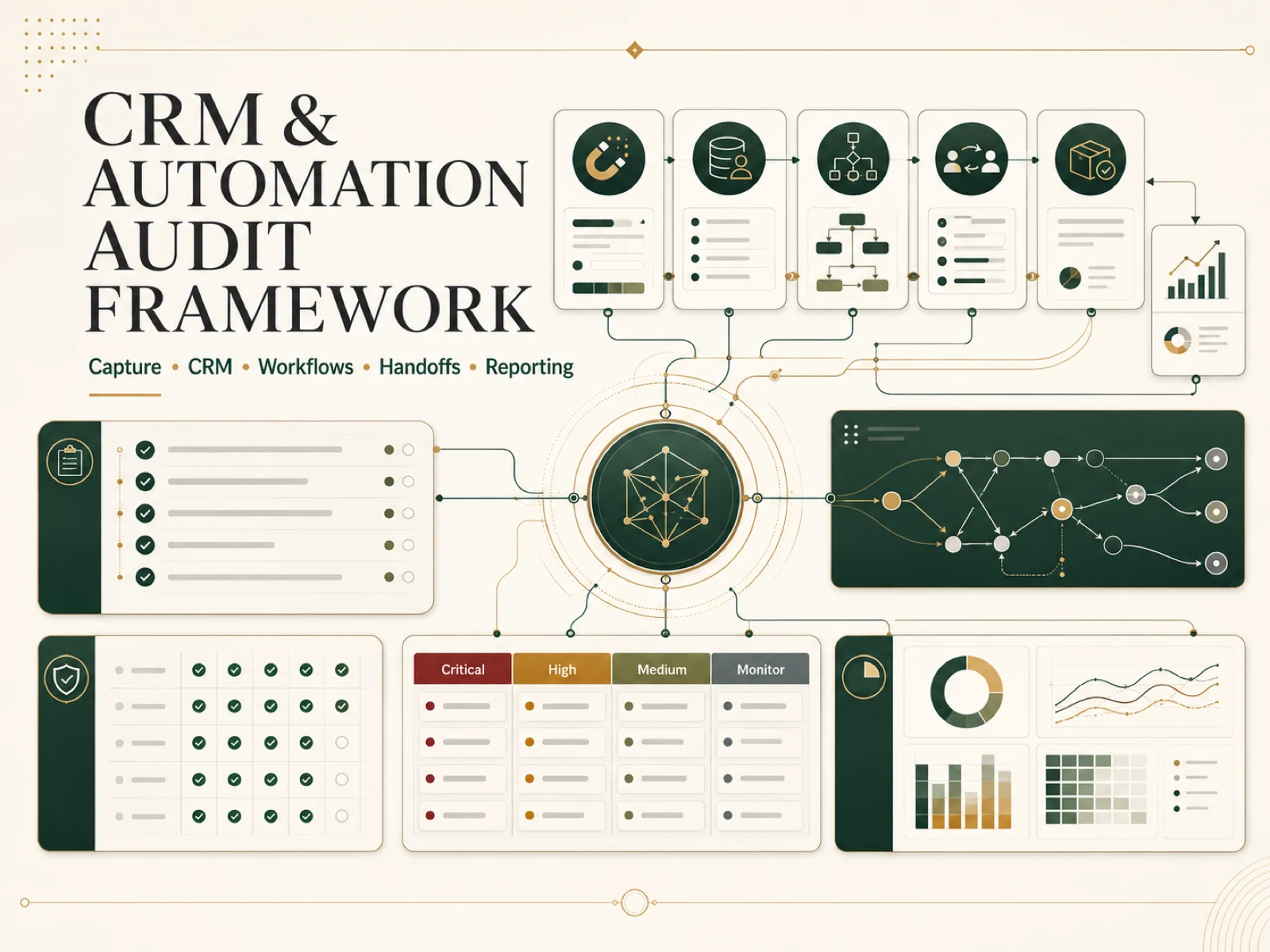
Overview
Original methodology disclosure: This is an original diagnostic framework created to demonstrate how I structure and validate a CRM and automation audit. It does not represent a named client, confidential account, paid Contra project, verified engagement, or guaranteed result.
A CRM audit should turn technical ambiguity into an ordered decision plan. This framework is the method I use to review one account and up to five critical workflows across capture, CRM data, automation logic, handoffs, access or fulfillment, and reporting.
It is designed for coaches, agencies, service businesses, course creators, and ecommerce teams that need to understand what is broken, why it is happening, and what should be fixed first.
Common failure signals
• Leads arrive without the right fields, source, owner, or opportunity
• Contacts are duplicated, mistagged, or sent into conflicting automations
• Follow-up stops at a decision point or continues after the desired action
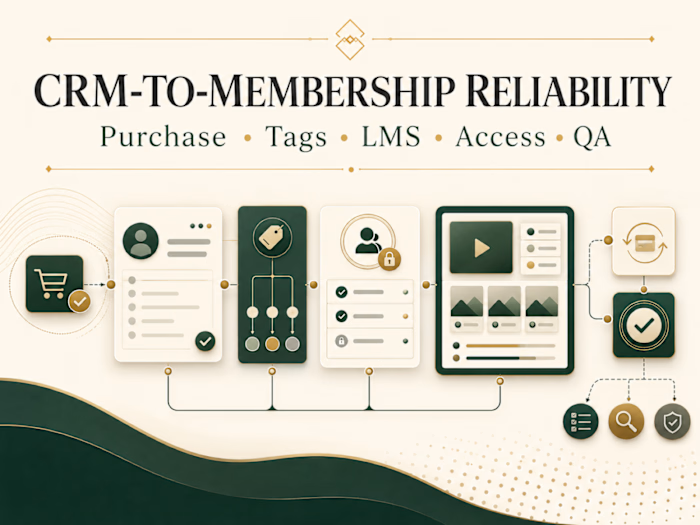
• Payment, membership, LMS, or fulfillment access fails silently
• Reports disagree because lifecycle stages and attribution rules are unclear
Diagnostic layers
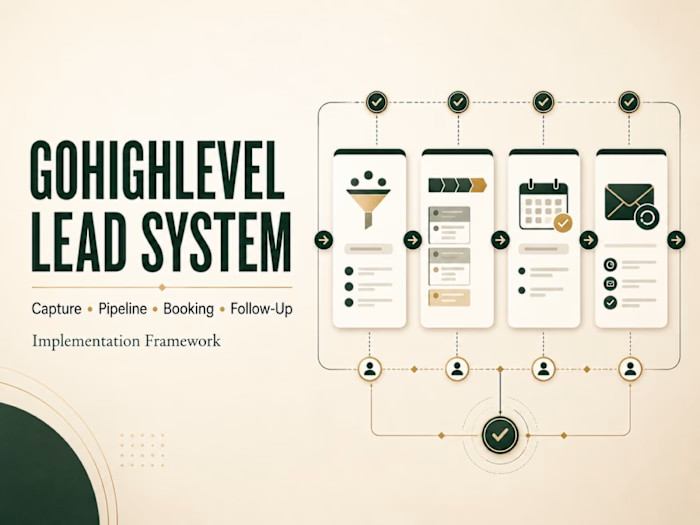
Capture and field mapping
Review forms, orders, applications, calendar events, source data, consent, required fields, and the first record created in the CRM.
CRM structure and ownership
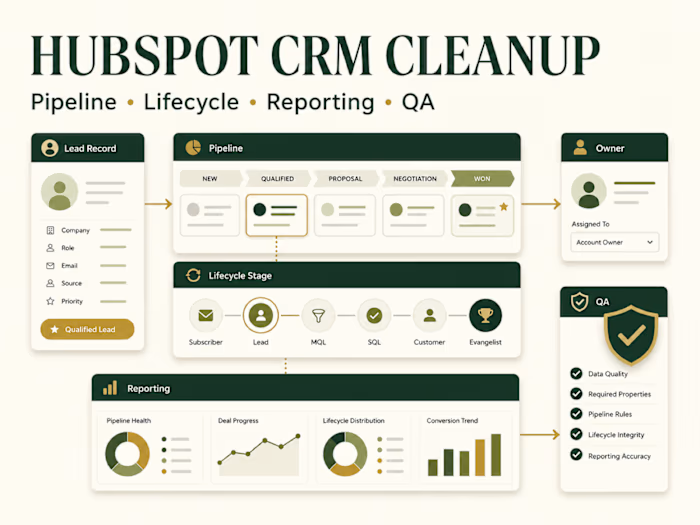
Check contact data, custom fields, tags, pipeline stages, assignments, permissions, duplicates, and the rules that define a usable record.
Workflow logic and communication
Trace triggers, goals, branches, waits, stop conditions, email or SMS steps, internal alerts, and the actions that move a contact forward.
Handoffs, access, and fulfillment
Verify the transfer between sales, operations, payment, membership, course access, service delivery, and the responsible human owner.
Reporting and testability
Compare expected reporting with actual lifecycle data, test records, attribution fields, failure logs, and the evidence needed to reproduce a problem.
Method
Map the current state
Document the intended journey, live dependencies, owners, and critical outcomes before changing anything.
Trace representative records
Follow real or safe test records through the system to separate visible symptoms from upstream causes.
Test success and failure paths
Check the happy path plus missing data, duplicate actions, delays, stopped automations, and rejected handoffs.
Prioritize by severity and dependency
Classify issues as Critical, High, Medium, or Monitor, then sequence repairs so downstream work is not built on an unstable foundation.
Deliver an action plan
Provide findings, recommended fixes, implementation order, test evidence, and a walkthrough or written handoff.
Typical deliverables
• Current-state journey and dependency map
• Prioritized issue register with severity and rationale
• Recommended repair order and implementation boundaries
• Test records, screenshots, or reproducible evidence where available
• Recorded walkthrough or written handoff
• One follow-up clarification round
Platform scope
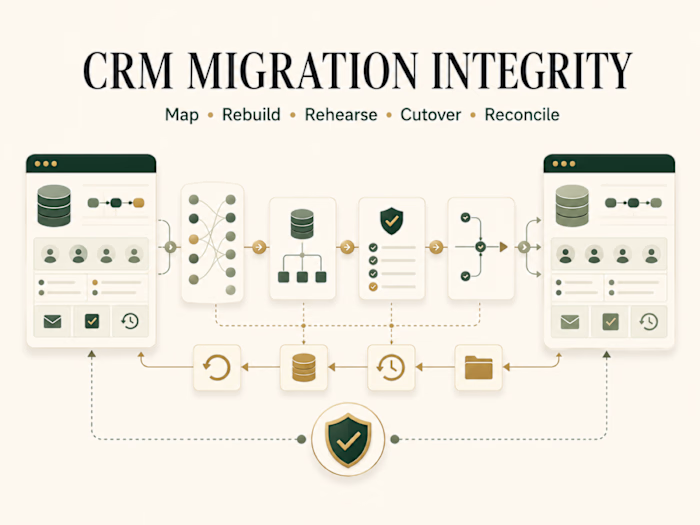
The framework is platform-neutral and adapts to Keap, GoHighLevel, HubSpot, Ontraport, WordPress/LMS, Memberium, WooCommerce, Zapier, and documented API integrations. Exact checks depend on the live account and connected systems.
Outcome
The outcome is not a generic list of settings. It is a risk-ranked, implementation-ready plan that shows what is failing, what depends on it, who owns the next step, and how to verify the repair.
Related service: CRM & Automation Audit + Action Plan — a fixed-scope diagnostic for one CRM account and up to five critical workflows, delivered as a prioritized action plan with evidence and handoff guidance.
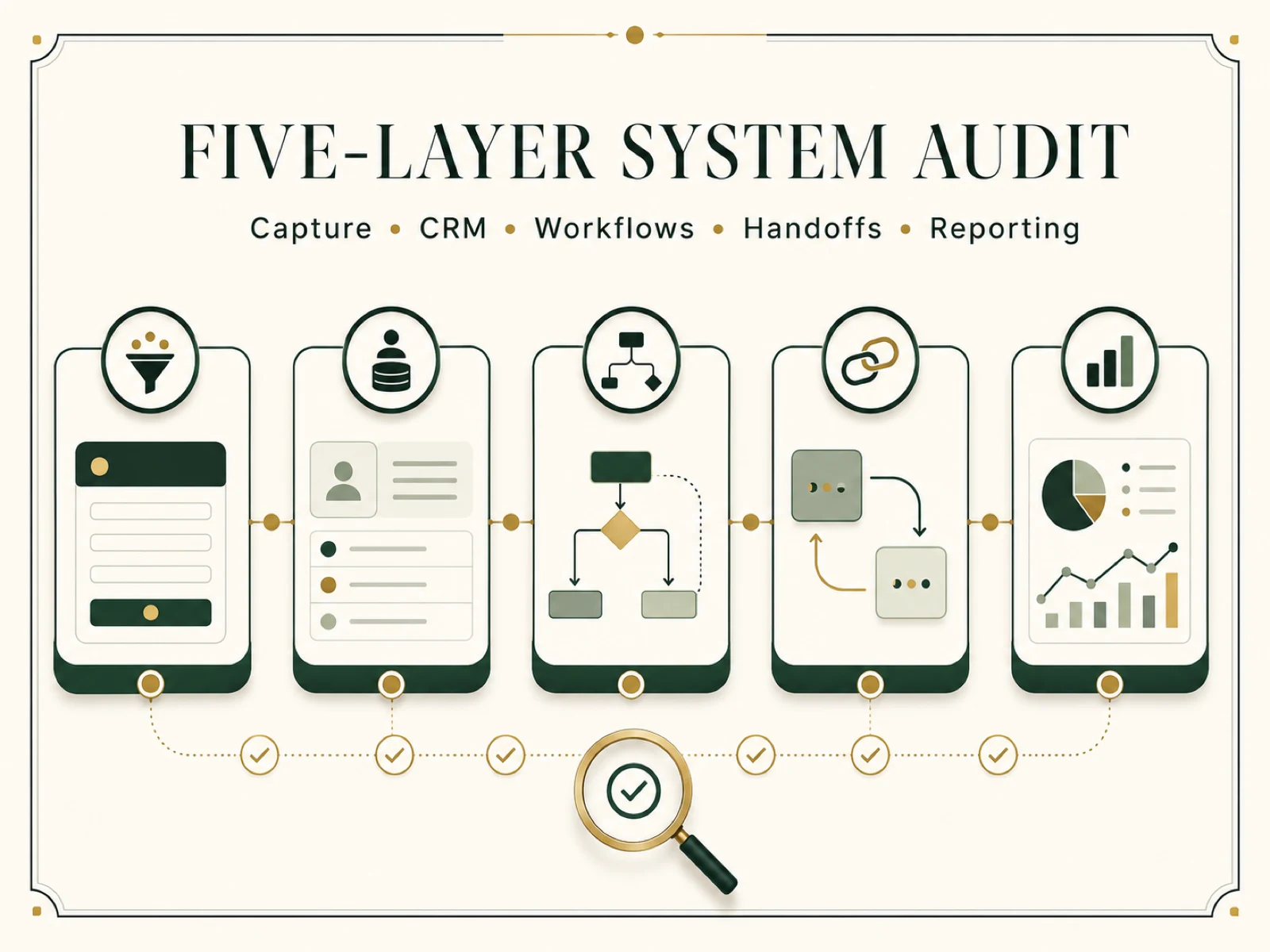
Five-layer diagnostic model — Capture, CRM structure, workflow logic, handoffs or access, and reporting are traced in sequence so visible symptoms can be connected to upstream causes.
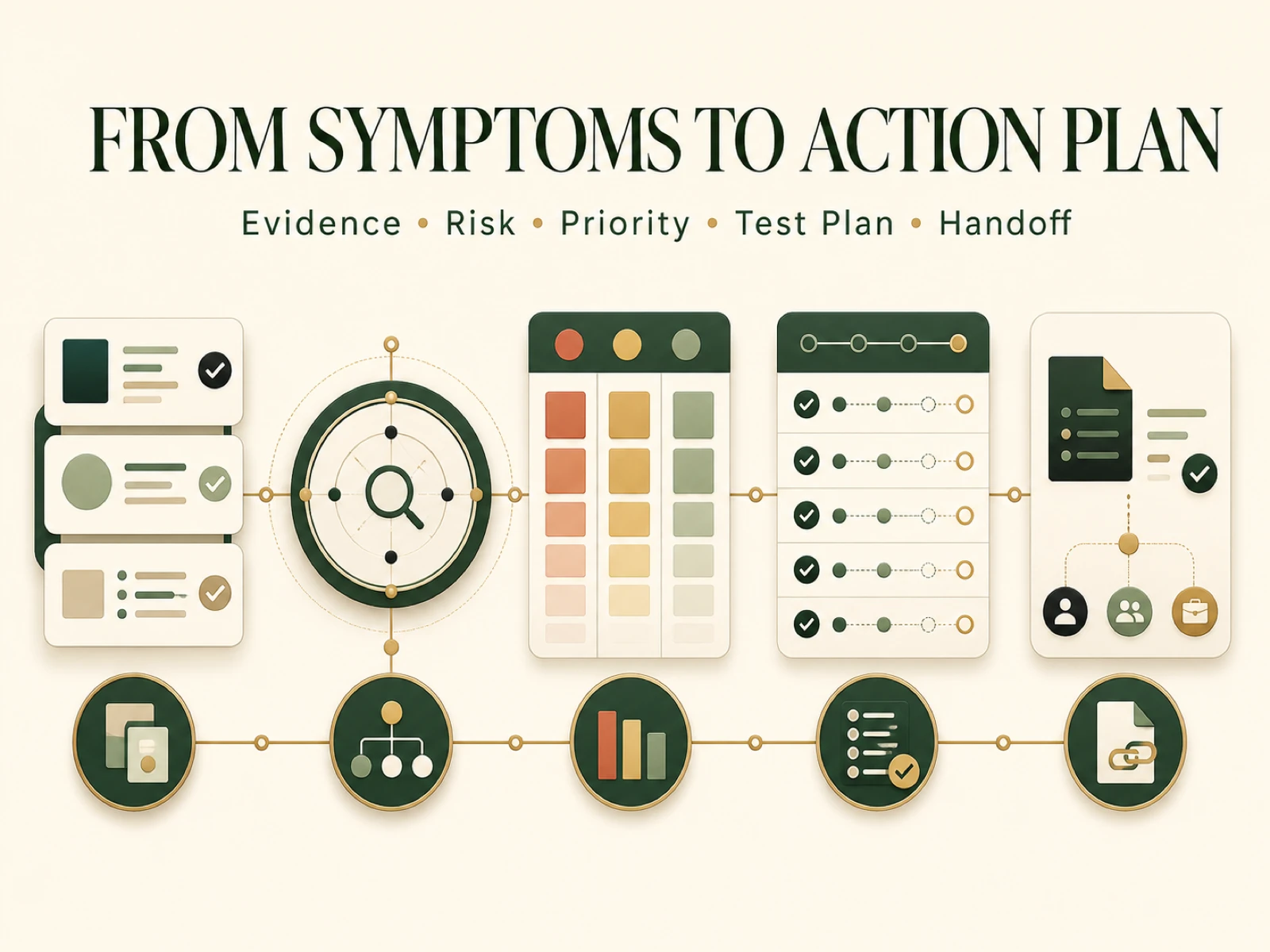
Prioritized action plan — Findings are organized by severity and dependency, with root cause, owner, repair order, test evidence, and handoff requirements made explicit.
Like this project
Posted Jul 16, 2026
A diagnostic method for tracing CRM failures, testing dependencies, ranking risk, and turning findings into an implementation-ready action plan.