GoHighLevel Lead-to-Booked-Call System

Md Arifur Rahman


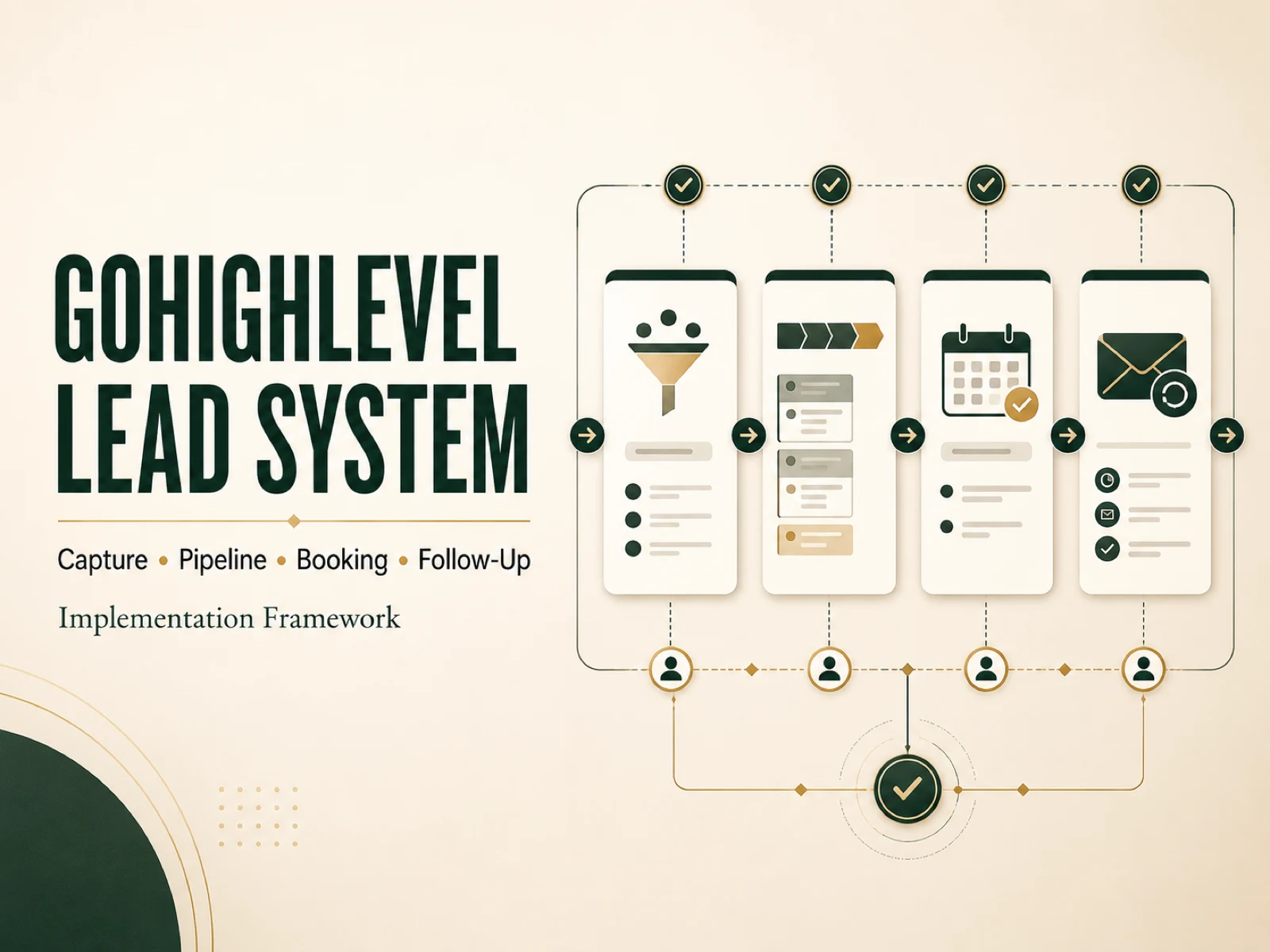
GOHIGHLEVEL LEAD-TO-BOOKED-CALL SYSTEM
Original framework disclosure
This is an original implementation framework created to demonstrate how I structure and validate a focused GoHighLevel lead-to-booked-call system. It does not represent a named client, confidential account, paid Contra project, verified earnings, or guaranteed business result.
THE OPERATING PROBLEM
A lead journey can look complete on a diagram and still fail in production. A form may create the wrong contact fields, an opportunity may never receive an owner, a calendar event may not update the intended stage, or follow-up may continue after a booking or opt-out.
The visible symptom is usually “the automation is broken.” The actual problem is often an unclear state transition between capture, CRM structure, ownership, booking, and follow-up.
THE OBJECTIVE
Design one focused path that is understandable, testable, and transferable:
Lead capture → field mapping → contact and opportunity state → ownership → nurture → booked call → confirmation and stop conditions
The goal is not to build every possible funnel or workflow. It is to create one reliable core path with explicit rules, evidence, and handoff documentation.
DEFINE THE PATH BEFORE CONFIGURING
Start with the expected journey, not the workflow builder.
• Identify the entry point and consent context.
• Define the contact fields and source data that must be preserved.
• Agree the pipeline, stage, owner, and next-action rules.
• Define what counts as a successful booking.
• List the conditions that should pause, stop, branch, or escalate follow-up.
MAP CAPTURE INTO ONE CRM STATE MODEL
Each incoming field needs a purpose and destination. The framework checks required fields, source attribution, duplicate behavior, tag and custom-field rules, opportunity creation, ownership, notifications, consent, and opt-out handling.
The CRM becomes the operating record rather than a passive contact list.
BUILD A PIPELINE WITH EXPLICIT OWNERSHIP
For each stage, define the entry condition, responsible owner, required next action, permitted automation, evidence of the state change, and the exit or exception condition.
This makes stalled leads and broken handoffs visible.
CONNECT BOOKING WITHOUT CONFLICTING STATES
Calendar configuration is tested as part of the CRM path:
• Availability, buffers, time zone, and assignment
• Contact and opportunity updates after booking
• Confirmation and reminder behavior
• Reschedule and cancellation handling
• Stop conditions for pre-booking nurture
• Internal alerts and task ownership
The booking event must create one clear operational truth across the calendar, contact record, opportunity, and follow-up logic.
ADD FOCUSED FOLLOW-UP AND EXCEPTIONS
The core workflow covers the agreed path only: trigger and enrollment rules, approved email or SMS steps, waiting periods, decision branches, owner notifications, booking, reply, opt-out, manual-stop conditions, and failure alerts where supported.
Unrelated funnels, calendars, pipelines, migrations, custom APIs, paid media, copywriting, and ongoing support remain separate scope.
TEST WITH EVIDENCE, THEN HAND OFF
The system is not complete because every block is connected. It is complete when the agreed states behave as expected.
The QA record captures the test identity and source, expected versus actual mapping, contact and opportunity state, messages or tasks, booking changes, stop conditions, exceptions, issue severity, fix, retest, and final status.
The handoff explains the core path, dependencies, safe operating rules, and what should be retested after future changes.
WHAT THIS FRAMEWORK DEMONSTRATES
• GoHighLevel CRM and pipeline architecture
• Lead-form and field-mapping logic
• Calendar and booking-state integration
• Workflow enrollment, branching, and stop conditions
• Ownership, notification, and exception design
• Desktop and mobile QA
• Test evidence and implementation documentation
It intentionally does not claim a client revenue increase, conversion lift, private-company result, or verified Contra engagement.
BEST-FIT BUYER
A coach, consultant, agency, or service business that needs one focused lead-to-booked-call path configured or repaired before adding more funnels, campaigns, or complex integrations.
RELATED SERVICE
GoHighLevel CRM, Pipeline & Workflow Setup — focused implementation from capture through booking, QA, and handoff.
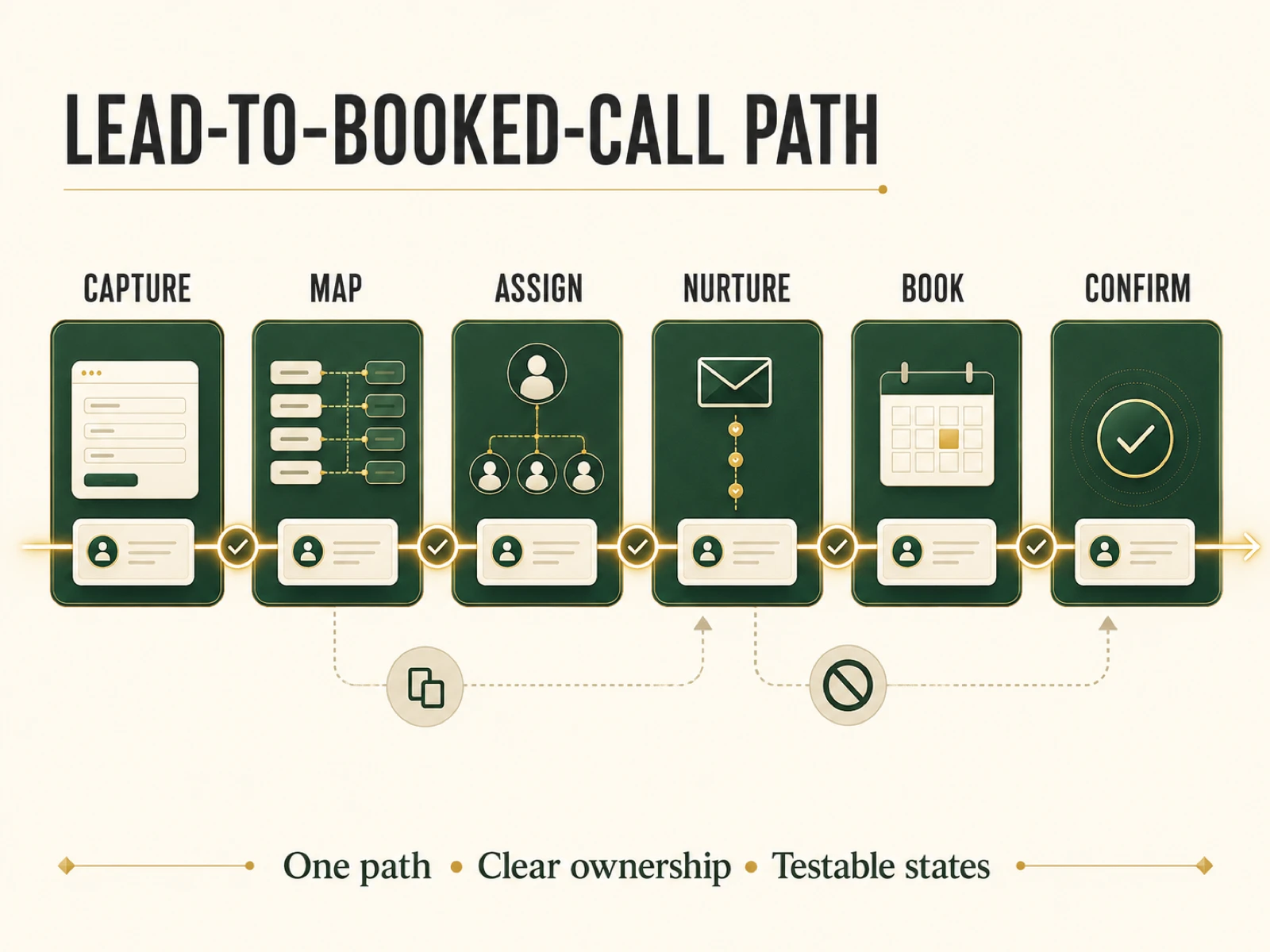
Lead-to-booked-call state path: capture, mapping, ownership, nurture, booking, confirmation, and exception branches.
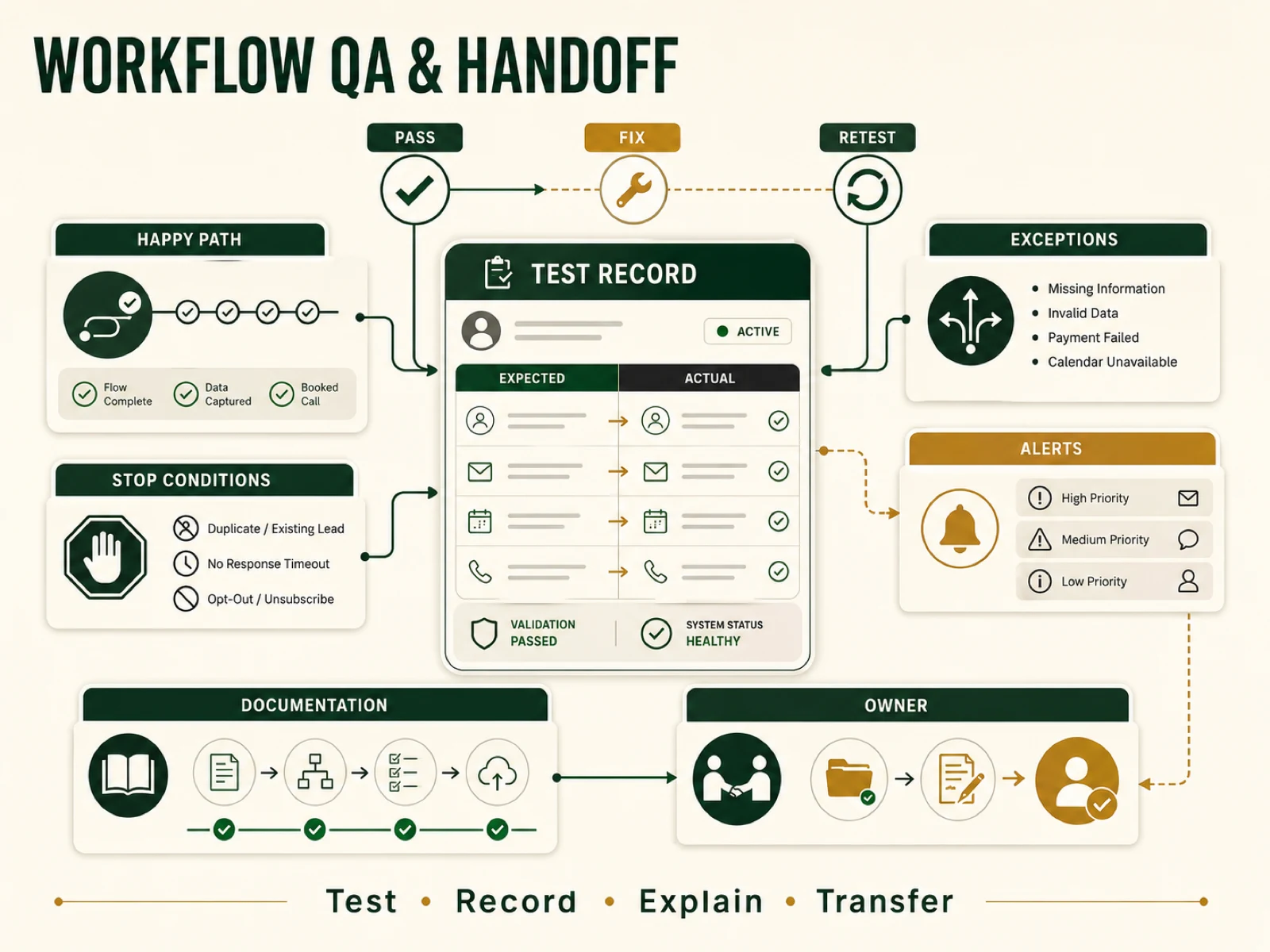
Workflow QA and handoff model: happy path, exceptions, stop conditions, alerts, evidence record, documentation, and owner transfer.
Like this project
Posted Jul 16, 2026
Original GoHighLevel marketing automation framework spanning lead capture, CRM mapping, pipeline ownership, booking, follow-up, QA, and handoff.