CRM Migration Integrity & Cutover Framework

Md Arifur Rahman


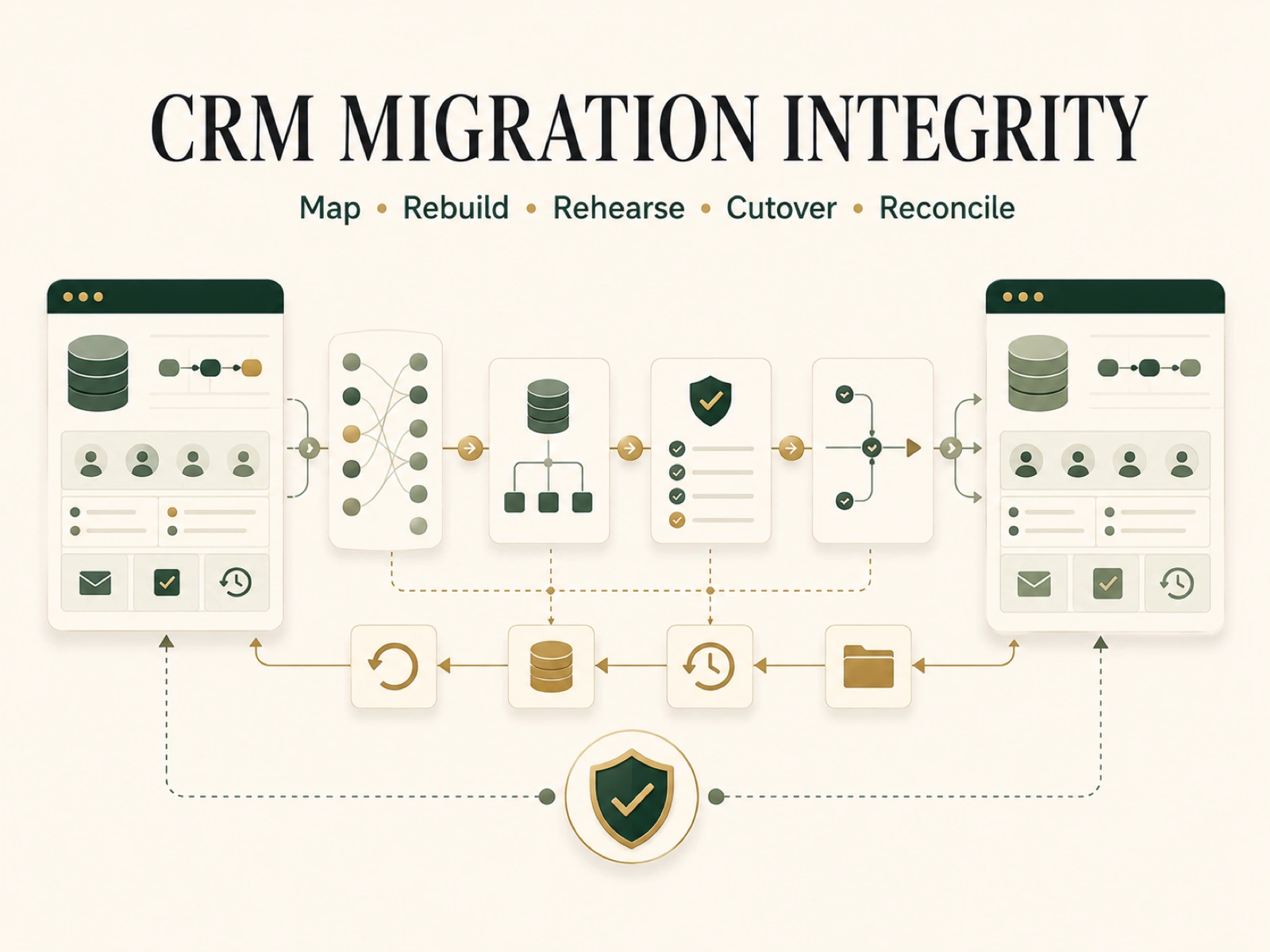
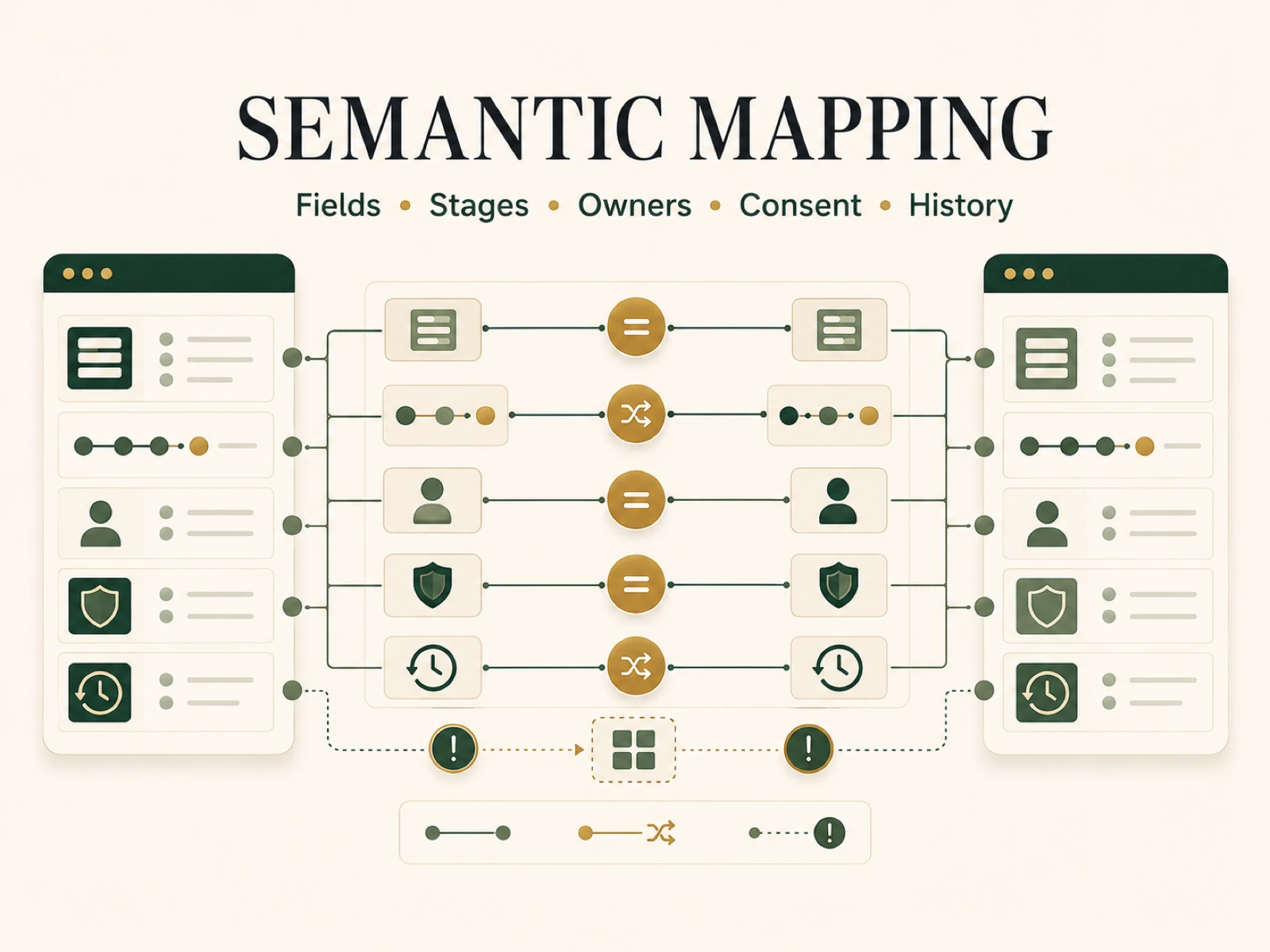
Semantic mapping model — Source fields, lifecycle states, ownership, consent, workflow dependencies, and reporting definitions are mapped by business meaning before records move.
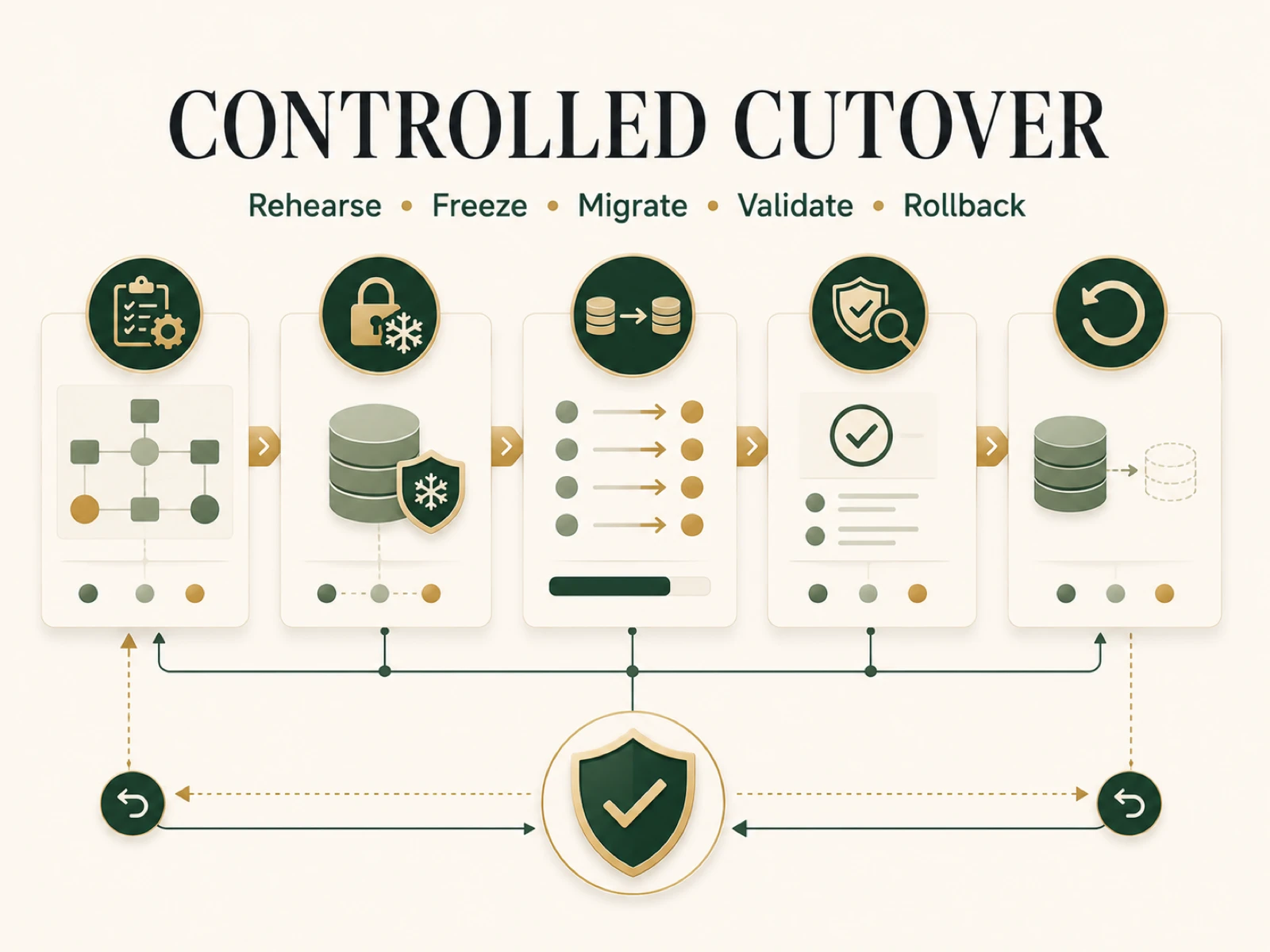
Controlled cutover and reconciliation — Rehearsal, record and state checks, freeze window, rollback criteria, post-launch QA, and exception ownership reduce migration ambiguity.
Overview
Original methodology disclosure: This is an original migration framework created to demonstrate how I scope, map, test, reconcile, and hand off a controlled CRM cutover. It does not represent a named client, confidential account, paid Contra project, verified engagement, or guaranteed result.
A CRM migration is not complete when contacts appear in the destination account. A trustworthy migration must preserve identity, lifecycle meaning, ownership, segmentation, automation behavior, payment or access dependencies, reporting logic, and the evidence needed to reconcile the result.
This framework is designed for businesses moving between platforms such as Keap and GoHighLevel, consolidating legacy CRM data, or rebuilding automation while keeping operations running.
Why migrations fail
Common migration risks include:
Fields are copied without defining how their meaning changes in the destination.
Tags, stages, products, subscriptions, and access states are treated as interchangeable when they are not.
Duplicate contacts are imported before identity and merge rules are agreed.
Legacy automation is recreated step by step without reviewing whether the underlying process is still valid.
Historical records and active operational records are mixed into one cutover rule.
Payment, membership, LMS, reporting, and webhook dependencies are discovered after launch.
The team validates record counts but not lifecycle behavior.
There is no rollback, exception queue, reconciliation owner, or post-cutover monitoring window.
Migration integrity model
Source inventory
Identify the source systems, contact and company records, custom fields, tags, lists, pipelines, opportunities, products, subscriptions, campaigns, templates, users, permissions, integrations, reports, and exports within scope.
Canonical identity
Define the identifiers used to recognize one person, company, opportunity, subscription, or transaction. Establish duplicate, merge, conflict, and missing-data rules before transformation begins.
Semantic mapping
Map the business meaning of each important source field, tag, stage, status, and event to the target system. A field is not accepted merely because a destination field with a similar name exists.
Workflow reconstruction
Separate current business requirements from legacy implementation details. Rebuild triggers, goals, branches, waits, stop conditions, assignments, messages, and handoffs around the intended lifecycle rather than copying obsolete complexity.
Dependency protection
Trace forms, calendars, payments, email or SMS, WordPress, membership, LMS, ecommerce, reporting, webhooks, Zapier, and custom API connections that depend on the CRM state.
Reconciliation and evidence
Compare source totals, transformed totals, imported totals, rejected rows, duplicates, lifecycle states, sample journeys, workflow entry, downstream access, and reporting output. Record every exception with an owner and disposition.
Controlled migration method
Discover and freeze scope
Document what will migrate, what will be rebuilt, what will be archived, what will remain in the legacy system, and what is explicitly excluded. Agree on owners, approvals, change boundaries, and the cutover window.
Export and preserve
Create date-stamped source exports and configuration evidence within the approved access boundary. Preserve the information needed for mapping, reconciliation, rollback, and audit without collecting unnecessary private data.
Transform in a staging layer
Normalize formats, map fields and states, flag duplicates, separate rejected rows, and retain source identifiers for traceability. Never transform the only copy of the source export.
Build the target foundation
Configure contact structure, fields, tags, pipelines, ownership, users, permissions, products, workflows, and integrations before the final operational import.
Run a representative pilot
Test a small, privacy-safe or approved sample covering different lifecycle states: new lead, active opportunity, customer, subscription, member, cancelled record, and relevant exceptions.
Validate behavior
Verify not only data presence but also workflow entry, stop conditions, assignments, messages, payment or access handoffs, reporting, and team usability.
Execute controlled cutover
Pause or route source changes as agreed, run the final delta, import in dependency order, activate target workflows deliberately, and monitor the first operational records.
Reconcile and stabilize
Complete the record-count and lifecycle-state reconciliation, resolve exceptions, document known limitations, confirm rollback status, and hand over the operating guide.
Verification matrix
Source, transformed, imported, rejected, and duplicate record counts
Required-field and data-type validation
Contact, company, opportunity, product, and subscription relationships
Tag, list, pipeline, stage, owner, and status meaning
Workflow trigger, branch, wait, goal, and stop-condition behavior
Form, calendar, payment, membership, LMS, ecommerce, and reporting dependencies
New, active, cancelled, refunded, reactivated, duplicate, and delayed-event paths
Permissions, operational ownership, monitoring, and exception handling
Rollback evidence and post-cutover support boundary
Typical deliverables
Migration scope and source inventory
Field, tag, stage, product, and lifecycle mapping workbook
Transformation and exception rules
Dependency and workflow reconstruction map
Pilot-test and cutover plan
Validation and reconciliation evidence
Risk register with severity, owner, and disposition
Rollback and stabilization checklist
Recorded walkthrough or written operational handoff
Platform scope
The method adapts to Keap, Ontraport, GoHighLevel, HubSpot, WordPress, LearnDash, Memberium, WP Fusion, WooCommerce, Shopify, Stripe, PayPal, Zapier, CSV transformations, and documented API or webhook integrations. Exact activities depend on the approved scope, available platform capabilities, and data-access boundary.
Outcome
The outcome is a controlled, traceable migration in which the team can explain what moved, how meaning changed, what was rebuilt, what was rejected, how critical journeys were tested, who owns each exception, and how the result was reconciled.
This framework does not promise a zero-risk migration. It establishes the controls and evidence needed to reduce avoidable risk and make remaining exceptions visible.
Related service path: Begin with the CRM Migration Mapping & Cutover Blueprint to define source state, dependencies, and risk. Migration implementation should be separately scoped after discovery because record volume, data quality, integrations, and cutover requirements vary.
Like this project
Posted Jul 16, 2026
A controlled method for migrating CRM data, lifecycle logic, workflows, access dependencies, and reporting without carrying hidden failures into the new system.