Built with Lovart
The Hawker Codex: Timeless Brand Identity

Révolté


THE HAWKER CODEX — Information Is the Identity
A pan-Asian street food brand that didn't want to be romanticized. The brief was to build something that felt like it had always existed — not a brand built around heritage, but one that looked like it had simply been documenting it for decades.
THE BRIEF
Street food brands almost always make the same mistake: they reach for the past as decoration. Exposed brick, brushstroke logos, "est. 19XX" in a serif that has never been near a hawker stall. The brief was the opposite of that. The client wanted pan-Asian street food taken seriously — not because it needed validation, but because the food already had the authority and the brand was failing to match it.
What they came with was a tone problem. The food was Hong Kong Char Kway Teow, Bangkok Pad See Ew, KL Laksa — pluralistic, dense, alive. The identity needed to hold all of that without flattening it into a single cultural shorthand or a generic "Asian fusion" aesthetic. No cherry blossoms. No chopstick pictograms. No earth tones pretending to be authenticity.
I took on the full identity system — logo, typography, color, print collateral, digital touchpoints, packaging. The interesting constraint was this: the brand had to look maximalist and feel completely controlled. Every layer of complexity had to have a rule behind it.
THE APPROACH
The first instinct was to build around the visual logic of physical hawker signage — the layered, sun-faded, hand-painted boards you see stacked four deep outside a Mongkok stall. It was the right instinct, wrong execution. Every direction I tried in that space looked like a mood board, not a system. I kept arriving at something that felt curated rather than accumulated.
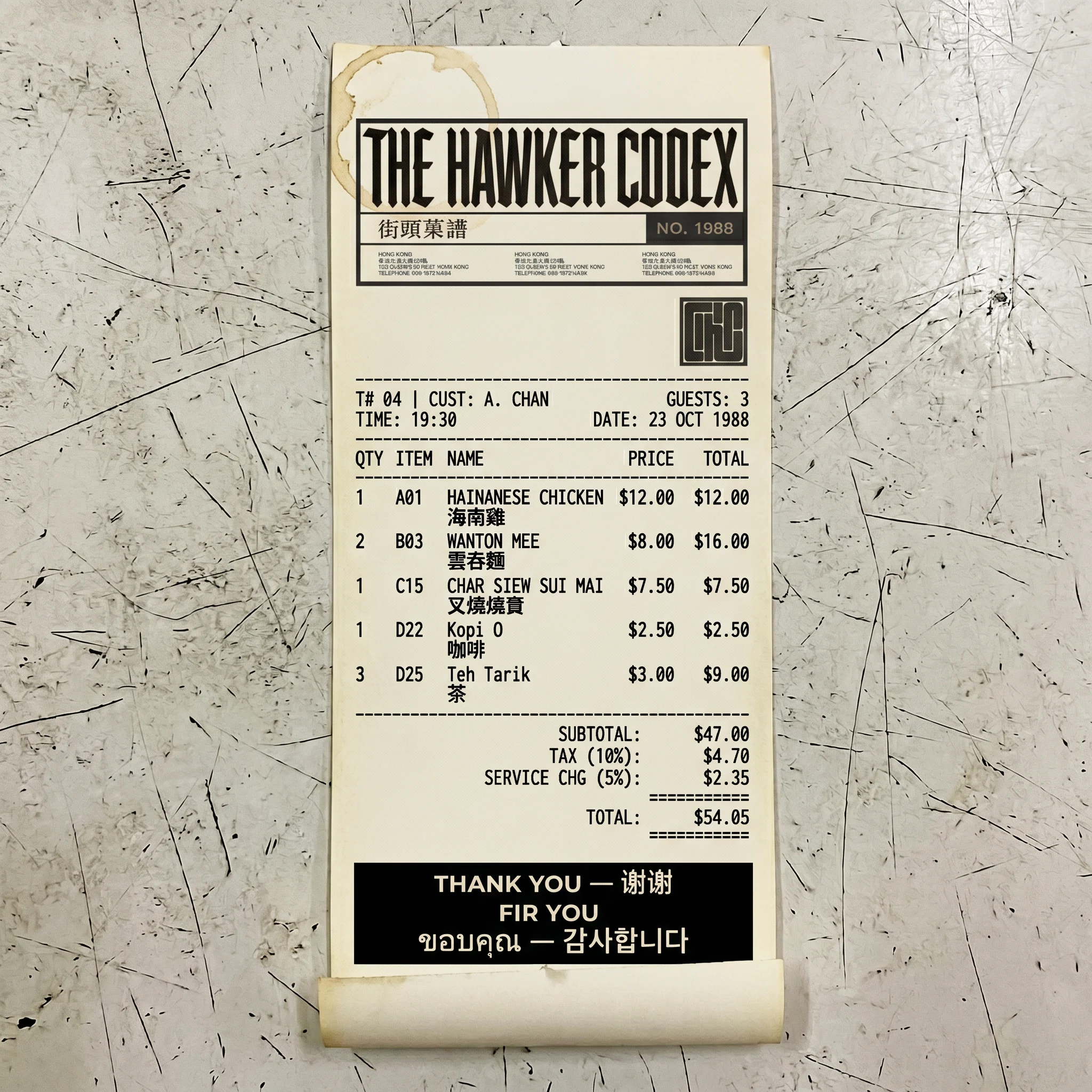
What unlocked it was a shift in source material. Not signage — documents. Hong Kong government forms from the 1970s. Thai laminated menus that have been photocopied twenty times. Malaysian receipt books, classified ad layouts, utility notices in three languages. These weren't designed objects. They were functional objects that happened to be beautiful because every element earned its place.
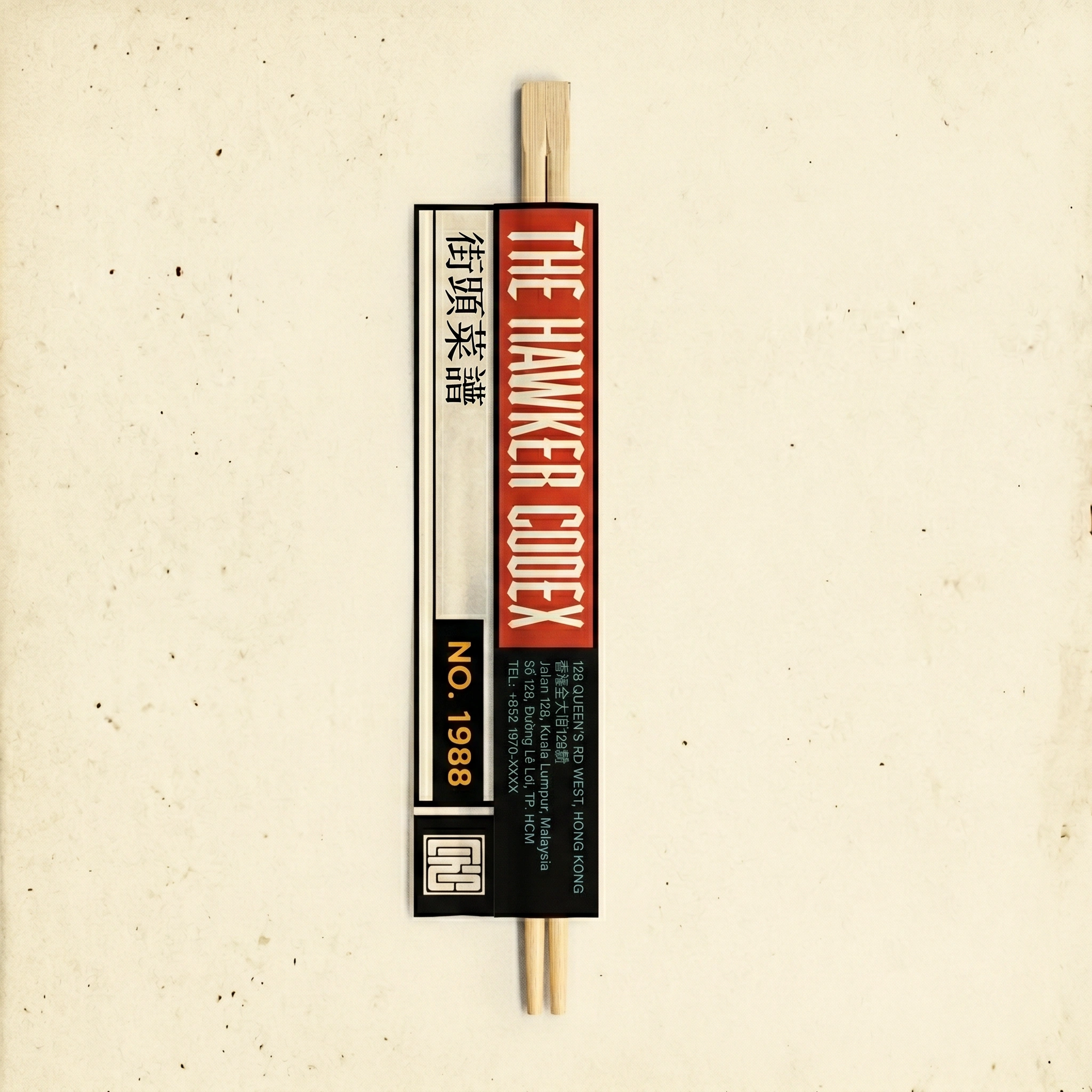
The insight was structural: each of those documents has a header — a block of information at the top that tells you exactly what the document is, who issued it, where it comes from, when it was created. I built the logo as a document header. Not inspired by one. Functioning as one. Three horizontal registers divided by rules. Primary name in compressed Gothic, Cinnabar Red. Chinese characters in serif below it. Address data in monospaced type across the bottom strip in Faded Cyan. The logo doesn't represent the brand — it is the brand's primary document.
From there, the system built itself. Each language got its own typeface and its own role. Latin in Barlow Condensed Black — compressed, aggressive, the voice that cuts through. Traditional Chinese in Noto Serif TC — quieter, more considered, the voice of the kitchen. Data, addresses, codes, prices in IBM Plex Mono — functional, precise, the voice of the receipt. None of these typefaces decorates the others. Each one carries a different register of information and is assigned to it consistently across every touchpoint.
THE WORK
LOGO SYSTEM
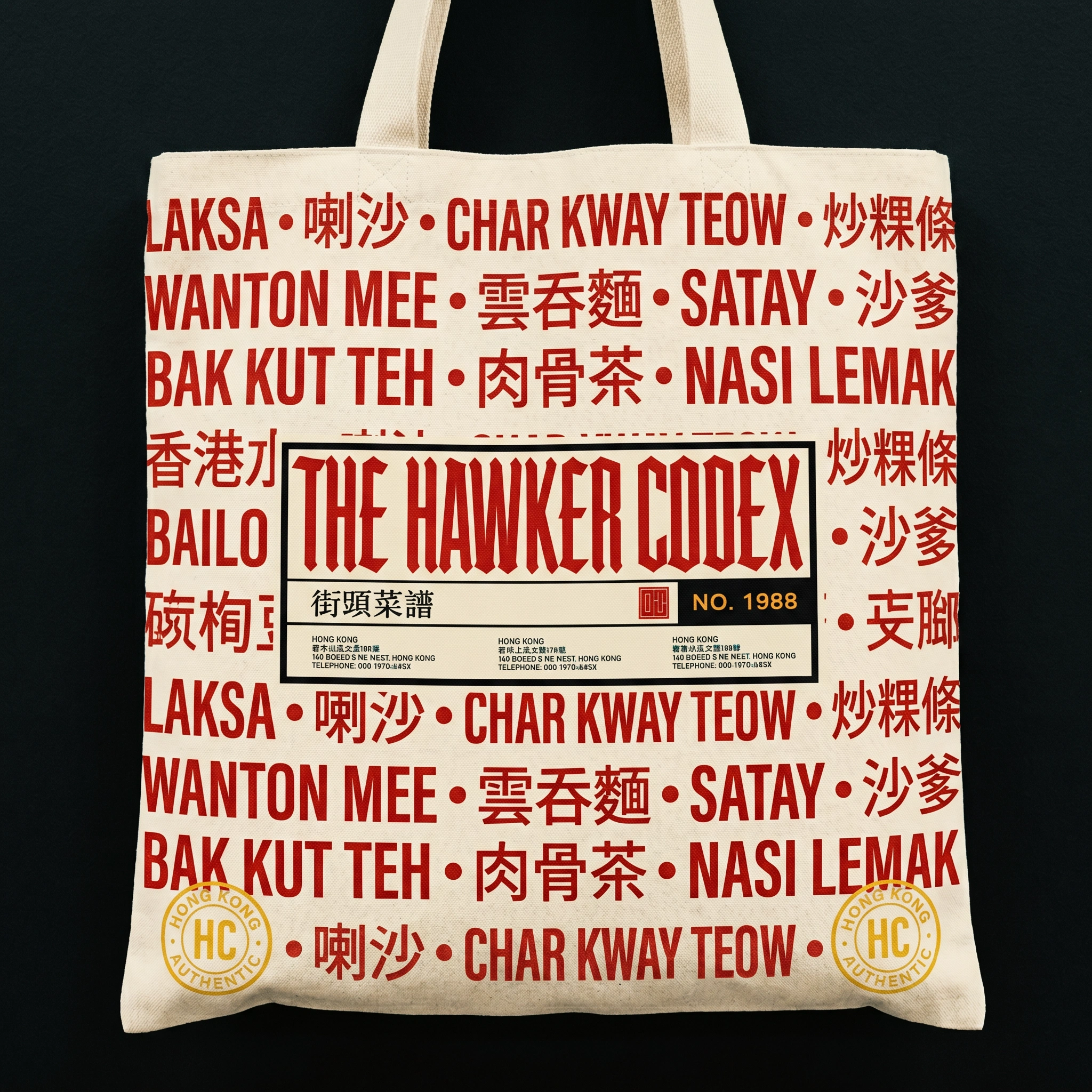
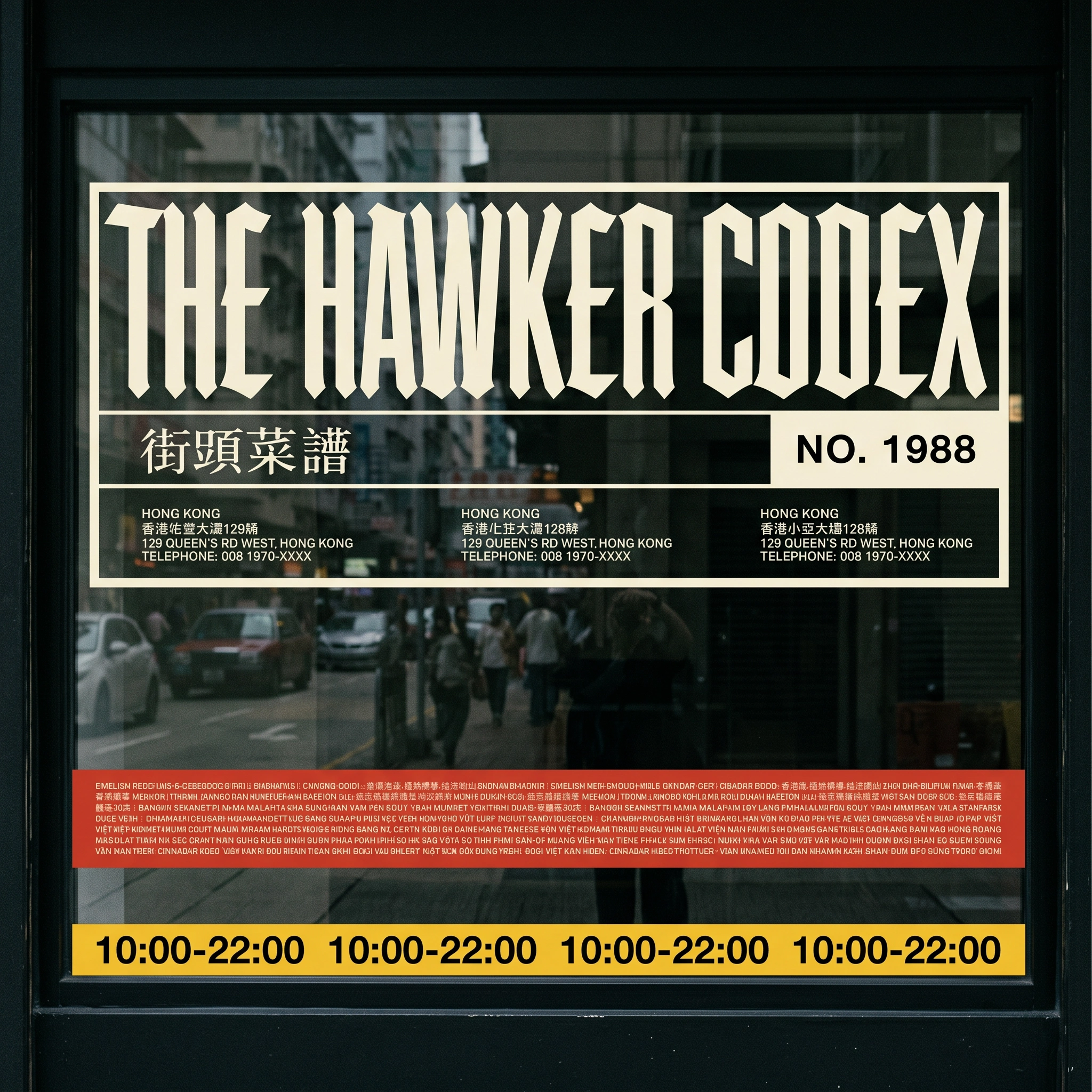
Three marks, one logic. The Header Block is the primary identity — a hard-bordered typographic block with three information registers, built to function as both a logo and an actual document header. It scales from a 600mm window vinyl to a 22mm sticker without losing a single layer of hierarchy. The Chop Stamp is a square seal with the CHC monogram constructed on a grid — interlocked, dense, reads as a single glyph before it reads as initials. It functions as a wax seal, a fabric stamp, a ceramic decal, a favicon. The Running Header is a single horizontal line: the brand name in compressed Latin, a vertical Cinnabar Red rule to its left, the Chinese abbreviation to its right. It runs along packaging edges, apron pockets, the spine of the newspaper insert.
COLOR SYSTEM
Five colors, no neutrals. Aged Cream (
#F5EED8) is the base — not white, not beige, the specific tone of uncoated paper stock that has been touched. Cinnabar Red (#D93F2A) is the primary signal, used for all display type and logo name registers. Ink Black (#111010) is structural — borders, rules, background for inverted applications. Municipal Yellow (#F4C430) is the price tag, the stamp, the item number — always in a hard black cell, never floating. Faded Cyan (#7EC8C8) is the address register, the data voice, the register that rewards close reading. The five colors were chosen not for palette harmony but for print logic — each one corresponds to an ink type and a hierarchy level.PRINT COLLATERAL
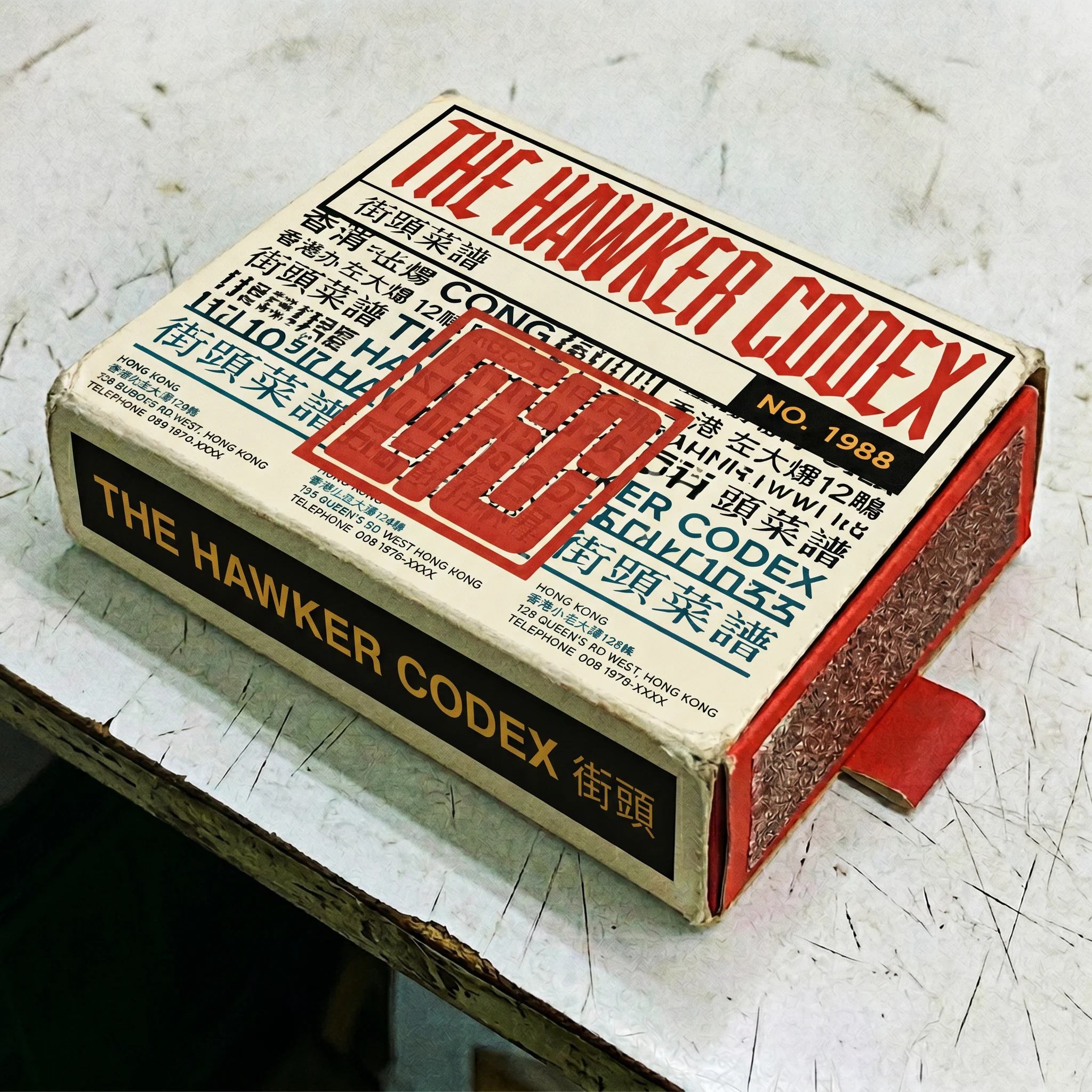
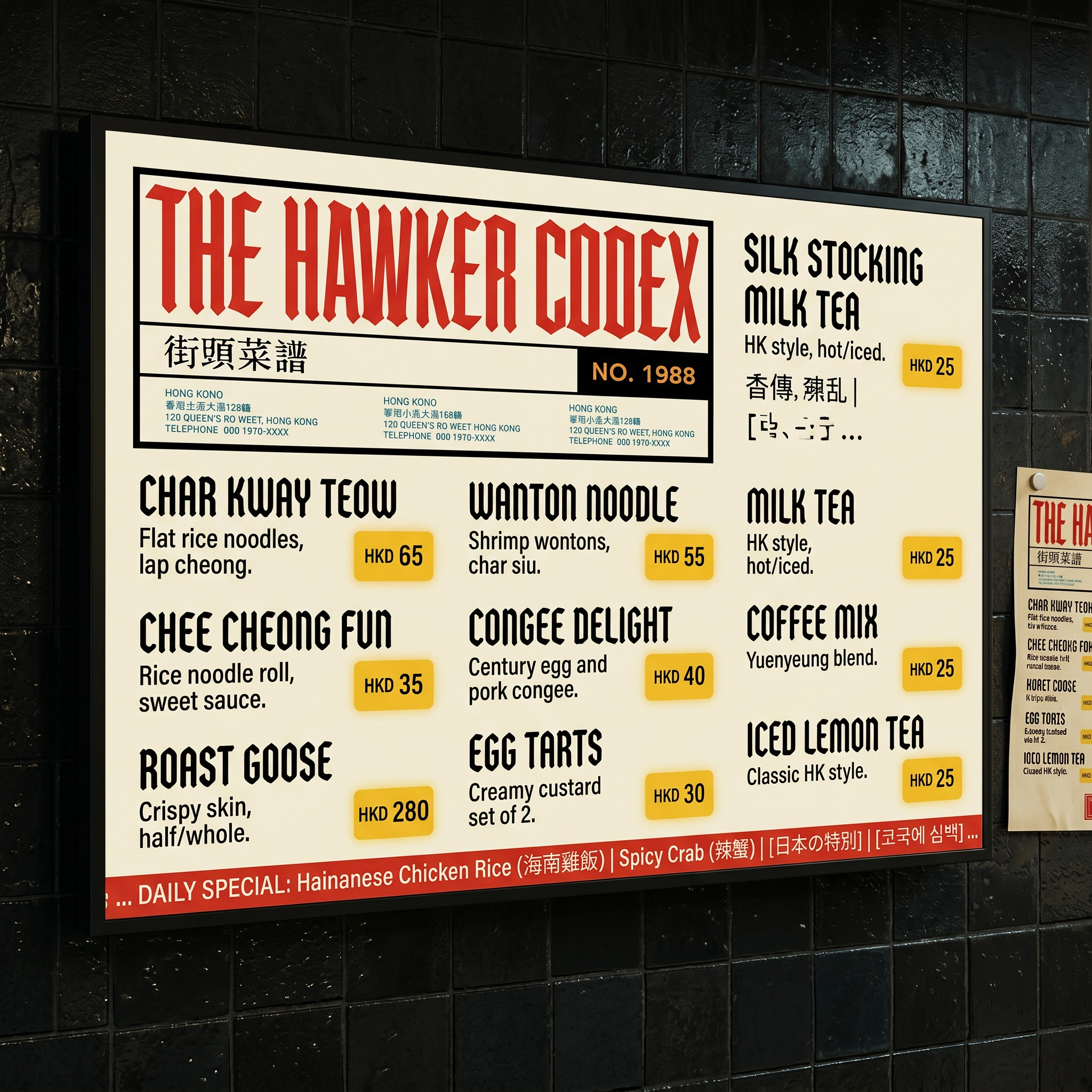
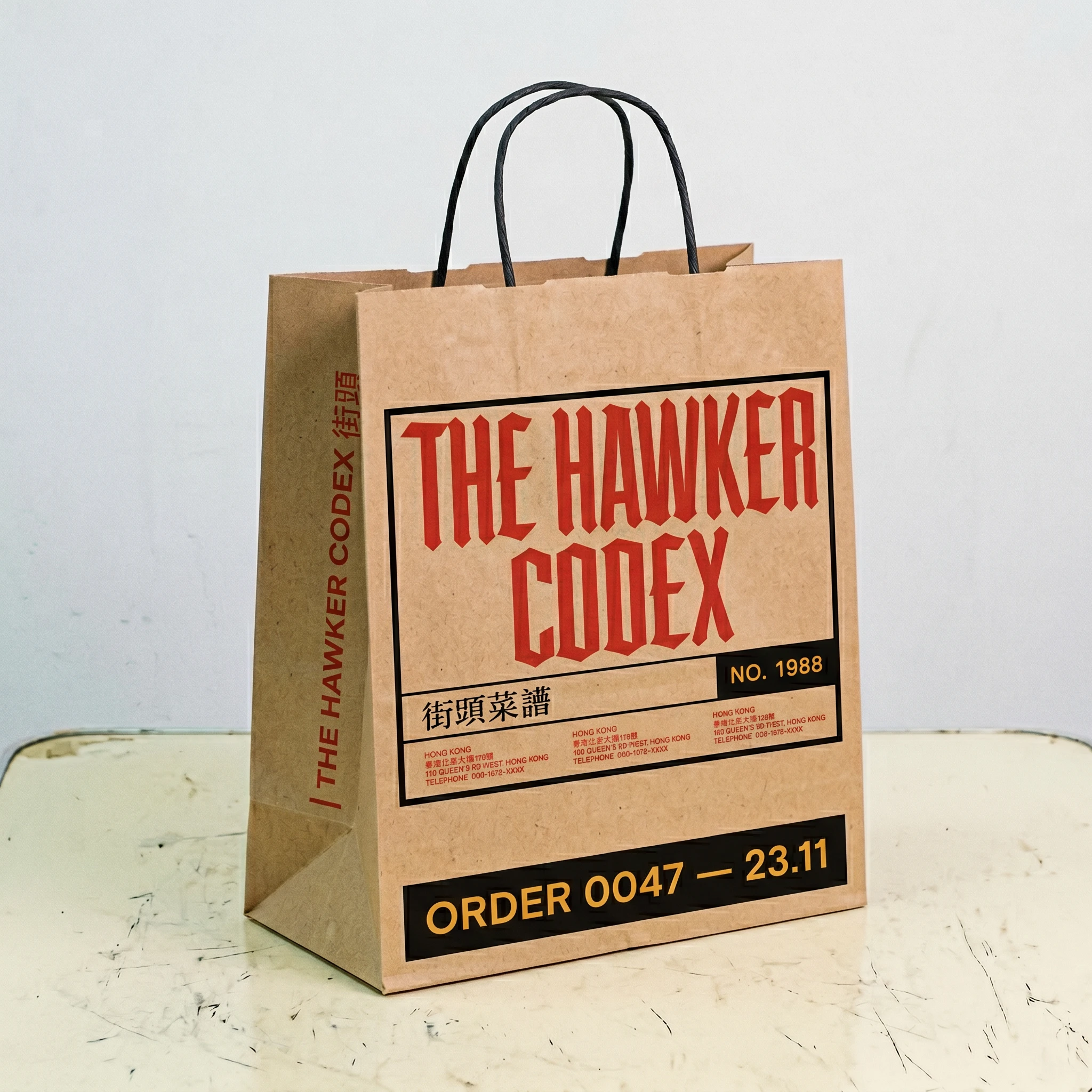
Every print piece behaves like a document from the brand's archive. The laminated menu is a three-column typographic form — Cinnabar Red dish names in compressed Gothic, Ink Black descriptions in body type, Municipal Yellow price cells hard-set in black rectangles. The plastic laminate edge is part of the object, not incidental. The takeaway kraft bag carries the full Header Block at 60% of the face height, with the order number in a Municipal Yellow bar at the base. The matchbox is the most extreme execution — all five brand colors applied to a surface the size of a business card, with the Chop Stamp overprinted across the dense address pattern without masking it, creating a palimpsest effect that is the whole brand logic compressed into 80×50mm. The ceramic bowl carries only the circumference address strip in Faded Cyan and two Chop Stamps — almost nothing, and it reads as completely branded.
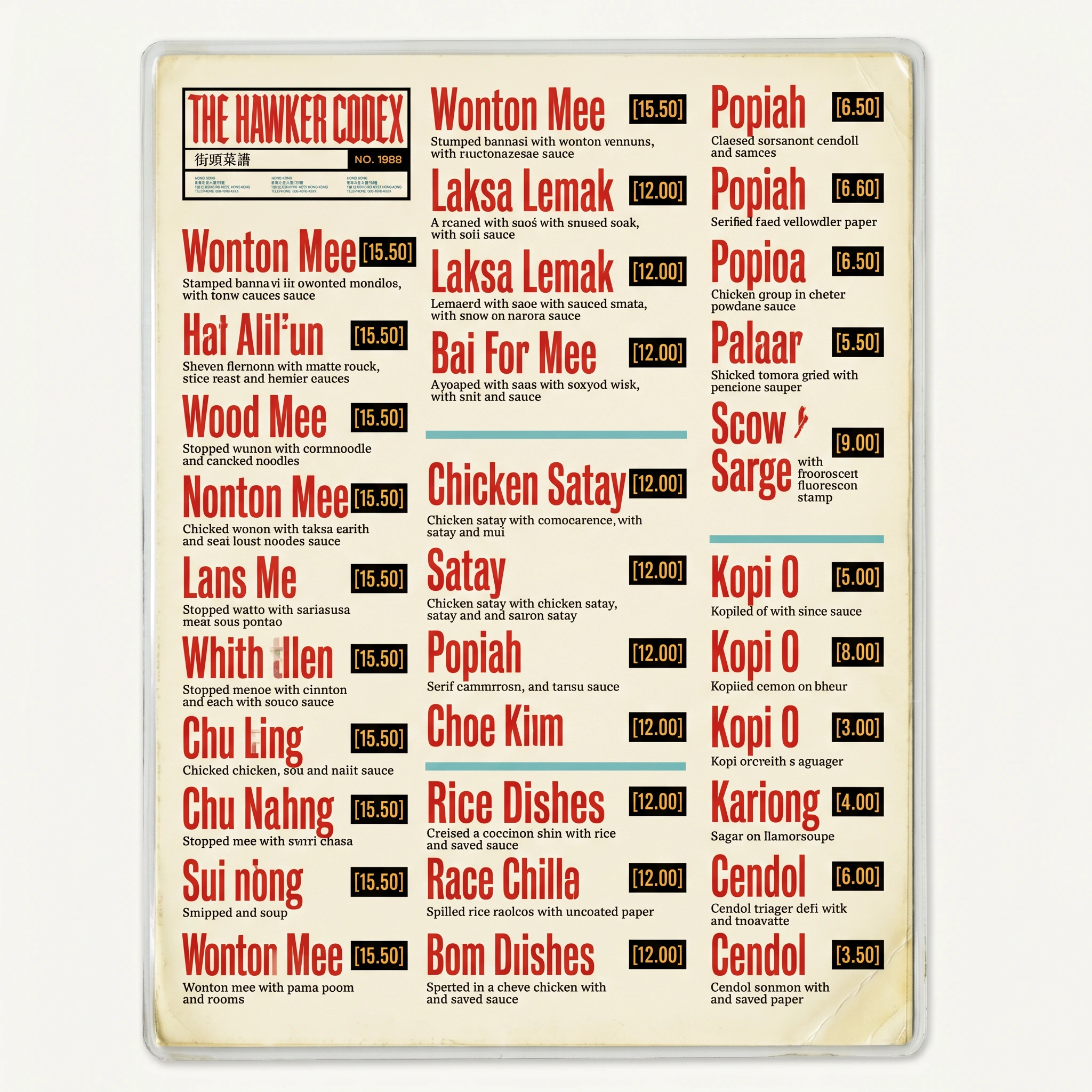
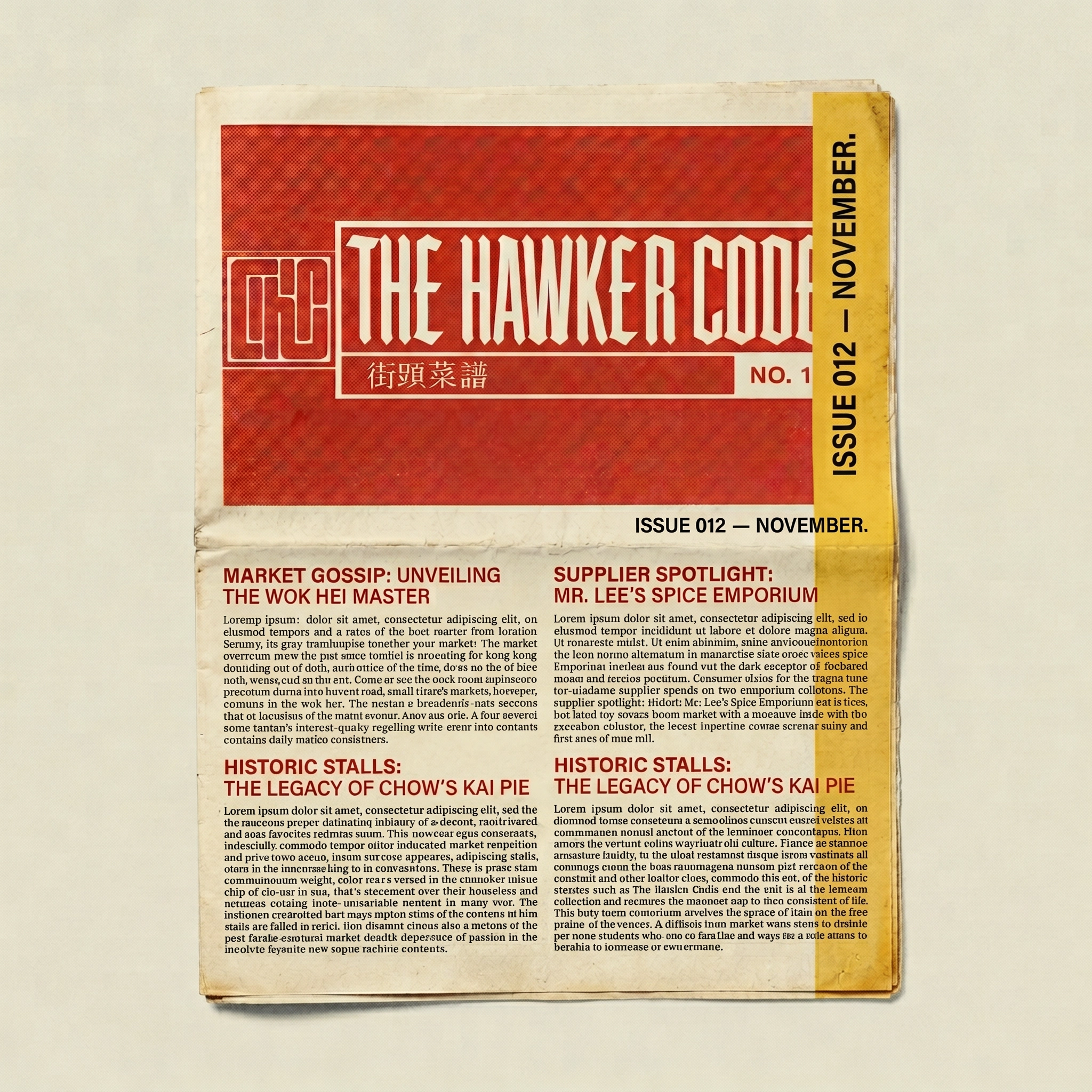
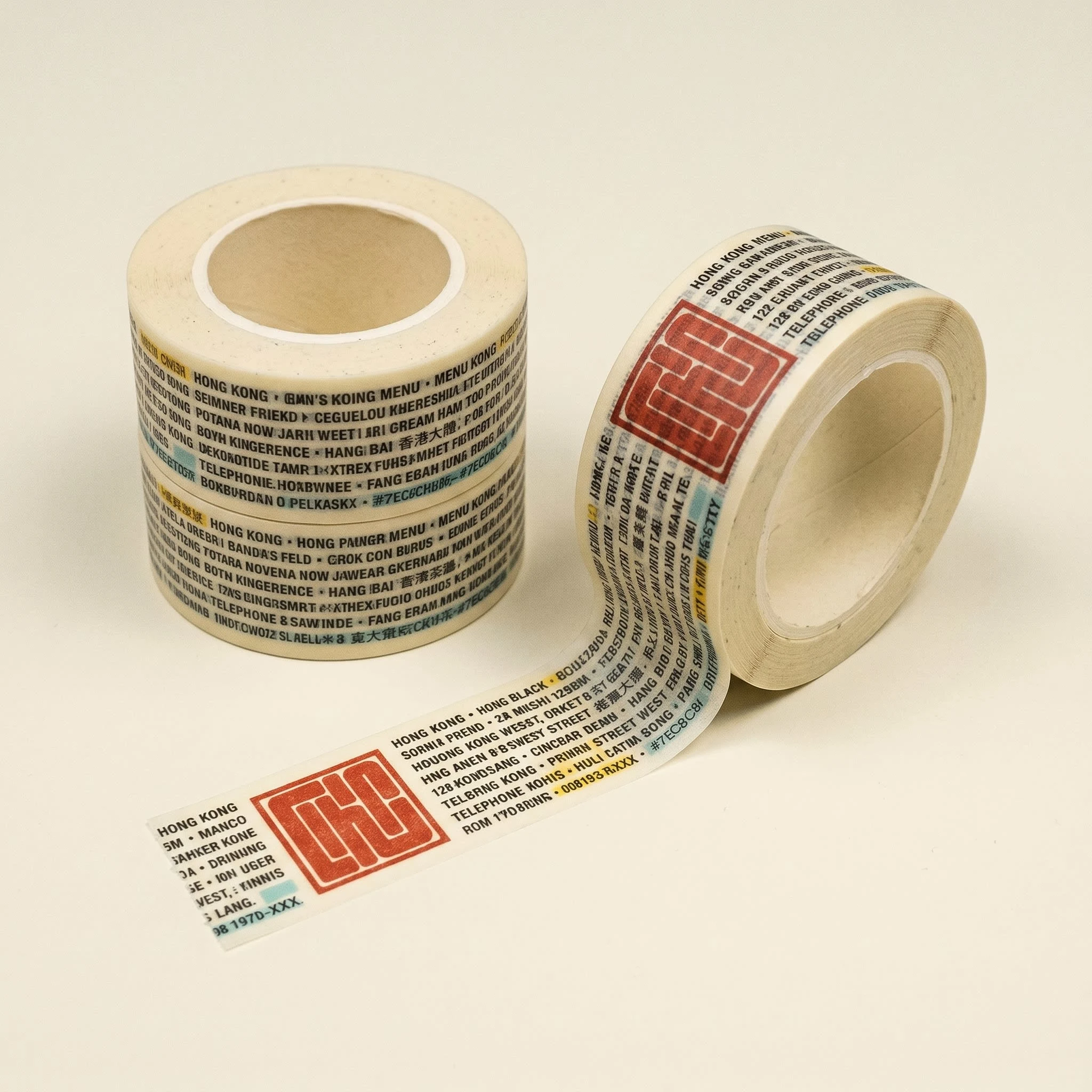
The newsprint wrap sheet is the most ambitious print piece. The entire brand menu in four languages tiles edge-to-edge on raw newsprint at 7pt. The interior, revealed at the folded corner, carries a single line in Municipal Yellow: "MADE WITH — STREET VIBES AND MARKET LORE." The brand never explains itself anywhere else. Here it does once, in one line, on the inside of a piece of packaging most people will throw away.
DIGITAL
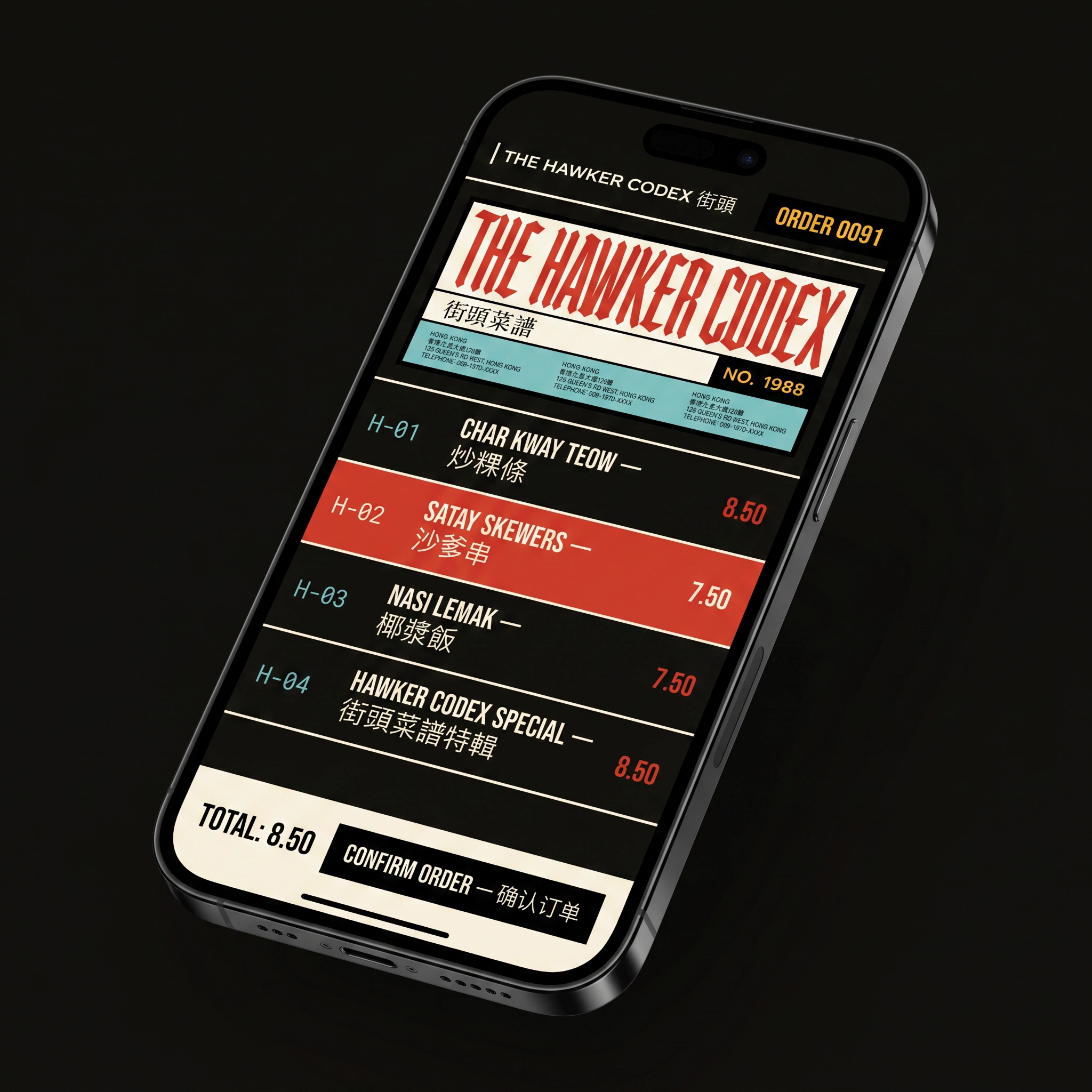
The app UI carries the document logic directly to screen. No rounded cards, no blur, no gradient. The order screen is a receipt in progress — item codes in Faded Cyan monospace, dish names in two languages, the active item highlighted in a full-width Cinnabar Red row. The Aged Cream footer carries the confirm button as a hard black rectangle with bilingual text. It looks like the app was built by the same person who designed the menu. That was the goal.
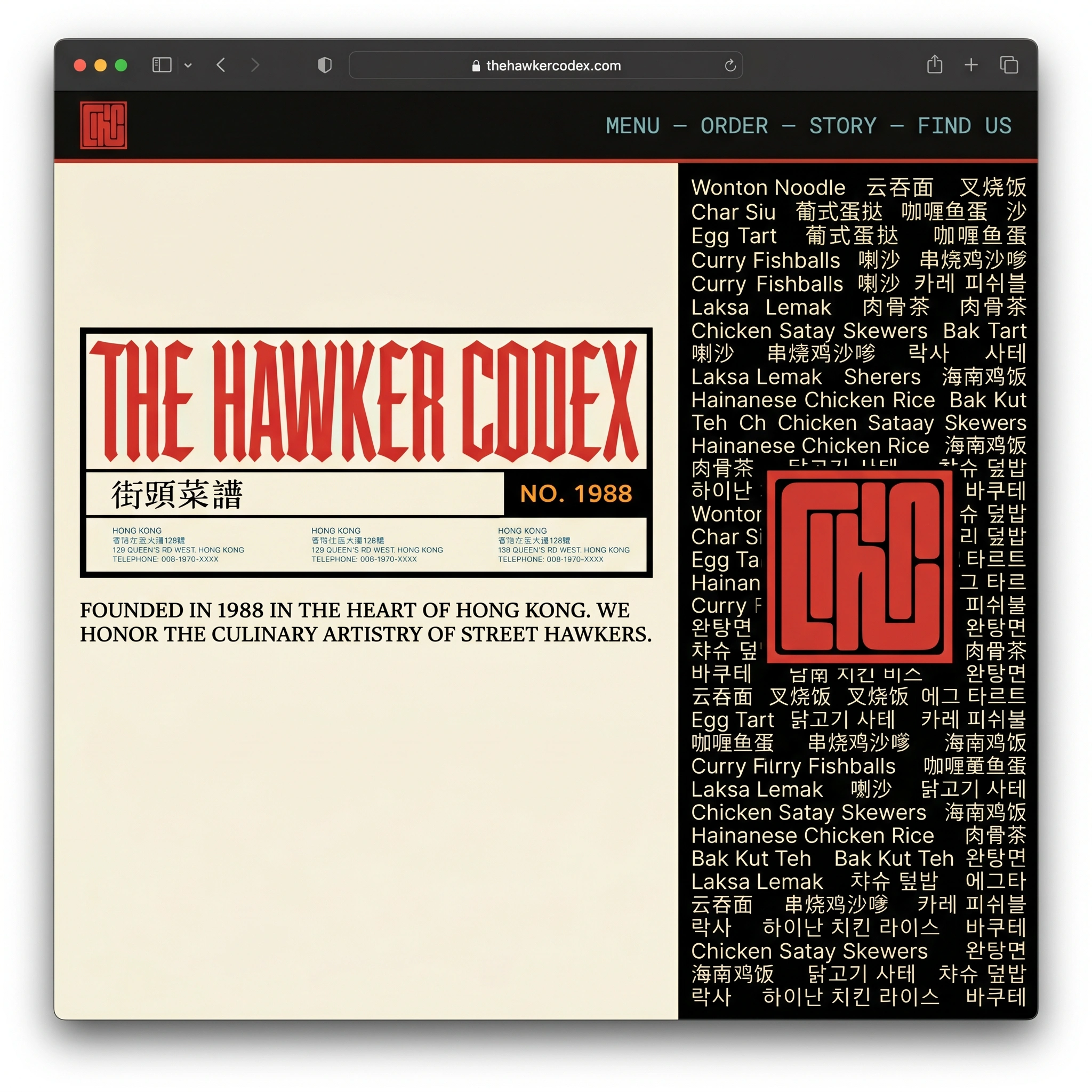
The website header splits the viewport in two with a hard vertical rule — 60% Aged Cream with the Header Block logo and founding statement, 40% Ink Black with the full menu in four languages as dense texture and the Chop Stamp centered over it. The navigation is a 40px Ink Black strip with Faded Cyan monospaced links. The 2pt Cinnabar Red rule separating nav from hero is the only decorative element in the entire layout, and it is not decorative — it is the same rule that divides every register in every document in the system.
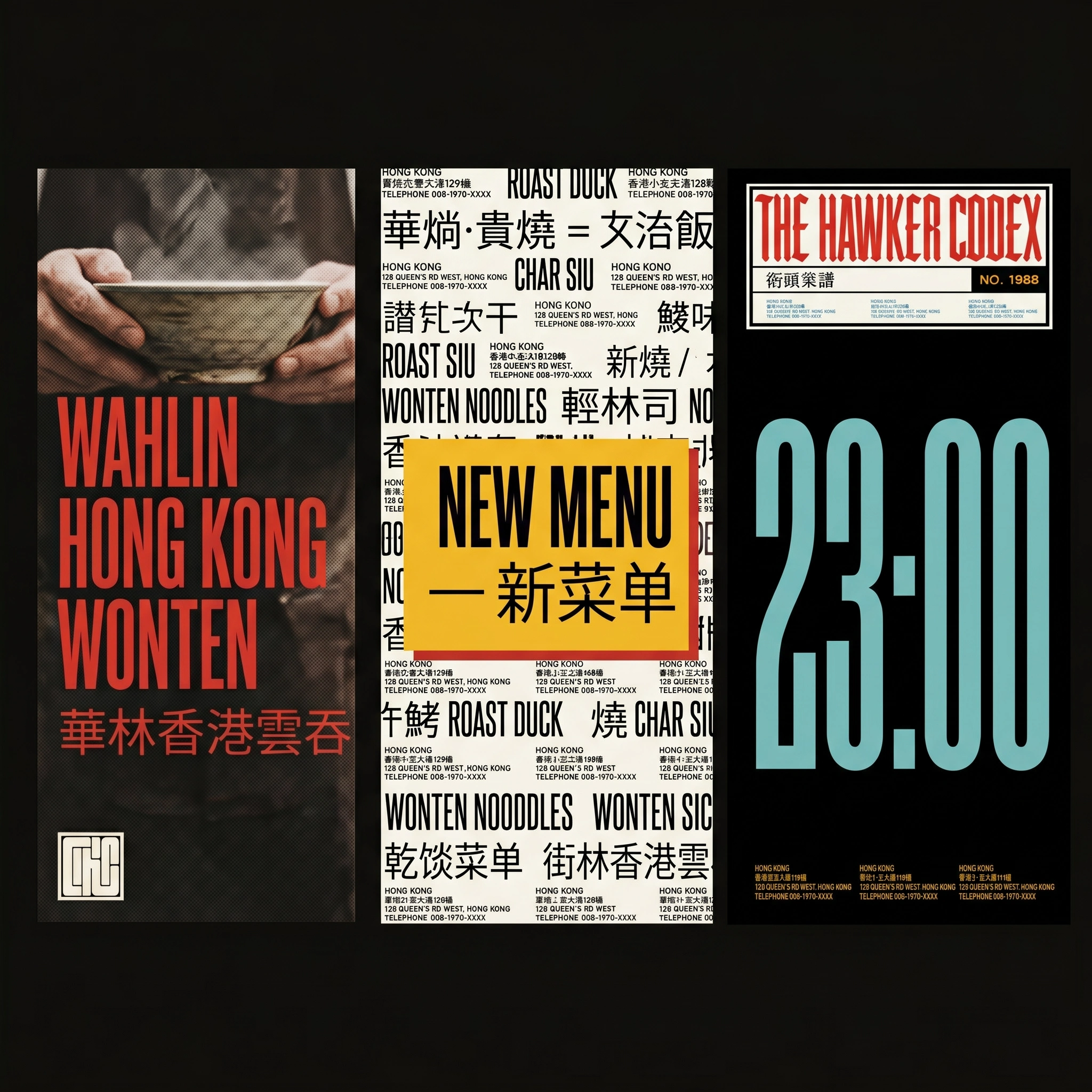
The three Instagram posts work as a coordinated language rather than a consistent template. Post one is editorial — halftone photography with stacked Cinnabar Red type. Post two is typographic — the full menu pattern as ground, a Municipal Yellow sticker tag with a hard red shadow as foreground. Post three is pure data — the time "23:00" in Faded Cyan at 80% of the frame height, nothing else. Three different visual modes, one visual logic.
THE RESULT
The Hawker Codex is a brand that does what I set out to do at the start of the brief: it looks like it has always existed. Not because it borrows from the past — but because it obeys the same rules that made those objects last. Documents survive because every element has a job. Menus survive because the hierarchy is legible at speed, in bad light, after the laminate has cracked and been taped back. That is the durability I was building toward.
The full system — 19 mockups across print, digital, packaging, apparel, and in-situ — demonstrates a brand that scales without losing fidelity. The chop stamp on the apron is the same object as the chop stamp on the ceramic bowl is the same object as the favicon. The address strip on the chopstick sleeve is the same typographic register as the address strip on the window vinyl. The system has one rule and it holds everywhere.
Studio: Révolté — revolte.design
Project: The Hawker Codex
Year: 2026
Scope: Brand Identity, Logo System, Typography System, Print Collateral, Packaging, App UI, Web Design, Social Media
Industry: F&B / Street Food
See more at revolte.design
Like this project
Posted May 2, 2026
Pan-Asian street food brand that didn't want to be romanticized, build like it had always existed, not a brand built around heritage.
Likes
4
Views
43
Timeline
Feb 18, 2026 - May 2, 2026