Small Wins: a stroke doesn't happen to one person

Catherine Hicks

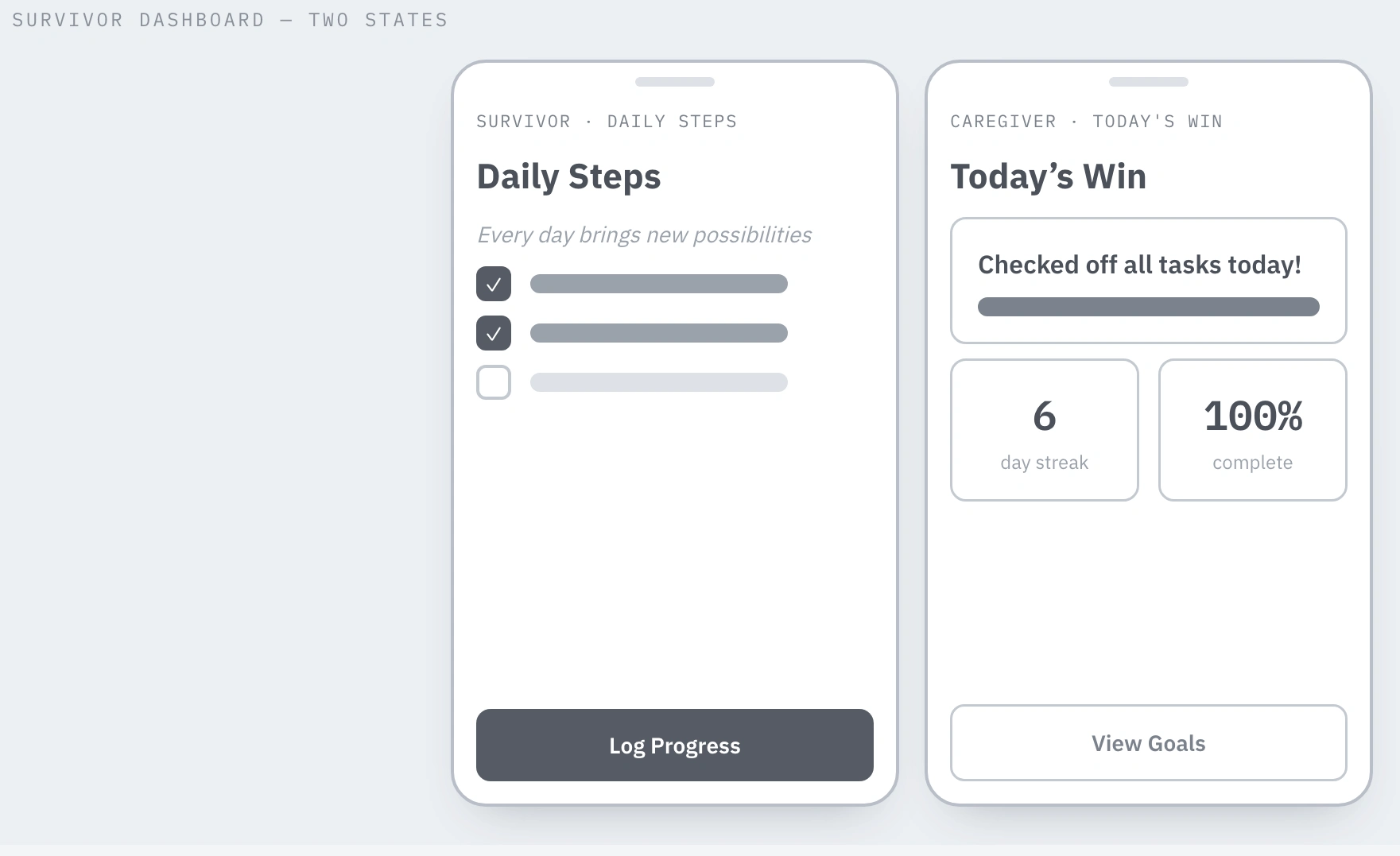
Most of my case studies are about a product. This one is about two people — because a stroke doesn't happen to one person, it happens to a household. I designed Small Wins as the daughter of a stroke survivor, in a one-week design innovation sprint, and the whole thesis fits on a card: the same recovery, read two ways. A daily checklist for the survivor. A day's win for the caregiver.
Recovery doesn't end at the hospital
We picture stroke recovery as the acute crisis and the discharge, but the real work starts after that — at home, over months and years, where someone relearns how to hold a fork or form a sentence. And it's where the support falls away. The survivor walks out with dozens of disconnected recommendations across physical, occupational, speech, and vision therapy, with no single thread tying them together. It reads like a medical checklist someone else wrote, not a life you could live. That pointed me at the principle I kept returning to: human resilience over medical compliance.
Two people carry it
The thing most tools miss, and that I understood in my bones, is that recovery lands on two people at once. The survivor is relearning daily life and needs it to feel achievable, not clinical, with low energy on the hard days. The caregiver — a spouse, adult child, or partner — inherits the schedules, the tracking, the advocacy, and the whole emotional weight of keeping it going, usually with no support of their own. Most tools serve one and forget the other. I designed for both, as two connected users of the same recovery.
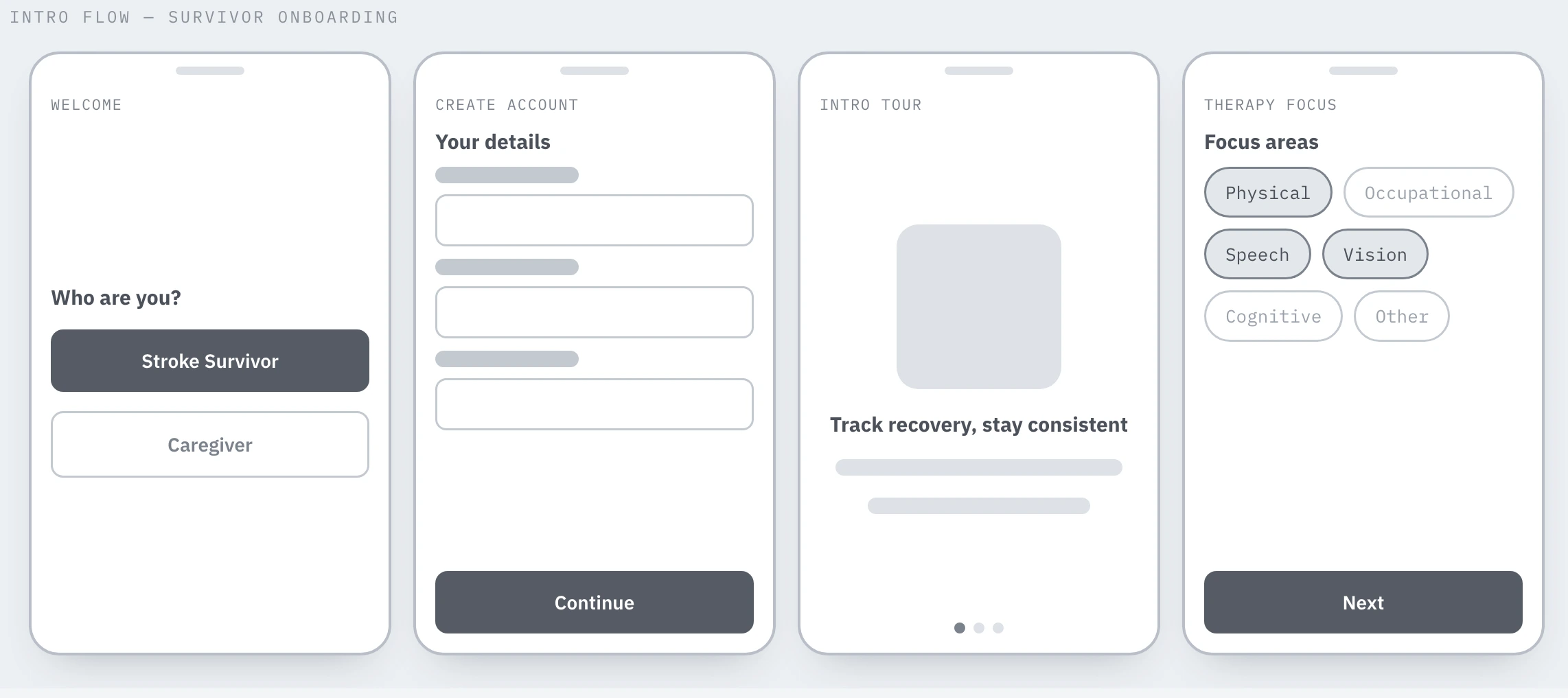
The survivor onboarding wireframe opens with therapy focus areas — the one selection that seeds a personalized daily checklist, so the survivor sees only their slice, never the full regimen.
Two parallel journeys, one shared recovery
I structured the product as two parallel journeys that meet in a shared dashboard. A single Start forks into a survivor branch — Home, Daily Routine Tracker, Goals, Check-in, Therapy Library — and a caregiver branch. Designing both spines up front, instead of bolting a caregiver view onto the survivor's app, is what kept the experiences coherent. From the survivor's focus areas, they build the routine: a Daily Habits Builder, Goal Setting broken into milestones, an optional Caregiver Invite, and a Confirmation that plays back what they just committed to.
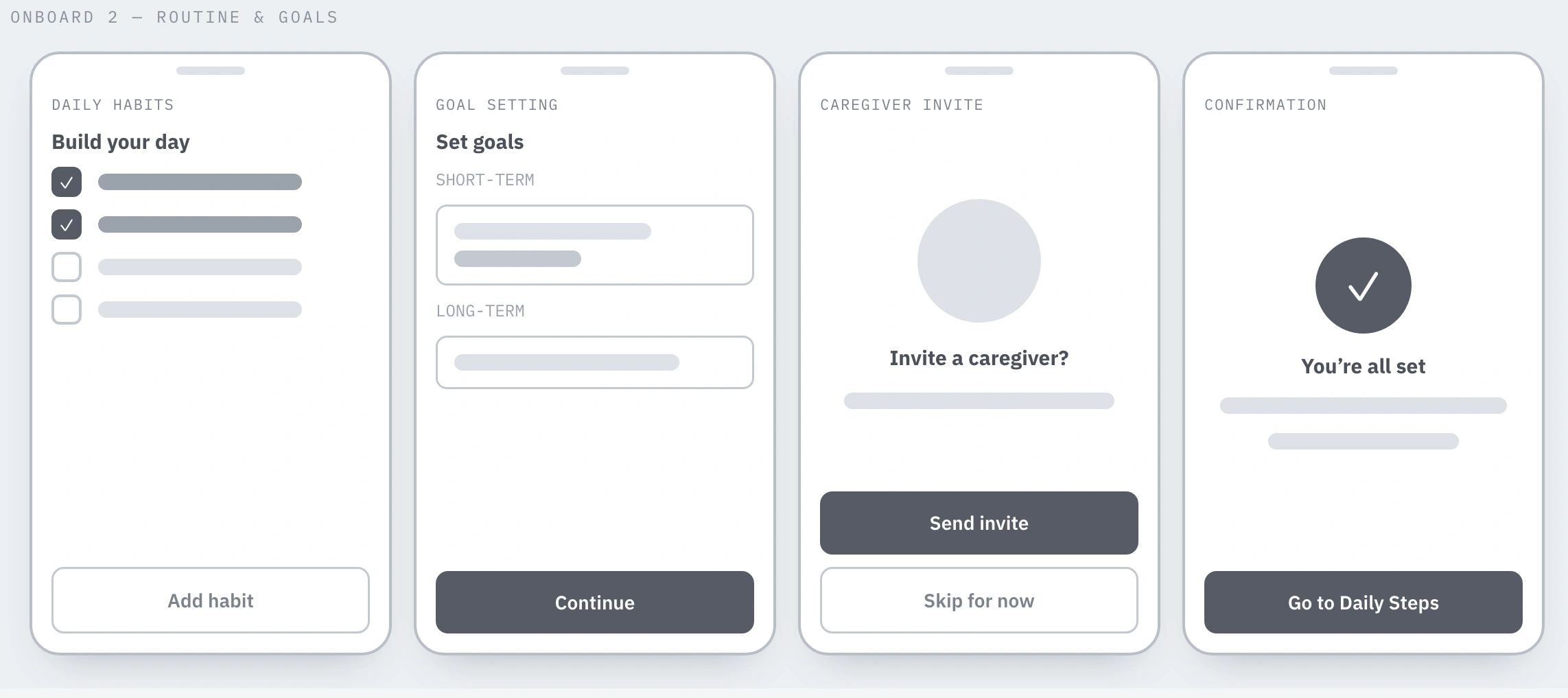
The routine and goals onboarding breaks recovery into daily habits and milestone-sized goals, so building a routine feels achievable rather than like a clinical regimen.
The caregiver enters through a different door
"Welcome, Caregiver" asks for the survivor's name and the relationship, then offers Invite Survivor or Skip for now. That "Skip for now" is one of the most human decisions in the flow — a deliberate nod to the real case where the caregiver sets everything up before the survivor is ready or able. Letting either person start the account falls straight out of taking the caregiver seriously as a primary user.
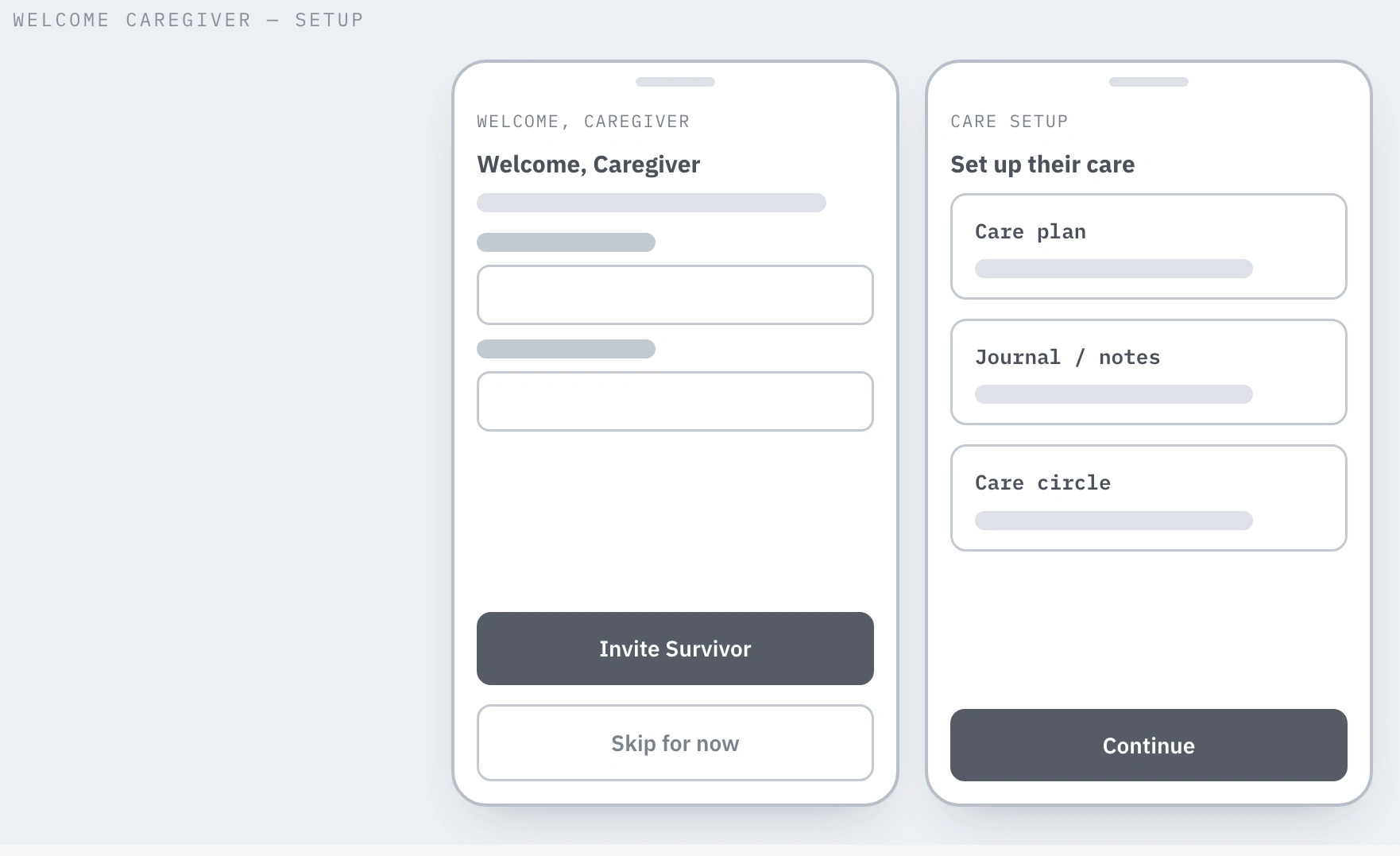
The caregiver setup wireframe lets a caregiver start the account before the survivor is ready — designing in the exact person most tools design out.
Both people then meet at the dashboard, looking at the same data in two registers: the survivor's Daily Steps checklist rewards showing up even on a low day, while the caregiver's view reframes the same recovery as Today's Win.
The heart of it is caregiver burnout
The feature I'm most sure of is the Burnout Check-In. It lets the caregiver choose how often the app checks in on their well-being — Daily, Weekly, or Off — and pick the topics that matter: Burnout, Communication, Delegation, Medical Advocacy. It's paired with a Care Circle for sharing tasks and a Care Plan Editor, so the caregiver isn't the only one who can carry the plan. Most tools treat the caregiver as free infrastructure. This one treats her sustainability as part of the recovery — because if the caregiver goes down, the recovery goes with her.
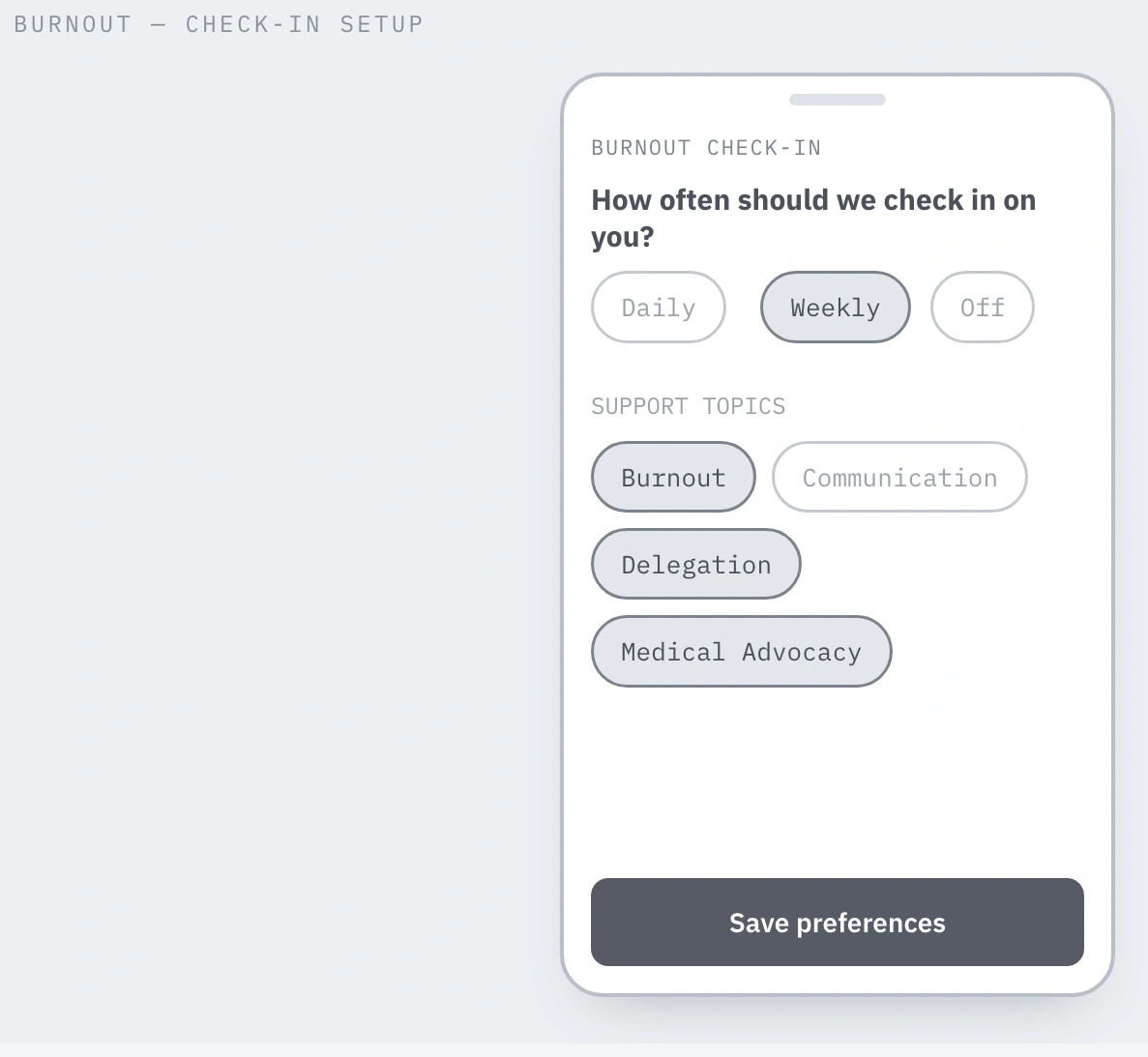
The caregiver burnout check-in setup lets a caregiver decide how often the app checks on their own well-being — treating caregiver sustainability as part of the recovery, not free infrastructure.
Accessibility was the starting constraint
A stroke can change vision, motor control, and cognition overnight, so accessibility wasn't a final pass — it was where I started. Large tap targets, minimal scrolling, simplified dashboards, optional audio playback, non-clinical language. I worked entirely in grayscale across 25-plus wireframes on purpose, keeping the focus on usability and hierarchy before any styling could distract from whether it actually worked.
In one week the concept came together as a full-featured MVP framework — coherent enough to hand off to developers or take straight into usability testing — and drew strong interest from healthcare designers as a model for post-acute and rehab care. The feedback is positive, but nothing is measured yet, so I don't quote numbers. The hard part was never the data model — it was the tone. The same record had to say encouragement to the survivor and reassurance to the caregiver. Most tools only see the first. Small Wins is built for both.
See the full case study → https://design-case-studies.vercel.app/small-wins
Like this project
Posted Aug 3, 2026
I designed Small Wins as the daughter of a stroke survivor to help facilitate my mental health during this time as well as my dad's recovery
Likes
0
Views
8