Advance Auto Parts: the content operation behind the store

Catherine Hicks
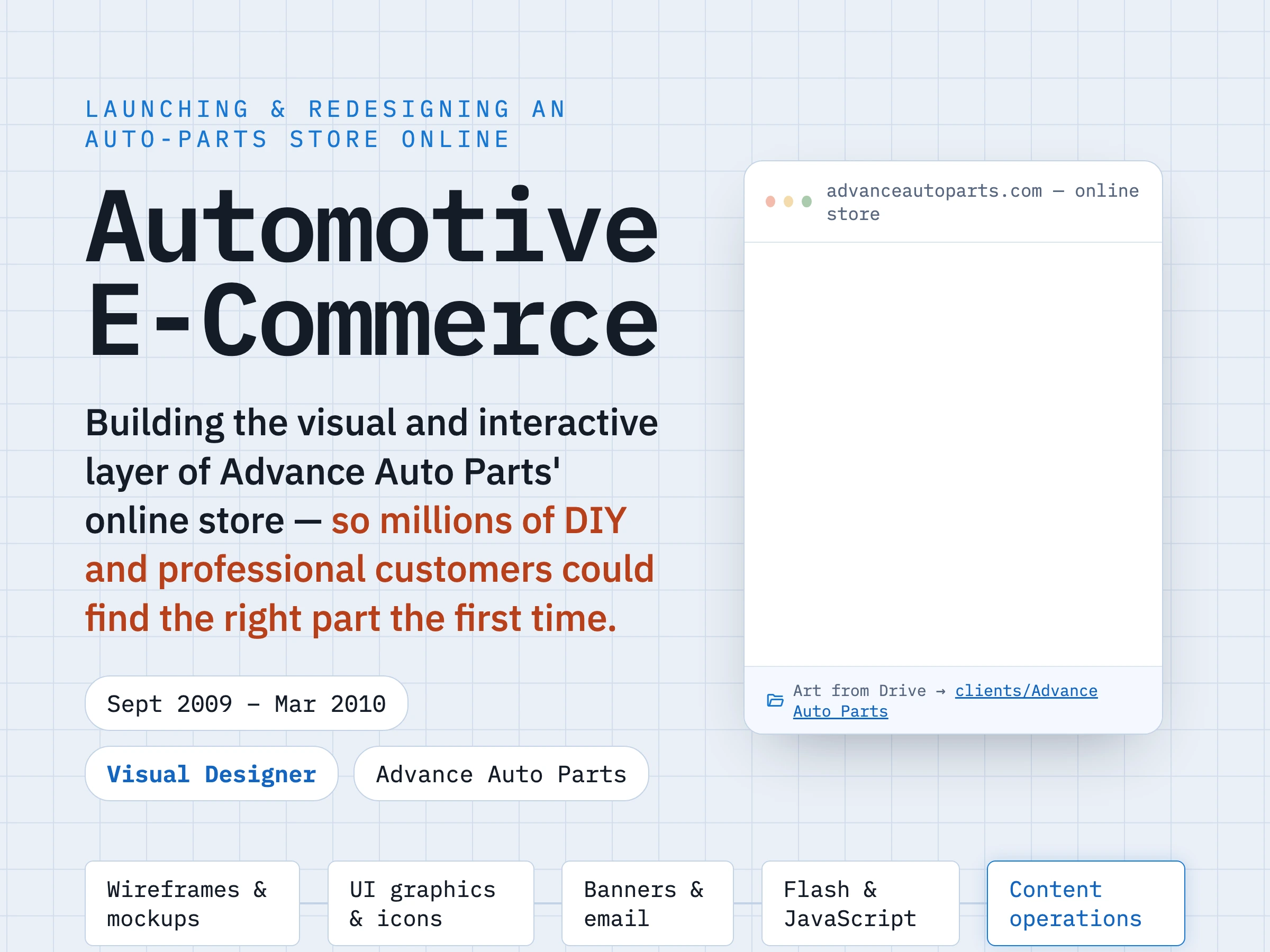
Every auto-parts sale comes down to one belief in a customer's head: this is the correct part for my vehicle. I joined Advance Auto Parts as a Visual Designer, September 2009 to March 2010, on the launch and redesign of their e-commerce store — and behind the storefront everyone thinks of as "the design" sat a second, hidden half: the content operation that kept it all navigable. This is that half.
A catalog this size only works if every page knows what it's for
The store had an outdated interface and a navigation customers struggled with — too many left before they bought. Fixing the look was the visible job. Fixing findability was the structural one, and it lived in the content.
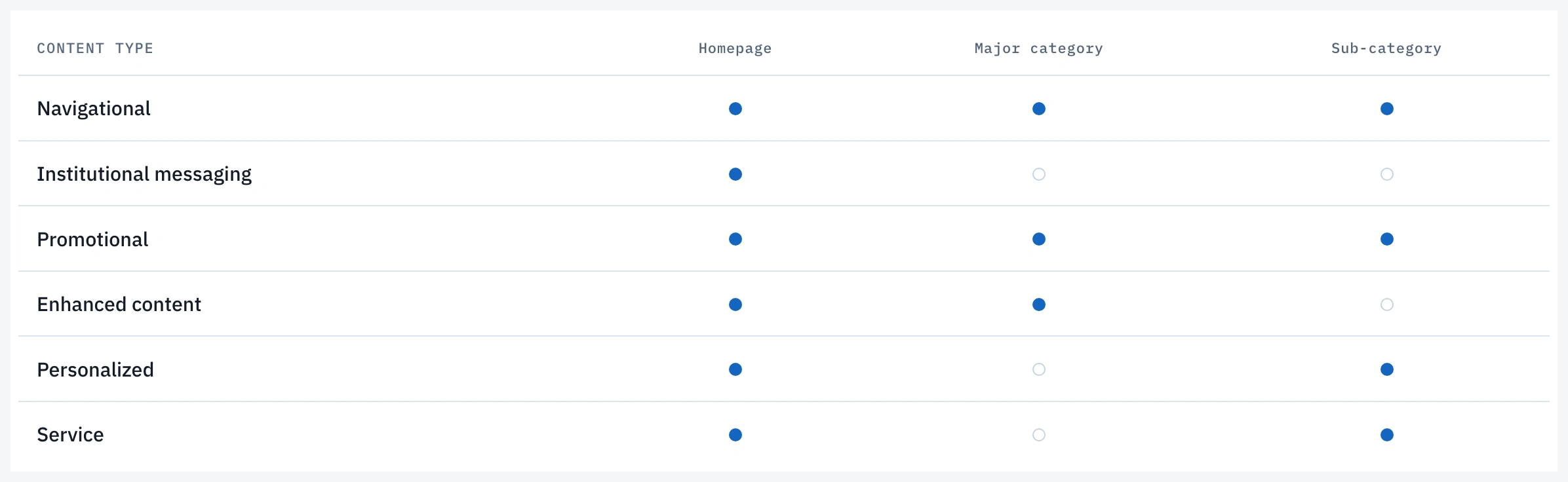
The content taxonomy matrix, mapping navigational, promotional, and service content type by type across every template so each spot had a defined job.
I mapped a taxonomy of content types — navigational, promotional, service, and more — module by module across every template, so each spot had a defined job instead of being decided ad hoc.
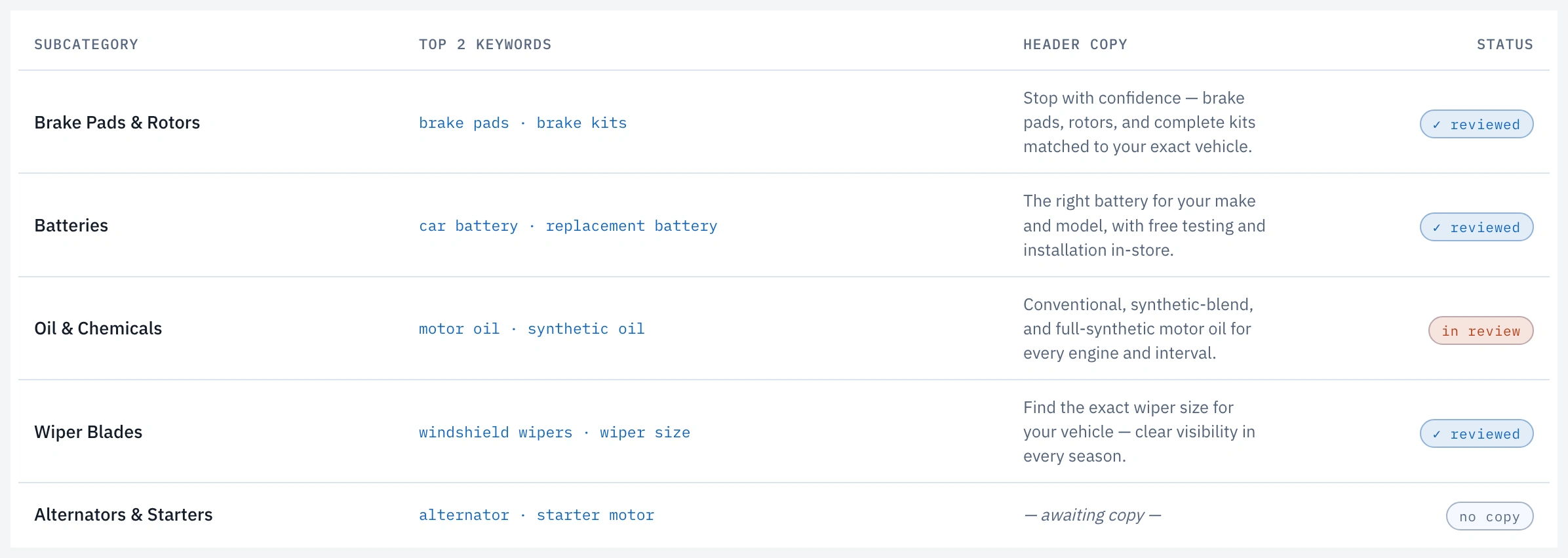
The SEO copy master template, driving keyword-optimized header copy for 60-plus subcategories across eight major categories through an editorial workflow.
I ran an SEO copy program end to end: keyword-optimized header copy for 60-plus subcategories across eight major categories, tracked through an editorial workflow with an outside vendor, with 53 gaps flagged and closed.
The unglamorous fix that mattered most
Three problems were quietly hurting performance: outdated content piling up, inconsistent naming, and no way to retire anything. I deleted all the past espot scheduling to start clean, then built two systems that only work together.
A naming convention — date range, year, type, location — shaped by the CMS's real constraints (Accelerator wouldn't allow a leading number, so abbreviated months; wouldn't allow duplicate names, so the date became the differentiator). And a retirement strategy: keep about a month of content live as a rolling window — add one to the bottom, remove one from the top. Nothing is ever truly deleted; everything stays in a library behind the Add button.
The hard part was never the diagram, it was adoption — so I backed the rollout with training and support, a repeatable workflow from planning to post-mortem.
Where it landed
The outcomes here are the kind you feel: faster load times, fewer errors, a faster workflow, more up-to-date content. The lesson that stuck: at scale, structured content management is as much a part of the experience as the visual design — the storefront gets the credit, but the content operation is what keeps it trustworthy.
See the full case study → https://design-case-studies.vercel.app/advance-auto-parts
Like this project
Posted Aug 3, 2026
The hidden half of an auto-parts e-commerce launch — the taxonomy, naming, retirement rules, and SEO copy program that kept an enormous catalog fast, findable, and current.