Designing a Scalable Marketplace for AI-Assisted Investing

Stas Udotov


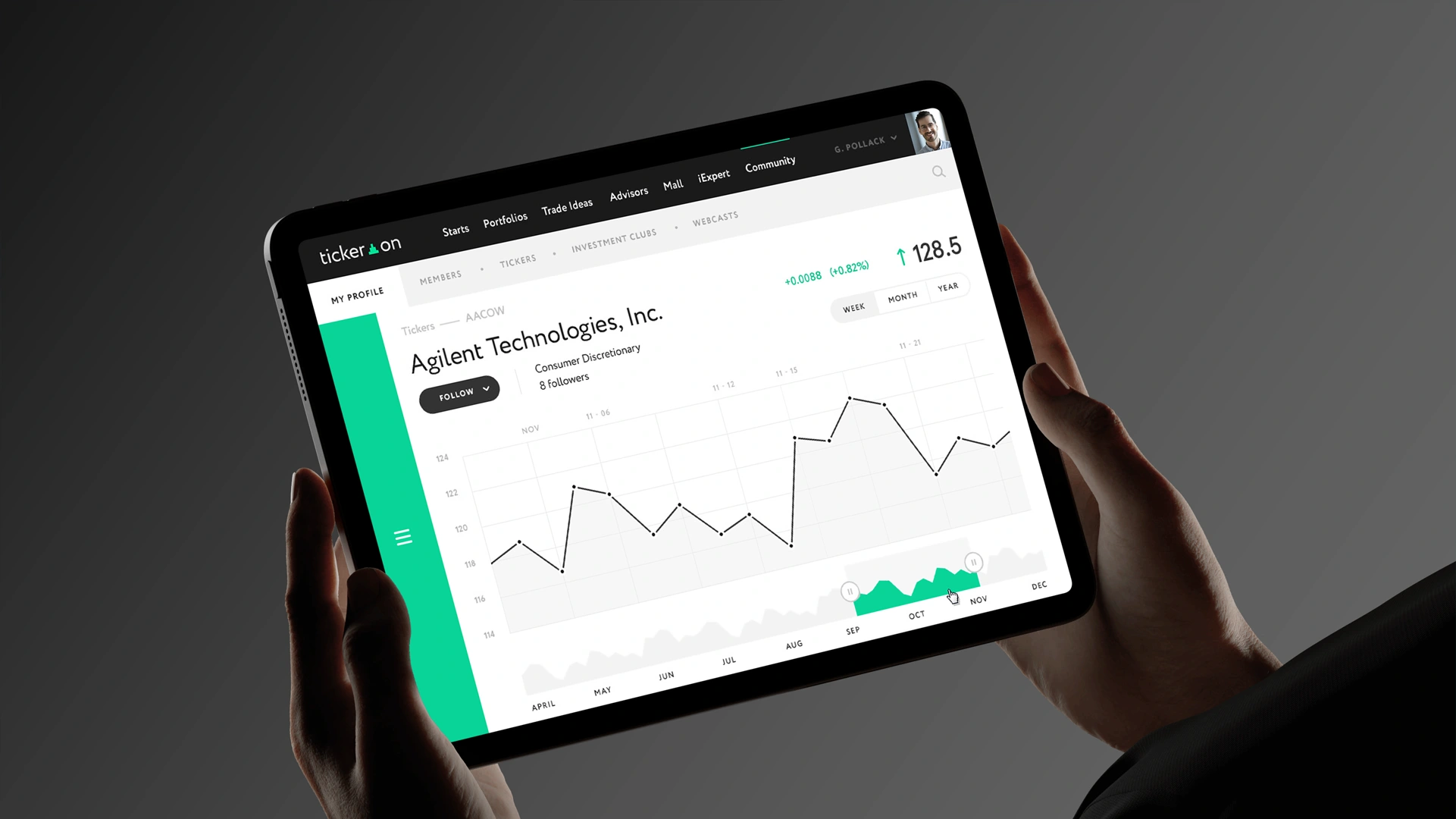
Tickeron: Designing a Scalable Marketplace for AI-Assisted Investing
Project overview
Tickeron was founded by Ph.D. mathematicians and quantitative analysts with an ambitious vision: create an all-in-one destination where investors could learn, test strategies, access advanced analytical tools, exchange ideas, and connect with financial professionals.
The concept extended far beyond a conventional trading dashboard. Tickeron envisioned a broad financial marketplace serving users from investment beginners to experienced traders and advisors. Its ecosystem included educational content, virtual portfolios, automated pattern recognition, screening tools, historical exploration, social groups, subscription products, and professional guidance.
Dworkz partnered closely with Tickeron's co-founders to transform this vision into a coherent digital product and recognizable brand. Our work covered visual identity, UX and UI design, information architecture, prototyping, responsive front-end development, animation, custom data graphics, iconography, and the creation of a scalable design system.
Services: Product strategy, visual identity, UX/UI design, information architecture, prototyping, data visualization, iconography, animation, design systems, and front-end development
Product: AI-assisted investment marketplace and financial-analysis platform
Primary users: Beginning investors, active traders, financial advisors, portfolio creators, educators, and investment-content publishers
The challenge
Tickeron's greatest strength was also its largest design challenge: the breadth of the product.
The platform brought together numerous tools and user journeys, each with different information requirements and interaction patterns:
The Academy for financial education and social learning.
The Mall for buying and selling investment ideas and content.
A Pattern Recognition System for advanced technical analysis.
Virtual Portfolios for testing investment strategies without financial risk.
Trader Clubs for community participation.
A Screener for identifying relevant investment opportunities.
A Time Machine for exploring market information historically.
Advisor connections for portfolio guidance and direct communication.
Subscription tiers serving users with different needs and levels of expertise.
Designing each feature as a separate product would have created a fragmented marketplace. Forcing every feature into one rigid interface would have made the platform difficult to use. The challenge was to give each tool the interaction model it required while maintaining enough consistency for the entire ecosystem to feel like one product.
The experience also needed to make sophisticated financial information approachable without diminishing its analytical depth. Beginners required orientation and education; expert traders expected density, efficiency, and control. Tickeron needed to support both audiences within the same visual and structural system.
Defining the product foundation
Before moving into polished interface design, Dworkz studied every major feature and documented its unique requirements, use cases, technical constraints, and business objectives.
We mapped the relationships among the platform's audiences, tools, content, and commercial model. This work helped clarify where users entered the ecosystem, how they discovered relevant capabilities, what information they needed to make decisions, and how they moved among learning, analysis, experimentation, collaboration, and subscription.
The foundation included:
User flows for core product journeys.
Content maps showing how features and information related.
Wireframes establishing hierarchy and page structure.
Prototypes for evaluating interaction models.
Requirements for individual tools and shared components.
Consideration of edge cases, business rules, and responsive behavior.
This structured blueprint gave the team a common reference for a product that would otherwise have been difficult to evaluate as a whole.
The design approach
1. Creating a flexible grid for a diverse marketplace
Tickeron's product surfaces ranged from educational articles to dense financial charts and interactive analytical tools. A single fixed page pattern could not serve all of them effectively.
Dworkz designed a versatile grid system that could accommodate different content types while maintaining consistent alignment, spacing, and hierarchy. The grid gave individual tools room to express their specific needs without abandoning the broader product language.
The system also established responsive behavior across screen sizes. Grid and breakpoint logic became part of the design foundation rather than an implementation detail addressed after the desktop experience was complete.
The result was a visual canvas capable of supporting a large marketplace without allowing the interface to distract from the financial content.
2. Guiding users toward the right subscription
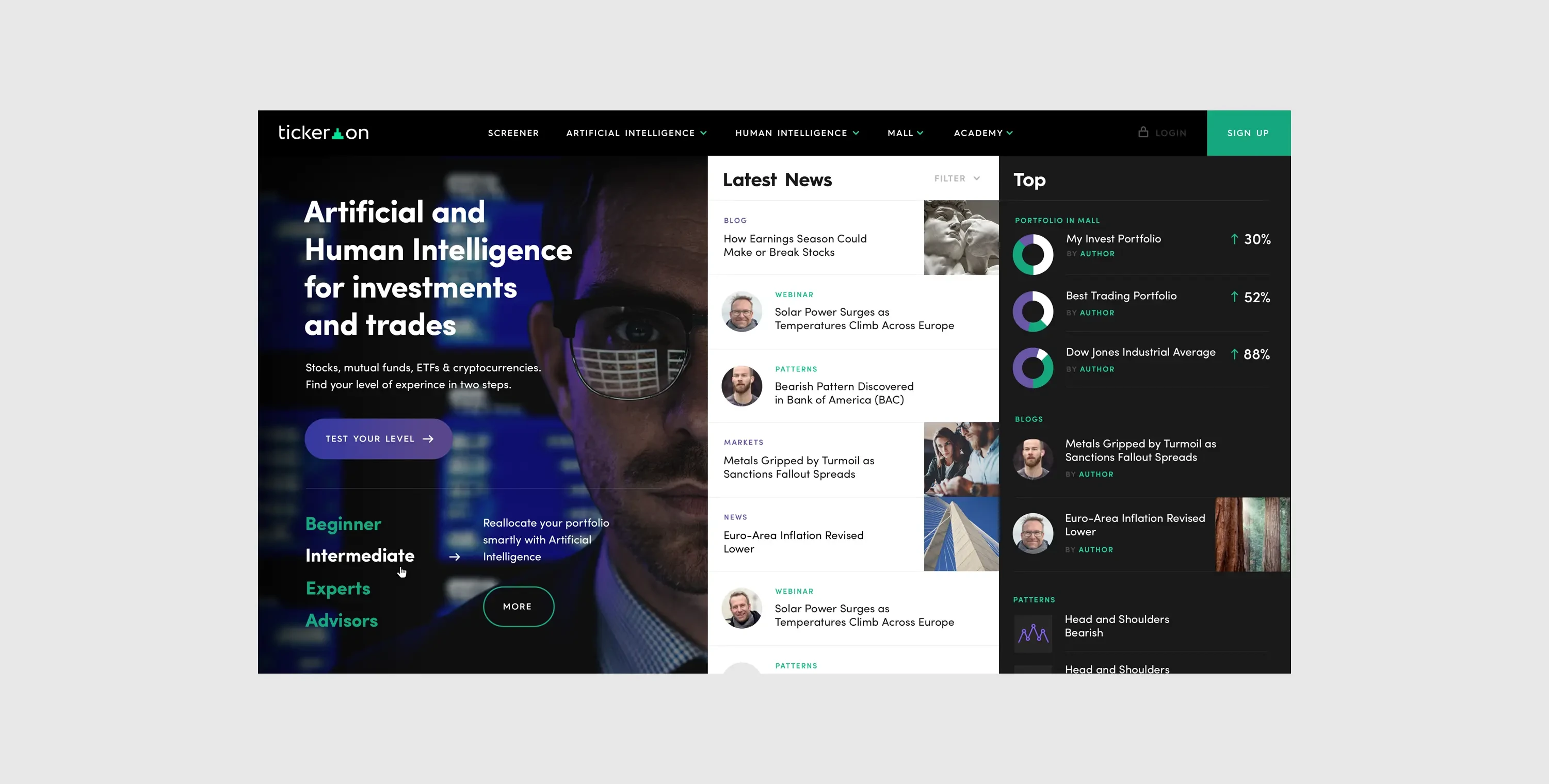
Tickeron's audience included people with different goals, experience levels, and expectations. The website needed to introduce the ecosystem and help visitors identify the subscription tier that matched their needs.
We designed the experience to connect product capabilities with user goals rather than presenting pricing as an isolated comparison table. The journey helped visitors understand what the platform offered, which tools were relevant to them, and how the available tiers differed.
This orientation was especially important for a product with many entry points. A beginner interested in education and a trader seeking advanced pattern analysis should not need to interpret the entire marketplace before deciding where to begin.
3. Making experimentation possible through virtual portfolios
Virtual Portfolios allowed users to subscribe to pre-built investment portfolios or create their own. They could test ideas and observe performance without putting real capital at risk.
The experience needed to make a clear distinction between exploring a strategy and executing a financial transaction. It also needed to present portfolio information in a way that supported comparison, monitoring, and learning.
By lowering the risk of experimentation, Virtual Portfolios created a bridge between education and active investment decision-making. Users could move from an idea to a structured model and evaluate it over time.
4. Visualizing sophisticated trading patterns
Tickeron's Pattern Recognition System addressed one of the more advanced areas of technical trading. Pattern-based strategies rely on interpreting market formations and the behavior they may signal.
To make this system understandable, Dworkz created 37 diagrams illustrating bearish and bullish patterns. The diagrams translated complex analytical concepts into a consistent visual language that users could learn and recognize across the interface.
Consistency was essential. Line weight, geometry, direction, color, labels, and surrounding interface elements needed to work together so users could compare patterns without relearning the visual conventions each time.
This library of diagrams supported both comprehension and product consistency, turning specialized financial knowledge into reusable interface assets.
5. Designing a marketplace for investment ideas
Tickeron Mall allowed users to buy and sell virtual portfolios, trading opinions, newsletters, and pattern predictions.
This feature combined the conventions of a digital marketplace with the credibility requirements of financial content. Users needed to understand what was being offered, who created it, how it related to their goals, and what action they could take next.
The design organized varied products within a common browsing and discovery experience. It helped Tickeron present the marketplace as a coherent extension of its broader platform rather than an unrelated commercial section.
6. Combining education with community
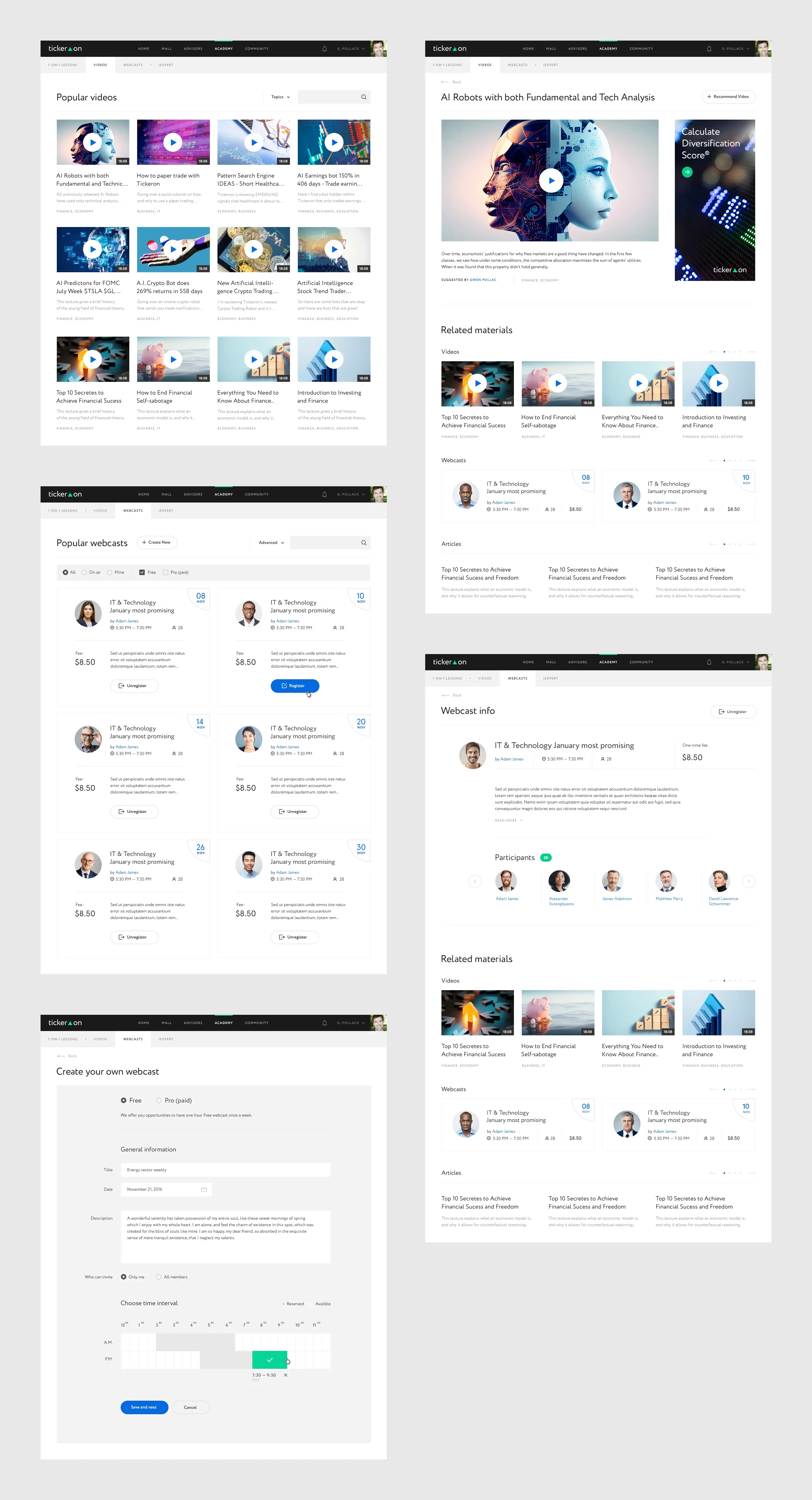
Tickeron Academy brought social-networking features into financial education. Users could learn about retirement, Social Security, investment strategies, and other financial topics while participating in a wider community.
The Academy needed to make educational material approachable and discoverable while connecting it to the tools and discussions available elsewhere in the platform.
This created an important entry point for less experienced investors. Users could build knowledge, observe ideas in practice, and gradually engage with more advanced capabilities without leaving the Tickeron ecosystem.
7. Supporting advisor relationships
Tickeron also connected users with financial advisors who could help them work toward their goals. Advisors could review portfolios, suggest improvements, and communicate with users directly.
This introduced a more personal layer to a platform built around data and automated tools. The interface needed to support trust, context, and clear communication while keeping portfolio information accessible to both parties.
Advisor connections demonstrated the broader product philosophy: technology could enhance investment decision-making without eliminating the role of human expertise.
8. Establishing a recognizable visual identity
Tickeron's product vision required an identity capable of spanning marketing, education, community, commerce, and advanced analytical tools.
Dworkz developed a consistent visual language across color, typography, layout, components, iconography, and motion. The identity needed to feel innovative enough for an AI-assisted platform while retaining the clarity and credibility expected of a financial product.
Visually consistent iconography played an important role in making the large feature set easier to scan and recognize. Animation added feedback and energy where it supported interaction, giving the experience a sense of responsiveness without competing with the data.
9. Carrying the experience into responsive front-end development
Dworkz's involvement extended beyond design deliverables into responsive front-end development. This helped preserve the intended hierarchy, spacing, behavior, and motion as the product moved from prototype to implementation.
Working across design and development was particularly valuable for a marketplace with many interactive tools. It allowed the team to resolve practical constraints in context and reduce the gap between the designed and shipped experience.
Building a scalable design system
As the marketplace grew, individual screens and components could no longer be managed as isolated design files. Tickeron needed a shared foundation that would support product expansion and maintain coherence across teams.
In close collaboration with the co-founders, Dworkz shaped a scalable design system spanning the entire platform. The library documented:
Grid and breakpoint logic.
Typography hierarchy and usage.
Color rules and semantic applications.
Reusable component structures.
Interaction patterns and behaviors.
Iconography and financial diagrams.
Content terminology and naming conventions.
The system became more than a collection of visual components. It served as a shared language for design, development, content creation, and product management.
This foundation improved communication and governance across a platform with many different features. Designers and content managers could create new experiences with greater confidence, while engineers had clearer patterns to implement and reuse.
Collaboration and iteration
The project required ongoing collaboration with Tickeron's co-founders and product stakeholders. Their financial and technical expertise defined the underlying logic of the marketplace, while Dworkz translated that logic into understandable flows and interfaces.
Iteration was essential because decisions made in one part of the ecosystem often affected several others. A new component, term, or interaction pattern needed to work not only for the feature where it originated but also across related tools and user journeys.
By grounding design discussions in shared flows, prototypes, and system rules, the team could evaluate individual decisions against the needs of the broader product.
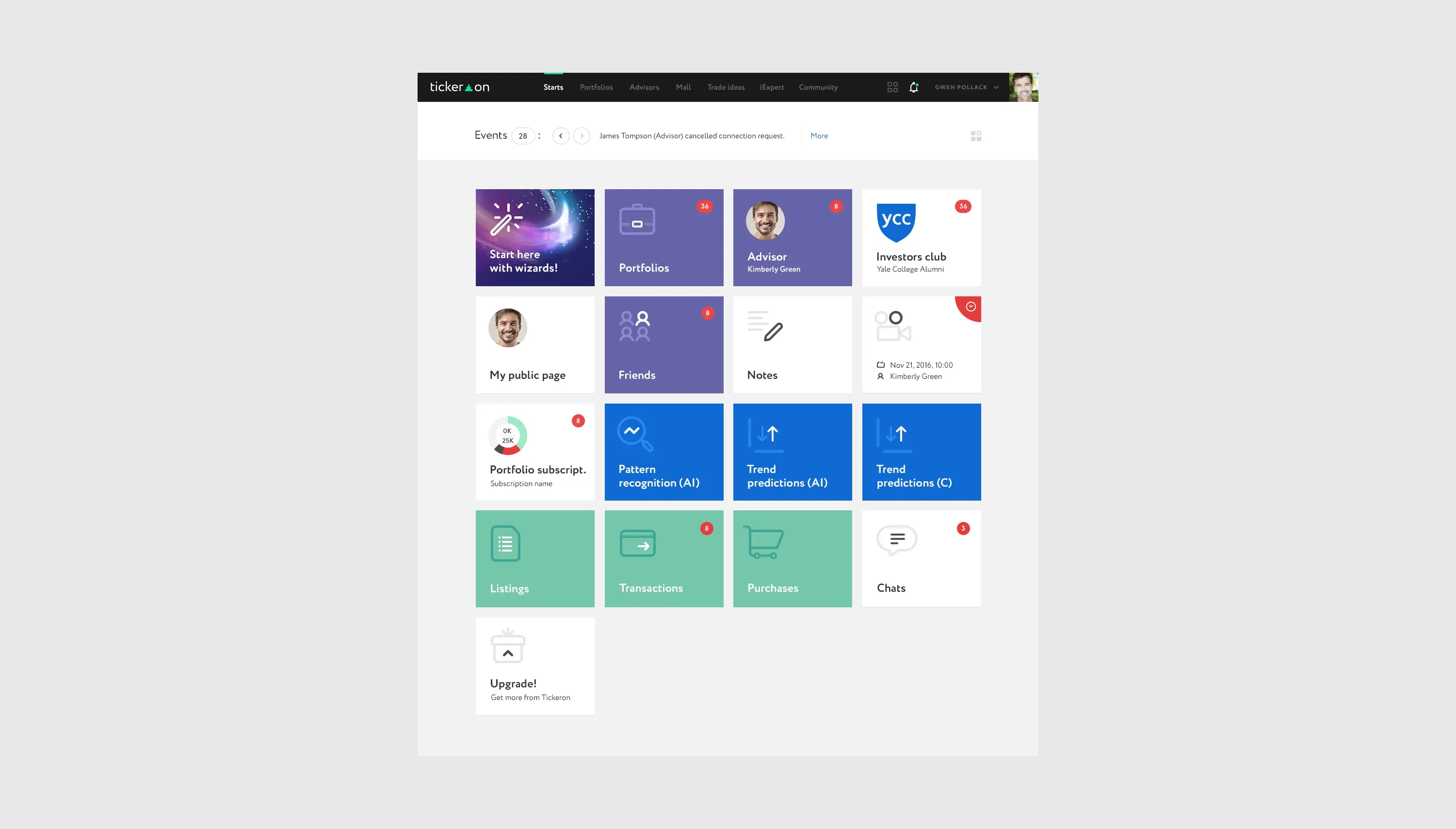
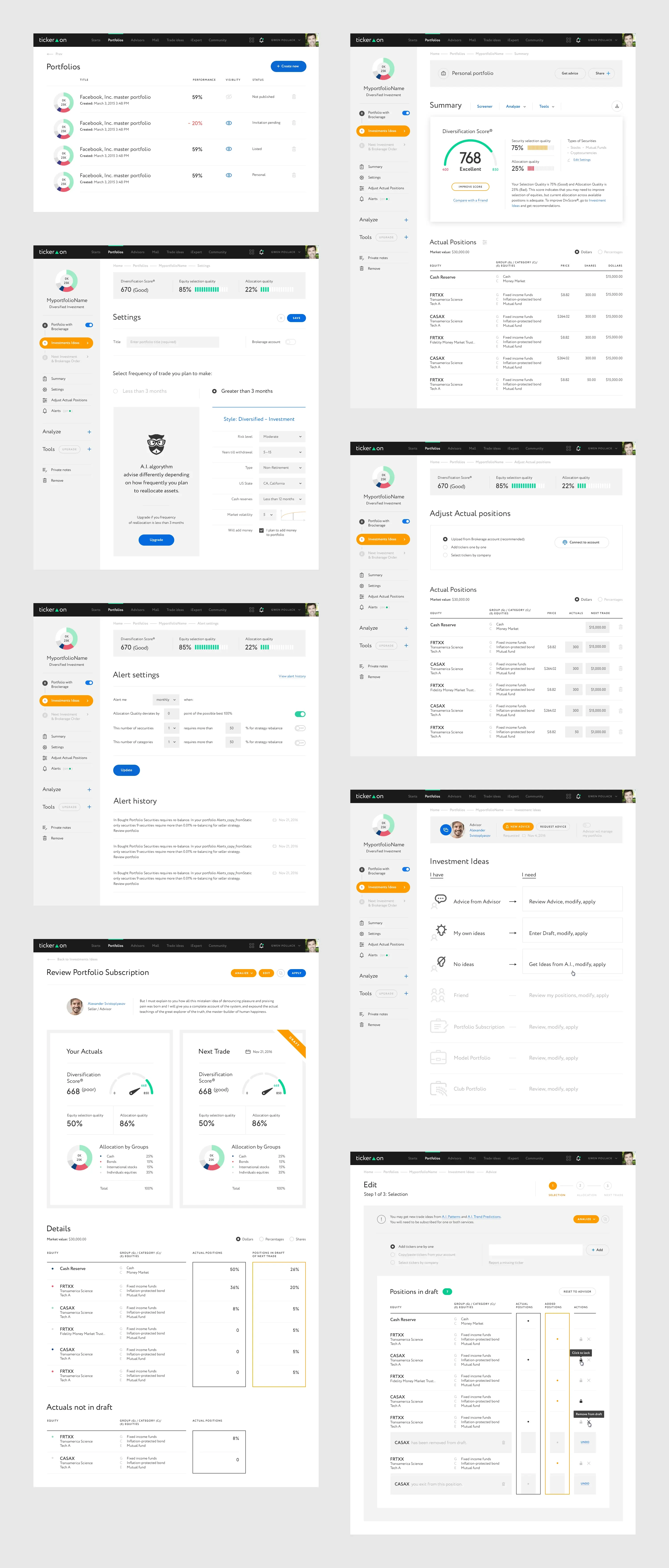
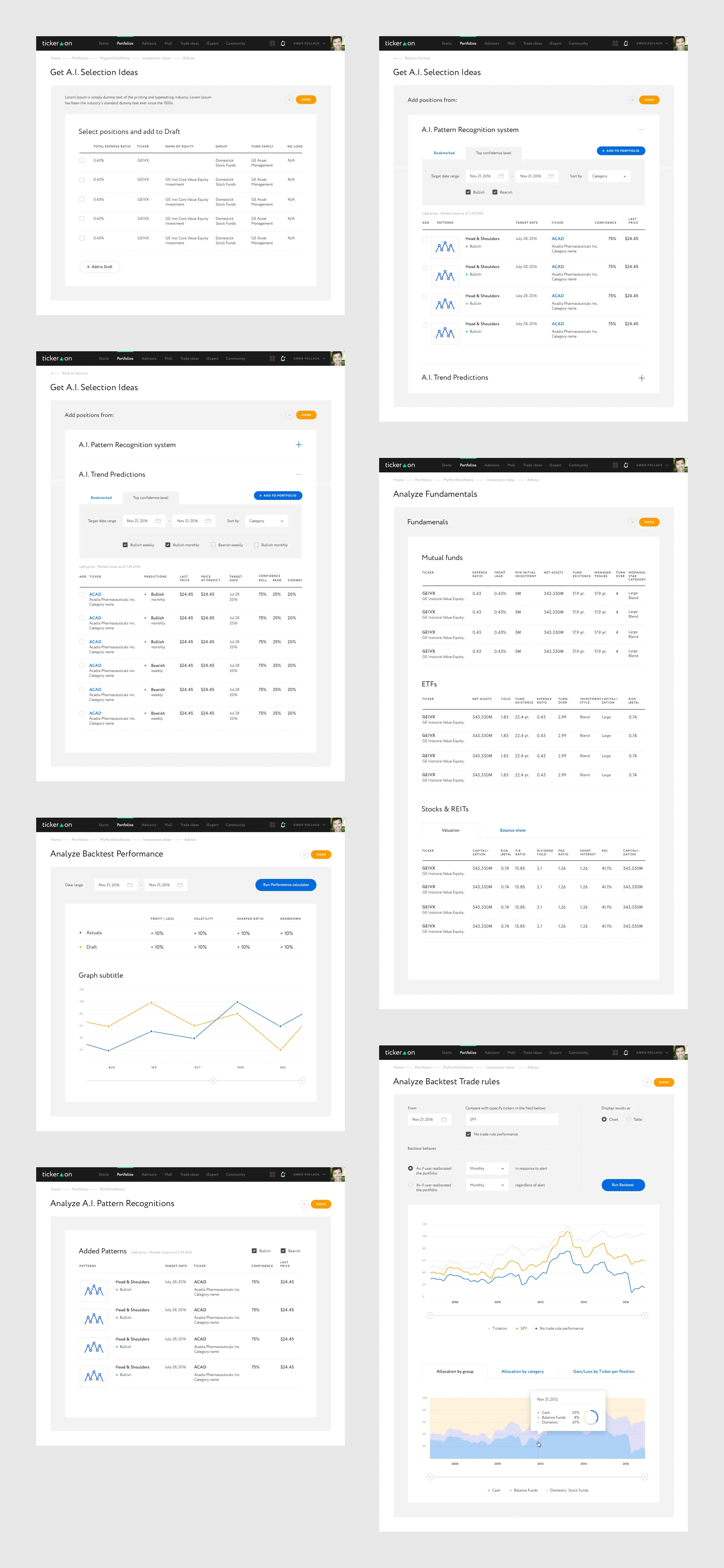
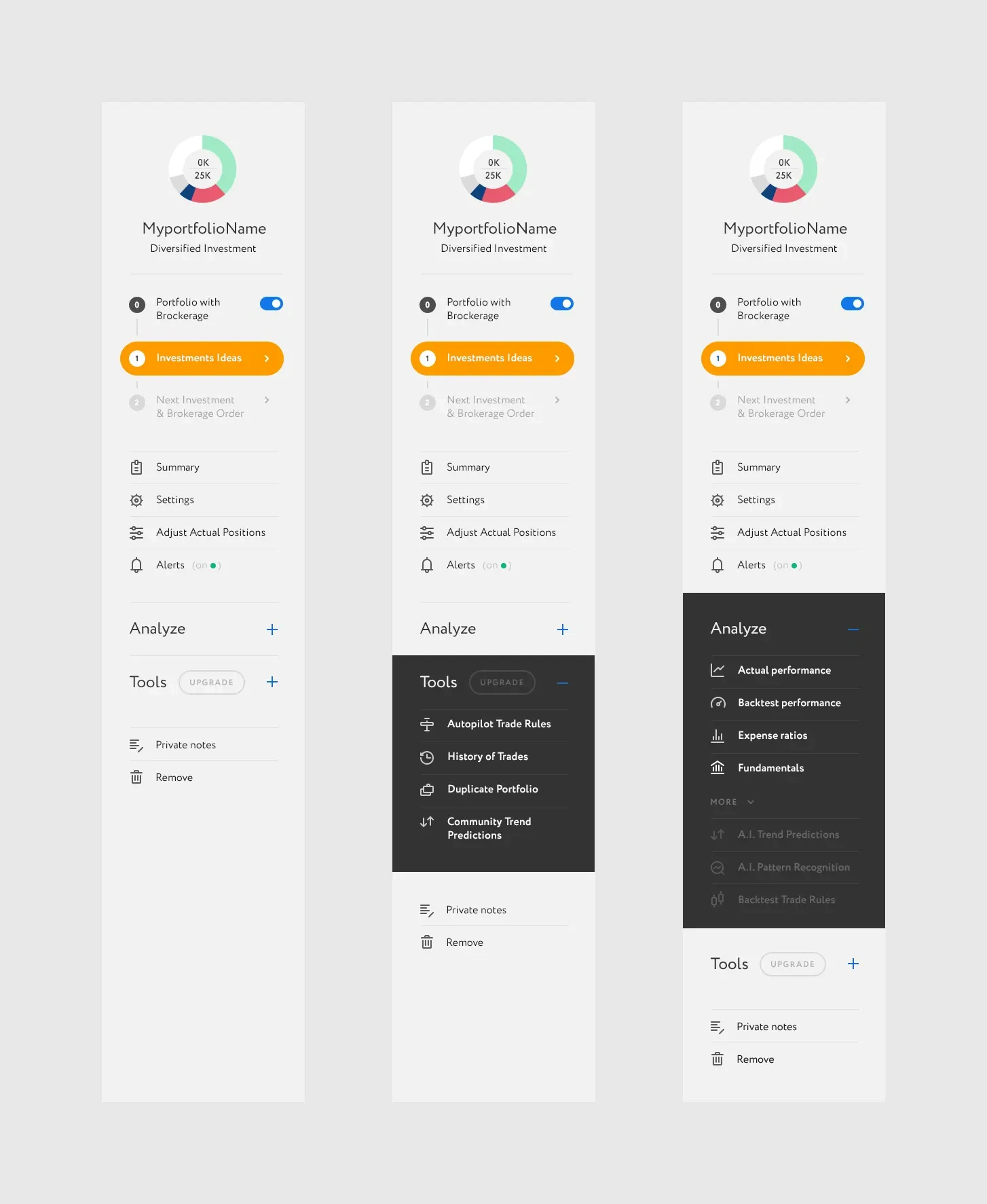
Tickeron users can subscribe to pre-built investment portfolios or create their own virtual portfolios and test their trading ideas without any financial risks.
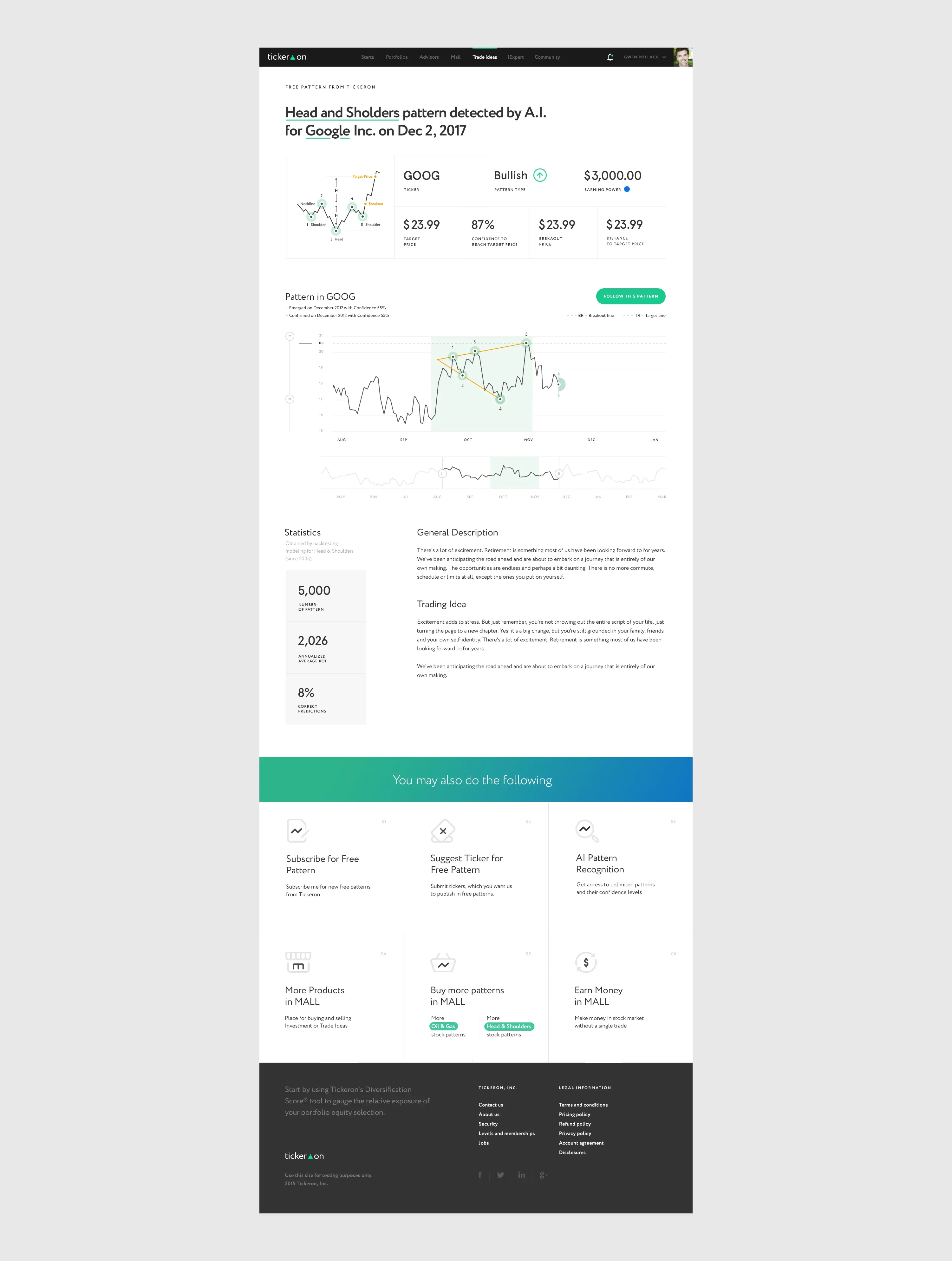
Trading patterns are one of the most sophisticated trading strategies. It exploits the psychology of market participants and takes advantage of the knowledge of market insights.
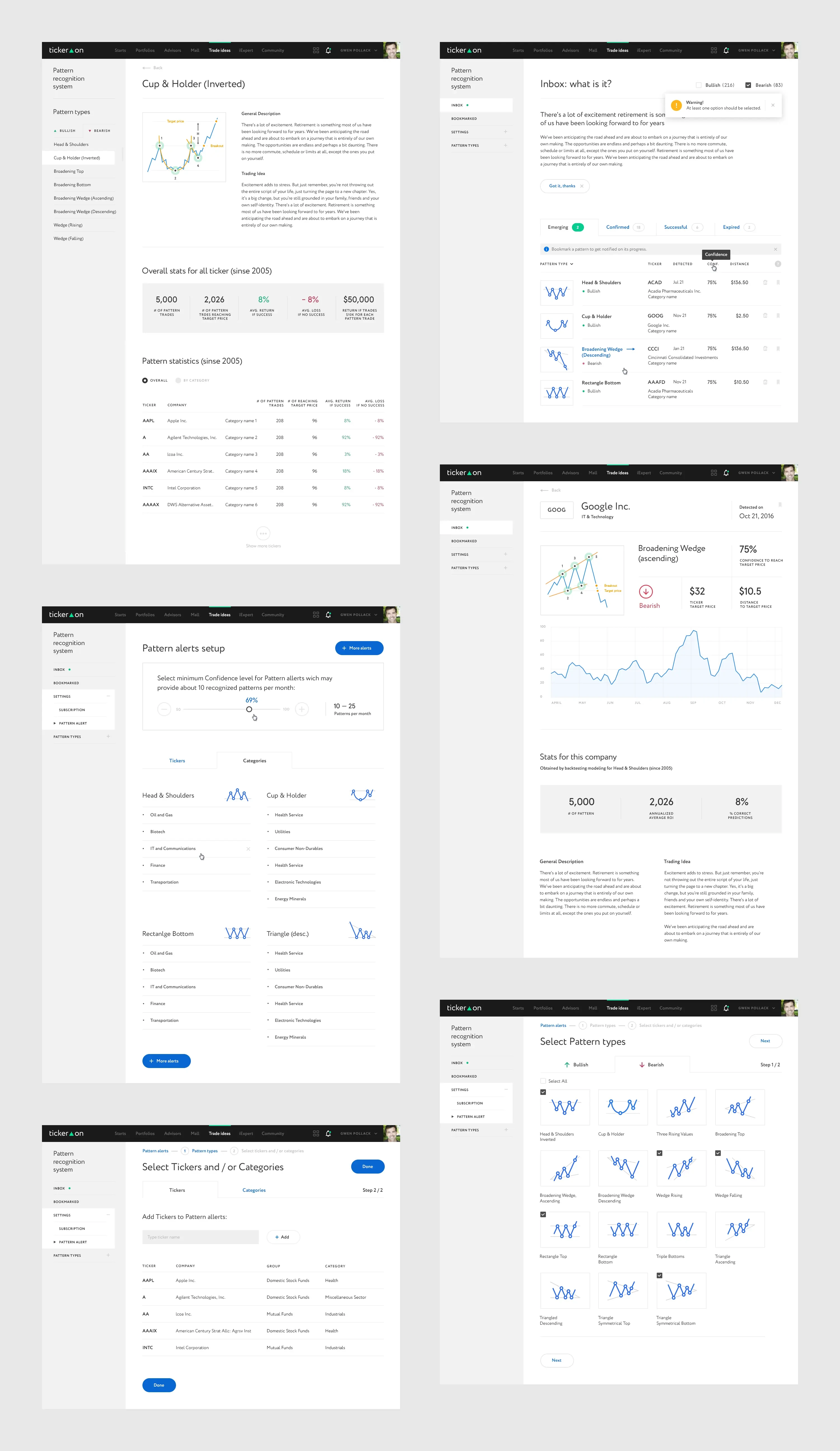
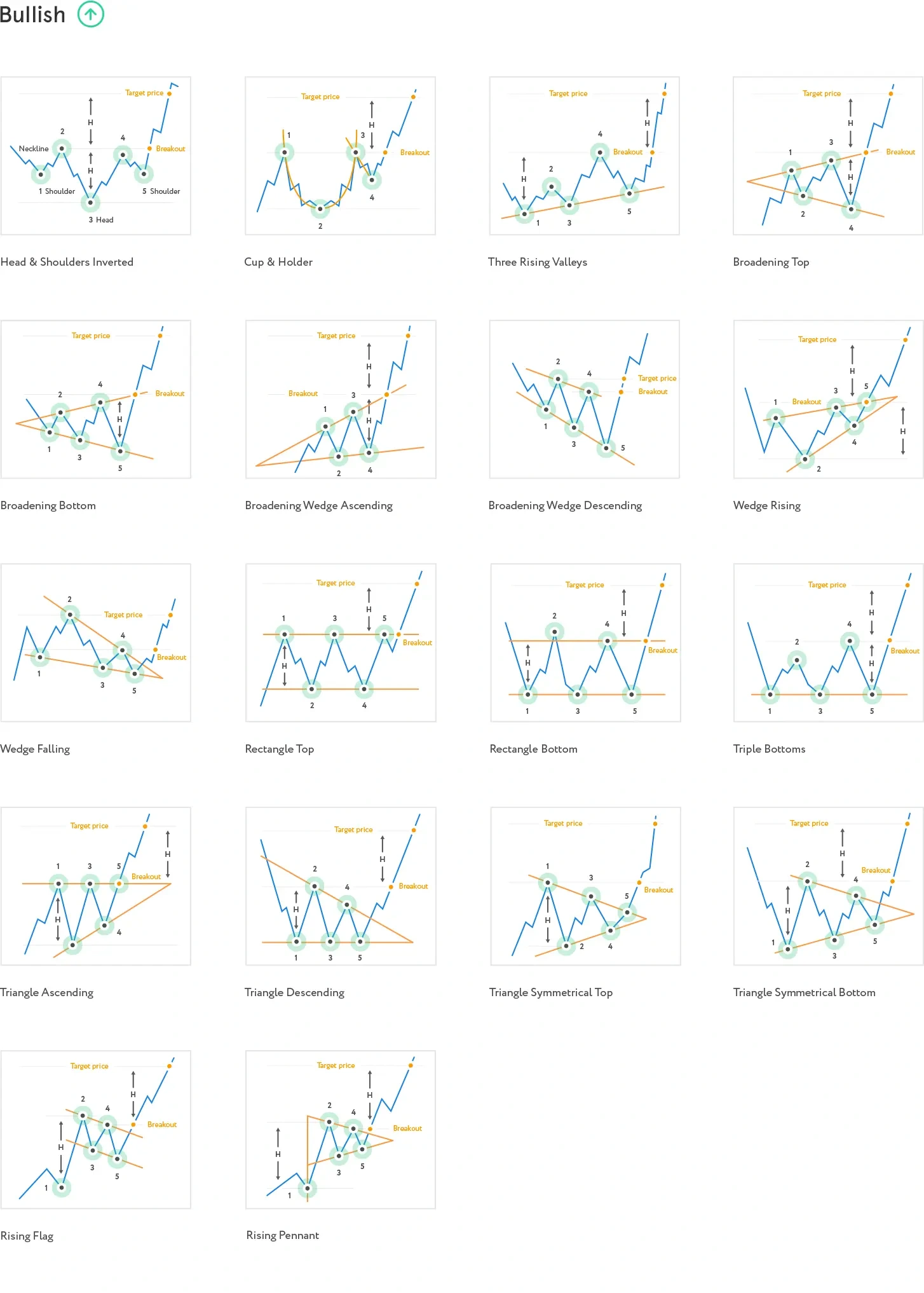
As we worked on the UI design for the Pattern Recognition System, we created 37 diagrams that illustrate both bearish and bullish patterns.
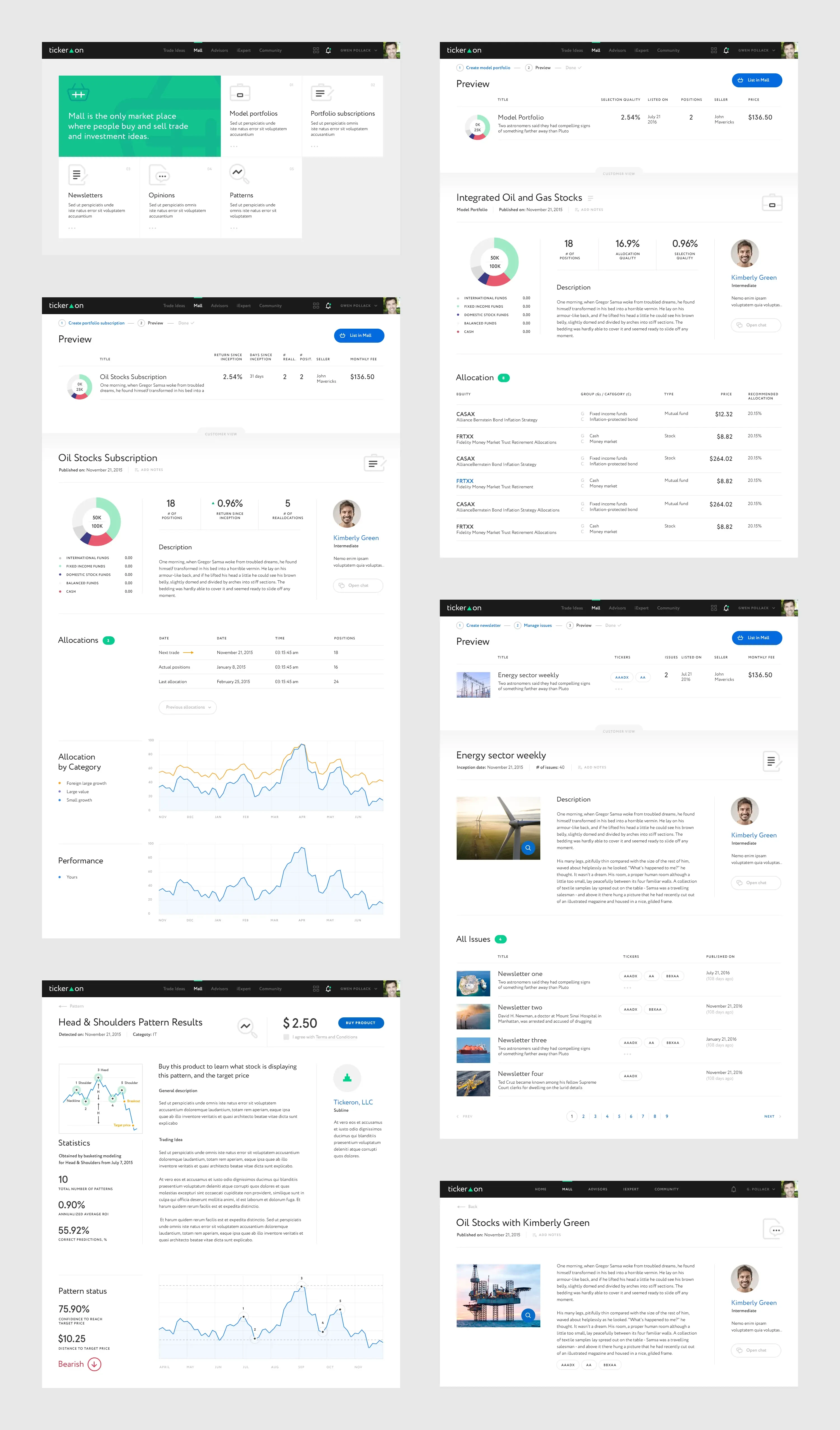
Tickeron Mall is an online marketplace where users can buy and sell virtual portfolios, trade opinions, newsletters, and pattern predictions.
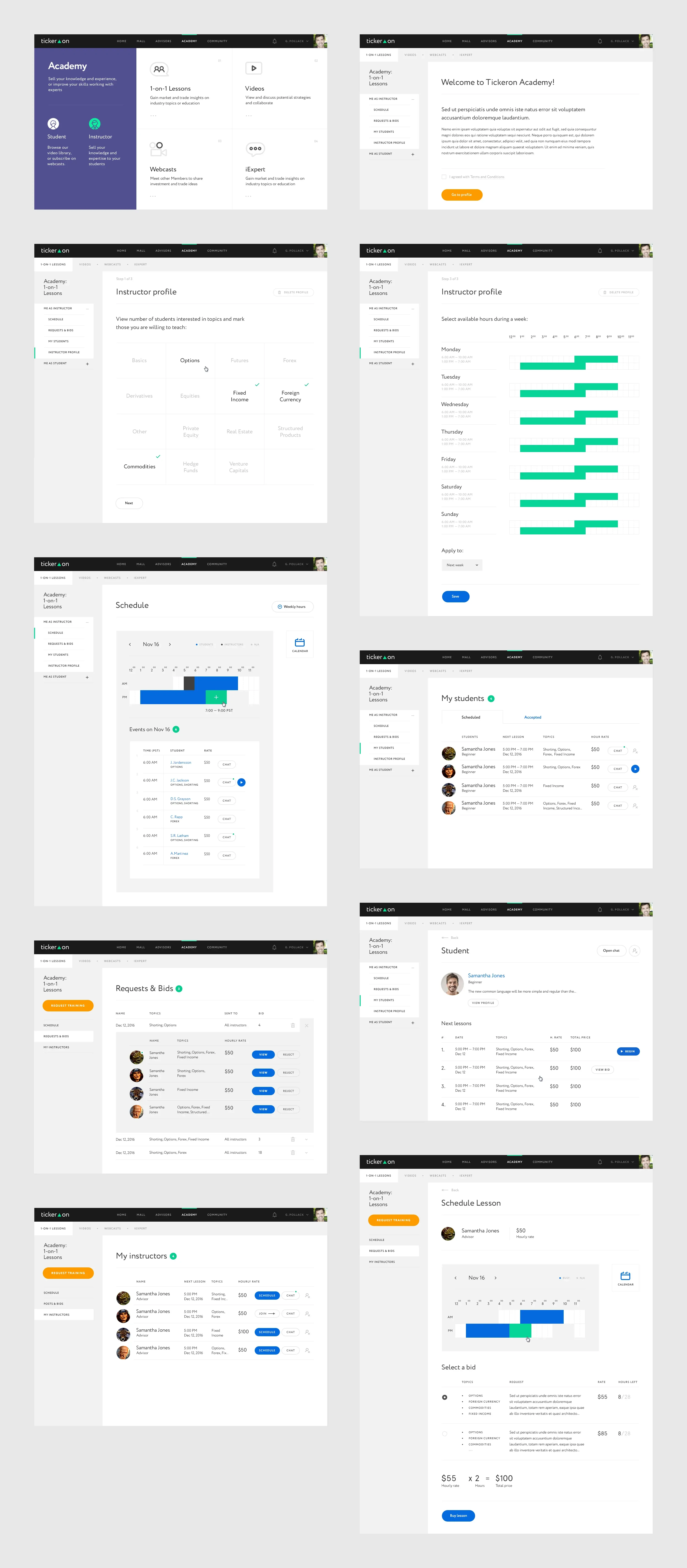
Tickeron Academy combines social networking with financial education, allowing users to learn about investment topics such as retirement, social security, investment strategies, and much more.
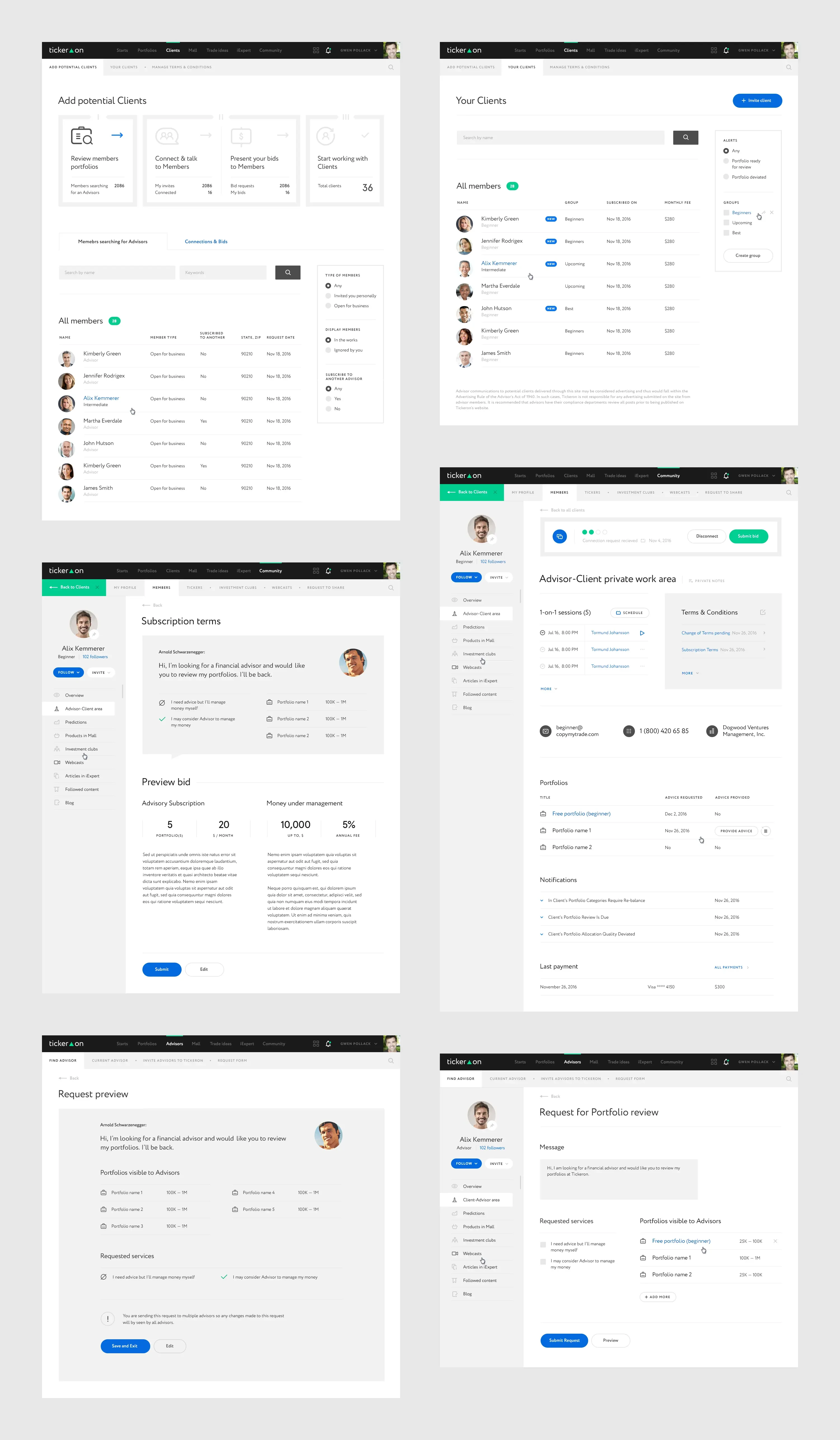
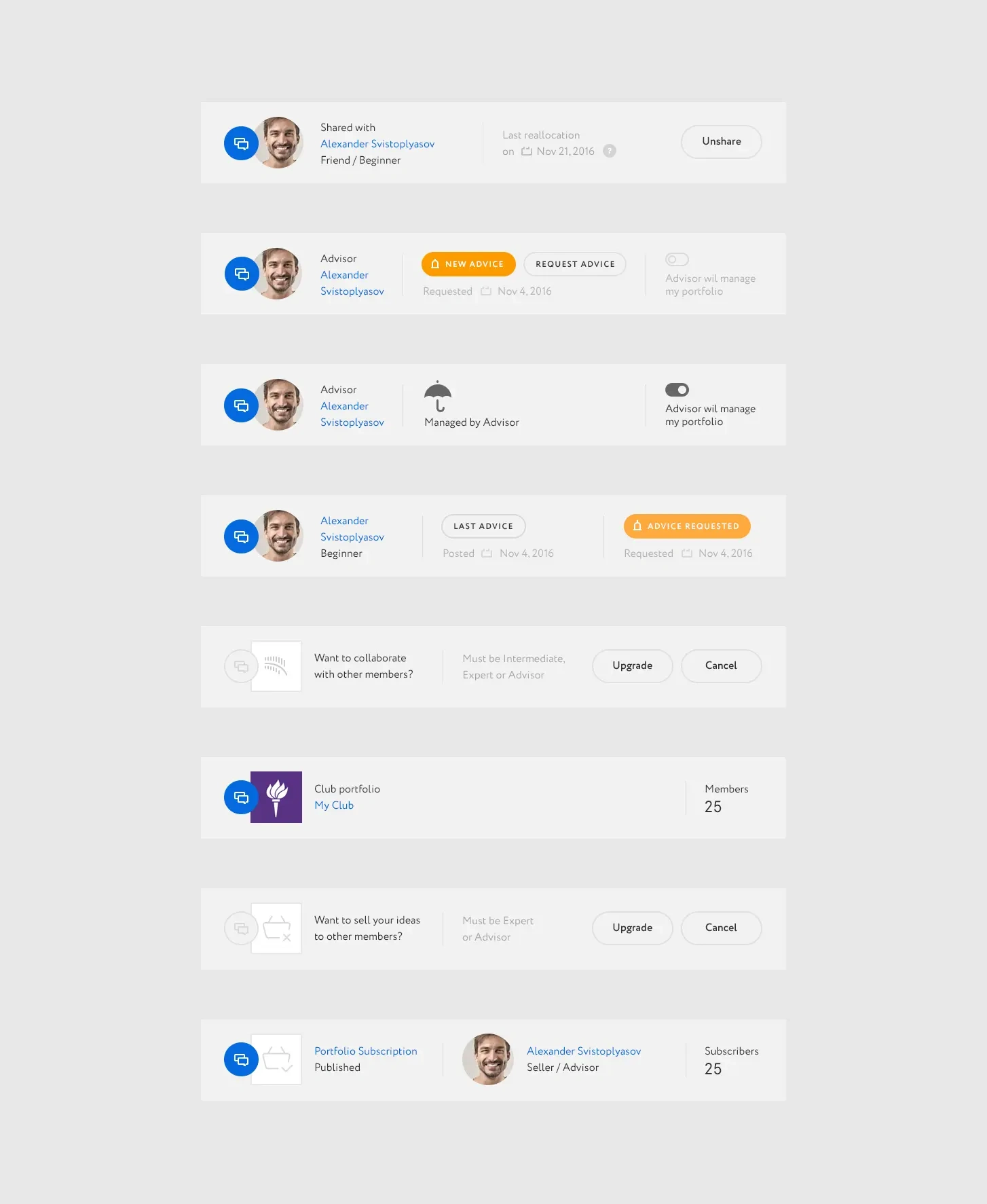
Tickeron offers a platform that connects users with Advisors who can help them achieve financial goals. Advisors can review portfolios, suggest improvements, and send personal messages.
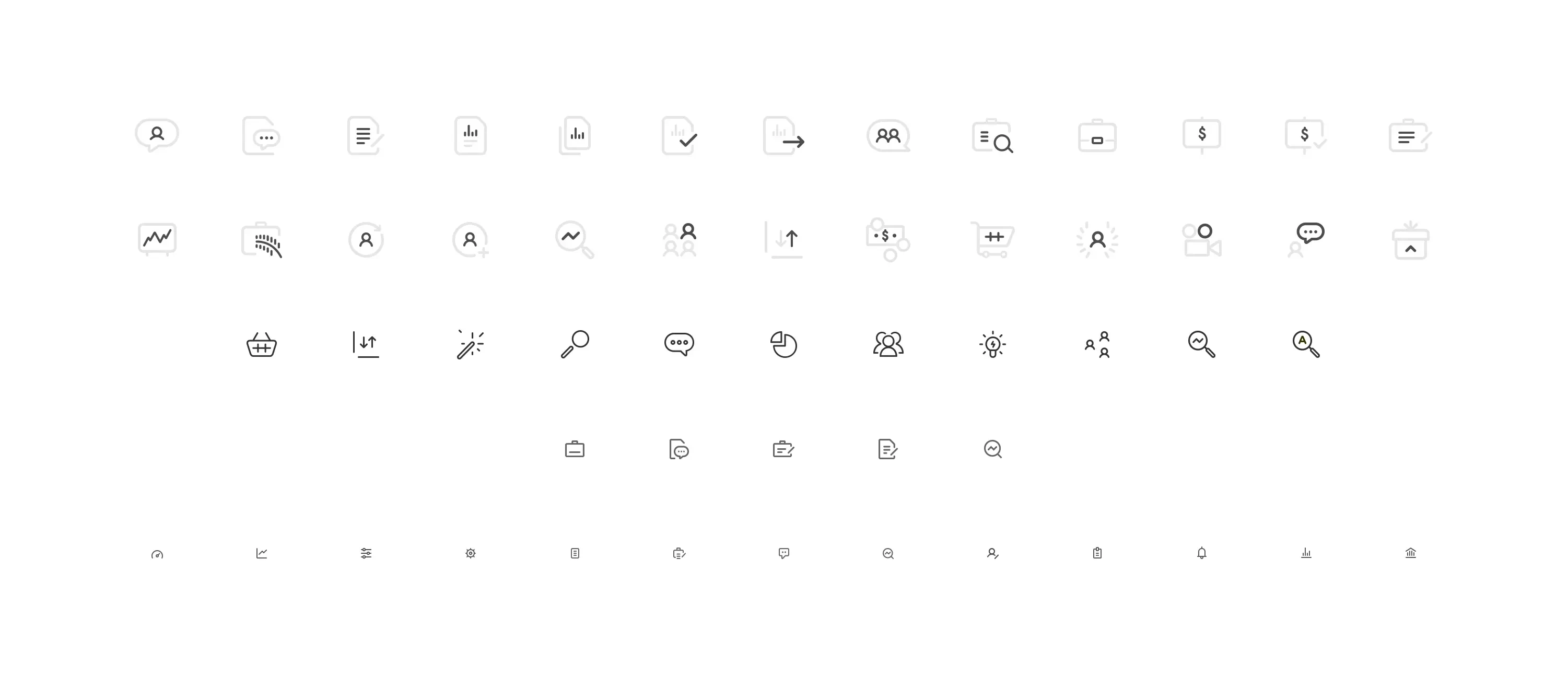
Another key element of the engaging UI design is the visually consistent iconography.
The outcome
Dworkz helped transform Tickeron's ambitious idea into a user-centered financial marketplace with a consistent identity and scalable product foundation.
The resulting experience supported a wide spectrum of users and activities: learning financial concepts, experimenting with virtual portfolios, exploring investment ideas, analyzing patterns, participating in communities, accessing market content, and consulting with advisors.
The design system unified these experiences while preserving the flexibility required by each tool. It also provided a single, dependable reference for ongoing design, implementation, content creation, and product management.
The project demonstrated how a complex fintech ecosystem can remain coherent when information architecture, interaction design, visual identity, development, and governance are treated as connected parts of the same product challenge.
Dworkz understands more than just design; they also understand business logic and add immense value to any product management team.
— Andrey Pogodin, VP Software Engineering, Tickeron
How success was evaluated
The project can be evaluated against the practical requirements established by Tickeron's vision:
Could users with different experience levels find an appropriate way into the platform?
Could distinct tools feel specialized without making the marketplace feel fragmented?
Did financial information remain central and understandable within the interface?
Could complex patterns be represented consistently across dozens of diagrams?
Did the system support education, experimentation, commerce, analysis, community, and professional guidance?
Could designers, developers, and content managers use a shared source of truth?
Could the platform expand without losing visual and interaction consistency?
The final product and design library addressed these needs through a flexible grid, detailed user flows, reusable components, consistent terminology, responsive implementation, and governance across the marketplace.
Key takeaways
Helped shape a broad fintech vision into a structured digital marketplace.
Designed for audiences ranging from beginning investors to expert traders and advisors.
Mapped complex features through user flows, content maps, wireframes, and prototypes.
Created a flexible responsive grid for varied financial tools and content.
Supported risk-free investment experimentation through Virtual Portfolios.
Designed 37 consistent diagrams for bullish and bearish trading patterns.
Created experiences for a marketplace, education, communities, screening, and advisor relationships.
Built a unified visual identity supported by custom iconography and animation.
Contributed responsive front-end development to preserve design quality.
Established a scalable design system covering components, interactions, breakpoints, terminology, and governance.
Like this project
Posted Sep 22, 2026
Developed a scalable design system for Tickeron's AI-assisted investment platform.
Likes
1
Views
1
Clients
Tickeron