Presentation Deck Analysis

Dave Penny
Verified


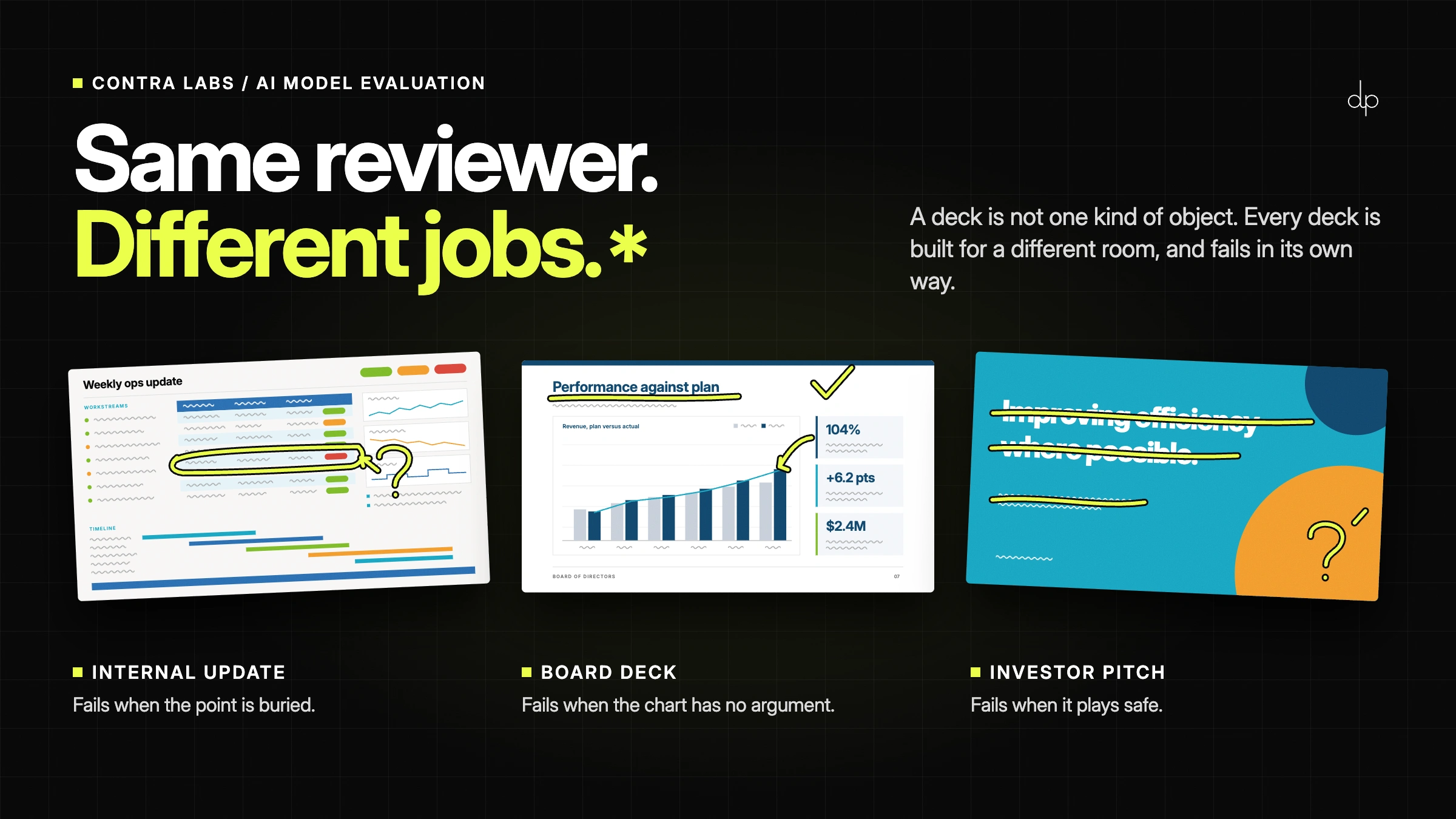
Presentation Deck Analysis
This was my first project with Contra labs and I really enjoyed the experience. The Contra Labs team are a great bunch of professionals to work with.
The Work
Contra Labs needed AI-generated presentation decks evaluated the way a designer would judge them. Two things at once: whether everything the brief asked for was actually there, and whether the messaging came across once it was.
Fixed scope, fixed deadline, delivered on schedule.
Why A Designer Was The Right Reviewer
A deck is not one kind of object. An internal update, a board presentation and an investor pitch are built to do completely different jobs, and they fail in completely different ways. A pitch deck that reads like an internal memo has not made a small mistake, it has misunderstood the room.
Knowing which kind you are looking at is most of the evaluation before the design is even considered.
Then the design. Typography, alignment, colour relationships, information hierarchy, and whether any of it serves the argument. Twenty years of doing that work by hand is the difference between "slide four feels cluttered" and naming exactly which hierarchy decision broke and why. Catching a deck that is well built and still not persuasive is the part that needs a designer.
A Note On What Is Shown
This engagement is covered by an NDA, so no deck content, brief material or client output appears here. The methodology above is my own and is described in general terms only.
Like this project
What the client had to say
Great collaboration with Dave! He is reliable and delivered very high quality work quickly. Would collaborate again - thank you for contributing to our project!


Alli Minetti Labs, Contra Labs
Aug 31, 2026, Client
Posted Sep 10, 2026
Scored and critiqued AI-generated slide decks on design, content and narrative quality, with written feedback to guide model improvement.
Likes
0
Views
5
Timeline
Aug 25, 2026 - Aug 31, 2026
Clients
Contra Labs