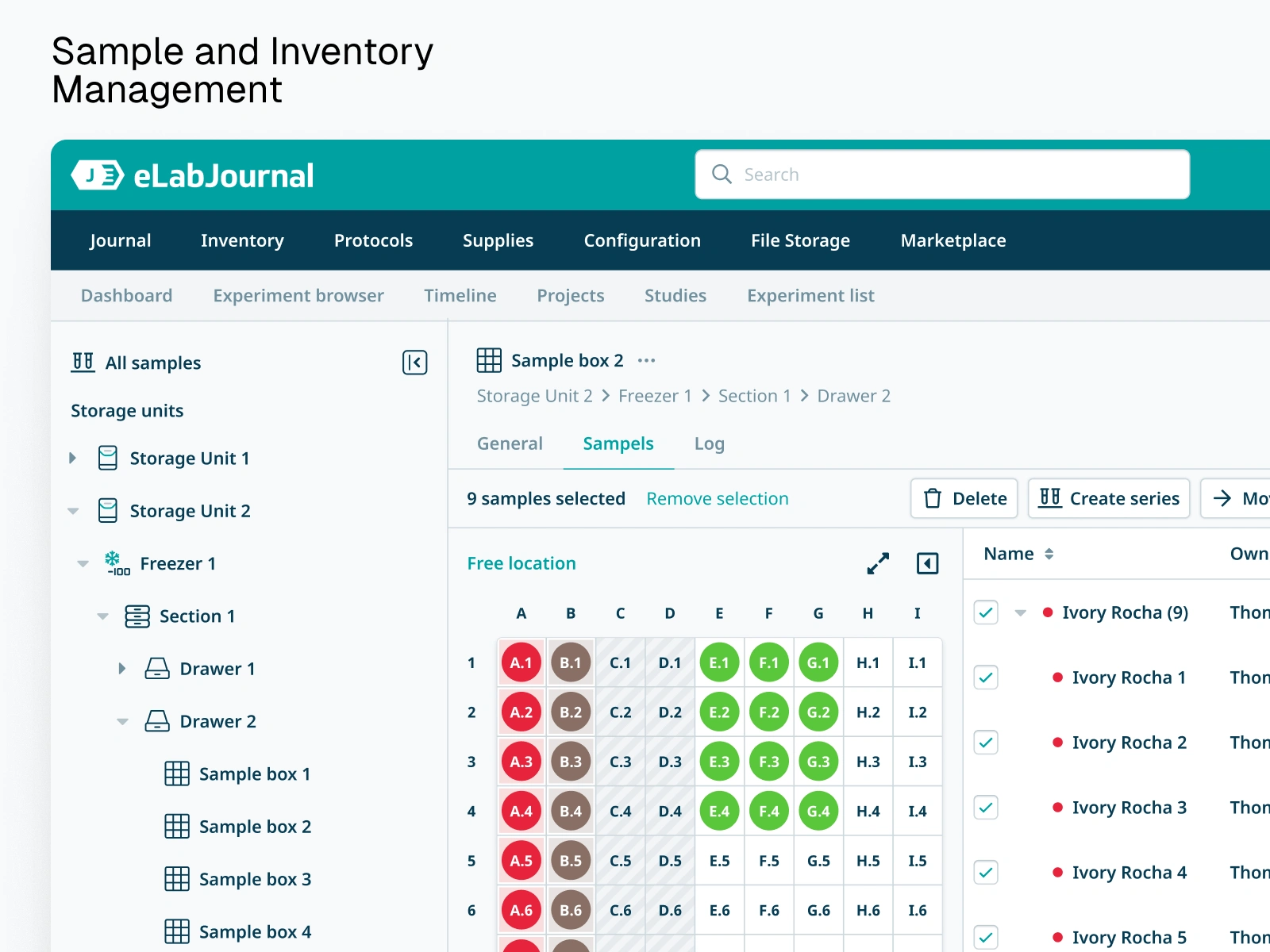
Sample and Inventory management platform

Thomas Oldenburger

Designing the digital lab: a design system and four core products for eLabNext
Client: eLabNext (Eppendorf Group) — lab management software used by research teams worldwide
Role: Product Designer
Scope: Design system, Inventory Browser, workflow automation, signature workflows, developer platform, navigation
The challenge
eLabNext helps scientists run their labs digitally — tracking samples, protocols, experiments, and approvals. Powerful software, but it had grown feature by feature without a shared design foundation. Screens looked and behaved differently depending on when they were built. Complex features like sample storage and approvals demanded more from users than they should have.
The brief: bring visual and structural consistency to the platform, then redesign its most complex workflows so scientists could spend less time fighting the interface and more time on research.
I took this on as the sole designer, working with eLabNext's product and engineering teams through Your Next Agency. Every screen, component, and flow below is my work — from the foundational design system to the final feature designs.
What I did
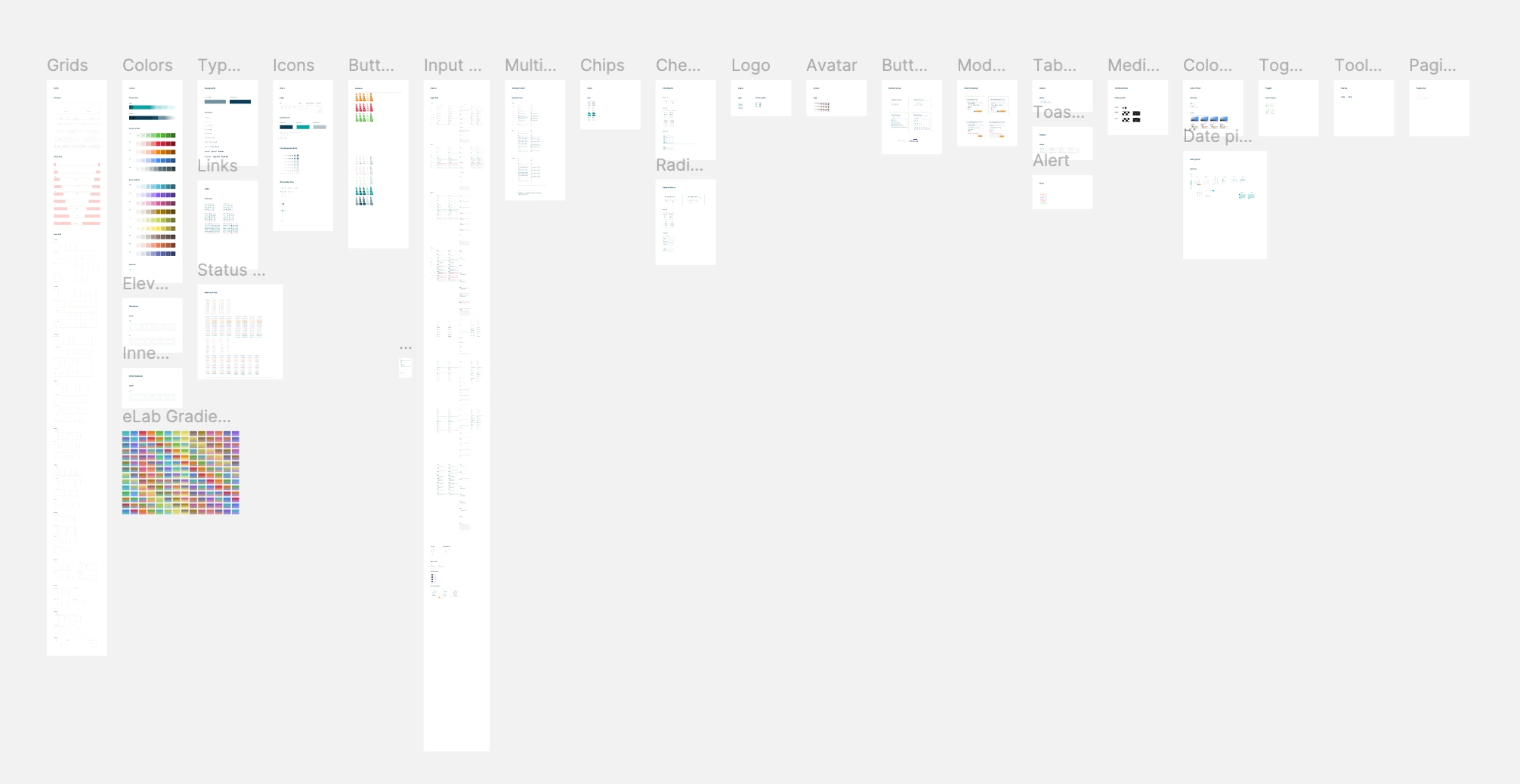
Built the design system from scratch. Components, patterns, color, typography, iconography — everything the product teams needed to ship consistent UI without reinventing decisions. Every screen below runs on it. That's the point of a design system: you shouldn't be able to tell which feature was designed first.
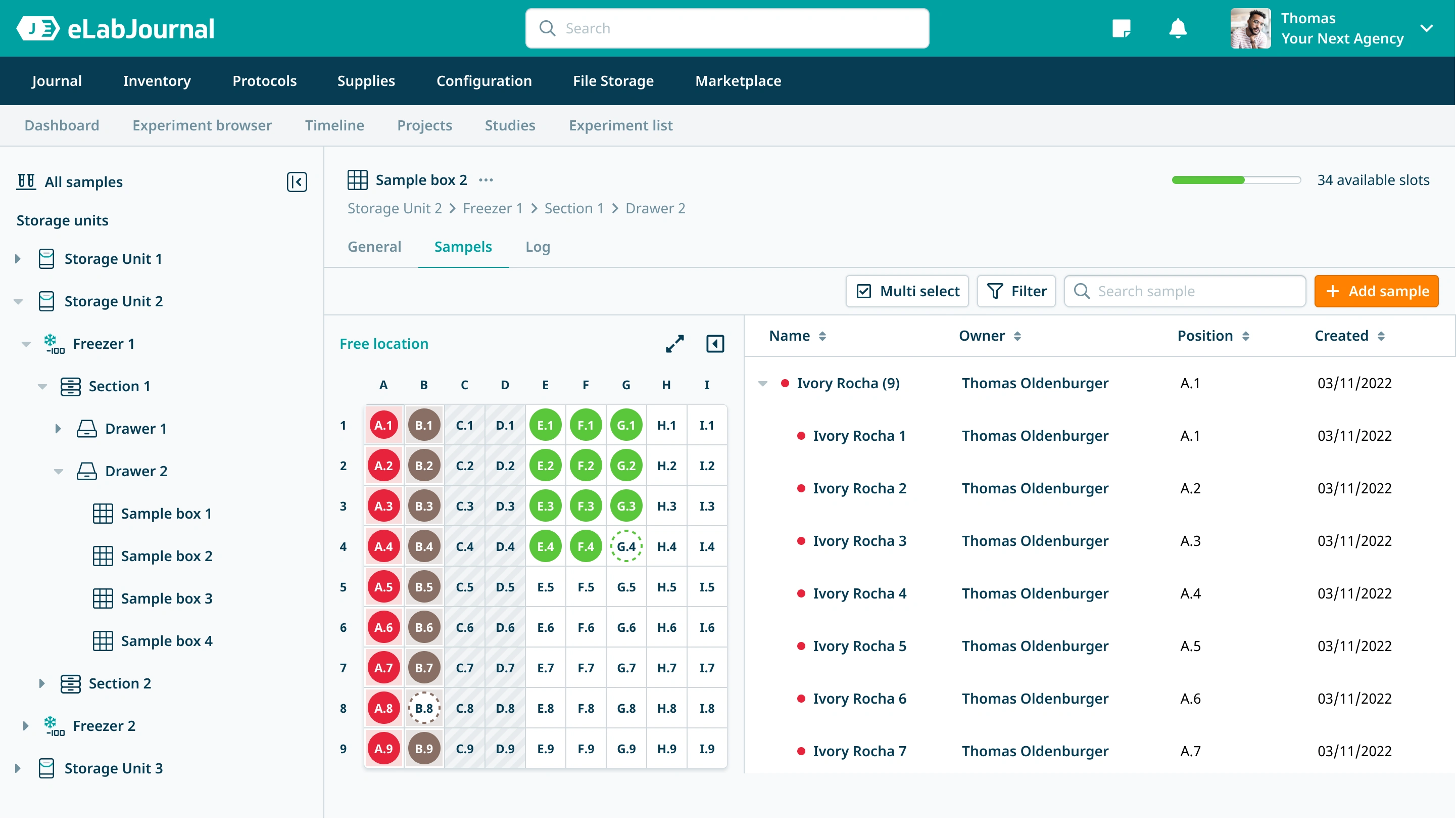
Redesigned the Inventory Browser. Labs store thousands of samples across freezers, drawers, and boxes. I designed a visual navigation model that mirrors physical reality: drill from storage unit down to an individual slot in a sample box, see occupancy at a glance through a color-coded grid, and act on samples (move, edit, reassign) without losing spatial context. Multi-select, filtering, and batch actions handle the scale a working lab actually operates at.
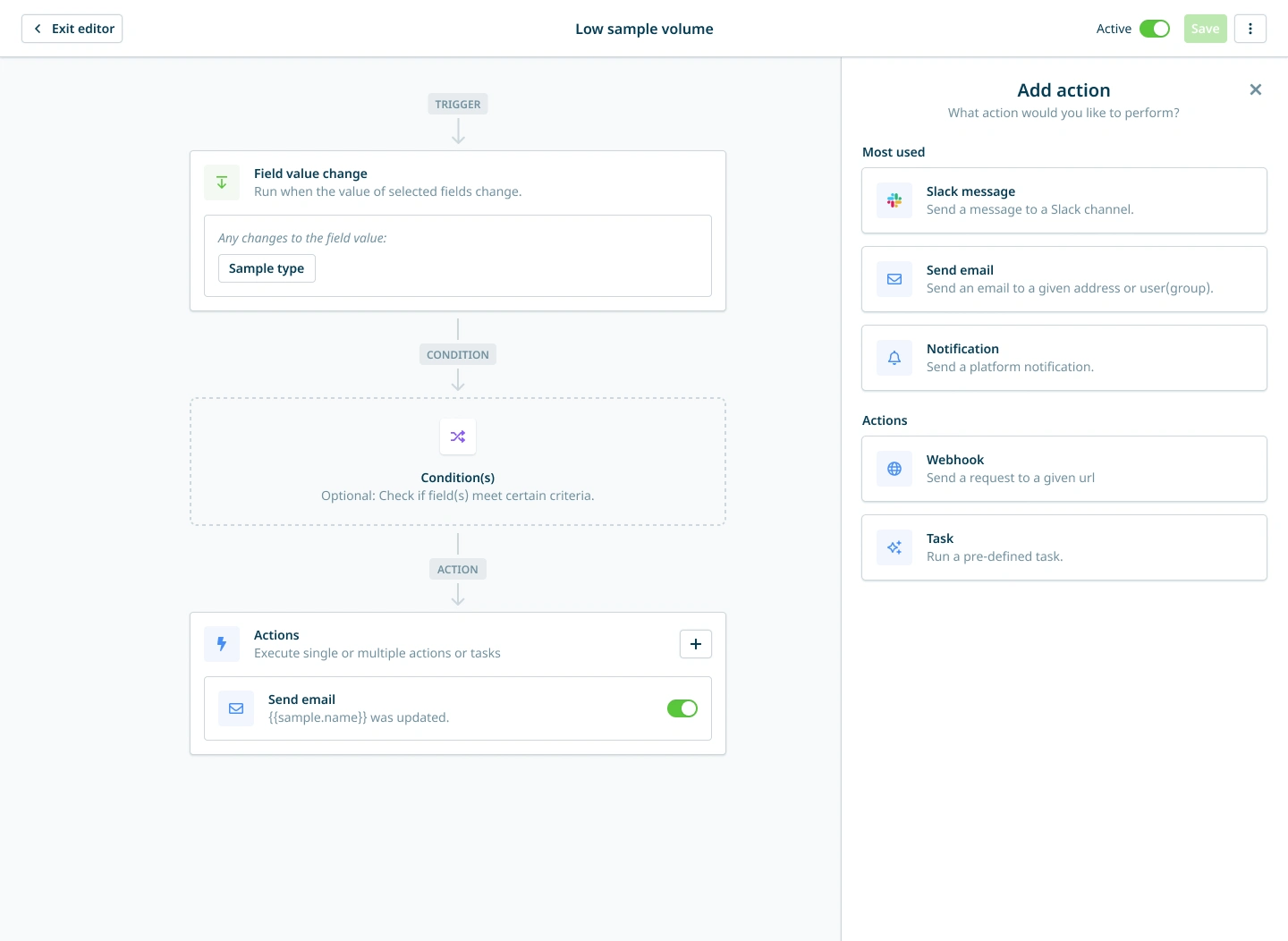
Designed a no-code automation builder. Scientists shouldn't need IT to get notified when a freezer hits capacity or a sample is about to expire. I designed a visual trigger → condition → action editor with 50+ ready-made templates, integrations with email and Slack, and a management dashboard for running automations. The pattern is familiar from tools like Zapier — the work was translating it into lab-native events (sample moved, field changed, storage threshold reached) that scientists recognize instantly.
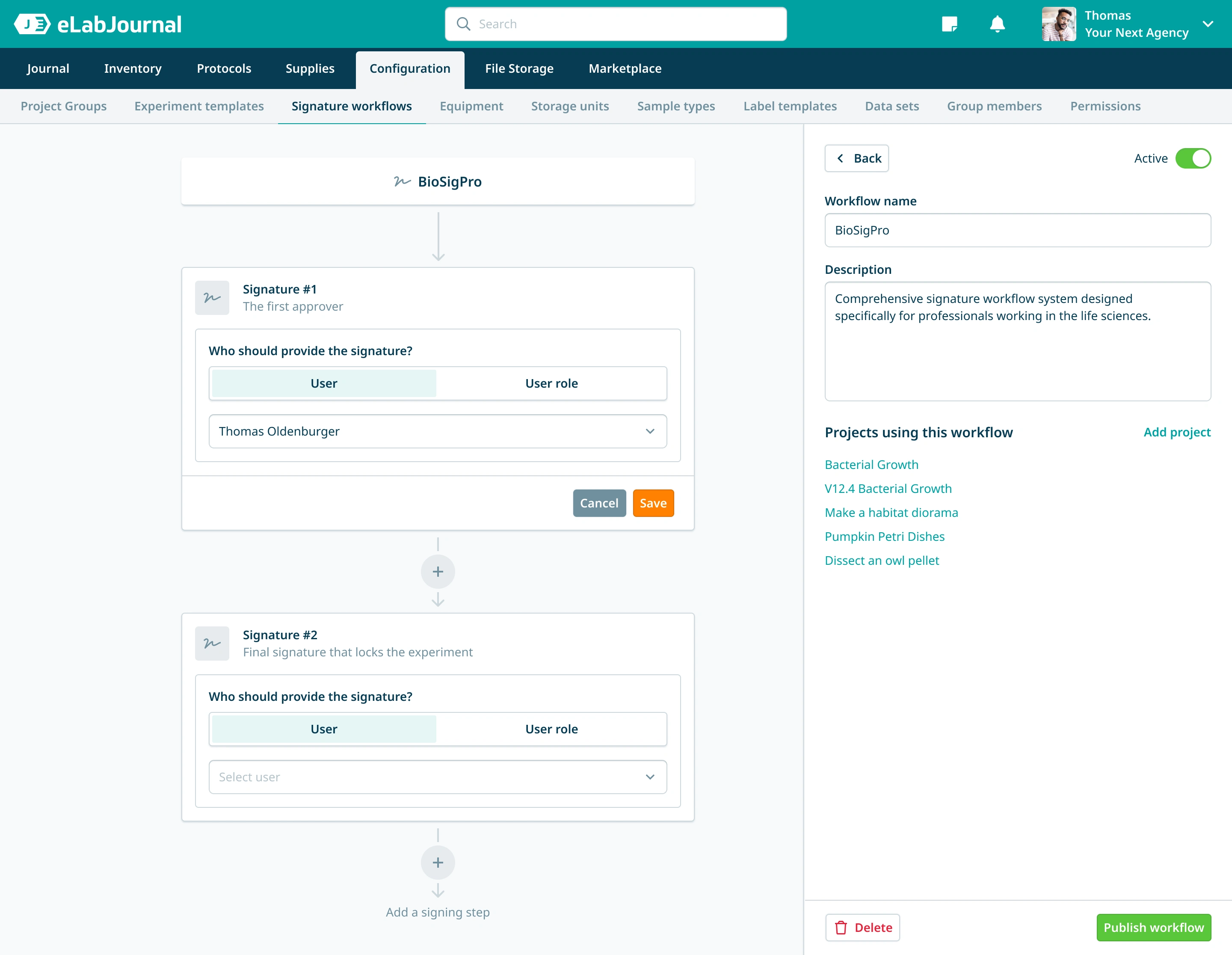
Designed signature workflows. In regulated research, experiments need formal sign-off. I designed a workflow builder where labs define multi-step approval chains — by named user or by role — and attach them to projects. Clear, auditable, and flexible enough to fit how different labs actually operate.
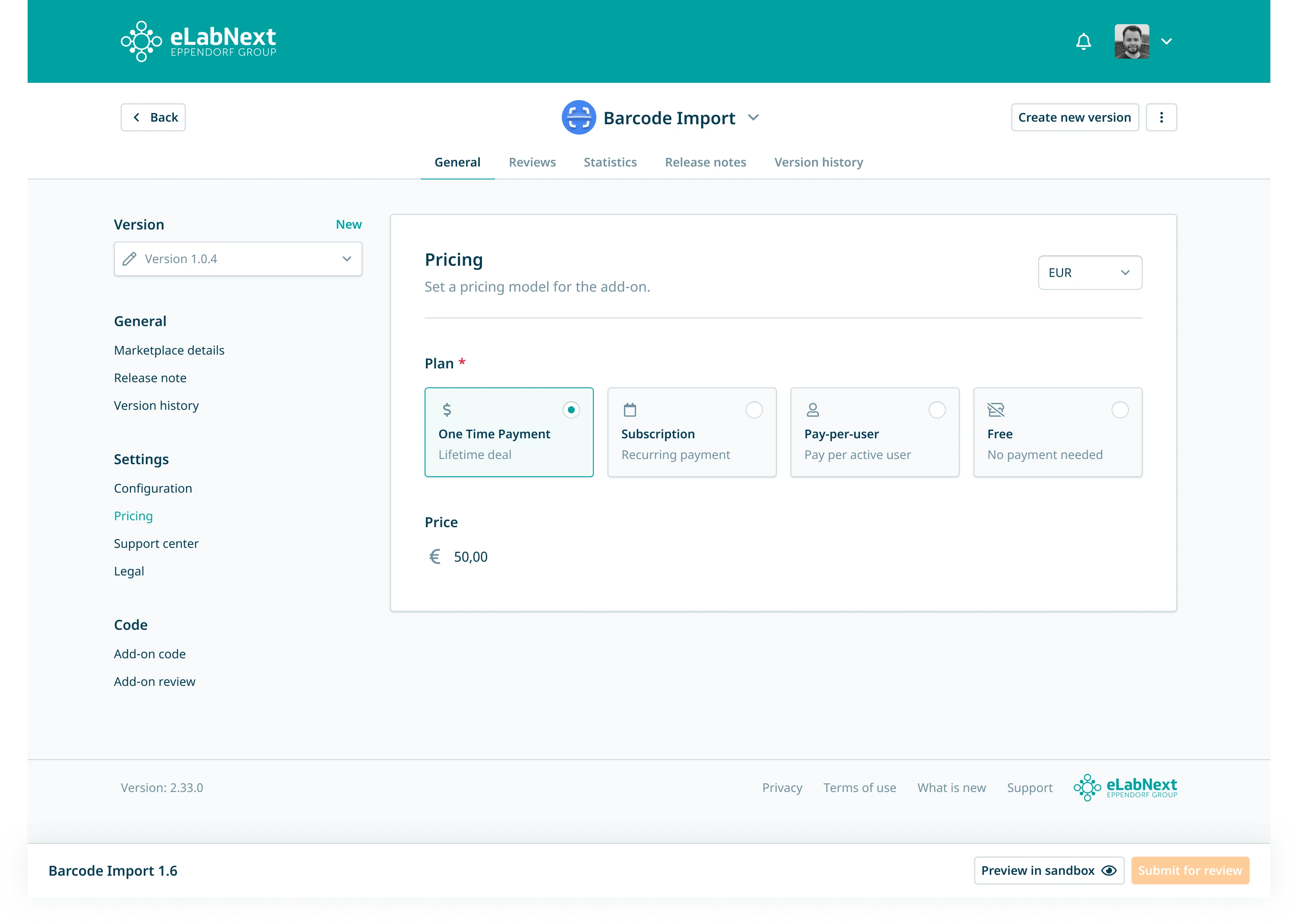
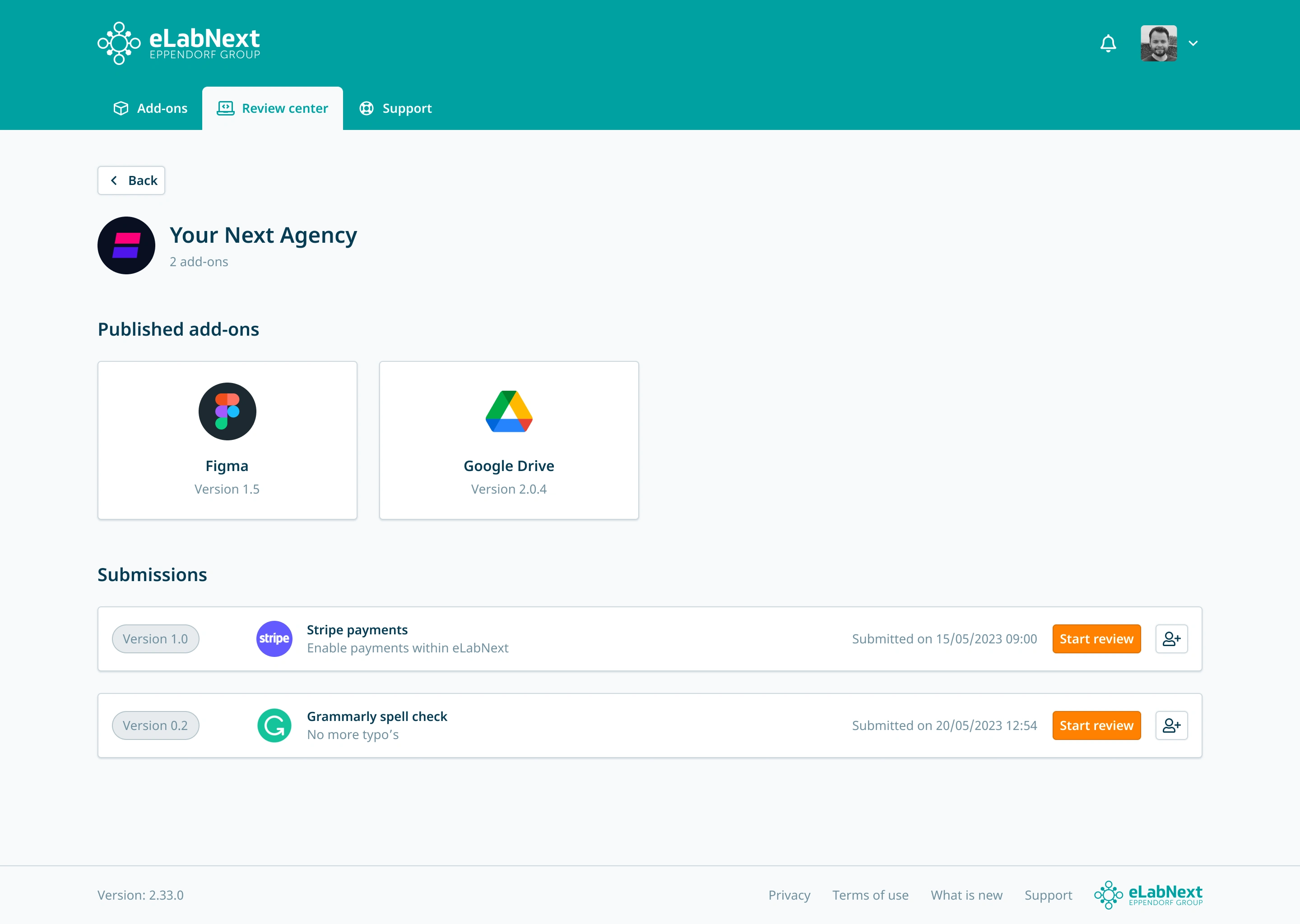
Designed the developer platform. eLabNext has a marketplace of third-party add-ons (Figma, Google Drive, Stripe, and more). I designed the full developer experience: add-on management, version control, submission and review flows, and audit trails showing every status change from draft to published. Two audiences — external developers submitting add-ons and internal reviewers approving them — served by one coherent system.
Improved system navigation. Restructured the global and section-level navigation so the platform's depth became browsable rather than buried.
Like this project
Posted Nov 4, 2025
One designer, four products: design system, inventory, automations, and a developer marketplace for eLabNext lab software.
Likes
0
Views
4