You the Birthday — AI Personality & Planning Product

Marcellus Borland


Your birthday, generated in two minutes.
Your birthday, generated.
You the Birthday turns a short input — name, date, vibe — into a full personalized celebration plan: themes, captions, destinations, outfits, and a 12-page report. Built solo end to end, it was designed as both a user product and a growth system.
At a glance
Product — Generative-AI consumer web app
Audience — People planning their own birthday or someone else's
Role — Solo founder, designer, prompt architect, developer
Shipped — Live at youthebirthday.app
Stack — Figma · Claude API · Next.js · Vercel · Supabase · Amazon Associates
Why it matters — Proves an AI product can hold voice across 12+ outputs while building in growth and monetization from day one
What I owned
Product strategy and positioning
UX and UI built directly in Claude Code — no Figma mockup step
Brand identity and landing page design
Prompt-chain architecture and production prompts
Next.js front end and Supabase back end
Programmatic SEO system for long-tail discovery
Admin dashboard for operations
Multi-stream monetization — AdSense, Stripe, Amazon Associates
Blog review queue for content QA
Landing → navigation → generation flow. One take, no edits.
The tension
Birthday planning is a content problem disguised as a planning problem. The hard part is not logistics — it is identity. Generic templates cannot answer "what kind of birthday is yours?" One prompt cannot either — the output falls flat.
The decision
Instead of one generation, I built a chain. Each stage passes a personality "bible" forward so tone holds across every surface.
Personality anchor — defines the user's birthday voice from minimal input
Themes — generates theme directions aligned to the personality
Captions — writes social copy in the theme's tone
Destinations — curates trip and venue recommendations
Report — stitches everything into a 12-page celebration plan
Onboarding input → personality result → full 12-page report. One chain, one voice.
The system
Prompt chain — personality anchor feeds every downstream generation
Landing + result flow — Next.js front-end with Supabase-backed sessions
Long-tail traffic pages — every report becomes a public, indexable URL
Admin dashboard — passcode-protected site operations and automation
Affiliate revenue layer — Amazon Associate links wired into destination output
The traffic engine
Every report becomes a public page tuned for a specific long-tail query.
Report outputs double as indexable SEO pages
Tuned to long-tail discovery like "Scorpio birthday ideas" or "Amalfi Coast birthday trip"
Organic traffic compounds without paid acquisition
The product acts as its own growth channel
Google Search Console used for ongoing SEO optimization and query insight
One destination page — Amalfi Coast — generated from a single user report.
The admin layer
Solo AI products need real tooling.
Passcode-protected dashboard — zero public exposure
Economics panel — revenue, traffic, and report volume at a glance
Automation controls — scheduled traffic-page generation
Blog review queue — human QA before AI-drafted content ships
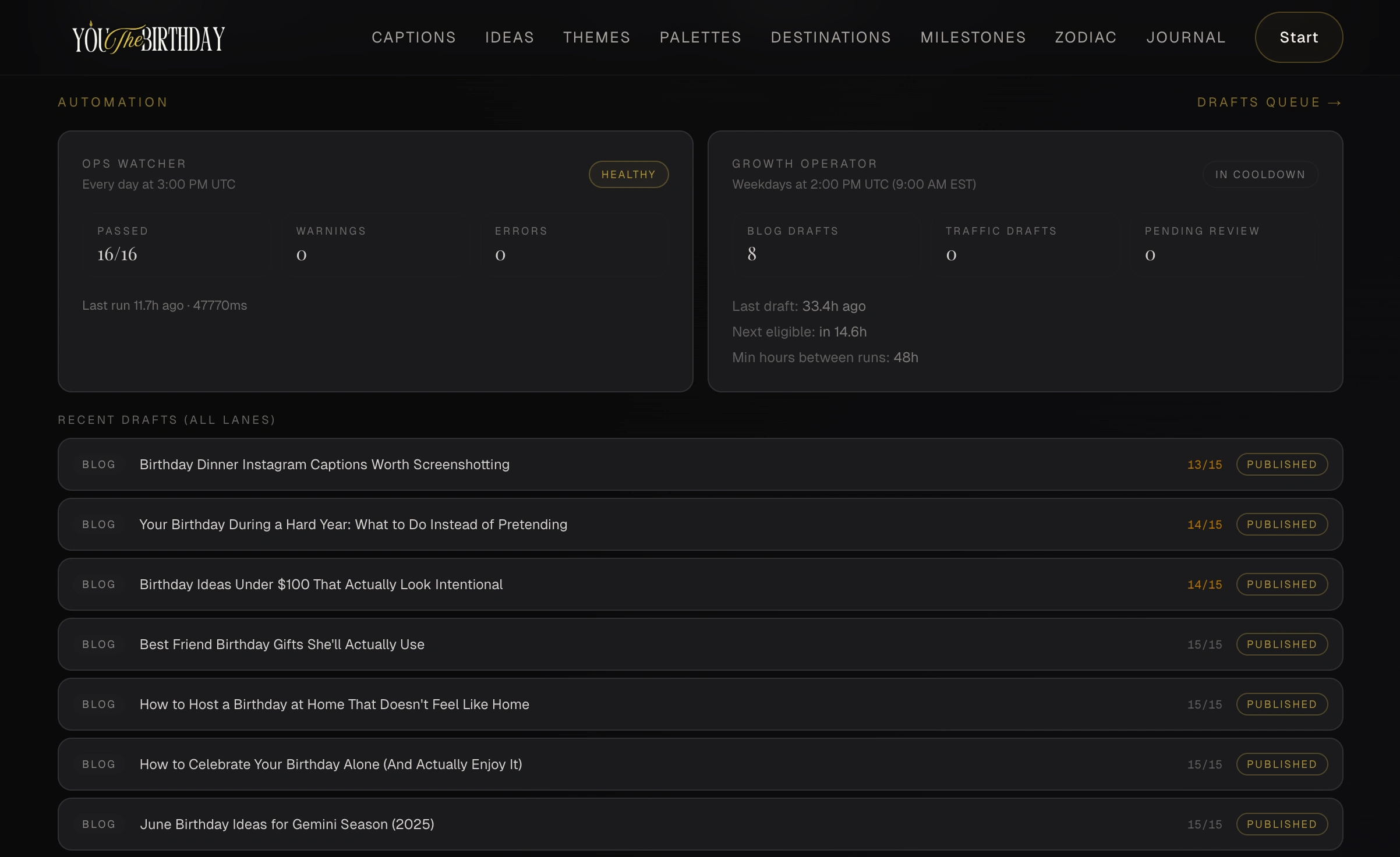
Automation controls for traffic-page and destination expansion.
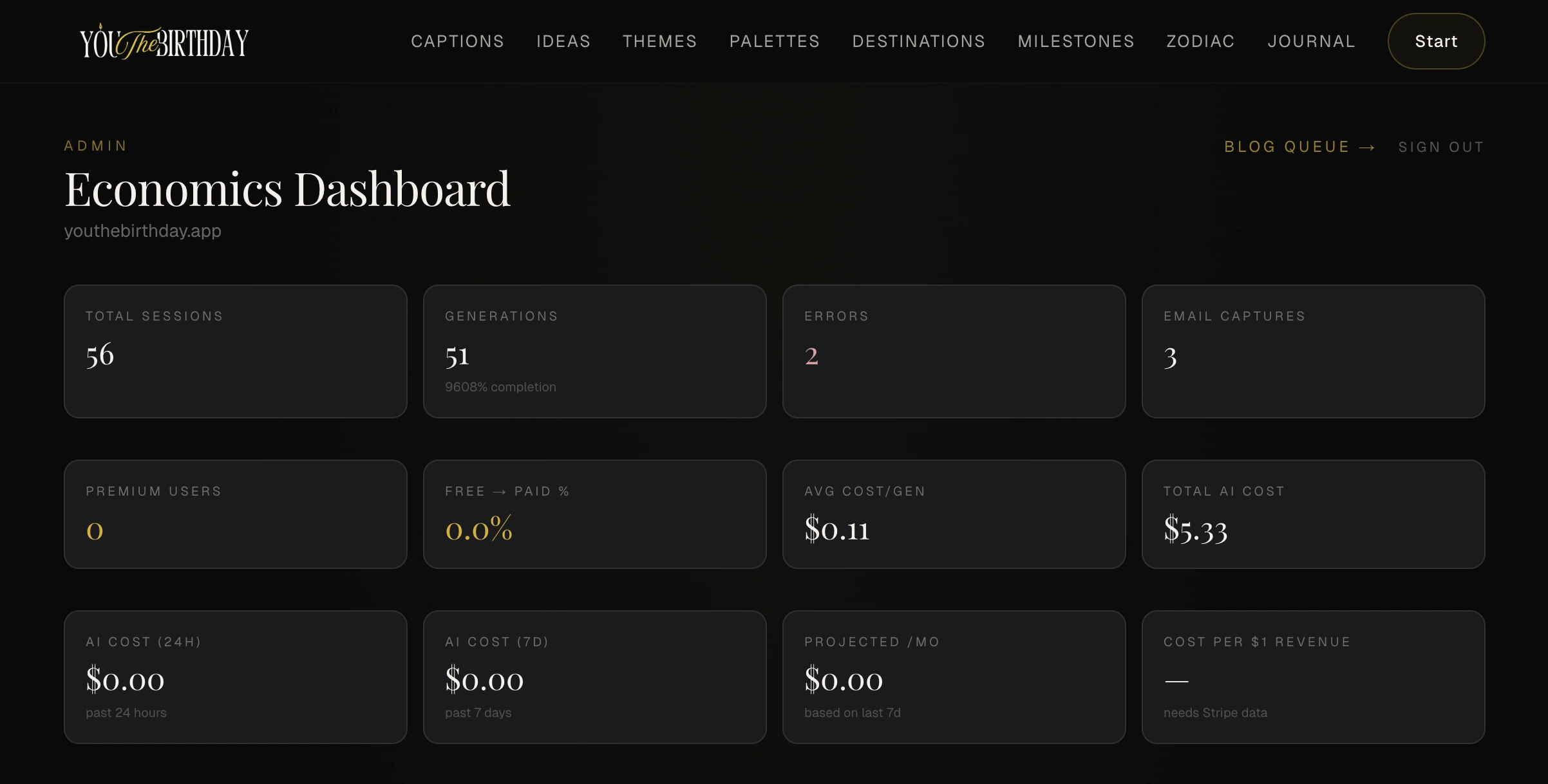
The economics dashboard. Revenue, traffic, and report volume in one view.
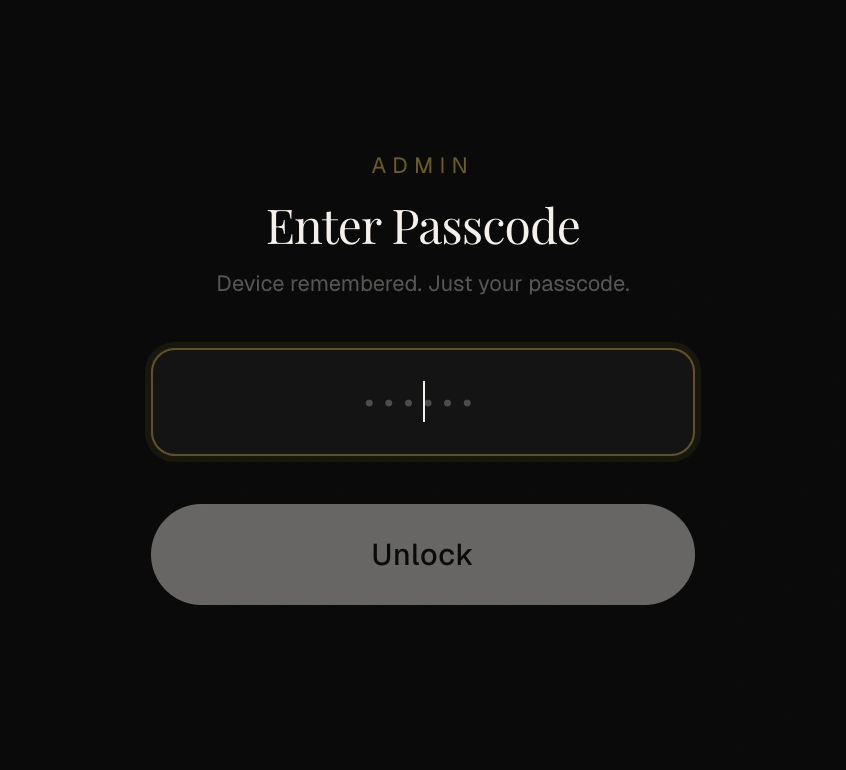
Passcode gate. No admin surface is publicly accessible.
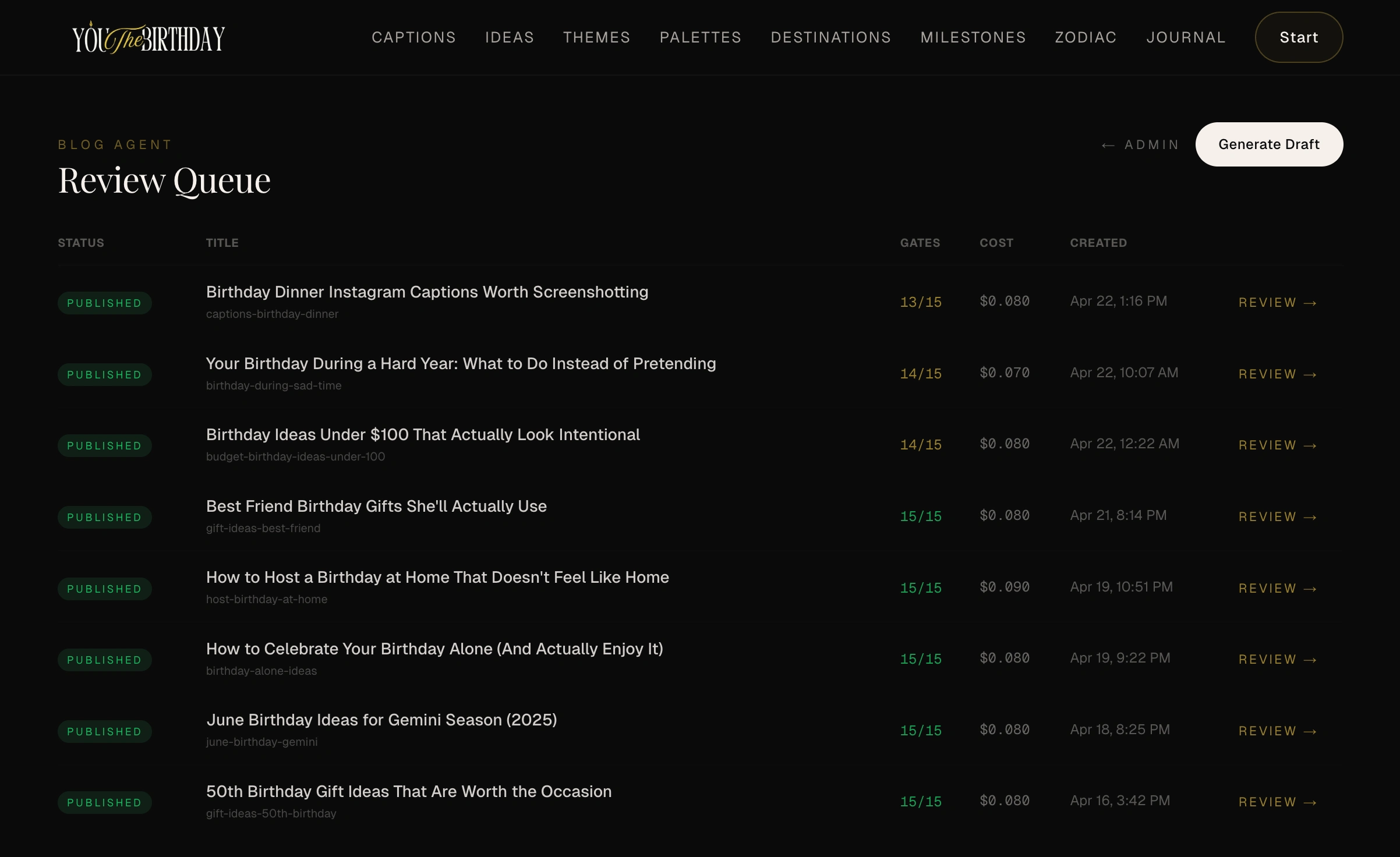
Blog review queue. AI drafts, human ships.
Monetization
Revenue comes from three surfaces, all tuned to pay for the AI costs it takes to run the product. No paid acquisition. No subscription wall.
AdSense on traffic pages — organic SEO turns reach into ad revenue
Stripe for paid celebration reports — a premium tier on top of the free chain
Amazon Associate links embedded in AI-curated destination outputs
Recommendations driven by the user's generated personality, not ad priority
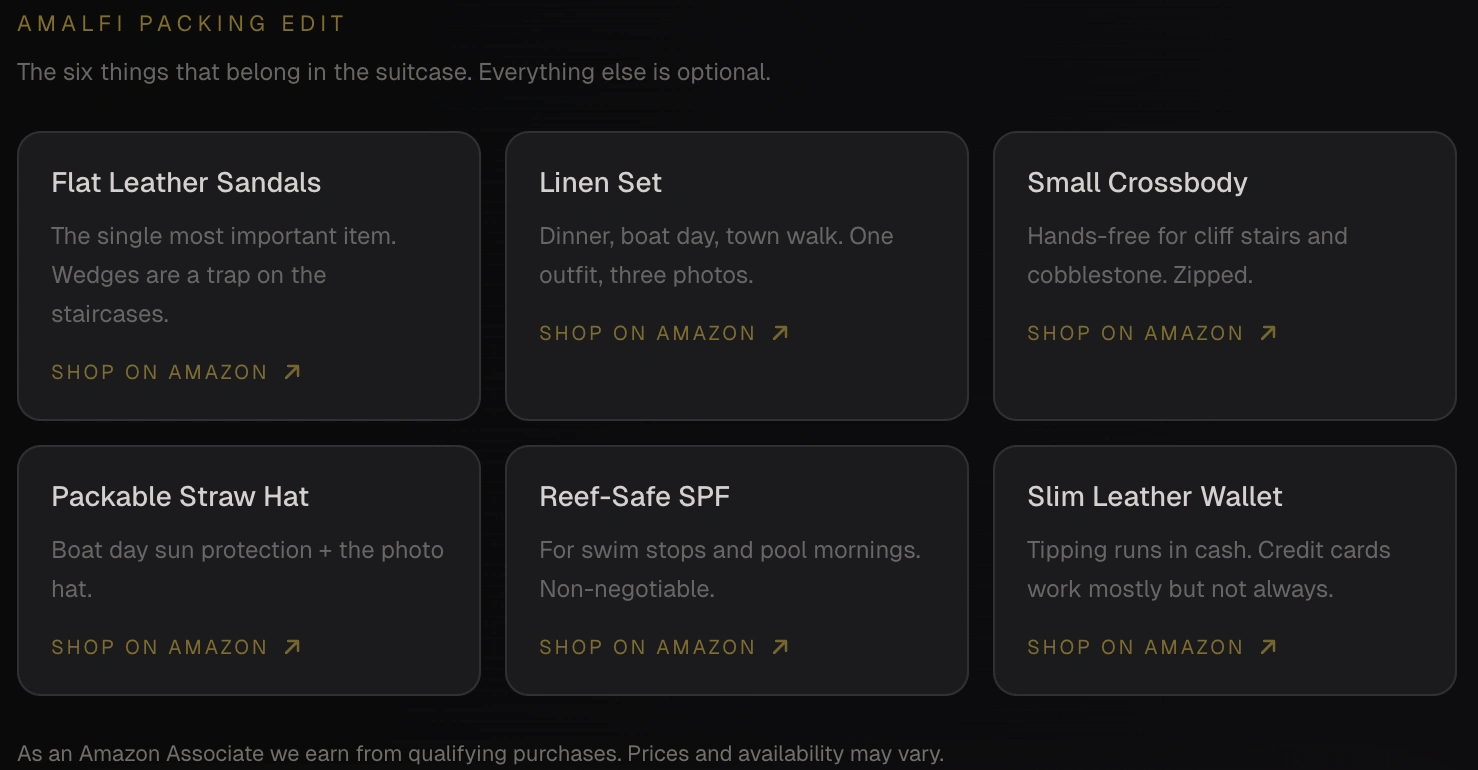
Affiliate links surfaced directly in the AI-curated destination output.
Holding voice across a chain
The hardest problem was making the final report sound like one voice. I solved it with a personality "bible" generated once at the top of the chain, then passed into every downstream prompt. Without that anchor, the output started drifting within two generations.
How it was built
I vibe-coded You the Birthday end to end. Claude and ChatGPT were the brains — every component, every prompt chain, every generated surface shipped from prompt to production with no Figma mockup step. The 3D hero asset on the landing page was the only element I did not build myself — I purchased it and integrated it into the stack. Everything else, from the personality bible to the admin dashboard, was shipped the same way: research, prompt, ship.
My Associates in Graphic Design and ongoing BFA in Electronic Design Media at CCNY are why none of this looks vibe-coded. Formal design training keeps the aesthetic tight when the build process moves fast.
What this project proves
I design UX and prompt systems together, not separately
I ship real AI products solo, not just prototypes
I build growth into the product itself
I think about monetization without breaking the user experience
I own the system end to end — vibe-coded, no handoff, no Figma step
Stack
AI brains — Claude · Claude API · Claude Code · ChatGPT
Build — Next.js · Vercel · Supabase
Growth — Programmatic SEO · Google Search Console
Monetization — AdSense · Stripe · Amazon Associates
Admin — Custom dashboard (passcode-protected)
Hero asset — Purchased 3D element integrated via code
Brand — Canva (logo design)
Like this project
Posted Apr 23, 2026
Generative-AI birthday-planning product shipped solo. Short input → full personalized report: themes, captions, destinations, outfits, and plan.
Likes
1
Views
11