Ustream — Music Streaming Concept (Solo Figma MVP)

Marcellus Borland

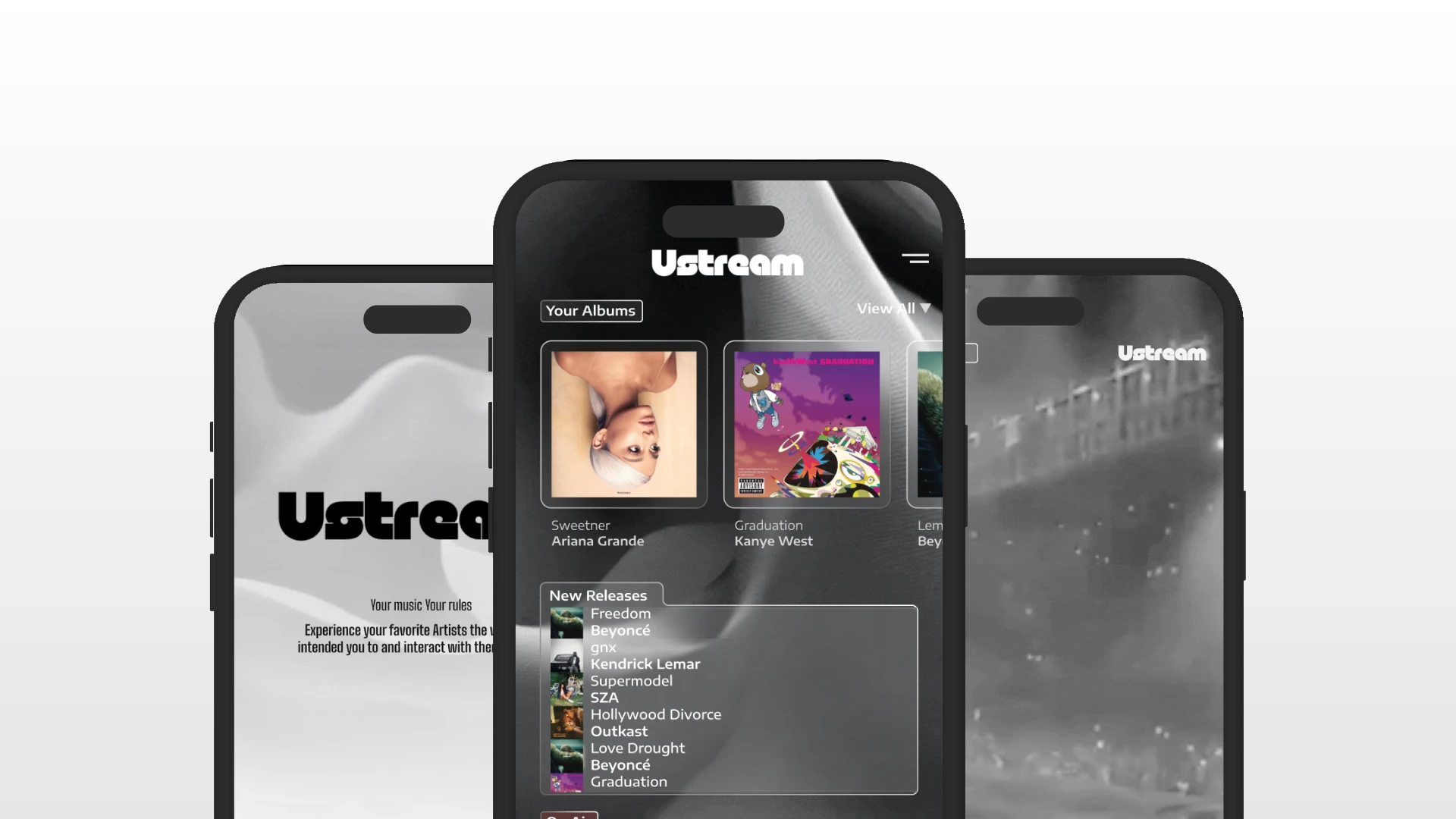
A new music economy, designed by hand.
Ustream is a music platform concept where listeners' subscriptions convert into credits that flow directly to the artists they actually play. I designed the product system and built a clickable MVP solo in Figma — listener experience, live flow, and the core logic behind direct artist support. No AI. My first real product MVP.
At a glance
Product — Music streaming + live concert platform built around direct artist payouts
Audience — Listeners who want their fandom to actually pay artists; independent artists tired of being commoditized
Role — Solo product designer, researcher, system architect
Status — Clickable MVP designed in Figma · Fall 2024
Stack — Figma · hand-designed · zero AI in the loop
Why it matters — Proves the product instincts behind FLOLO and You the Birthday were already there before AI was in my toolkit
What I owned
The product thesis — direct-pay streaming as a response to the creator-economy gap
Research: 4 proto-personas, 4 full user-journey maps (artist, executive, investor, fan)
The full system architecture — listener side, artist side, live + community layer
UX flows for the MVP slice: onboarding, home/library, live concert
Every screen designed by hand in Figma — layout, hierarchy, typography, color, interaction
The clickable prototype and the demo walkthrough
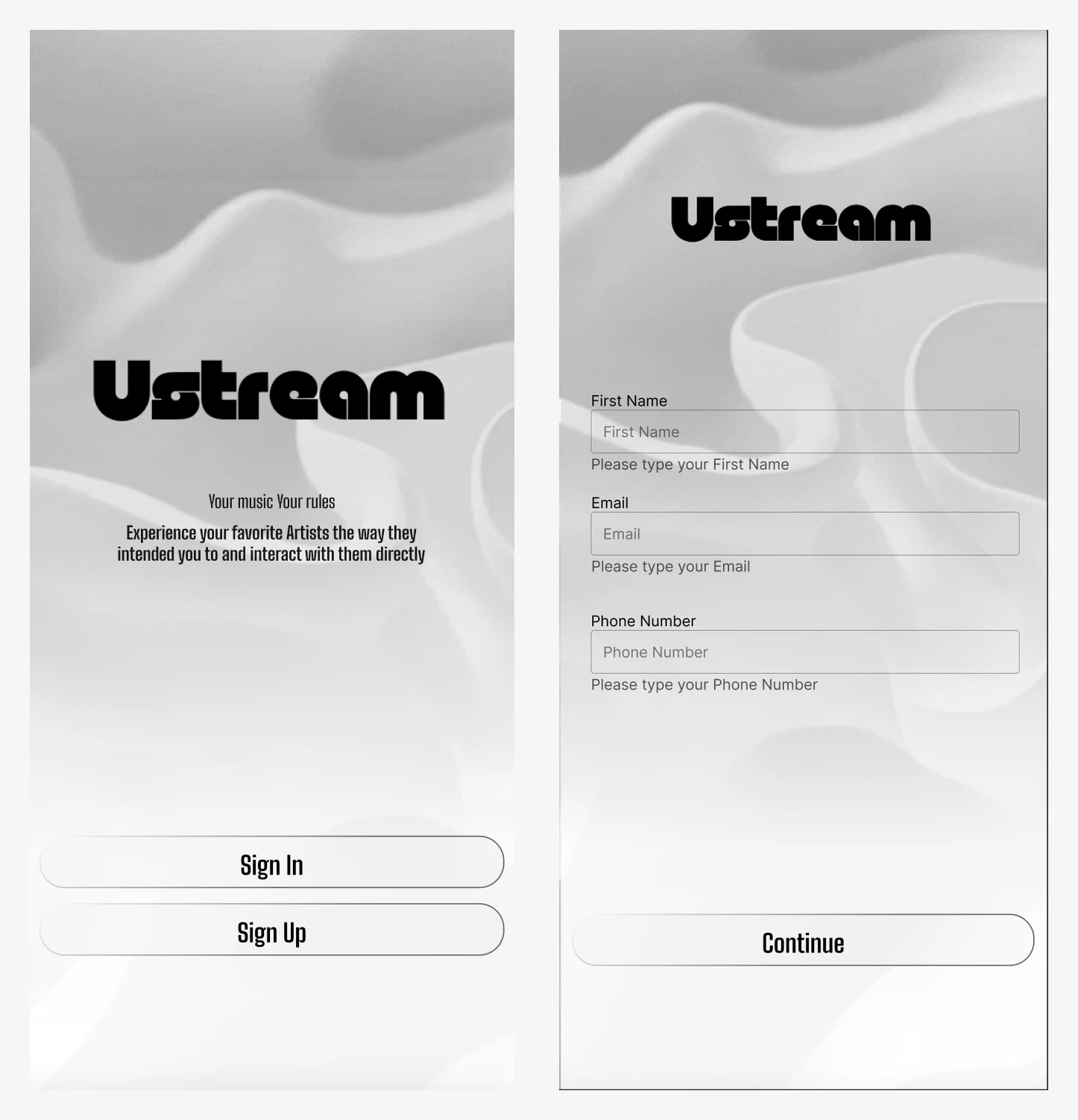
The entry experience — splash thesis on the front door, then the lightest possible identity capture.
The tension
Streaming commoditized music. Artists can rack up millions of plays and still not make rent. The economics were rebuilt to favor the platform, and the relationship between the listener and the artist they love became indirect, abstract, and broken.
The thesis
Ustream rewires the loop. A subscription becomes spendable credit. Every play moves real value from the listener to the artist. The platform takes a small fee instead of the lion's share. Fandom becomes a payment, not a metric.
Subscribe — listener pays a flat monthly subscription
Convert — that subscription becomes credits with real monetary value
Listen — every play transfers a portion of those credits to the artist
Connect — live streams, gifting, and community deepen the artist–fan loop
Cash out — artists see payouts and performance in their own dashboard
Why I chose to build this solo
The class allowed groups. I went solo because I wanted the full weight of the product on me — research, system, flows, screens — without the option of handing any of it off. That decision forced me to think in product systems, not just screens.
Research — who is this product actually for?
I mapped four people the platform has to serve at once. Each one has a different reason to show up and a different definition of "this works."
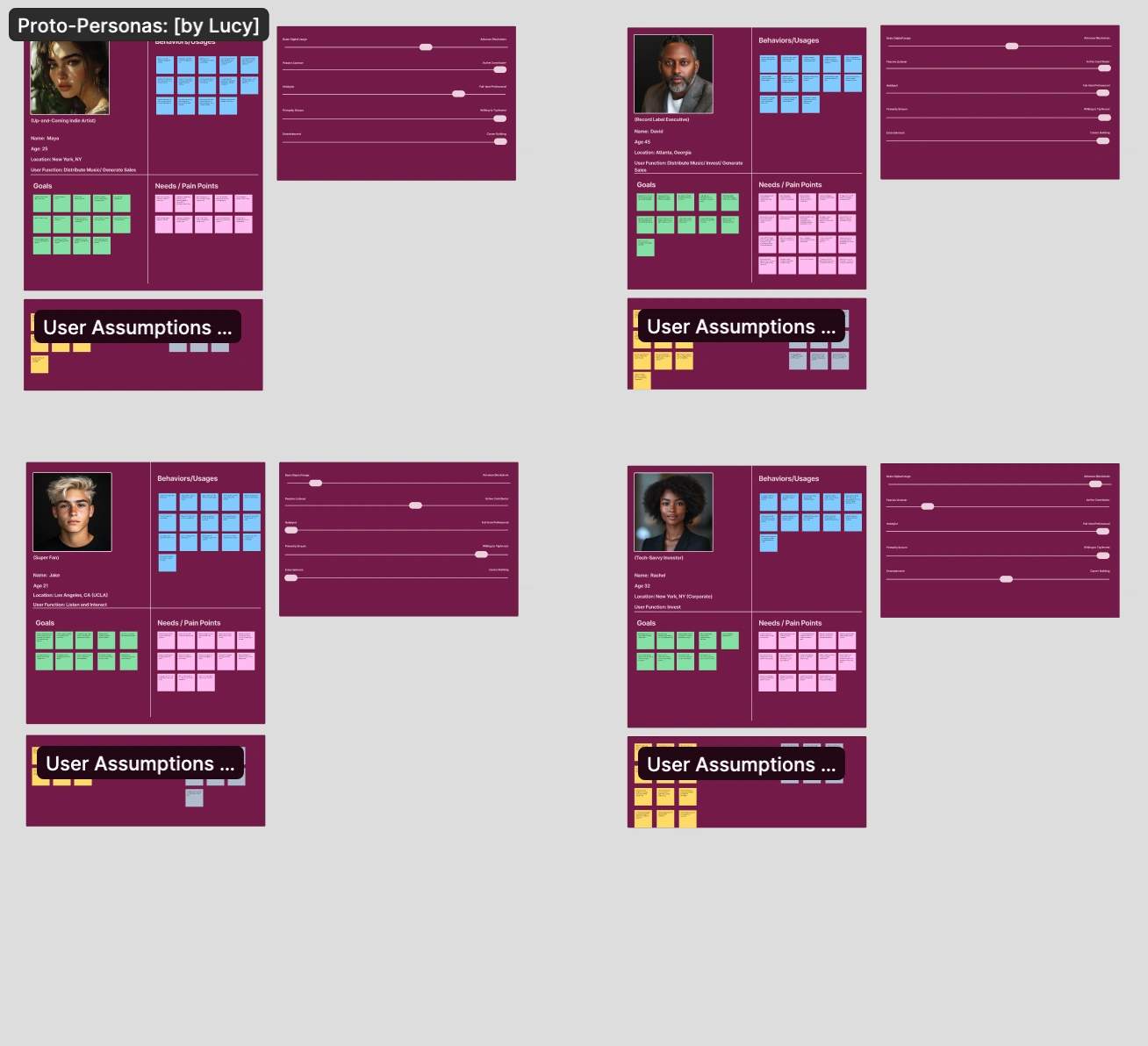
Four proto-personas. Listener, artist, executive, investor — every screen has to earn its place with all four.
Super Fan — wants to support artists directly, follow live moments, collect access
Upcoming Artist — needs payouts, distribution, and a real path to fans
Music Executive — needs scouting, performance signals, and roster tools
Tech Investor — needs scalability, transparent economics, and a model that holds
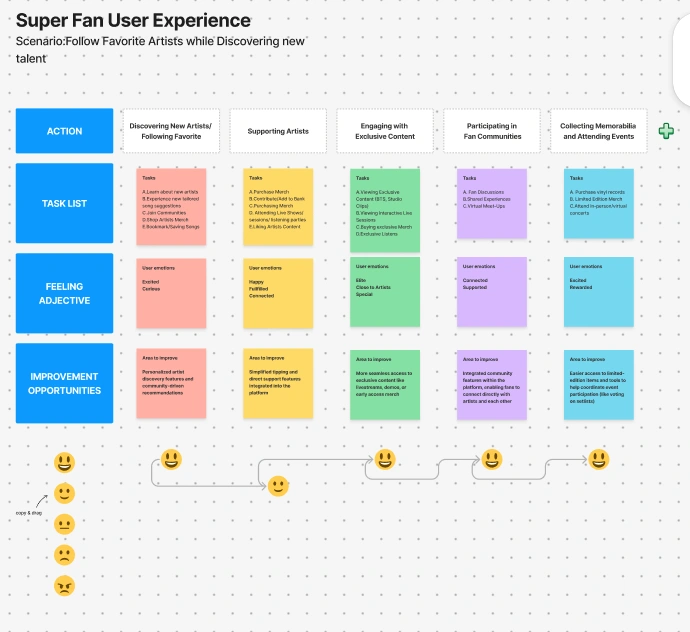
Super Fan journey — discovering, supporting, attending, collecting.
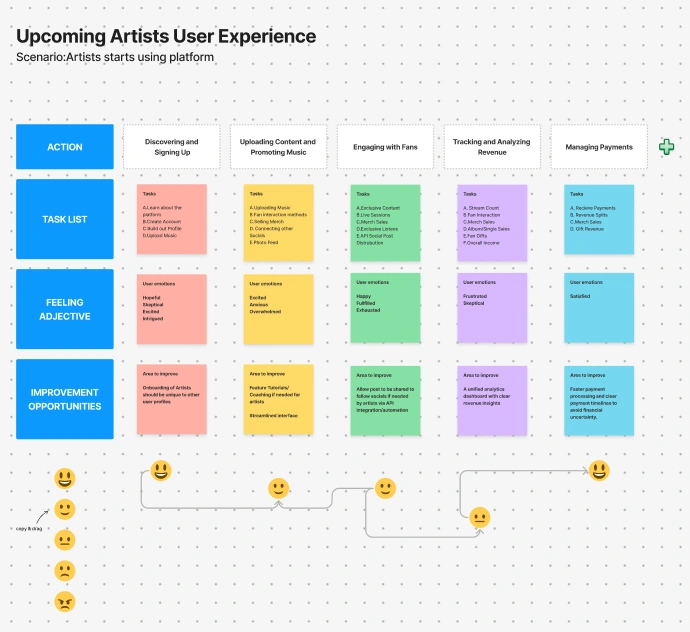
Upcoming Artist journey — onboarding, uploading, engaging, getting paid.
The product vision
Listener side — onboarding, library, discovery, live concerts, gifting, community chat
Artist side — distribution, uploads, fan engagement, live broadcasts, payout dashboard, analytics
Live + community layer — concerts as first-class product surfaces, not afterthoughts
Direct-pay engine — credit conversion, per-play transfer, transparent splits
Roster tools — for executives scouting and managing talent
What I designed for the MVP
I scoped the clickable build to one clean slice of the listener journey: enter the product, find your music, attend a live moment. Everything else is system architecture on paper.
Onboarding — sign-up, identity capture, genre selection
Home / library — your albums, new releases, live "On Air" surface
Live concert — full-bleed stream, real-time chat, in-stream gifting
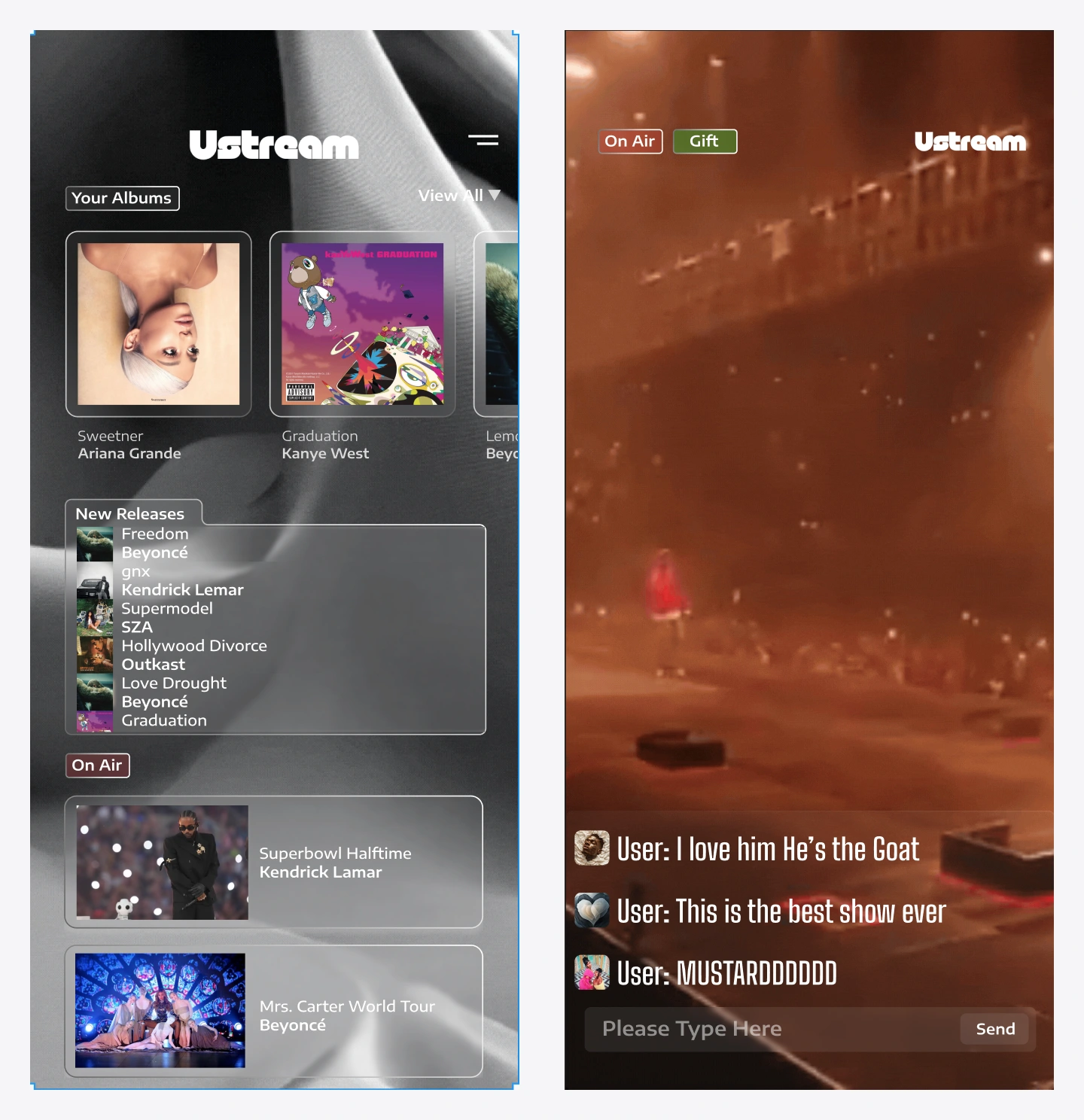
The in-product experience — home stacks library, releases, and live concerts; the live surface turns fandom into a gifting moment.
What this project taught me
Product design is system design. Screens are the last 10%.
Every interface decision answers a journey question — who, when, why now
A real product problem beats a clever interface every time
Going solo by choice trains the muscles a team would otherwise carry for you
Hand-built Figma work is where hierarchy, judgment, and taste get earned
What this project proves
I think in product systems, not just screens — even before AI was in my stack
I can translate a real industry problem into a coherent product thesis
I do my own research — personas, journeys, scope decisions — and ship the slice that matters
I design listener and operator surfaces with the same rigor
The instincts in FLOLO and You the Birthday were already there in 2024
How it was built
This was the opposite of how I build now. Every screen, flow, and journey map was designed by hand in Figma — no AI in the loop, no generative shortcuts. Fall 2024, first semester of my BFA at City College after transferring from Hostos, in a UX/UI class I was waved into early. I aced it. More importantly, it forced me to feel the full weight of product design before I had AI to lean on.
Stack
Design — Figma (hand-built, no AI assist)
Research — Proto-personas · user journey mapping · scenario design
Prototype — Figma clickable prototype + demo walkthrough
Process — Solo by choice · scoped MVP from a larger product vision
Like this project
Posted Apr 25, 2026
A direct-pay music platform concept. Designed solo, by hand, in Figma — before AI was in my toolkit. My first real product MVP.
Likes
1
Views
14