AI MVP for Kryscapes Travel Advisor

Marcellus Borland


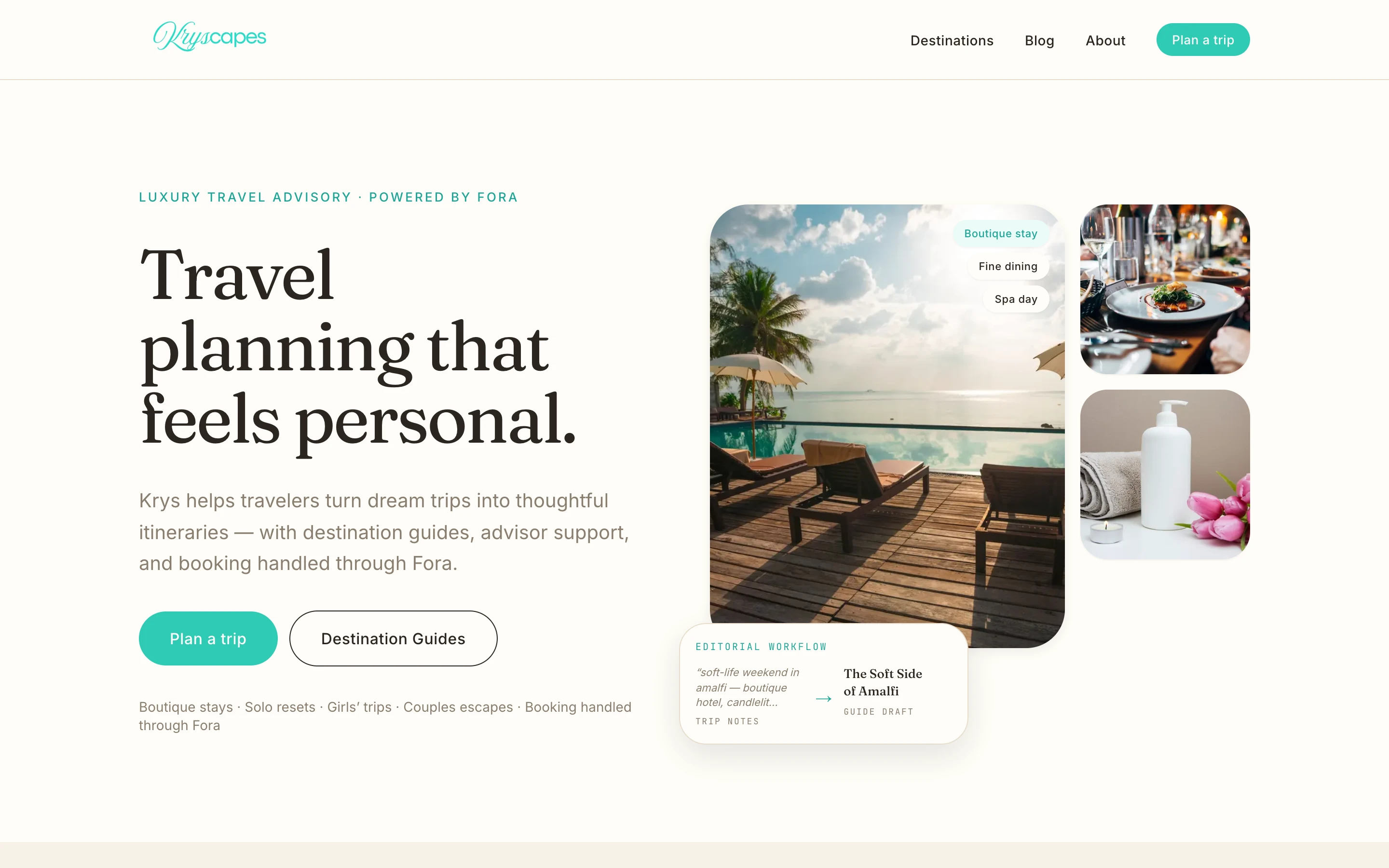
AI MVP Sprint — from idea to working product system.
I turned a rough service idea into a working AI MVP: a travel advisor brand, a voice-to-blog admin flow, and a published guide system — built as proof of what my AI MVP Sprint can ship.
What this is
Kryscapes is a prototype for a busy travel advisor who needs to look credible online without becoming a full-time content creator.
The product — a premium travel site with an admin engine behind it.
The user — a travel advisor balancing a full-time job, clients, and content pressure.
The system — voice notes become structured blog drafts, then published guides.
The sprint — strategy, UX, design system, Figma screens, AI pipeline, and working prototype.
The problem
A profile is not a brand — Fora handles booking, but the advisor still needs her own point of view.
Content takes too much time — the knowledge is in her head, not sitting in polished blog drafts.
Generic AI would hurt the trust — the output has to feel curated, personal, and editorial.
The scope had to stay tight — no payments, no Fora API, no production CMS, no fake enterprise buildout.
The MVP promise
The advisor talks about the trip. The system ships the post. Trip notes go in — an AI-drafted guide, hotel block, affiliate items, SEO metadata, and social captions come out.
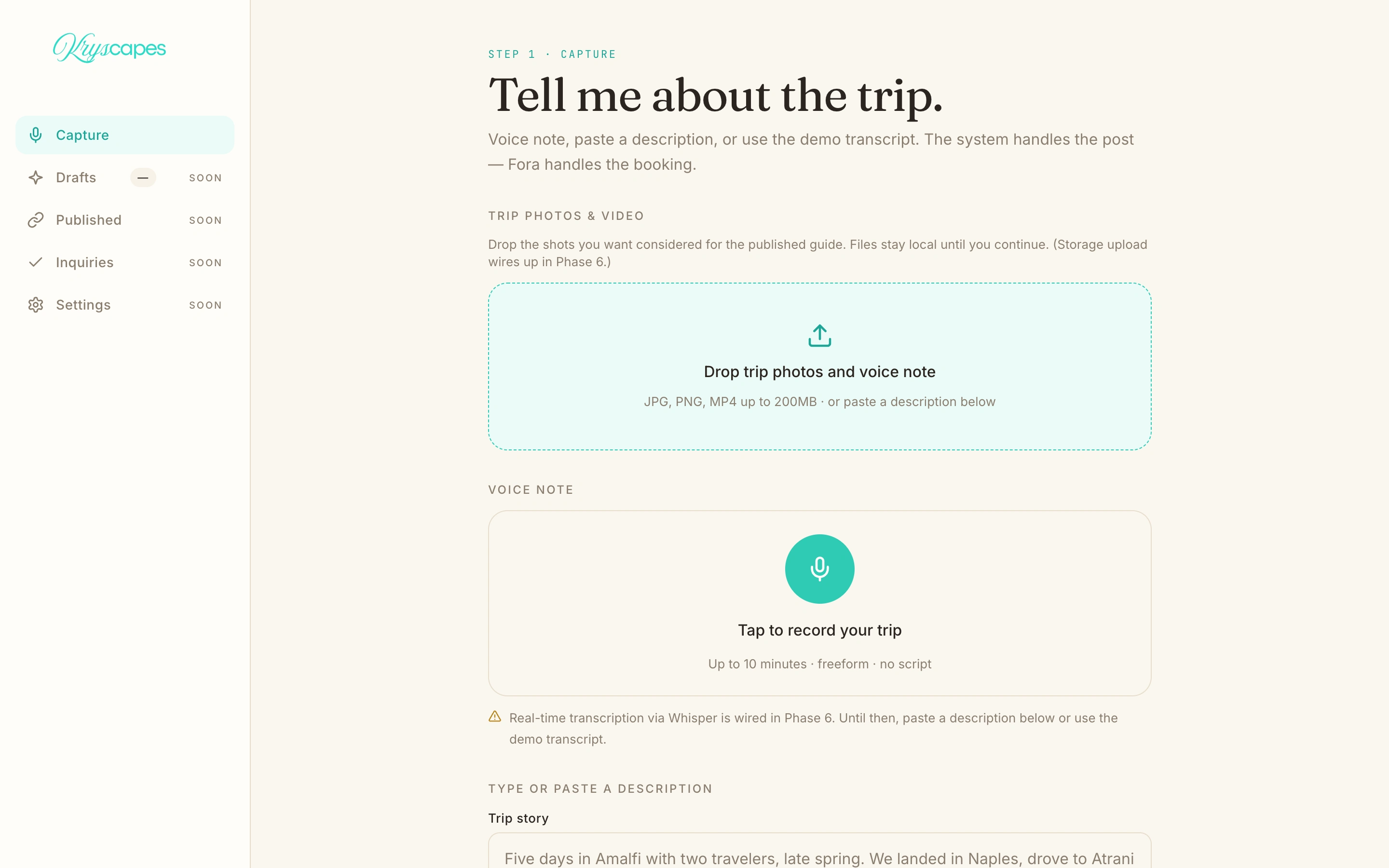
The admin starts where the advisor already is — photos, voice notes, or a quick pasted description.
What shipped
Public site — editorial homepage, blog index, published guide template, and inquiry form.
Advisor admin — capture flow, processing screen, draft review, and publish path.
AI pipeline — structured generation with fallbacks, so a failed API call does not kill the demo.
Data layer — Supabase tables for ideas, drafts, posts, inquiries, hotels, and affiliate items.
Design system — warm neutral palette, turquoise accent, tokenized components, and reusable UI rules.
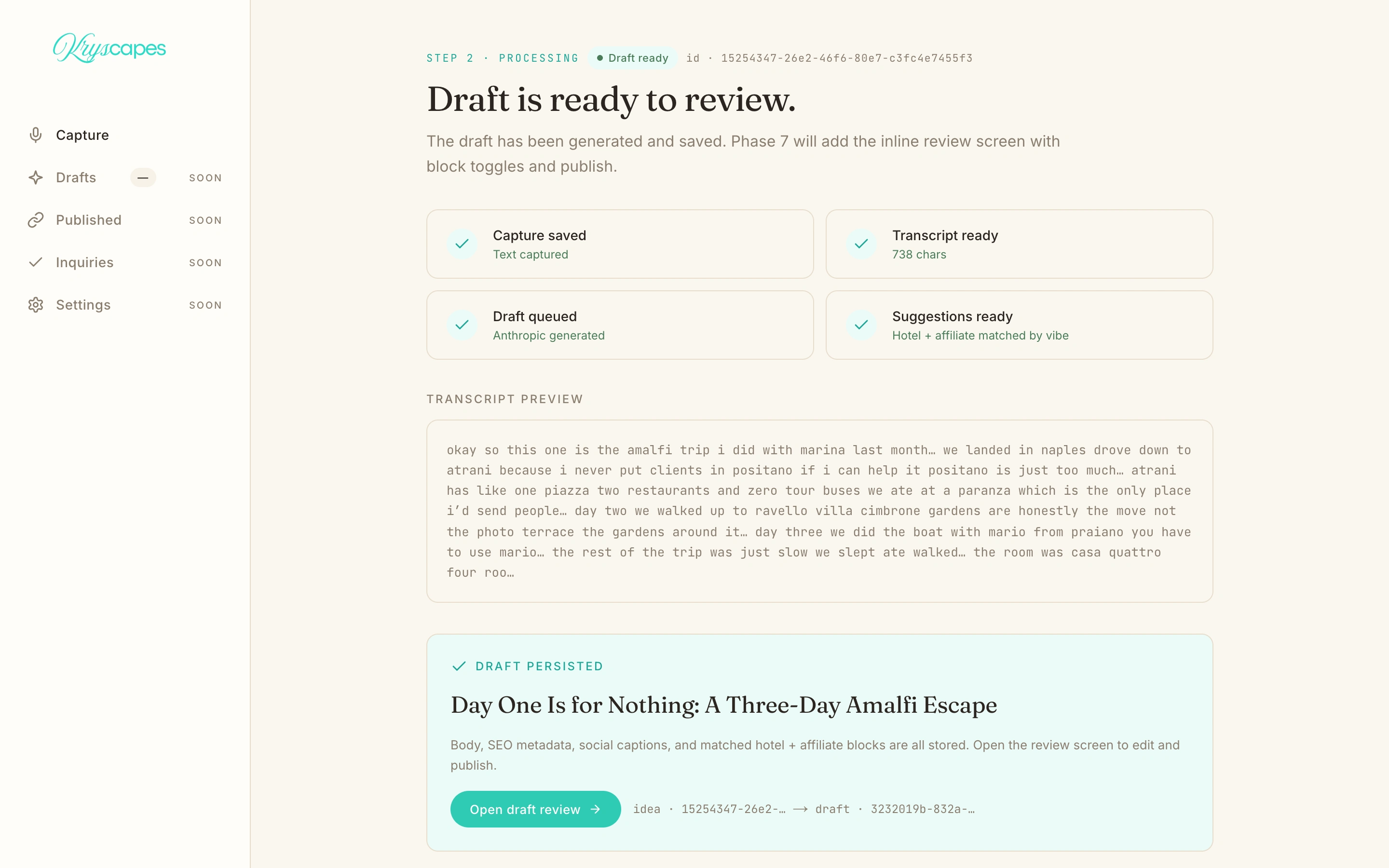
The pipeline turns raw trip notes into a structured draft with visible progress and a persisted draft result.
Process — planned before it was built
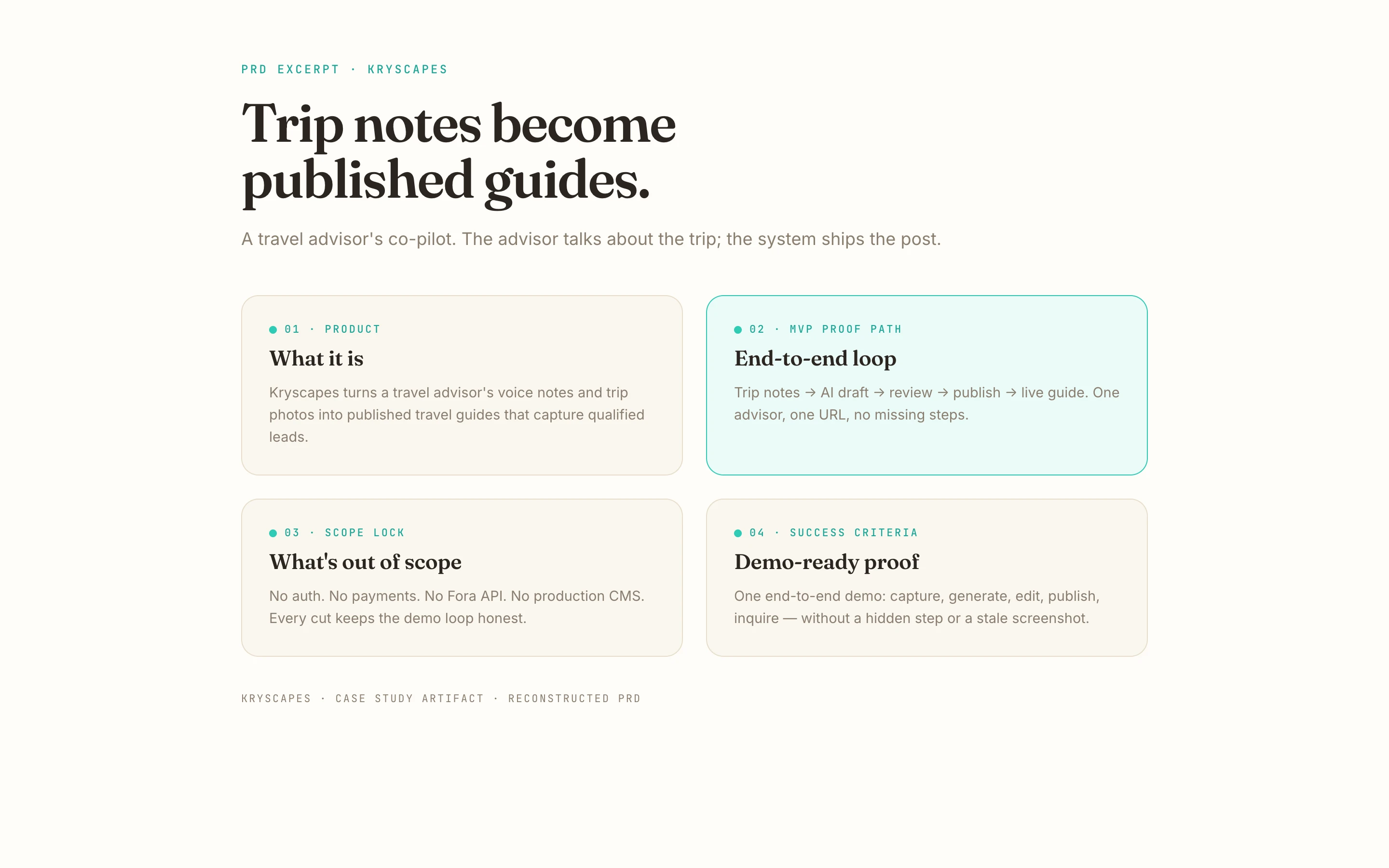
PRD excerpt — the product promise, proof path, scope lock, and success criteria.
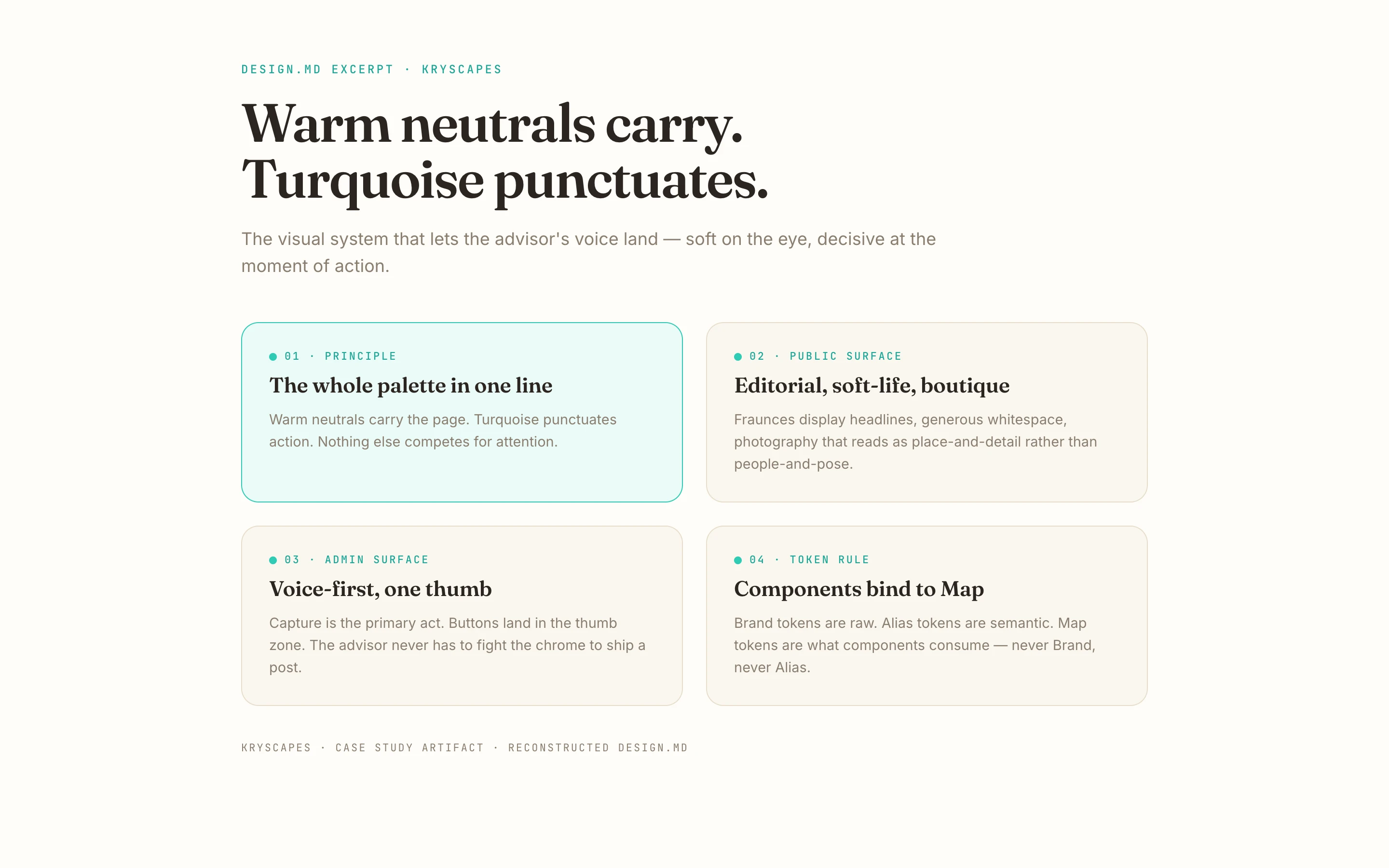
DESIGN.md excerpt — the brand rules that kept the public site editorial and the admin calm.
The design system was not decoration
Before screens, I built the system: tokens, type, components, states, and layout rules. That made the UI faster to assemble and easier to change.
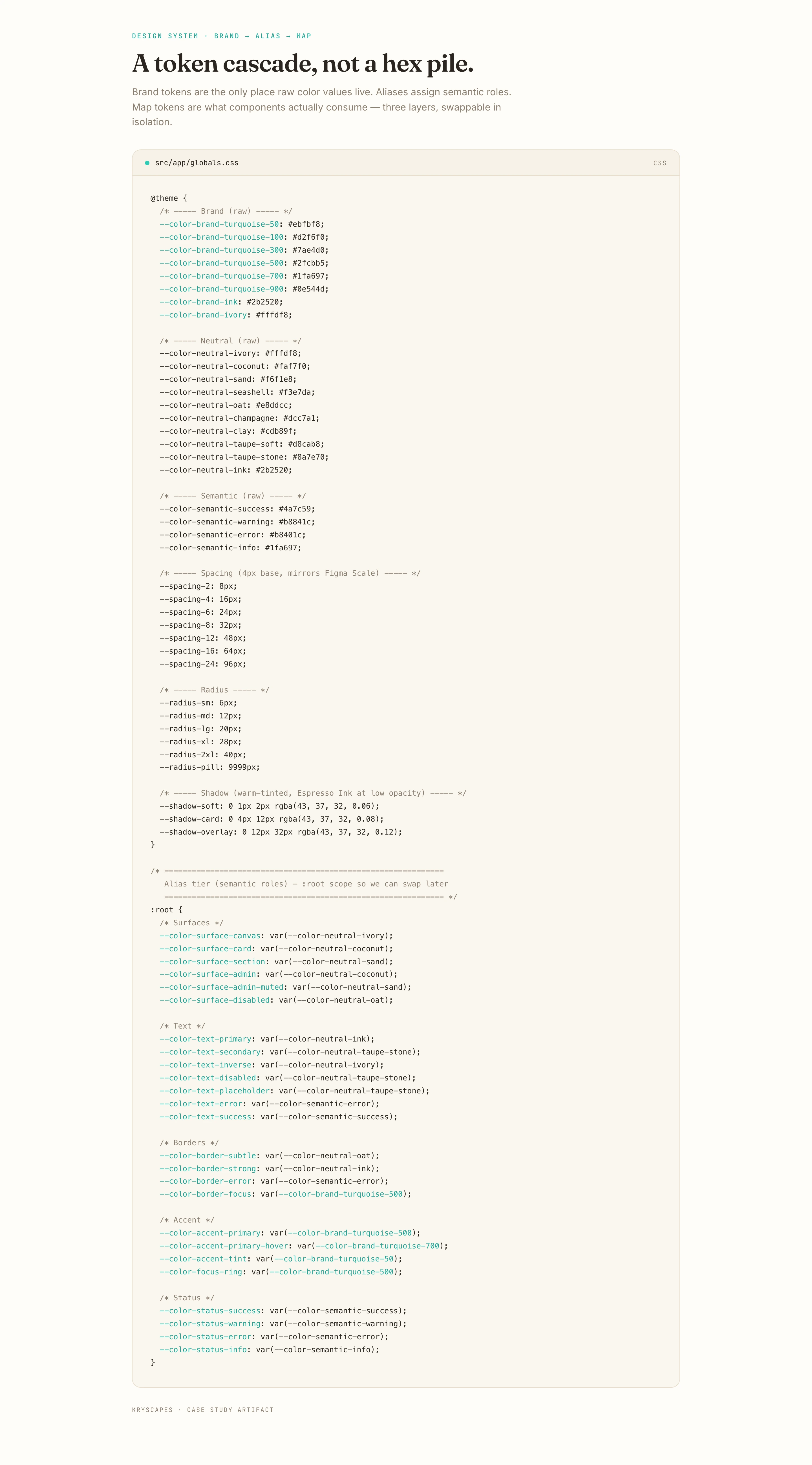
Brand → Alias → Map token cascade in code. Components consume Map tokens — not raw hex.
The AI had a real spine
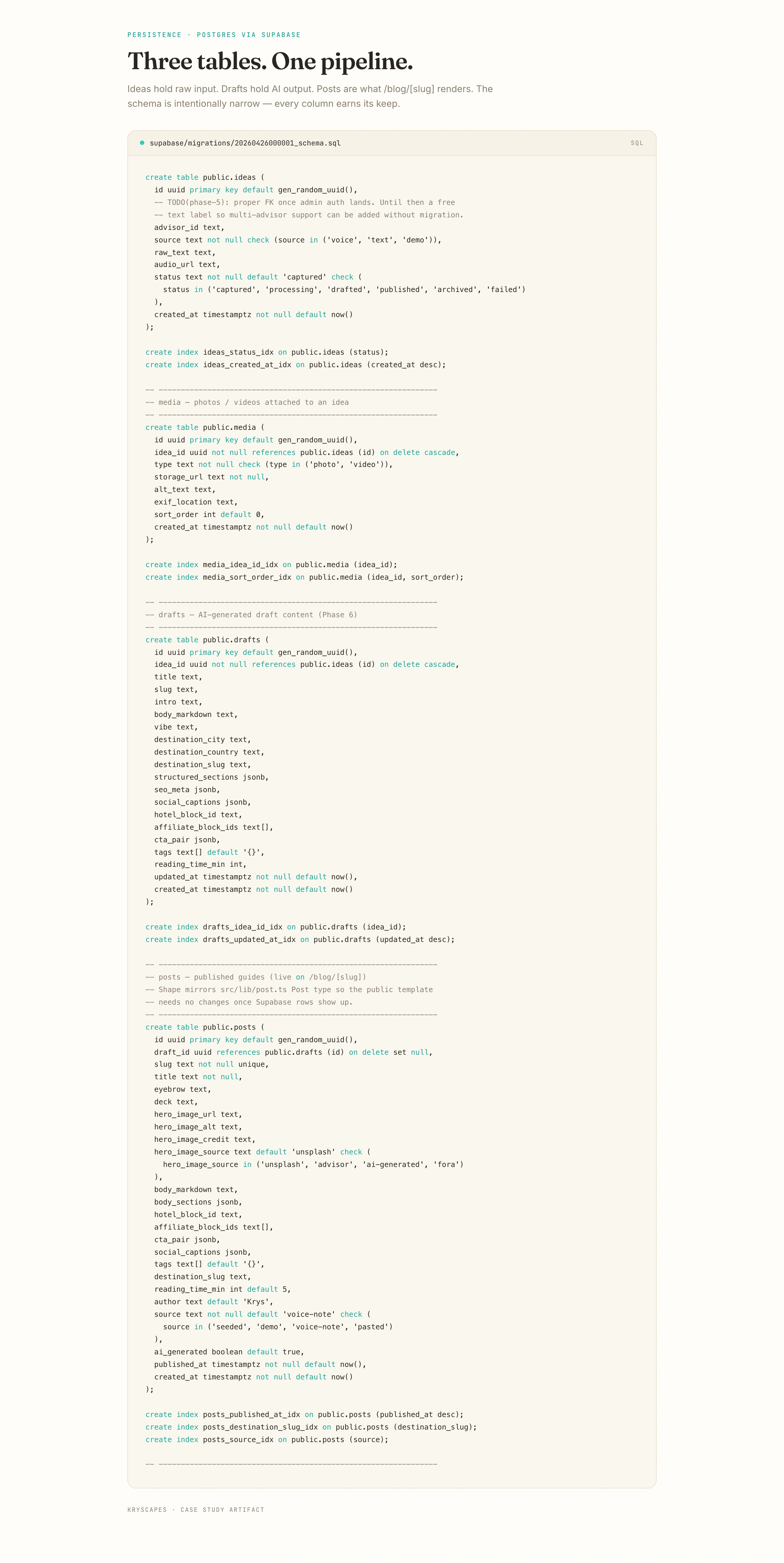
Ideas, drafts, and posts form the core loop. Narrow on purpose — every table supports the demo path.
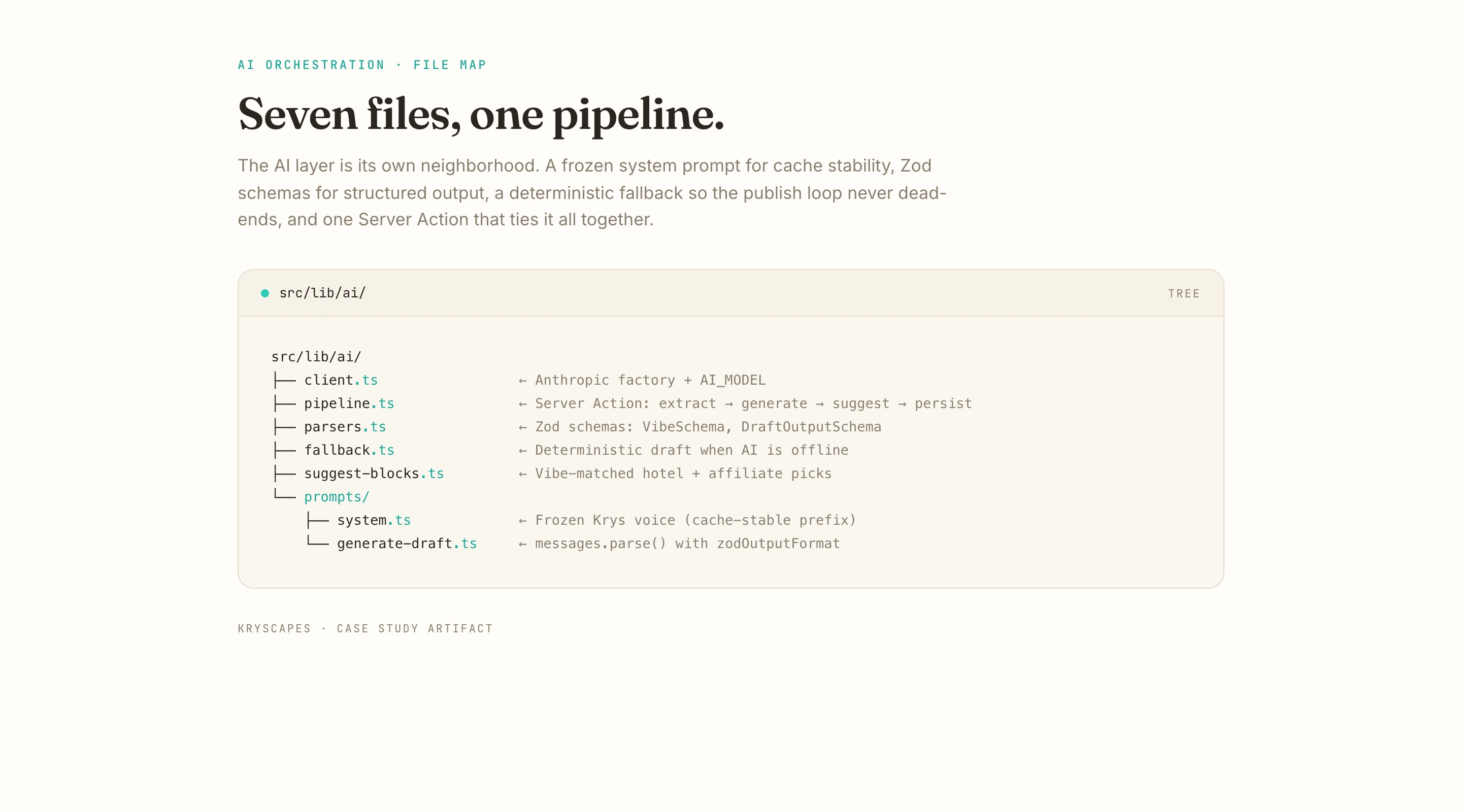
Prompt files live in the codebase, not hidden inside components. The AI workflow is editable, versioned, and inspectable.
Working product proof
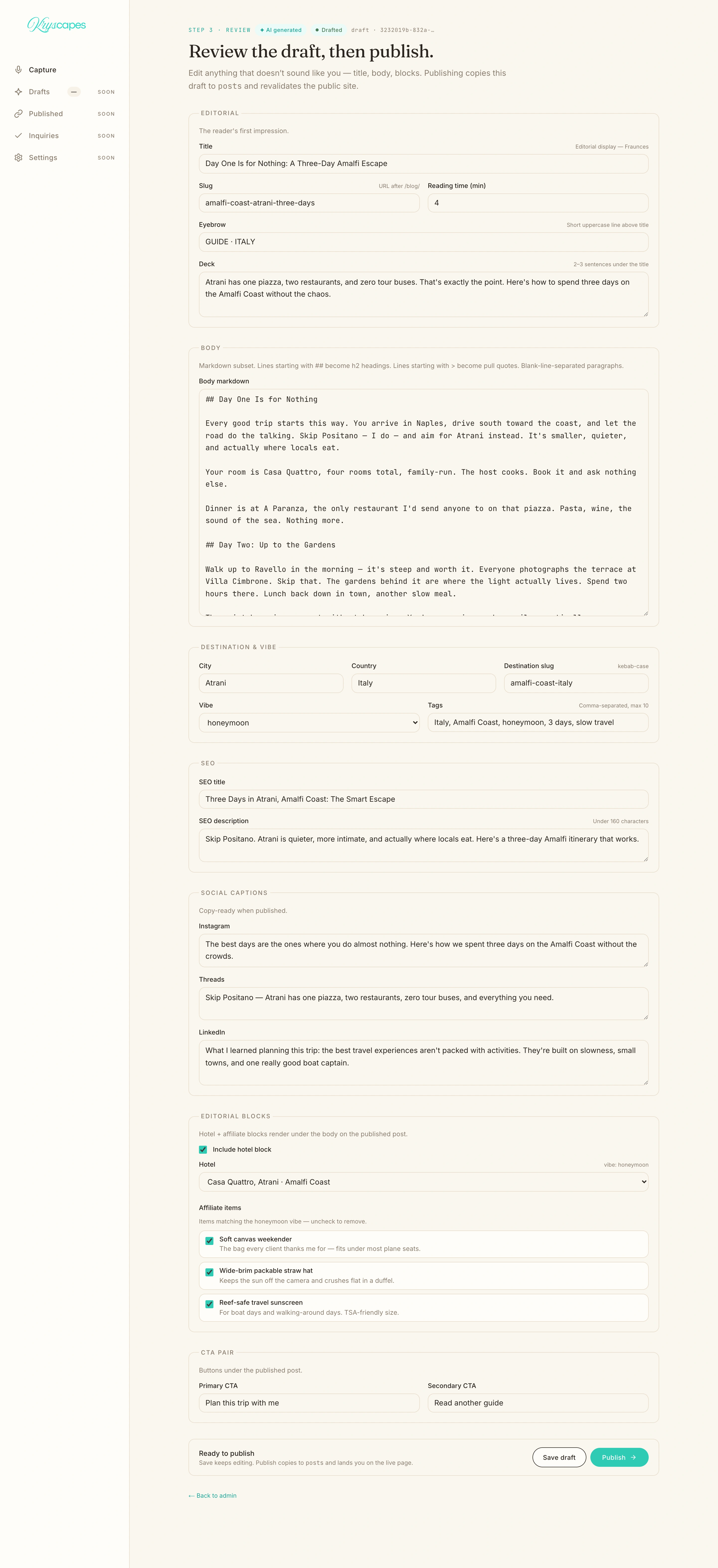
The AI draft becomes editable before it becomes public — title, body, SEO, social captions, hotel block, affiliate items, and CTA pair.
![The final guide renders on /blog/[slug] with a provenance chip, hotel block, affiliate block, and inquiry CTA.](https://media.contra.com/image/upload/fl_progressive/q_auto:best/mnz0ves4vdfq1hr2snv4.webp)
The final guide renders on /blog/[slug] with a provenance chip, hotel block, affiliate block, and inquiry CTA.
Why this matters for buyers
You get a real artifact — not just a deck, not just Figma screens, not just “strategy.”
You see the workflow — the product logic, design system, data model, and AI behavior are all documented.
You can keep building — the files are structured so the next designer, developer, or AI agent can continue.
You leave with proof — screenshots, prototype flows, and a story you can use for pitching or fundraising.
The sprint stack
Strategy — ChatGPT for product framing, scope, and case-study structure.
Build — Claude Code for implementation, testing, and iteration.
Design — Figma MCP for tokens, components, screens, and design-system artifacts.
Frontend — Next.js, Tailwind, reusable React components.
Backend — Supabase for ideas, drafts, posts, inquiries, hotels, and affiliate data.
AI — Anthropic for structured draft generation with fallback paths.
Deploy path — Cloudflare-ready, with key rotation required before any public deployment.
Hire me — two ways in
AI Product Design Sprint · $2,400 — strategy, UX, Figma system, clickable prototype, and AI workflow map. Best when you need clarity before build.
AI MVP Sprint · $6,500 — everything in the design sprint, plus a working MVP, database, AI pipeline, and launch-ready handoff. Best when you need proof people can actually use.
Book an AI MVP Sprint on Contra.
Like this project
Posted Apr 28, 2026
Developed an AI MVP for a travel advisor with a voice-to-blog system.