Luxury HandBag

Jerry Stark


Luxury Handbag Case Study: The Architectural Top-Handle Satchel
1. Executive Summary & Project Overview
The Architectural Top-Handle Satchel is a premium structured handbag designed to bridge high-end European leather craftsmanship with modern CAD-driven pattern engineering. Engineered for functional versatility and lasting structural integrity, the bag incorporates an accordion side-gusset system, a custom turn-lock clasp mechanism, and a multi-layer composite lining stack.
Role: Lead Accessories Designer & Leather Goods CAD Engineer
Tools: Rhino 3D / SolidWorks (3D Wireframe & Structural Modeling), KeyShot (CMF & Studio Rendering), Adobe Illustrator (Pattern Digitization & Tech Pack Assembly)
Deliverables: Conceptual Design Sketches, 3D Digital Wireframes, Physical Material Layouts, Multi-Stage Assembly Schematics, Production Tech Pack & Bill of Materials (BOM)
2. Market Positioning & Design Philosophy
Target Audience: Modern luxury consumers seeking timeless, functional silhouettes capable of transitioning seamlessly from professional settings to formal evening wear.
Core Problem Solved: Traditional structured top-handle bags often suffer from sagging bases, fraying edge paint, or rigid internal spaces that restrict storage capacity.
Design Philosophy: Clean geometric lines combined with a sharp envelope flap, architectural side gussets, and concealed interior reinforcement layers that preserve structural memory over extended use.
3. Concept Ideation, CAD Wireframe & Structural Modeling
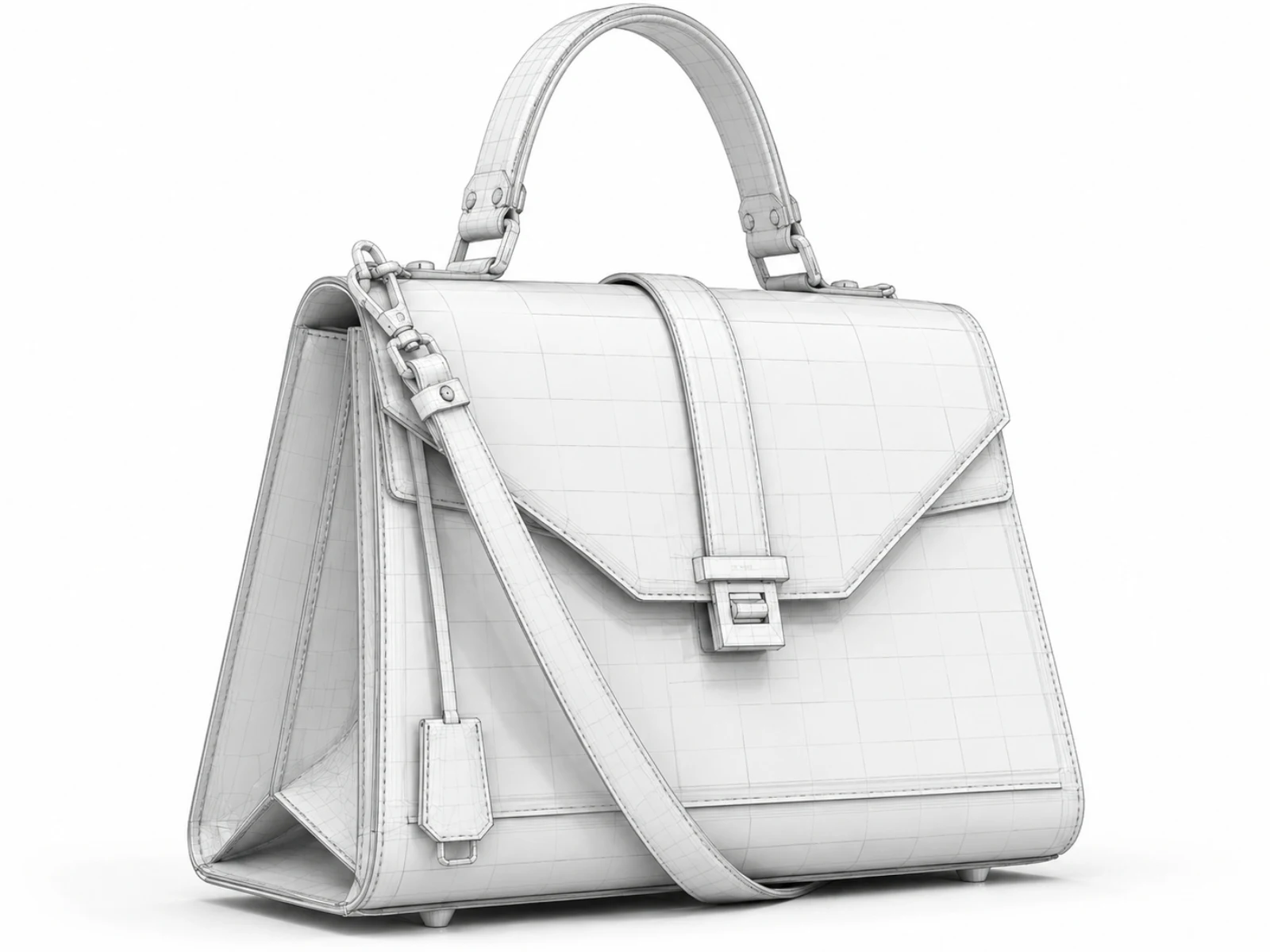
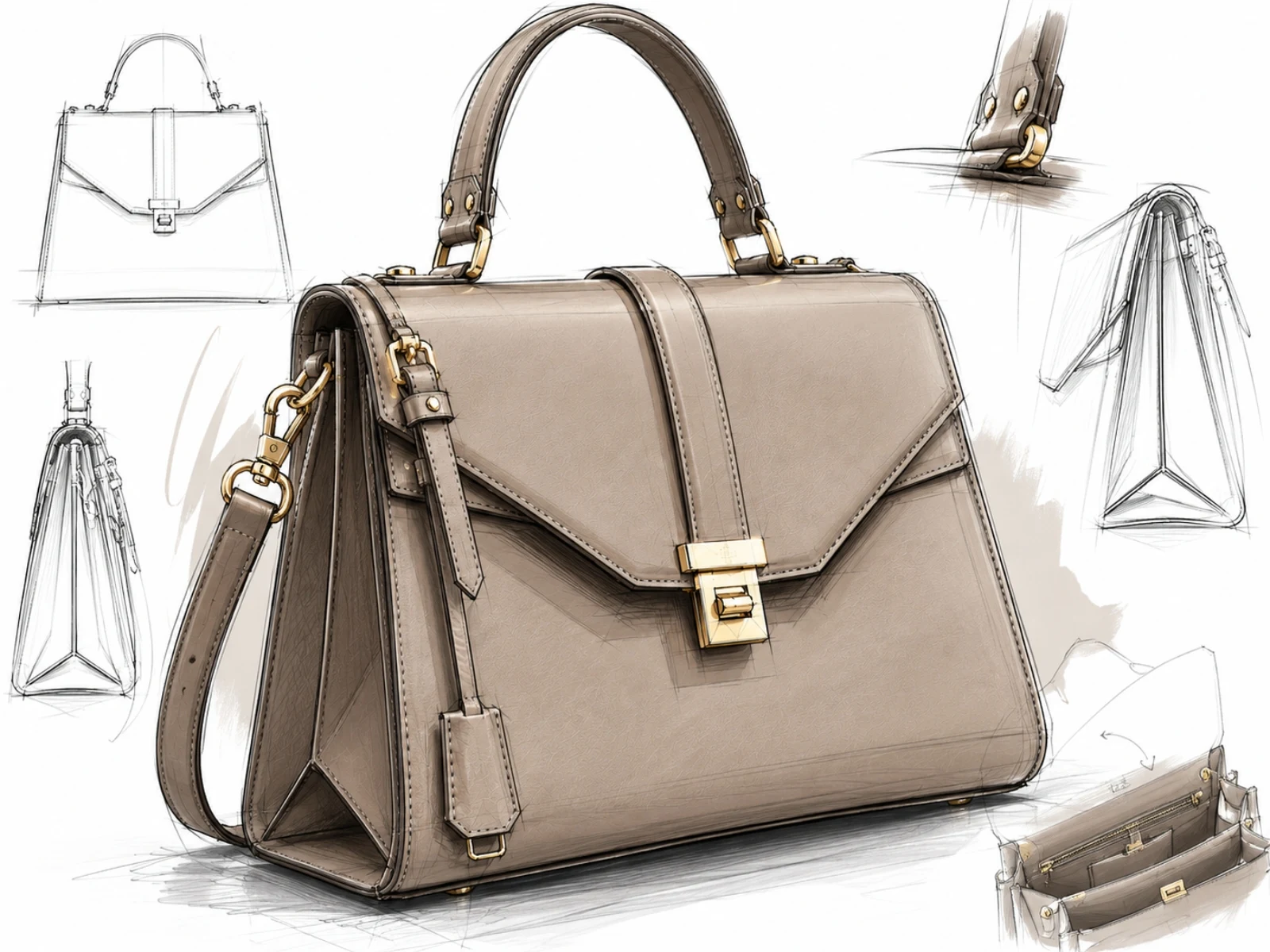
The design evolution moved from initial proportional line sketches through detailed 3D digital wireframing to map spatial volumes and stress points prior to physical sampling.
Geometric Envelope Flap: Designed with a clean angular drop that aligns precisely with the central brass turn-lock clasp.
Digital Mesh Validation: 3D wireframe modeling verified that the gusset folds collapse inward without stressing the primary shoulder strap anchor points.
4. Anatomy, Internal Layering & Cross-Section Engineering
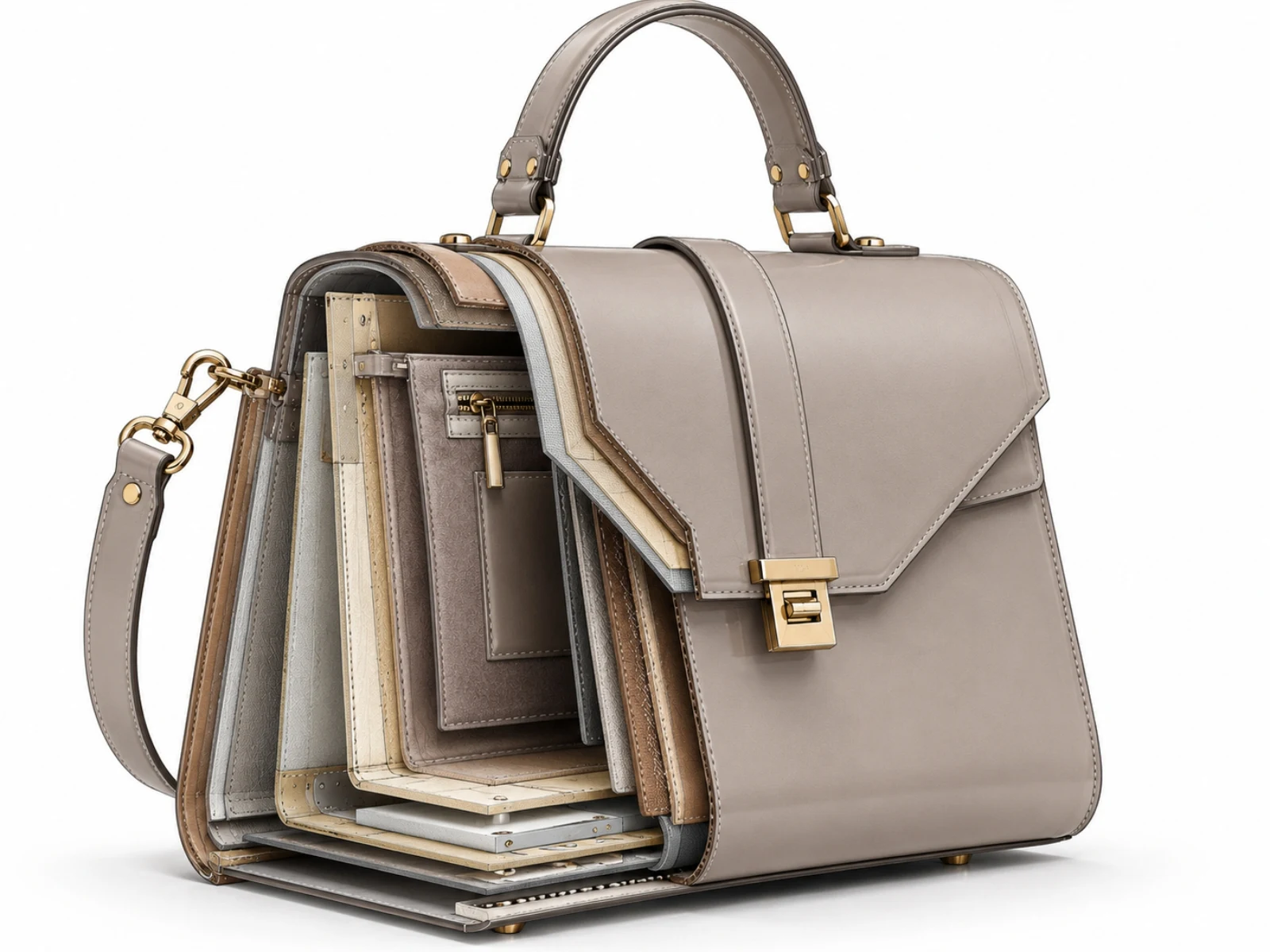
A cross-sectional teardown reveals the multi-layer interior architecture engineered to maintain a self-supporting silhouette without adding excessive weight.
Multi-Layer Wall Stack: Consists of full-grain taupe calf leather on the exterior, backed by non-woven structural interfacing for shape retention, and finished with a soft beige microfiber suede interior lining.
Internal Organization: Features two main open compartments separated by a central zipped divider pocket, plus dedicated slip pockets on both the front and rear walls.
5. CMF Strategy & Hardware Specifications
The material selection prioritizes high tactile quality, water resistance, and long-term durability.
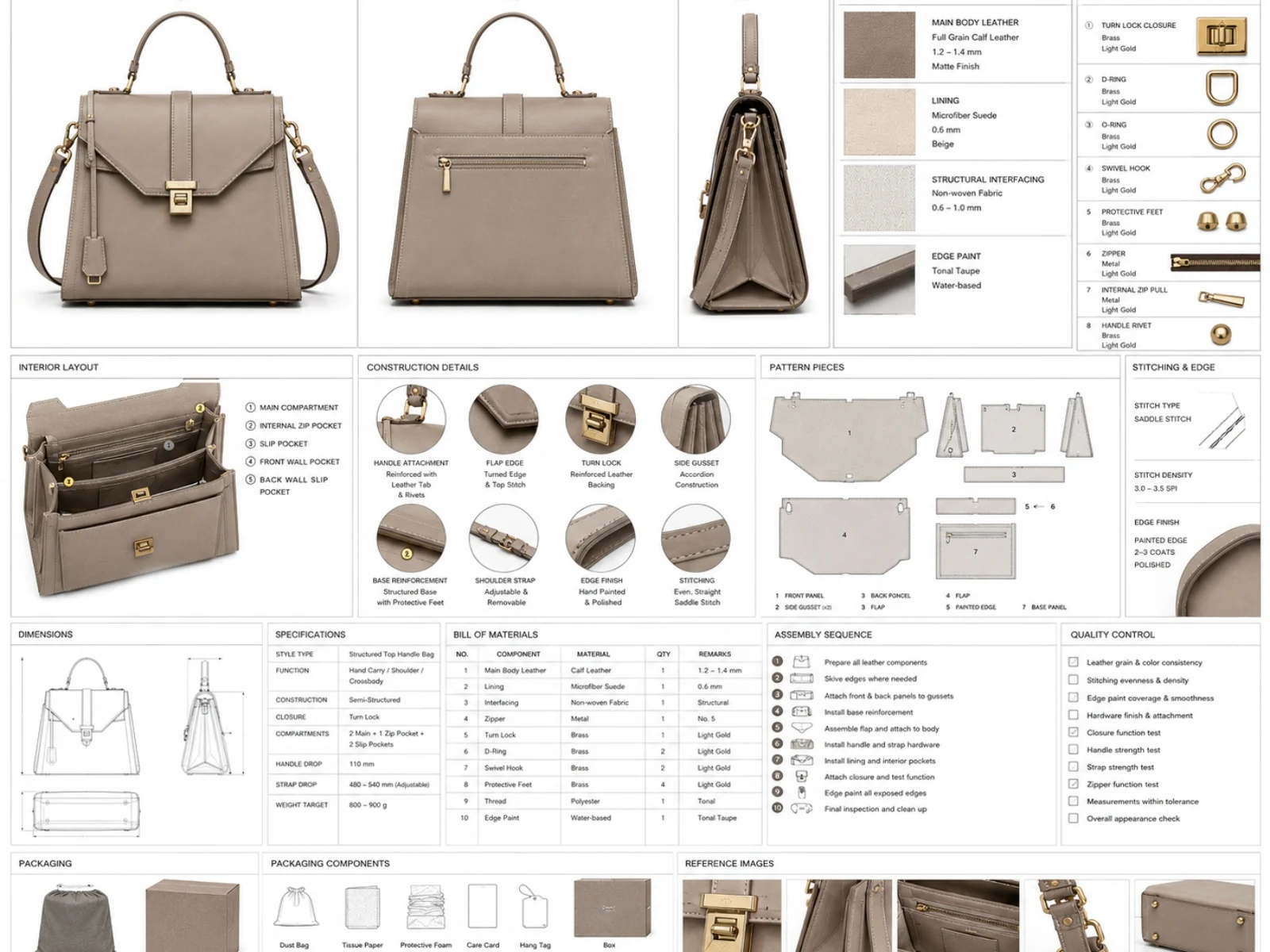
Main Body Leather: Full-grain calf leather (1.2mm - 1.4mm thickness) in a matte tonal taupe finish.
Interior Lining: Microfiber suede (0.6mm thickness) in a soft beige tone for contrast and scuff resistance.
Hardware Finish: Precision-cast solid brass hardware with a light gold electroplated coating, including the custom rectangular turn-lock closure, swivel hooks, D-rings, and protective base feet.
Edge Finishing: Tonal taupe water-based edge paint applied in 2 to 3 hand-sanded and polished coats along all turned and cut leather edges.
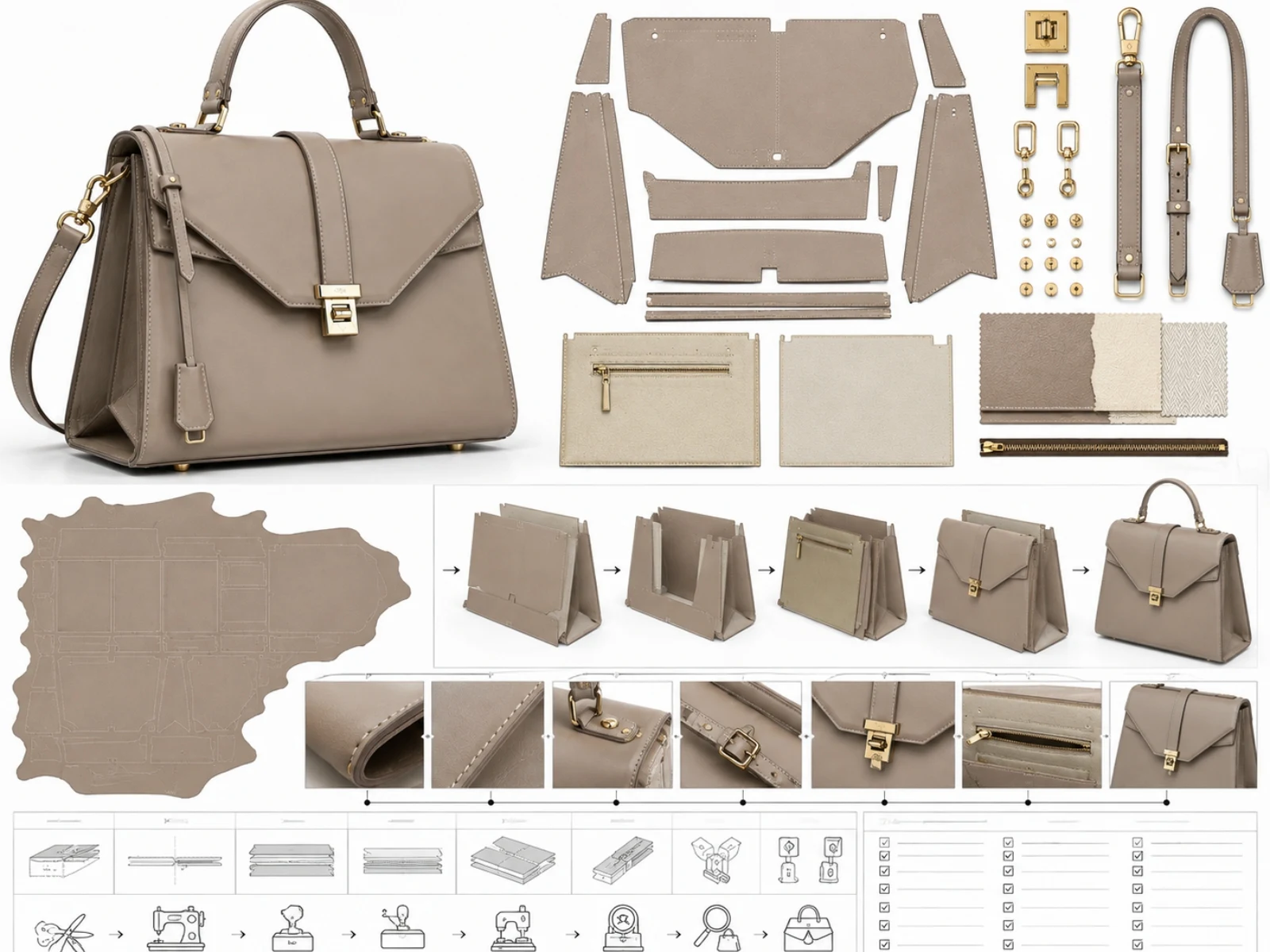
6. Pattern Pieces, Bill of Materials (BOM) & Manufacturing Specifications
The production blueprint standardizes all components, tolerances, and material callouts to ensure consistency across artisanal manufacturing runs.
Key Dimensions: Handle Drop = 110mm; Shoulder Strap Drop = 480mm - 540mm (adjustable); Target Weight = 800g - 900g.
Stitching Standards: Traditional saddle stitching using bonded polyester thread executed at a density of 3.0 - 3.5 stitches per inch (SPI).
Assembly Sequence:
Skive leather panel edges → 2. Laminate structural interfacing → 3. Assemble front/back wall subassemblies → 4. Attach accordion side gussets → 5. Mount turn-lock and top handle → 6. Insert lining stack → 7. Paint and polish edges.
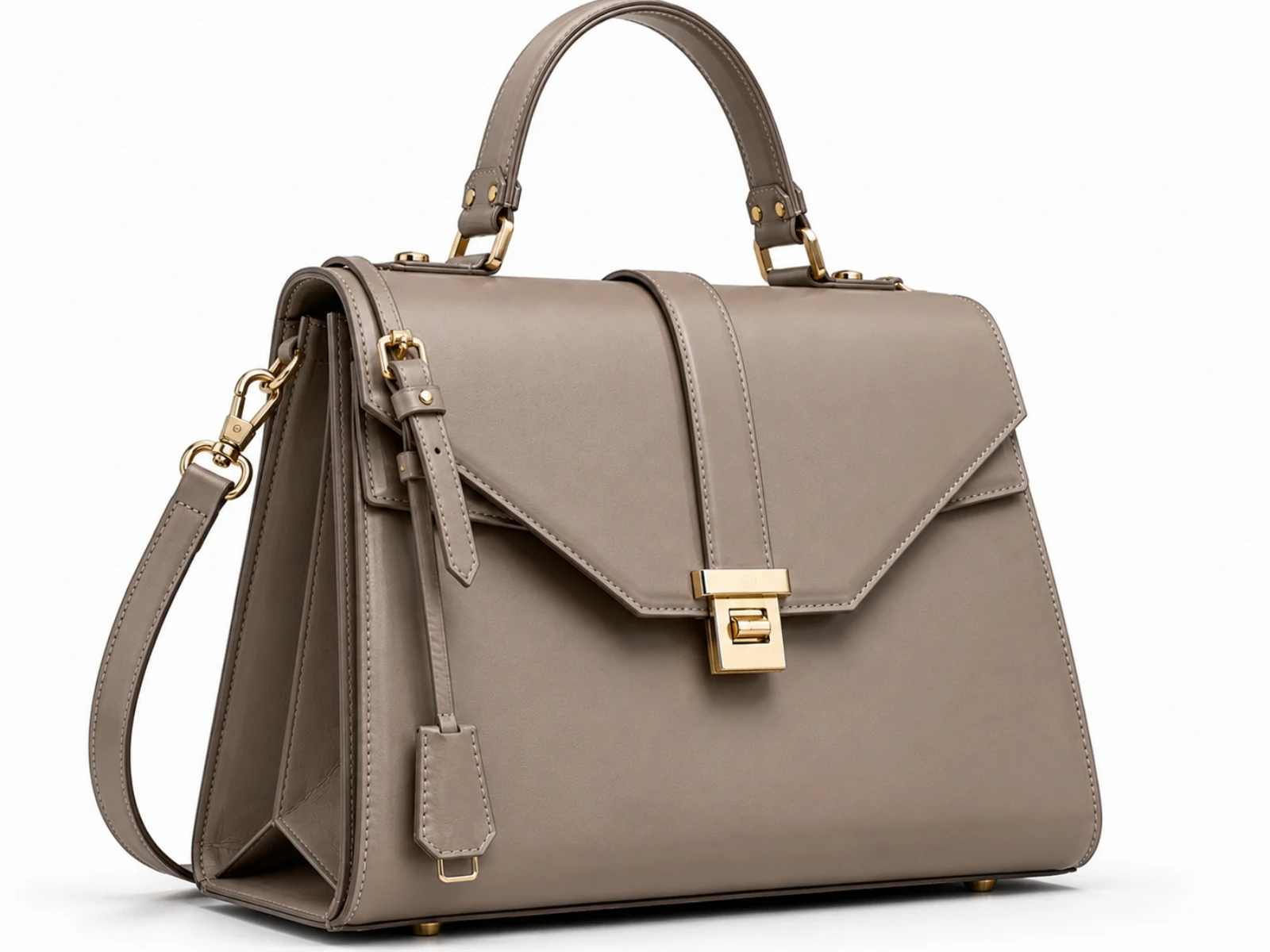
7. Quality Control, Packaging & Final Results
Quality Control Checklist: Includes verifying leather grain consistency, stitch line straightness (3.0-3.5SPI), edge paint smoothness, hardware snap tension, and load testing on top handle rivets and strap anchors.
Packaging Architecture: Ships in a protective dust bag, wrapped in acid-free tissue paper with foam inserts to protect internal pocket geometry, housed inside a premium rigid presentation box.
Final Takeaway: The project successfully demonstrates how integrating 3D CAD modeling with traditional leathercraft techniques minimizes physical sample iterations, streamlines tech pack handoffs, and ensures high structural fidelity in luxury accessory design.
Like this project
Posted Sep 16, 2026
Completed a structurally advanced top-handle luxury satchel design.