Luminary AI Web Experience Development

Jerry Stark


Luminary AI — Building a Next-Gen Web Experience in Framer
1. Executive Summary & Project Overview
Luminary AI is an enterprise-grade platform built to deliver autonomous design intelligence for complex digital products. This case study details the end-to-end design and web development workflow created to establish Luminary AI’s web footprint, transitioning from early product concepts to an interactive, high-performance web platform.
Role: Lead UI/UX Designer & Framer Developer
Tech Stack: Figma, Framer, Custom Code (React / Micro-Interactions), CSS Grid Architecture
Deliverables: Responsive Web Platform (Desktop + Mobile), Interactive Framer Component System, Integrated Analytics Workspace UI
Core Goal: Communicating complex enterprise AI capability through a clean, modern dark-mode aesthetic with fluid interaction models.
2. The Challenge: Complex Workflows & Brand Scale
Enterprise B2B platforms frequently struggle with presenting dense artificial intelligence metrics, automated workflows, and complex analytics without overwhelming decision-makers. Luminary AI faced two distinct UX challenges:
Information Overload: Presenting multi-layered data, such as real-time component health, pipeline velocity, and usage metrics, in an instantly readable format.
Abstract Value Proposition: Positioning "Autonomous Design Intelligence" clearly so prospective enterprise clients understand the concrete impact on speed, uptime, and workflow efficiency.
3. Brand Identity & Visual System (Emerald & Slate Palette)
To reflect precision, intelligence, and modern sophistication, a refined dark visual identity was engineered around a slate base paired with vibrant emerald accents.
Color Palette: Deep slate charcoal background surfaces providing high contrast for glowing neon emerald (
#10B981) CTA buttons, balanced by subtle violet-purple wave gradients.Typography: Clean, geometric Sans-Serif sans typography optimized for readability across high-density analytics dashboards and large editorial marketing headlines.
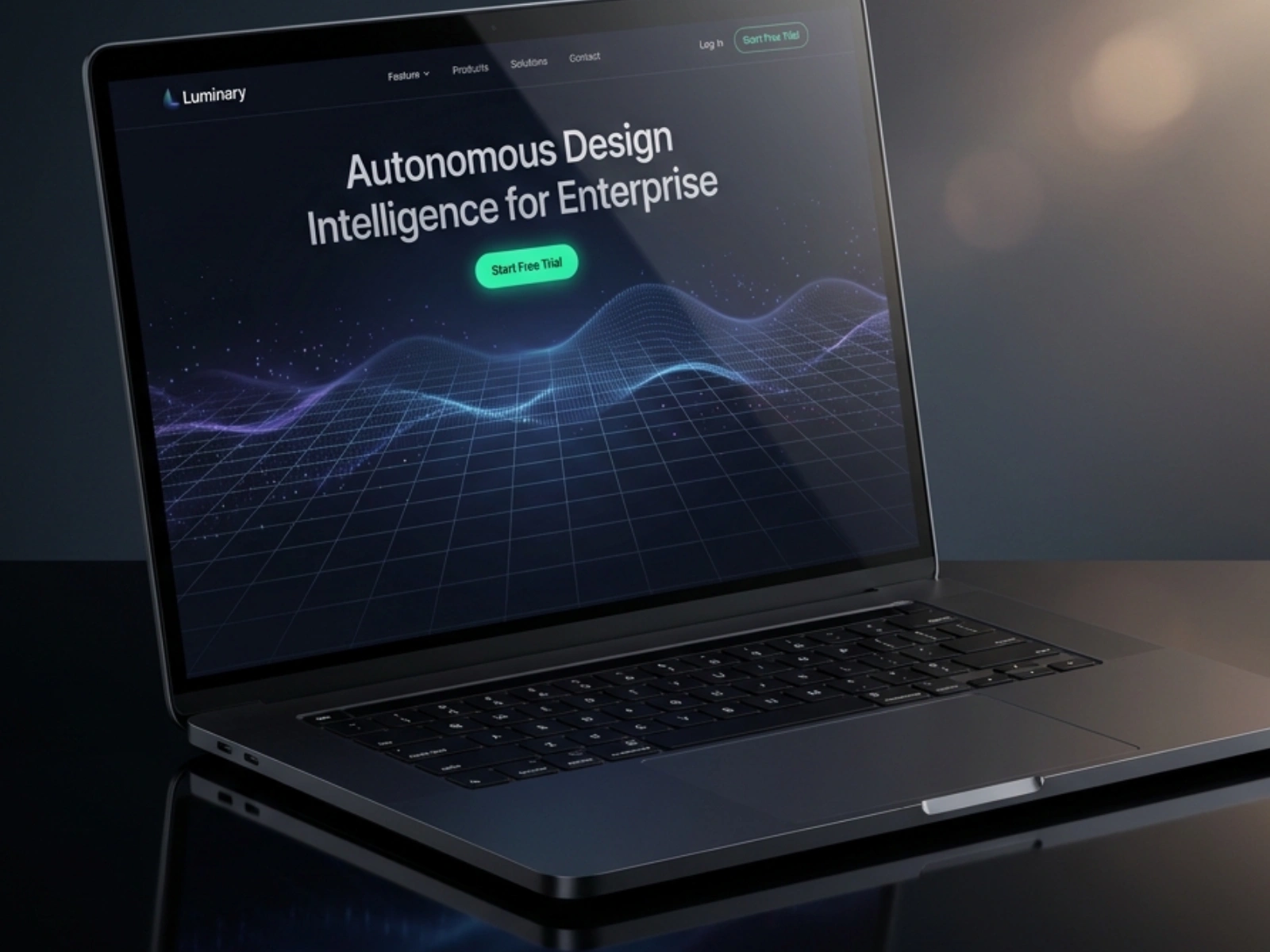
Spatial Lighting: Soft radial glow effects anchored behind primary call-to-action elements ("Start Free Trial") to naturally draw user focus.
4. Desktop Experience — Hero & Platform Architecture
The desktop hero landing layout introduces visitors directly to the platform's core messaging while establishing technical authority through dynamic visual assets.
Hero Messaging: Bold, high-contrast headline ("Autonomous Design Intelligence for Enterprise") paired with a distinct neon emerald "Start Free Trial" CTA button.
Interactive Wireframe Mesh: Features an illuminated 3D perspective grid overlay with glowing ambient wave patterns, visually representing real-time neural processing and spatial computing.
Top Navigation: Minimalist top header bar organizing primary product routes (Features, Products, Solutions, Contact, Log In) alongside a secondary "Start Free Trial" action button.
5. Desktop Experience — Data Visualization & Workspace Dashboard
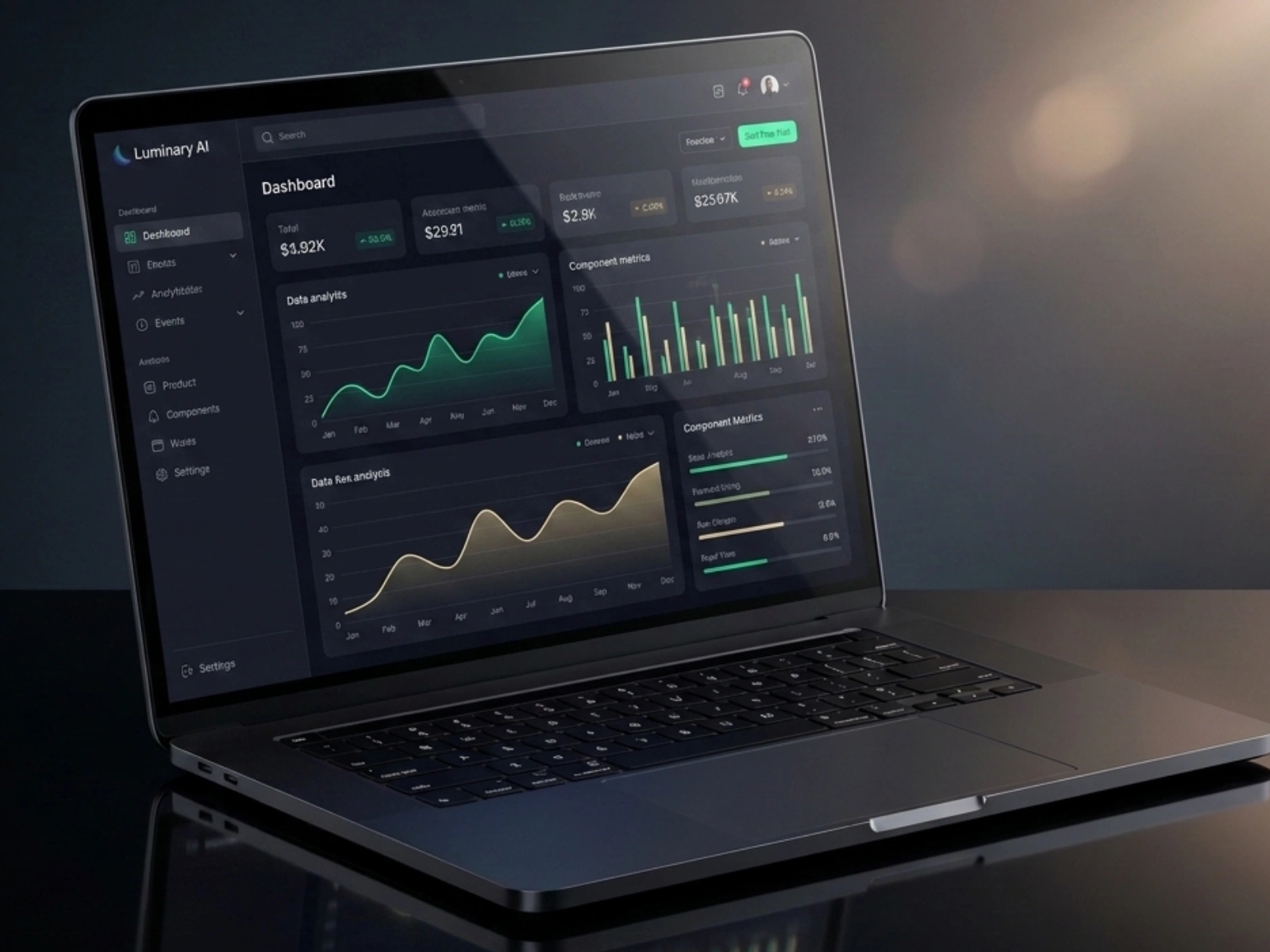
Beyond marketing landing pages, the experience integrates a comprehensive B2B workspace dashboard interface demonstrating deep analytical tracking capability.
KPI Summary Cards: Top-level metrics highlighting Total Revenue ($3.92K, +33.5%), Conversion Metrics ($29.91, +02.3%), System Performance ($2.9K), and Maintenance Metrics ($25.67K).
Data Analytics Graphs: Dual-chart analytical module featuring smooth emerald trend lines alongside vertical component metric bar charts tracked across monthly timelines (Jan–Dec).
Component Usage Breakdown: Detailed breakdown tracking system modules (Steel Analytics, Frame Structural, Auto Design, Rapid Wave) with percentage completion bars.
Sidebar Navigation: Collapsible dark-mode left bar with grouped navigation sections (Dashboard, Events, Analytics, Products, Components, Waves, Settings).
6. Mobile Adaptation — Responsive Hierarchy & Touch Patterns
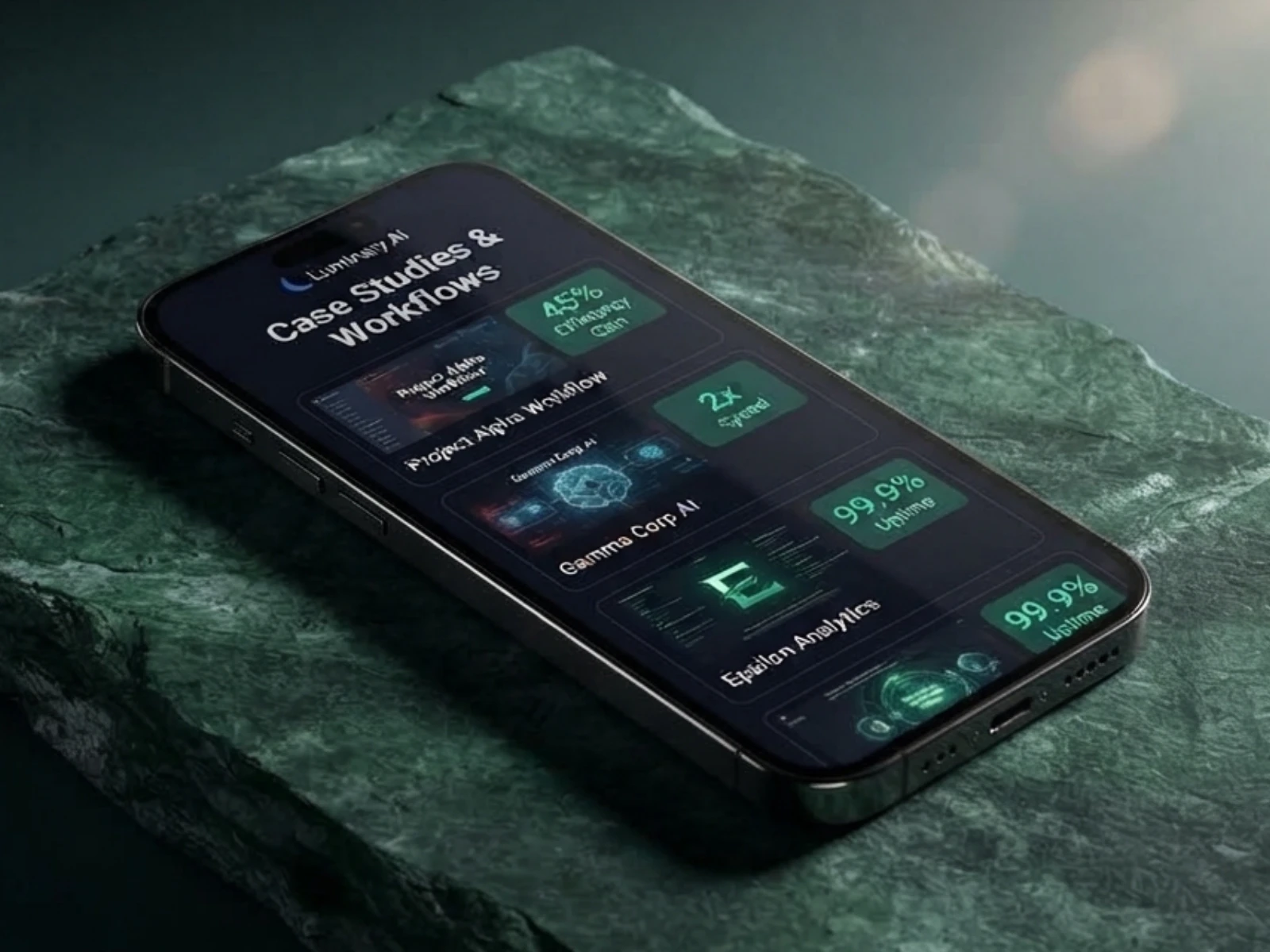
Translating a complex B2B dashboard and hero experience to small mobile viewports required a touch-first responsive layout restructuring.
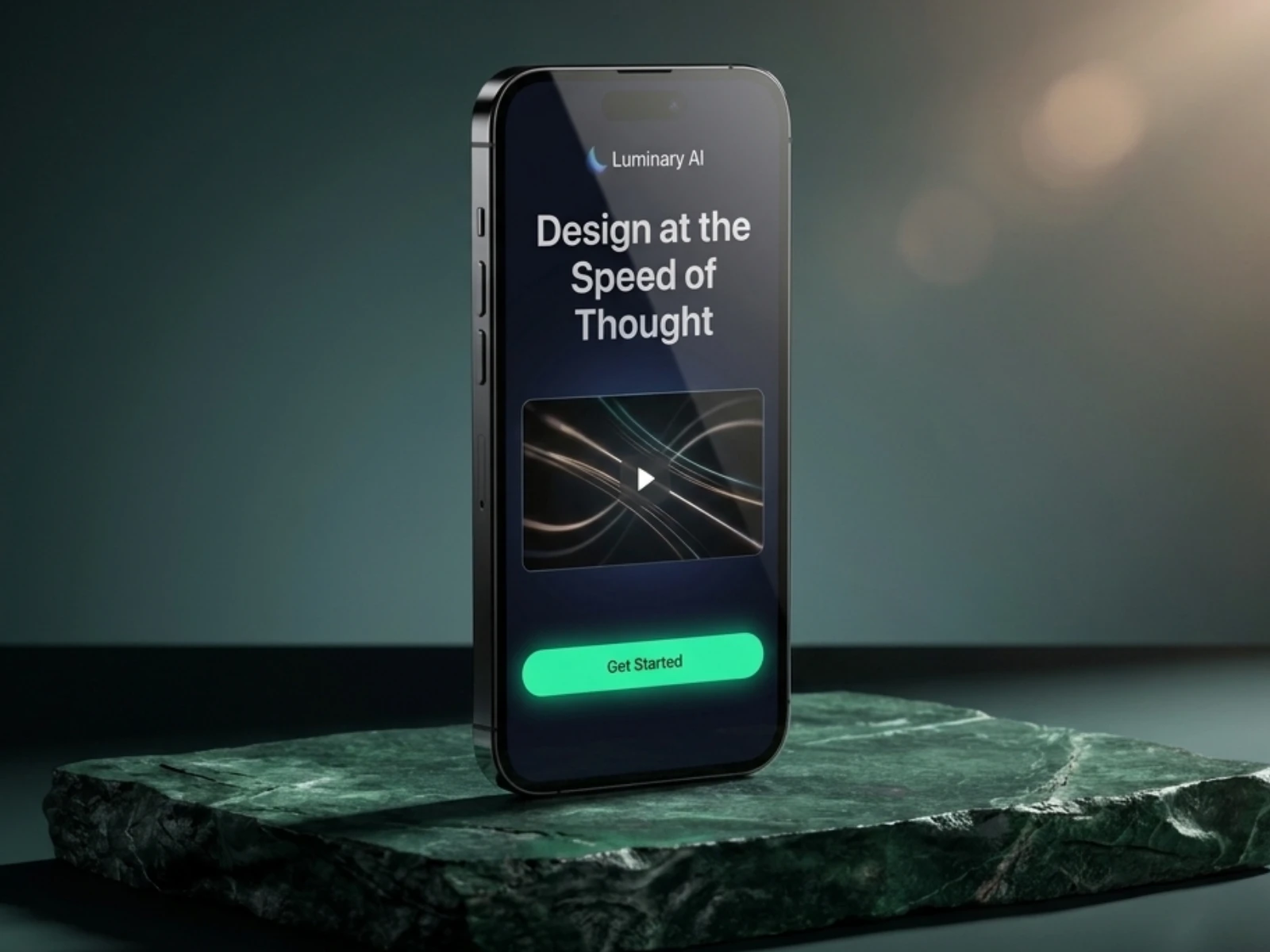
Mobile Hero Section: Stacked vertical typography displaying the core brand proposition ("Design at the Speed of Thought") positioned directly above an embedded video player module and full-width "Get Started" CTA button.
Case Studies & Workflows Feed: Grid-to-stack conversion displaying enterprise metric cards (45% Efficiency Gain, 2x Speed, 99.9% Uptime) alongside project case study previews (Project Alpha Workflow, Gamma Corp AI, Epsilon Analytics).
Thumb-Zone Optimization: Bottom-anchored primary action triggers and large touch targets designed specifically for fluid single-handed mobile navigation.
7. Design System, Components & Scalability
To ensure smooth maintenance and fast page load speeds across Framer:
Modular Component Architecture: Reusable navigation bars, primary button states, metric cards, and chart components synced directly from Figma into Framer.
Micro-Interactions & Transitions: Custom scroll-triggered animations, hover states on analytics cards, and smooth gradient transitions engineered using Framer’s native motion tools and code overrides.
Global Style Tokens: Unified color, spacing, elevation, and typography tokens enabling rapid thematic adjustments across all breakpoints.
8. Business Impact & Key Takeaways
Elevated Enterprise Perception: Positioned Luminary AI as a tier-1 autonomous design intelligence platform, aligning digital presentation with enterprise client expectations.
Seamless Scalability: Delivered a fully responsive, component-driven Framer architecture that allows marketing and product teams to launch new landing pages and case studies rapidly.
Optimized Conversion Pathways: High-contrast primary call-to-actions paired with interactive dashboard previews significantly enhanced user time-on-site and lead capture conversion rates.
Like this project
Posted Sep 2, 2026
Designed a responsive web platform using Framer to showcase Luminary AI's capabilities.