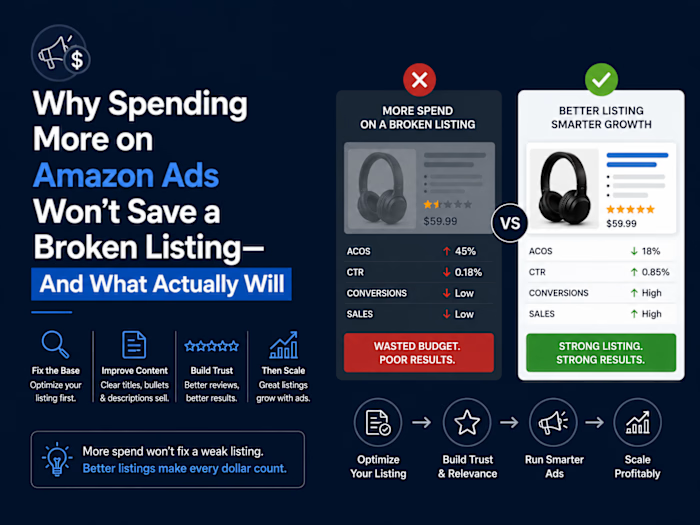
Amazon Product Listing Conversion Guide

Pradipta Podder


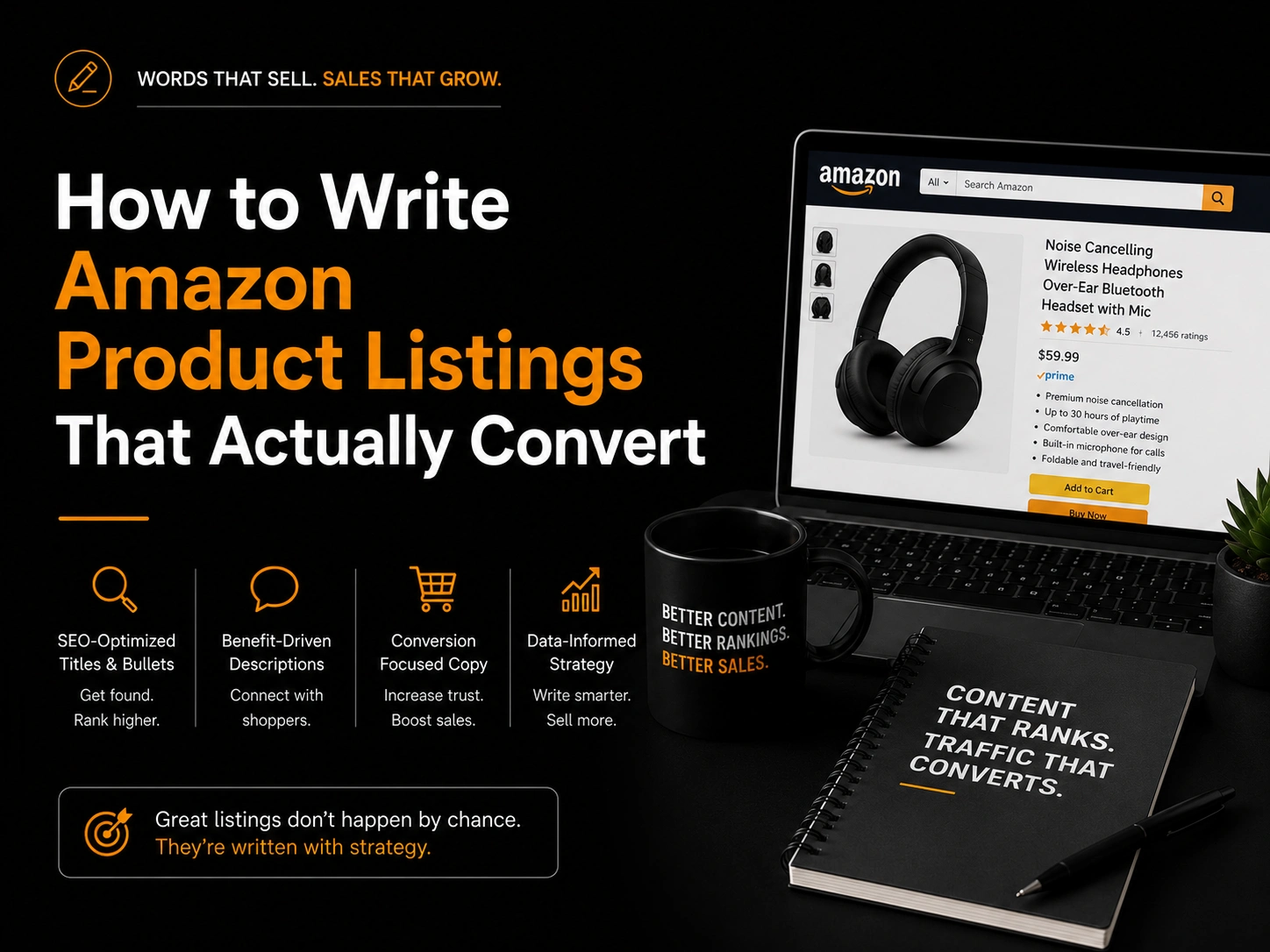
How to Write Amazon Product Listings That Actually Convert
3 min read
·
Just now
--
Share
Driving traffic to your Amazon product detail page is just the beginning; the real challenge is turning that traffic into actual sales. Many sellers treat their product descriptions like a place to dump technical specs instead of using them as a powerful sales tool that taps into customer psychology. To consistently snag the Buy Box and keep your conversion rates high, you need to write with both strategic precision and clear operational insight.
1. Start with the Main Benefit in the Title
An effective title needs to strike a balance between being optimized for search engines and easy for humans to read. While it’s important to include your top keywords for visibility, the first sixty characters should clearly convey the main value of your product. Shoppers skimming through search results aren’t interested in internal codes or minor features; they want to know what your product does and how it can solve their immediate problem. A title that highlights instant usefulness will grab attention and pave the way for conversions.
2. Tackle Customer Pain Points in the Features Section
Many brands waste the bullet points by stating the obvious instead of addressing potential buying objections. To create copy that truly converts, take a close look at your competitors’ negative reviews to pinpoint common frustrations in the market, and clearly explain how your product addresses these issues. Present each feature as a direct solution to a customer concern, using active verbs and concise, impactful sentences. By proactively addressing the buyer’s unspoken doubts, you build trust and reduce the friction that often leads to cart abandonment.
3. Keep Technical Specifications Precise
When it comes to online shopping, ambiguity can hurt your sales, especially since customers can’t physically touch the products. Your descriptions should clearly state dimensions, materials, and compatibility requirements in straightforward sentences. If you don’t provide exact details, potential buyers might hesitate and look elsewhere, worried they’ll order the wrong item. By offering precise and clear information, you not only boost your conversion rates but also significantly lower your return rates.
4. Add Social Proof and Real-World Context
Bringing in real-life examples and social validation into your product descriptions can turn vague claims into trustworthy promises. Rather than just saying a product is durable, illustrate the specific situations or tough environments where it truly shines. You want your readers to picture themselves using the product in their everyday lives. By aligning your listing with the language and positive feedback found in your organic reviews, you create a compelling and cohesive brand narrative.
5. Make It Easy to Scan Without Losing Depth
Shoppers online aren’t keen on wading through long paragraphs; they prefer to scan for keywords and key points that matter to them. Break up lengthy sections into bite-sized, two-to-three sentence chunks that focus on one idea at a time. Highlight important phrases naturally within your text to guide the reader’s eye down the page, avoiding cluttered lists. A well-structured sentence combined with thoughtful spacing ensures that even casual browsers catch your main selling points.
An Amazon listing is a dynamic sales tool that needs regular updates based on performance data and market shifts. Great copy that converts doesn’t depend on misleading fluff or cramming in keywords; it thrives on clear communication, understanding buyer psychology, and being technically spot-on. The best sellers are always reviewing their listings — they don’t sit back and wait for sales to dip before realizing something’s off with their messaging.
Like this project
Posted Jun 21, 2026
Practical guide for Amazon sellers on writing listings that convert — covering title structure, bullet points, keyword placement, and A+ content strategy.