5 Simple Habits for Remote Work Productivity

Pradipta Podder


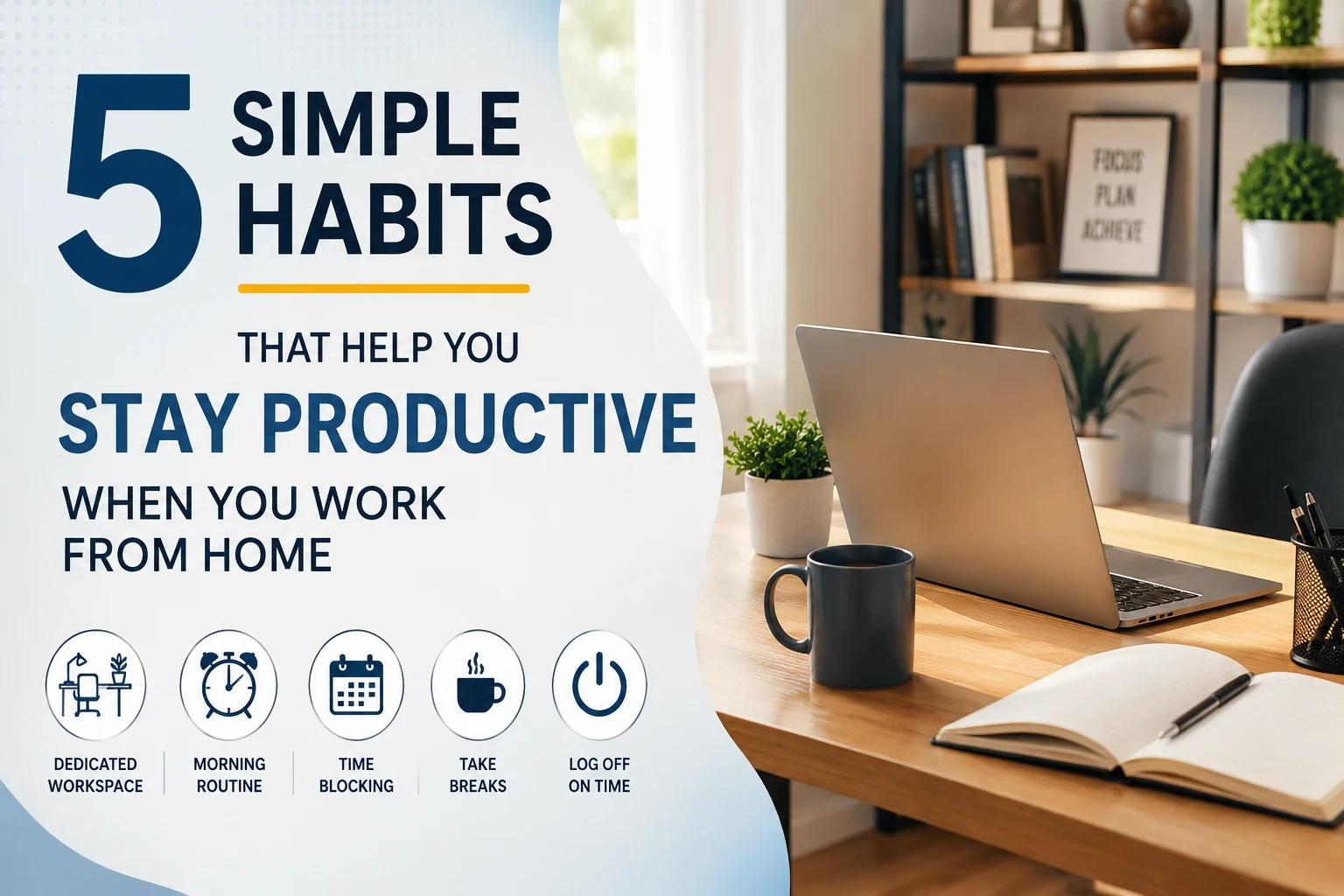
5 Simple Habits That Help You Stay Productive When You Work From Home
Follow
3 min read
·
Just now
Share
Remote work has transformed the way people approach their careers, offering greater flexibility, reduced commuting time, and improved work-life balance. However, working from home also introduces unique challenges. Household distractions, blurred boundaries between personal and professional life, and a lack of structure can quickly impact productivity if left unmanaged.
Fortunately, maintaining high performance while working remotely does not require complex systems or expensive tools. By adopting a few simple habits, professionals can create a more focused, efficient, and sustainable work environment.
1. Create a Dedicated Workspace
One of the most effective ways to improve productivity is to establish a designated work area. Although working from a couch or bed may seem comfortable, these spaces are typically associated with relaxation rather than concentration.
A dedicated workspace helps create a mental separation between work and personal life. Whether it is a home office, a desk in the corner of a room, or a specific spot at the dining table, having a consistent location for work signals to the brain that it is time to focus. This simple adjustment can significantly improve concentration and reduce distractions throughout the day.
2. Follow a Consistent Morning Routine
Without the structure of a daily commute, many remote workers fall into the habit of starting work immediately after waking up. While this may seem efficient, it often leads to lower energy levels and reduced focus.
A structured morning routine helps create a smooth transition into the workday. Waking up at the same time each morning, getting dressed, eating breakfast, and taking a few moments to prepare mentally can set a productive tone for the hours ahead. These small actions help establish consistency and create a sense of readiness before work begins.
3. Use Time Blocking to Organize Your Day
Managing multiple tasks can quickly become overwhelming when working remotely. Instead of relying on a long and often intimidating to-do list, consider using time blocking.
Get Pradipta’s stories in your inbox
Join Medium for free to get updates from this writer.
Subscribe
Subscribe
Remember me for faster sign in
Time blocking involves assigning specific periods of the day to specific tasks or projects. By dedicating uninterrupted blocks of time to focused work, professionals can reduce multitasking, improve efficiency, and maintain momentum. This approach also makes larger projects feel more manageable by breaking them into structured work sessions.
4. Take Intentional Breaks
Productivity is not about working continuously for hours without interruption. In fact, prolonged periods of screen time can lead to mental fatigue, reduced creativity, and lower-quality work.
Taking regular, intentional breaks allows the mind to recharge. Simple activities such as stretching, walking around the house, stepping outside for fresh air, or resting your eyes for a few minutes can improve concentration and energy levels. Short breaks throughout the day often lead to better performance than pushing through exhaustion.
5. Establish a Clear End to the Workday
Just as a strong start is important, knowing when to stop working is equally essential. When work and home exist in the same space, it can be tempting to answer one more email, complete one more task, or stay online longer than necessary.
Setting a clear log-off time helps maintain healthy boundaries and prevents work from consuming personal time. Closing your laptop and stepping away at the end of the day allows you to recharge, reduce stress, and return to work the next morning with renewed focus and motivation.
Final Thoughts
Success in a remote work environment is not determined by where you work, but by how you manage your time and habits. By creating a dedicated workspace, maintaining a consistent routine, organizing tasks effectively, taking regular breaks, and setting clear boundaries, you can maximize productivity while preserving a healthy work-life balance.
Ultimately, thriving while working from home comes down to a simple choice: intentionally manage your day, or allow distractions and uncertainty to manage it for you.
Like this project
Posted Jun 18, 2026
Practical guide to building productive work-from-home habits — covering workspace setup, time-blocking, and boundary-setting for remote professionals.
Likes
0
Views
1
Timeline
Jun 1, 2025 - Ongoing