Amazon Store Quality Audit for Enhanced Performance

Pradipta Podder


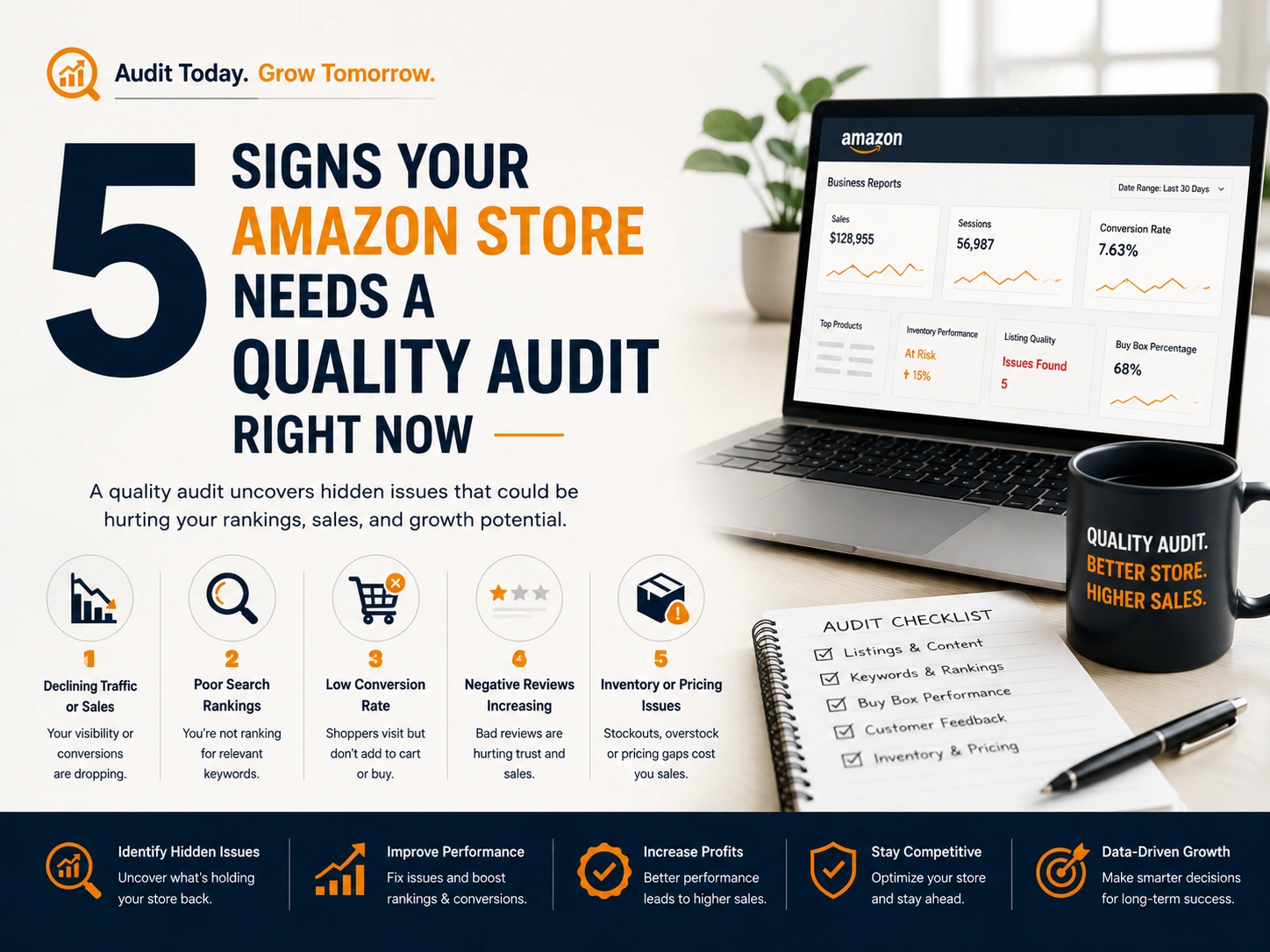
5 Signs Your Amazon Store Needs a Quality Audit Right Now
Follow
3 min read
·
Just now
Share
Running a successful Amazon storefront takes a lot of discipline, but many brands let hidden inefficiencies sneak in and jeopardize their account health. When small mistakes pile up, the platform’s automated enforcement algorithms can penalize your listings before you even notice a dip in sales. The best way to spot these weaknesses and safeguard your profits is by conducting a thorough quality audit.
1. Increasing Voice of the Customer Defect Rates
Think of your Voice of the Customer dashboard as an early warning system for inventory problems. If you see your Negative Customer Experience rate starting to rise, it’s a sign that there’s a disconnect between what’s on your product detail page and what customers actually receive. Buyers often flag issues like missing parts, incorrect sizes, or cosmetic flaws. If you ignore a steady increase in these complaints, you risk having your listings suppressed and your Account Health Rating take a hit.
2. Frequent Damaged-on-Arrival Claims
High return rates hurt your profits, but it’s the specific reasons customers give that should trigger an immediate audit. If your return reports show a trend of items arriving damaged, scratched, or bent, it’s clear that your packaging isn’t holding up during shipping. Products sent through Fulfilled by Amazon face a lot of stress in transit, and if your protective materials aren’t up to par, customer satisfaction will plummet. An operational audit can help you determine whether the issue lies with your factory’s quality control or if your packaging design needs a serious upgrade.
Get Pradipta’s stories in your inbox
Join Medium for free to get updates from this writer.
Subscribe
Subscribe
Remember me for faster sign in
3. Rising Total Advertising Cost of Sales
When you notice your Total Advertising Cost of Sales shooting up while your conversion rate takes a nosedive, it’s a clear sign that your traffic generation isn’t in sync with what customers actually want. This kind of disconnect often arises when your listing keywords are attracting irrelevant search queries or when your product images seem outdated compared to what competitors are showcasing. Simply pouring more money into underperforming Sponsored Products campaigns won’t solve the deeper issues with your positioning. Conducting a thorough quality audit will help you clean up your keyword data, refresh your A+ content, and adjust your pricing strategy to better reflect the current market landscape.
4. Falling Inventory Performance Index Scores
A drop in your Inventory Performance Index score is a clear sign that your supply chain management needs some serious attention and that you might be carrying too much overhead. Holding onto excess stock or allowing stranded inventory to sit idle in fulfillment centers can lead to hefty storage fees that quietly eat away at your profit margins. Amazon doesn’t take kindly to sellers who treat fulfillment centers like long-term storage instead of fast-moving distribution points. An asset audit will help you systematically clear out slow-moving SKUs and fine-tune your restock schedules before the platform limits your ability to send in new shipments.
5. Outdated Listing Compliance Language
Amazon is always updating its marketplace policies around product claims, safety certifications, and restricted keywords. If you leave older listings unchecked for months, you’re opening yourself up to significant regulatory risks that could lead to sudden account suspensions. Unsupported health claims, unverified warranty statements, or even slight changes in keyword policies can quickly flag your ASINs for removal. A detailed compliance audit will ensure that every piece of text on your live listings is fully aligned with the latest platform rules.
Basing your entire business health on daily sales volume alone is a risky move when selling on Amazon. To truly achieve operational stability, you need to take a close look at your listing copy, the durability of your packaging, and how well your supply chain is running. The most successful sellers are the ones who take the initiative to audit their processes regularly — they don’t just sit back and wait for a Seller Support notification to let them know something’s gone wrong.
Like this project
Posted Jun 19, 2026
A guide to five critical warning signs that an Amazon store needs a quality audit — covering account health, advertising, inventory, and compliance.
Likes
0
Views
1
Timeline
Jun 1, 2026 - Ongoing