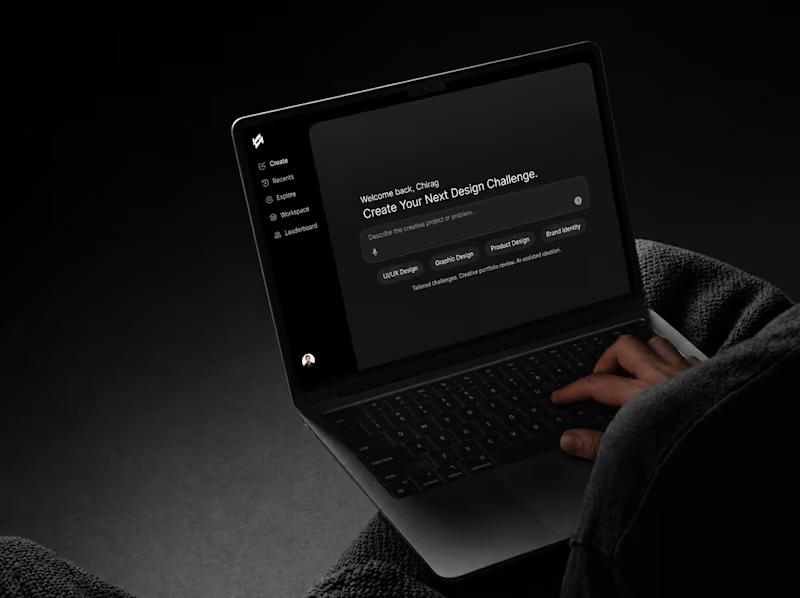
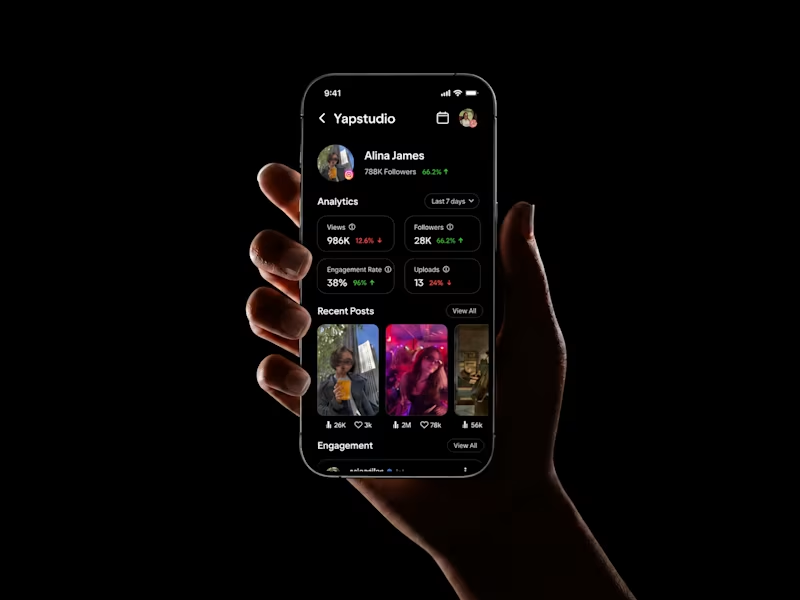
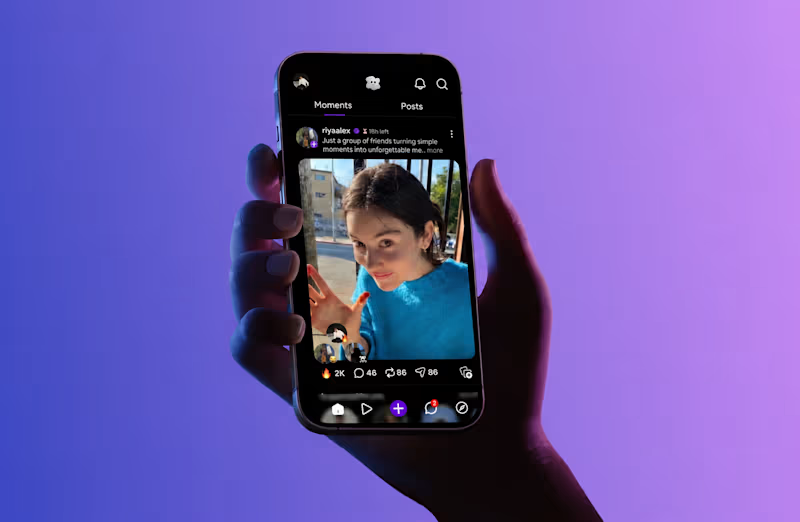
Freelancers using StitchFreelancers using Stitch
I Design & Build for Founders, Brands, Startups via UX & AI.
    54
    Followers
I Design & Build for Founders, Brands, Startups via UX & AI.
Cover image for Planning a milestone event shouldn’t
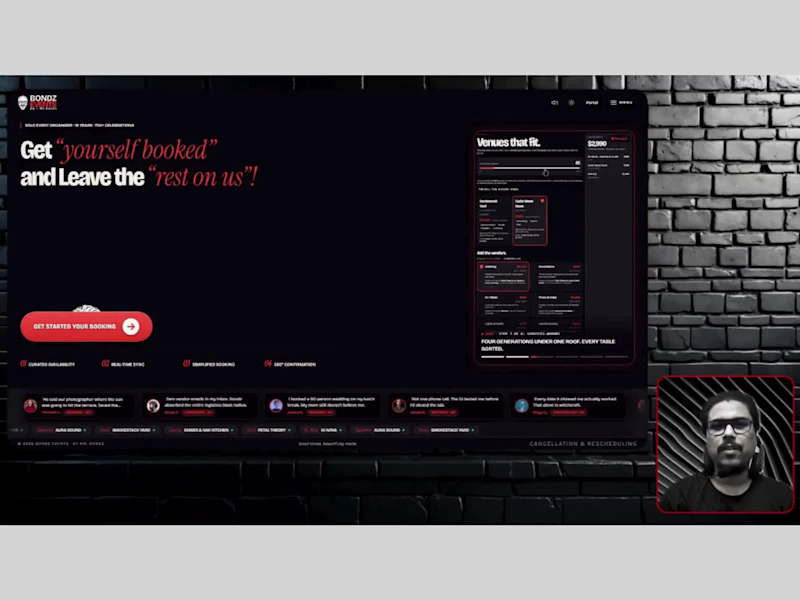
Planning a milestone event shouldn’t feel like running an air traffic control tower from your inbox. You know the drill: you want to celebrate a wedding, corporate events, milestone birthday, or anniversary. You find a venue you love, but their open Saturday doesn't work for the caterer. You scramble to find another date, but now the caterer is booked. Three weeks, nine different vendor quotes, and 30 back-and-forth emails later, you’re exhausted before the party even starts. The worst. So I built Bondz Events. The problem I wanted to solve: eliminate multi-vendor booking chaos and turn high-touch event planning into a synchronized, single-sitting digital experience. See it in action here: https://bondzevents.lovable.app The booking canvas lets clients pick their vibe, select a venue or home setup, and assemble their curated vendor dream team, from live grill catering and craft lighting to DJs and cinematics. Behind the scenes, an intelligent 75-day multi-calendar availability engine checks everyone's schedules simultaneously. A date turns green only if the venue, Mr. Bondz, and every single selected partner are 100% available, zero double-booking, zero post-deposit cancellations. Everything wraps up with a high-contrast digital signature pad and with 360° confirmation feedback the moment you tap to lock in your deposit. Behind the curtain, the dual-sided Owner's Portal keeps the entire ecosystem in sync. Mr. Bondz has a master command center to monitor live revenue, confirmed dispatches, and incoming requests. Meanwhile, partners have their own dedicated view to inspect work orders and toggle blackout dates that update front-end client availability in real time. Built and deployed natively with Lovable and engineered with Web Audio synthesis and editorial visual. Less phone tag for the client, zero scheduling conflicts for the vendors. The celebration is bespoke. Locking it in shouldn’t be a headache. 🥂 See Social posts: X: https://x.com/mdrafat007/status/2105906188852539804?s=20 LinkedIn: https://lnkd.in/p/gqiMf_he See the demo walk through and the build process below.
2
2
562
Product Designer & Creative Technologist
Cover image for (Studio Flat-Lay Concept) Web Design
Visual
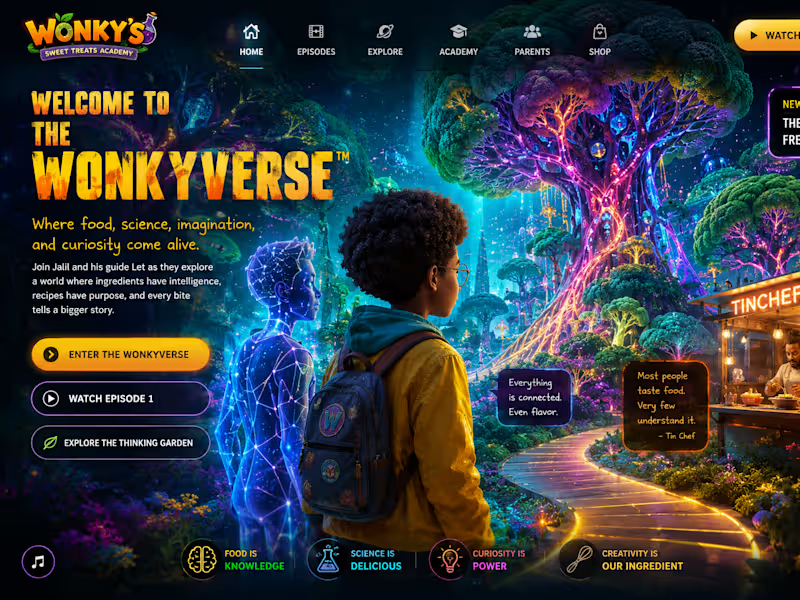
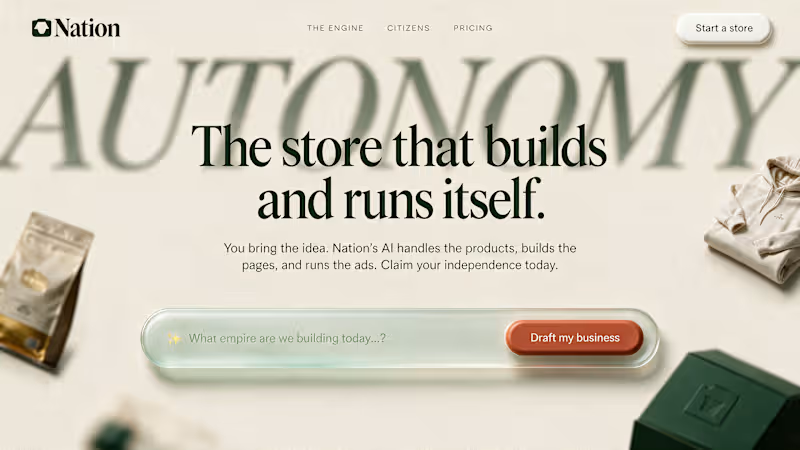
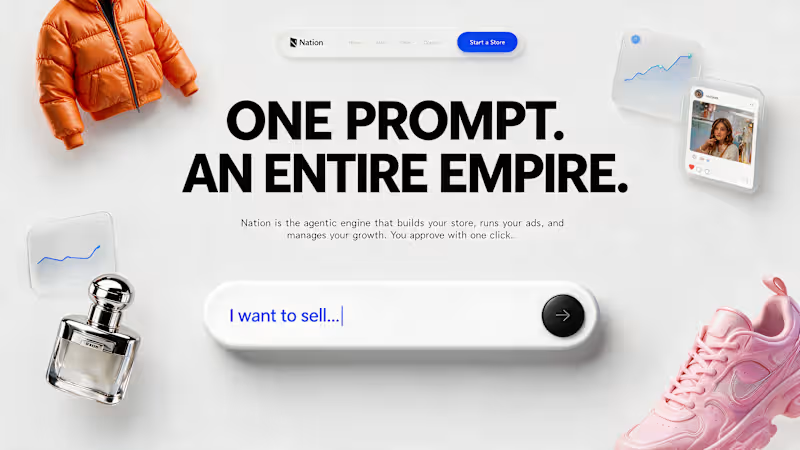
(Studio Flat-Lay Concept) Web Design Visual Direction: Bridging Direct-to-Consumer Reality and Digital Agency Concept Overview: This concept is built on a direct, high-contrast flat-lay studio aesthetic. The design philosophy was to instantly merge the result (physical products) with the catalyst (the digital agentic engine). By displaying iconic e-commerce goods—like a vibrant orange puffer jacket and a bold pink sneaker—side-by-side with minimal UI, the composition tells a story: your words create physical reality. Key Design Elements: High-Tactility Flat-Lay: Curated photography of physical retail goods (luxury fragrance, high-fashion apparel, modern sneakers) positioned on a crisp white textured canvas. Minimalist UI: The prompt bar is stripped down to its essential form with a clean black control button, highlighting the ease of "one click" approval. Augmented Widgets: Floating frosted panels displaying performance graphs and a natural user story/social post concept are placed around the products, reinforcing the "engine" that handles your ads and growth, grounding the platform's power in tangible outputs. Description for Image 3 (Soft Ivory Editorial Concept) Visual Direction: Editorial Autonomy & Strategic Sophistication Concept Overview: This description addresses the mature, refined core of the Nation brand identity. Designed with a warm, textured ivory canvas and subtle, organic shadows, this layout functions like a prestigious editorial cover for a modern creative engine. It rejects typical cold, technical UI patterns in favor of luxury brand sophisticated typography (a dominant serif title) and extensive whitespace to convey trust and quality. It positions Nation not just as a tool, but as a strategic partner. Key Design Elements: Editorial Serif Typography: I used a large, elegant serif font to headline "AUTONOMY," making the concept feel mature and premium. Organic Shadow-Work: The design relies on soft, floating product samples (like a premium bag and a folded hoodie) cast in subtle shadows, creating deep layers without clutter. Themed CTAs: Features a custom, soft-green-tinted prompt bar and a warm terracotta primary CTA ("Draft my business"), using natural earth tones instead of generic digital blue to emphasize the organic, human aspect of business creation.
2
2
319
Cover image for  Project Description: CONTRA Phone
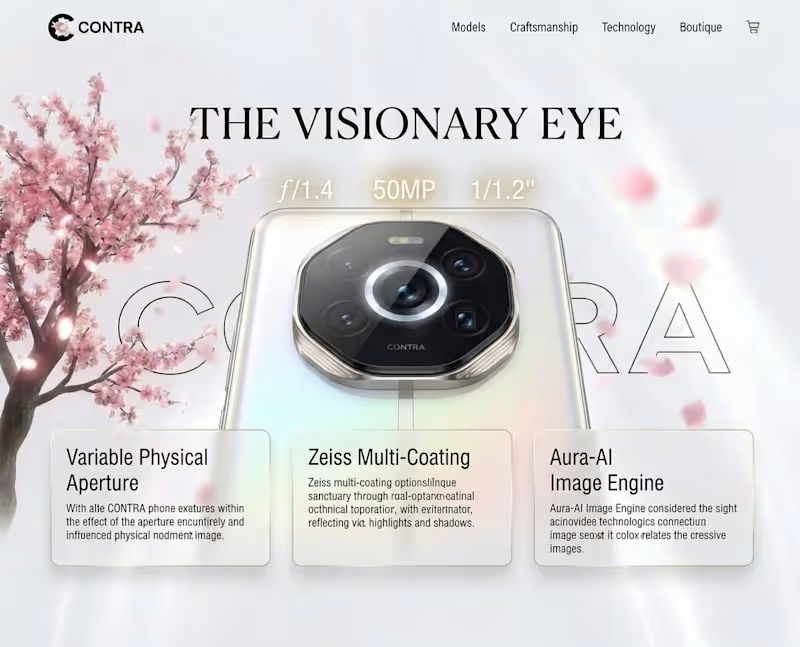
Project Description: CONTRA Phone – The Blossom Sanctuary Status ( incomplete and unpolished) Project Overview CONTRA: The Blossom Sanctuary is an immersive, world-class 3D cinematic web experience built for the Google Stitch flagship portal competition. Moving far beyond traditional, flat e-commerce layouts, this project establishes a "Digital Sanctuary" that merges high-fashion luxury product presentation with interactive, atmospheric storytelling. The experience is engineered using an HTML-native canvas that links fluid 3D animations directly to the user’s real-time scroll. The Creative Vision The aesthetic concept creates an intentional contrast between raw, precision hardware and organic tranquility. The Hero Asset: The CONTRA flagship smartphone floats weightlessly as a central monument, showcasing its premium titanium frame and its signature pulsing hardware feature: the Aura Ring. The Environment: A vast, minimalist White Fantasy Void featuring a soft, glowing white marble floor. Arching over the device is a massive, hyper-detailed ancient Japanese Cherry Blossom tree in full bloom. The "Alive" Factor: To make the portal feel active and responsive, a custom 3D particle system drifts pink petals through the workspace. The phone's Aura Ring dynamically casts an emissive white-and-pink glow that bleeds into the atmosphere and reflects off the passing petals. Technical Architecture & Core Mechanics Built on a high-performance WebGL stack utilizing React-Three-Fiber and Three.js, the project is optimized for a locked 60 FPS delivery directly in the browser: Scroll-Bound Interpolation: Using canvas scroll controls, the smartphone executes a flawless, continuous $360^\circ$ rotation along its Y-axis mapped perfectly to the user's scroll depth. GPU-Accelerated Particle Engine: To prevent performance lag, the falling cherry blossom petals are managed via an instanced mesh (THREE.InstancedMesh). This compiles over 100 unique, tumbling petals into a single draw call, calculating wind drift and reset boundaries on the GPU. Cinematic Lighting & Shaders: The camera uses a post-processing Bloom Shader combined with a highly emissive MeshDistortMaterial. This causes the phone's light ring to bleed naturally into the high-contrast white environment, giving it a premium, ethereal glow. Dynamic Material Swapping: A responsive front-end state manager hooks into the 3D scene, allowing users to select from a 6-color finish palette (including Obsidian, Pearl, Alpine, and Rose) which instantly repaints the phone's digital shaders. The User Experience (UX) Journey 1. Section 1: The Reveal (Hero Phase) The user lands on a pristine white canvas. The CONTRA phone floats dead-center under the blossom canopy. The word "CONTRA" sits anchored in the background layer in a massive, bold 200px Syne typography outline, establishing an immediate high-fashion editorial vibe. 2. Section 2: Aura Intelligence (Detail Phase) As the user scrolls, the phone smoothly spins $360^\circ$ and tracks across the screen to clear space for the UI. A semi-transparent, ultra-blurred glassmorphic layout card flies in from the side with a crisp motion blur effect, revealing the hardware specs (Aura-Flow OLED, X-IMAGE Variable System, Grade 5 Titanium) alongside the interactive finish-swapper. 3. Section 3: Material Honesty (The Sanctuary) The camera shifts depth-of-field, drifting past the hardware as a final brand philosophy statement fades onto the screen. The interaction leaves the user with a lasting impression of the phone not just as a tool, but as a design environment. While standard competition entries rely on flat grids and basic scrolling text, The Blossom Sanctuary wins on both Creativity and Technical Execution. By syncing advanced WebGL rendering, GPU particle physics, and high-fidelity post-processing with simple scroll behavior, this project redefines the boundaries of modern, flagship interactive web design. Preview1 :https://stitch.withgoogle.com/preview/420511950395424838?node-id=d0e8c33cd85a47428ddf3d0c4f36681f Preview 2:https://stitch.withgoogle.com/preview/420511950395424838?node-id=08e254f0306b4cce94b63657831bb2ef
1
3
576
Graphic Designer, Al-Assisted Web Developer & UI/UX Designer
Cover image for Title: Axon Modular — High-Performance Architecture for Tech...
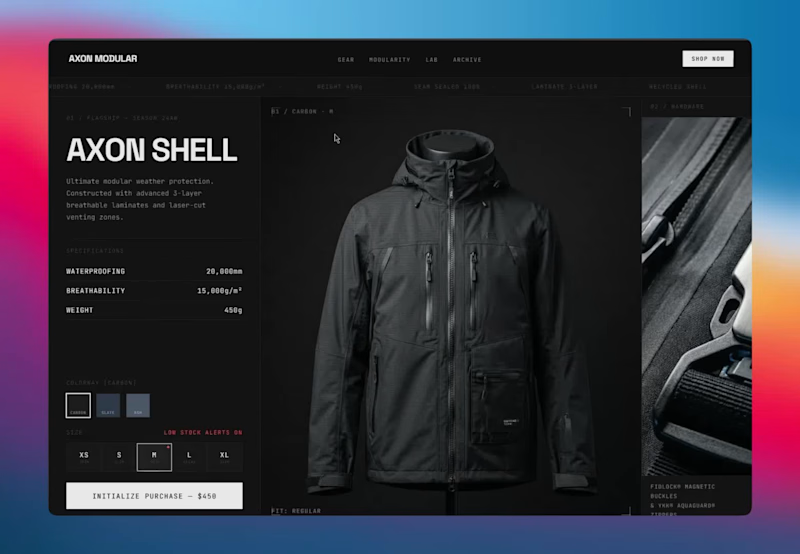
Title: Axon Modular — High-Performance Architecture for Technical Apparel Overview Axon Modular is a conceptual digital storefront engineered for a performance outerwear brand. The goal of this project was to bridge the gap between traditional e-commerce and a native software experience. By employing a high-performance minimalist aesthetic, the interface prioritizes absolute mathematical precision, frictionless user flow, and rapid conversion over standard, static template designs. The Design Philosophy The visual language draws heavily from tech-focused, dark-brutalist architecture. By utilizing an explicit grid system, high-contrast states, and a stark obsidian color palette, the interface mimics a high-end desktop application. This structural approach ensures the product’s technical specifications are delivered with ultimate clarity and zero visual clutter. Key Technical & Interactive Features App-Like Variant Matrix: Engineered an interactive product module where colorway and size selections trigger instant, mechanical state changes. The UI responds with physical "weight," utilizing snappy, 200ms transitions that feel tactile and highly responsive. Conversion-Optimized Flow: Integrated dynamic micro-copy and live-state indicators, such as low-stock alerts, directly into the selection grid to drive urgency without disrupting the premium aesthetic. Strict Design System & Tokens: Built on a robust, scalable foundation of reusable components. Every padding, margin, and typography scale adheres to strict grid rules, ensuring the entire visual identity can be seamlessly translated into a functioning Shopify architecture. Data-Driven Typography: Utilized monospace fonts for specifications and data points to contrast with clean sans-serif headers, reinforcing the brand's technical, lab-tested identity. The Result A flawlessly structured, highly interactive landing page that guides the user from exploration to purchase with zero friction. It serves as a blueprint for how technical DTC brands can leverage advanced UI/UX to elevate their perceived value and streamline the path to checkout. Capabilities Demonstrated UI/UX Concept & E-Commerce Flow High-Fidelity Prototyping & Micro-Interactions (Antigravity IDE) Design System Architecture (Tokens, Variables, Components) Conversion-Focused Layout Design
0
122
Cover image for Title: Monolith — Cinematic E-Commerce
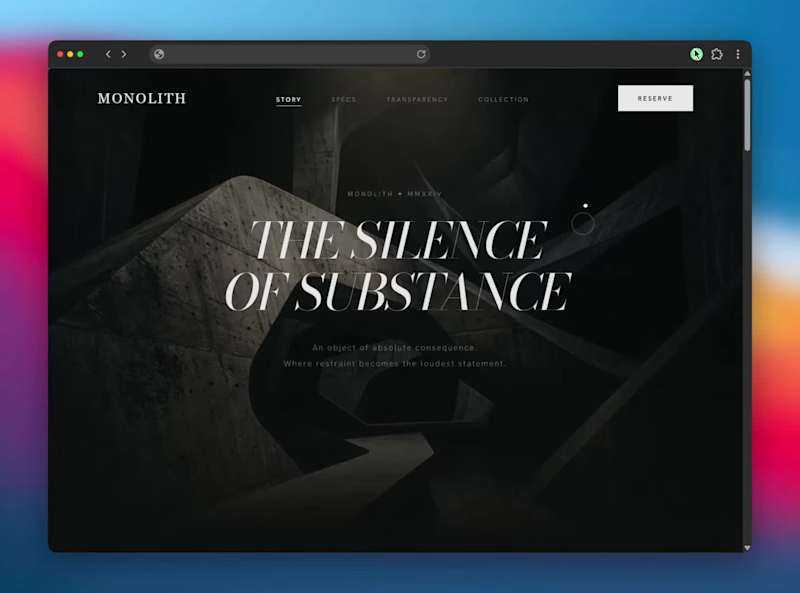
Title: Monolith — Cinematic E-Commerce Experience for Luxury DTC Overview Monolith is a conceptual, high-performance landing page designed for an ultra-luxury consumer goods brand. The objective was to move away from static, traditional e-commerce layouts and instead build an immersive, "alive" digital environment. By treating the browser as a cinematic canvas, the design communicates absolute premium quality through intentional motion, deep contrasts, and frictionless storytelling. The Design Philosophy The core aesthetic relies on a high-performance minimalist framework. Every pixel serves a purpose. By utilizing a stark, monochromatic palette and a highly refined typography scale, the product itself becomes the undisputed focal point. The user experience is designed to feel heavy, viscous, and deliberate—matching the physical properties of luxury hardware. Key Technical & Interactive Features Cinematic Scroll Architecture: Implemented scroll-driven, perspective-shifting macro pans that guide the user's eye through the intricate details of the product without requiring clicks. Intentional Micro-Interactions: Replaced standard snappy animations with slow, viscous transitions. Accordions and text reveals unfold smoothly with precise cubic-bezier timing, creating a sense of unfolding space. Frictionless Information Architecture: Designed scannable, sticky specification sections that lock into the viewport, allowing users to absorb technical data alongside stunning visual assets seamlessly. Robust Design System: Built on a strict token-based system including defined color variables, a fluid typography scale, and reusable component architectures (like the dynamic FAQ accordions and interactive collection grids) ready for direct integration into platforms like Shopify. The Result A flawlessly smooth, app-like web experience that elevates the brand identity and drives conversion through sheer visual authority and tactile digital interaction. Tools & Workflows UI/UX Design & Prototyping Antigravity IDE & Google Stitch for rapid, high-fidelity interaction generation Framer Motion / Advanced CSS Transitions Responsive Grid Architecture
0
119
Cover image for Memento — A Notes App
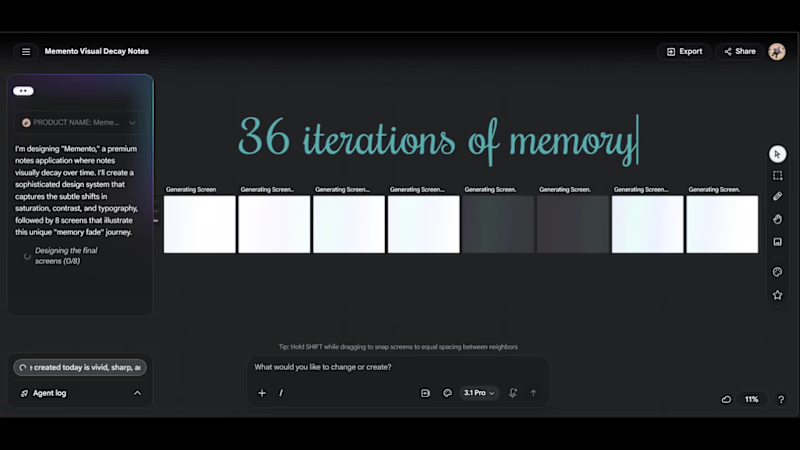
Memento — A Notes App Where Memories Decay Live app: https://memento-navy.vercel.app Every notes app treats a thought from three years ago identically to one from this morning. Memento doesn't. Notes decay visually from the moment they're created — across typography weight, contrast, border integrity, and color temperature — until they become near-invisible archaeological artifacts. A note from today is sharp and vivid. A note from six months ago is a ghost. The archive isn't a list. It's fog. Pinning a note revives it — it returns warm and glowing, carrying the memory of having faded. Eight decay states. One continuous system. The interface is alive because time is acting on it constantly — even while you sleep. — HOW I USED STITCH I've been using Stitch since it first launched, and this project pushed it harder than anything I've built with it. The entire visual system — all 8 decay states — was designed simultaneously on Stitch's infinite canvas using multi-screen generation. I wrote a single detailed prompt specifying exact hex values, typography weights, opacity levels, and border behavior for each state, then used targeted follow-up prompts to refine individual screens without disrupting the system. The workflow was: Stitch for the full design system → HTML/CSS export → Antigravity to build the functional React/Next.js app using Stitch exports as visual reference → deployed on Vercel. The most interesting challenge was making decay feel considered rather than broken — Stitch's rapid iteration helped me find the line between "elegantly faded" and "unreadably dark" faster than any other tool would have. — FEEDBACK ON STITCH I've used Stitch across several projects since launch and it's genuinely changed how I approach UI work — the speed from concept to exportable interface is unlike anything else available. One honest observation: visual continuity across screens can drift, particularly on the Flash model. When generating a system of related screens, subtle inconsistencies in spacing, border radius, and color values creep in between generations. The Pro model handles this significantly better, but it's worth noting for anyone building multi-screen products. That said — Stitch moves the bottleneck from "can I design this" to "can I think clearly about what I want." That's exactly where the bottleneck should be.
1
2
308
Cover image for Title: SubTracker: Minimalist Subscription Manager
Platform:
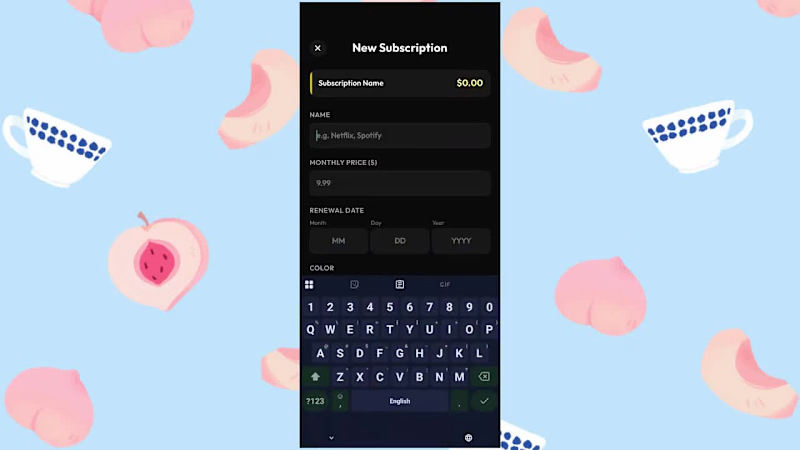
Title: SubTracker: Minimalist Subscription Manager Platform: Android Live Link: avgdev.gumroad.com/l/subtracker (https://avgdev.gumroad.com/l/subtracker) Overview: SubTracker is a streamlined Android application designed to put users back in control of their recurring digital expenses. With the rapid growth of subscription-based services, SubTracker eliminates financial blind spots by providing a friction-free, intuitive dashboard to monitor where money is going every month. Built utilizing Antigravity and Lovable, the application prioritizes a clean, minimalist, Apple-esque design language within the Android ecosystem. The dark-mode interface utilizes high-contrast color coding and typography to make financial data instantly readable, stripping away unnecessary clutter to focus entirely on user experience. Key Features: Proactive Alerts: Automated notifications trigger exactly two days before any subscription renews, giving users ample time to cancel unwanted services before they are charged. Financial Insights: The dashboard automatically calculates both monthly and yearly spending overhead, translating small monthly fees into their true annual cost. 'Most Expensive' Target: A dedicated UI card highlights the highest-cost subscription, actively showing users how much they could save annually by cutting their biggest expense. Seamless Data Entry: A simplified, color-coded input flow allows users to add new subscriptions (like Netflix, Spotify, or Amazon Prime) in seconds. My Role: End-to-end product development, including UI/UX design, dark-mode color theory application, and frontend Android development.
0
98
Where Founder Vision Is Engineered into Agentic AI Products.
    52
    Followers
Where Founder Vision Is Engineered into Agentic AI Products.
Cover image for I wish I had it
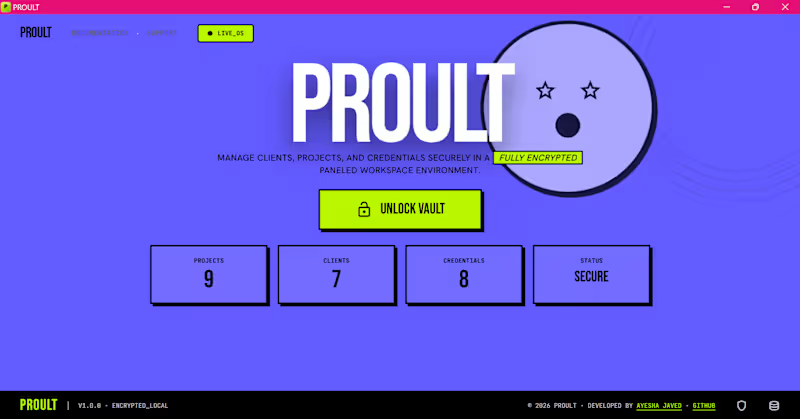
I wish I had it months ago. (Launching Proult - Desktop App) I spent 20 minutes looking for a Stripe credential. I checked my notes. My browser bookmarks. Old chats. Random text files. Not because I forgot it. Because I couldn't remember where I had saved it. That's when I realized the most dangerous phrase in a developer's workflow isn't: "I forgot." It's: "I've saved it somewhere." As freelancers, students, developers, and builders, we constantly juggle multiple projects simultaneously. And each project comes with its own ecosystem of information: • Client details • Credentials and passwords • API keys and secrets • Domains and hosting accounts • GitHub repositories • Deployment links • Meeting notes • Project requirements • Time logs and deadlines The problem isn't that we don't save this information. The problem is that we save it everywhere. -A Notepad file for credentials. -A spreadsheet for clients. -A project management tool for tasks. -Bookmarks for links. -Chat messages for "important" details. And before long, finding information takes more time than using it. After one too many "I know I saved this somewhere" moments, I decided to build something for myself. A single place where every project has its own secure workspace. Not just for storing passwords, but for managing everything related to that project: clients, credentials, API keys, notes, services, links, statuses, and time tracking. That's how "𝐏𝐫𝐨𝐮𝐥𝐭" started. So over the last few days, I've been building Proult, A local-first desktop application designed to keep everything related to a project in one place. -AES-encrypted credentials, API keys, and secrets -Project and client management -Built-in time tracking -Organization through project domains (Freelance, Personal, Organization, University) -Global search across projects, clients, credentials, and services -Full import/export support so your data always remains yours -Pinned projects, tags, notes, deployment links, and service management -Local-first architecture; no cloud dependency, everything stays under your control Still polishing it, but building it has already improved my own workflow significantly. Turns out, the best developer tools are often the ones built to solve your own frustrations first.
1
510
AI developer shipping multi-agent apps & ecommerce websites
New to Contra
AI developer shipping multi-agent apps & ecommerce websites
Want a Mobile App UI UX Design that scales and converts?🚀
    8x
    Hired
    4.9
    Rating
    425
    Followers
Want a Mobile App UI UX Design that scales and converts?🚀
Cover image for ✈️ AI Travel App Concept
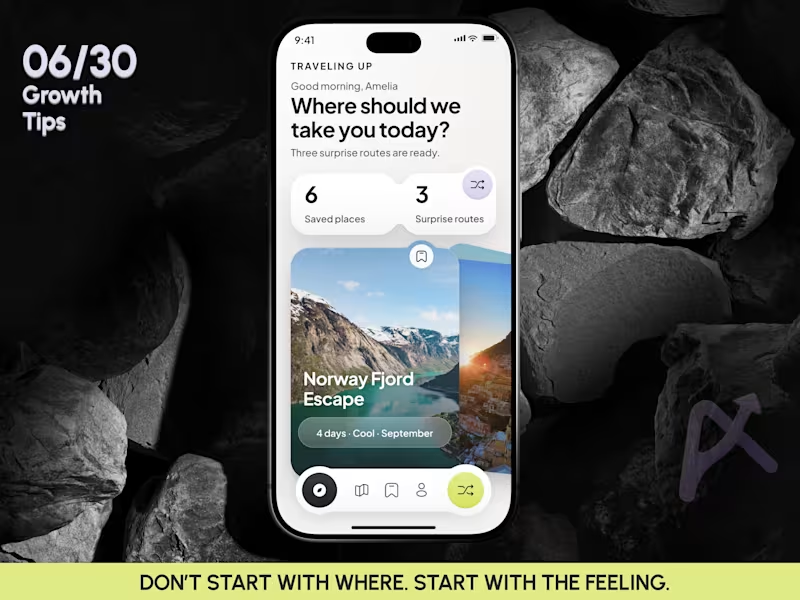
✈️ AI Travel App Concept for the Stitch Challenge For this Stitch Challenge, I decided to test what AI can do in my strongest zone - mobile app design. My agency and I have created 350+ mobile apps across AI, hospitality, wellness, hotel platforms, marketplaces, and travel-related products. So instead of creating just a nice UI shot, I wanted to test Stitch on something closer to a real product. The concept: An AI Trip Planner App that helps users discover trips, generate a personalized travel plan, optimize the budget, and turn everything into a ready itinerary.The main UX idea was to show how an AI travel agent can guide the user from curiosity to action: → Discover trip ideas → Generate a plan → Build a route → Optimize budget → Show savings → Push the user toward booking I used: a product specification a Claude-generated visual reference the same prompt direction in Stitch then Figma polishing to improve spacing, hierarchy, consistency, and final presentation Claude gave me a strong visual reference. Stitch gave me the first working structure. The biggest advantage of Stitch for me was iteration speed. With the free / Gemini access, I could generate and test more without constantly thinking about tokens. Claude is paid in my workflow, so for fast visual exploration Stitch was actually useful. After Stitch generated the first version, I refined it in Figma and turned it into a cleaner, more premium mobile concept. Final outcome: AI Travel mobile app concept Trip discovery experience AI trip planning flow Budget and savings logic Smart recommendations This challenge was not only about “can AI generate screens?” 🟢For me, the real question was: Can AI help a senior mobile designer move faster from reference and prompt to a product idea that actually feels usable, structured, and business-focused? My answer: yes - but the depth still comes from UX strategy, product thinking, visual direction, and final design judgment. Live Link: https://stitch.withgoogle.com/preview/3633210786682110568?node-id=6fcf2b2aafa9411b8a6f7e377f220b81 If your mobile app looks good but users still don’t activate, return, or convert - I can help you find the leak. Book a Mobile App Diagnostic Call: https://calendly.com/asol_design/book-diagnostic-call-linkedin-clone #stitchchallenge #stitch #mobileappdesign #uidesign #uxdesign #productdesign #aitravel #figma #growthdesign #mobileux
16
52
4.5K