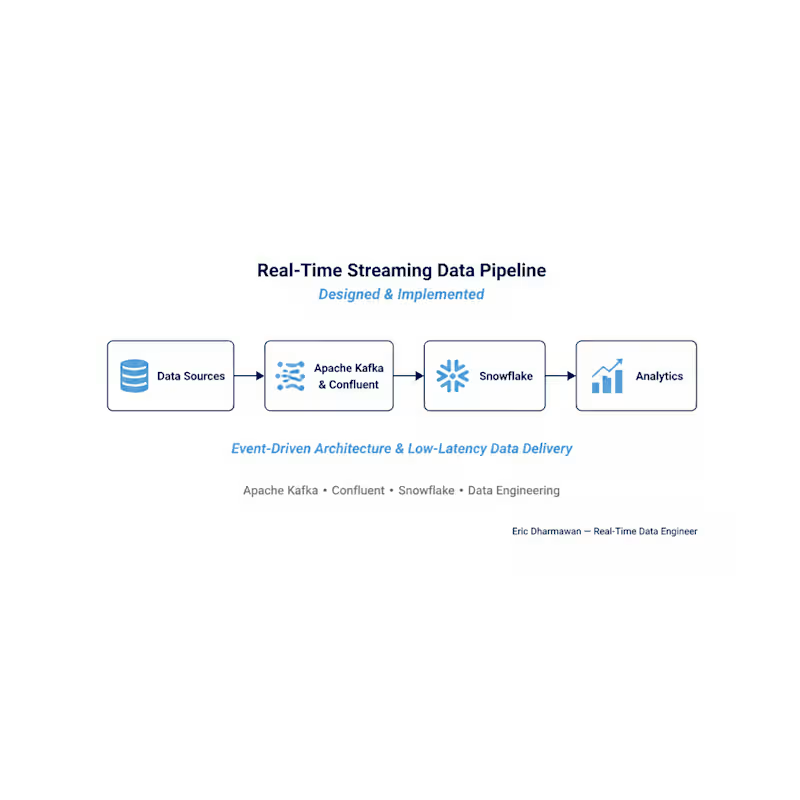
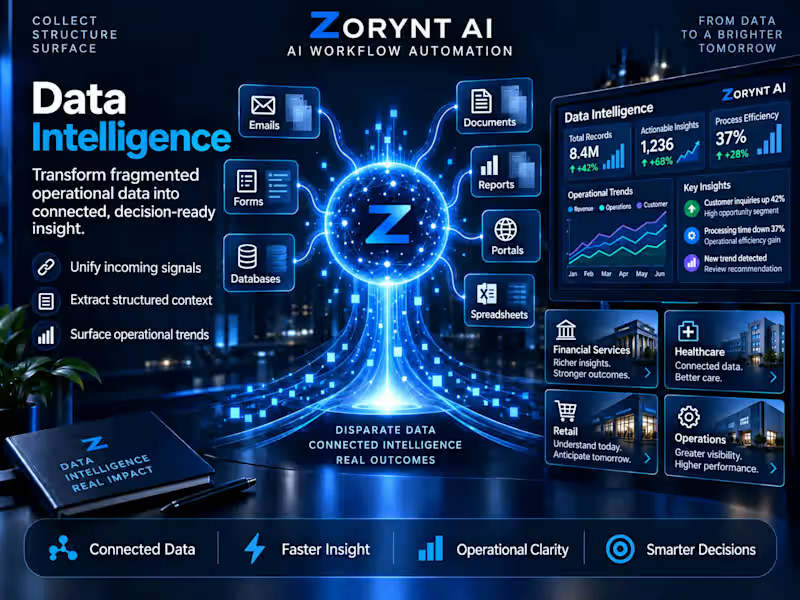
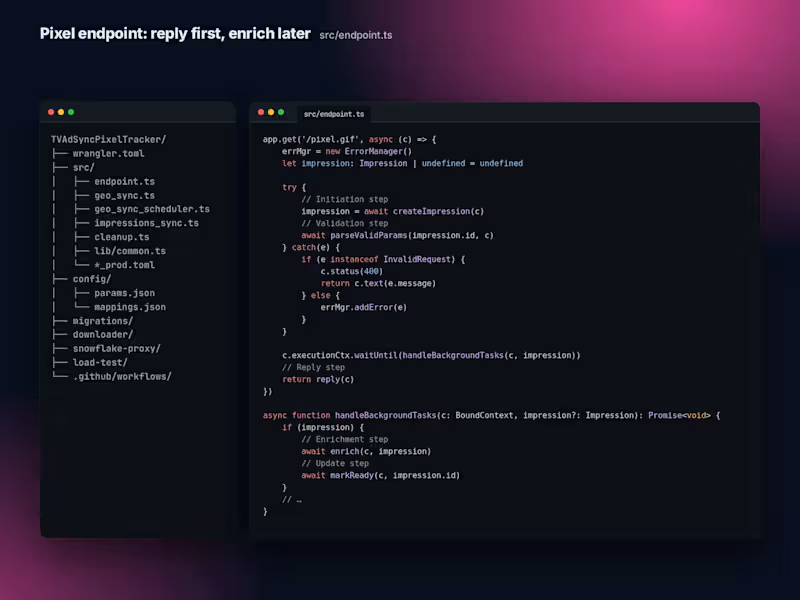
Projects using SnowflakeProjects using SnowflakeThis architecture showcase details how Zorynt AI transforms fragmented operational data into connected, decision-ready intelligence. Instead of forcing management teams to manually aggregate records across siloed platforms, we engineer centralized data intelligence layers that unify information, surface critical patterns, and turn operational complexity into actionable business insight.
Key Architectural Elements Featured in This System:
• Multi-Channel Signal Unification: Automatically collecting and consolidating inputs from emails, forms, databases, documents, reports, and portals into a unified intelligence environment.
• Structured Context Extraction: Ingesting disparate data sets to extract actionable trends, track core performance metrics, identify emerging patterns, and pinpoint system exceptions.
• Executive Visibility Matrix: Designing real-time dashboard modules tailored for high-impact industries—including Financial Services, Healthcare, Retail, and Operations—to deliver faster insights, stronger operational visibility, and smarter business decisions. Data Ingestion Migration: $170K a Year Saved (cover: work_6.png)
# Problem:
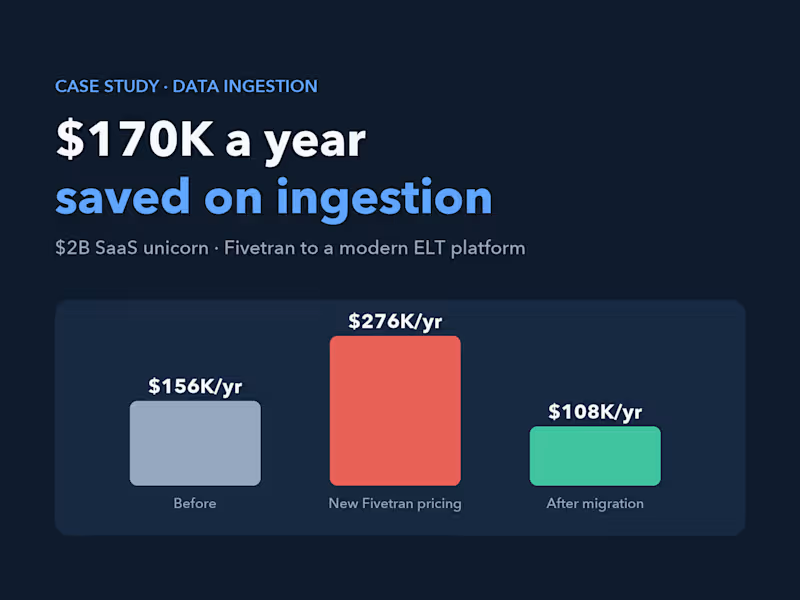
At a $2B SaaS unicorn, Fivetran’s new pricing model was about to raise ingestion costs from ~$13K to ~$23K a month, with no change in data volume. Syncs from Google Cloud SQL read replicas also broke whenever a replica lagged or was rebuilt, and each break needed manual re-syncs and chat with Fivetran team (due to table size).
# What I did
- Benchmarked ELT alternatives on cost, connector coverage and sync reliability
- Migrated production connectors to a modern ELT platform in about 30 days, running old and new pipelines in parallel
- Built an end-to-end validation framework comparing every internal and customer-facing data product before cutover: row counts, values and schemas
- Found and resolved data type inconsistencies between the two tools (timestamps, decimals, JSON and nested fields) plus edge cases in deletes and soft-deletes
- Preserved full history: migrated SCD Type 2 tables and past deletes from the existing Snowflake tables, so no history was lost and nothing had to be re-synced from source
- Re-pointed downstream dbt sources only after the outputs matched
- Tuned sync frequency and schemas to stop loading tables nobody used
- Set up automatic recovery for replica issues, so syncs resume on their own instead of failing and waiting for a manual re-sync
# Result:
- Ingestion cost down from ~$13K to ~$9K a month (about 30% lower)
~$170K a year saved against the projected new pricing
- Zero changes to internal or customer-facing data products: every output validated identical before cutover
- Full history kept: SCD Type 2 history and past deletes carried over with no historical re-sync
- More reliable pipelines: replica hiccups now recover automatically instead of breaking syncs and paging the team