Freelancers using ArdiunoFreelancers using Ardiuno
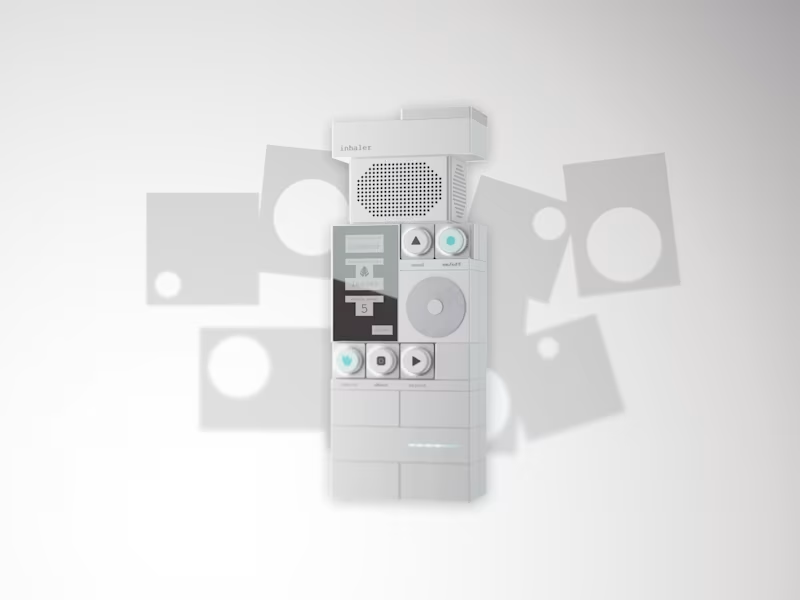
Designing PCBs, electronics, embedded and product design
New to Contra
Designing PCBs, electronics, embedded and product design
AI Campaign Assets + Agents for DTC Growth
$100k+
Earned
19x
Hired
5.0
Rating
274
Followers
AI Campaign Assets + Agents for DTC Growth
Brand designer & strategist
2x
Hired
5.0
Rating
10
Followers
Brand designer & strategist
Game Developer | Prototyping, Mobile, AI & Multiplayer
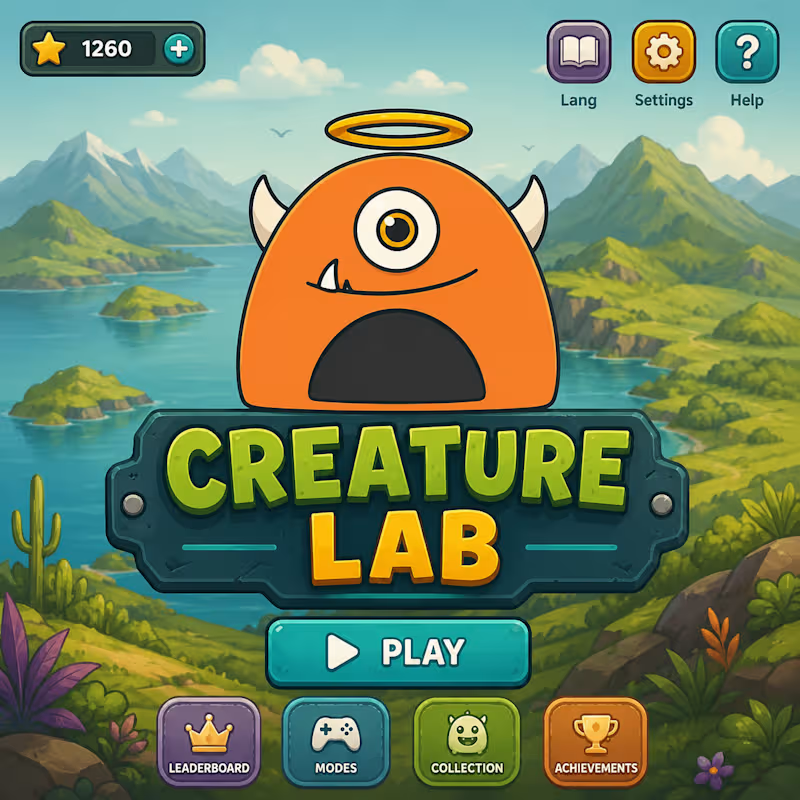
Cover image for One conversation with a client
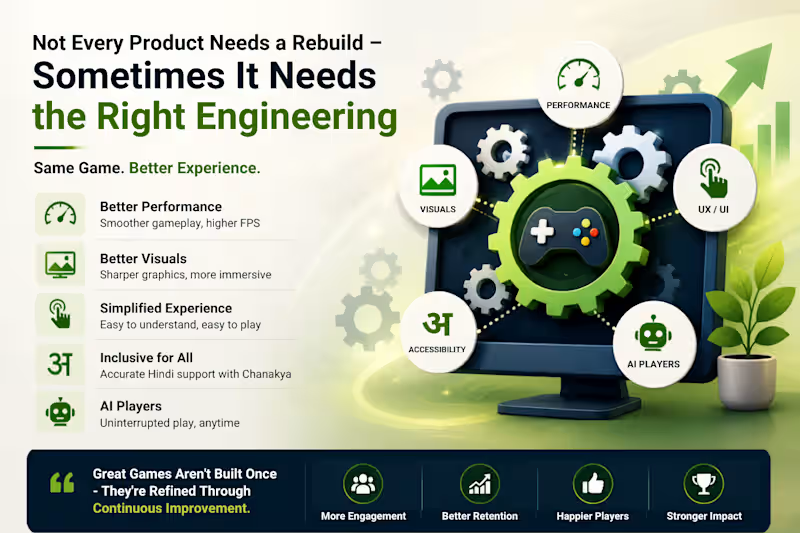
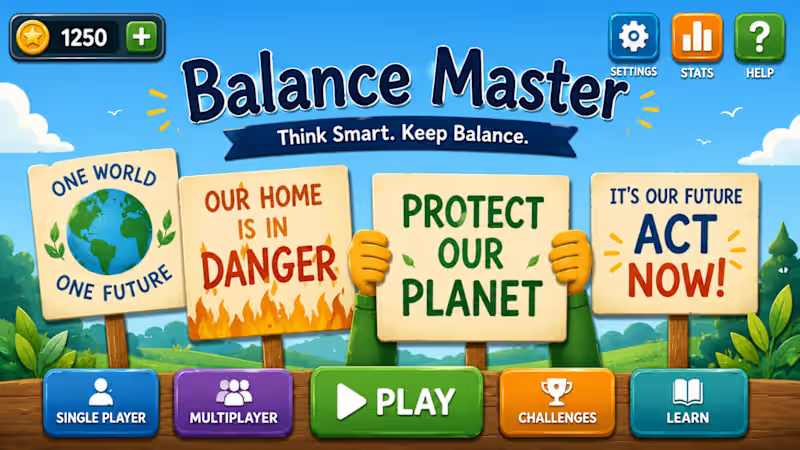
One conversation with a client reminded me that innovation isn't always about creating something from scratch. Sometimes, it's about taking a good product that's struggling to deliver the right experience - and helping it reach its full potential. Recently, a team approached us after developing an educational multiplayer game designed to create awareness around reducing carbon emissions. The concept, gameplay, and design were already in place. They weren't looking for a redesign. They wanted players to enjoy the experience as much as they believed in the idea. The Challenges We Identified - After reviewing the application, a few key issues stood out: - Frequent lag and game freezes were disrupting gameplay. - Animations running at 30 FPS made the experience feel less responsive. - Graphics were limited to 720p, affecting visual quality. - Players found parts of the interface confusing, making the game less intuitive. - Hindi graphics weren't rendering correctly, limiting accessibility. - Since the game required five participants, sessions often couldn't begin if enough players weren't available. None of these problems affected the concept of the game-but they had a significant impact on player engagement. How We Solved Them Instead of changing the product itself, we focused on improving how users experienced it. Our team: - Increased animation performance from 30 FPS to 60 FPS for smoother gameplay. - Upgraded the graphics from 720p to 1080p to create a sharper and more immersive experience. - Simplified the interface so players could understand the game more naturally. - Implemented Chanakya to render Hindi graphics accurately. - Introduced AI-powered players, allowing games to continue even when all five participants weren't available. The Outcome What changed wasn't the idea - it was the experience. The gameplay became smoother, the visuals became more engaging, multilingual support made the product more inclusive, and AI ensured players could enjoy uninterrupted sessions without waiting for a full group. For me, this project reinforced an important lesson: users rarely stop using a product because the idea is weak. More often, they leave because small technical friction gets in the way of a great experience. As technology partners, that's where we can make the biggest difference - not by replacing good ideas, but by helping them perform the way they were always meant to. I'm curious to know your perspective. If you had to prioritize just one while improving a digital product, what would it be? A) Performance B) User Experience C) Accessibility D) AI-powered capabilities Drop your answer in the comments - I’d love to know what you think.
1
133
Cybersecurity Analyst | Cloud Security & IT Operations
New to Contra
Cybersecurity Analyst | Cloud Security & IT Operations
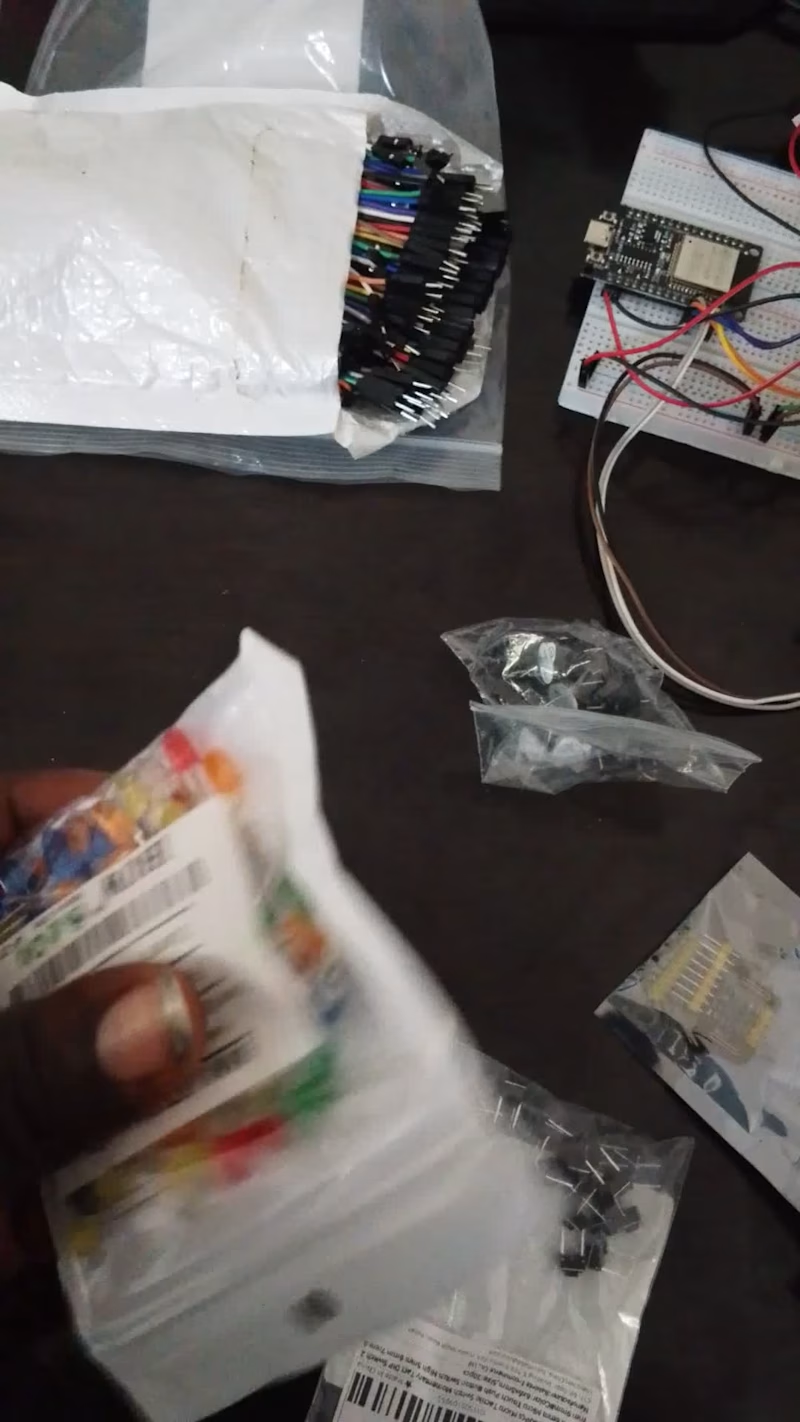
Cover image for This is a project I
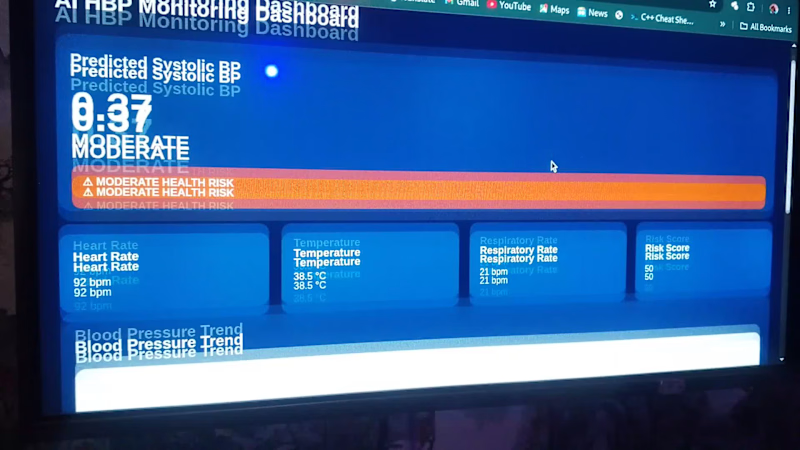
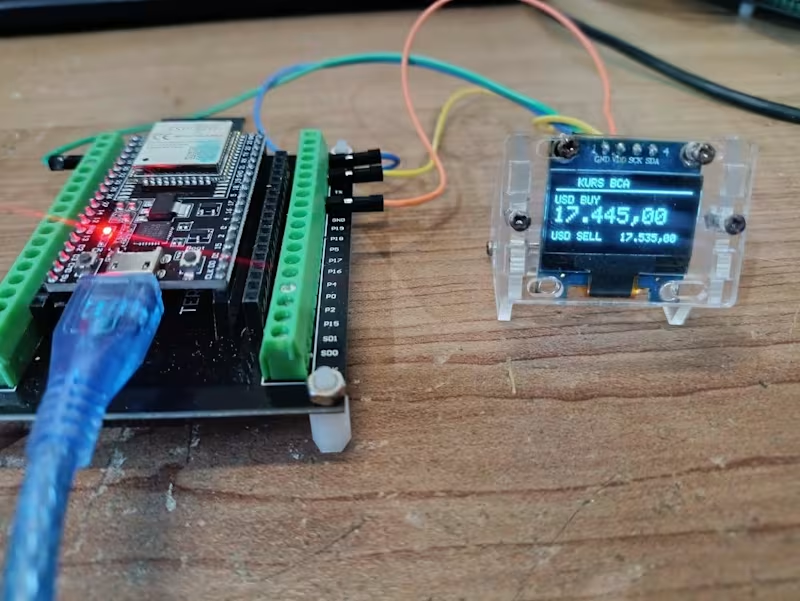
This is a project I titled: Development of High Blood Pressure (HBP) Prediction and Monitoring System Using CNN-BiLSTM and Fuzzy Logic in Real Time Still undergoing development: 1. The Flask backend is operational with an integrated CNN-BiLSTM prediction pipeline and a fuzzy logic module for health risk assessment, along with REST API endpoints for communication. 2. A Flutter mobile application has been developed, featuring a dashboard that displays various health metrics and successfully communicates with the backend. ‎3. Hardware development includes the successful configuration of the ESP32 microcontroller, integration of an OLED display, and testing of the MAX30102 PPG sensor for real-time waveform acquisition. 4. AI integration involves transmitting real PPG data from the MAX30102 sensor to the Flask backend, where the CNN-BiLSTM model generates blood pressure predictions, which are then returned to the ESP32 and backend. ‎5. The complete communication pipeline from sensor to monitoring dashboard has been established, confirming successful real-time signal processing for blood pressure prediction. ‎6. Ongoing work focuses on sensor stabilization, hardware integration, synchronization of live updates, alert mechanisms, power management, and final system packaging. 7. The core real-time HBP prediction system using CNN-BiLSTM is implemented and tested, with the project now in the optimization stage before final deployment. Willing to hear suggestions and getting more gigs to work with and solving of problems
0
54
Multi-Skilled Digital Freelancer Website Development | Video
New to Contra
Multi-Skilled Digital Freelancer Website Development | Video