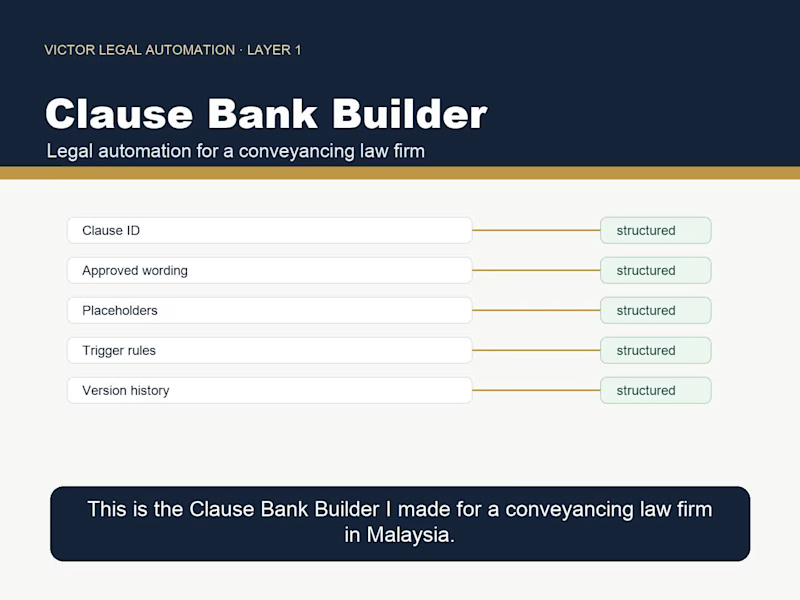
Projects using Microsoft Excel in United KingdomProjects using Microsoft Excel in United KingdomDesigned and built a Clause Bank Builder for a 22-staff Malaysian conveyancing law firm as the foundation of their legal document automation system.
The problem was not just generating documents. The firm needed a way to organise its legal knowledge first: approved wording, reusable clauses, transaction scenarios, placeholders, trigger rules, exclusions and version history.
The tool gives the team a simple Windows interface to add, edit, browse and review clauses without touching code. Each clause can be categorised, marked as active or draft, linked to usage conditions, and exported for backup. This creates a structured legal knowledge base that can feed future SPA generators, tenancy agreements, letter templates, matter workflows and Microsoft 365/SharePoint automation.
The aim was to keep the system practical for a real law office: offline, maintainable, plain-English, and easy for non-technical staff to understand. Business Analyst for a Government client on behalf of Accenture. Supported the delivery of a data warehouse programme aimed at centralising data, improving reporting capabilities and enabling data-driven decision-making across multiple departments. Worked closely with business and technical stakeholders to define data requirements and ensure alignment with strategic objectives.
My duties included the following:
▪ Led requirement gathering activities to capture data, reporting, and analytics needs through stakeholder interviews, workshops, and process analysis.
▪ Facilitated workshops with business users, data engineers and architects to define data sources, data flows and reporting requirements.
▪ Produced detailed documentation including business requirements documents (BRDs), data requirements, data mapping specifications, and user stories.
▪ Collaborated with technical teams to translate business needs into data models, ensuring clarity on data definitions, transformations, and quality rules.
▪ Translated business needs into structured user stories and acceptance criteria, supporting agile delivery and ensuring traceability from requirements through to implementation.
▪ Managed RAID logs and supported programme governance by tracking risks, dependencies, and data-related issues.
▪ Supported UAT by defining acceptance criteria, validating outputs, and ensuring delivered data aligned with business expectations.
Key outcomes included:
Key outcomes included:
▪ Delivered clearly defined data and reporting requirements, enabling the successful design and implementation of the data warehouse.
▪ Improved data consistency and trust by standardising data definitions and aligning stakeholders on a single source of truth.
▪ Strengthened delivery alignment by linking use cases and user stories directly to technical outputs, reducing ambiguity and rework.