
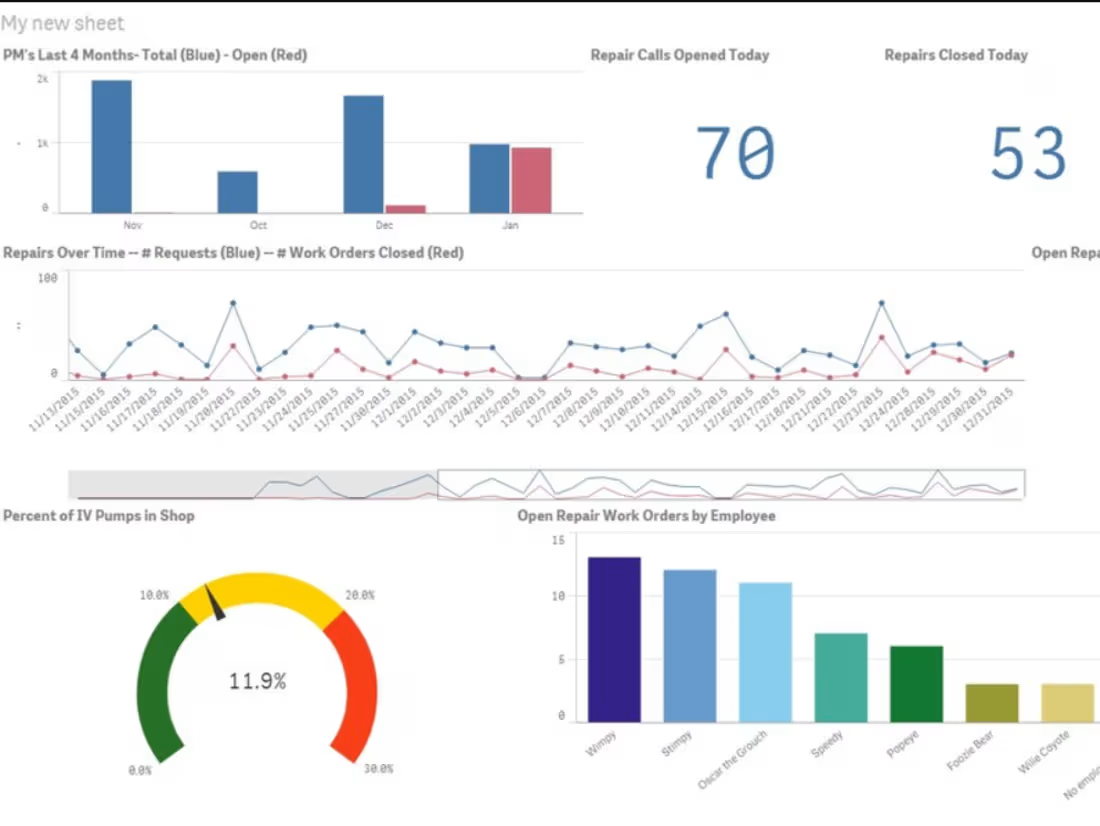
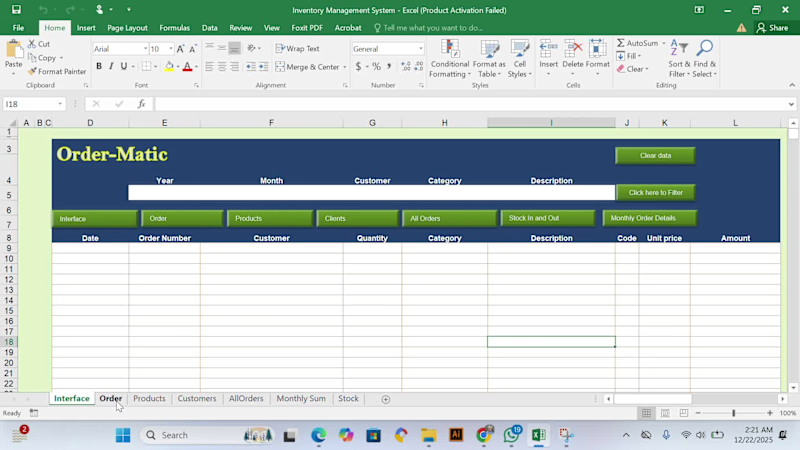
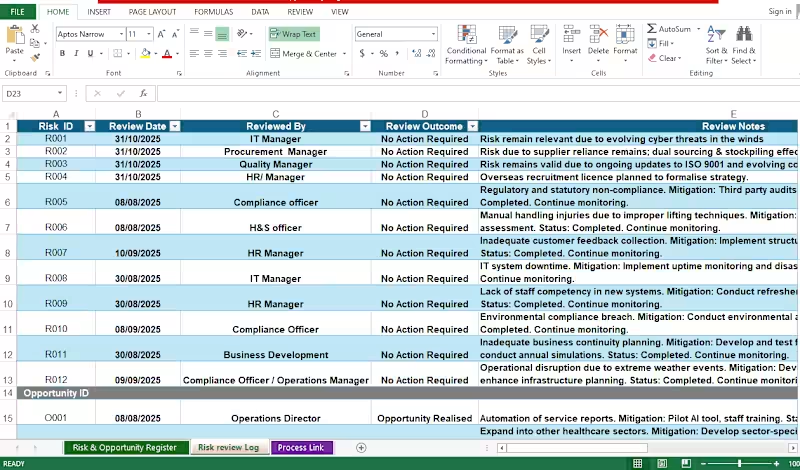
Expert in Excel & Google Sheets automation using VBA, Google Apps Script, formulas, macros, and APIs. I build automated workflows for data entry, reporting, calculations, dashboards, data processing, email notifications, imports/exports, and repetitive business tasks—turning manual spreadsheet processes into reliable, efficient solutions.
0
169
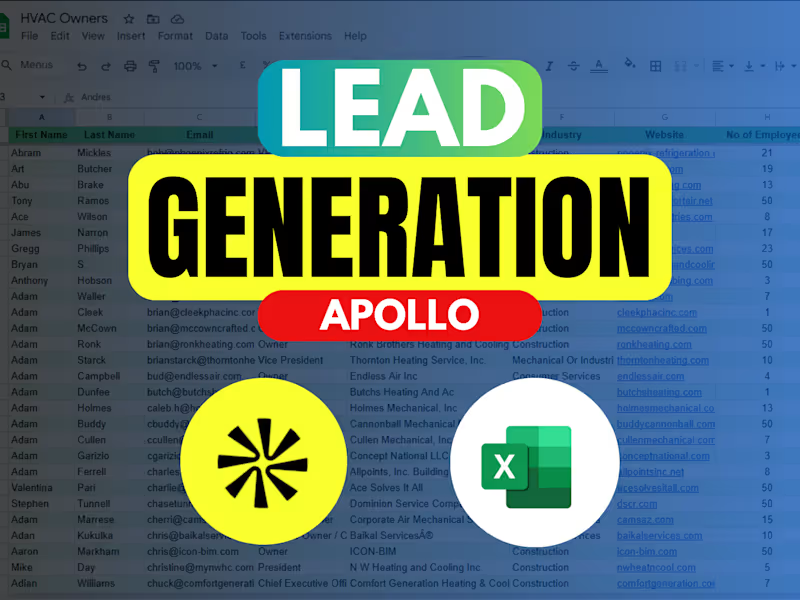
I built an investor research database for an international technology company that needed qualified, evidence-based investor profiles in AI, robotics, SaaS and IoT.
What I delivered:
25 investor profiles across 5 world regions
18 data fields per profile: investor type, current title, LinkedIn, website, investment evidence, two independent sources, email status, validation notes and a fit score
A scoring breakdown with High / Medium / Low follow-up priority
A clear split between firm-level investments and personally attributable ones
An honest email status (Verified / Unverified) with source or contact form
Process:
The client reviewed the work in several rounds. I fixed titles and missing profiles, replaced duplicated sources, corrected mismatched comments and re-checked every email status.
Result:
The client accepted the final file as a research base and described it as “considerably more rigorous and professional.”
Tools: Excel, CSV, LinkedIn, Crunchbase, public company sources
0
89
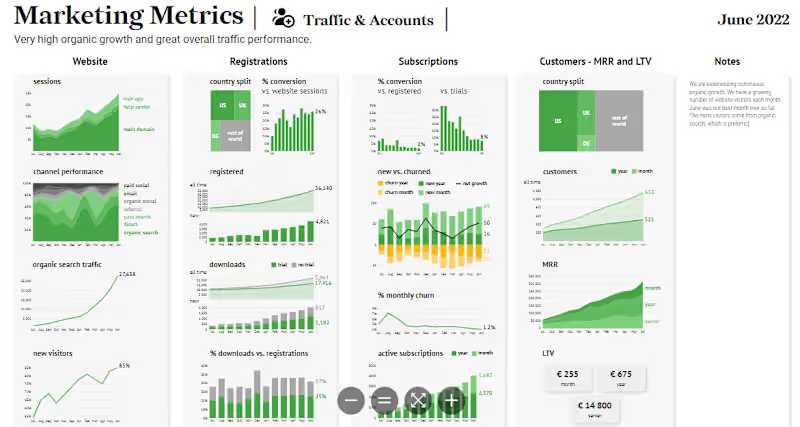
Turning Process Data into Visual Insight😯🤯
Process data alone doesn’t create insight.
Visual structure does.
By combining:
• chemical engineering logic
• clean graphic layouts
• clear charts and flow visuals
Raw data becomes decision-ready information.
Engineering tells you what’s happening.
Design shows you why it matters.🤠
2
7
356
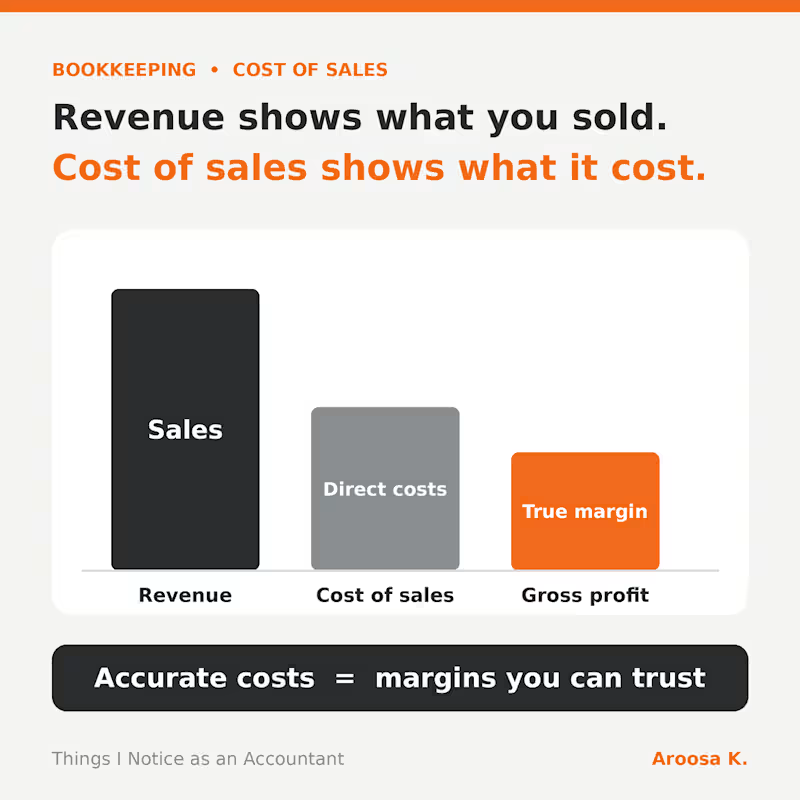
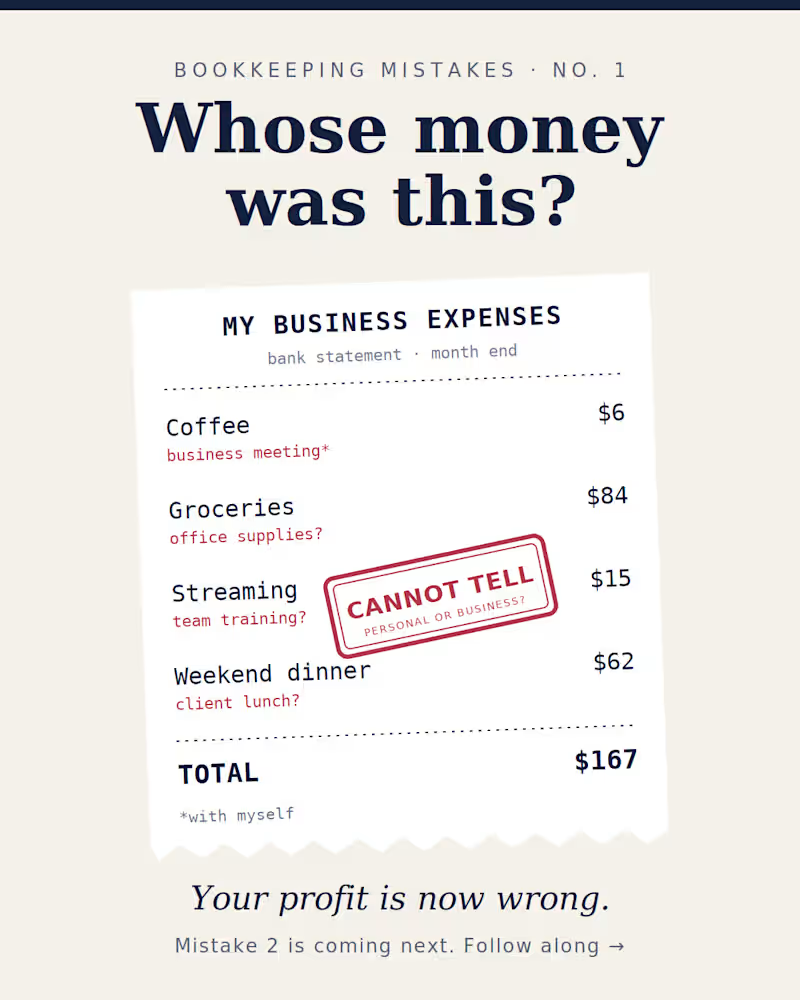
I am calling this the "Mistake post".
Wait. Did I post this by mistake?....
No, I promise. This is a bookkeeping post about the mistakes that quietly cost business owners money. There are many, so I will take one mistake at a time. This post is only about Mistake 1.
Mistake 1: Mixing personal and business spending One coffee here, one grocery bill there, and by the end of the month nobody knows whose money was spent. Yes, that coffee was a "business meeting". With yourself.
It looks small. It is not. Here is what it quietly does to your business:
Your profit becomes wrong. Personal costs sit inside business expenses, so the numbers do not show how the business is really performing.
Your bank reconciliation becomes slow. Every personal payment needs an explanation before your books can match the bank statement.
Your tax work becomes harder. When costs are mixed, it is difficult to prove which expenses truly belong to the business.
You lose clarity. You cannot tell how much the business earned and how much you took out for yourself.
Check your statement once a week. Small habit. Clean books. Much less stress at year end.
Mistake 2 is coming in the next post, so follow along so you do not miss it.
1
3
356

Why ERP systems like SAP, Oracle, and Odoo won't save your business — and what will
After years in FMCG warehouse operations and now working as a freelance supply chain consultant, I keep seeing the same mistake in local industries across Pakistan.
Every business owner, every operations manager, every CEO believes the same thing:
"If we get SAP, everything will be fixed."
It won't. Here's why — and what actually will.
The misconception
ERP systems — SAP, Oracle, Odoo, Microsoft Dynamics — are seen as the solution to every operational problem. Inventory inaccurate? Get an ERP. Deliveries delayed? Get an ERP. Team making mistakes? Get an ERP.
But this thinking gets it completely backwards.
ERP systems are tools. Powerful ones. But they are only as good as the humans using them — and humans, trained or untrained, make mistakes every single day in every single company.
What I saw firsthand
I consulted with a company that had spent millions implementing SAP.
Six months after go-live, their inventory data was still wrong.
The reason? Nobody had agreed on what a "received" delivery actually meant.
Was it received when the truck arrived? When the goods were scanned? When they were inspected? When they were put away in the correct location?
No SOP. No definition. No standard.
Every operator decided for themselves. The ERP logged whatever they entered.
Garbage in. Garbage out.
SAP didn't cause the problem. The missing process did. SAP just made it faster and more expensive.
The truth about AI
Now everyone is talking about AI as the next fix.
AI will not save you either.
AI works on specific, structured, accurate knowledge. If your fundamentals are missing — if your SOPs don't exist, your processes aren't documented, your data isn't clean — AI has nothing meaningful to work with.
I've seen this firsthand too. A business tried to use AI-powered demand forecasting on inventory data that hadn't been accurately recorded for 18 months. The AI produced confident, detailed forecasts. Every single one was wrong — because the underlying data was wrong.
The AI wasn't the problem. The missing process was.
What actually holds a company together
The backbone of every thriving operation is not its software. It's its systems and fundamentals:
→ SOPs — documented, followed, and updated regularly
→ Work processes — clear steps that any trained team member can follow
→ SLAs — defined expectations between teams, suppliers, and customers
→ Data standards — everyone agrees on what "received", "dispatched", and "completed" actually mean
Get these right first.
Then your ERP becomes powerful — because it's recording accurate, consistent data.
Then your AI becomes useful — because it has clean data to learn from.
Then your team stops making the same mistakes every quarter — because there's a standard to follow.
The formula
Software is the amplifier. Your fundamentals are the signal.
If the signal is broken, no amplifier in the world will fix it.
What this means for your business
Before your next software investment, ask these questions:
Do we have documented SOPs for our core processes?
Does every team member know what "done" means for their task?
Are our SLAs defined and measured?
Is our data accurate enough to trust?
If the answer to any of these is no — fix that first. The software can wait.
Need help with this?
This is exactly what my Warehouse SOP Audit service covers. In 5 days I'll review your current processes, identify where your fundamentals are missing, and give you a prioritised action plan — before you spend another rupee on software.
👉 Book a discovery call or view my services below.
https://contra.com/tabish_khan_r5d8g4t1/services?r=tabish_khan_r5d8g4t1
0
85
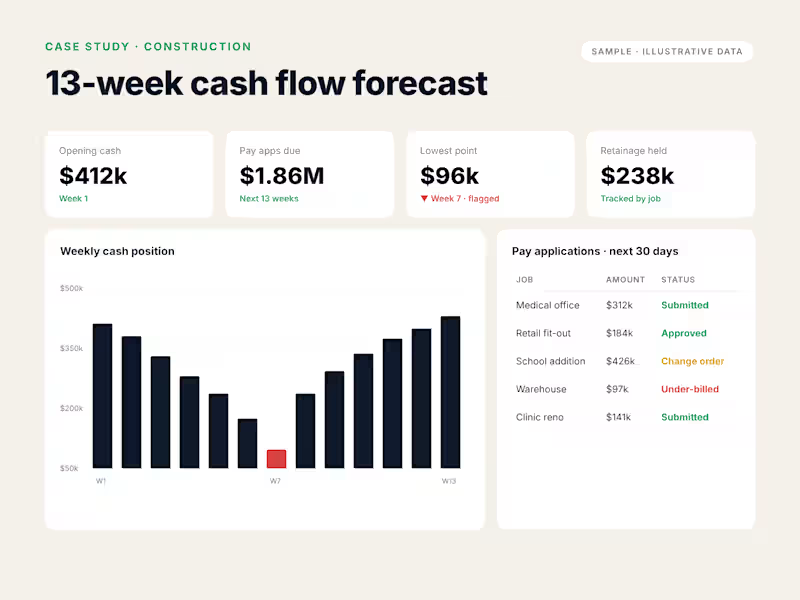
13-week cash flow forecast for a commercial contractor running five active jobs: opening cash, scheduled pay applications, payroll, subcontractor and supplier payments, and retainage tracked by job. The forecast flagged a week-7 low point early, so under-billed work and a pending change order were pushed through before the gap hit. (Sample with illustrative data.)
0
60

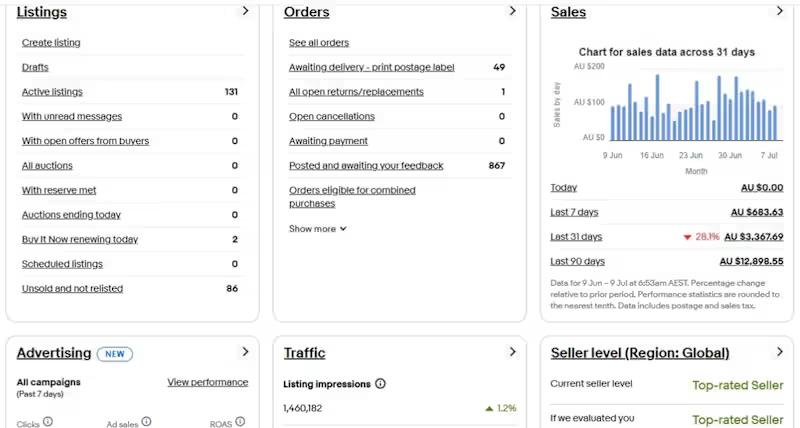

Amazon Catalog Management | Variations, Flat Files & Listing Troubleshooting
A well-organized Amazon catalog is essential for maintaining accurate product listings and a smooth shopping experience.
My work involves managing complex Amazon Seller Central catalogs, fixing listing issues, and making sure product data is structured correctly across different marketplaces.
Key Areas of Work:
• Catalog Management: Create, update, and maintain product listings with accurate titles, attributes, categories, and backend information.
• Parent-Child Variations: Build and troubleshoot variation relationships for products with different sizes, colors, styles, and other attributes.
• Flat File Management: Prepare and submit inventory templates for bulk listing updates, catalog corrections, and product relationship changes.
• Listing Troubleshooting: Investigate suppressed listings, catalog conflicts, attribute errors, and variation issues.
• Multimarketplace Coordination: Maintain consistent catalog information across Amazon US, Canada, Mexico, and other supported marketplaces.
My approach focuses on accurate product data, efficient catalog maintenance, and resolving issues without creating unnecessary disruptions to existing listings.
Services: Amazon Seller Central | Catalog Management | Parent-Child Variations | Flat File Uploads | Listing Error Resolution
0
40
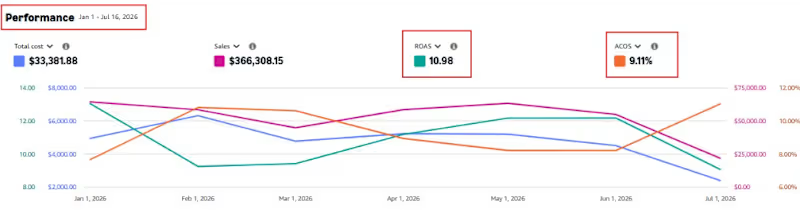
PPC optimization project focused on improving advertising efficiency and driving strong sales performance. I managed campaign structure, budgets, targeting, search terms, and ongoing performance analysis to control ad spend while maintaining strong sales.
Results:
• Ad Spend: $33,381.88
• Sales: $366,308.15
• ROAS: 10.98
• ACOS: 9.11%
The project demonstrates efficient ad spend management and strong return from PPC campaigns.
0
54