Projects using Grammarly in NigeriaProjects using Grammarly in NigeriaA place is being built, but no one has experienced it yet.
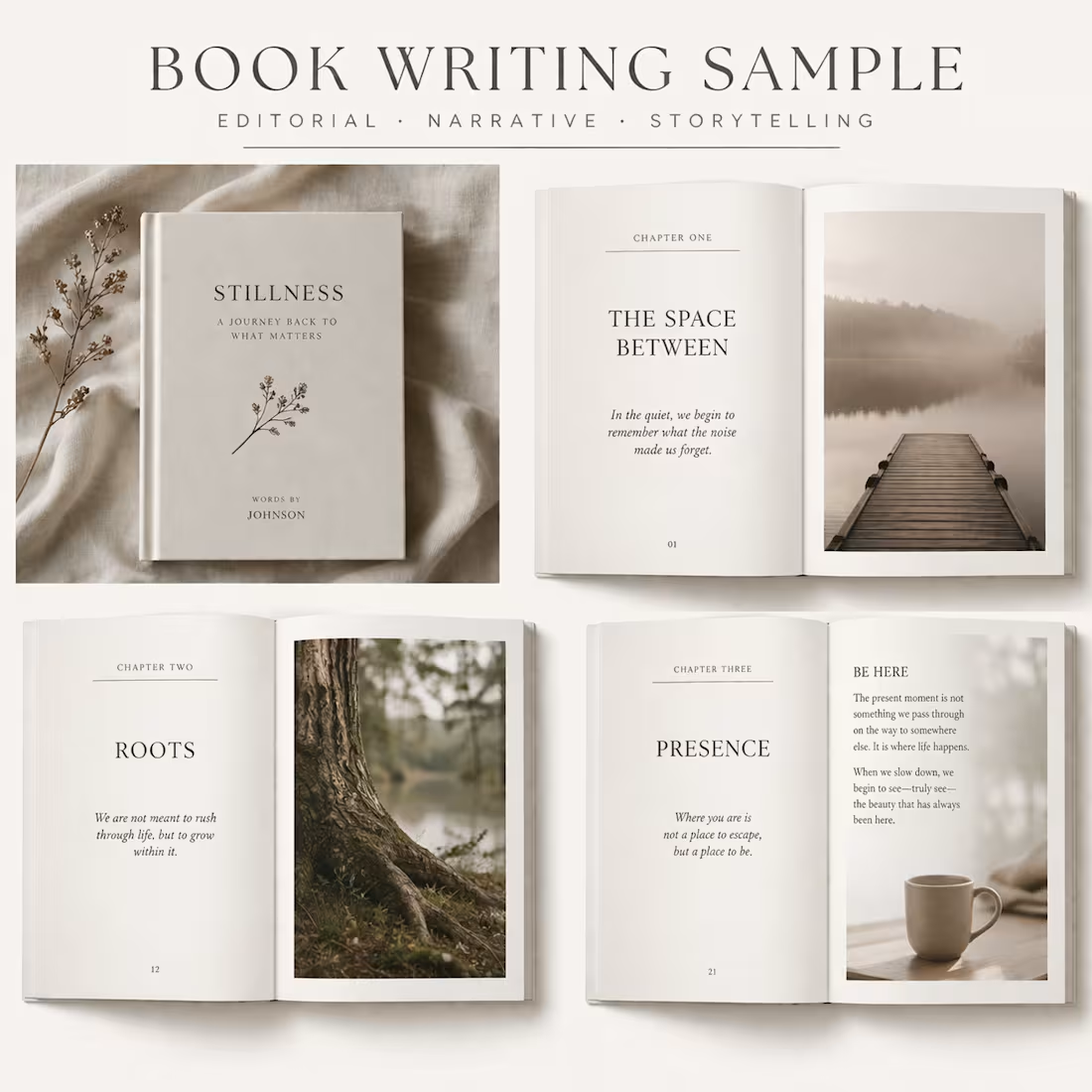
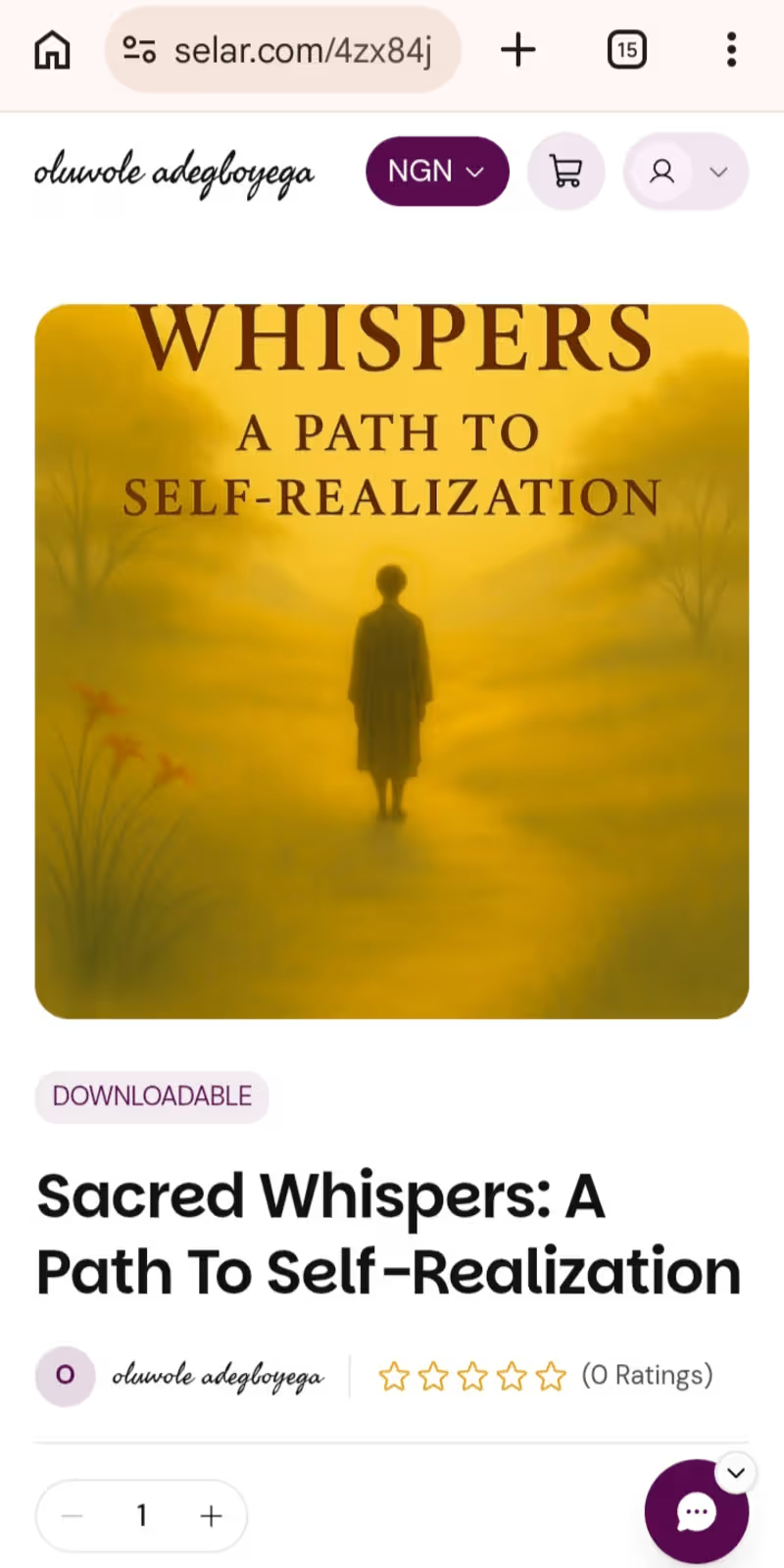
There is no map for it, only intention. The land holds its own memory quiet, patient, unchanged by the pace of those who arrive and leave. What is being created here does not begin with structures, but with attention. How light settles in the morning. How the air shifts before evening. How silence can feel like presence rather than absence.
To write for something that does not yet exist is to listen more than declare. It is to notice what is forming beneath the surface materials chosen with care, spaces shaped with purpose, and the unseen thread that connects them all. Storytelling, in this sense, is not about filling gaps, but about honoring them.
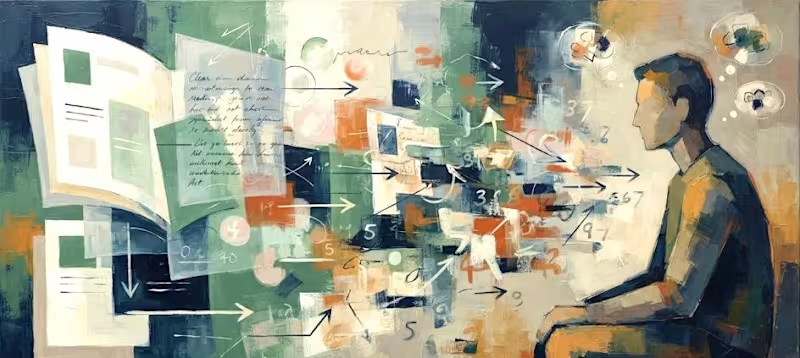
I approach editorial work as a process of restraint and clarity. Each word must feel placed, not added. Each sentence must carry weight without excess. The goal is not to persuade, but to allow something to be felt before it is fully known. 𝐂𝐥𝐞𝐚𝐫 𝐄𝐧𝐨𝐮𝐠𝐡 𝐭𝐨 𝐑𝐞𝐚𝐝, 𝐍𝐨𝐭 𝐂𝐥𝐞𝐚𝐫 𝐄𝐧𝐨𝐮𝐠𝐡 𝐭𝐨 𝐀𝐜𝐭
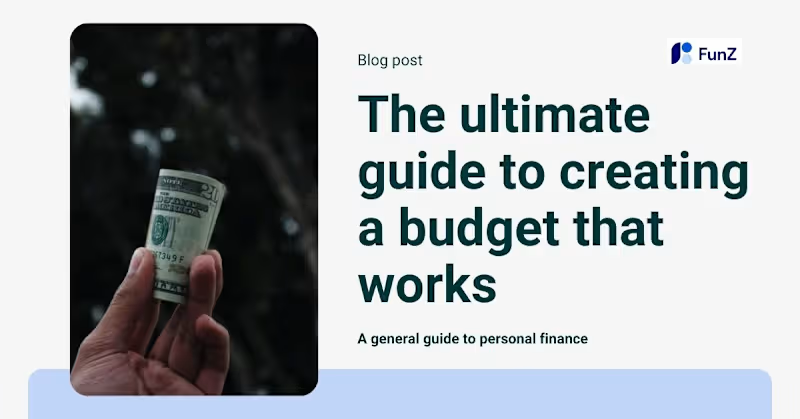
This article looks at why plain language alone isn't always enough to make health information clear and useful, and how we can help people really understand it by testing with intended audiences, being specific about what to do, using examples that fit their culture, and checking understanding with teach-back.
This piece shows how I take complex health research and turn it into clear, practical content that helps readers understand what health information means and what to do with it.
Link to the article. (https://www.linkedin.com/pulse/clear-enough-read-act-uduak-eti-bcule)
People don’t always struggle with health information and services because they can’t read. Health information can be medically accurate and easy enough to read, yet still fail to help people understand what it means or what they should do.
We often talk about health literacy as though it is simply about communication between doctors and their patients or about medical writers developing written materials in plain language.
Health literacy begins in early childhood, long before a child can read or write. Children develop it through interactions with caregivers, family members, schools, and communities.
It involves the ability to find, understand, evaluate, and use health information and services to make informed health-related decisions and take appropriate action for ourselves and others.
People can misunderstand health information even when it's written in plain, simple language because understanding depends on more than just simple words and short sentences.
𝐅𝐚𝐜𝐭𝐨𝐫𝐬 𝐓𝐡𝐚𝐭 𝐀𝐟𝐟𝐞𝐜𝐭 𝐇𝐨𝐰 𝐖𝐞 𝐔𝐧𝐝𝐞𝐫𝐬𝐭𝐚𝐧𝐝
Plain language can reduce misunderstanding, but it doesn't put an end to it. It can make it easier to understand risks, recognise misinformation, and respond to warnings about severe weather or environmental hazards.
Several factors can affect how someone understands and uses a health message.
A person’s health literacy skills can affect how easily they find, understand, and act on information. However, understanding does not depend on individuals alone. Healthcare organisations also shape whether people can understand and act.
Different cultures hold different beliefs about sickness, risk, and treatment, and these beliefs can affect how people understand health information.
A reader may struggle to understand a health message when they are unfamiliar with the language, when there is a translation error, or when vague wording is used.
Medical terms and instructions can also confuse a patient, even when the information uses clear and simple words.
Information about dosage should specify the amount to take and when to take it.
Numbers can be especially tricky to understand. People may interpret a ‘50% increase in risk’ very differently from ‘risk rises from 2 in 1,000 to 3 in 1,000,’ even though both describe the same relative change. The second example makes the actual difference easier to see.
Pain, fear, stress, time pressure, and information overload can affect attention, memory, and decision-making.
These factors show why plain language is important, but not always enough.
𝐃𝐨𝐧'𝐭 𝐀𝐬𝐬𝐮𝐦𝐞: 𝐂𝐡𝐞𝐜𝐤 𝐔𝐧𝐝𝐞𝐫𝐬𝐭𝐚𝐧𝐝𝐢𝐧𝐠
For health communication to be effective, professionals and writers should combine plain language with practical ways of checking understanding.
Be specific about what you want people to do. Instead of saying ‘Take twice daily’, say ‘Take one tablet in the morning and one in the evening’, when that schedule is appropriate for the medicine. Explain symptoms, side effects, and warning signs using simple examples.
It is also important to use the language your intended audience prefers and understands, along with culturally relevant examples.
Before you publish, test your written materials with members of the intended audience. Ask them what they think the message is about, what they will do next, and which parts remain unclear.
Teach-back is a way to check whether the information was understood. It tests whether the explanation was clear; it is not a test of the patient. Ask the person to explain, in their own words, what they understand and what they will do.
For example:
‘I want to be sure my explanation was clear. Can you please tell me how you will take this medication when you get home?’
𝐂𝐨𝐧𝐜𝐥𝐮𝐬𝐢𝐨𝐧
Plain language is a good starting point, but clear words do not always guarantee clear understanding.
We should not assume that people understand us simply because we have explained something clearly. A better test is whether they understood what we meant, know what to do next, and can act on it.
𝐒𝐨𝐮𝐫𝐜𝐞𝐬
World Health Organization (WHO). Low health literacy is costing health (2025). https://www.who.int/publications/i/item/B09619
Centers for Disease Control and Prevention (CDC). Plain Language Materials & Resources. https://www.cdc.gov/health-literacy/php/develop-materials/plain-language.html
Swedish Agency for Health Technology Assessment and Assessment of Social Services (SBU). Interventions to Promote Health Literacy in Children, Adolescents, and Supporting Adults (2025). https://www.sbu.se/en/publications/sbu-kartlagger/interventions-to-promote-health-literacy-in-children-adolescents-and-supporting-adults/
NIH/PMC. Health promotion through reading in the first thousand days (2025). https://pmc.ncbi.nlm.nih.gov/articles/PMC12716577/