Freelance AI Agent Designers in New DelhiFreelance AI Agent Designers in New Delhi
UX & Service Designer crafting human-centered systems

10
Followers
UX & Service Designer crafting human-centered systems
UI/UX Designer • No-code Builder • AI Architect
$1k+
Earned
60
Followers
UI/UX Designer • No-code Builder • AI Architect
Building Production-Grade AI Agents & RAG Systems
13
Followers
Building Production-Grade AI Agents & RAG Systems
Full Stack Developer
7
Followers
Full Stack Developer
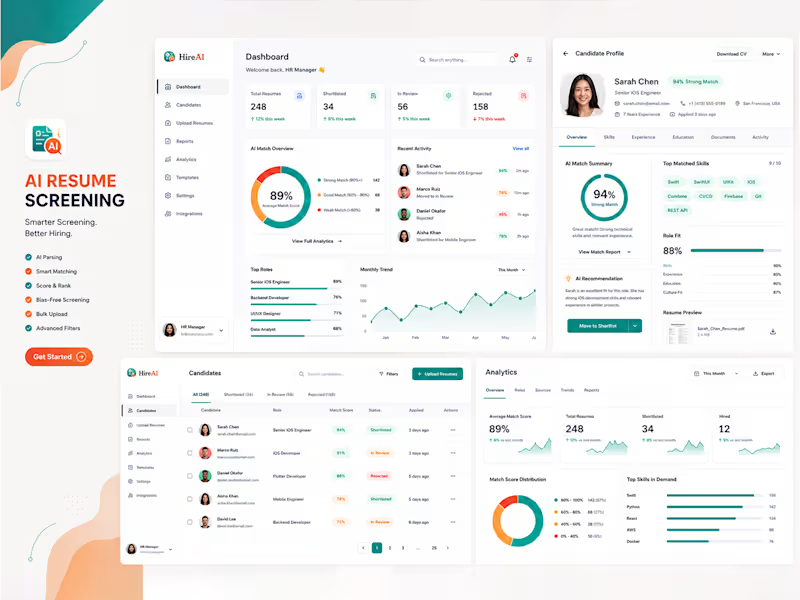
Cover image for AI Resume Screening | Candidate
AI Resume Screening | Candidate Ranking System | AI HR Recruiter | ATS CV/Resume Optimization 𝗢𝘃𝗲𝗿𝘃𝗶𝗲𝘄 Recruiters often spend hours manually reviewing resumes, comparing candidate qualifications, and identifying the best fit for open positions. To address this challenge, I developed an AI-powered Resume Screening and Candidate Ranking Platform that automates candidate evaluation, improves hiring efficiency, and reduces recruitment time. 𝗖𝗵𝗮𝗹𝗹𝗲𝗻𝗴𝗲 Traditional recruitment processes involve reviewing hundreds of resumes for a single position. This manual approach is time-consuming, inconsistent, and often results in qualified candidates being overlooked. Recruiters needed a solution capable of quickly analyzing resumes, matching them against job requirements, and generating reliable candidate rankings. 𝗦𝗼𝗹𝘂𝘁𝗶𝗼𝗻 I built an intelligent recruitment platform that leverages Artificial Intelligence and Natural Language Processing (NLP) to automate resume analysis and candidate assessment. 𝗞𝗲𝘆 𝗳𝗲𝗮𝘁𝘂𝗿𝗲𝘀 𝗶𝗻𝗰𝗹𝘂𝗱𝗲: - ATS-compatible resume parsing for PDF and DOCX files - Automated extraction of skills, experience, education, certifications, and contact information - AI candidate matching based on job descriptions - Intelligent candidate scoring and ranking system - Semantic skill matching using NLP techniques - Automated shortlist generation for recruiters - Recruiter dashboard for managing applications and rankings - Bulk resume processing for high-volume recruitment - Interview recommendation system based on candidate fit - Fair and consistent evaluation framework to reduce manual bias 𝗗𝗲𝘃𝗲𝗹𝗼𝗽𝗺𝗲𝗻𝘁 𝗣𝗿𝗼𝗰𝗲𝘀𝘀 The platform was designed with scalability and accuracy in mind. The workflow begins by parsing uploaded resumes and extracting structured candidate data. AI models then compare candidate profiles against job requirements, analyzing technical skills, years of experience, educational background, and industry relevance. A ranking engine generates compatibility scores and presents candidates in order of suitability. Recruiters can review detailed scoring insights, compare applicants, and make faster hiring decisions. 𝗥𝗲𝘀𝘂𝗹𝘁𝘀 The solution significantly improved recruitment efficiency and candidate discovery. 𝗢𝘂𝘁𝗰𝗼𝗺𝗲𝘀 > Reduced manual resume screening time by up to 80% > Accelerated candidate shortlisting process > Improved recruiter productivity and hiring speed > Increased consistency in candidate evaluation > Enabled processing of hundreds of resumes within minutes > Enhanced talent identification through AI-driven matching 𝗖𝗼𝗻𝗰𝗹𝘂𝘀𝗶𝗼𝗻 This AI recruitment platform transforms traditional hiring workflows by automating resume screening, ranking candidates intelligently, and helping recruiters identify top talent faster, more accurately, and at scale.
1
104
Full-Stack Developer & UI/UX Designer | React, PHP
New to Contra
Full-Stack Developer & UI/UX Designer | React, PHP
Cover image for AI Viral Story & Cinematic
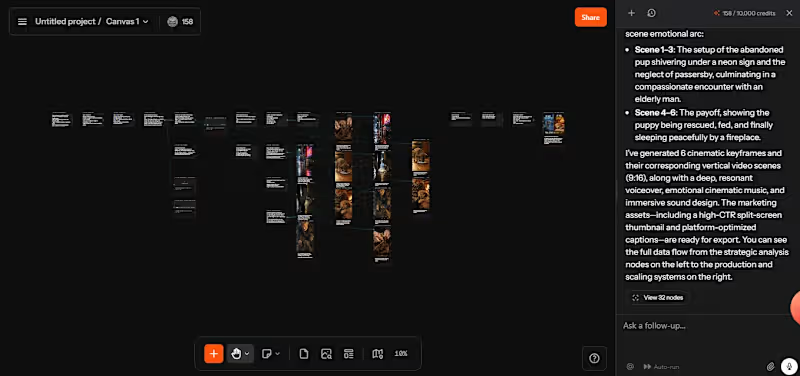
AI Viral Story & Cinematic Shorts Factory AI Viral Story & Cinematic Shorts Factory is a futuristic AI-powered storytelling workflow built entirely inside Melius. The project explores how AI can transform a single emotional idea into a complete viral-ready cinematic production pipeline for platforms like YouTube Shorts, TikTok, Instagram Reels, and Pinterest Video Pins. Using interconnected AI agents and advanced visual workflow nodes, the system handles: Trend research and viral analysis Emotional story generation Cinematic scene breakdowns AI image prompting AI animation direction Camera movement planning Voiceover scripting Music and sound design Thumbnail optimization Captions and hashtag generation Engagement prediction Multi-platform export workflows For the core demonstration, I created a 6-scene emotional rescue story following an abandoned puppy in the rain. The workflow visually demonstrates how a raw emotional concept evolves into a fully cinematic short-form narrative through interconnected AI systems. The project was designed to feel like a next-generation AI filmmaking operating system — combining storytelling psychology, prompt engineering, cinematography logic, emotional optimization, and creator workflow automation into one connected visual canvas. My goal was to explore the future of AI-native filmmaking and demonstrate how creators can generate production-ready emotional content in minutes instead of weeks. Process: Researched emotional viral storytelling formats Designed a multi-agent cinematic workflow architecture Built interconnected AI production nodes inside Melius Generated a full 6-scene cinematic narrative Created image and animation prompt systems Added voiceover, music, and sound design logic Built thumbnail, caption, and engagement optimization systems Produced a cinematic walkthrough showcasing the workflow Feedback on Melius: Using Melius felt like directing an AI-powered creative studio visually instead of switching between disconnected tools. The node-based workflow made it easier to structure cinematic storytelling pipelines, iterate on ideas, and connect production systems together in a much more intuitive way. LinkedIn Post: https://www.linkedin.com/posts/buildwithlalit_meliuschallenge-ugcPost-7462439292988968960-xnV2
2
87
CSE student building ML pipelines & AI-powered products
New to Contra
CSE student building ML pipelines & AI-powered products
Cover image for What It Is
SevaFlow is a
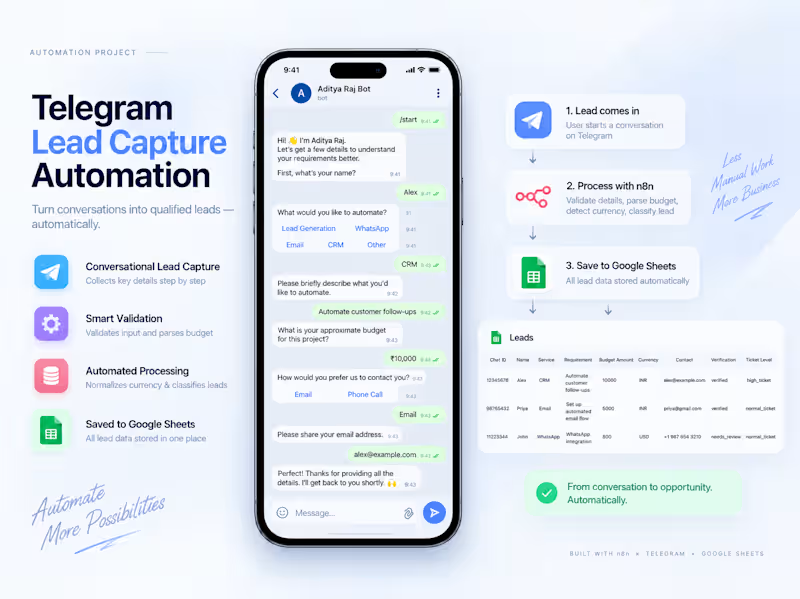
What It Is SevaFlow is a civic complaint management system that lets Indian citizens file government complaints through Telegram without downloading any app or creating an account. The complaint gets automatically understood, routed, and tracked using AI. How It Works End to End A citizen sends a plain text message to the Telegram bot describing their problem. That message gets sent to Google Gemini with a carefully designed prompt at temperature 0.1, meaning the AI outputs consistent, deterministic JSON every time. Gemini extracts the issue type, location, responsible department, priority level, and generates a summary, all returning a confidence score between 0 and 1. The routing engine then takes over. It applies priority override rules first, so words like "fire" or "emergency" always trigger urgent regardless of what the AI said. It maps the AI suggestion to a configured department, assigns an SLA deadline based on department and priority, and stores everything in SQLite. The citizen immediately receives a Telegram confirmation with their reference ID like SF1234, department name, priority, and expected response time. The Admin Side Government officials log into a dashboard at the FastAPI server. They can filter and sort complaints, view the full status history of each one showing who changed what and when, update the status with notes like "team dispatched", and trigger a Telegram notification back to the citizen automatically. What Makes It Technically Interesting The AI pipeline has a two layer fallback. If Gemini fails, keyword matching kicks in to identify the department. If that also fails, it routes to General Services with medium priority and confidence marked as 0.0 so admins know it needs manual review. Nothing gets lost. The department configuration is fully data driven. Adding a new government department requires zero code changes, just a new entry in config.py (http://config.py) with keywords, SLA hours, and contact email. The system picks it up on restart. The database tracks two separate tables: complaints with all AI output stored alongside the raw text, and status history with a complete changelog including timestamps and the identity of who made each change. Why It Won Most hackathon civic tech projects build a web form. SevaFlow used Telegram as the interface because that is where citizens already are, made the AI classification reliable enough to actually route correctly, and built the full government side too, not just the submission side. End to end in one system, deployable on a single lightweight server.
0
23