Freelance AI Agent Designers in GurugramFreelance AI Agent Designers in Gurugram
UX & Service Designer crafting human-centered systems

9
Followers
UX & Service Designer crafting human-centered systems

I build production AI agents that automate real workflows
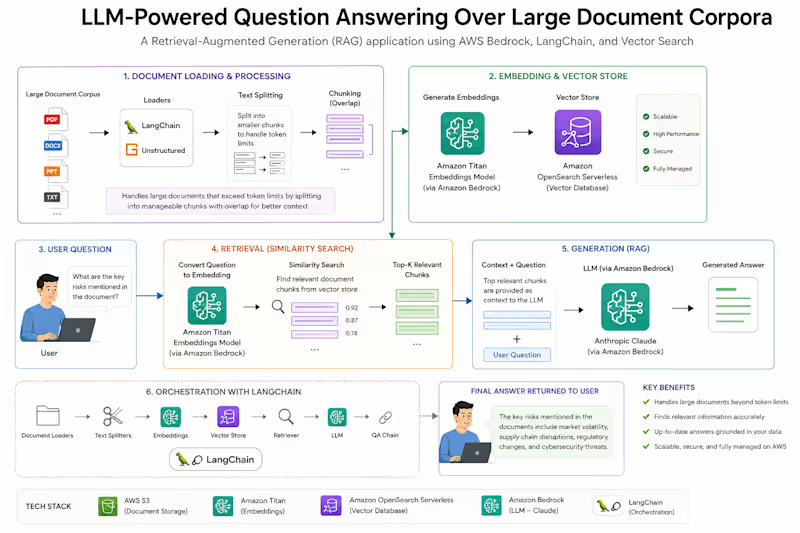
Cover image for Built an LLM-powered question-answering application
Built an LLM-powered question-answering application that lets users ask natural-language questions over large document corpora and get accurate, grounded answers, instead of manually searching through documents for the right section. Designed and built the full RAG pipeline independently, from document ingestion through to answer generation, as a technical demonstration of production-grade retrieval-augmented generation using AWS-native tooling. Key Challenges: Documents exceeding token limits: Large source documents couldn't be fed directly into the LLM's context window, so they had to be broken down without losing meaning or context across chunks. Finding the right context: With a large corpus, the system needed to reliably surface the specific chunks relevant to a given question, not just the most textually similar ones. Grounded, accurate answers: Answers had to be based on the actual retrieved content, not the model's general knowledge, to avoid confidently wrong responses. Working within a managed AWS ecosystem: Embeddings, storage, and generation all needed to work together cleanly using Bedrock-native models rather than a patchwork of external services. Approach: Document loading and chunking Processed large documents into manageable chunks sized to stay within model token limits while preserving enough context for coherent retrieval. Vector embeddings with Amazon Titan Generated vector embeddings for each document chunk using Amazon Titan, capturing semantic meaning rather than just keyword overlap. Vector storage and retrieval Stored the embeddings in a vector database, enabling fast similarity search to pull the most relevant chunks for any given question. RAG-based answer generation with Claude on Bedrock When a question comes in, the system retrieves the relevant chunks and passes them as context to Anthropic Claude via Amazon Bedrock, which generates an answer grounded in the retrieved content rather than relying on parametric memory alone. Results & Impact: Accurate, source-grounded answers over document corpora too large to fit in a single context window. A scalable retrieval architecture that separates document processing, embedding, and generation, so any of the three can be swapped or scaled independently. A fully AWS-native RAG pipeline, demonstrating fluency with Bedrock's embedding and generation models working together in production patterns. Tech Stack Python · LangChain · AWS Bedrock · Amazon Titan · Anthropic Claude · FAISS DB
1
105
Cover image for Built a virtual try-on application
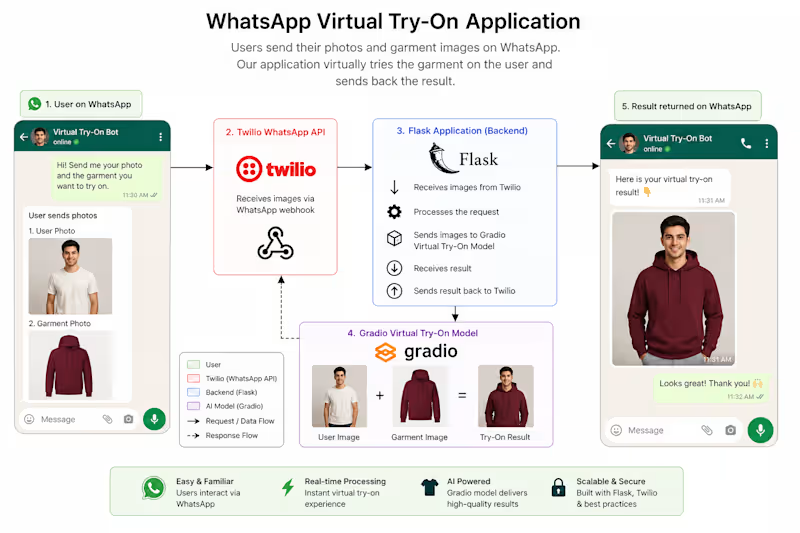
Built a virtual try-on application that lets users try on garments over WhatsApp. A user sends a photo through WhatsApp, and the app returns a realistic image of them wearing the selected garment, no app download or website visit required. Designed and built the system end-to-end, from the WhatsApp messaging integration through to the try-on generation pipeline, as a self-contained product demonstrating conversational commerce for fashion/retail use cases. Key Challenges: - Frictionless UX over a messaging app: WhatsApp isn't built for structured app interactions, so the flow had to feel natural through simple image and text messages, not clunky commands. - Reliable image handling: Incoming photos vary wildly in quality, lighting, and pose, and had to be received, processed, and matched with garment images reliably. - Fast turnaround: Users expect a near-instant reply on a messaging app, so the backend had to handle image processing and model inference without long delays. - Stitching third-party services together: Twilio's WhatsApp API and Gradio's try-on model weren't built to talk to each other, so the app had to bridge them cleanly. Approach: WhatsApp integration via Twilio -Set up Twilio's WhatsApp API to receive incoming user images and send outgoing try-on results, handling the messaging layer end-to-end. Flask backend as the orchestration layer -Built a Flask application to receive Twilio webhooks, manage the request flow, and coordinate between incoming user images and the try-on model. Virtual try-on generation with Gradio - Integrated Gradio's virtual try-on model to generate the final garment-on-user image, returning a realistic composite result. End-to-end flow design - Connected the pieces so a user's WhatsApp message triggers the full pipeline automatically: receive image → process → generate try-on → send result back, all within a single conversation. Results & Impact - A working conversational shopping experience built entirely on a messaging app users already have open every day. - Zero-download, zero-signup try-on flow — removes the biggest friction point in getting users to try a new AI-powered feature. - A reusable integration pattern connecting Twilio, Flask, and a generative vision model, applicable to other WhatsApp-based commerce or personalization tools. Provided Services & Solutions 📌 Conversational App Development 📌 WhatsApp API Integration (Twilio) 📌 Backend Development (Flask) 📌 Generative AI Integration (Gradio virtual try-on model) 📌 Third-Party API Orchestration Tech Stack: Python · Flask · Twilio WhatsApp API · Gradio If you want an AI-powered experience built directly into a channel your customers already use, like WhatsApp, let's talk.
1
63
Cover image for Built and maintained a HIPAA
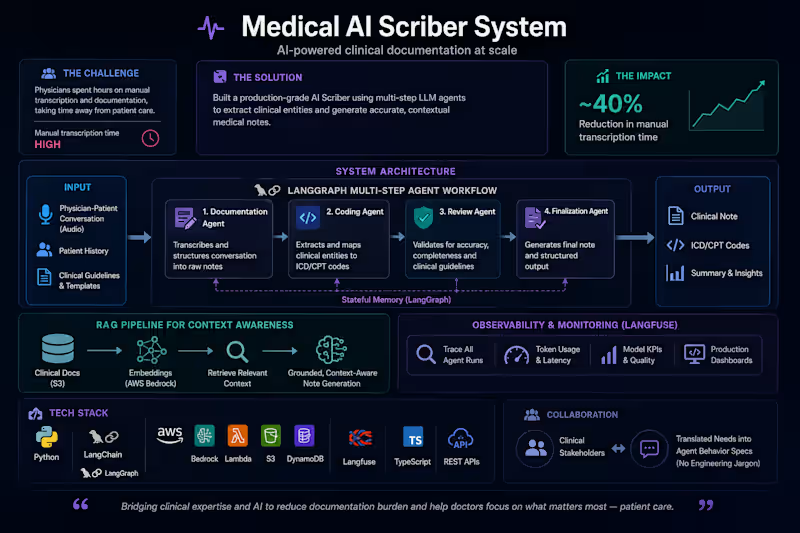
Built and maintained a HIPAA compliant production medical AI scribe system that uses multi-step LLM agents to extract clinical entities directly from physician-patient conversations and turn them into structured medical notes, cutting down the manual transcription work clinicians used to do after every visit. Multi-stage clinical workflow: Documentation, coding, and review each have different logic and conditional paths, and the system needed to branch correctly between them without losing context. Clinical accuracy: Generated notes had to be grounded in real patient history and clinical guidelines, not just plausible-sounding text. Production reliability: As a live system handling real conversations, every agent run needed to be observable, debuggable, and monitored for cost and latency in real time. Non-technical requirements gathering: Clinical needs had to be captured accurately from stakeholders without a technical background and translated into precise agent logic. Approach: Stateful agent orchestration with LangGraph Designed LangGraph-based agent workflows with conditional branching, allowing the system to move correctly across documentation, coding, and review stages based on conversation content. Context-grounded note generation with RAG Built a RAG pipeline on AWS Bedrock with embeddings, so every generated note is grounded in the patient's actual history and relevant clinical guidelines rather than generic output. Full production observability Integrated Langfuse across all agent runs to track token usage, latency, and model KPIs, giving the team visibility into system health and cost in production, not just at build time. Clinical stakeholder collaboration Ran requirements sessions directly with clinical staff, converting their documentation needs into concrete agent behavior specs and validation criteria. Results & Impact: ~40% reduction in manual transcription time for clinicians using the system. Clinically grounded output, with notes tied to real patient history and guidelines instead of unsupported generation. Full production observability, with token usage, latency, and model performance tracked continuously. A workflow clinicians could trust, built through direct collaboration rather than a black-box handoff. Provided Services & Solutions: 📌 AI Agent Development (LangGraph) 📌 RAG Pipeline Development (AWS Bedrock) 📌 LLM Observability (Langfuse) 📌 Cloud Infrastructure (AWS Lambda, S3, DynamoDB) 📌 Stakeholder Requirements Translation 📌 Production ML Systems Tech Stack Python · LangChain · LangGraph · AWS (Bedrock, Lambda, S3, DynamoDB) · Langfuse · TypeScript · REST APIs
2
95
Cover image for Overview 📖
Built an end-to-end agentic
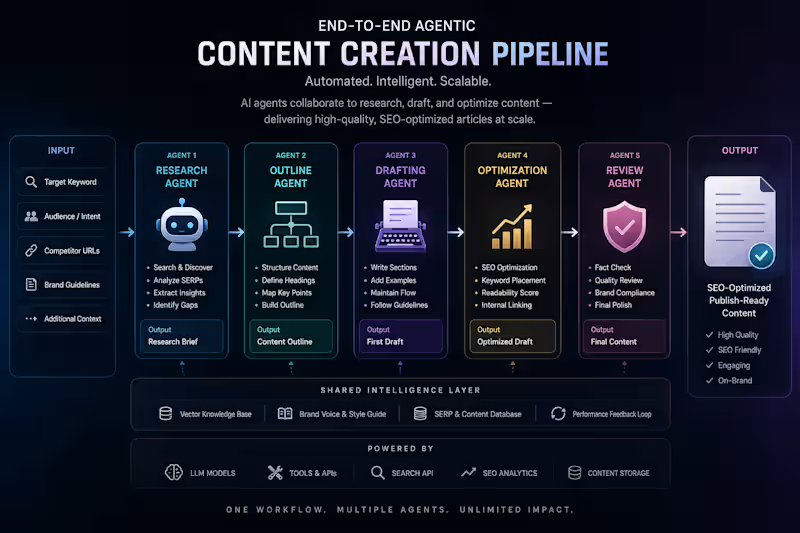
Overview 📖 Built an end-to-end agentic content creation pipeline for a fast-growing AI-powered SEO platform. The system chains multiple LLM agents together to research, draft, and optimize content automatically, replacing what used to be a manual, multi-step editorial process with a single automated workflow. Collaboration 🤝 Partnered directly with the platform's engineering team to design and ship the automation layer that now sits at the core of their content operations, turning a bottlenecked manual process into a scalable, always-on pipeline. Key Challenges 🤔 Multi-step content logic: Research, drafting, and optimization each require different context and tone, but had to feel like one coherent pipeline, not three disconnected tools. Consistency at scale: Every piece of generated content had to match brand voice and pass compliance checks, without a human reviewing each one manually. Orchestration complexity: Content jobs needed to trigger reliably from webhooks and third-party APIs, run through multiple agents in sequence, and fail gracefully without stalling the whole pipeline. Performance under load: The backend had to stay fast and stable as content throughput scaled up. Approach 🔍 Agentic content pipeline design Designed a multi-step LangChain agent chain with tool-calling, where each agent (research, drafting, optimization) has a clearly scoped role and hands off structured output to the next. Workflow orchestration with n8n Built n8n automation workflows to handle webhook triggers, third-party API integrations, and job routing, removing the need for manual intervention at almost every stage. Brand voice & compliance enforcement Layered in structured prompting and validation steps so generated content stays on-brand and passes compliance checks automatically, at scale. Backend performance tuning Optimized FastAPI endpoints and managed Azure-hosted PostgreSQL databases to keep latency low under high content-throughput conditions. Results & Impact ✨ ~60% reduction in manual intervention across the content pipeline, freeing the team to focus on strategy instead of babysitting workflows. Consistent brand voice at scale, with compliance checks running automatically instead of manually. Reliable, low-latency infrastructure validated under real content-throughput loads. A reusable agentic architecture the platform can extend to new content types without rebuilding the pipeline. Provided Services & Solutions ✅ 📌 AI Agent Development (LangChain) 📌 Workflow Automation (n8n) 📌 LLM Integration (GPT-4, Claude) 📌 API Development (FastAPI) 📌 Cloud Database Management (Azure, PostgreSQL) 📌 Architecture Design & Consulting Tech Stack Python · FastAPI · LangChain · n8n · GPT-4 · Claude · Azure · PostgreSQL
2
95
AI Agent Developer & Engineer | MCP, LLM apps, automation
1x
Hired
5.0
Rating
62
Followers
AI Agent Developer & Engineer | MCP, LLM apps, automation

Design Head & Product Designer at Pencil & Screen
5.0
Rating
6
Followers
Design Head & Product Designer at Pencil & Screen
Full Stack Developer
23
Followers
Full Stack Developer
Cover image for Multi-Vendor E-Commerce Marketplace
Designed and developed
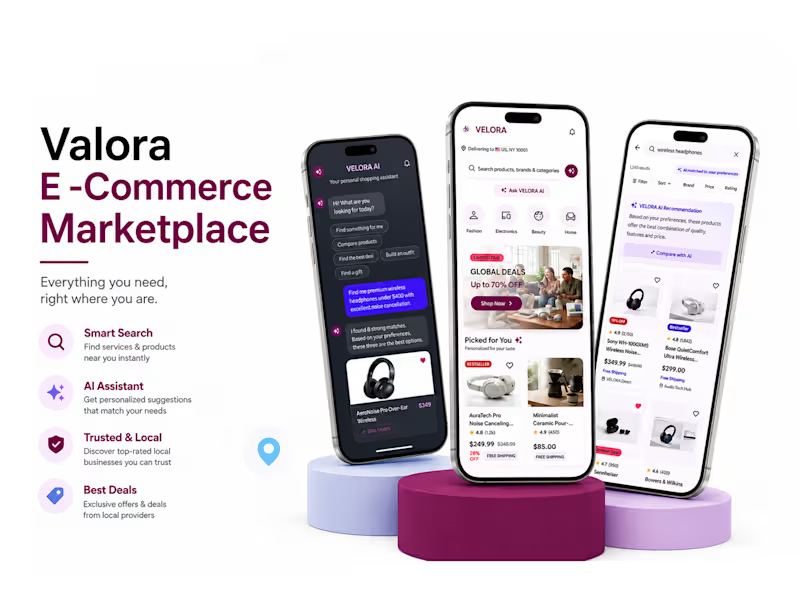
Multi-Vendor E-Commerce Marketplace Designed and developed a scalable multi-vendor e-commerce marketplace connecting customers, sellers, and administrators through a unified platform. Overview A modern marketplace platform built for multiple independent vendors, allowing sellers to manage products, inventory, orders, pricing, and fulfillment, while customers can discover products, compare options, purchase securely, and track their orders. Key Features - Multi-vendor seller registration and onboarding - Seller dashboards with products, inventory, orders, and sales - Advanced product catalog with categories, variants, attributes, and pricing - Powerful search, filtering, sorting, and product discovery - Product details, reviews, ratings, wishlist, and saved items - Shopping cart and secure checkout - Multiple payment methods and automated vendor payouts - Order management and real-time order status - Customer accounts, addresses, order history, and tracking - Vendor storefronts and profiles - Promotions, coupons, discounts, and featured products - Admin dashboard for users, vendors, products, orders, payments, and commissions - Vendor commission and revenue management - Responsive design across desktop, tablet, and mobile - Scalable architecture prepared for large product catalogs and growing traffic UX & Design The interface was designed around a clean, conversion-focused shopping experience inspired by leading marketplaces such as Amazon, eBay, Wayfair, etc. The focus was on intuitive navigation, fast product discovery, clear product information, frictionless checkout, and dedicated experiences for both buyers and sellers. Outcome Delivered a complete marketplace foundation designed to support multiple vendors, thousands of products, secure transactions, automated workflows, and scalable business operations.
0
48
Cover image for AI Resume Screening | Candidate
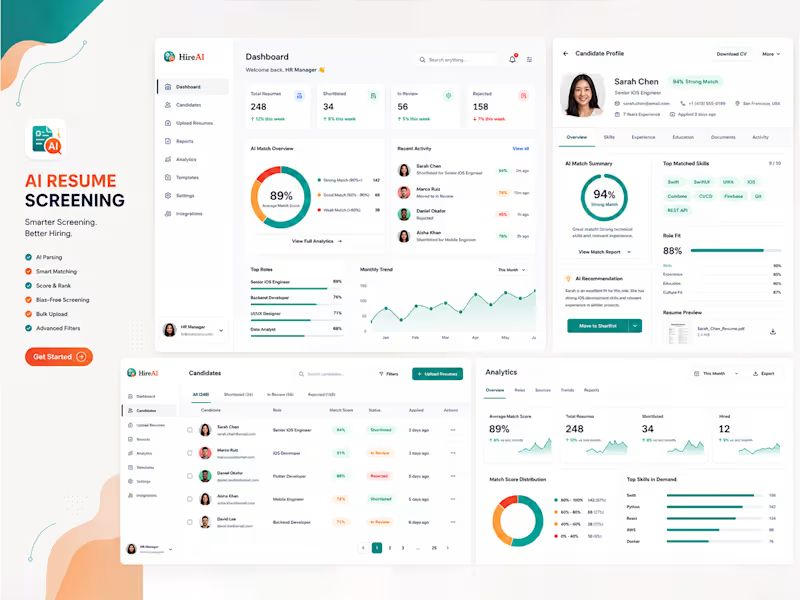
AI Resume Screening | Candidate Ranking System | AI HR Recruiter | ATS CV/Resume Optimization 𝗢𝘃𝗲𝗿𝘃𝗶𝗲𝘄 Recruiters often spend hours manually reviewing resumes, comparing candidate qualifications, and identifying the best fit for open positions. To address this challenge, I developed an AI-powered Resume Screening and Candidate Ranking Platform that automates candidate evaluation, improves hiring efficiency, and reduces recruitment time. 𝗖𝗵𝗮𝗹𝗹𝗲𝗻𝗴𝗲 Traditional recruitment processes involve reviewing hundreds of resumes for a single position. This manual approach is time-consuming, inconsistent, and often results in qualified candidates being overlooked. Recruiters needed a solution capable of quickly analyzing resumes, matching them against job requirements, and generating reliable candidate rankings. 𝗦𝗼𝗹𝘂𝘁𝗶𝗼𝗻 I built an intelligent recruitment platform that leverages Artificial Intelligence and Natural Language Processing (NLP) to automate resume analysis and candidate assessment. 𝗞𝗲𝘆 𝗳𝗲𝗮𝘁𝘂𝗿𝗲𝘀 𝗶𝗻𝗰𝗹𝘂𝗱𝗲: - ATS-compatible resume parsing for PDF and DOCX files - Automated extraction of skills, experience, education, certifications, and contact information - AI candidate matching based on job descriptions - Intelligent candidate scoring and ranking system - Semantic skill matching using NLP techniques - Automated shortlist generation for recruiters - Recruiter dashboard for managing applications and rankings - Bulk resume processing for high-volume recruitment - Interview recommendation system based on candidate fit - Fair and consistent evaluation framework to reduce manual bias 𝗗𝗲𝘃𝗲𝗹𝗼𝗽𝗺𝗲𝗻𝘁 𝗣𝗿𝗼𝗰𝗲𝘀𝘀 The platform was designed with scalability and accuracy in mind. The workflow begins by parsing uploaded resumes and extracting structured candidate data. AI models then compare candidate profiles against job requirements, analyzing technical skills, years of experience, educational background, and industry relevance. A ranking engine generates compatibility scores and presents candidates in order of suitability. Recruiters can review detailed scoring insights, compare applicants, and make faster hiring decisions. 𝗥𝗲𝘀𝘂𝗹𝘁𝘀 The solution significantly improved recruitment efficiency and candidate discovery. 𝗢𝘂𝘁𝗰𝗼𝗺𝗲𝘀 > Reduced manual resume screening time by up to 80% > Accelerated candidate shortlisting process > Improved recruiter productivity and hiring speed > Increased consistency in candidate evaluation > Enabled processing of hundreds of resumes within minutes > Enhanced talent identification through AI-driven matching 𝗖𝗼𝗻𝗰𝗹𝘂𝘀𝗶𝗼𝗻 This AI recruitment platform transforms traditional hiring workflows by automating resume screening, ranking candidates intelligently, and helping recruiters identify top talent faster, more accurately, and at scale.
1
279
AI Engineer | Conversational AI, Agents & Backend Automation
New to Contra
AI Engineer | Conversational AI, Agents & Backend Automation
Cover image for Competitor Price Monitor | n8n
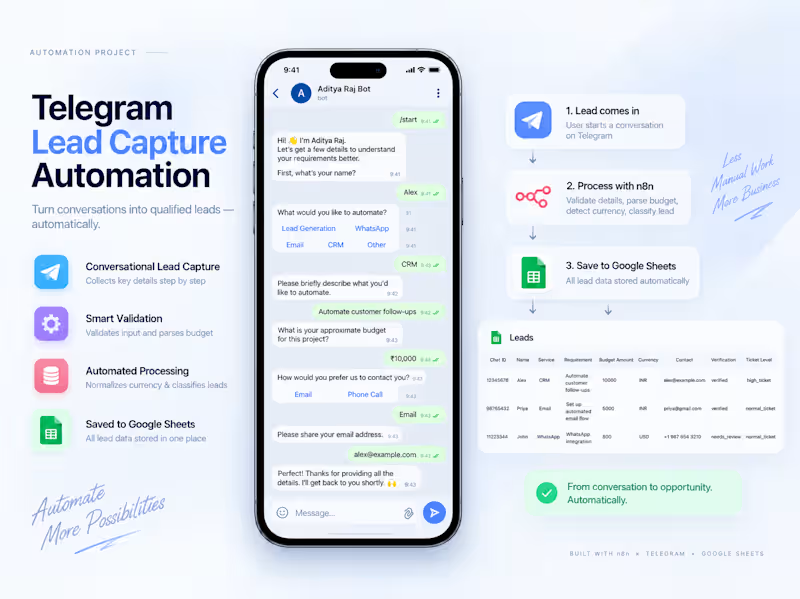
Competitor Price Monitor | n8n + Google Sheets Keeping track of competitor prices becomes repetitive when a retailer manages several product categories and regularly adds new SKUs. I built this automation around TechNest Accessories, a simulated electronics retailer, with a practical brief: monitor comparable competitor products while keeping the solution affordable and easy to manage. The budget shaped the approach. Product discovery and matching stayed manual: the retailer enters its own SKU, selling price and chosen competitor URL in Google Sheets. This keeps control over which products are compared and reduces the complexity of the build. Once a listing is selected, the repeated checking is automated. The workflow reads active listings, retrieves competitor prices and availability, and compares each result with both the retailer’s price and the previously recorded competitor price. It then updates the Current Prices tab and appends a timestamped record to Price History. The retailer can manage everything from the sheet—add listings, update selling prices, or pause monitoring with a Yes/No dropdown. The workflow also handles failed page requests and price extraction. It records the error, preserves the last valid price and continues to the next listing. A successful later check clears the error. I tested the build with two Portronics charger listings, confirming price comparisons, historical records and recovery after a deliberately failed check. The workflow supports scheduled daily checks and manual runs. The result is a working prototype that brings selected competitor prices into one place, highlights meaningful differences and preserves a record for review—while leaving product selection and pricing decisions with the retailer. Built with: n8n, JavaScript, HTTP requests and Google Sheets. Independent portfolio project based on a simulated client brief. Images show recorded test data and simplified views of the working system.
1
83
Cover image for Where most Sales Manager go
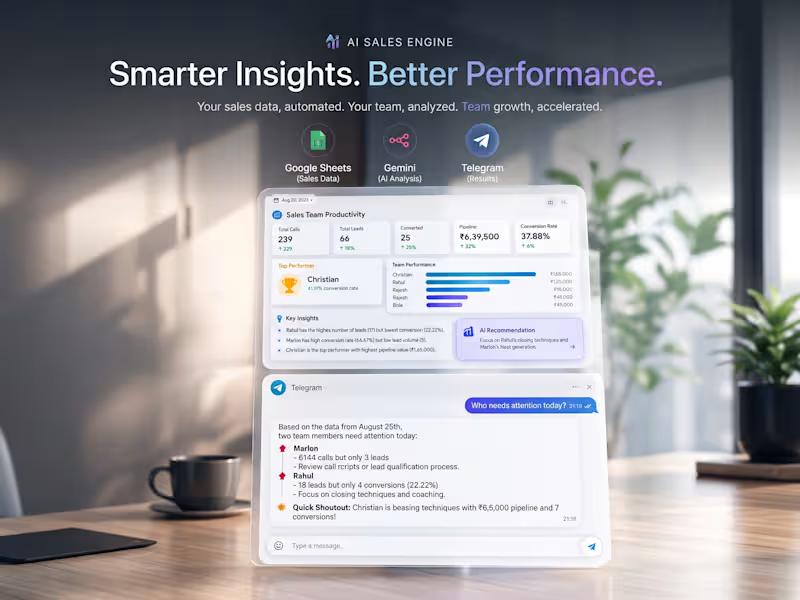
Where most Sales Manager go wrong isn't lack of data, it's getting overwhelmed with numbers and targets. What actually matters is not numbers, but "why" behind it. So we built an Agentic AI Sales Engine that sits on your Telegram, dissects the "why" behind what's happening in your sales team. It doesn't just throws number but tells you why someone is falling short while another pulling ahead, surfaces the operational bottlenecks underneath the numbers, and suggests what can actually be done better, all in real time at 0 infrastructure cost. Problem: A Sales Manager needed a fast way to check teams performance, calls, leads, conversions, pipeline value, but without opening spreadsheets or chasing manual reports. But raw numbers alone don't tell you what to do. Two reps can have identical conversion rates for completely different reasons. The manager needed something that could reason about the data, not just report it but by answering questions like "who needs attention today?" or "why is Rahul underperforming?" What We Built A fully automated Telegram bot, powered entirely by a self-hosted n8n workflow, that reads live data from Google Sheets and combines two layers: hard KPI reporting on demand, and an AI reasoning layer that interprets those numbers into a story a manager can act on. The "Why Layer" This is a part that makes it more than a dashboard, instead of just telling Rahul 12% conversion, the engine reasons over calls, leads pipeline and conversion patterns together and drives an analysis thereby providing the right suggestive next steps. Skills Demonstrated :Workflow automation & API orchestration (n8n) :OAuth 2.0 debugging and Google Cloud API setup :Data processing / aggregation logic (JavaScript in Code nodes) :LLM integration with grounded, hallucination-resistant prompting :Conversational bot design (Telegram Bot API) :Building production-usable tools on a strict zero-cost budget
1
119
Full-Stack Developer & UI/UX Designer | React, PHP
New to Contra
Full-Stack Developer & UI/UX Designer | React, PHP
Cover image for AI Viral Story & Cinematic
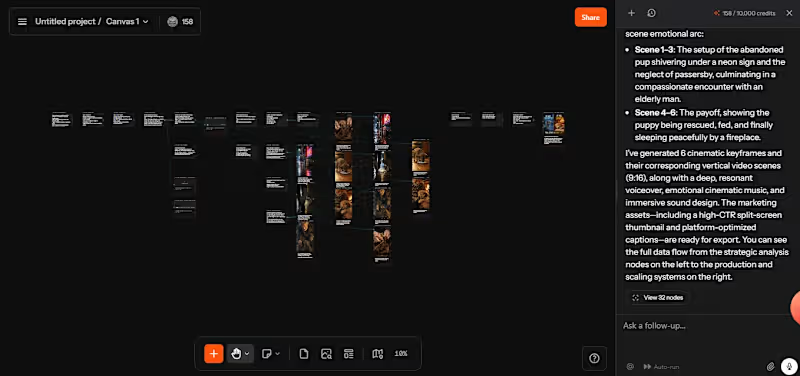
AI Viral Story & Cinematic Shorts Factory AI Viral Story & Cinematic Shorts Factory is a futuristic AI-powered storytelling workflow built entirely inside Melius. The project explores how AI can transform a single emotional idea into a complete viral-ready cinematic production pipeline for platforms like YouTube Shorts, TikTok, Instagram Reels, and Pinterest Video Pins. Using interconnected AI agents and advanced visual workflow nodes, the system handles: Trend research and viral analysis Emotional story generation Cinematic scene breakdowns AI image prompting AI animation direction Camera movement planning Voiceover scripting Music and sound design Thumbnail optimization Captions and hashtag generation Engagement prediction Multi-platform export workflows For the core demonstration, I created a 6-scene emotional rescue story following an abandoned puppy in the rain. The workflow visually demonstrates how a raw emotional concept evolves into a fully cinematic short-form narrative through interconnected AI systems. The project was designed to feel like a next-generation AI filmmaking operating system — combining storytelling psychology, prompt engineering, cinematography logic, emotional optimization, and creator workflow automation into one connected visual canvas. My goal was to explore the future of AI-native filmmaking and demonstrate how creators can generate production-ready emotional content in minutes instead of weeks. Process: Researched emotional viral storytelling formats Designed a multi-agent cinematic workflow architecture Built interconnected AI production nodes inside Melius Generated a full 6-scene cinematic narrative Created image and animation prompt systems Added voiceover, music, and sound design logic Built thumbnail, caption, and engagement optimization systems Produced a cinematic walkthrough showcasing the workflow Feedback on Melius: Using Melius felt like directing an AI-powered creative studio visually instead of switching between disconnected tools. The node-based workflow made it easier to structure cinematic storytelling pipelines, iterate on ideas, and connect production systems together in a much more intuitive way. LinkedIn Post: https://www.linkedin.com/posts/buildwithlalit_meliuschallenge-ugcPost-7462439292988968960-xnV2
2
89
CSE student building ML pipelines & AI-powered products
New to Contra
CSE student building ML pipelines & AI-powered products
Cover image for What It Is
SevaFlow is a
What It Is SevaFlow is a civic complaint management system that lets Indian citizens file government complaints through Telegram without downloading any app or creating an account. The complaint gets automatically understood, routed, and tracked using AI. How It Works End to End A citizen sends a plain text message to the Telegram bot describing their problem. That message gets sent to Google Gemini with a carefully designed prompt at temperature 0.1, meaning the AI outputs consistent, deterministic JSON every time. Gemini extracts the issue type, location, responsible department, priority level, and generates a summary, all returning a confidence score between 0 and 1. The routing engine then takes over. It applies priority override rules first, so words like "fire" or "emergency" always trigger urgent regardless of what the AI said. It maps the AI suggestion to a configured department, assigns an SLA deadline based on department and priority, and stores everything in SQLite. The citizen immediately receives a Telegram confirmation with their reference ID like SF1234, department name, priority, and expected response time. The Admin Side Government officials log into a dashboard at the FastAPI server. They can filter and sort complaints, view the full status history of each one showing who changed what and when, update the status with notes like "team dispatched", and trigger a Telegram notification back to the citizen automatically. What Makes It Technically Interesting The AI pipeline has a two layer fallback. If Gemini fails, keyword matching kicks in to identify the department. If that also fails, it routes to General Services with medium priority and confidence marked as 0.0 so admins know it needs manual review. Nothing gets lost. The department configuration is fully data driven. Adding a new government department requires zero code changes, just a new entry in config.py (http://config.py) with keywords, SLA hours, and contact email. The system picks it up on restart. The database tracks two separate tables: complaints with all AI output stored alongside the raw text, and status history with a complete changelog including timestamps and the identity of who made each change. Why It Won Most hackathon civic tech projects build a web form. SevaFlow used Telegram as the interface because that is where citizens already are, made the AI classification reliable enough to actually route correctly, and built the full government side too, not just the submission side. End to end in one system, deployable on a single lightweight server.
0
40