Freelance AI Agent Designers in Greater Noida
Sign Up
Post a job
Sign Up
Log In
Filters
2
Projects
People
Sahil Roy
Delhi, India
UX & Service Designer crafting human-centered systems
10
Followers
Follow
Message
UX & Service Designer crafting human-centered systems
0
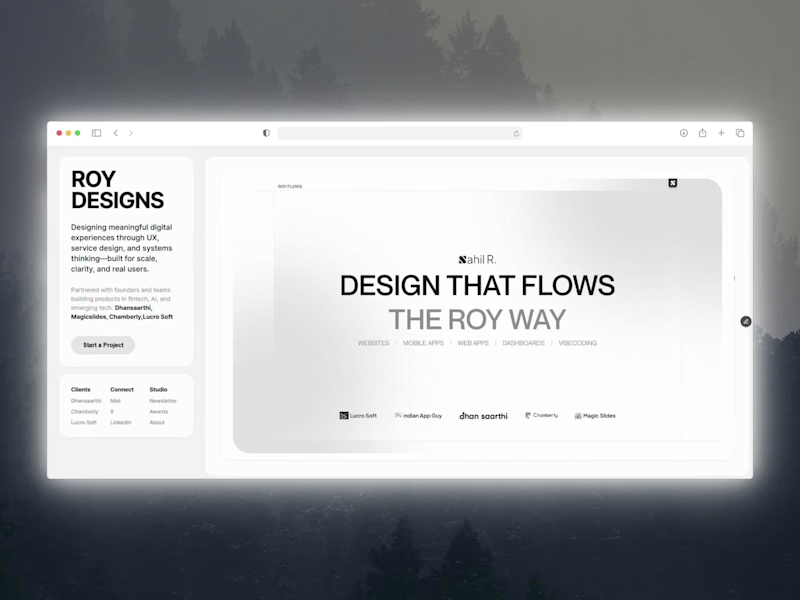
I design. I build. I ship. Figma → Framer → production. No handoffs or back and forth. Just a finished product. Roy Studio has 2 spots this month. If you know, you know. If you don't—royflows.com (https://—royflows.com)
0
122
9
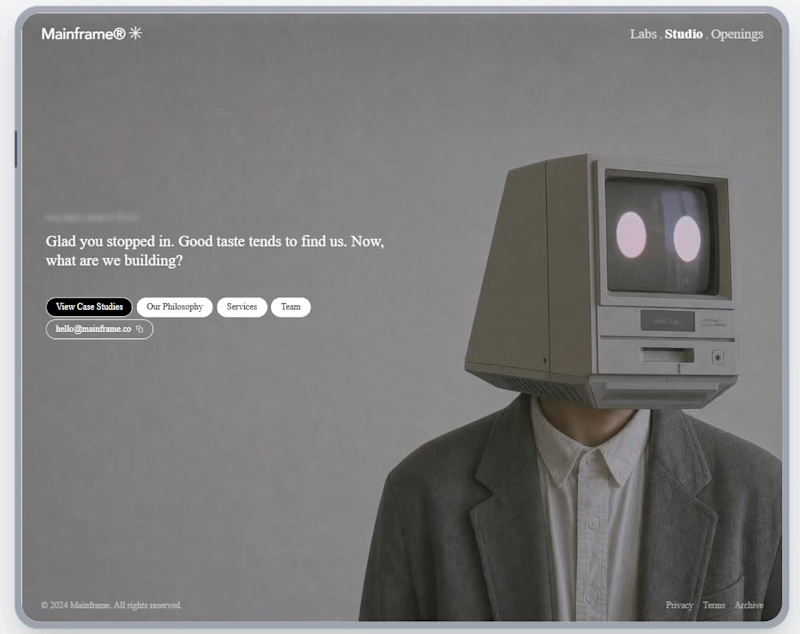
Mainframe is a conceptual AI studio — brand system + full multi-page website, built entirely in Stitch. Landing page with animated states, five inner pages (Labs, Studio, Services, Openings), and a complete DESIGN.md (http://DESIGN.md) covering color, type, and layout. Monochromatic, editorial, cinematic. The kind of system that usually takes weeks — done in one session. Started with brand tokens, used them as the foundation for every page. Iterated hover states and animations without leaving the design context. The generated DESIGN.md (http://DESIGN.md) became the actual handoff doc. Fastest I've gone from concept to a coherent multi-page system. Want: auto-propagating token updates across pages, finer motion controls, native multi-page navigation. Otherwise — best design-gen tool I've used since Figma got auto-layout.
7
9
431
1
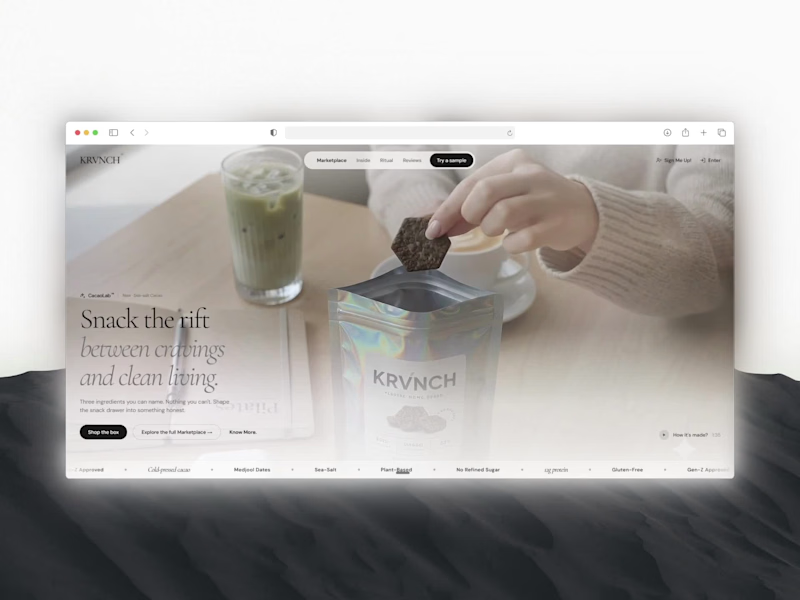
Just wrapped a custom store build and I'm genuinely proud of this one. Minimal. Clean. The kind of ecommerce experience that doesn't shout—it just works. Product pages that breathe. A checkout flow so smooth it almost feels intentional. Collections that actually make sense when you're browsing. The hero hits different when you scroll through it live. Real product imagery. Real storytelling. The whole vibe just clicks. This is what I build for brands that know design matters. No template defaults. No generic flows. Just a store that converts because it feels right. Demo's ready to show—thinking this could be something special for the right founder. → DM if you're building something like this.
1
72
2
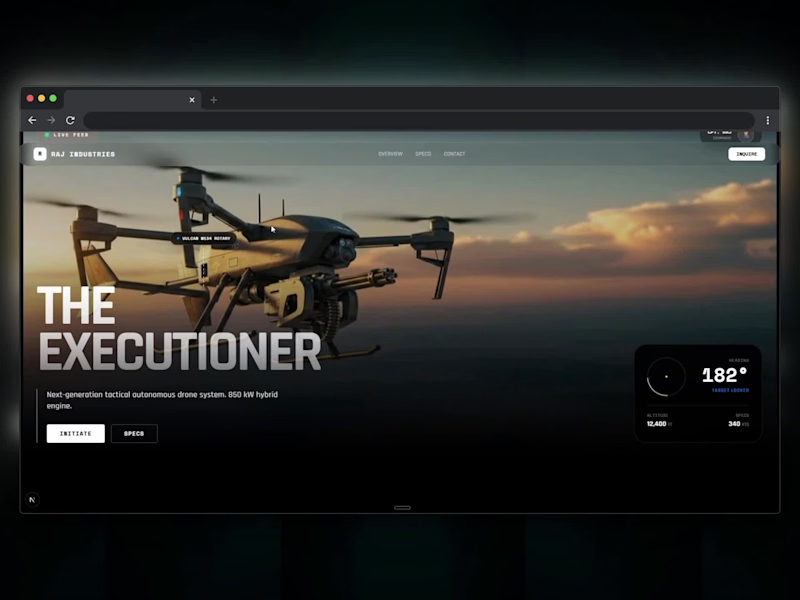
I set a quick design challenge for myself: What would a high-end landing page look like for a national defense contractor or a private drone dealer? 🚁🔥 Check out my latest UI/UX concept: a cinematic, dark-mode experience for a next-gen tactical drone called "The Executioner." The goal was to blend intense military aesthetics with a sleek, minimalist tech UI. Let's hear your thoughts in comments!
2
87
AI Agent Designer
(5)
Follow
Message
Ayush Shukla
Greater Noida, India
UI/UX Designer • No-code Builder • AI Architect
$1k+
Earned
62
Followers
expert
Follow
Message
UI/UX Designer • No-code Builder • AI Architect
58
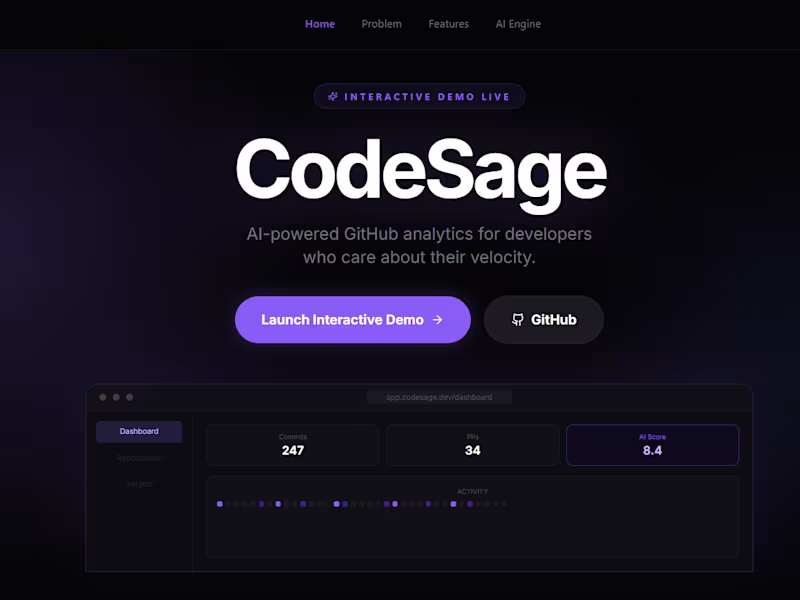
I built something wild for the Paper Challenge🚀 It turns any GitHub repo into a visual case study — instantly. No writing. No designing. Just drop a repo link… and the canvas builds itself. That’s CodeSage💯 Most devs have solid projects… but they’re buried in README files nobody reads. CodeSage changes that. It reads your actual code — architecture, stack, commits — and transforms it into a clean, dark, presentation-ready case study. The real unlock? Paper MCP. I connected my AI agent directly to the canvas. So instead of designing manually… the agent builds everything: • Sections • Layout • Insights • Structure All generated directly on the canvas. No drag. No drop. Just output. Pick any repo → get 3 analysis modes: *Each one gives → Complexity score → PR velocity → Language breakdown → Full Refactor Roadmap Try CodeSage: https://codesage-871524277866.us-central1.run.app/ Tech stack: Paper MCP · Gemini API · GitHub API · Antigravity
22
58
1.2K
7
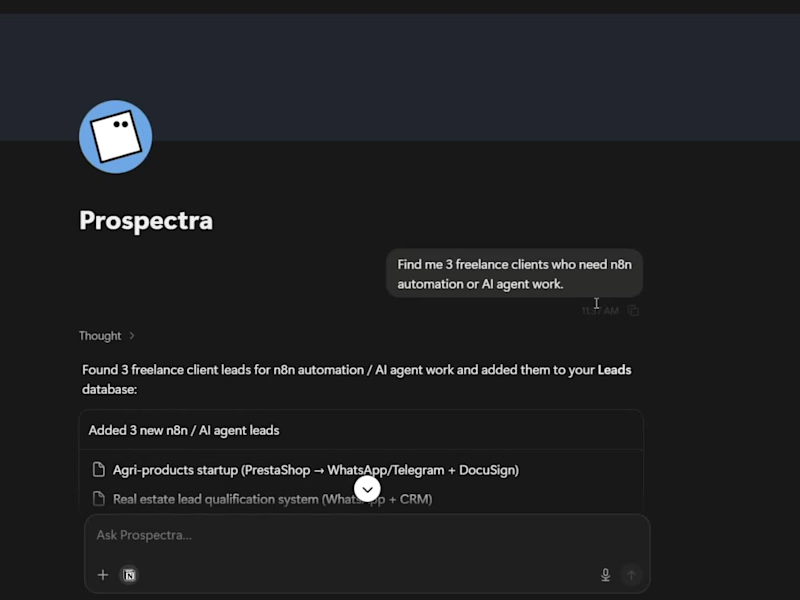
Finding freelance clients shouldn't take hours. Prospectra is a Notion agent that hunts leads for you, scores them by priority, and writes your cold emails — automatically. → Finds real leads from across the web → Tells you who to reach out to first → Writes personalised cold emails instantly → Keeps your entire pipeline inside Notion Stop scrolling LinkedIn for hours. Try it → https://www.notion.so/agent/3357b509492d801682d200929fc20ce0 Let AI fill your pipeline.
1
7
310
5
AI Trading Co-Pilot reimagines how humans interact with financial data. Instead of overwhelming dashboards, the interface introduces an AI presence that observes, analyzes, and responds in real time. When a user selects a cryptocurrency, the AI activates — scanning price movement and liquidity signals through a cinematic analysis sequence before delivering a clear risk level and strategic suggestion. https://ai-trading-co-pilot.figma.site/ The core innovation lies in the interaction: A responsive AI panel that feels alive Smooth state transitions from observation to insight Subtle ambient motion that creates a futuristic, intelligent atmosphere Built entirely in Figma Make, this prototype explores a new design language for collaborative decision-making — where AI acts as a co-pilot, not an autopilot.
5
296
5
We spend hours jumping between Pinterest, Behance, Reddit, YouTube, and countless other apps looking for inspiration. But creativity isn't about consuming more. It's about finding the ideas that truly resonate—and having the confidence to turn them into something real. So I built Muse🌙 Muse is an AI-powered creative community that learns your creative taste, curates meaningful inspiration, connects you with like-minded creators, and even provides thoughtful AI critiques to help refine your work. Rather than another endless feed, we wanted to create an experience that feels calm, intentional, and inspiring—a place that understands your creative journey instead of competing for your attention. Try: Muse (https://muse-61893.bubbleapps.io/version-test) Built entirely on Bubble, starting from a Bubble AI-generated foundation, then carefully crafted into the experience you see today. I hope you enjoy exploring Muse as much as I enjoyed building it.
4
5
472
AI Agent Designer
(3)
Follow
Message
Suyash Dubey
Delhi, India
I build production AI agents that automate real workflows
Follow
Message
I build production AI agents that automate real workflows
1
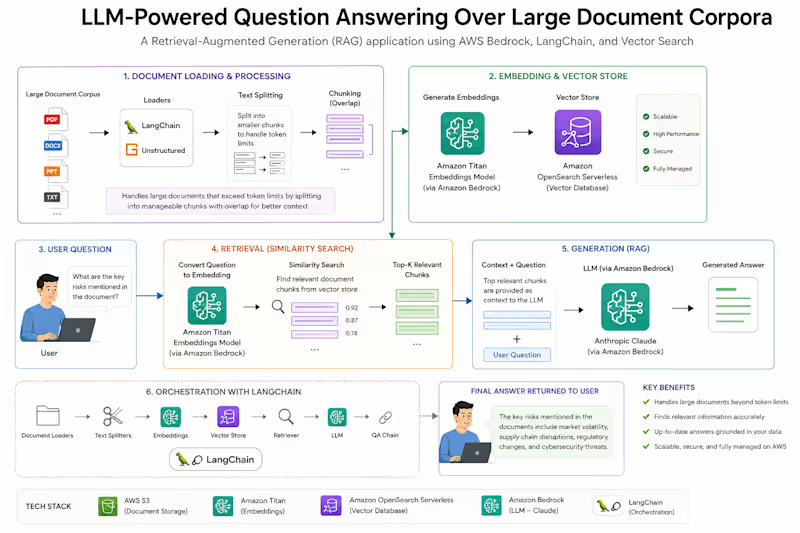
Built an LLM-powered question-answering application that lets users ask natural-language questions over large document corpora and get accurate, grounded answers, instead of manually searching through documents for the right section. Designed and built the full RAG pipeline independently, from document ingestion through to answer generation, as a technical demonstration of production-grade retrieval-augmented generation using AWS-native tooling. Key Challenges: Documents exceeding token limits: Large source documents couldn't be fed directly into the LLM's context window, so they had to be broken down without losing meaning or context across chunks. Finding the right context: With a large corpus, the system needed to reliably surface the specific chunks relevant to a given question, not just the most textually similar ones. Grounded, accurate answers: Answers had to be based on the actual retrieved content, not the model's general knowledge, to avoid confidently wrong responses. Working within a managed AWS ecosystem: Embeddings, storage, and generation all needed to work together cleanly using Bedrock-native models rather than a patchwork of external services. Approach: Document loading and chunking Processed large documents into manageable chunks sized to stay within model token limits while preserving enough context for coherent retrieval. Vector embeddings with Amazon Titan Generated vector embeddings for each document chunk using Amazon Titan, capturing semantic meaning rather than just keyword overlap. Vector storage and retrieval Stored the embeddings in a vector database, enabling fast similarity search to pull the most relevant chunks for any given question. RAG-based answer generation with Claude on Bedrock When a question comes in, the system retrieves the relevant chunks and passes them as context to Anthropic Claude via Amazon Bedrock, which generates an answer grounded in the retrieved content rather than relying on parametric memory alone. Results & Impact: Accurate, source-grounded answers over document corpora too large to fit in a single context window. A scalable retrieval architecture that separates document processing, embedding, and generation, so any of the three can be swapped or scaled independently. A fully AWS-native RAG pipeline, demonstrating fluency with Bedrock's embedding and generation models working together in production patterns. Tech Stack Python · LangChain · AWS Bedrock · Amazon Titan · Anthropic Claude · FAISS DB
1
74
1
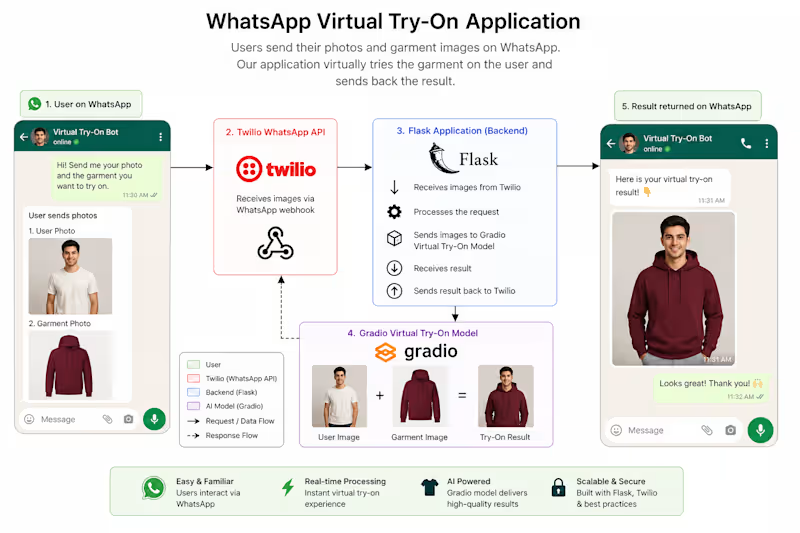
Built a virtual try-on application that lets users try on garments over WhatsApp. A user sends a photo through WhatsApp, and the app returns a realistic image of them wearing the selected garment, no app download or website visit required. Designed and built the system end-to-end, from the WhatsApp messaging integration through to the try-on generation pipeline, as a self-contained product demonstrating conversational commerce for fashion/retail use cases. Key Challenges: - Frictionless UX over a messaging app: WhatsApp isn't built for structured app interactions, so the flow had to feel natural through simple image and text messages, not clunky commands. - Reliable image handling: Incoming photos vary wildly in quality, lighting, and pose, and had to be received, processed, and matched with garment images reliably. - Fast turnaround: Users expect a near-instant reply on a messaging app, so the backend had to handle image processing and model inference without long delays. - Stitching third-party services together: Twilio's WhatsApp API and Gradio's try-on model weren't built to talk to each other, so the app had to bridge them cleanly. Approach: WhatsApp integration via Twilio -Set up Twilio's WhatsApp API to receive incoming user images and send outgoing try-on results, handling the messaging layer end-to-end. Flask backend as the orchestration layer -Built a Flask application to receive Twilio webhooks, manage the request flow, and coordinate between incoming user images and the try-on model. Virtual try-on generation with Gradio - Integrated Gradio's virtual try-on model to generate the final garment-on-user image, returning a realistic composite result. End-to-end flow design - Connected the pieces so a user's WhatsApp message triggers the full pipeline automatically: receive image → process → generate try-on → send result back, all within a single conversation. Results & Impact - A working conversational shopping experience built entirely on a messaging app users already have open every day. - Zero-download, zero-signup try-on flow — removes the biggest friction point in getting users to try a new AI-powered feature. - A reusable integration pattern connecting Twilio, Flask, and a generative vision model, applicable to other WhatsApp-based commerce or personalization tools. Provided Services & Solutions 📌 Conversational App Development 📌 WhatsApp API Integration (Twilio) 📌 Backend Development (Flask) 📌 Generative AI Integration (Gradio virtual try-on model) 📌 Third-Party API Orchestration Tech Stack: Python · Flask · Twilio WhatsApp API · Gradio If you want an AI-powered experience built directly into a channel your customers already use, like WhatsApp, let's talk.
1
42
2
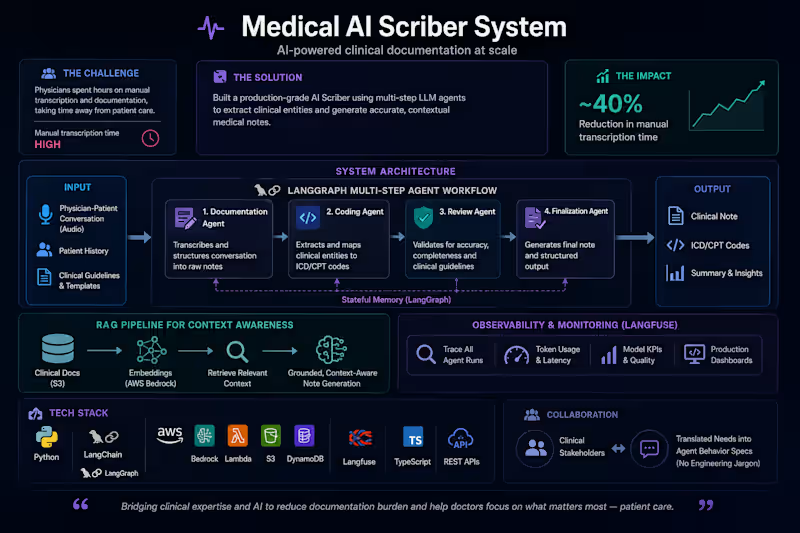
Built and maintained a HIPAA compliant production medical AI scribe system that uses multi-step LLM agents to extract clinical entities directly from physician-patient conversations and turn them into structured medical notes, cutting down the manual transcription work clinicians used to do after every visit. Multi-stage clinical workflow: Documentation, coding, and review each have different logic and conditional paths, and the system needed to branch correctly between them without losing context. Clinical accuracy: Generated notes had to be grounded in real patient history and clinical guidelines, not just plausible-sounding text. Production reliability: As a live system handling real conversations, every agent run needed to be observable, debuggable, and monitored for cost and latency in real time. Non-technical requirements gathering: Clinical needs had to be captured accurately from stakeholders without a technical background and translated into precise agent logic. Approach: Stateful agent orchestration with LangGraph Designed LangGraph-based agent workflows with conditional branching, allowing the system to move correctly across documentation, coding, and review stages based on conversation content. Context-grounded note generation with RAG Built a RAG pipeline on AWS Bedrock with embeddings, so every generated note is grounded in the patient's actual history and relevant clinical guidelines rather than generic output. Full production observability Integrated Langfuse across all agent runs to track token usage, latency, and model KPIs, giving the team visibility into system health and cost in production, not just at build time. Clinical stakeholder collaboration Ran requirements sessions directly with clinical staff, converting their documentation needs into concrete agent behavior specs and validation criteria. Results & Impact: ~40% reduction in manual transcription time for clinicians using the system. Clinically grounded output, with notes tied to real patient history and guidelines instead of unsupported generation. Full production observability, with token usage, latency, and model performance tracked continuously. A workflow clinicians could trust, built through direct collaboration rather than a black-box handoff. Provided Services & Solutions: 📌 AI Agent Development (LangGraph) 📌 RAG Pipeline Development (AWS Bedrock) 📌 LLM Observability (Langfuse) 📌 Cloud Infrastructure (AWS Lambda, S3, DynamoDB) 📌 Stakeholder Requirements Translation 📌 Production ML Systems Tech Stack Python · LangChain · LangGraph · AWS (Bedrock, Lambda, S3, DynamoDB) · Langfuse · TypeScript · REST APIs
2
72
2
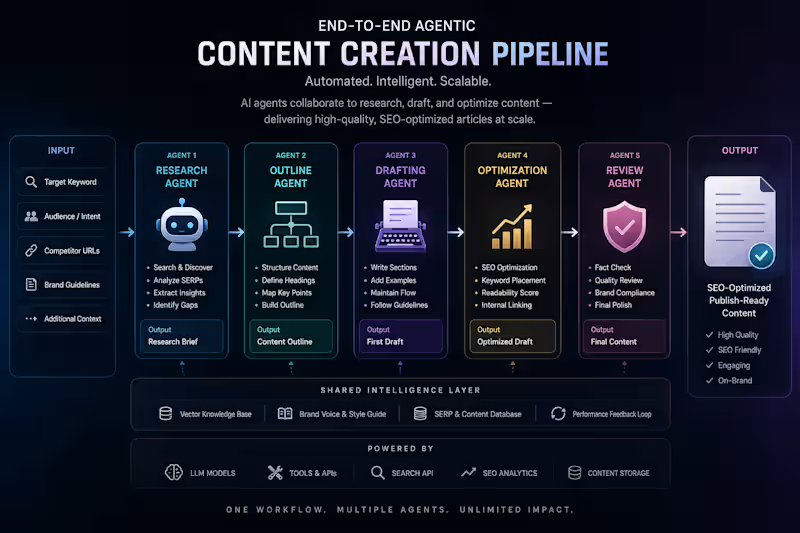
Overview 📖 Built an end-to-end agentic content creation pipeline for a fast-growing AI-powered SEO platform. The system chains multiple LLM agents together to research, draft, and optimize content automatically, replacing what used to be a manual, multi-step editorial process with a single automated workflow. Collaboration 🤝 Partnered directly with the platform's engineering team to design and ship the automation layer that now sits at the core of their content operations, turning a bottlenecked manual process into a scalable, always-on pipeline. Key Challenges 🤔 Multi-step content logic: Research, drafting, and optimization each require different context and tone, but had to feel like one coherent pipeline, not three disconnected tools. Consistency at scale: Every piece of generated content had to match brand voice and pass compliance checks, without a human reviewing each one manually. Orchestration complexity: Content jobs needed to trigger reliably from webhooks and third-party APIs, run through multiple agents in sequence, and fail gracefully without stalling the whole pipeline. Performance under load: The backend had to stay fast and stable as content throughput scaled up. Approach 🔍 Agentic content pipeline design Designed a multi-step LangChain agent chain with tool-calling, where each agent (research, drafting, optimization) has a clearly scoped role and hands off structured output to the next. Workflow orchestration with n8n Built n8n automation workflows to handle webhook triggers, third-party API integrations, and job routing, removing the need for manual intervention at almost every stage. Brand voice & compliance enforcement Layered in structured prompting and validation steps so generated content stays on-brand and passes compliance checks automatically, at scale. Backend performance tuning Optimized FastAPI endpoints and managed Azure-hosted PostgreSQL databases to keep latency low under high content-throughput conditions. Results & Impact ✨ ~60% reduction in manual intervention across the content pipeline, freeing the team to focus on strategy instead of babysitting workflows. Consistent brand voice at scale, with compliance checks running automatically instead of manually. Reliable, low-latency infrastructure validated under real content-throughput loads. A reusable agentic architecture the platform can extend to new content types without rebuilding the pipeline. Provided Services & Solutions ✅ 📌 AI Agent Development (LangChain) 📌 Workflow Automation (n8n) 📌 LLM Integration (GPT-4, Claude) 📌 API Development (FastAPI) 📌 Cloud Database Management (Azure, PostgreSQL) 📌 Architecture Design & Consulting Tech Stack Python · FastAPI · LangChain · n8n · GPT-4 · Claude · Azure · PostgreSQL
2
78
AI Agent Designer
(4)
Follow
Message
Trashu Vashisth
Delhi, India
Building Production-Grade AI Agents & RAG Systems
14
Followers
Follow
Message
Building Production-Grade AI Agents & RAG Systems
0
The Problem: Sales teams waste 60% of their time researching leads instead of closing them. The Solution: I built a custom Agentic AI Pipeline that automates deep-dive business intelligence and lead scoring. Key Technical Highlights: Multi-Agent Architecture: Built using CrewAI, featuring a 'Business Intelligence Specialist' (for real-time research) and a 'Senior Sales Director' (for strategic scoring). High-Speed Intelligence: Powered by Llama 3.3-70B for near-instant reasoning and decision-making. Real-time Web Scoping: Integrated Tavily AI to fetch live revenue data, employee counts, and market positioning. Enterprise Storage: A robust SQLite backend to manage lead pipelines with a sleek Streamlit dashboard. Smart Throttling: Engineered custom rate-limiting and token-trimming logic to ensure 99.9% uptime even under heavy API constraints. How it works: Simply enter a company name and URL. The AI agents scour the web, analyze the company's "AI potential," calculate a priority score (0-100), and even write a personalized sales pitch—all in under 30 seconds.
0
83
0
I built a professional, end-to-end AI Receptionist system designed to automate clinic appointment management. This isn't just a chatbot; it's an AI Agent that can reason, use tools, and manage a live database autonomously. Key Contributions: Agentic Reasoning: Integrated CrewAI with Llama 3.3 (Groq) to enable the agent to understand complex user intents (Booking vs. Cancellation) and relative time (e.g., "next Tuesday at 3pm"). Autonomous Tool Use: Developed custom Python tools that allow the agent to verify real-time availability in a SQLite database and execute atomic transactions without human intervention. High-Performance Backend: Built a robust API using FastAPI to handle asynchronous requests between the AI agent and the database. Premium Dashboard: Designed a modern, Glassmorphic UI using Tailwind CSS that provides a real-time sync of the clinic’s schedule. The Result: A seamless, hands-free system that reduces administrative overhead by 100%, allowing clinic staff to focus on patients while the AI handles the entire scheduling lifecycle. Tech Stack: Python, CrewAI, Groq API, FastAPI, SQLite, Tailwind CSS
0
98
1
An autonomous AI system that turns a simple voice command into a deep-dive research report in seconds. No typing, no manual searching. Key Highlights: Voice Control: Uses Speech-to-Text for hands-free research triggers. Multi-Agent Intelligence: Powered by CrewAI & Llama 3.3 (Groq) to find, verify, and summarize live web data. Voice Synthesis: Delivers an instant audio summary via ElevenLabs. Automated Export: Generates a professional PDF report automatically. Tech Stack: CrewAI, Groq, ElevenLabs, Streamlit, DuckDuckGo API.
1
109
2
Developed a highly responsive AI Voice Agent using Vapi that handles real-time conversations with exceptional clarity. The agent is designed to engage users naturally, gather specific information during the call, and accurately extract that data for further use. The voice quality for both the user and the bot is seamless, making the interaction feel professional and human-like
2
156
AI Agent Designer
(3)
Follow
Message
Jagwinder Singh
Delhi, India
Full Stack Developer
9
Followers
Follow
Message
Full Stack Developer
0
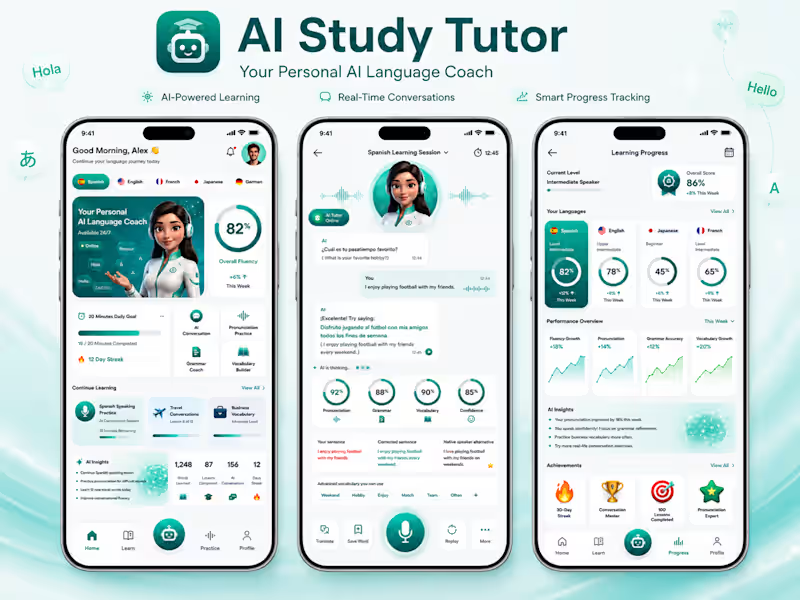
AI Agent Tutor Mobile App An AI personal tutor mobile application designed for learners of all ages, from students to professionals. The app provides personalized guidance, explanations, skill development, and interactive learning across multiple subjects and topics. Key Features: > AI tutor conversations for learning any topic > Personalized learning paths based on user goals and skill level > Support for academics, professional skills, coding, languages, and general knowledge > AI explanations, summaries, and concept breakdowns > Practice exercises, quizzes, and knowledge improvement tools > Voice and text-based learning interactions > Learning history and progress tracking > Adaptive AI responses based on user behavior Key Contributions: -- Developed a cross-platform mobile learning experience -- Integrated AI/LLM technology for real-time tutoring interactions -- Implemented secure authentication and data management -- Optimized performance and user experience across devices Outcome: Created an AI learning companion that enables users of all ages to learn, improve skills, and access personalized education anytime through a mobile-first experience.
0
57
1
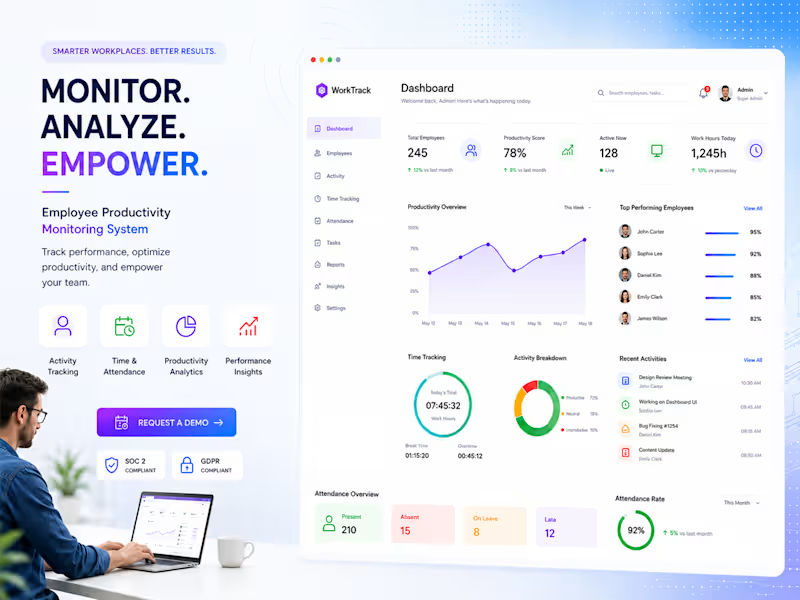
Employee Productivity Monitoring System Built a web-based Employee Productivity Monitoring System designed to help organizations track work activity, improve accountability, and gain insights into team performance in real time. The system includes features such as activity tracking (keyboard/mouse usage metrics), application and website usage monitoring, task-wise time logging, and optional periodic screenshots for audit transparency. It provides role-based access for admins, managers, and employees with secure authentication and data segregation. A real-time dashboard aggregates productivity metrics into visual reports, showing active vs idle time, productivity scores, and weekly performance trends. Managers can assign tasks, set productivity benchmarks, and export reports for HR or compliance use. Focused on scalable backend architecture with efficient event logging, low-overhead tracking agents, and privacy-aware configuration controls to ensure compliance and minimal system impact.
1
105
1
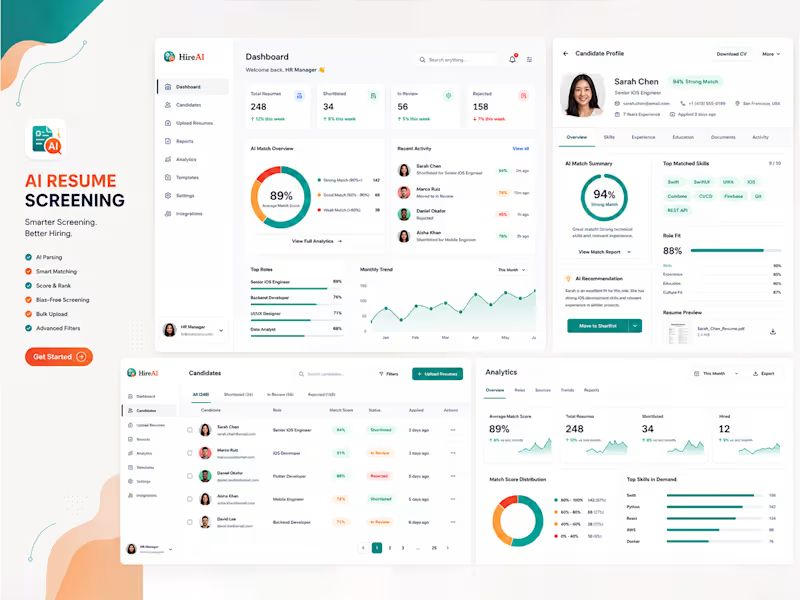
AI Resume Screening | Candidate Ranking System | AI HR Recruiter | ATS CV/Resume Optimization 𝗢𝘃𝗲𝗿𝘃𝗶𝗲𝘄 Recruiters often spend hours manually reviewing resumes, comparing candidate qualifications, and identifying the best fit for open positions. To address this challenge, I developed an AI-powered Resume Screening and Candidate Ranking Platform that automates candidate evaluation, improves hiring efficiency, and reduces recruitment time. 𝗖𝗵𝗮𝗹𝗹𝗲𝗻𝗴𝗲 Traditional recruitment processes involve reviewing hundreds of resumes for a single position. This manual approach is time-consuming, inconsistent, and often results in qualified candidates being overlooked. Recruiters needed a solution capable of quickly analyzing resumes, matching them against job requirements, and generating reliable candidate rankings. 𝗦𝗼𝗹𝘂𝘁𝗶𝗼𝗻 I built an intelligent recruitment platform that leverages Artificial Intelligence and Natural Language Processing (NLP) to automate resume analysis and candidate assessment. 𝗞𝗲𝘆 𝗳𝗲𝗮𝘁𝘂𝗿𝗲𝘀 𝗶𝗻𝗰𝗹𝘂𝗱𝗲: - ATS-compatible resume parsing for PDF and DOCX files - Automated extraction of skills, experience, education, certifications, and contact information - AI candidate matching based on job descriptions - Intelligent candidate scoring and ranking system - Semantic skill matching using NLP techniques - Automated shortlist generation for recruiters - Recruiter dashboard for managing applications and rankings - Bulk resume processing for high-volume recruitment - Interview recommendation system based on candidate fit - Fair and consistent evaluation framework to reduce manual bias 𝗗𝗲𝘃𝗲𝗹𝗼𝗽𝗺𝗲𝗻𝘁 𝗣𝗿𝗼𝗰𝗲𝘀𝘀 The platform was designed with scalability and accuracy in mind. The workflow begins by parsing uploaded resumes and extracting structured candidate data. AI models then compare candidate profiles against job requirements, analyzing technical skills, years of experience, educational background, and industry relevance. A ranking engine generates compatibility scores and presents candidates in order of suitability. Recruiters can review detailed scoring insights, compare applicants, and make faster hiring decisions. 𝗥𝗲𝘀𝘂𝗹𝘁𝘀 The solution significantly improved recruitment efficiency and candidate discovery. 𝗢𝘂𝘁𝗰𝗼𝗺𝗲𝘀 > Reduced manual resume screening time by up to 80% > Accelerated candidate shortlisting process > Improved recruiter productivity and hiring speed > Increased consistency in candidate evaluation > Enabled processing of hundreds of resumes within minutes > Enhanced talent identification through AI-driven matching 𝗖𝗼𝗻𝗰𝗹𝘂𝘀𝗶𝗼𝗻 This AI recruitment platform transforms traditional hiring workflows by automating resume screening, ranking candidates intelligently, and helping recruiters identify top talent faster, more accurately, and at scale.
1
149
0
Waste Management Platform A smart waste management system that uses IoT sensors to monitor bin levels in real time and make waste collection more efficient. It connects smart bins, collectors, and administrators on one platform so everyone stays updated. The system sends alerts when bins are full, helps plan better collection routes, and provides simple insights to improve overall waste handling and reduce manual effort.
0
71
AI Agent Designer
(1)
Follow
Message
Vishakha Sanjay Yadav
New Delhi, India
CSE student building ML pipelines & AI-powered products
New to Contra
Follow
Message
CSE student building ML pipelines & AI-powered products

0
What It Is SevaFlow is a civic complaint management system that lets Indian citizens file government complaints through Telegram without downloading any app or creating an account. The complaint gets automatically understood, routed, and tracked using AI. How It Works End to End A citizen sends a plain text message to the Telegram bot describing their problem. That message gets sent to Google Gemini with a carefully designed prompt at temperature 0.1, meaning the AI outputs consistent, deterministic JSON every time. Gemini extracts the issue type, location, responsible department, priority level, and generates a summary, all returning a confidence score between 0 and 1. The routing engine then takes over. It applies priority override rules first, so words like "fire" or "emergency" always trigger urgent regardless of what the AI said. It maps the AI suggestion to a configured department, assigns an SLA deadline based on department and priority, and stores everything in SQLite. The citizen immediately receives a Telegram confirmation with their reference ID like SF1234, department name, priority, and expected response time. The Admin Side Government officials log into a dashboard at the FastAPI server. They can filter and sort complaints, view the full status history of each one showing who changed what and when, update the status with notes like "team dispatched", and trigger a Telegram notification back to the citizen automatically. What Makes It Technically Interesting The AI pipeline has a two layer fallback. If Gemini fails, keyword matching kicks in to identify the department. If that also fails, it routes to General Services with medium priority and confidence marked as 0.0 so admins know it needs manual review. Nothing gets lost. The department configuration is fully data driven. Adding a new government department requires zero code changes, just a new entry in config.py (http://config.py) with keywords, SLA hours, and contact email. The system picks it up on restart. The database tracks two separate tables: complaints with all AI output stored alongside the raw text, and status history with a complete changelog including timestamps and the identity of who made each change. Why It Won Most hackathon civic tech projects build a web form. SevaFlow used Telegram as the interface because that is where citizens already are, made the AI classification reliable enough to actually route correctly, and built the full government side too, not just the submission side. End to end in one system, deployable on a single lightweight server.
0
34
0
UniEvent - University Event Management Platform
0
3
0
Verath: AI-Powered Personal Memory System
0
1
0
ReGenX - Smart Circular Bio-Waste Logistics Platform
0
1
AI Agent Designer
(1)
Follow
Message
Abhishek Kumar
pro
Delhi, India
AI & Full-Stack Developer | Enterprise Software
5.0
Rating
4
Followers
Follow
Message
AI & Full-Stack Developer | Enterprise Software
1
Indigloo Softwares - AI-Driven Software Solutions
1
2
1
Pioneering Pharmaceutical Innovation & Quality | Indchemie
1
2
1
Pharmaceutical company portal
1
132
1
Pharmaceutical company portal
1
98
AI Agent Designer
(1)
Follow
Message
Priya Verma
Delhi, India
Visual Designer
35
Followers
Follow
Message
Visual Designer
5
:Mushk is a fictional fragrance brand I originally created as a branding project. When I came across the Bubble Challenge, I saw it as an opportunity to bring the brand to life digitally. Using AI-powered tools and Bubble, I transformed Mushk's identity into a website that reflects its story, aesthetics, and user experience.🫧🛁
3
5
1.4K
59
What if the Krusty Krab hit the road? 🍔🛻 I reimagined the iconic Krusty Krab as a real-world food truck and brought the idea to life with Squarespace. From playful visuals and custom illustrations to an immersive scrolling experience, every section was designed to capture the charm and nostalgia of Bikini Bottom. I also used Finish Layer to add animations, hover interactions, layered visuals, and smooth transitions that make the experience feel more dynamic and engaging. 🔗 Website: https://cardioid-helicon-94jp.squarespace.com (https://cardioid-helicon-94jp.squarespace.com)🔒 Password: square
31
59
4.2K
3
As an extension of the website redesign, I also designed a dedicated admin dashboard for the IVF clinic to streamline daily operations. The dashboard provides a centralized workspace where staff can manage patients, appointments, consultations, prescriptions, and clinic activities from a single interface. It includes an overview of key metrics, upcoming appointments, recent patient records, and quick-access actions for improved efficiency. An additional feature I introduced is an AI-powered consultation recorder, which allows doctors to record patient consultations, helping them maintain accurate documentation, review important discussions, and reduce manual note-taking. Together, the dashboard and recording feature create a more organized, efficient, and user-friendly workflow for the clinic.
3
279
5
This walkthrough highlights the transformation of an IVF clinic's online presence through a complete website redesign. The video begins by showcasing the clinic's existing website, identifying areas where the user experience and visual presentation could be improved. It then introduces the redesigned website, featuring a clean, modern, and fully responsive interface that makes it easier for patients to explore fertility services, understand the treatment journey, and book consultations. The walkthrough focuses on the before-and-after transformation, demonstrating how thoughtful UI/UX design creates a more trustworthy, accessible, and engaging digital experience for both the clinic and its patients.
5
372
AI Agent Designer
(1)
Follow
Message
Explore people