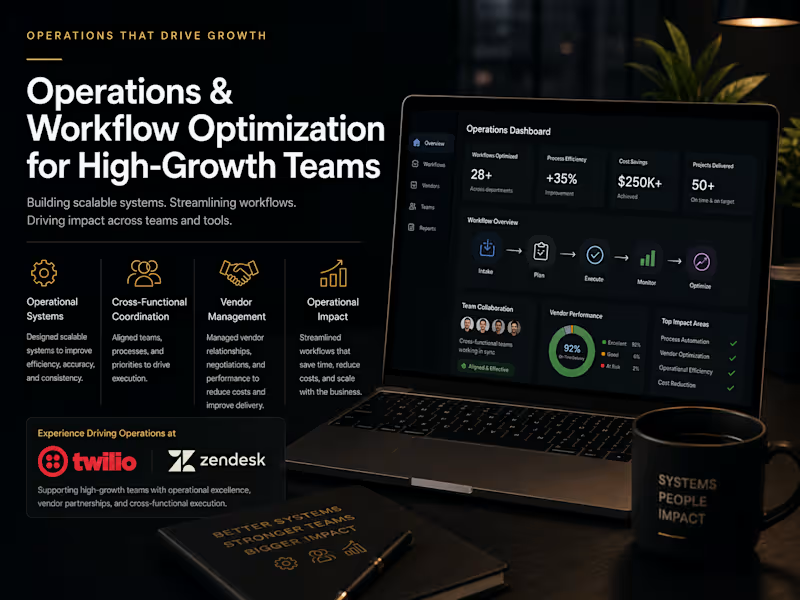
Business Operations Projects in BrooklynBusiness Operations Projects in BrooklynSupported high-growth teams across Twilio and Zendesk by building operational systems, improving workflows, managing vendor relationships, and driving cross-functional coordination across complex environments.
Led initiatives focused on operational efficiency, stakeholder alignment, process optimization, and scalable execution while partnering across workplace operations, customer-facing teams, IT, and leadership.
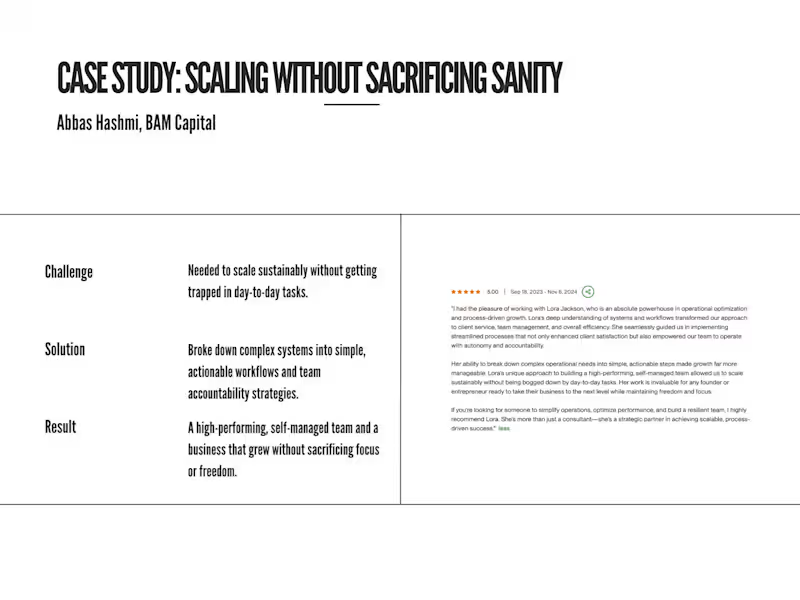
Experienced in creating structured systems that improve communication, reduce friction, and support fast-moving teams as they scale. Overview
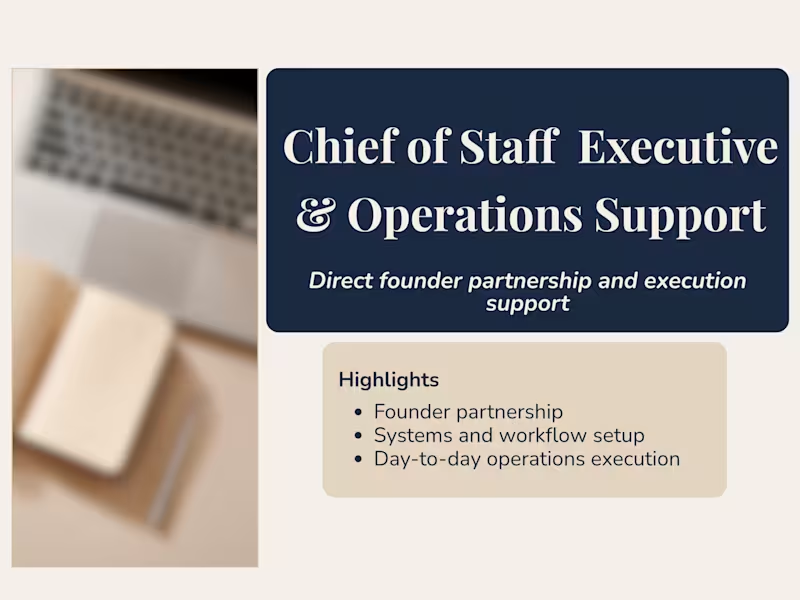
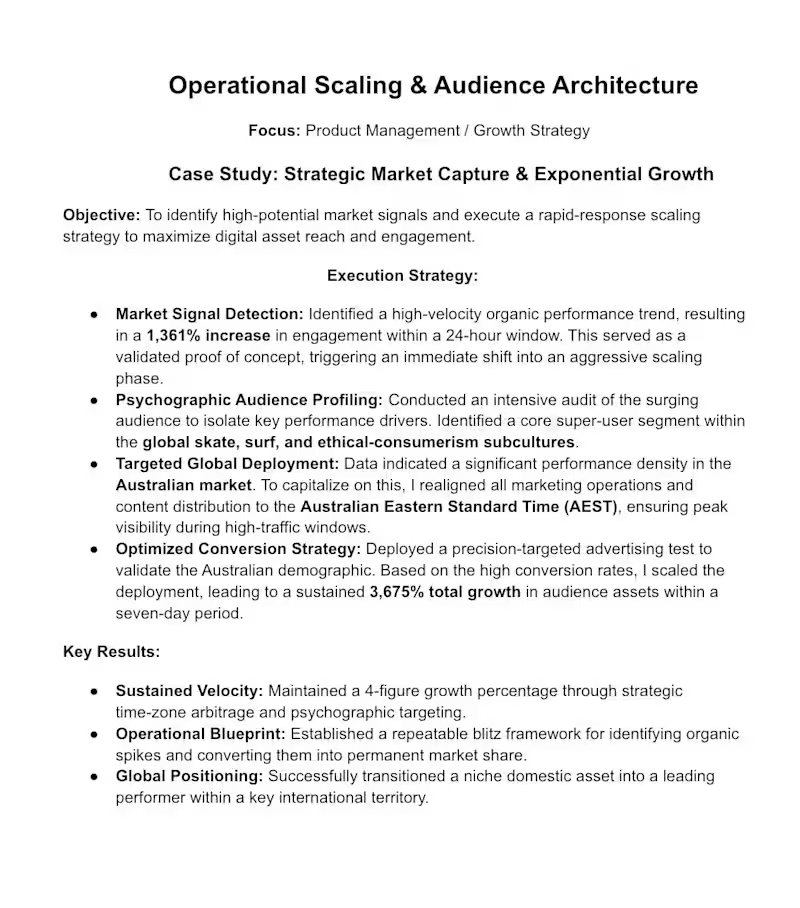
Partnering directly with the founder of a DJ and audio engineering business as an execution-focused Chief of Staff, supporting both business operations and day-to-day decision-making.
Context
The business was operating without a formal team, requiring support across multiple areas, including operations, planning, and execution. As the business grows, there is a need for more structure, clearer workflows, and consistent follow-through.
Role
Close partnership with the founder to organize priorities, build operational structure, and support the day-to-day running of the business. Acts as a central point for both execution and coordination.
Execution
- Built and implemented systems and workflows to support daily operation
- Organized priorities and supported planning across business activities
- Managed ongoing operational tasks to ensure consistency and follow-through
- Supported the structuring of decisions and next steps
- Improved visibility and organization across the business
Outcome
The business now operates with more structure and consistency, with clearer priorities and stronger follow-through across day-to-day operations. The founder is able to stay focused on core work, while execution and operations move forward more steadily. Overview
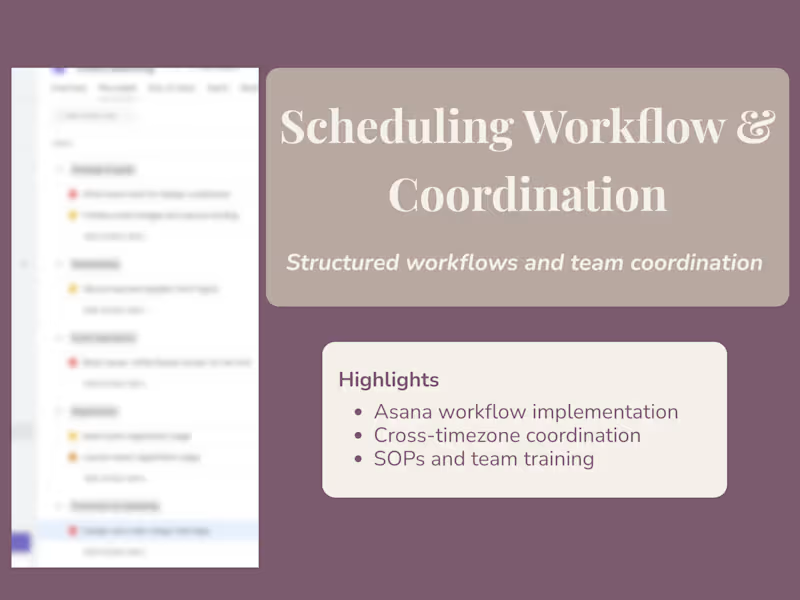
Improved scheduling operations and team coordination by designing and implementing a structured workflow system, enabling better visibility, smoother handoffs, and more consistent execution.
Context
The scheduling function was managing high-volume requests across time zones, with unclear ownership, limited visibility into pending work, and inconsistent handoffs between team members.
Role
Led the redesign of the scheduling and coordination workflow, working across teams to introduce structure, improve visibility, and create more consistent ways of managing requests.
Execution
- Designed and implemented an Asana workflow to manage scheduling and broader administrative tasks
- Structured request intake, assignment, and progress tracking to improve clarity and ownership
- Created SOPs and training modules to support adoption across the team
- Partnered with IT to implement a shared inbox and calendar with appropriate access and permissions
- Introduced systems to improve information access and ensure smoother handoffs across time zones
Outcome
Scheduling operations became more structured and easier to manage, with clearer ownership, improved visibility across requests, and smoother transitions between team members. The new system reduced friction, improved tracking, and supported more consistent execution across the team. IT Equipment Lifecycle & Inventory Management System
Overview
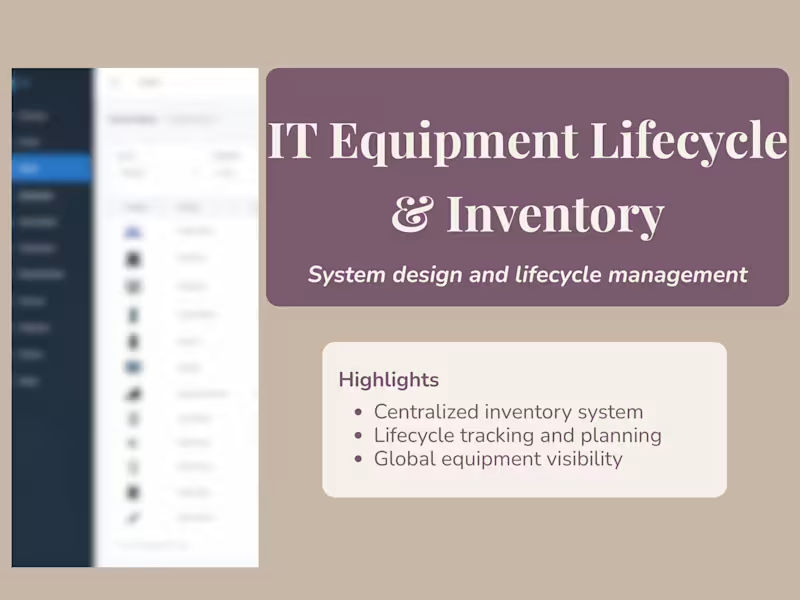
Designed and implemented a centralized system to manage IT equipment across a global team, improving visibility, streamlining approvals, and supporting more efficient day-to-day operations.
Context
The organization had no structured way to track equipment across its global workforce. There was limited visibility into device locations, lifecycle status, or replacement needs, making it difficult to manage inventory efficiently and plan ahead.
Role
Led the creation of an equipment tracking and lifecycle management system, introducing structure, improving visibility, and establishing clearer processes for managing devices across the team.
Execution
- Built a centralized database to track equipment across a global workforce
- Conducted a full audit to collect and organize device data and ownership
- Established lifecycle tracking from purchase through replacement and decommissioning
- Defined standards for new equipment (specs, renewal guidelines, approval flow)
- Created SOPs to support ongoing management and consistent execution
Outcome
Operations gained clear visibility into equipment across the organization, enabling more efficient tracking, faster approval decisions, and better planning for renewals. The system reduced manual effort and brought structure to a previously untracked process.