The network for creativity
Join 1.25M professional creatives like you
Connect with clients, get discovered, and run your business 100% commission-free
Creatives on Contra have earned over $150M and we are just getting started
Back to feedPost

Overview
Partnering directly with the founder of a DJ and audio engineering business as an execution-focused Chief of Staff, supporting both business operations and day-to-day decision-making.
Context
The business was operating without a formal team, requiring support across multiple areas, including operations, planning, and execution. As the business grows, there is a need for more structure, clearer workflows, and consistent follow-through.
Role
Close partnership with the founder to organize priorities, build operational structure, and support the day-to-day running of the business. Acts as a central point for both execution and coordination.
Execution
- Built and implemented systems and workflows to support daily operation
- Organized priorities and supported planning across business activities
- Managed ongoing operational tasks to ensure consistency and follow-through
- Supported the structuring of decisions and next steps
- Improved visibility and organization across the business
Outcome
The business now operates with more structure and consistency, with clearer priorities and stronger follow-through across day-to-day operations. The founder is able to stay focused on core work, while execution and operations move forward more steadily.


The network for creativity
Join 1.25M professional creatives like you
Connect with clients, get discovered, and run your business 100% commission-free
Creatives on Contra have earned over $150M and we are just getting started
Related posts




Nice how the sidebar collapses down to just icons. Did you build this in code or Figma?

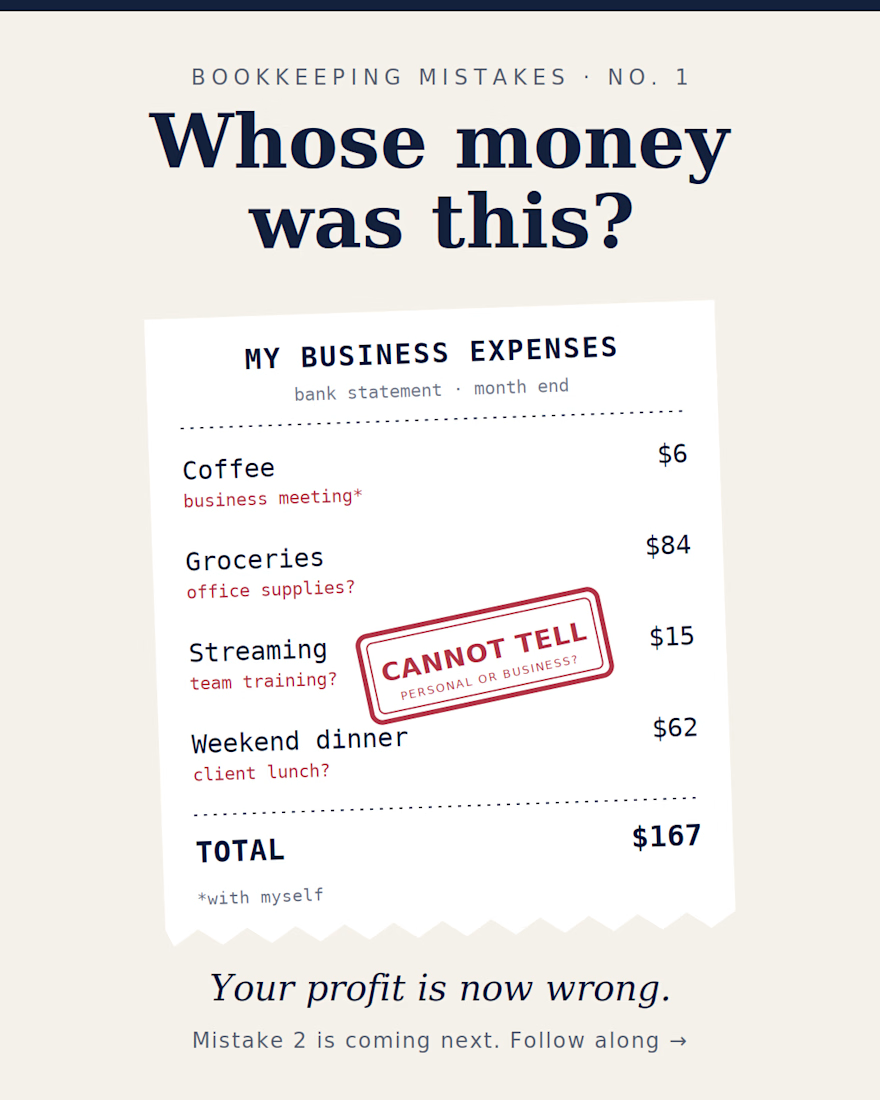
I am calling this the "Mistake post".
Wait. Did I post this by mistake?....
No, I promise. This is a bookkeeping post about the mistakes that quietly cost business owners money. There are many, so I will take one mistake at a time. This post is only about Mistake 1.
Mistake 1: Mixing personal and business spending One coffee here, one grocery bill there, and by the end of the month nobody knows whose money was spent. Yes, that coffee was a "business meeting". With yourself.
It looks small. It is not. Here is what it quietly does to your business:
Your profit becomes wrong. Personal costs sit inside business expenses, so the numbers do not show how the business is really performing.
Your bank reconciliation becomes slow. Every personal payment needs an explanation before your books can match the bank statement.
Your tax work becomes harder. When costs are mixed, it is difficult to prove which expenses truly belong to the business.
You lose clarity. You cannot tell how much the business earned and how much you took out for yourself.
Check your statement once a week. Small habit. Clean books. Much less stress at year end.
Mistake 2 is coming in the next post, so follow along so you do not miss it.



Your business deserves more than just numbers. ✨
At Accounts4You T/A Nicolette Lange Consultant, we combine financial expertise, business insight and practical solutions to support your business journey.
From accounting and tax compliance to financial reporting, business advisory and project management — professional support designed around your business.
ACCOUNTS4YOU
Professional Financial & Business Solutions
📩 Get in touch to discuss your business needs.
#Accounts4You #NicoletteLangeConsultant #BusinessConsulting #AccountingServices #FinancialReporting #TaxCompliance #Entrepreneurship #BusinessGrowth


Can you send me your portfolio?