Built an interactive museum where old interfaces become digital artifacts.
For the Wonder Challenge, I wanted to explore a simple idea:
What if, centuries from now, our interfaces were displayed in museums?
That idea became CTRL+ALT+PASTβan interactive experience set in the year 2475, where visitors step into the role of a curator restoring humanity's last surviving digital relics.
Instead of preserving paintings or sculptures, the museum preserves interactions we once took for granted:
π₯οΈ Windows XP
π¬ MSN Messenger
π± Nokia 3310
π΅ iPod Classic
β³ A loading screen forever frozen at 99%
The goal wasn't to recreate these products, but to capture the tiny interactions that made them unforgettable.
Built with Wonder for ideation, rapid iteration, and interface generation, and VS Code to bring the interactions to life.
This was one of those projects that started with a random "what if?" and turned into something I genuinely enjoyed building.
File: https://app.wonder.so/tanya/files/019f230a-adfe-7daf-a99b-85fa200d50da
LinkedIn: https://www.linkedin.com/feed/update/urn:li:activity:7479580277091258368/
5
13
572
Wireframes are where the real UX decisions happen β before any colour, font, or component touches the file.
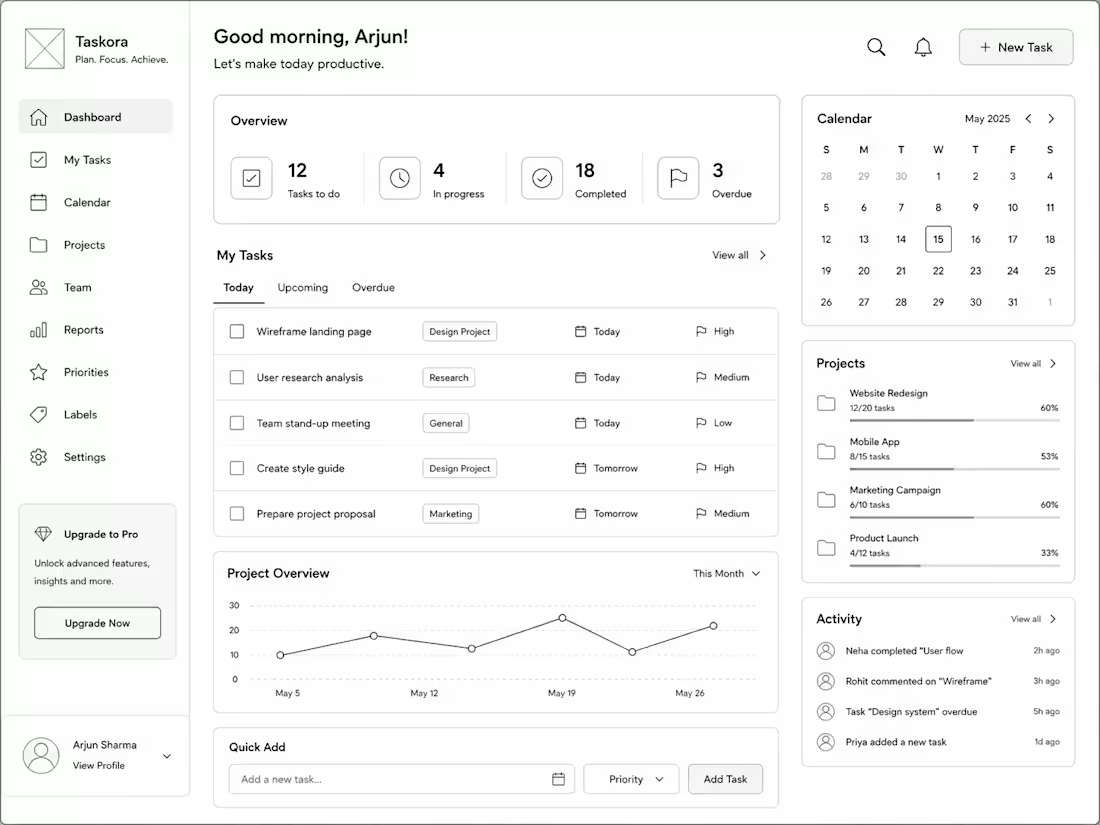
This is Taskora, a productivity dashboard wireframe I designed around a single question:
what does a user actually need to see the moment they open this app?
The overview stats sit at the top so your day's status is never buried. The task list defaults to Today, not All Tasks, because most productivity tools overwhelm you on open. Calendar and projects stay visible but secondary β supporting context, not competing for it.
Every layout choice here has a reason behind it. That's what wireframing is for.
Currently open to UX wireframing projects starting at $200 β feel free to check out my Wireframing service or drop a message if you want to chat about your product.
1
73
ANANTA β An Infinite Universe Where Every Thought Becomes Light β¨
An immersive interactive experience inspired by the Sri Kopeshwar Temple of Maharashtra and the Hoysala architecture of Halebeedu, Karnataka.
Users write their thoughts on an ancient palm-leaf manuscript and release them into the universe, where they become stars and illuminate deepas (oil lamps) in a shared constellation of anonymous human emotion.
Built with Figma Design, Figma Make, and Figma Weave, ANANTA explores how architecture, storytelling, AI workflows, motion, and sound can transform interaction into ritual.
Some thoughts are too beautiful to stay inside us.
Design Note:
ANANTA is built as a cinematic interactive experience rather than a conventional interface. The first visit may take a few moments to load its assets, after which the experience becomes seamless. The brief pause is intentional to preserve the richness of the environment, motion, and sound.
#ConfigMakeathon
Submissions-
1) Live link: https://chant-hacks-15909075.figma.site/
2) Community link: http://figma.com/community/file/1648705186473125803/ananta-an-infinite-universe-of-quiet-voices?fuid=1476235831950591466
3) Design Journal β The idea, research, and creative journey behind ANANTA: https://docs.google.com/document/d/1lzo_reWa1445AtMxRAyZN3U_twOkBei1/edit?usp=sharing&ouid=109595803400669179852&rtpof=true&sd=true
4) LinkedIn post: https://www.linkedin.com/feed/update/urn:li:activity:7472852516083343360/
5
301
Pixel Quest β Gamified Productivity for Students
"Turn your daily goals into epic quests."
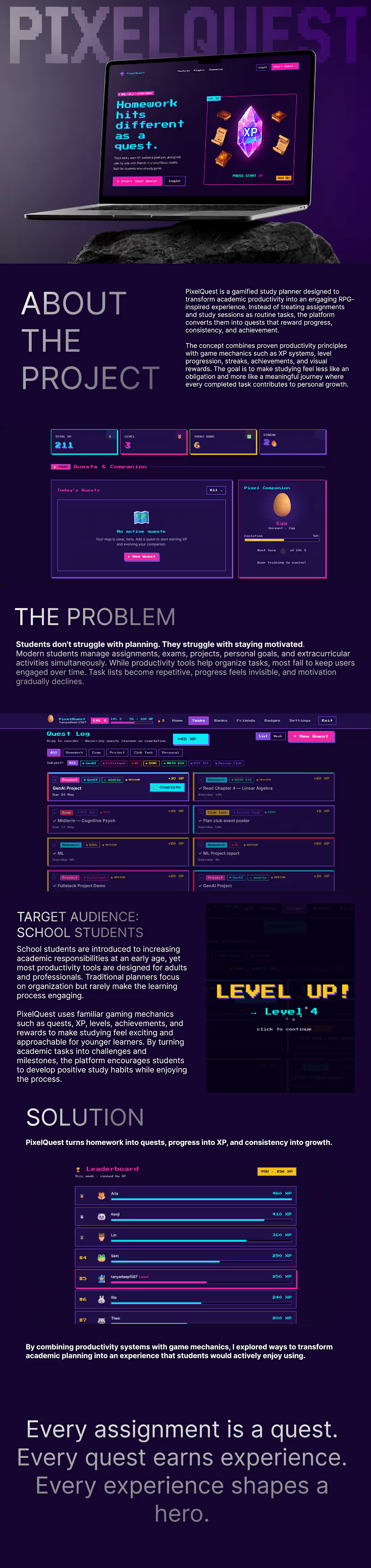
Pixel Quest is a productivity web application that transforms everyday tasks, habits, and academic goals into RPG-style quests. Users earn XP, level up their profiles, unlock achievements, and grow a virtual pixel companion as they complete tasks.
Designed with a retro pixel-art aesthetic and modern UX principles, the platform aims to make productivity more engaging, motivating, and rewarding for students.
My Role: UI/UX Design, Product Design, Frontend Development, Gamification Design
Tools: Figma, HTML, CSS, JavaScript, Typescript
Behance: https://www.behance.net/gallery/250660045/Pixel-Quest-A-Students-Journey-Gamified
GitHub: https://github.com/Tani-2005/pixel-quest-planner
(https://github.com/Tani-2005/pixel-quest-planner)
2
1
150
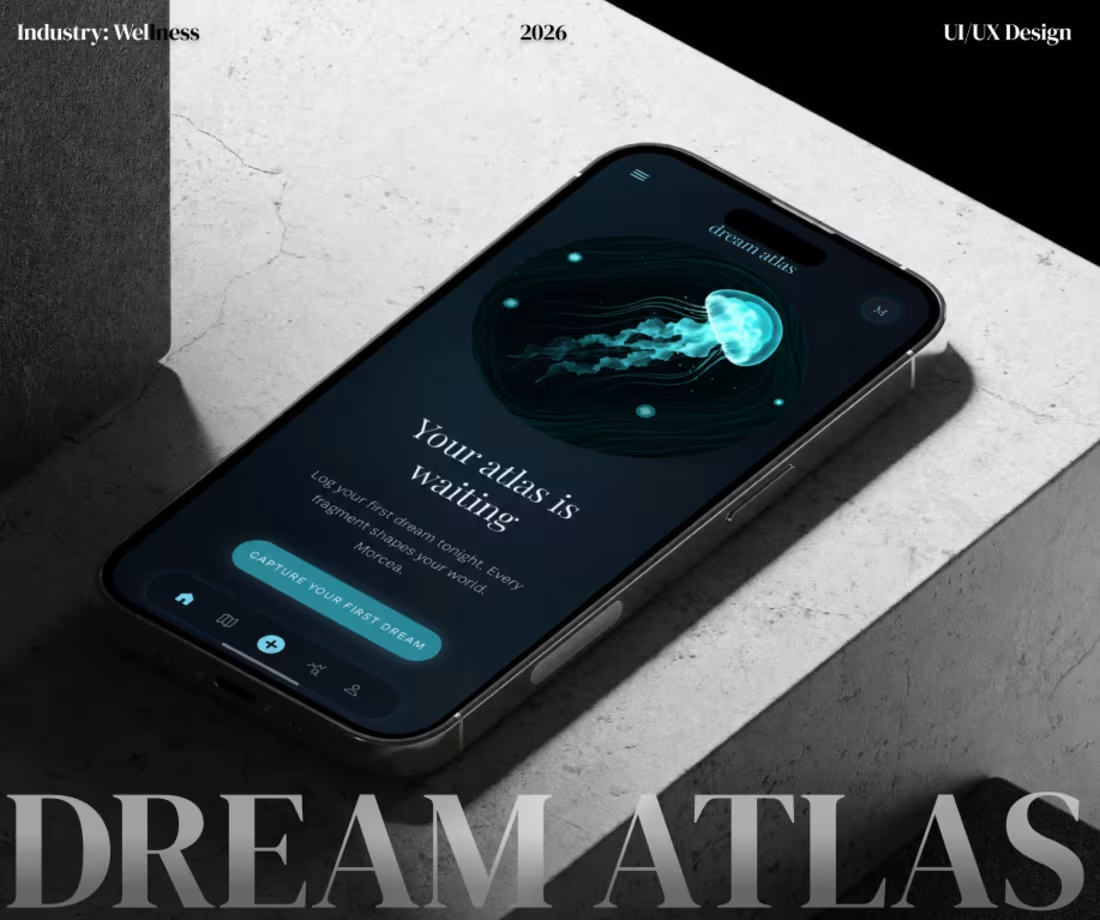
Dream Atlas is a conceptual AI-powered mobile application that transforms dream journaling into an immersive self-discovery experience. Instead of storing dreams as journal entries, the app visualizes them as an evolving landscape of memories, emotions, and recurring patterns.
Designed in Figma, the project combines AI product design, mobile UX, interaction design, and visual storytelling to create a calm, atmospheric experience focused on reflection and exploration. Users can capture dreams, uncover recurring themes, and navigate a personalized subconscious world through AI-powered insights.
Project Highlights:
- AI-powered dream interpretation and pattern recognition
- End-to-end mobile UX/UI design
- User research and product strategy
- Information architecture and user flows
- High-fidelity UI design in Figma
- Design system and reusable components
- Interaction and experience design
- Wellness and self-discovery product concept
- Dark mode interface with immersive visual storytelling
Tools:
- Figma
- Figma Make
- ChatGPT (UX ideation & product strategy)
- Claude (documentation & product planning)
Let me know you thoughts.
3
2
121
Miyako is a luxury resort website concept inspired by Kyoto's traditional architecture, cultural rituals, and natural landscapes. I designed the experience with a focus on visual storytelling, premium UI, and user engagement, using cinematic imagery, refined typography, and modern interaction patterns. The result is a hospitality experience that feels immersive, elegant, and culturally authentic while maintaining a seamless user journey.
Role: UI/UX Designer
Tools: Figma, Photoshop
Industry: Hospitality / Luxury Travel
Scope: UX Research, Information Architecture, UI Design, Visual Design, Responsive Design
Behance: https://www.behance.net/gallery/251581745/Miyako
0
76
AuraHealth β AI-Powered Wellness Companion
"Making healthier choices simpler, smarter, and more sustainable."
AuraHealth is a healthcare and wellness platform designed to help users build healthier lifestyles through personalized insights, habit tracking, nutrition planning, and AI-assisted guidance. The platform brings together wellness monitoring, activity tracking, diet management, and intelligent health recommendations within a single user experience. The concept explores a calm, trust-driven design system with a focus on making health management feel approachable rather than clinical.
Key Features:
- Personalized wellness dashboard
- Nutrition and meal tracking
- AI health assistant
- Progress and habit tracking
- Wellness scoring and insights
- Responsive mobile-first experience
Tools: Figma, User Flow Design, Design Systems, Prototyping
My Role: UI/UX Design, Product Design, User Research, Design System Creation
Behance: https://www.behance.net/gallery/250087983/AuraHealth