BaseLine — Explainable Rail Anomaly Triage

Josue Perez


Status: working concept prototype. Not deployed in a rail operation and not validated with live operator data.
The Problem
Rail-maintenance teams receive large volumes of inspection, vibration, and acoustic evidence, but the information can arrive in formats that make prioritization slow and difficult. BaseLine explores a narrow question: how might a maintenance triage engineer understand the evidence behind a possible anomaly before deciding what deserves inspection?
This public case study does not claim predictive accuracy, operational validation, or automatic control of rail infrastructure.
Research Boundary
The opportunity framing was based on desk research into rail inspection workflows, explainability, anomaly triage, and safety-critical decision support. No railway operator sponsored this concept, and no live infrastructure data or operator interviews are presented as evidence here.
The MVP Wedge
The concept deliberately starts narrow:
One user: a maintenance triage engineer
One job: decide where to look first
One example defect class
Human review before every operational decision
No automated alerts to drivers, speed restrictions, or infrastructure actions
Designed Interface
Anomaly list
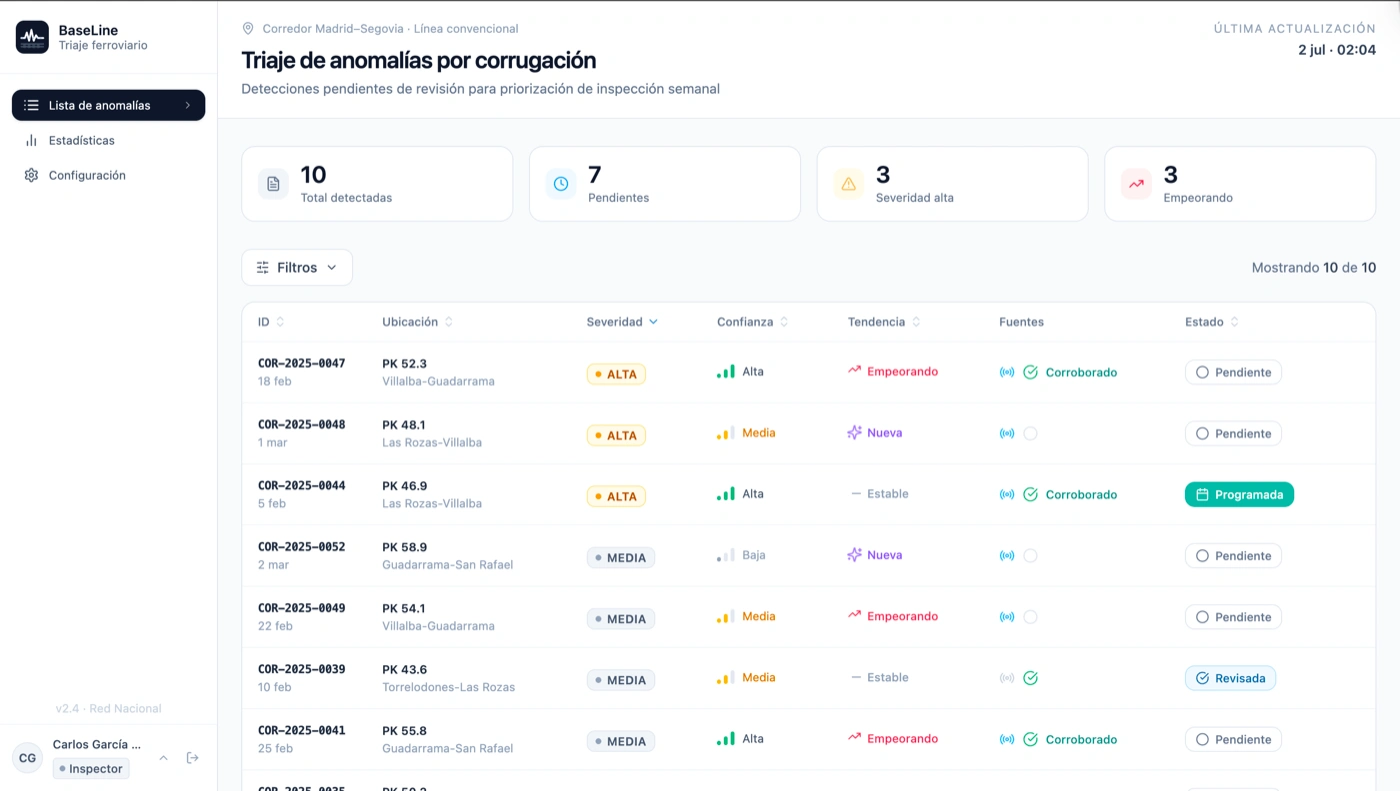
BaseLine anomaly triage list
Evidence and statistics
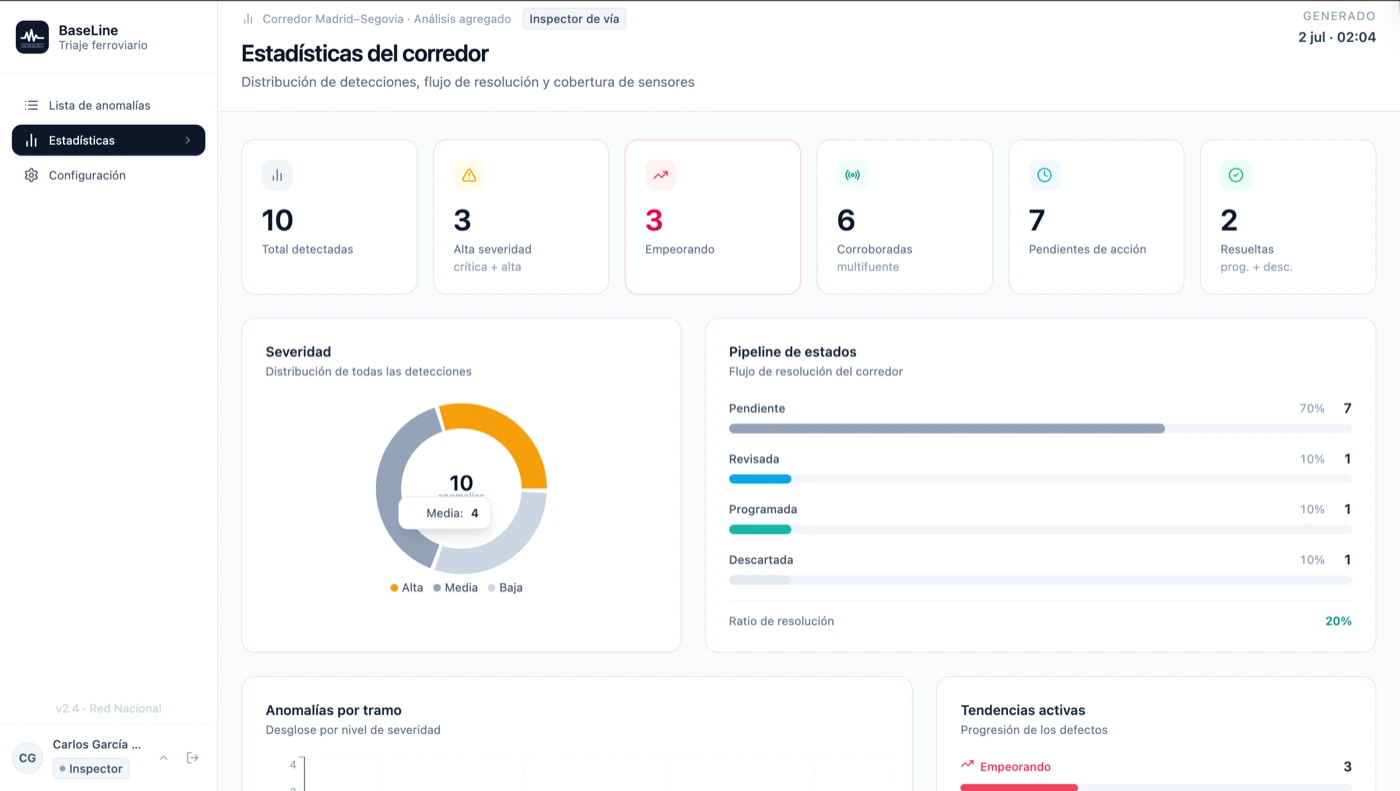
BaseLine evidence and statistics view
Engineer-controlled configuration
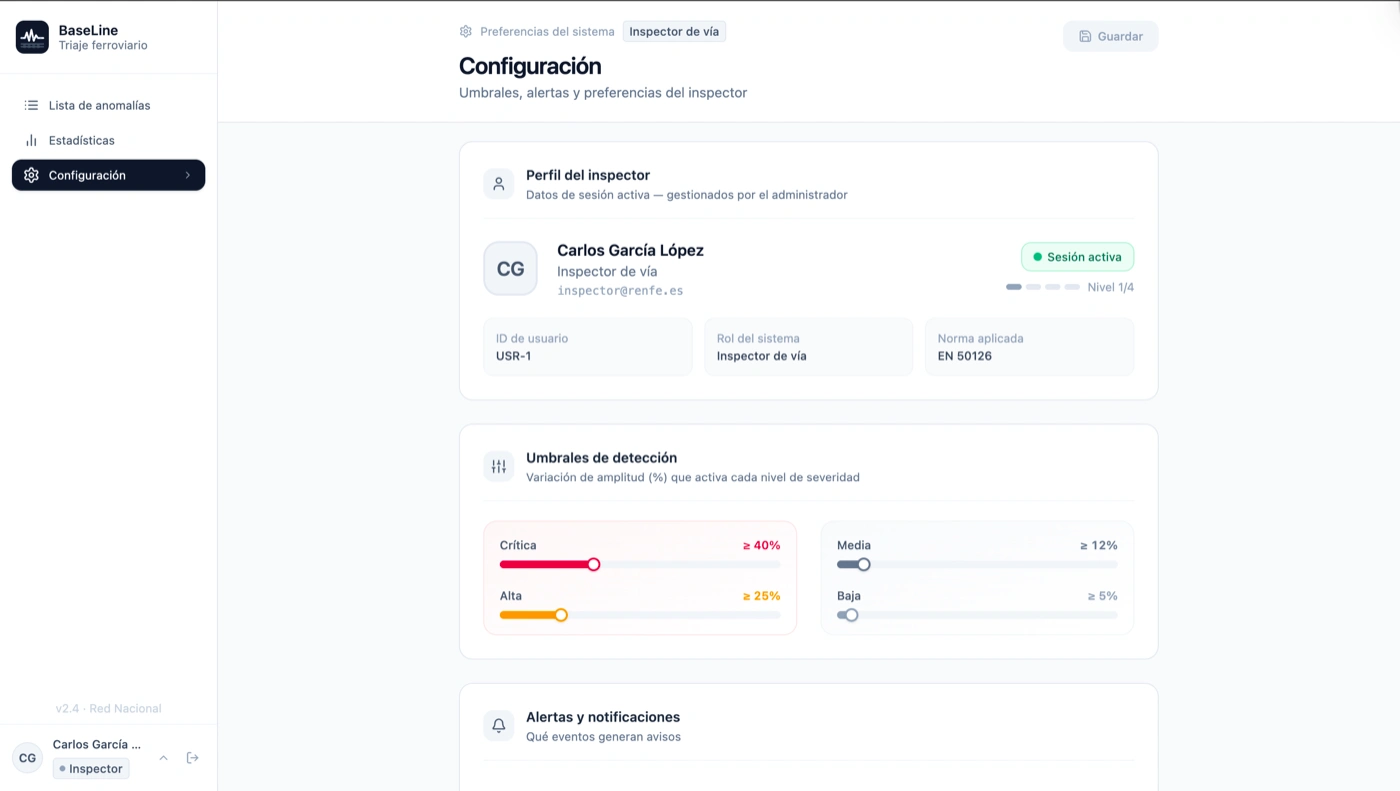
BaseLine configuration and thresholds
Key Design Decisions
Explain before severity
The interface exposes the evidence and reasoning associated with a detection before asking the engineer to accept a severity judgment.
Corroboration is visible
The concept distinguishes between single-source and corroborated evidence so confidence is not communicated as a binary certainty.
Thresholds remain under human control
Detection thresholds are visible and adjustable in the concept. Changes are intended to be logged rather than hidden in an administrative layer.
No automatic operational action
BaseLine is decision support. It does not issue automatic infrastructure commands or replace inspections.
Proposed Validation
A real pilot would require an operator partner, representative historical data, maintenance-triage participants, and an agreed defect class. Success criteria should be defined with the operator before testing and should measure decision usefulness, false-positive burden, comprehension, and whether the evidence changes inspection priorities.
Outcome
A working interaction prototype, a narrowly defined MVP hypothesis, and a pilot framework. It demonstrates explainability and human-control principles; it is not evidence that the underlying detection model has been validated.
Like this project
Posted Jul 14, 2026
Concept prototype for human-controlled, explainable anomaly triage in rail maintenance, designed to make evidence understandable before a severity decision.