Press-Sense — An Attentive Generative Environment

Josue Perez


Status: V2 shipped · V3 in progress
Role: Sole designer and developer
Stack: React · TypeScript · Canvas API
Press-Sense asks what a digital environment could feel like if it behaved like a room rather than an interface: a space with atmosphere, memory, and its own slow internal life.
Its governing constraint is simple: feel alive without feeling intelligent. The room may have moods, weather, and history, but it does not identify, predict, optimize, or build a model of the person inside it.
Nine dispositions of one room
Night, Snowfall, Sediment, Bioluminescent, Vespers, Ember, Dawn, Observatory, and Bloom are not color themes laid over identical behavior. Each has its own motion grammar, cadence, emergence pattern, energy, and sense of space.

Press-Sense in Bioluminescent mode
Presence without surveillance
The environment responds to movement and stillness entirely inside the browser. Nothing is sent across the network or stored as an identity. Attention accumulates spatially during the session, allowing the room to develop a faint patina without remembering a person.
From implementation to perception
V1 established continuous state, presence, significance, and emergence. A design review exposed an important gap: several systems were technically present but fell below the perceptual floor—they existed in code but could not be felt.
V2 rebuilt those behaviors around visible environmental consequences:
Autonomous climate oscillators give the room weather without giving it a brain
Distinct motion grammars make each mode recognizable without relying on color
Fragment positions survive resizing instead of regenerating
Long-lived spatial patina gives the session a sense of history
Stillness becomes an input, letting the environment settle toward a quiet presence
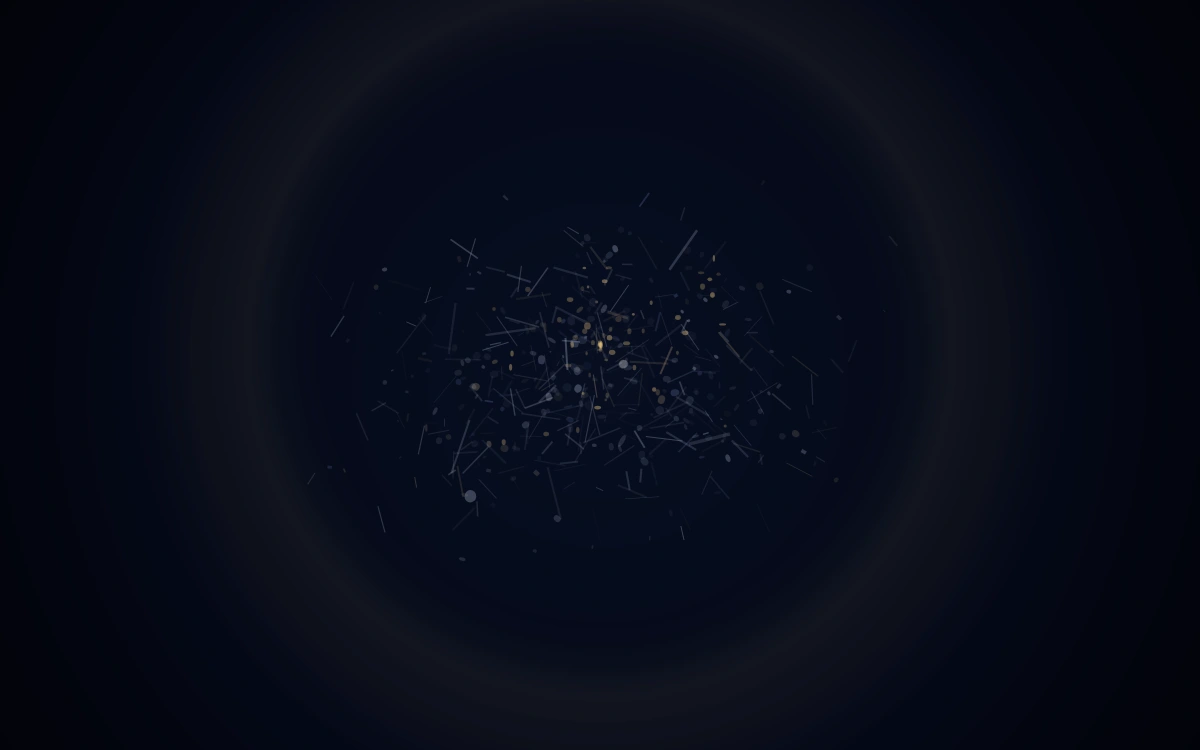
Press-Sense in Observatory mode
V3 — curvature
V3 adds one spatial idea: when a still presence dwells, space curves toward it and the room’s local clock slows. The curvature exists only because someone is there. When the room is empty, it returns to flat space and ordinary time.
Only the fragment field bends; the background and light remain stable. This makes the effect read as a change in the room’s physics rather than a decorative lens.
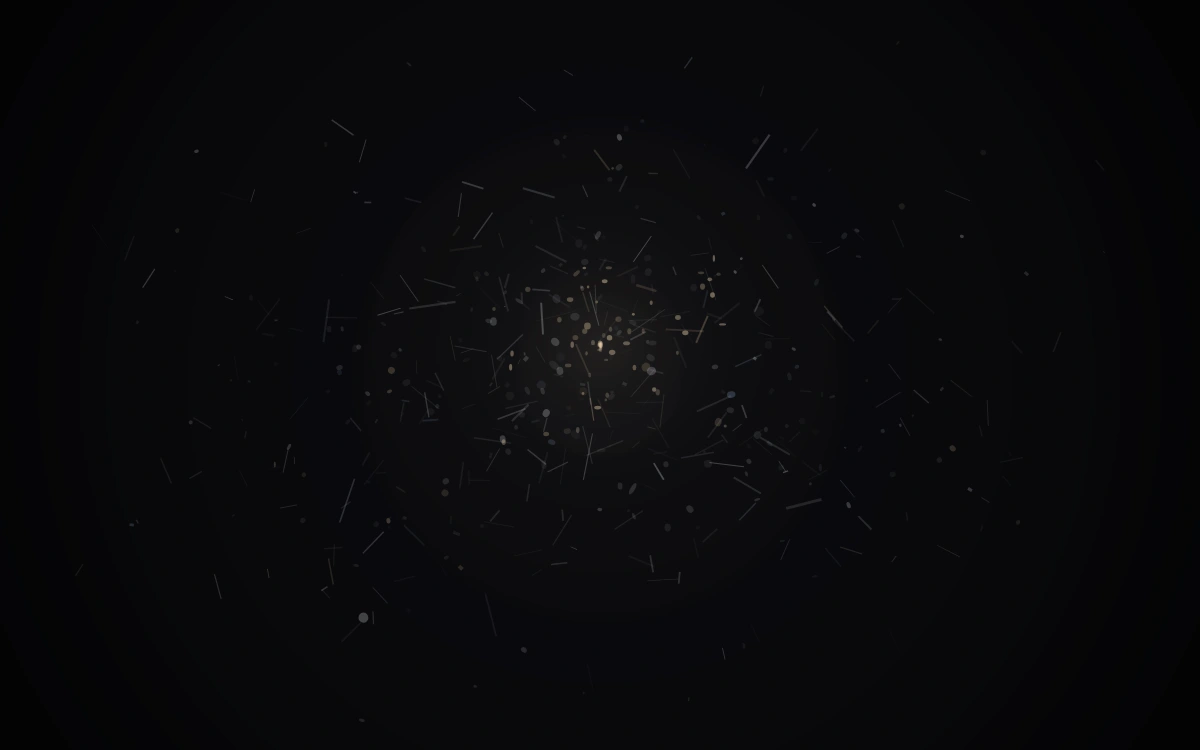
Press-Sense in Night mode
Standing principles
No dashboards, analytics, productivity framing, or gamification
No identity, profiling, storage, or network tracking
Every system must cross the perceptual floor
Reduced-motion preferences remain supported without turning the environment into a static image
The room can be attentive without claiming intelligence
Outcome
A fully implemented generative environment shaped through two complete design-review cycles, with architectural changes tied to what a visitor can actually perceive. Press-Sense is an exploration of environmental interaction, continuous state, restraint, and the difference between a system being implemented and an experience being felt.
Like this project
Posted Sep 8, 2026
A live generative environment with nine atmospheric modes, continuous memory, and presence-responsive curvature—designed to feel alive without pretending to be intelligent.