Built with Kajabi
Kajabi Strategy, Funnel Architecture & Emotional UX

Anush | Foundrline
Verified


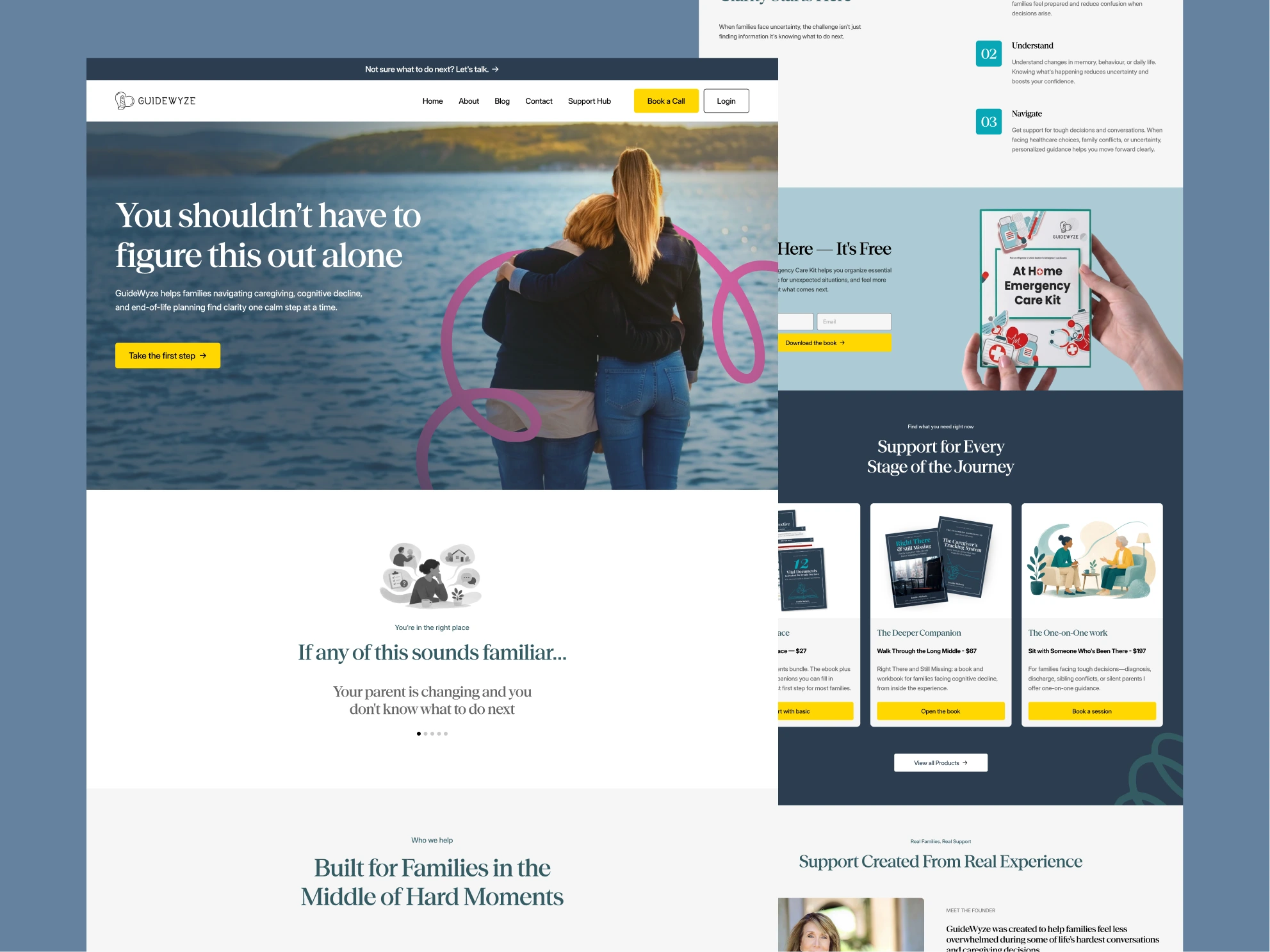
Helping build a complete Kajabi-based caregiving support ecosystem designed around emotional trust, guided support pathways, and scalable nurture experiences for families navigating difficult life transitions.
Client
GuideWyze
Industry
Caregiving, Advance Care Planning, Family Support, Digital Education
Platform
Kajabi
Audience
Caregivers, families navigating aging and care planning, adults supporting parents, and individuals preparing for difficult life transitions
Scope
Kajabi Ecosystem Strategy
Website UX Architecture
Offer & Funnel Strategy
Product Ecosystem Setup
Email Automation & Nurture Systems
Emotional-First UX Direction
Responsive Website Design
Analytics & Tracking Setup
Current Status
Work in progress — product ecosystem setup, nurture sequences, and offer architecture completed, with website UI/UX redesign and broader Kajabi rollout currently in progress.
Challenge
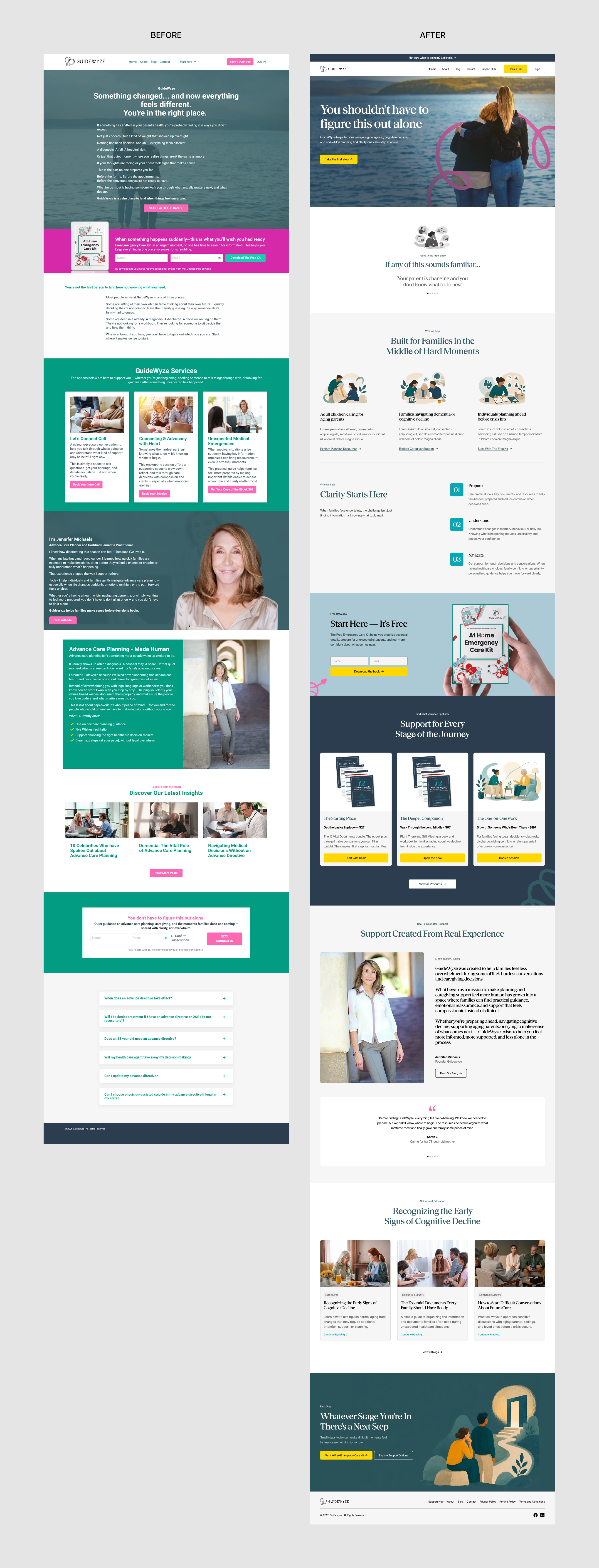
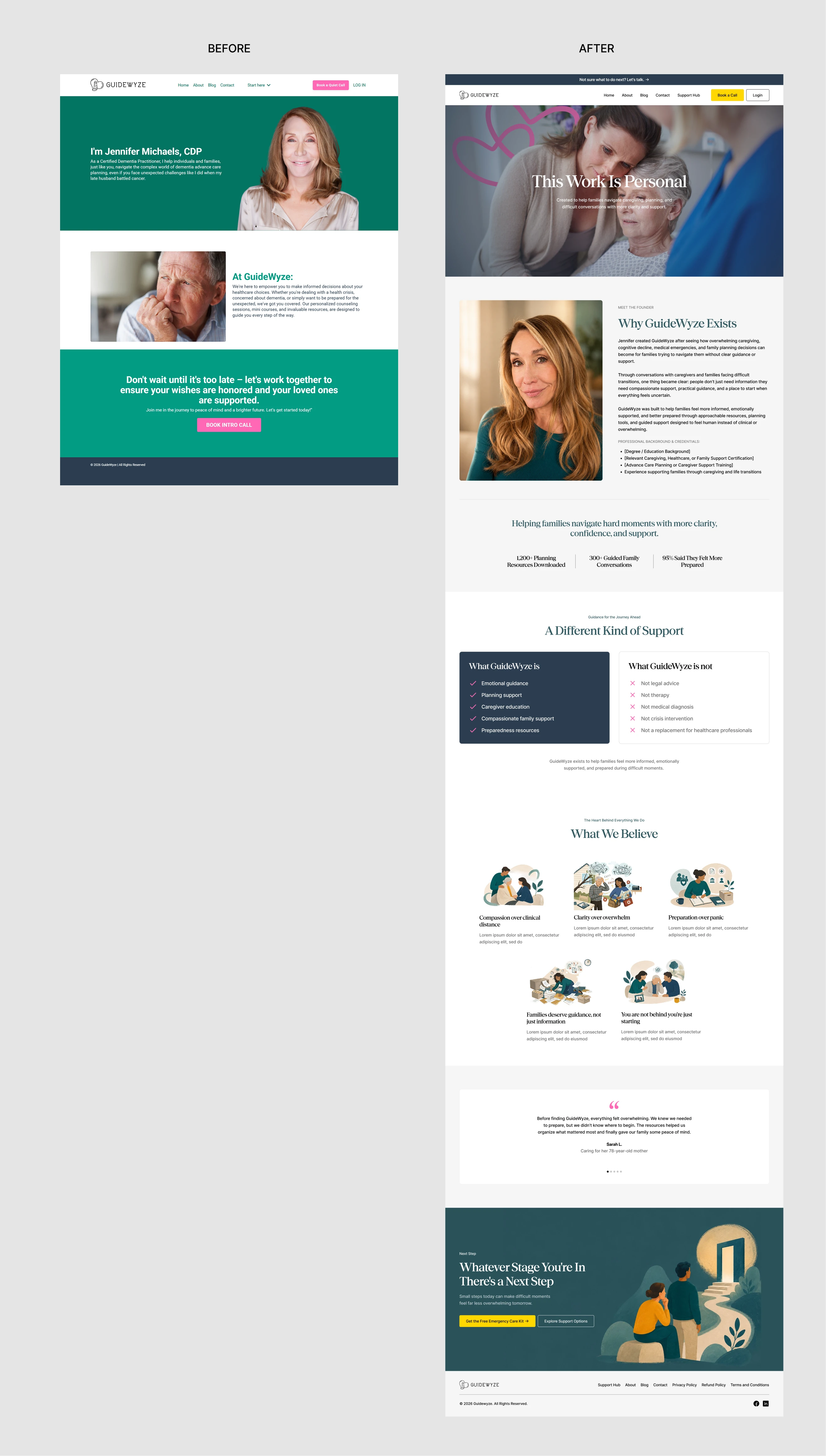
Transform a basic informational caregiving website into a structured support ecosystem capable of guiding emotionally overwhelmed users through educational resources, digital products, planning tools, and guided support services.
Early Progress
Established the foundational product ecosystem, funnel structure, nurture systems, and emotional-first UX direction for a broader Kajabi experience transformation currently underway.
The Challenge
GuideWyze operates in an emotionally sensitive space.
Families arriving on the platform are often navigating caregiving stress, aging parent conversations, emergency preparedness, burnout, and emotionally difficult planning decisions. The original experience communicated information, but it didn’t provide enough structure, guidance, or emotional clarity for people already feeling overwhelmed.
At the same time, the business itself was evolving beyond a simple content website.
GuideWyze was expanding into a broader support ecosystem that included educational resources, digital planning products, caregiver support tools, guided planning sessions, nurture journeys, and long-term support pathways.
The challenge wasn’t simply redesigning pages inside Kajabi.
It was designing a connected ecosystem capable of helping users navigate emotionally heavy situations while also supporting product discovery, conversion flows, email nurturing, and future scalability.
The platform needed to feel calm, supportive, emotionally safe, and operationally structured — without becoming overly clinical or conversion-heavy.
Where Things Were Breaking
The original experience lacked clear support pathways.
Different visitors were arriving with completely different needs, but the ecosystem didn’t clearly segment those journeys. Someone looking for emergency preparedness resources required a very different experience than someone seeking caregiver support or guided planning sessions.
This created friction and cognitive overload.
The platform also felt more informational than supportive. Visitors could access resources, but there wasn’t enough guidance helping them understand where to begin, which products were relevant, or what next step made the most sense for their situation.
From a UX perspective, traditional high-pressure marketing patterns would have felt deeply misaligned with the audience. The platform needed a softer and more emotionally intelligent conversion strategy centered around reassurance, clarity, and guided progression.
Operationally, the ecosystem was also becoming fragmented across offers, funnels, automations, scheduling systems, and nurture journeys. The business needed a more unified Kajabi structure capable of scaling cleanly over time.
Strategic Reframing
The biggest shift was moving GuideWyze from:
a caregiving information website
to
a guided caregiving and planning support ecosystem.
That reframed the entire experience.
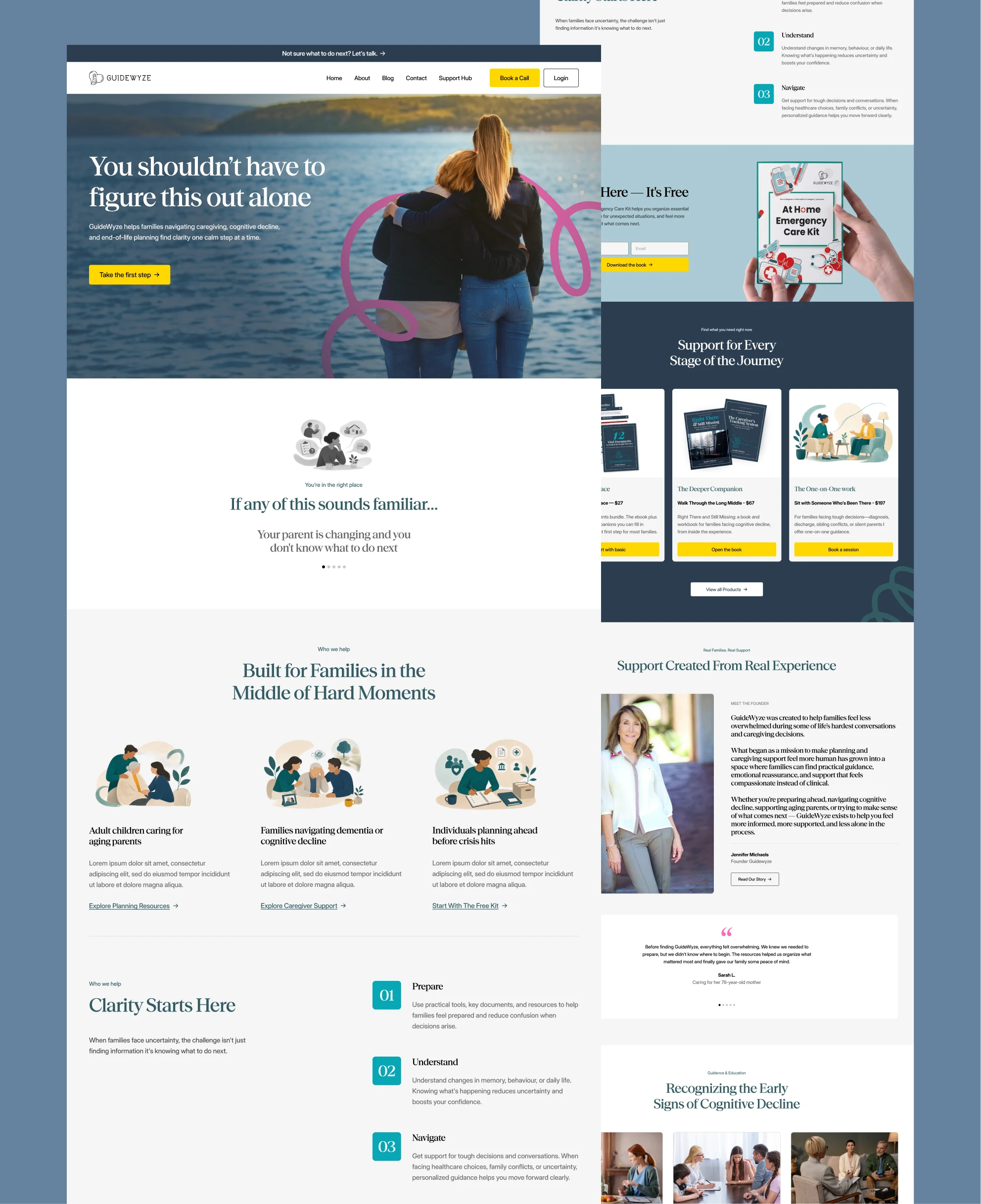
Instead of focusing purely on content delivery, the platform was restructured around emotional progression, support discovery, and guided decision-making.
The objective became reducing overwhelm, improving trust, segmenting support journeys more clearly, and helping users naturally move toward the most relevant level of support — whether that meant free preparedness resources, digital planning tools, caregiver support products, or guided planning sessions.
Rather than pushing users aggressively through funnels, the ecosystem was designed to guide people more intentionally through emotionally difficult situations
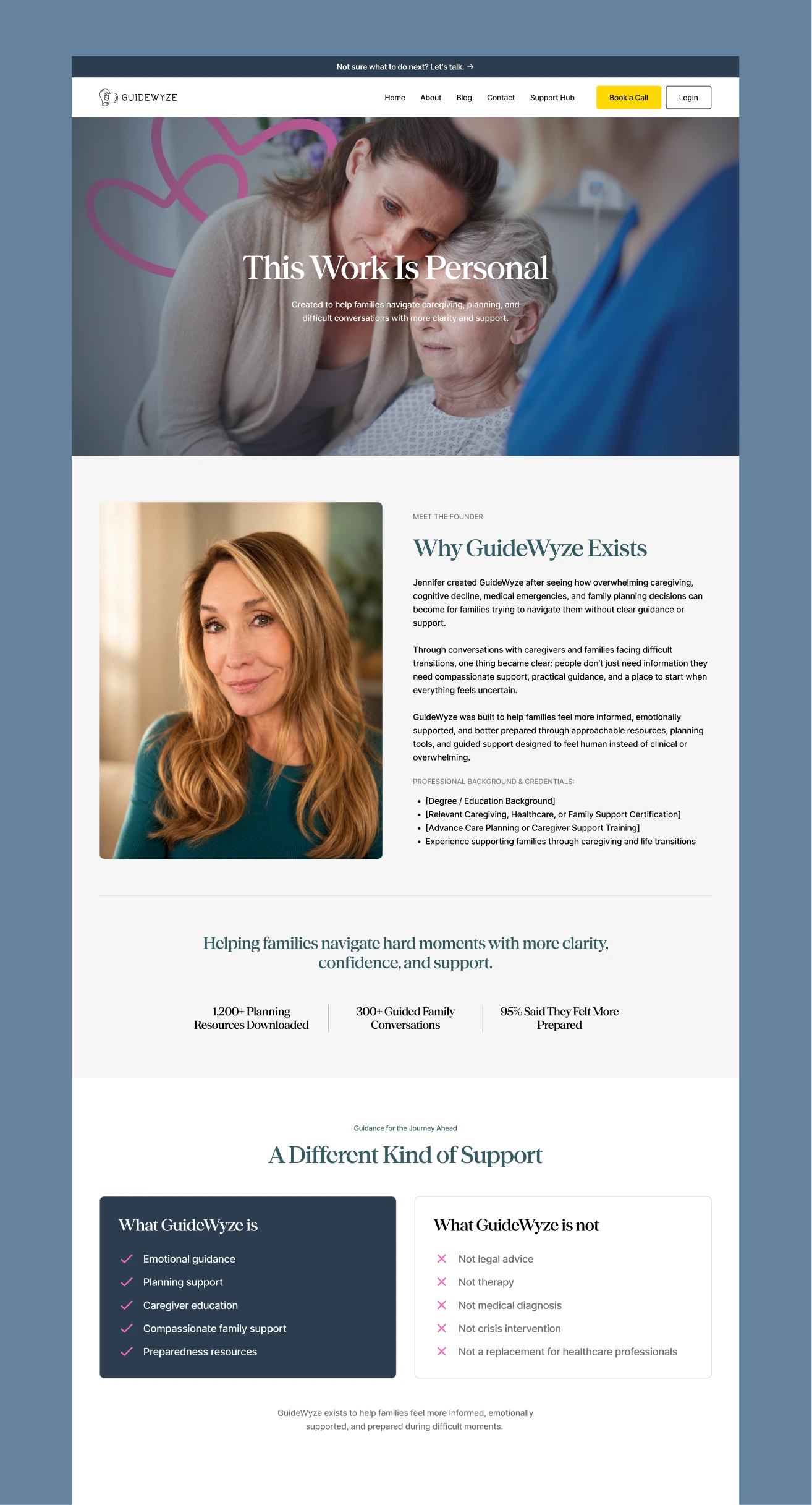
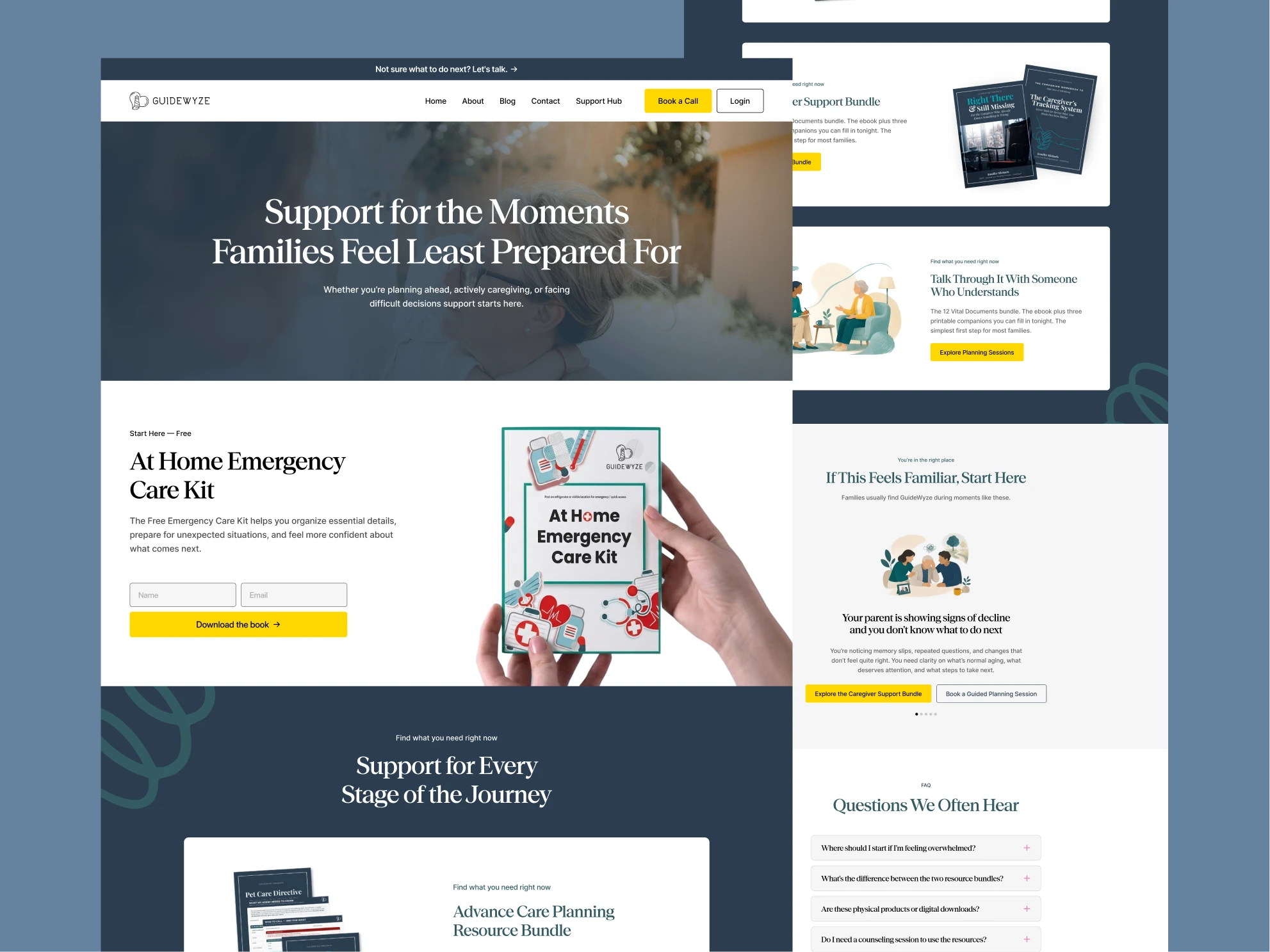
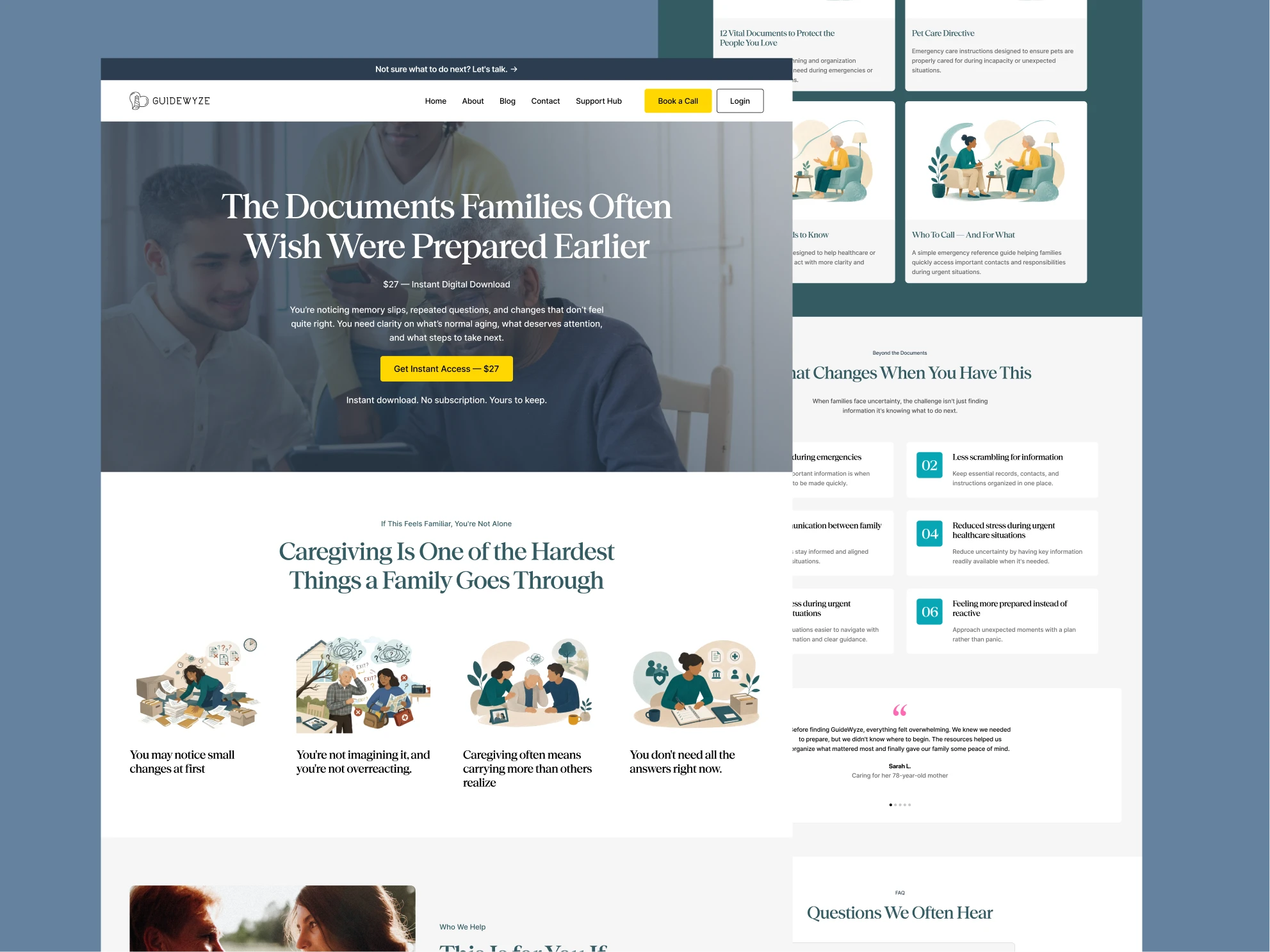
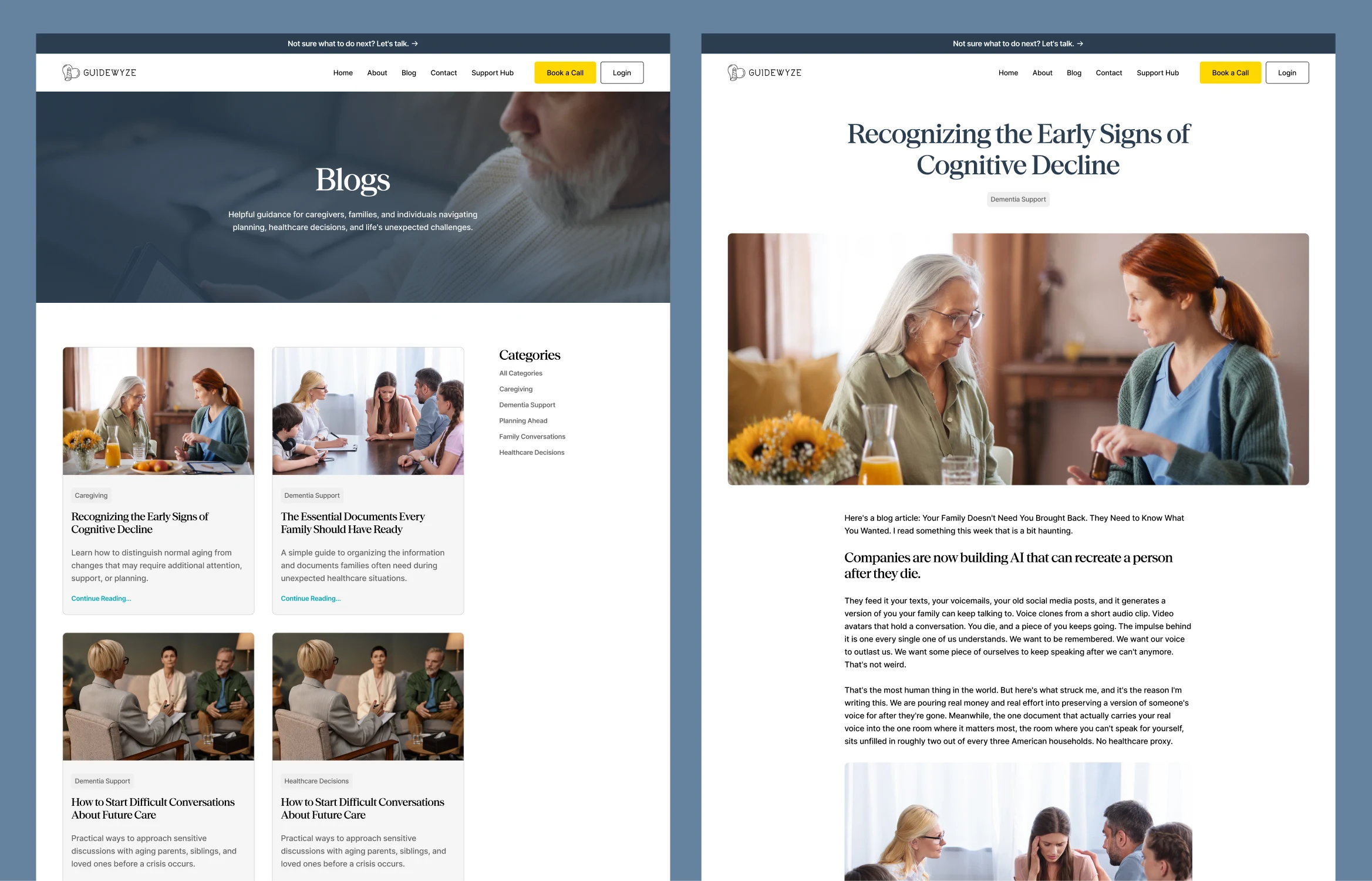
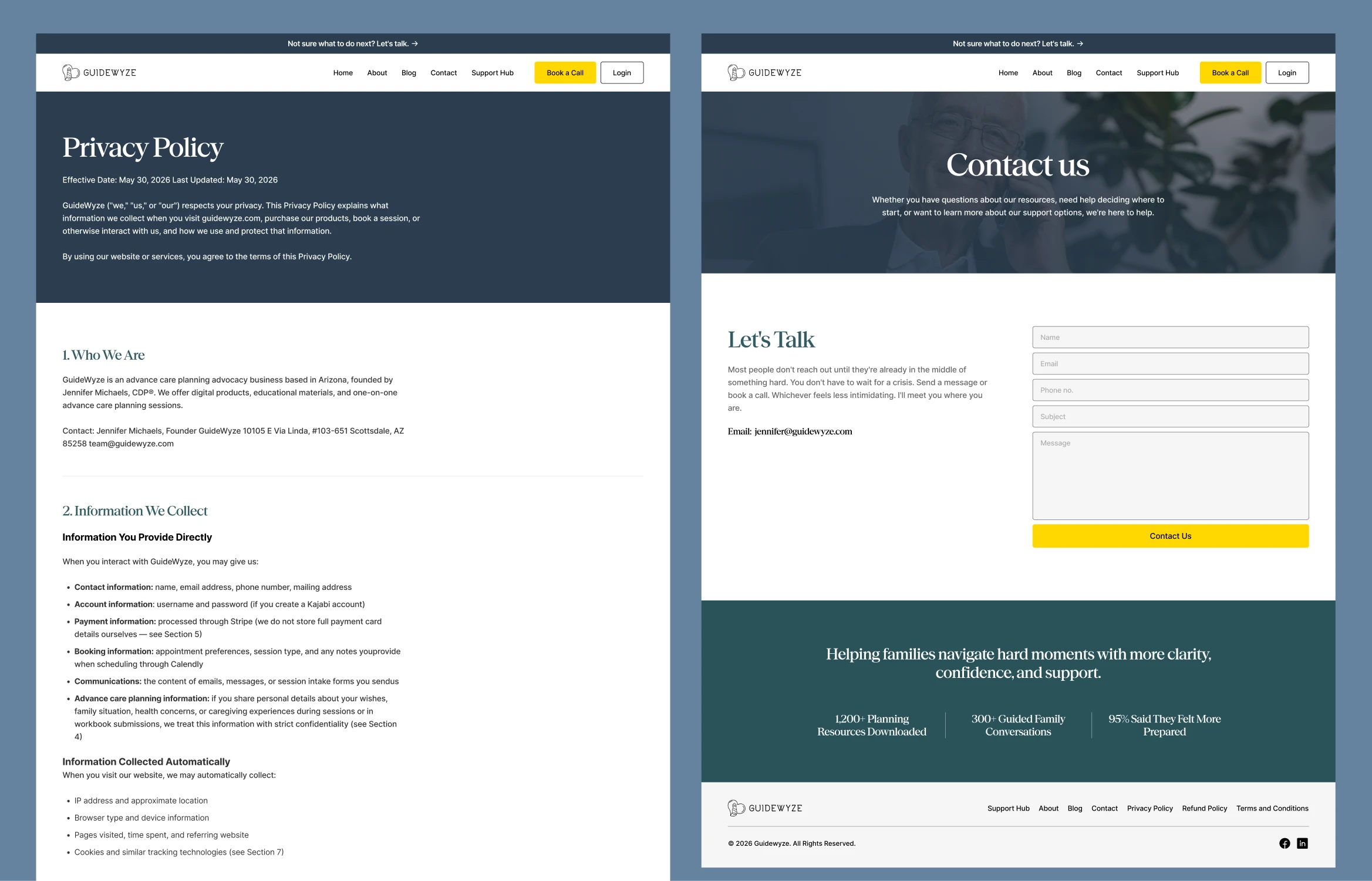
The Shift In Approach
Emotional-First UX Strategy
The UX direction centered heavily around emotional usability.
The platform was intentionally designed to feel calm, supportive, and non-clinical for families already navigating stressful life situations. Layouts, navigation flows, and conversion pathways were structured to reduce cognitive fatigue rather than increase urgency.
The experience prioritized reassurance and clarity first.
Conversion second.
That distinction shaped nearly every strategic and UX decision across the ecosystem.
Rebuilding the Ecosystem Around Real-Life Scenarios
Instead of organizing the platform around disconnected products or generic navigation structures, the experience was restructured around real caregiving and planning situations.
This helped users more quickly identify relevant support pathways based on where they were emotionally and practically.
The platform became easier to navigate because the structure started reflecting how users actually think during moments of uncertainty.
Funnel Segmentation & Guided Support Pathways
A major focus of the strategy involved creating clearer segmentation throughout the ecosystem.
Different support journeys were planned around:
Emergency preparedness
Advance care planning
Caregiver support
Guided planning and counseling
This created more personalized and relevant experiences without overwhelming visitors with too many unrelated options at once.
Structured Offer Ascension
The ecosystem was designed to naturally guide users from lower-friction resources toward deeper levels of support.
Visitors could move from:
Free preparedness resources
Digital planning products
Caregiver support bundles
Guided planning sessions
without the experience feeling overly transactional or sales-driven.
The progression needed to feel supportive and logical rather than forced.
Kajabi Ecosystem Consolidation
Rather than relying on fragmented tools and disconnected systems, the ecosystem was intentionally consolidated inside Kajabi.
This included:
Website structure
Funnels
Product pathways
Email automations
Analytics tracking
Scheduling integrations
Nurture journeys
The result is a more scalable and operationally manageable ecosystem that simplifies future growth and maintenance.
What Has Been Completed
The completed phase of the project includes:
Product and offer ecosystem setup
Lead magnet structure and offer hierarchy
Email nurture and automation sequences
Funnel architecture planning
Kajabi ecosystem structuring
User journey and support pathway strategy
Emotional-first UX direction
Analytics and tracking setup foundations
Homepage and ecosystem UX planning
Currently In Progress
The current phase is focused on:
Website UI/UX redesign
Support hub and product page design
Funnel experience refinement
Responsive Kajabi layouts
Visual system development
Conversion flow optimization
Platform-wide rollout and implementation
Why This Matters
GuideWyze is evolving from:
a basic informational caregiving website
into
a connected digital support ecosystem designed around emotional trust, guided progression, and long-term scalability.
The restructuring work is laying the foundation for a more cohesive experience across products, funnels, support pathways, nurture journeys, and guided planning services.
Most importantly, the platform is becoming significantly more aligned with the emotional reality of the audience it serves.
Strategic Takeaways
1. Emotional UX matters deeply in caregiving platforms
People navigating stressful life situations evaluate how supported and understood they feel — not just how quickly they can convert.
2. Guidance often outperforms urgency in emotionally sensitive industries
Support ecosystems require trust-building and clarity before conversion.
3. Strong ecosystems connect education, products, support, and automation together
Disconnected pages and funnels create friction.
Connected systems create momentum.
4. Kajabi can support sophisticated ecosystems when structured strategically
The platform becomes significantly more powerful when UX, funnels, products, and automations are designed together as one connected system.
If your business is growing beyond a simple website into a more complex education, support, or product ecosystem
That’s often not just a design challenge.
It’s an experience architecture and systems problem.
That’s often where I help.
Discuss a similar challenge
Like this project
What the client had to say
Anush brings solutions beyond what I was considering and they're better. That's reflective of the professional quality he brings to the project.


Jennifer Michaels, GuideWyze
May 26, 2026, Client
Posted Jun 3, 2026
Developed a Kajabi-based support ecosystem for caregiving, focusing on emotional guidance.
Likes
0
Views
4
Timeline
May 1, 2026 - May 26, 2026
Clients
GuideWyze