Development of Vantara: The Shoppable Streaming Platform

Muhammad Salman


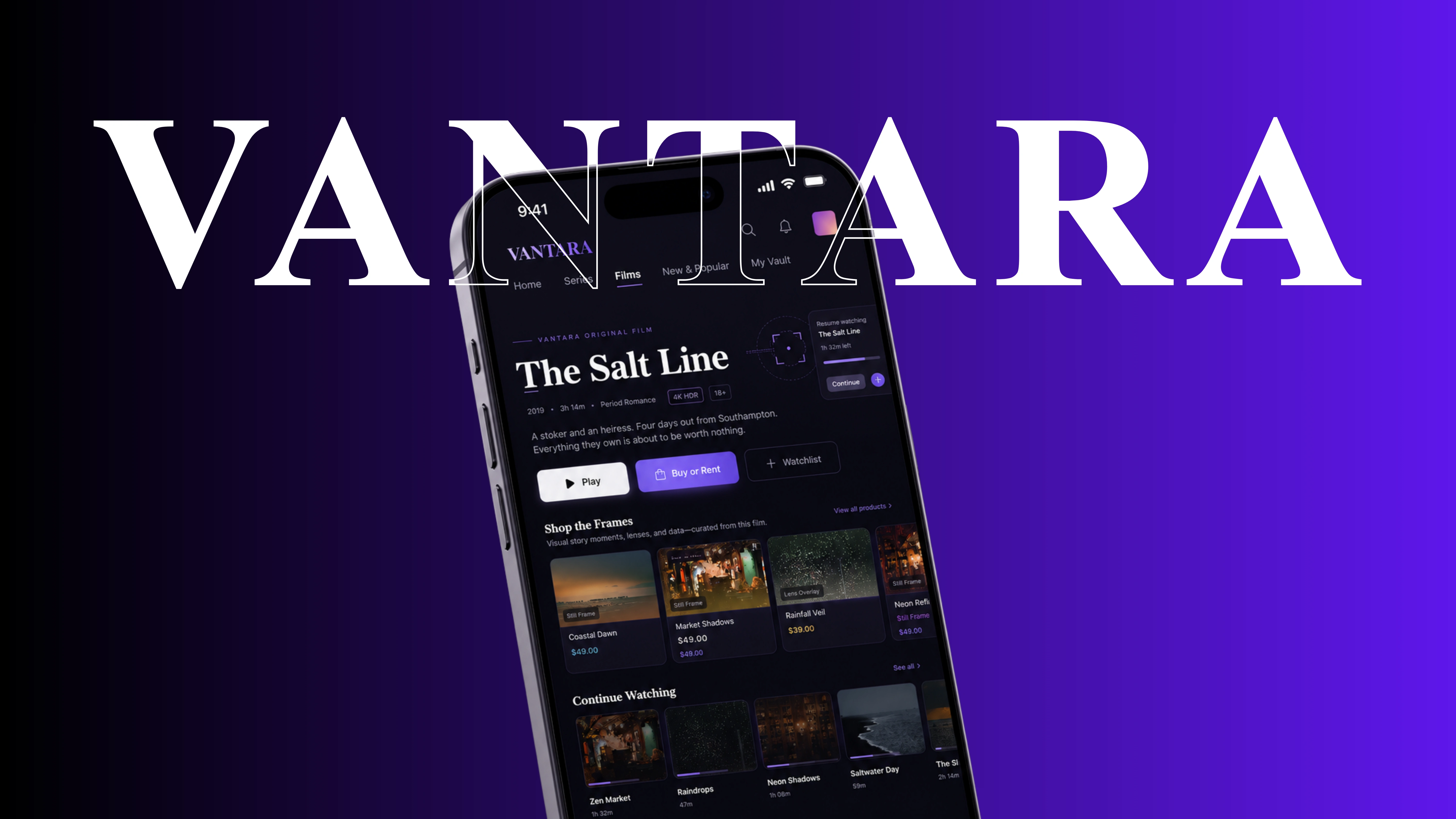
Pause the film. Buy the frame.
Vantara
A streaming service with one extra idea: pause on any moment, and it tells you what’s in the shot and where to buy it — the exact piece, or its closest match.
Why I wanted it to exist
I keep pausing films to shop them
Not on purpose — it just happens. Someone walks past in the exact coat I’ve been meaning to find, or a room has the lamp I didn’t know I wanted, and my thumb hits the spacebar before I’ve decided to.
Then comes the boring part. Screenshot. Crop. Reverse-search. Scroll past forty results that aren’t it. Give up. The thing I wanted was sitting right there in the frame — it just wasn’t connected to anything.

Vantara is me trying to connect it.
What it is, in one breath
Everything you watch is quietly a storefront
Vantara looks and behaves like a streaming service you already know how to use — a hero, your rows, a Top 10. The difference is what happens when you stop.
Pause on any moment and it reads the frame — every piece of clothing, every prop, every bit of furniture — and shows you where to buy each one. Not a link to a fan wiki. The actual product, the price today, and where it ships to you.
The idea that makes it work
You’re not buying the costume. You’re buying the look.
Here’s the part I care about most. You’re almost never going to track down the exact 1912 opera coat from a costume department, and you wouldn’t want to pay for it if you could. So Vantara grades every match, and lets you shop at whatever level you can afford.
How it feels to use
Watch, pause, and the frame opens up
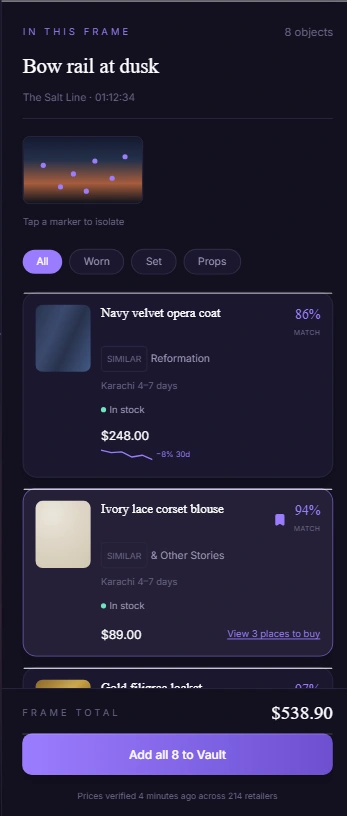
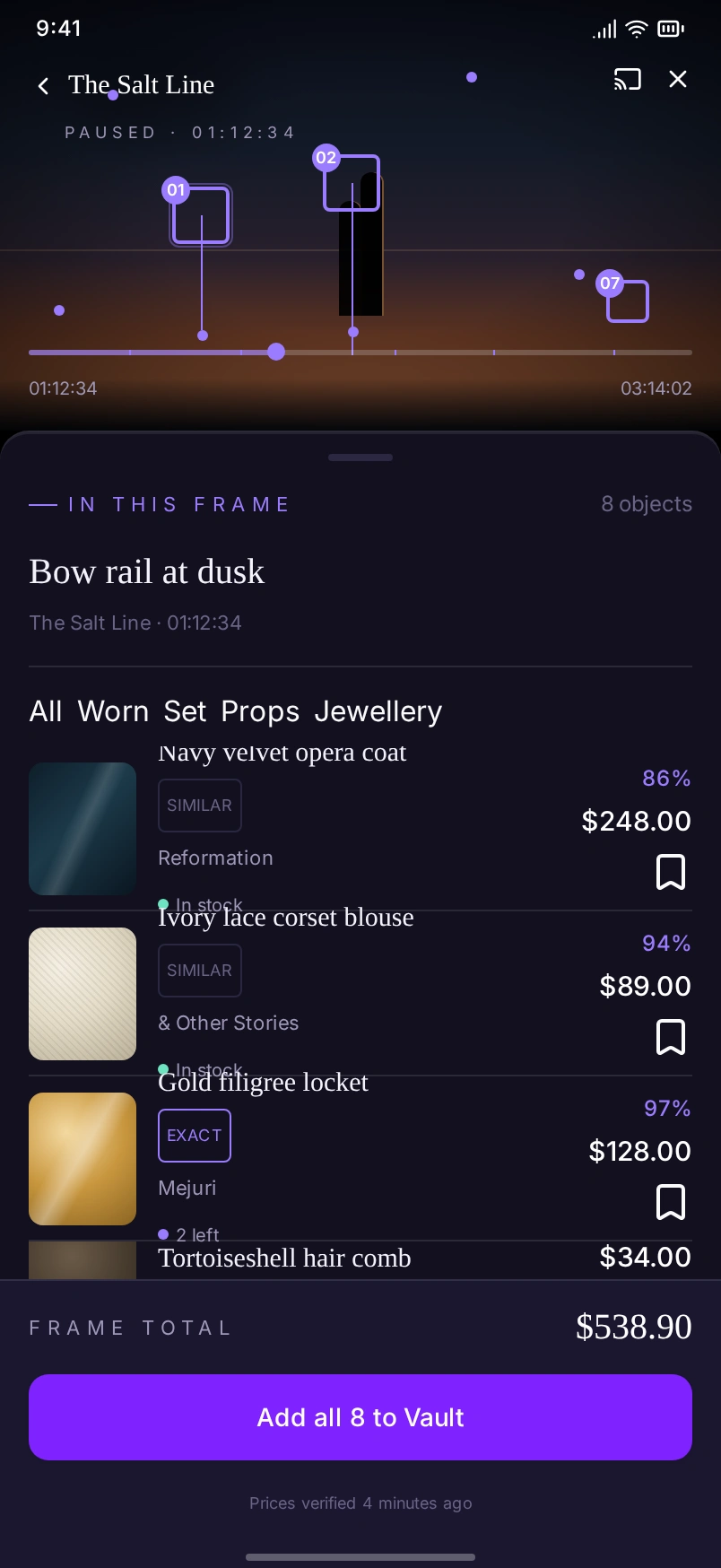
You’re watching. You pause. For half a second the frame is read — a scan passes, brackets settle onto objects, a panel slides in. Then you’re looking at a list: the coat, the blouse, the locket, each with a match grade, a price, and how many days it takes to reach you.
Open any item and you get the full picture — three places to buy it, a 30-day price history so you know if now is a good time, sizes, and the cheaper lookalikes underneath. Save what you like to your Vault, and Vantara watches the price for you. When the coat drops from $248 to $186, you’re the one who gets told.
And it runs backwards, too: describe a look you want, and Vantara finds the scene it lives in.
Eleven screens, one continuous world
Home
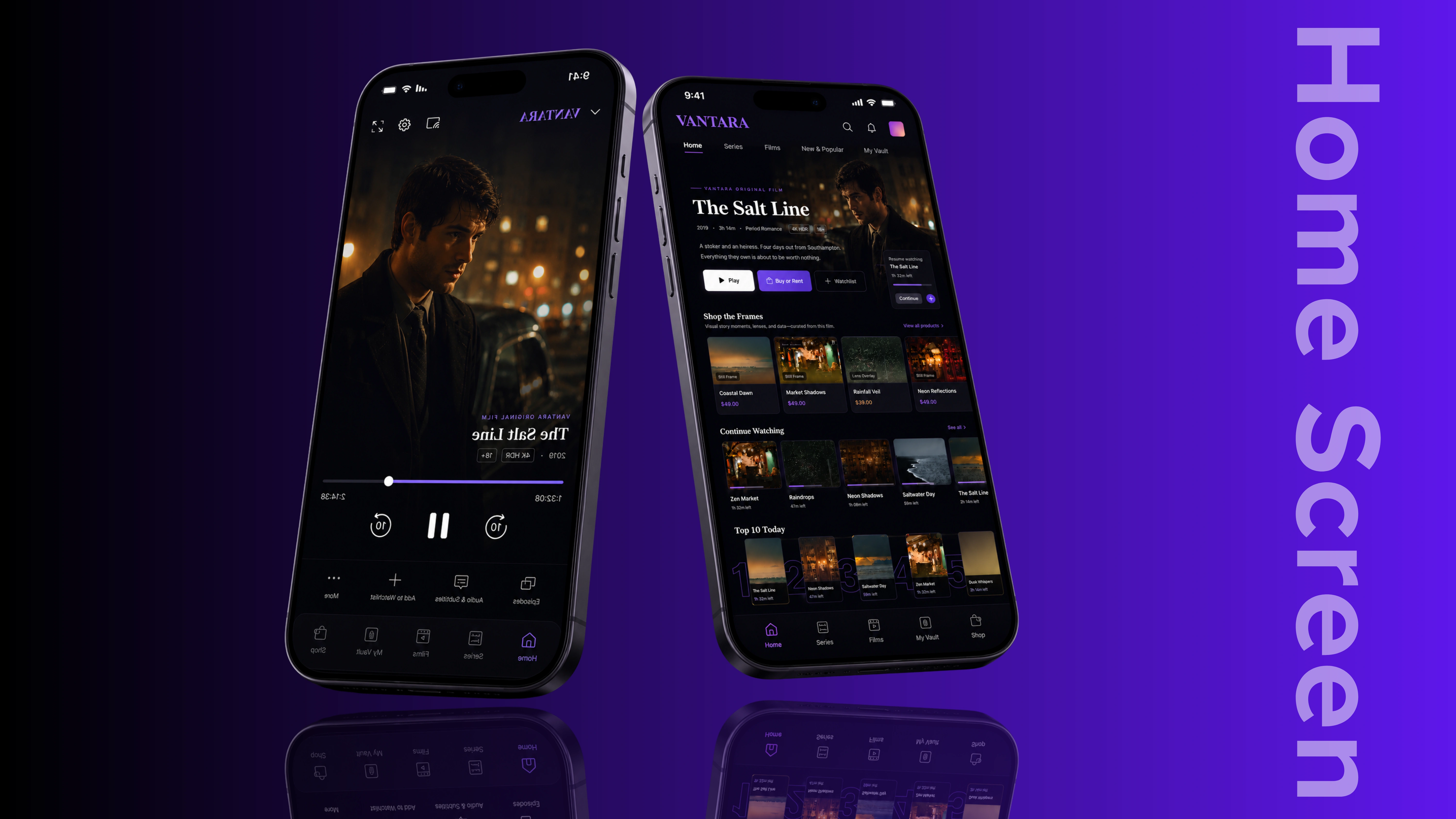
Hero, the Shop-the-Frame rail, Continue Watching, Top 10.
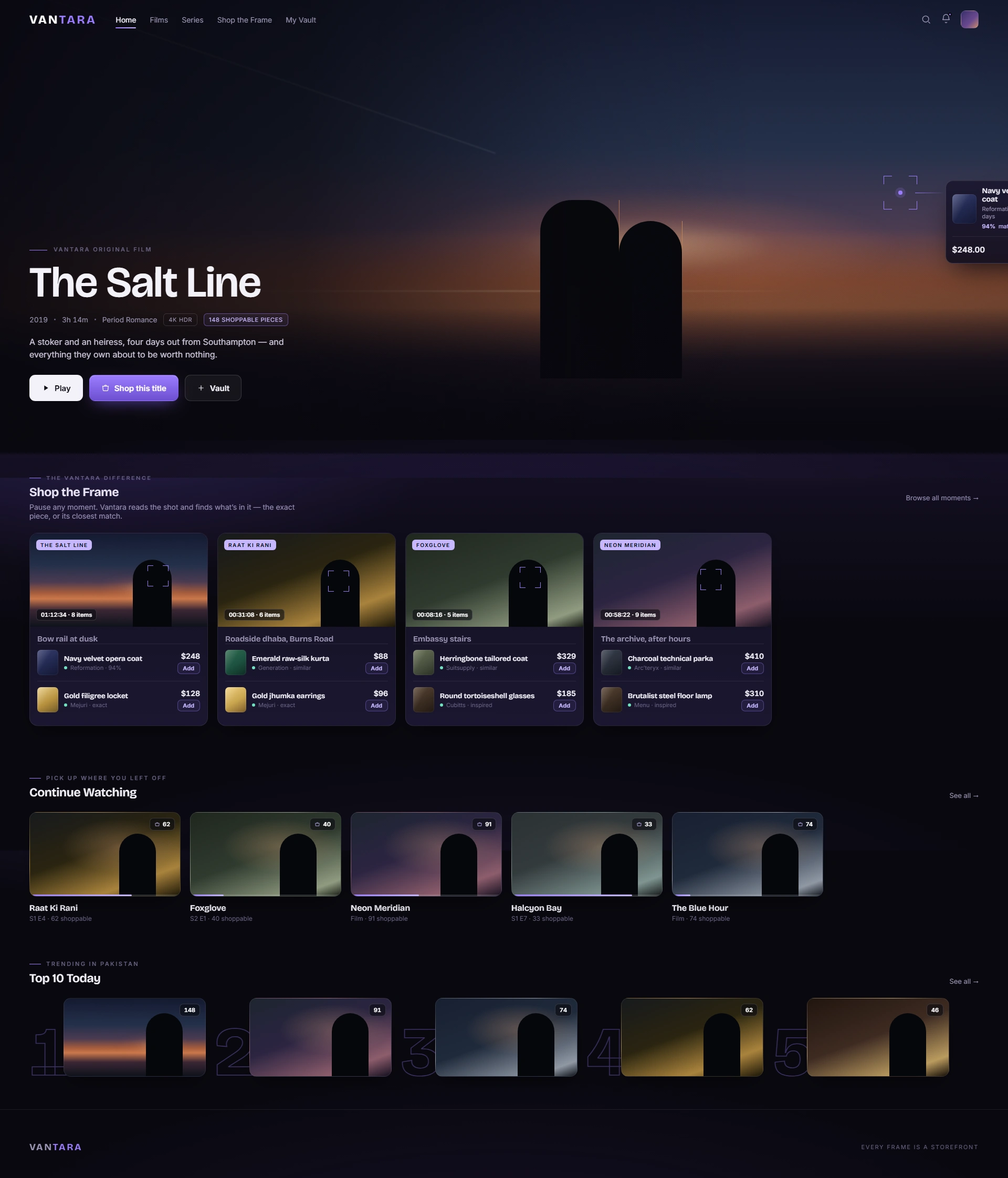
Home
Player — Playing Shoppable moments marked right on the scrub bar.
Player — Paused The signature screen. The frame becomes a storefront.
Item detail Three retailers, price history, sizes, lookalikes.
Shop the Frame Every identified piece, browsable by title.
Title page A film and its full shoppable catalogue, by scene.
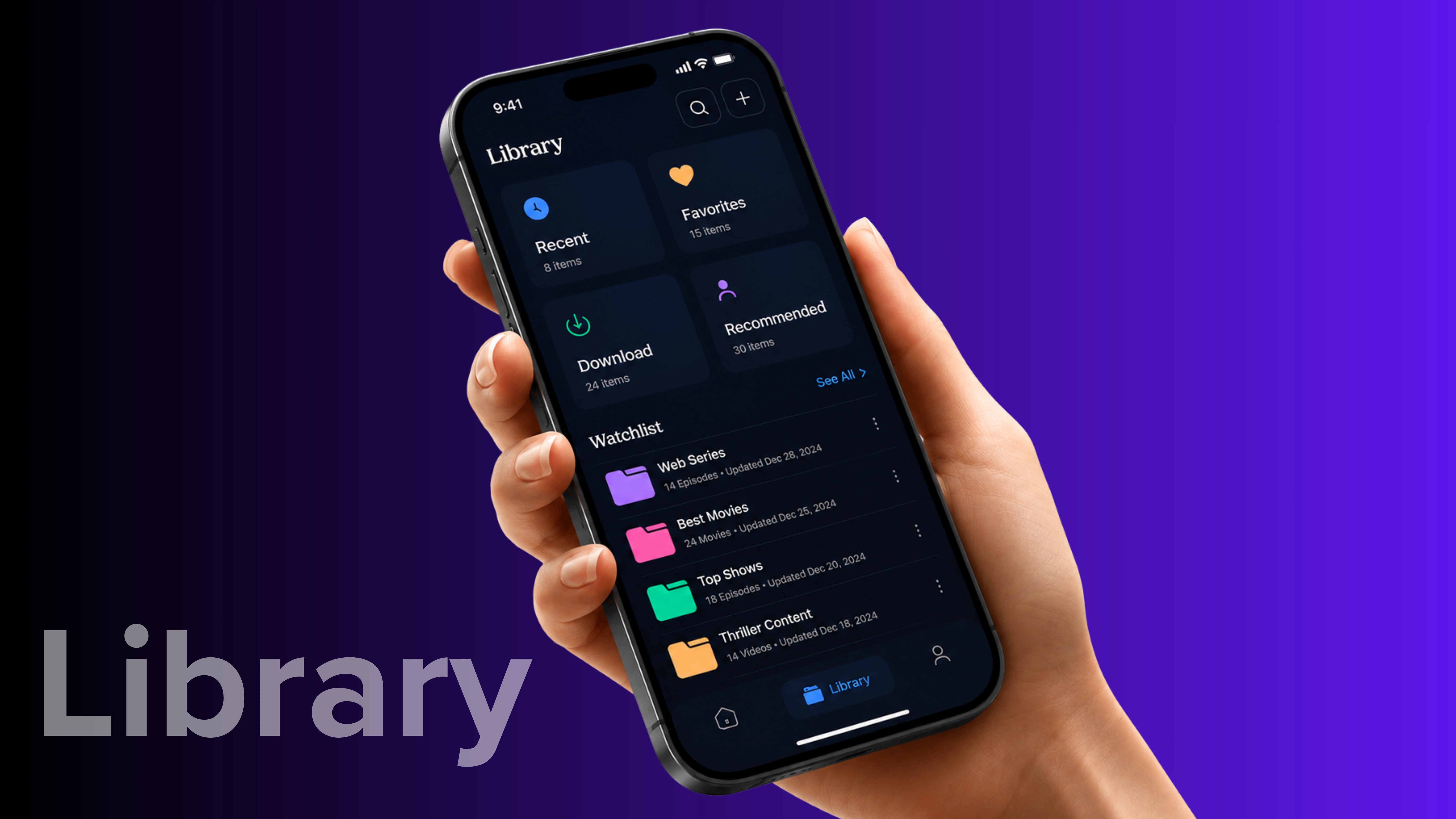
My Vault Saved pieces, and the price-drop alerts.
Search — Find the Look Describe a piece; get the scene it appears in.
Mobile — Home The phone build, where most watching happens.
Mobile — Paused The panel becomes a bottom sheet.
The identity
Built to feel expensive, on purpose
The brief I set myself was simple: it should read like the most expensive thing in the room, and a first-time visitor should understand what it does before they finish the hero. Every decision below serves one of those two things.
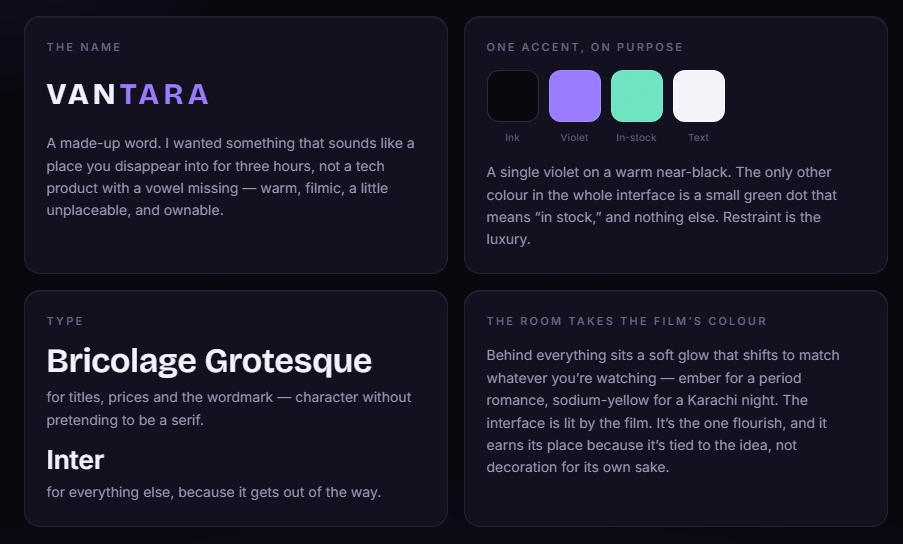
Imagery. No stock photos, no borrowed film stills. Every frame in the product is a built image, graded like a real shot, with a fixed palette per title — so The Salt Line always looks like The Salt Line, wherever it appears. Product thumbnails are little material studies, so velvet reads as velvet and lace as lace.
Voice. Small, wide-spaced capitals label every section, the way a museum wall text sits beside a painting. Prices and details are set precise and quiet. Nothing shouts. The commerce is present but never pushy — it sits beside the frame, it doesn’t cover it.
I invented the catalogue on purpose
There are no real films in Vantara. Partly because reproducing someone’s movie is a quick way to get a submission pulled — but mostly because inventing the catalogue let me build the world properly instead of borrowing one.
So there’s The Salt Line, a 1912 period romance aboard a liner (yes, the one you’re picturing). And Raat Ki Rani, a Karachi neo-noir where the kurta is from Generation, the shawl is Khaadi, and the shipping estimate reads Karachi, 4–7 days. That last detail matters more than it looks: a product that knows where its user actually lives.
How it was made
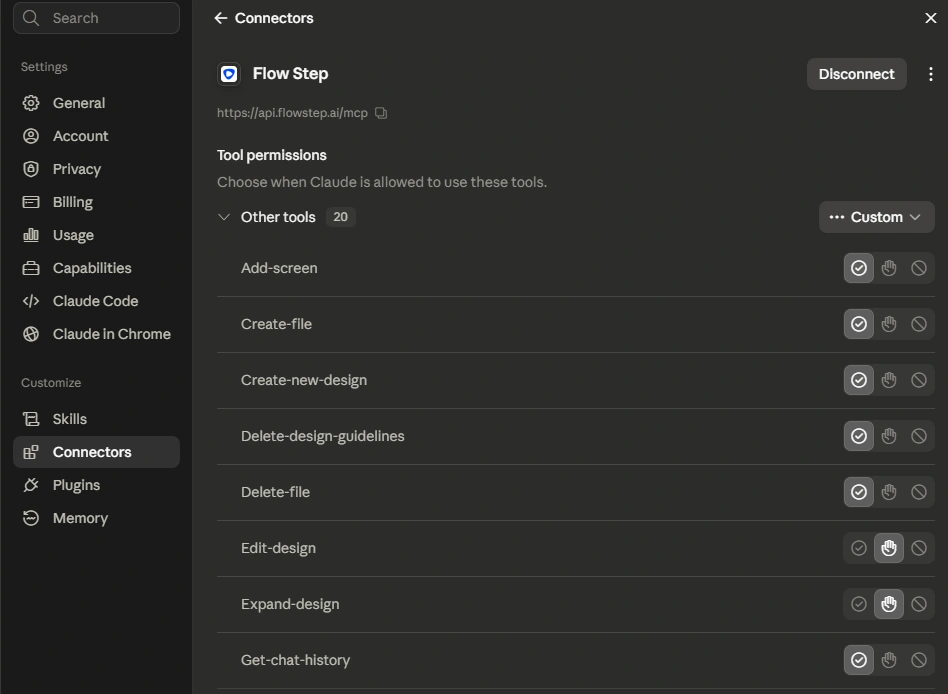
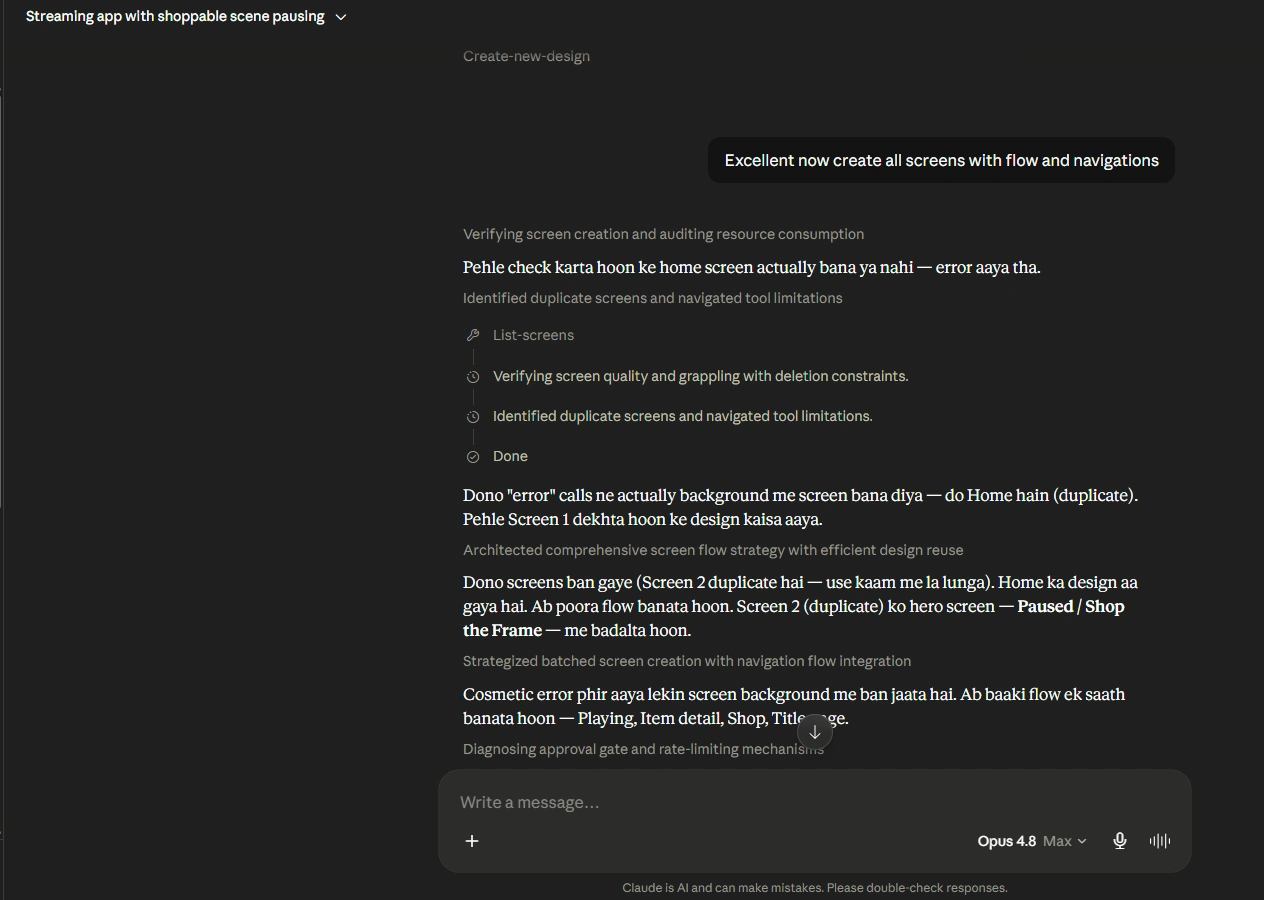
Flowstep, driven by a coding agent through MCP
Every screen was built in Flowstep and driven through the Flowstep MCP server from a coding-agent workflow — one shared design system, written once and enforced across all eleven screens by prompt. The colours, the type, the spacing, the shoppable-tag component: defined in one place, applied everywhere, so nothing drifted.
It did not come out right the first time. Keeping the dead ends here because that’s the actual work.
What’s in the box

Developed by: Muhammad Salman
#FlowStepChallenge
Like this project
Posted Jul 28, 2026
Developed Vantara, a shoppable streaming service that identifies and links products in paused frames.
Likes
8
Views
31
Clients
Vantara