

Project Overview
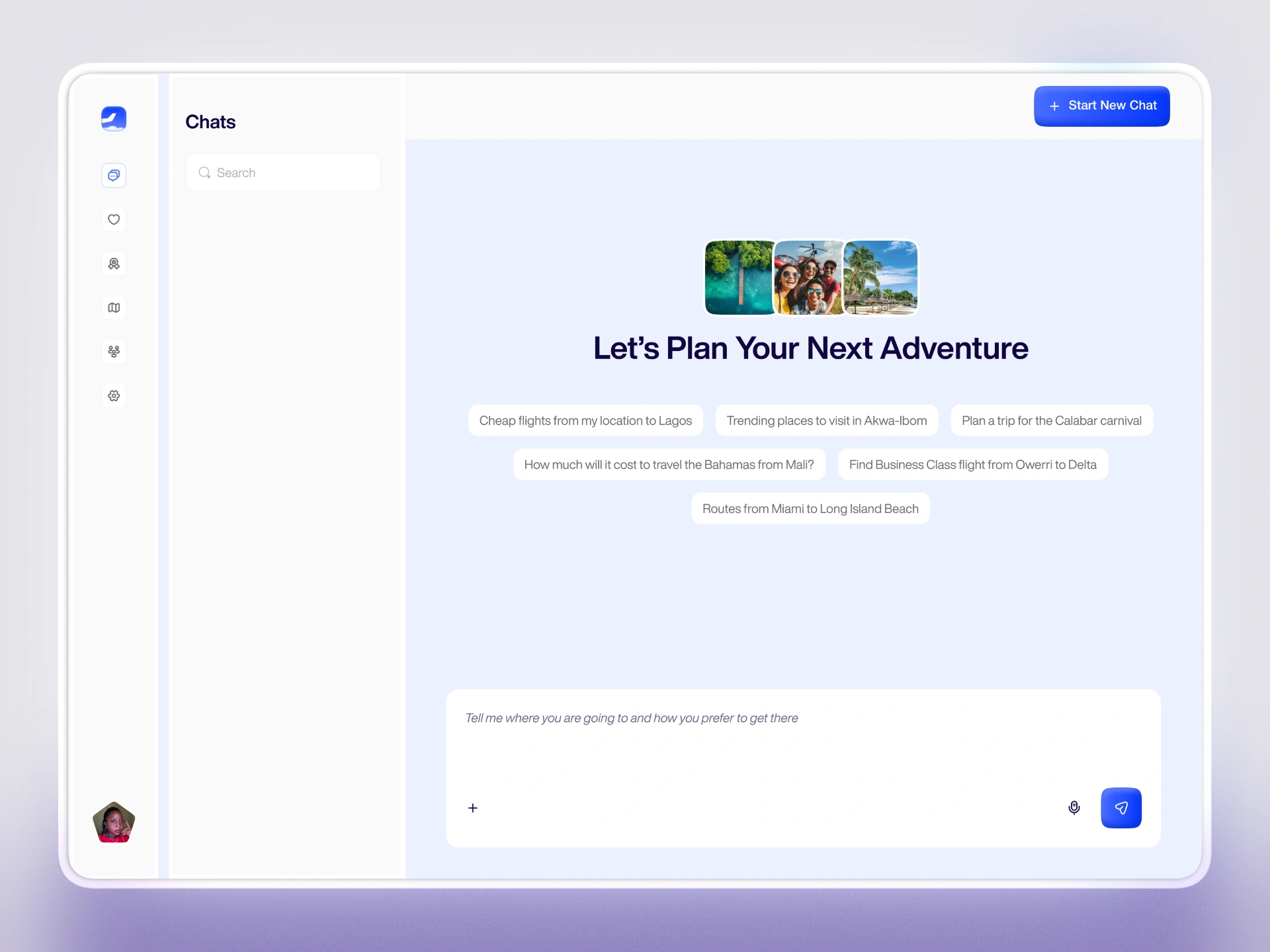
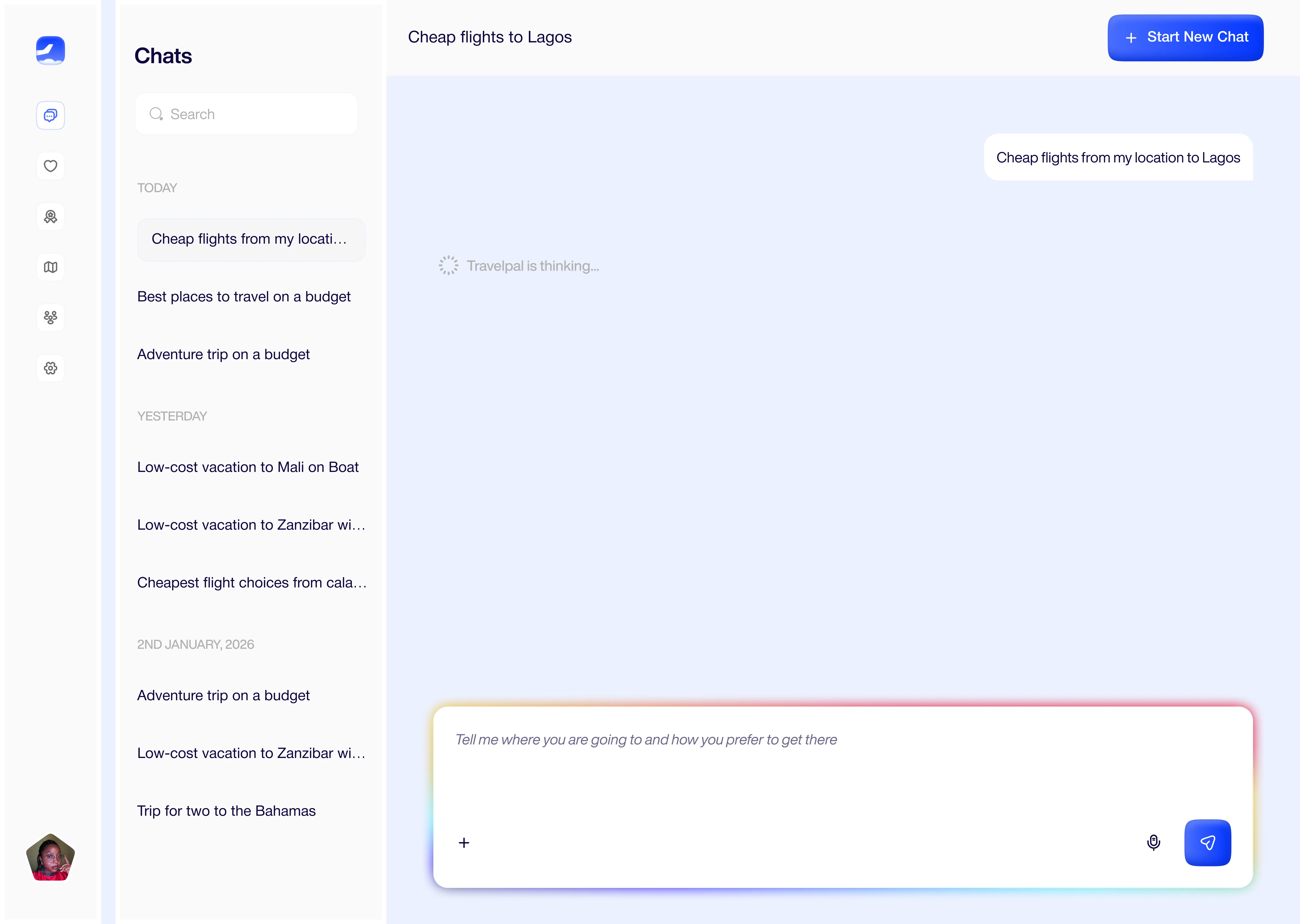
Designed and developed Tripal, an intelligent travel planning platform that leverages AI to streamline the flight and accommodation discovery process. The solution integrates real-time search capabilities, geospatial visualization, and comparative pricing to deliver a seamless booking experience.
My Role
Product Designer & UX Strategist
The Challenge
Modern travelers face decision fatigue when comparing countless flight and accommodation options across multiple platforms. The goal was to create an intelligent system that not only aggregates options but understands user preferences to surface the most relevant recommendations while maintaining transparency in pricing and location context.
Design Approach
User-Centered AI Integration: I architected the interaction model between users and the AI recommendation engine, ensuring the system captured nuanced preferences without overwhelming users with excessive input requirements. The AI learns from selection patterns and refines suggestions progressively, creating an adaptive experience that improves with use.
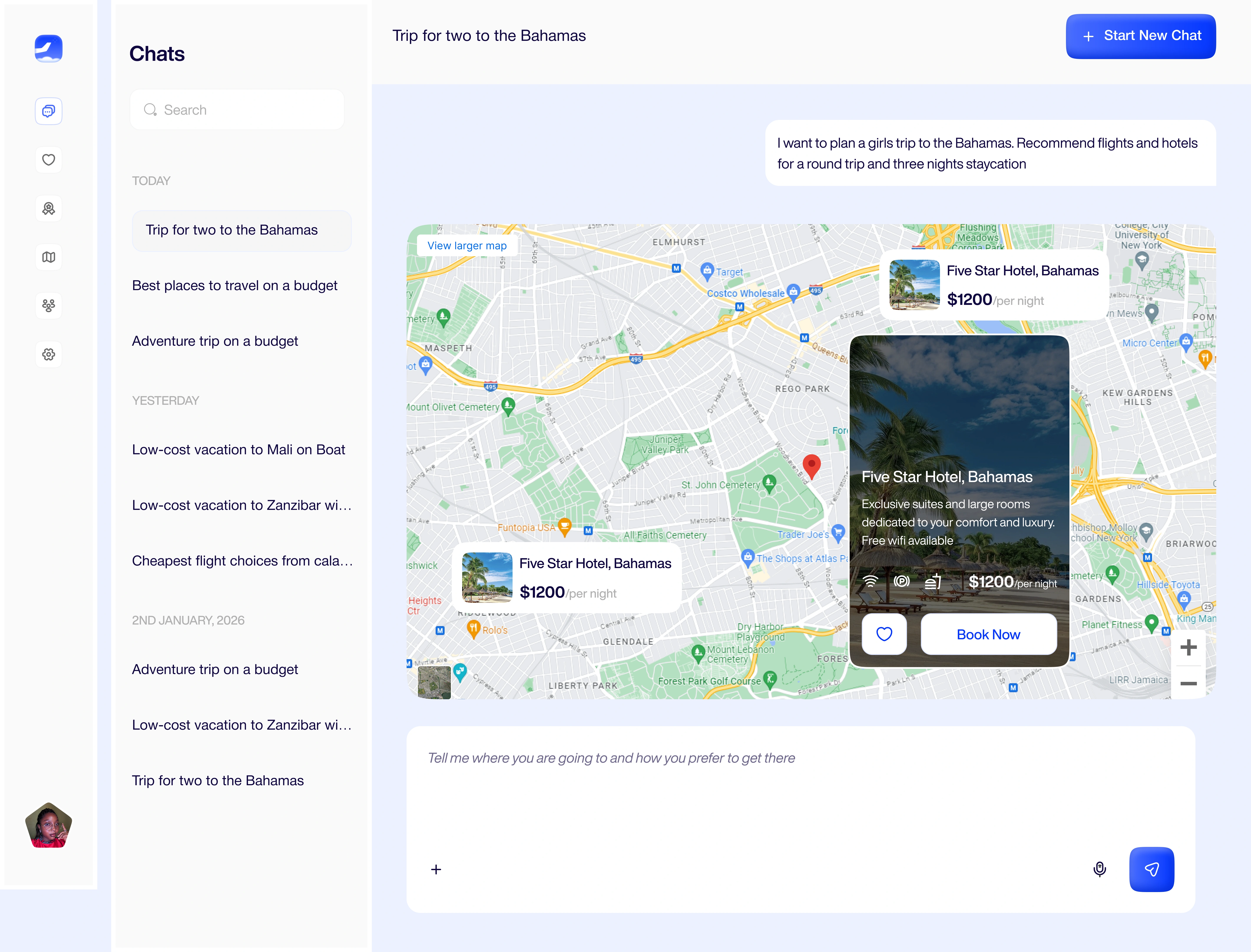
Spatial Intelligence & Wayfinding: Recognizing that location context is critical to travel decisions, I integrated interactive mapping that serves multiple functions: visualizing spatial relationships between airports and accommodations, calculating real-world distances, and providing geographical context that influences booking decisions. This transforms abstract location data into actionable spatial intelligence.
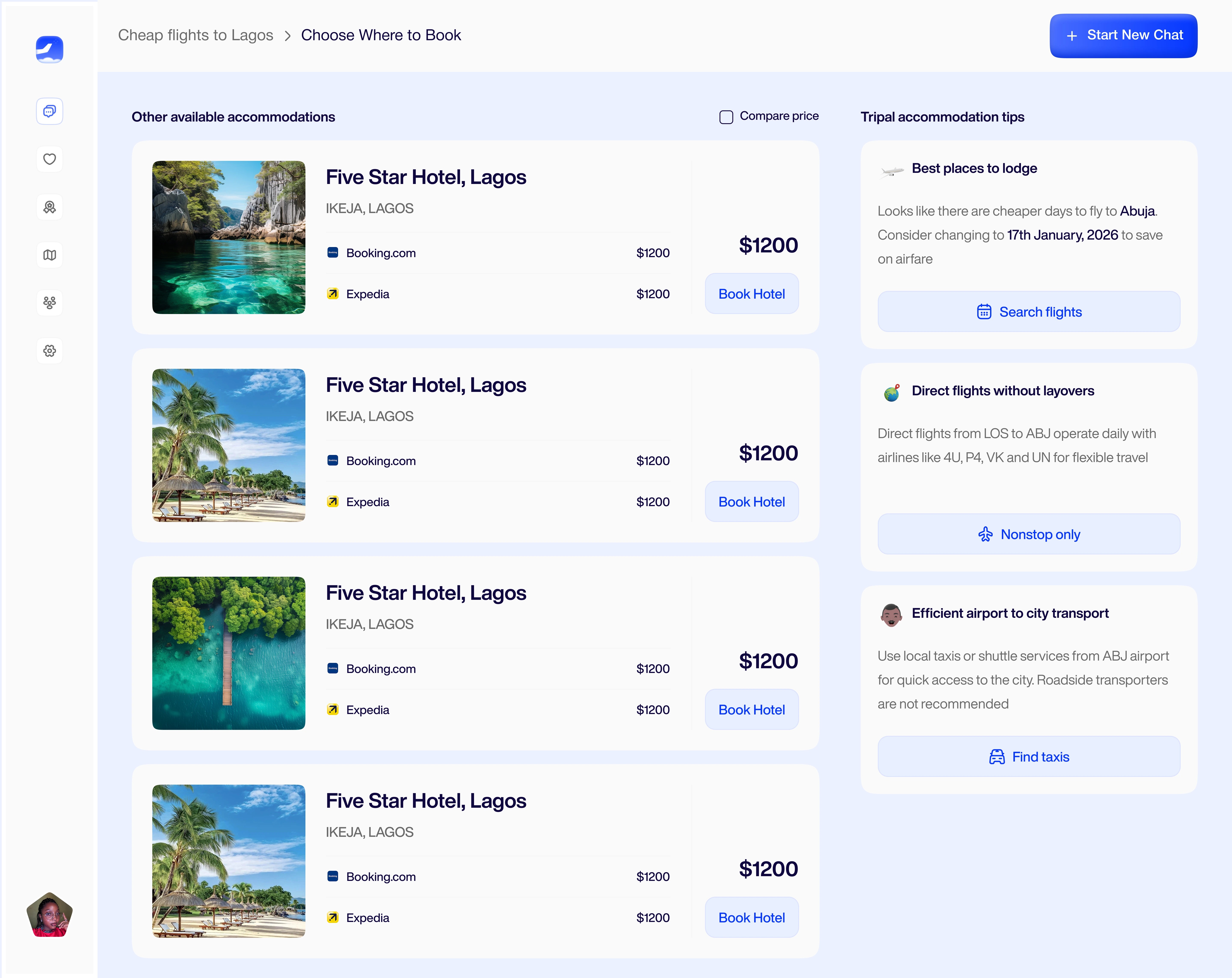
Comparative Analysis Framework: I designed a multi-dimensional comparison interface that synthesizes pricing data from various booking platforms. The UI hierarchy prioritizes decision-relevant information while maintaining cognitive ease—users can quickly parse differences without analysis paralysis.
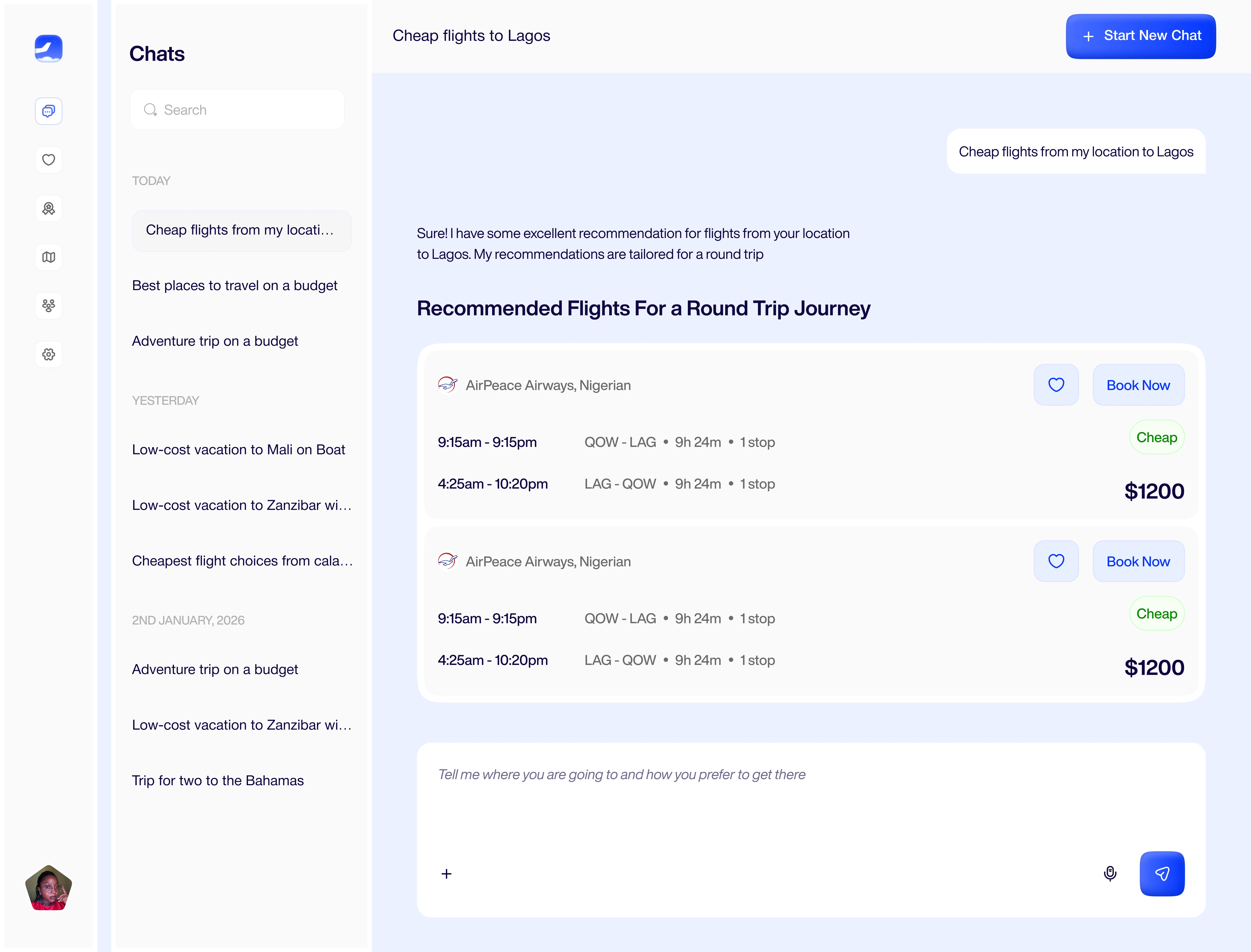
Persistent Recommendations System: Implemented a save functionality that allows users to curate and revisit recommendations, acknowledging that travel planning is rarely linear. This feature respects the non-linear decision-making journey while maintaining user context across sessions.
Design Principles Applied
Progressive Disclosure: Complex filtering and AI parameters are revealed contextually, maintaining interface clarity
Information Hierarchy: Visual weight and spatial organization guide users through the decision funnel
Feedback Loops: Clear system status indicators keep users informed during searches and AI processing
Frictionless Transitions: Seamless handoffs to booking platforms preserve user momentum and trust
Outcomes
Tripal demonstrates how thoughtful product design can harmonize AI capabilities with human decision-making processes, creating an experience that feels both intelligent and intuitive.
Skills Demonstrated: AI/ML Product Design • Geospatial UX • Comparative Interface Design • Information Architecture • Interaction Design • User Flow Optimization
0 likes · 21 views · Jan 16, 2026
Developed an AI-driven travel planning platform enhancing user experience and decision-making.
