Built with Framer
Designing an AI-Powered Job Application Tool

Uthman Akinsawe


Overview
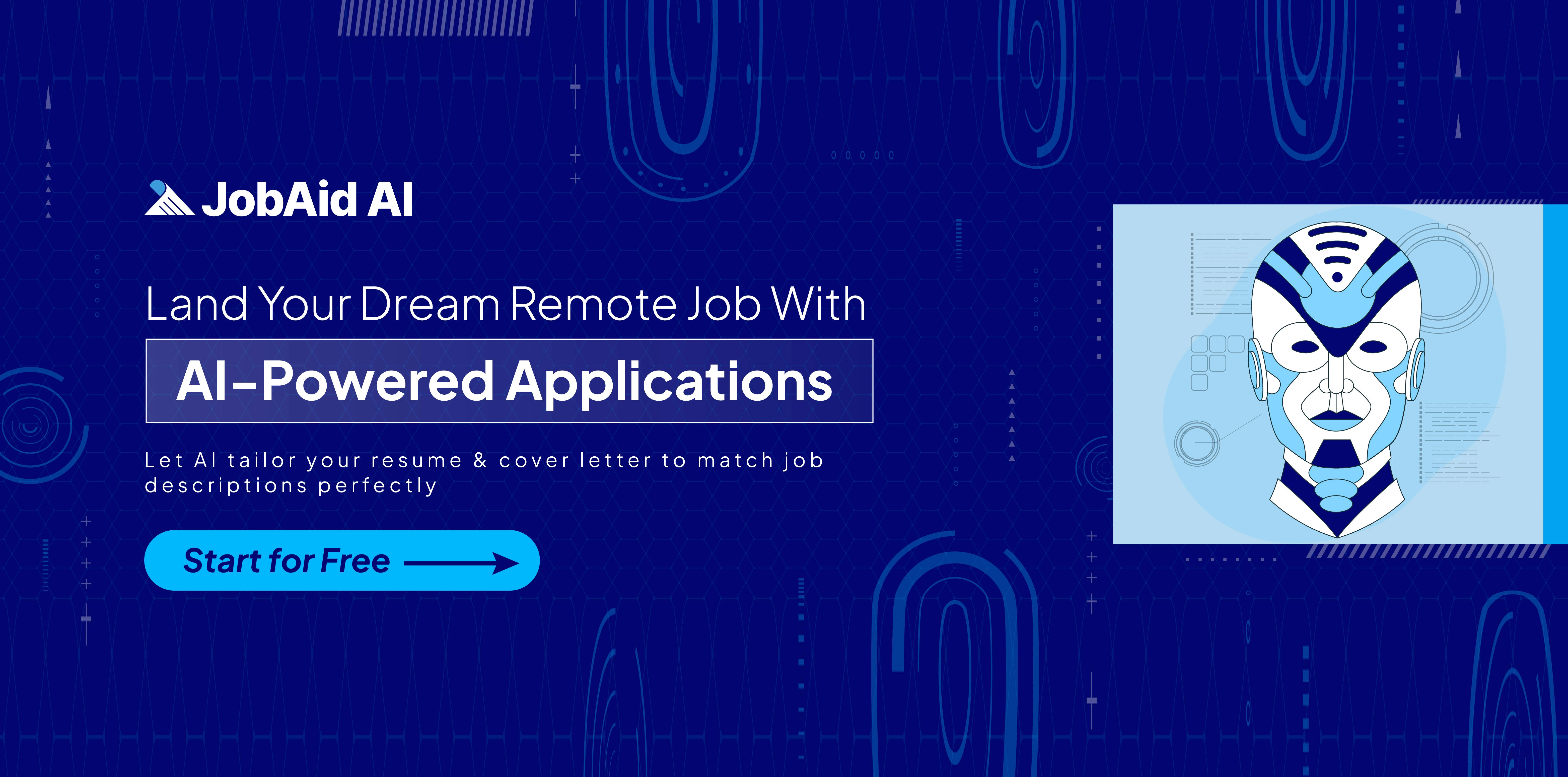
JobAid AI is an AI-powered platform designed to help job seekers craft stronger, tailored job applications and significantly improve their chances of getting hired. The product leverages intelligent automation to analyze job descriptions, optimize resumes, generate context-specific cover letters, and eventually automate the job application process.
Context & Problem
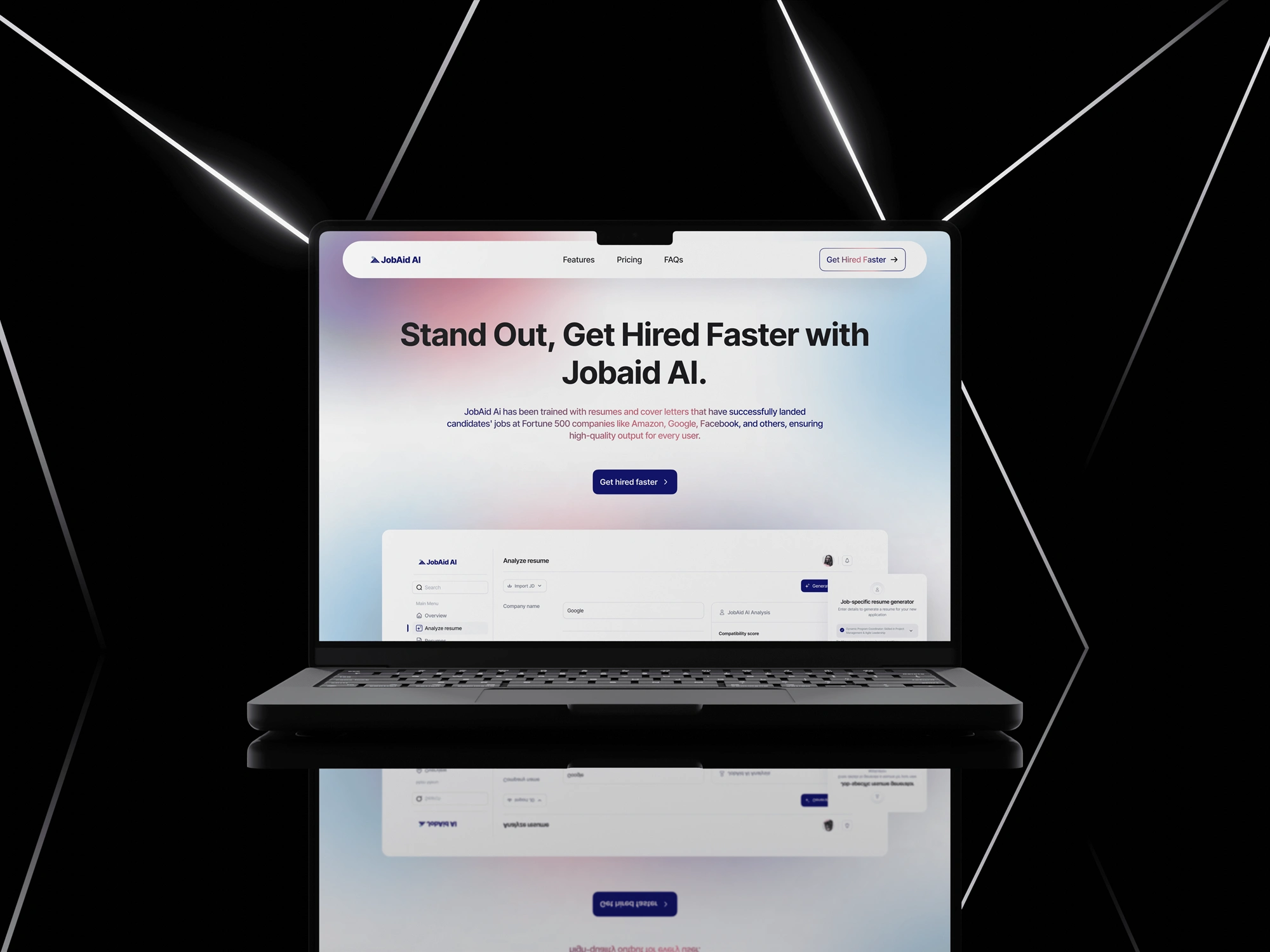
The job market has become increasingly competitive, especially for tech professionals. Many applicants submit generic resumes and cover letters, leading to poor outcomes even when qualified. Meanwhile, recruiters struggle with a high volume of low-quality applications.
JobAid AI was created to solve this dual-sided challenge:
Help job seekers tailor their applications to specific roles with ease.
Reduce the time spent on manual applications.
Improve application quality through data-driven resume and cover letter enhancement.
My Role & Responsibilities
As the sole Product Designer, I led the end-to-end design process. My responsibilities included:
Shaping the product vision alongside stakeholders
Conducting product and user research
Designing the full brand identity
Creating UX flows, wireframes, and interactive prototypes
Designing the web application and marketing website
Collaborating with developers and AI engineers to integrate intelligent features
Conducting usability tests and iterating based on feedback
Research & Discovery
1. User & Market Research: I conducted user interviews and surveys with tech professionals actively seeking roles to understand their pain points. Key insights:
Many users reuse one resume for all applications
Tailoring applications feels overwhelming and time-consuming
Users want AI assistance, but it must feel personal and not robotic
Stakeholders Meeting
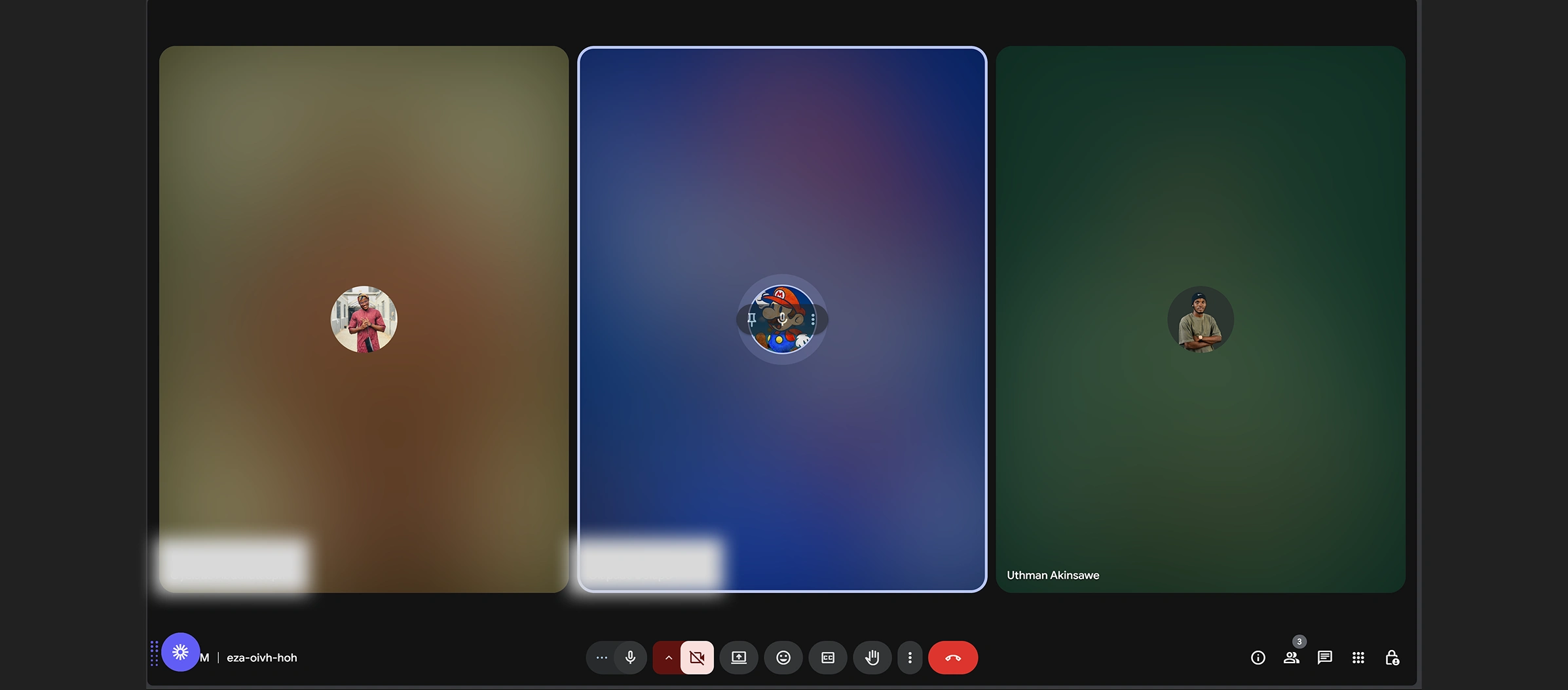
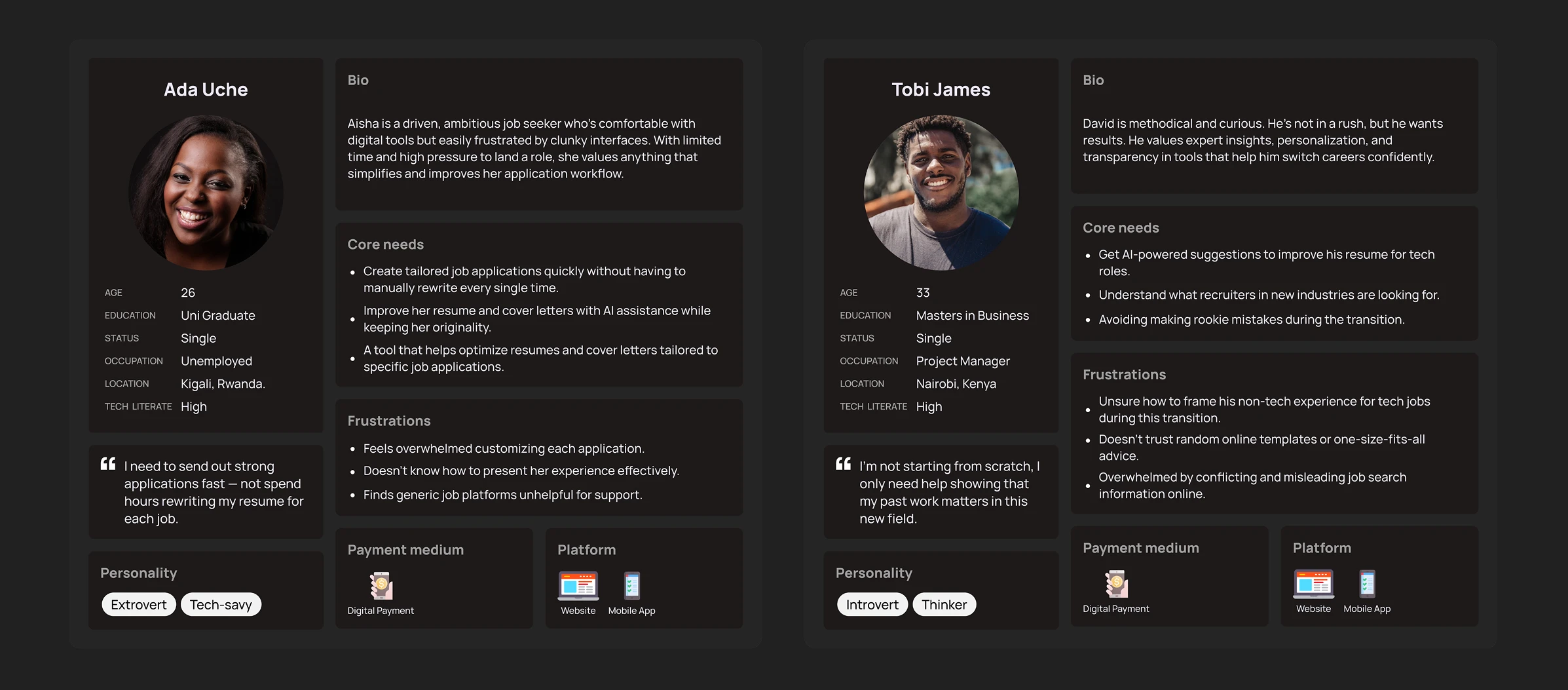
2. User Surveys & Personas: I created surveys targeting students and remote workers to understand their job application process, frustrations with current processes and tools, and wishlist features. I didn’t just come about these Personas through surveys alone. I had virtual interviews with 3 participants, and their stories led to the development of two primary personas: Aisha, the recent university graduate, and David, the Mid-Level Professional Pivoting Careers
User Personas
3. Competitive Benchmarking I reviewed similar platforms like Teal HQ and Resume.io to analyze feature gaps and user complaints. These insights informed the initial feature set and value propositions.
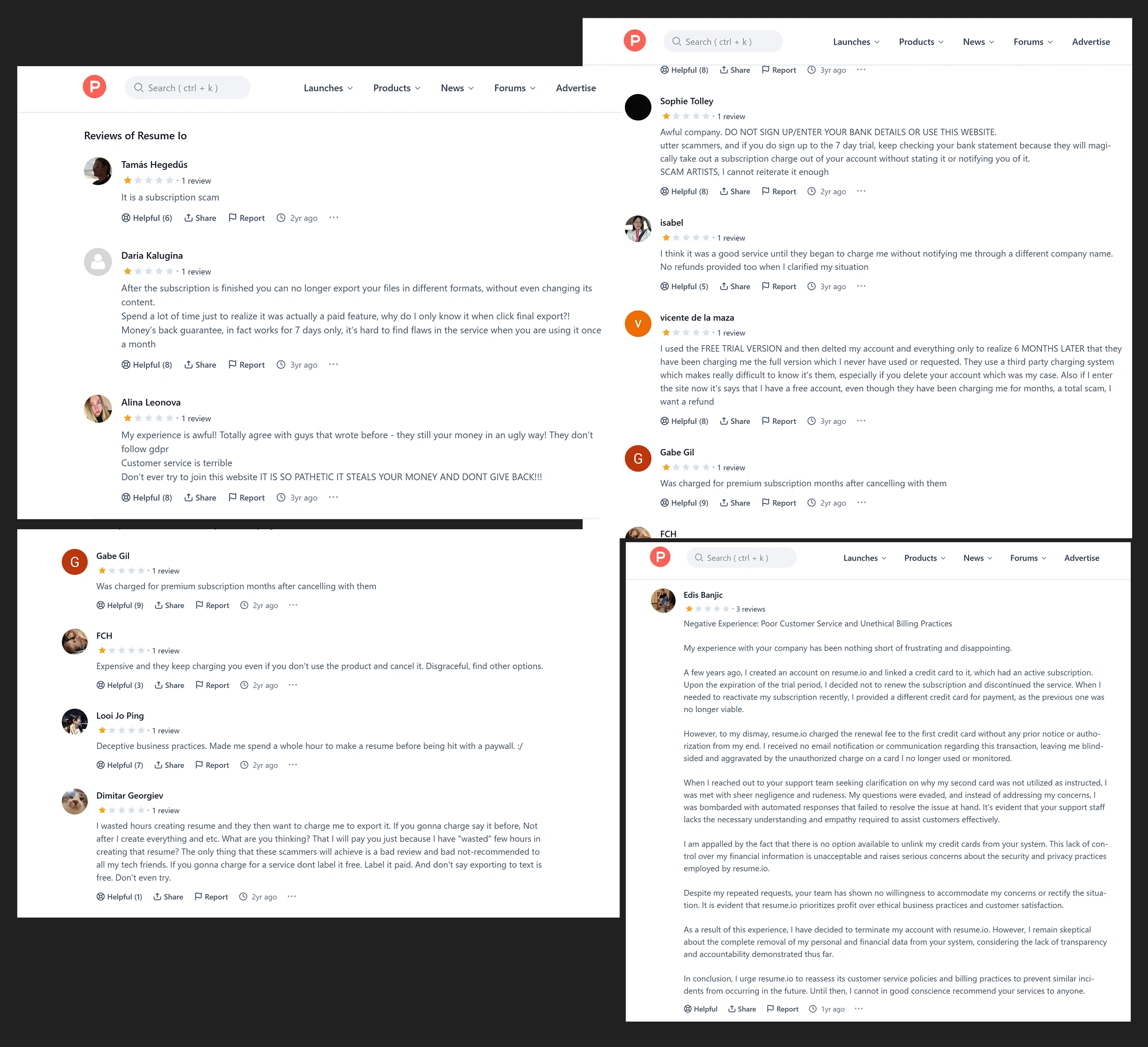
Resume.io Users Reviews (Product Hunt)
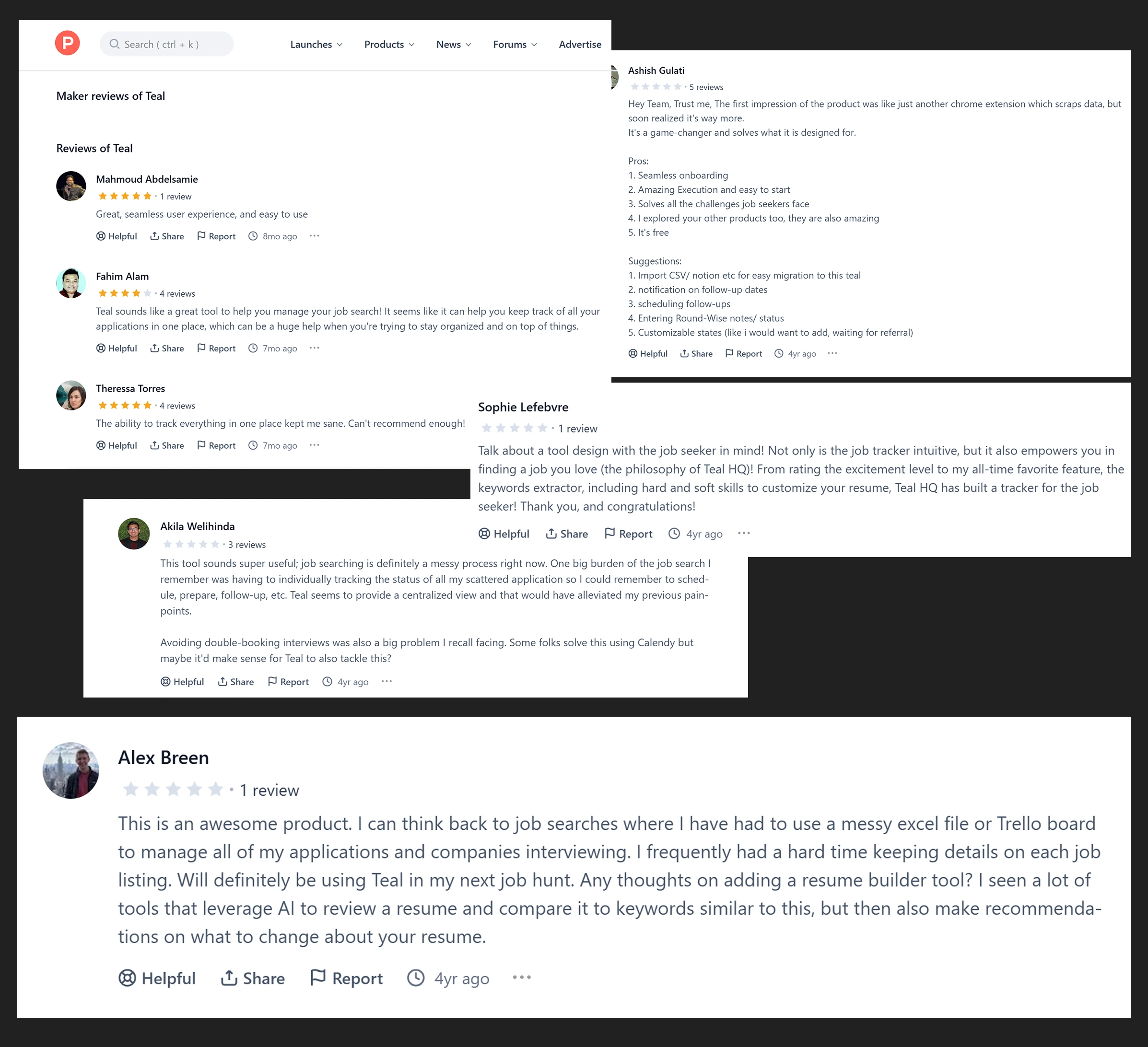
Teal HQ Users Reviews (Product Hunt)
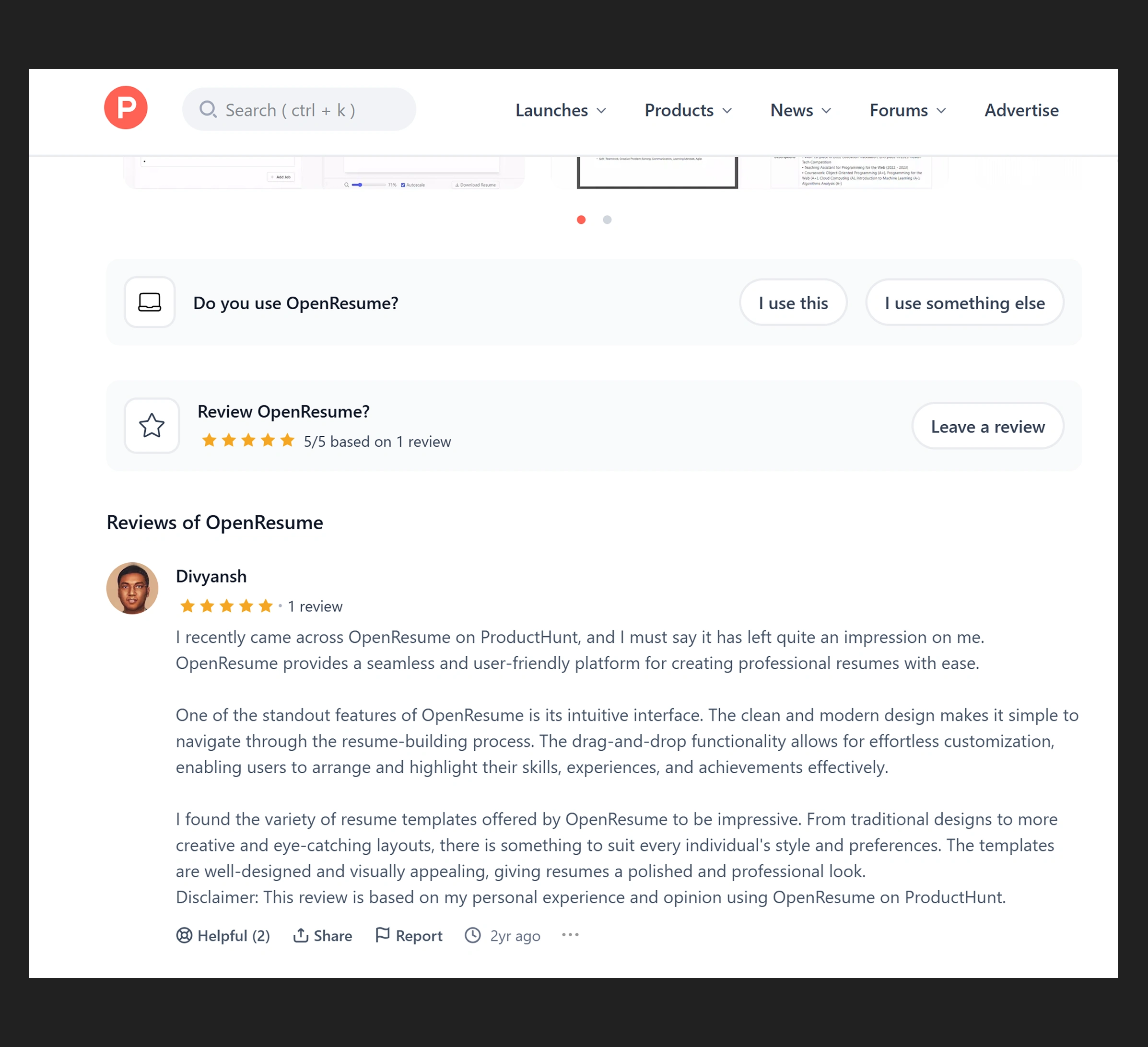
OpenResume Users Reviews (Product Hunt)
Wireframing & Ideation
I sketched initial concepts on paper and quickly moved into low-fidelity wireframes in Figma, covering onboarding, resume optimization, and cover letter generation flows. These were reviewed with stakeholders and tested with early users.
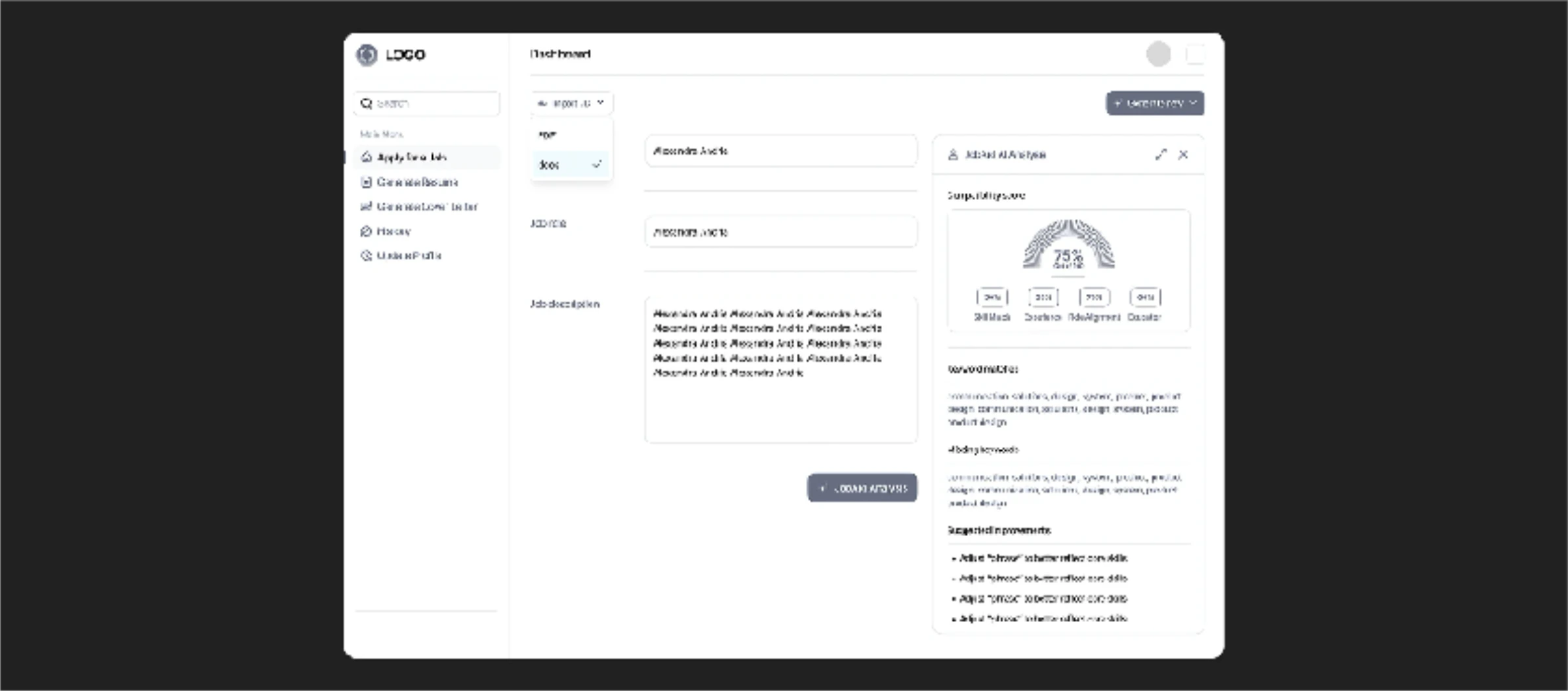
Low-Fidelity Wireframe of Analysis Screen
Information Architecture
I structured the application around four key flows:
Resume Upload & Analysis
Job Description Matching
Cover Letter Generation
AI-Driven Job Application (coming soon)
I wrote out individual flows and used AI to combine and come up with a general visual representation of the Information Architecture.

Information Architecture
Branding & Visual Design
Brand Identity I directed the visual identity to feel intelligent, trustworthy, and approachable; avoiding the overly corporate aesthetic of many job platforms.
JobAid AI was designed to evoke trust, professionalism, and innovation, which are the key values for a platform that handles sensitive career data and personal growth.
UI Elements
A clean, modular layout for readability
Contextual guidance for users as they edit
Clear success states to boost user confidence
Accessibility-focused color contrast and typography
Brand Logo Icon
Brand Logo
Color & Typography:
Primary Colors:
#00237A (Oxford Blue): Represents authority, intelligence, and reliability. This anchors the brand in a serious, professional tone which we thought is perfect for career-building.
#3C9EDB (Skye Blue): Adds freshness, modernity, and a sense of optimism. It gives the brand a tech-forward and friendly edge, counterbalancing the seriousness of the navy.
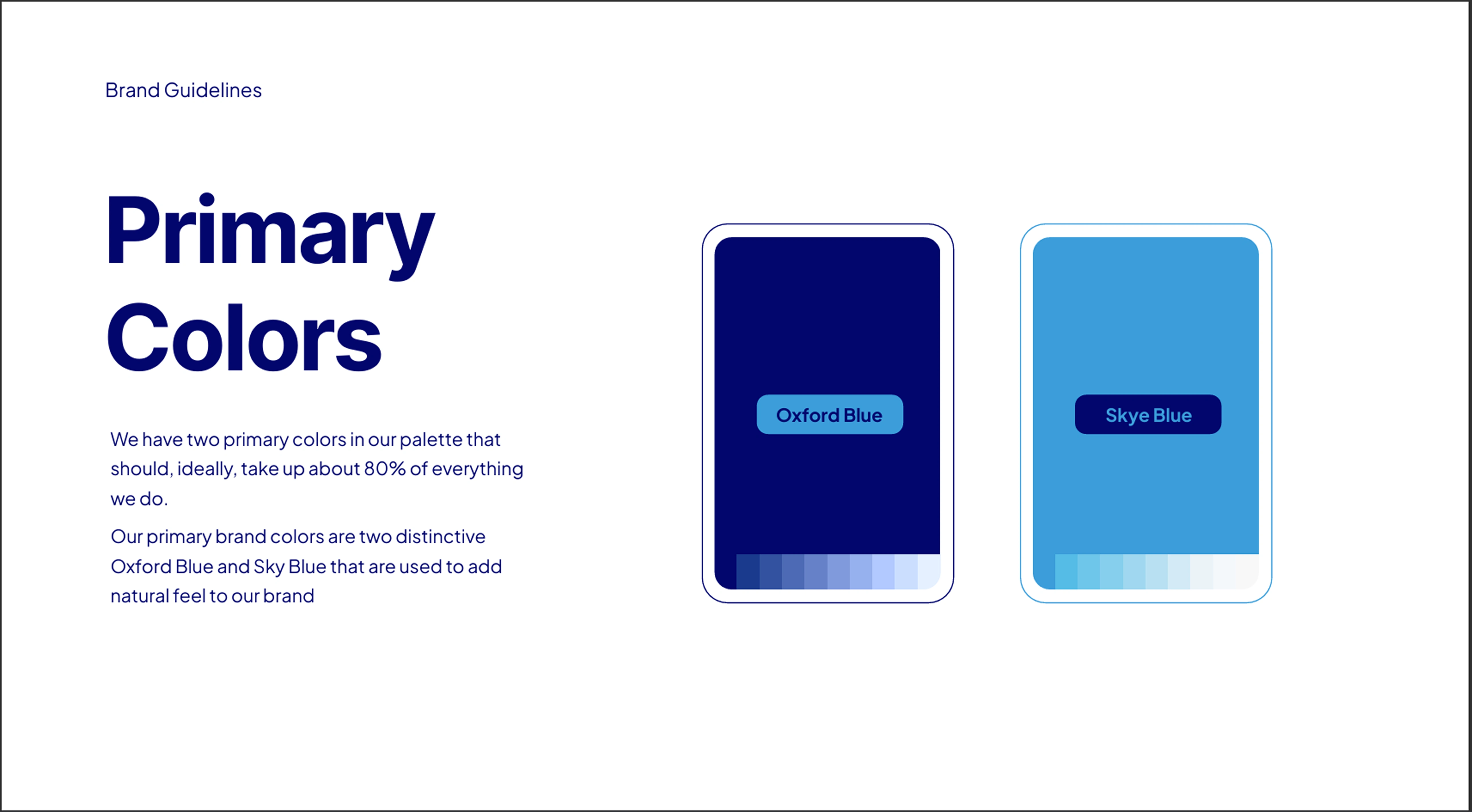
Primary Colors
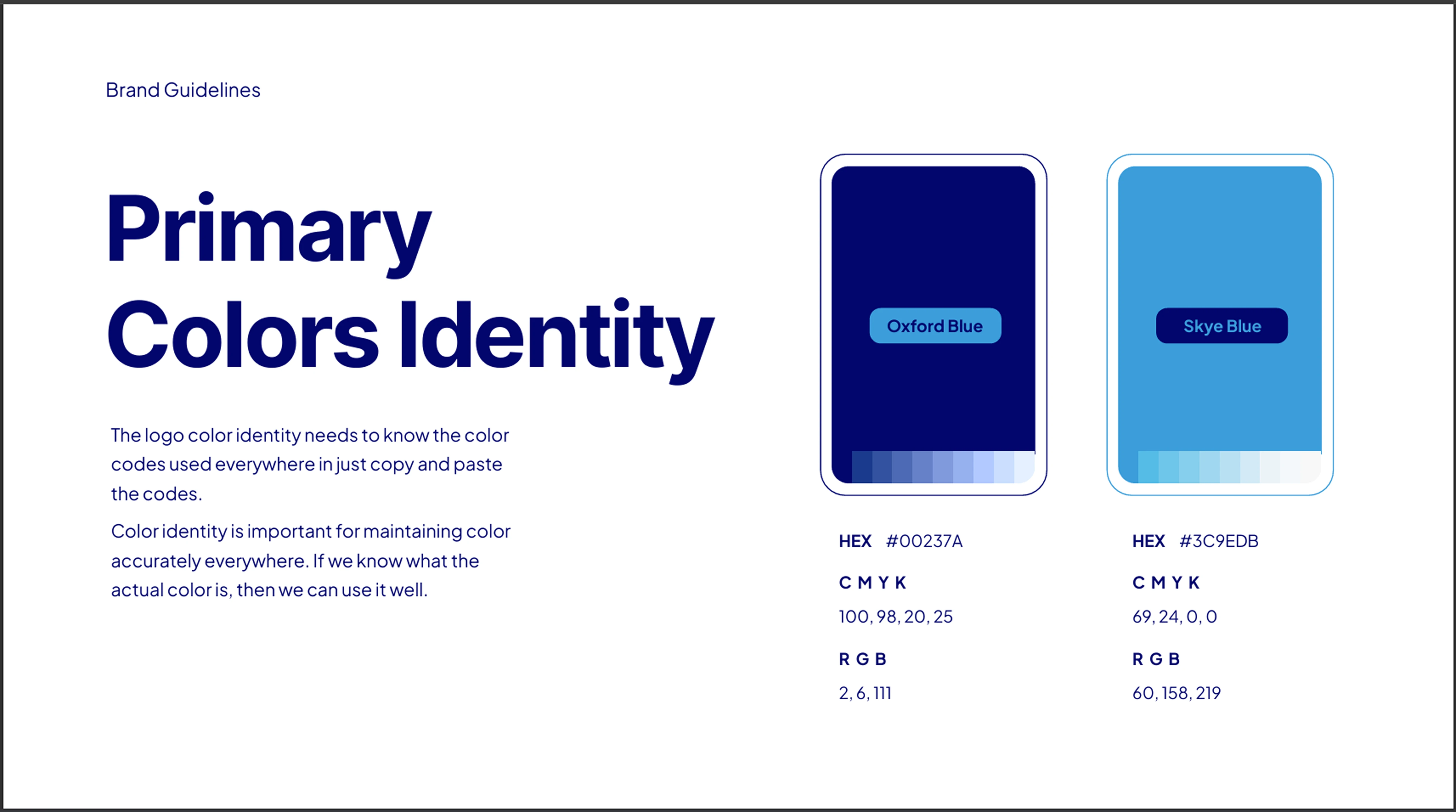
Primary Colors Identity
Typeface
Inter Tight: Sleek, space-efficient, and highly legible, ideal for dashboard-heavy interfaces and compact info layouts.
Plus Jakarta Sans: Rounded yet modern which gives the brand a slightly approachable, human feel without sacrificing clarity.
This combination was chosen to reflect the dual nature of JobAid AI: serious and reliable, yet innovative and supportive.
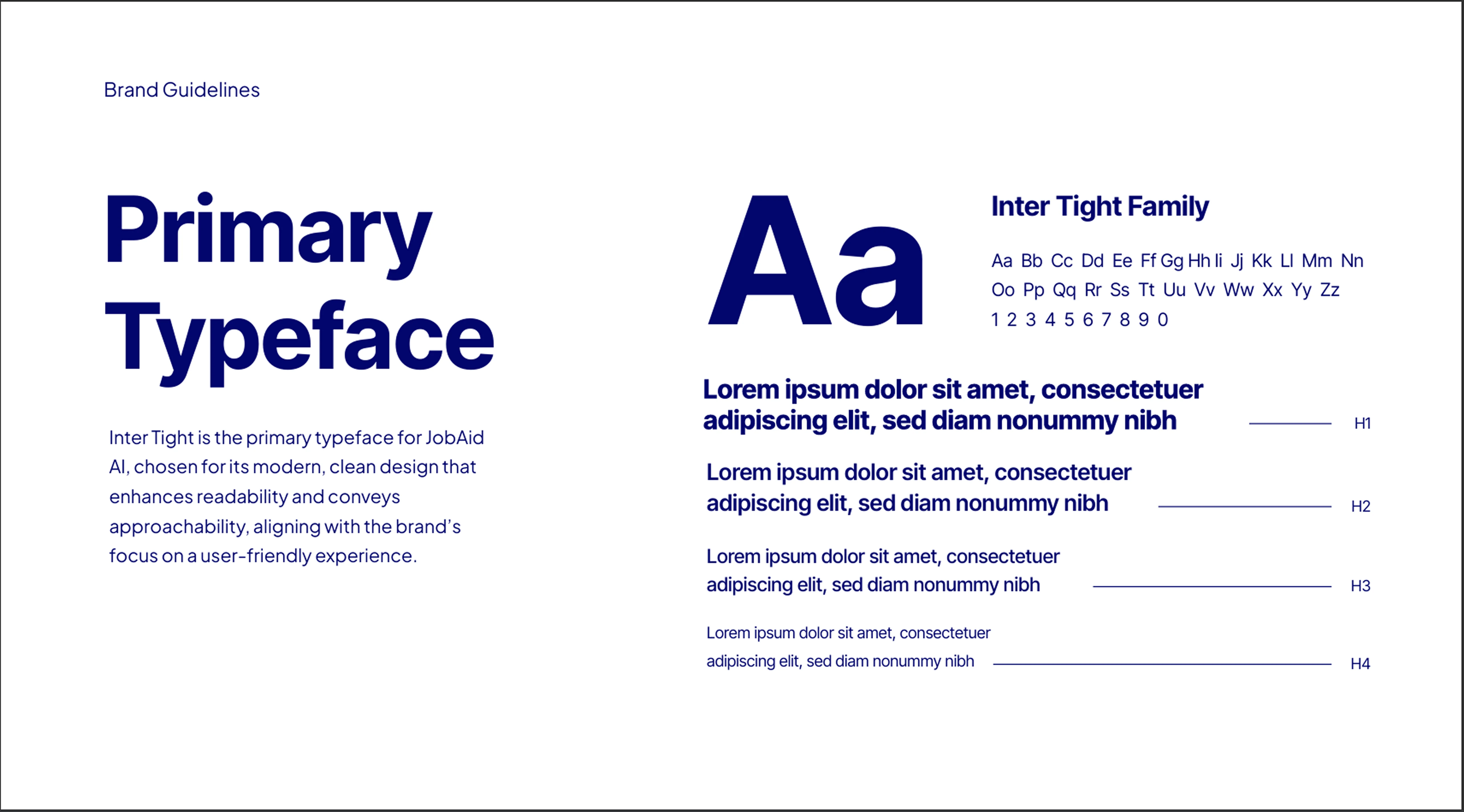
Primary Typeface
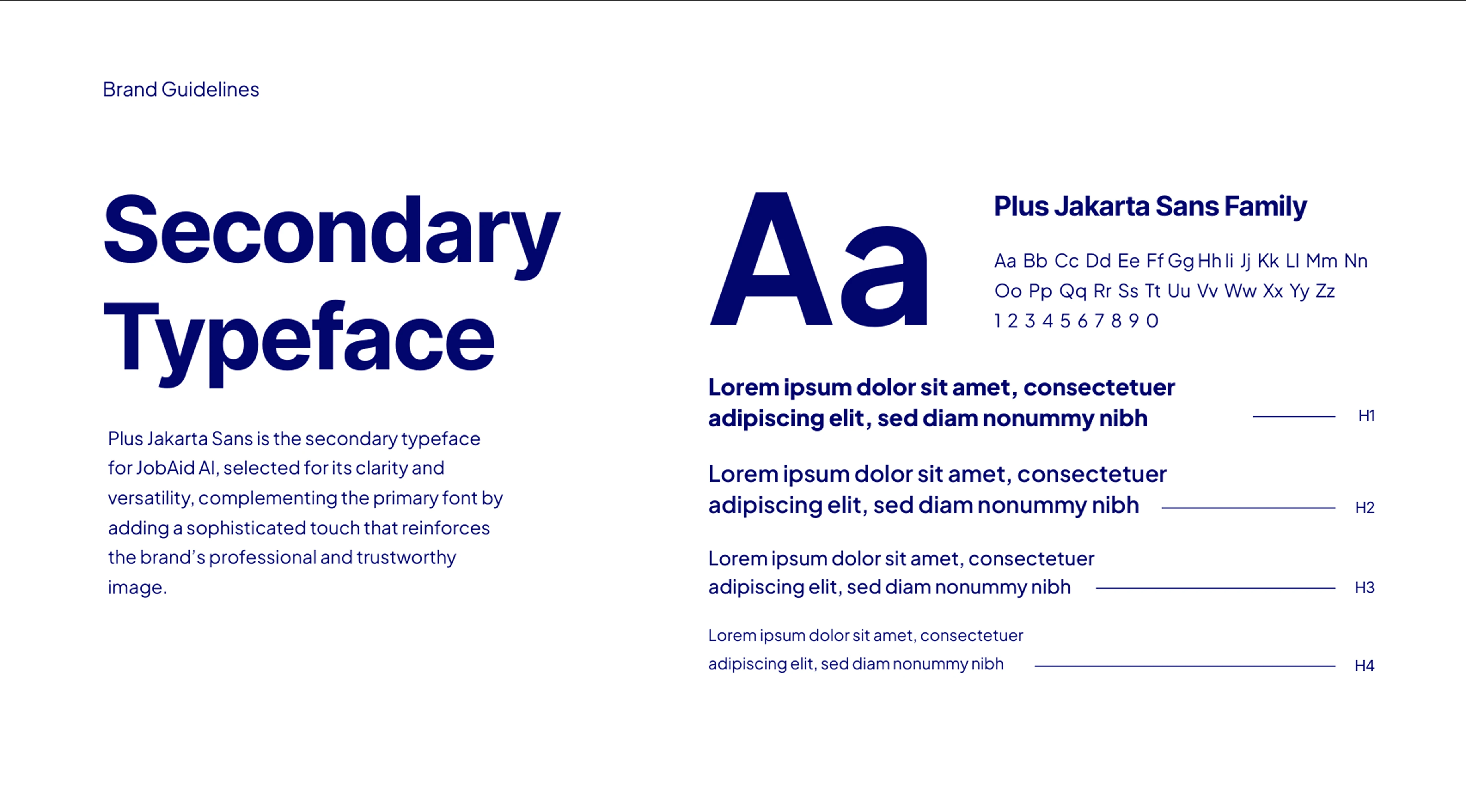
Secondary Typeface
Design Execution
JobAid AI was envisioned as a seamless, AI-powered ecosystem that supports job seekers across various touchpoints:
Web Application: The core platform where users upload resumes, generate AI-enhanced cover letters, and manage application documents.
Chrome Extension: Allows users to optimize job listings on the fly, directly from job boards.
Marketing Website: Introduces the product, shares use cases, and allows user onboarding via free trials.
What ties the ecosystem together is its document intelligence pipeline — once a resume is uploaded, every other interaction is informed by that document. AI models pre-fill fields, suggest edits, and personalize content. The UX journey remains consistent: minimal friction, fast feedback, and clearly defined outcomes.
Landing Page Prototype
Job Analysis Prototype
Prototyping & Usability Testing
Prototypes were built and tested in Figma with 12 early access users. The testing covered key flows:
Resume upload and analysis
Cover letter generation
Document revision history
Onboarding
Key findings and improvements:
Users loved the auto-fill feature but wanted more control soI added a manual-fill option.
The resume analysis scores were unclear, so I redesigned the feedback layout for better clarity and breakdown.
Some users felt the onboarding was too long and overwhelming, so I streamilined the process by shortening the flow.
Each round of testing brought measurable improvements in task completion time and user satisfaction.
Challenges & Solutions
Challenge 1: Simplifying complex AI interactions for non-technical users
Many users were new to AI-powered tools and didn’t fully understand how their input data was being analyzed or scored. Our goal was to offer an intelligent system without overwhelming users with technical jargon or rigid flows.
Solution:
We approached this by designing a clean, conversational interface that guides users step-by-step through uploading their resumes or job links. We replaced complex configuration options with intuitive toggles and smart defaults. Informational tooltips were added at critical points to explain the “why” behind our suggestions without requiring additional user effort. This struck a balance between transparency and simplicity.
Challenge 2: Optimizing AI prompt engineering for accurate, relevant suggestions
To make JobAid AI genuinely useful, the AI had to not only analyze documents effectively but also generate tailored suggestions for improvement. Initial testing revealed that some outputs were too generic or missed contextual cues from the job descriptions.
Solution:
We invested time in refining our prompt structures, feeding the AI large sets of annotated CVs and job descriptions across different roles and industries. By fine-tuning prompts and layering contextual understanding, we boosted the relevance of AI-generated insights. This work helped us achieve an impressive 95% accuracy rate in analysis and recommendations, ensuring users felt like they were getting expert-level guidance.
Conclusion
JobAid AI pushed the boundaries of what job seekers can expect from digital tools. By combining intelligent document parsing, adaptive design, and user-driven improvements, we created a platform that’s not only useful, but empowering.
This case study reflects my ability to lead full-cycle product design, integrate with AI capabilities, and turn complex workflows into clean, approachable experiences. I'm proud of how JobAid AI came to life and even prouder of how it’s helping real people unlock better career opportunities.
Like this project
Posted Jun 26, 2025
Designed JobAid AI, an AI-powered job application tool that improves job applications and increases the chances of job seekers by 40%