Restaurant & Bar Landing Pages | Digital Design Collection

Georgia Tsiouli

Restaurant & Bar Landing Pages | Digital Design Collection
Designed and developed a commercial collection of fully live landing pages for hospitality venues — restaurants, bars, cafes, and bistros — spanning nine distinct visual identities. Each page is a complete, deployable digital presence: not a wireframe or prototype, but a working product that venue owners can use immediately.
Live Links
Background
Years of working in the hospitality industry shaped a clear understanding of what these businesses actually need from a digital presence. Most venues — especially independent ones — are run by people whose expertise is in food, drink, and service, not in briefing designers or managing web projects. They need something that feels high-end, communicates the right atmosphere instantly, and gets visitors to act (book a table, view the menu, find the address) — all without the cost or timeline of a bespoke build.
This collection was built to fill that gap: a range of production-ready designs, each one rooted in a specific venue type and visual identity, that can be adopted and adapted without starting from zero.Each page was designed in Figma with a focus on atmosphere and conversion: communicating the venue's personality at a glance while guiding visitors toward a reservation, menu view, or contact. Typography, color, and layout were all tailored to the type of venue — a fine dining landing page reads very differently from a neighborhood bar's.
Design Philosophy
The central tension in hospitality design is atmosphere versus function. A landing page for a fine dining restaurant has to feel considered and unhurried — the wrong typeface or a pushy CTA can undermine the entire brand impression before the visitor has read a word. A street food venue, on the other hand, needs energy and immediacy; restraint reads as cold.
Every page in this collection was approached with that tension front of mind. The question was never just "does this look good?" but "does this look like this place?" Each design decision — typography, color palette, image treatment, layout density — was made in service of a specific kind of guest and a specific kind of venue.
The Collection: Style Breakdown
Fine Dining
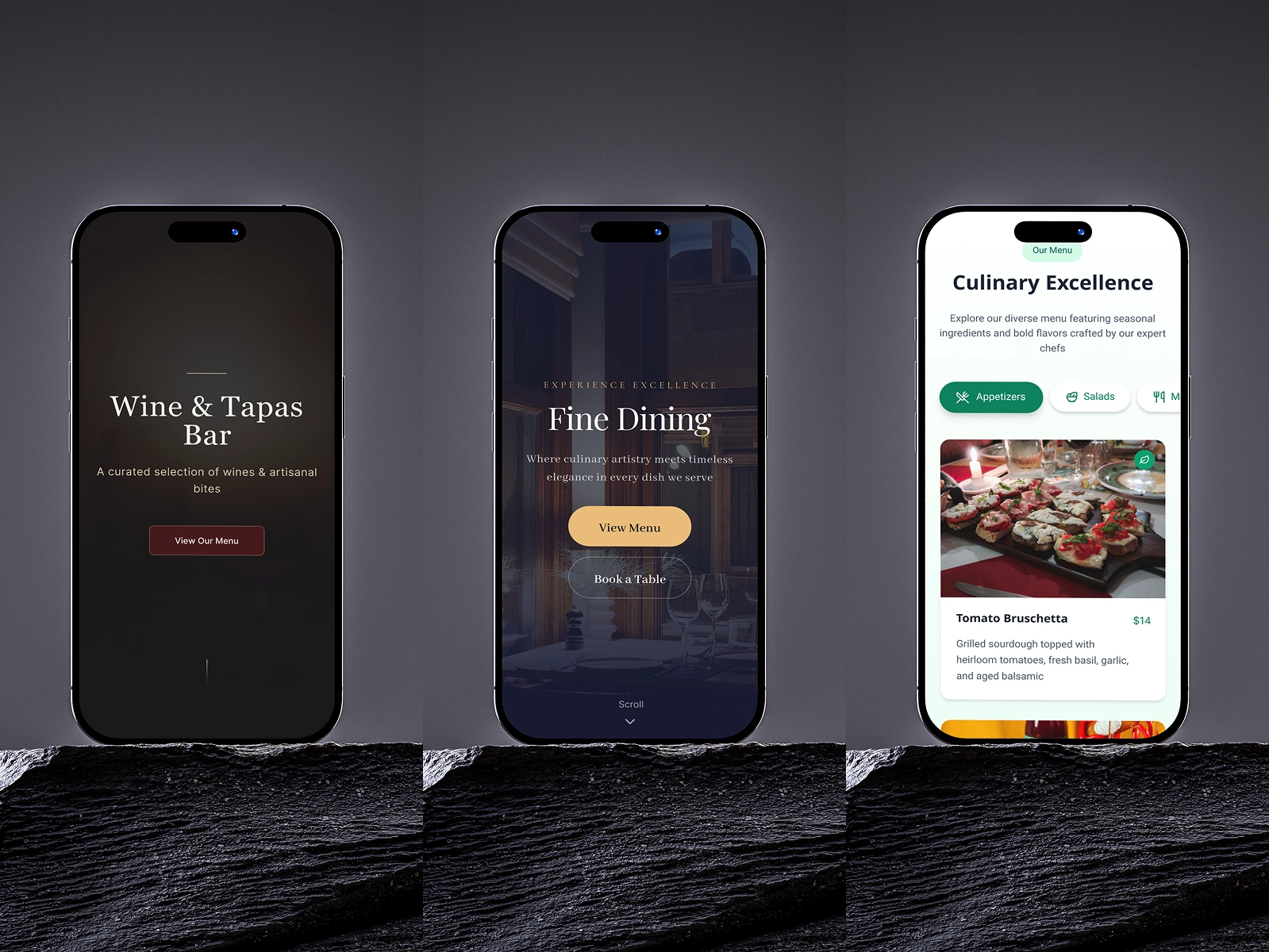
Clean, controlled, and typographically led. Dark backgrounds with gold or cream accents communicate luxury without being decorative. Copy is sparse; white space does the heavy lifting. The CTA is a single, calm "Book a Table" — no competing elements. This template suits tasting-menu restaurants, wine bars with a kitchen, or any venue where the brand rests on understatement.
Scandinavian Café (Lilla Kaféet)
Light, warm, and textural. The palette pulls from natural materials — off-whites, warm greys, muted greens — and the typography feels handpicked rather than systemized. The layout is unhurried, with enough breathing room to suggest a place where you'd linger over a second coffee. Suited to specialty coffee shops, small brunch spots, and Nordic-influenced cafés.
Wine & Tapas Bar
Mediterranean warmth with a contemporary edge. The design references the visual culture of wine and produce — earthy tones, tactile textures — without leaning into cliché. Layout draws the eye across multiple menu categories (wine, small plates, charcuterie) without feeling cluttered. Suited to intimate bars with rotating seasonal menus.
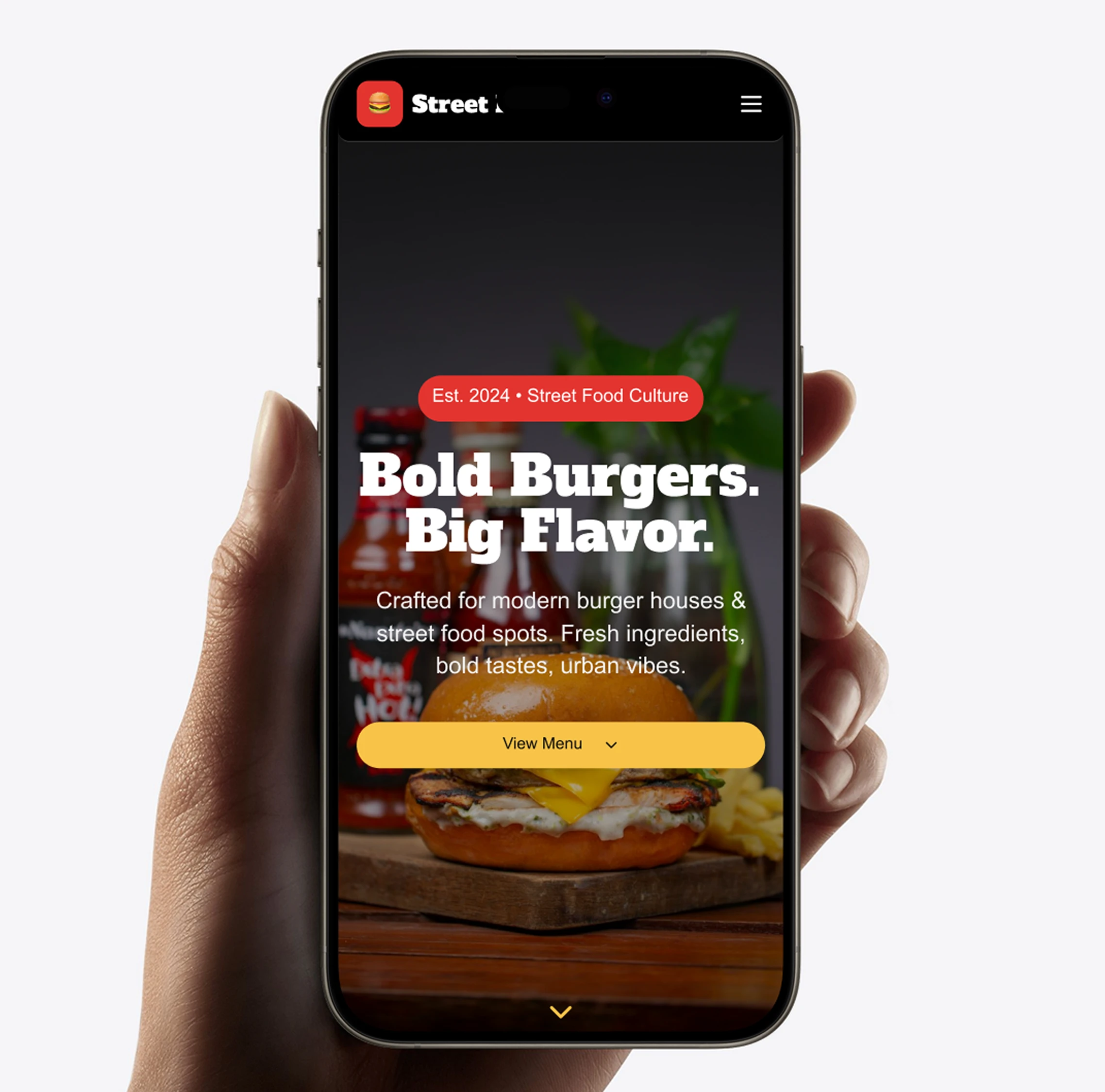
Burger & Street Food
Bold and high-contrast. The design leans fully into energy: oversized type, punchy color (black, yellow, red), full-bleed food photography. There's no subtlety — and that's the point. Visitors understand within seconds what kind of place this is and what they should order. Suited to burger joints, street food stalls, and fast-casual concepts.
Urban Brew & Co
Industrial warmth. Craft beer culture has a strong visual language — exposed materials, utilitarian type, a sense of handmade authenticity — and this template speaks it fluently. The layout is relaxed, designed to communicate a space you'd want to spend an evening in, not just pass through. Suited to craft breweries, taprooms, and neighborhood bars.
Modern Bistro
Versatile and polished. A middle ground between fine dining and casual — clean lines, confident typography, a palette that reads as contemporary without chasing trends. This is the everyday restaurant template: good food, good service, no pretension. Suited to neighbourhood bistros, modern European restaurants, and mid-range dining venues.
Luna Cafe Bar
Evening-forward. The design shifts the mood toward the bar side of a hybrid café-bar concept — darker palette, moodier photography, a layout that suggests a good cocktail list alongside the food menu. Suited to all-day venues that transition into a bar atmosphere at night.
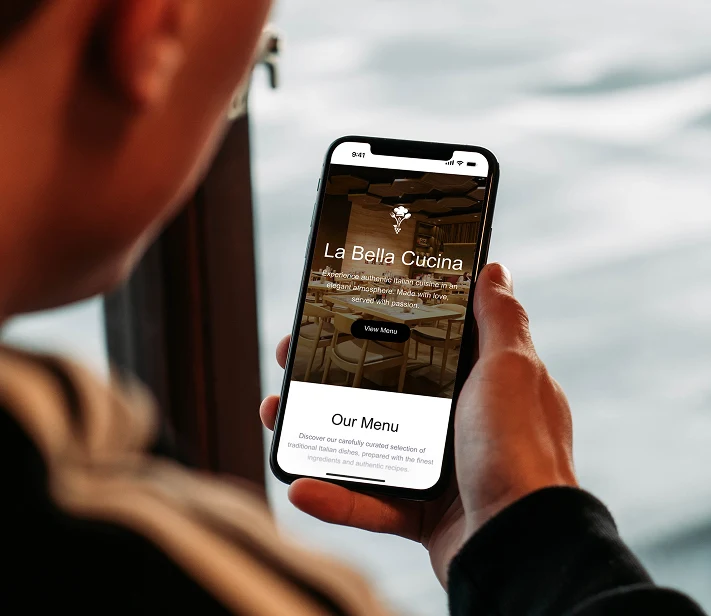
La Bella Cucina
Italian warmth and tradition. Classic typographic choices (serif headings, generous leading) sit alongside rich food photography and a palette drawn from Italian visual culture — deep reds, creams, olive tones. The layout prioritises the menu and the story of the kitchen. Suited to Italian restaurants, trattorias, and family-run dining venues.
Oasis Bar
Escape and leisure. A lighter, almost resort-inflected palette — whites, soft blues, warm sand — gives this template a sense of ease and retreat. Suited to rooftop bars, beach clubs, garden terraces, and venues where the atmosphere is as much of the product as the drinks.
What This Collection Offers
Range without compromise. Nine distinct visual identities means a buyer is unlikely to need a fully custom brief — there's almost certainly a template here that fits their venue type. But range alone isn't enough. Each template was built to the same standard of craft and attention as a bespoke project would be.
Speed to launch. A venue owner with no design background can take one of these templates and be live quickly. The design work — the hardest, most time-consuming part — is already done.
Hospitality-native design thinking. These templates weren't designed by generalising "what a restaurant website looks like." They were designed by someone who has worked in and around hospitality for years, with a real understanding of how these venues operate, what their guests expect, and what a digital presence actually needs to do for the business.
Like this project
Posted Mar 24, 2026
Designed and developed a commercial collection of fully live landing pages for hospitality venues - restaurants, bars, cafes, and bistros.
Likes
0
Views
22
Timeline
Oct 1, 2025 - Jan 15, 2026