Restaurant Menu Design Templates | Print Collection

Georgia Tsiouli

Restaurant Menu Design Templates | Print Collection
Project Details
A commercial collection of 20+ print-ready menu templates for restaurants, cafes, and bars — each one designed to reflect a specific venue type, visual identity, and atmosphere, and built to production standards from the first file.
Background
A menu is one of the most tactile touchpoints a venue has with its guests. It arrives at the table before the food, before the conversation really starts — and it sets the tone for the entire experience. A poorly designed menu undermines even a well-run kitchen. A thoughtful one reinforces exactly what the venue wants the guest to feel.
Most independent hospitality businesses face the same dilemma: commissioning a custom-designed menu is expensive and time-consuming, but generic templates look exactly like what they are. This collection was built as a third option — professionally designed, visually distinct, and specific enough to each style of venue that it doesn't feel like a compromise.
Years of working in and around the hospitality industry informed every decision here. Not just what looks good, but what actually functions in a real dining context — how guests scan a menu, how hierarchy guides ordering decisions, how the physical object should feel in hand.
Design Philosophy
Print design for menus operates under constraints that digital work doesn't. A menu is a physical object read at arm's length, often in low light, by someone who is already in a social situation and not fully concentrating. Legibility is non-negotiable — but it has to coexist with atmosphere, personality, and brand.
The central design challenge across this collection was maintaining that balance at scale: more than 20 distinct templates, each serving a different venue type and aesthetic, while meeting the same rigorous standard of craft and usability across all of them.
Several principles guided the work throughout:
Hierarchy over decoration. Every template organises information so guests can navigate it naturally — from category to dish to price — without thinking about how the menu works. Decorative elements serve the mood; they never obscure the information.
Typography as identity. Rather than relying on heavy illustration or complex layouts, each template uses typeface selection, weight, scale, and spacing as the primary carriers of personality. This makes the designs more adaptable and ensures they hold up cleanly at print scale.
Venue-native visual language. Each design was approached by asking: what does a guest already expect from this kind of place, and how does the design confirm or elevate that? A sushi bar menu, a botanical garden café menu, and a cocktail bar menu all have very different visual languages — and each template speaks that language rather than approximating it.
The Collection: Style Breakdown
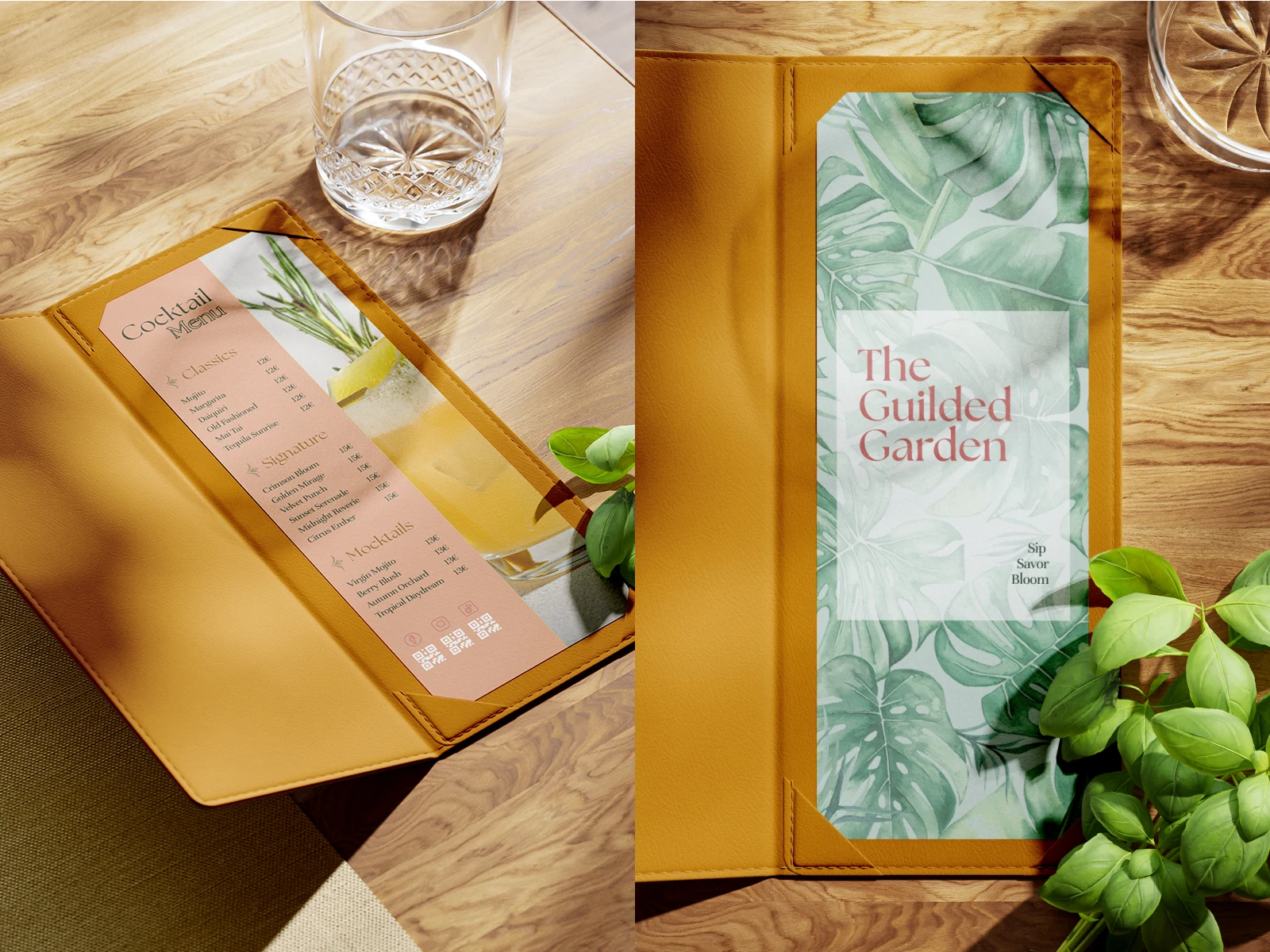
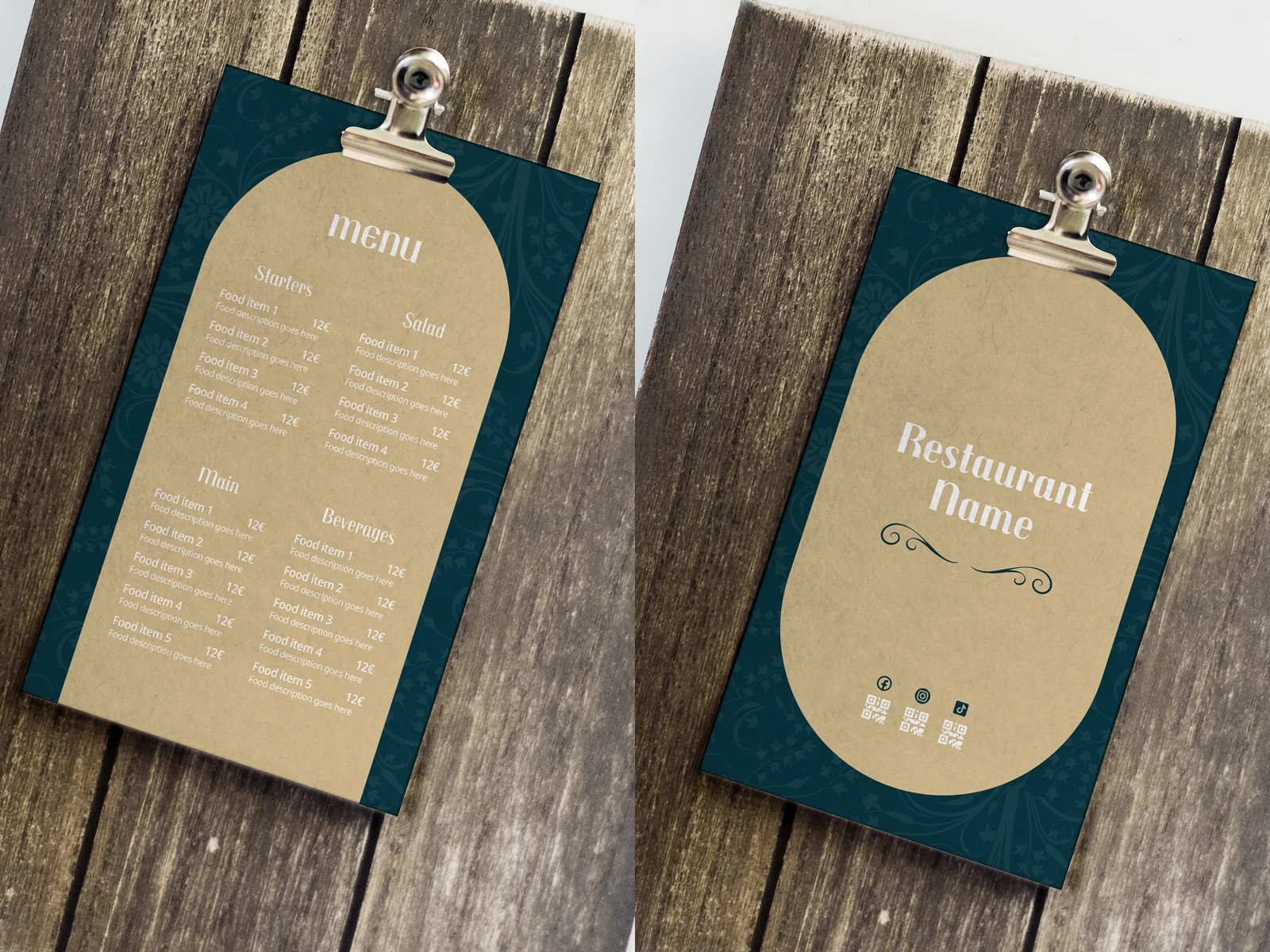
Botanical & Garden (The Guilded Garden)
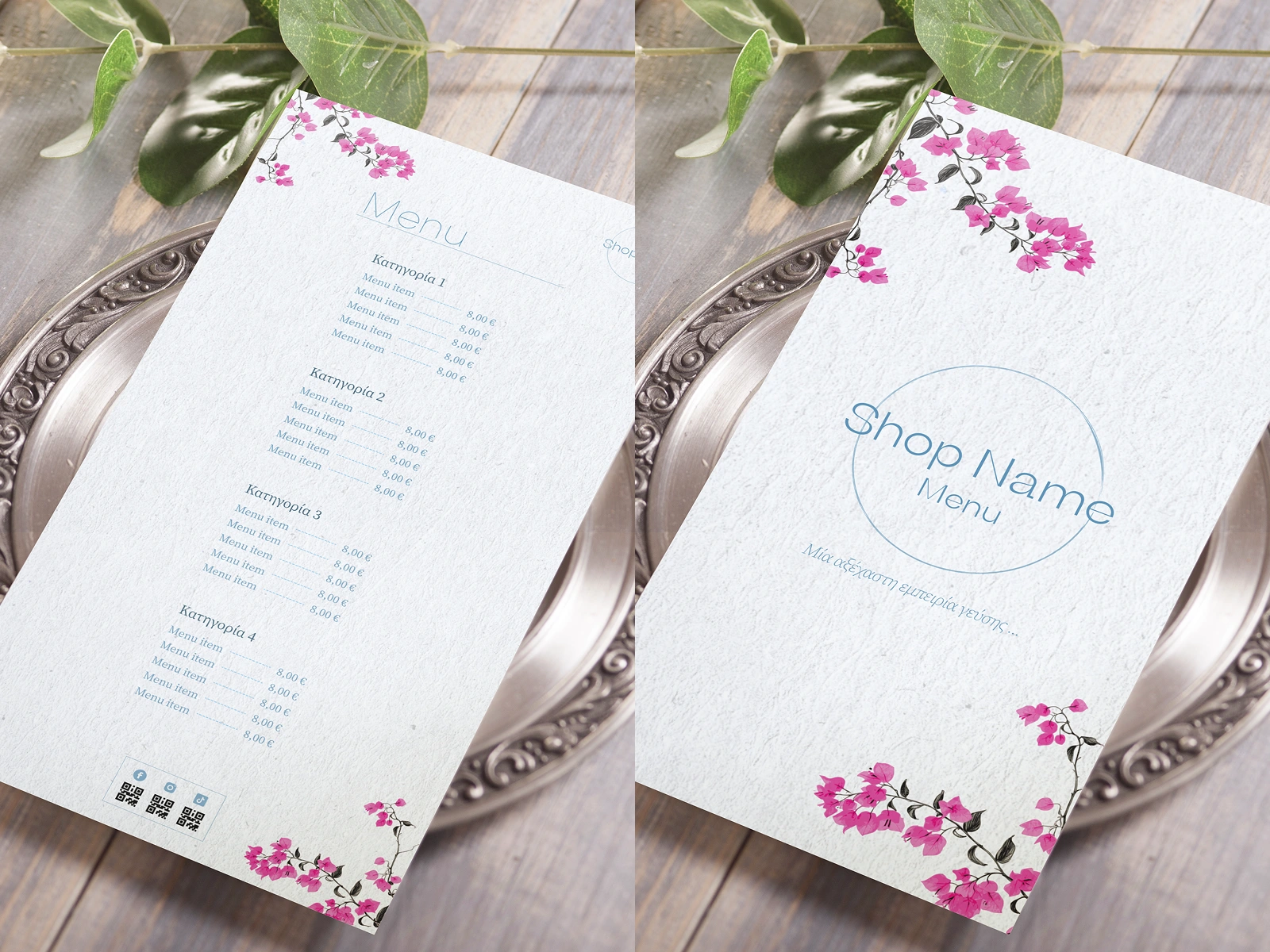
Delicate floral illustration, warm cream stock, handwritten-style typography. This template suits venues with a garden, terrace, or natural-ingredient focus — afternoon tea rooms, farm-to-table restaurants, floral cafés. The illustration work is subtle enough to frame the menu content without competing with it, and the overall effect is warm, considered, and slightly romantic.
Fine Dining & Tasting Menu
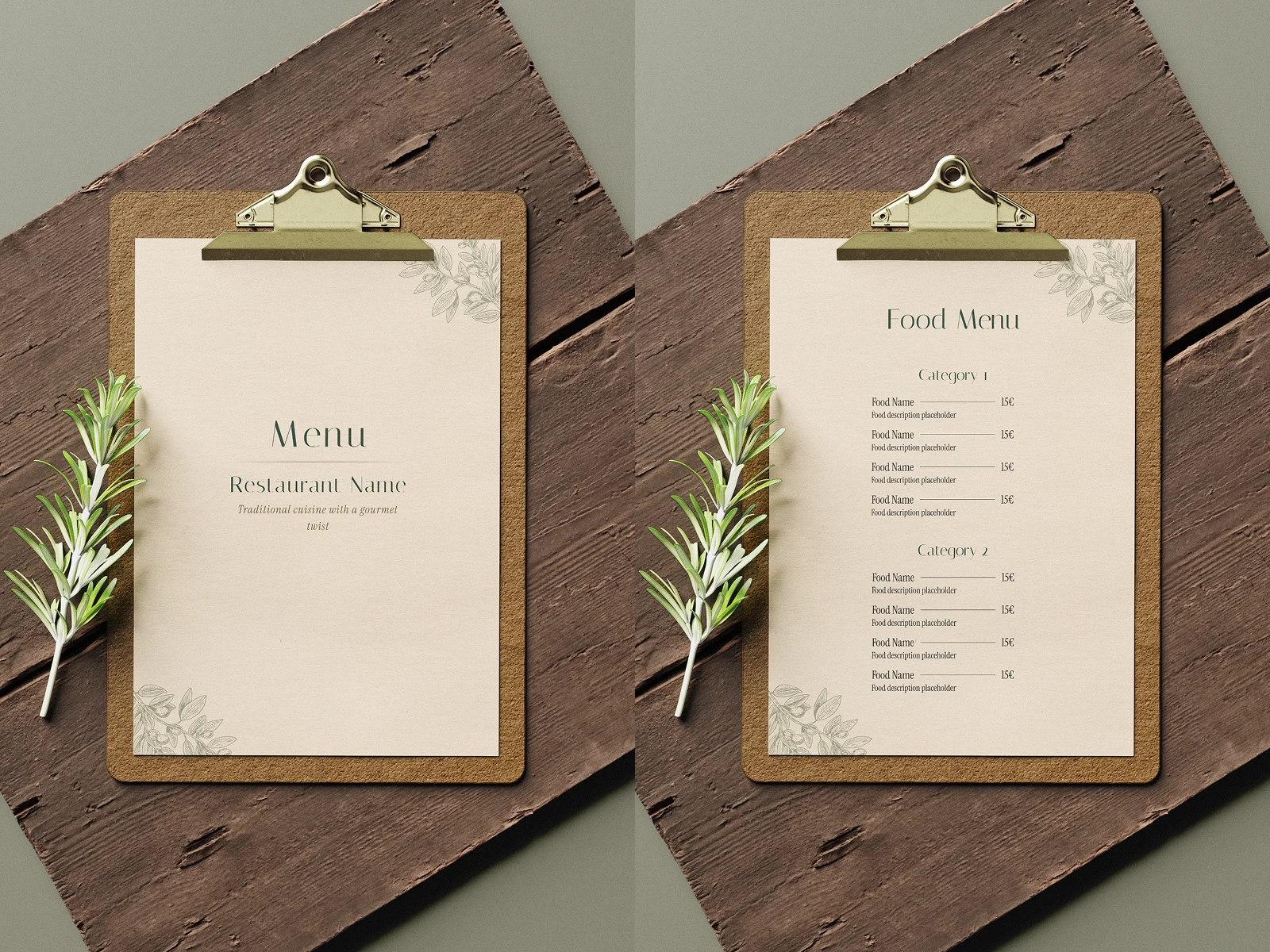
Minimal and typographically precise. A restrained palette — typically deep green or black on cream — with generous white space and a serif type system that reads as confident rather than fussy. Designed for venues where the menu itself is part of the ritual: tasting menus, chef's tables, wine-pairing dinners. Every element earns its place.
Casual & All-Day Café
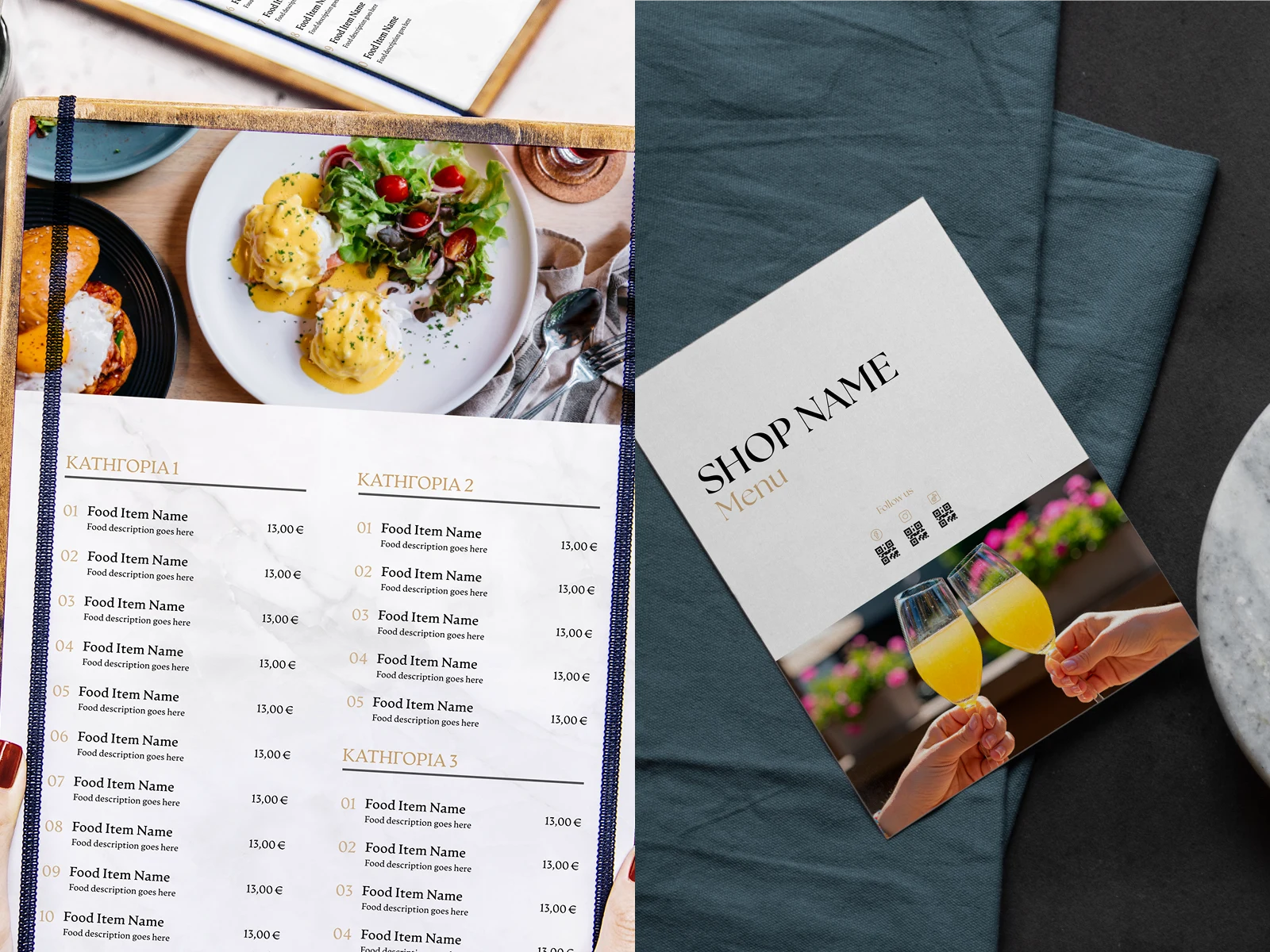
Clean, approachable, and practical. Multiple columns, clear category structure, and typography that's warm without being informal. Suited to brunch spots, neighbourhood cafés, and all-day dining venues where the menu needs to carry a lot of information without feeling overwhelming. The design communicates ease and familiarity.
Cocktail Bar & Drinks Menu
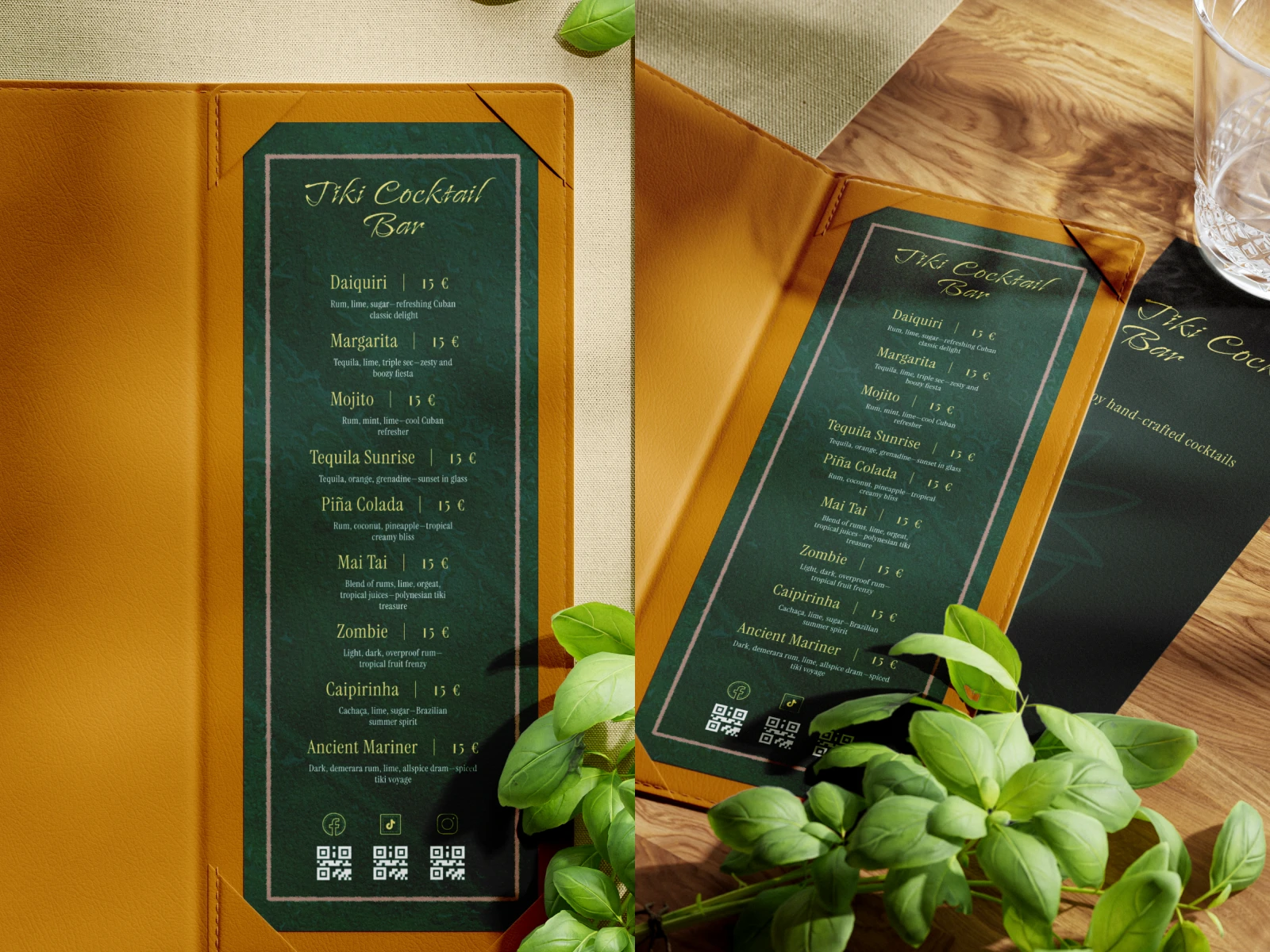
Atmospheric and editorial. Dark backgrounds, considered use of negative space, and type treatments that feel closer to editorial design than traditional menu layouts. A cocktail list is as much about storytelling — provenance of spirits, the character of a drink — as it is about information, and the design reflects that. Suited to independent cocktail bars, speakeasies, and venues with a serious drinks programme.
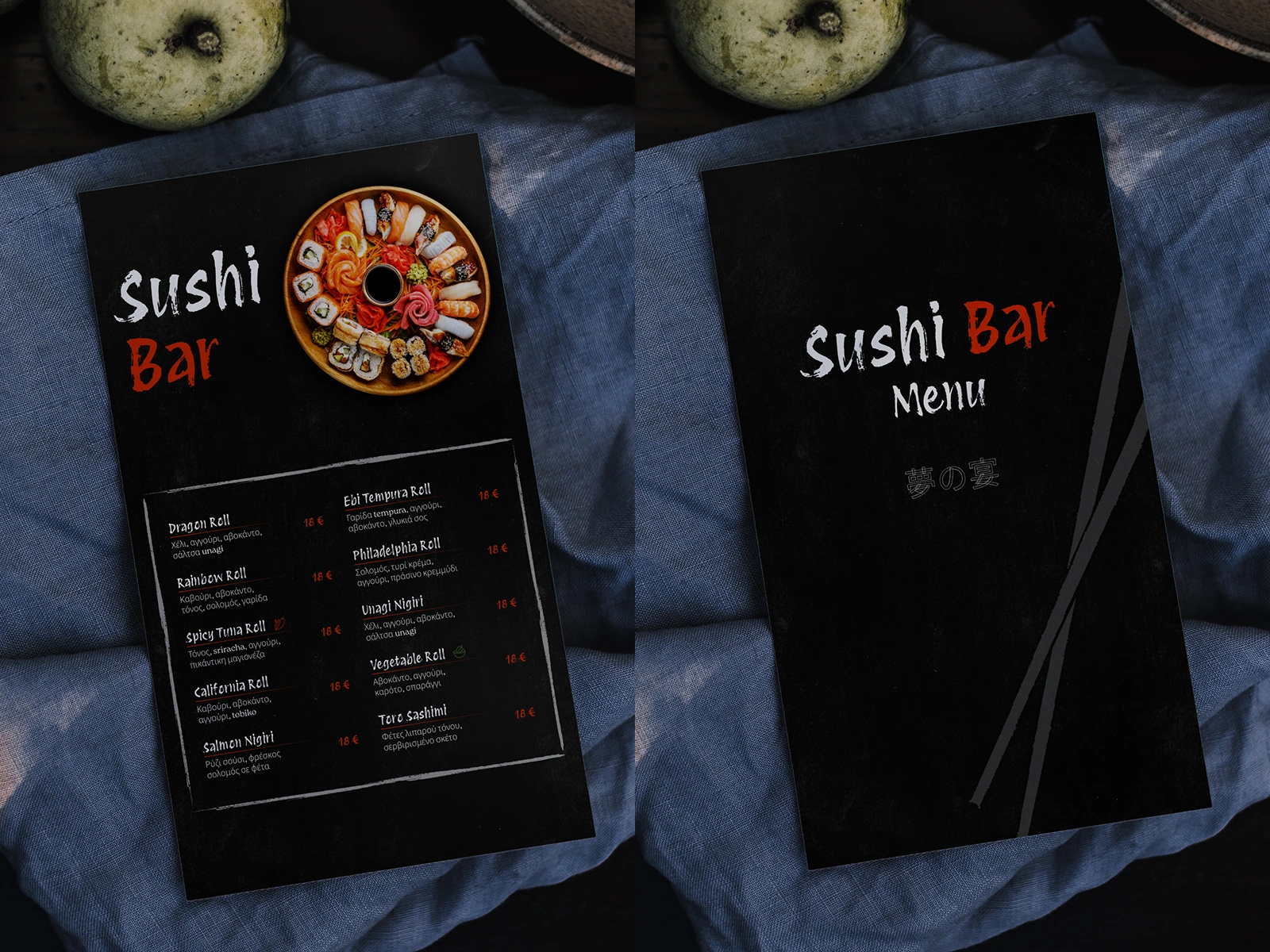
Japanese & Sushi
Restrained and precise, drawing on Japanese visual culture without resorting to cliché. Clean grid, careful typographic contrast between English and Japanese script (where applicable), and a palette that communicates freshness and care. Suited to sushi restaurants, izakayas, and modern Japanese concepts.
Upscale Bistro & Brasserie
A middle register — more relaxed than fine dining, more considered than casual. Classic structure, confident serif typography, and a layout that feels established rather than trendy. This template suits venues that want to communicate quality and consistency over novelty: bistros, brasseries, and neighbourhood restaurants with a serious kitchen.
Mediterranean & Italian
Warm, generous, and textural. The layout reflects the abundance of Mediterranean food culture — multiple courses, shared plates, generous portions — and the typography leans classic without being stiff. Earthy tones, occasional ornamental detail, and a sense of conviviality. Suited to Italian restaurants, Greek tavernas, and Mediterranean dining broadly.
Street Food & Fast Casual
High contrast, bold type, direct. This template isn't trying to be subtle — it's communicating speed, flavour, and accessibility. Large category headers, simple price formatting, and a palette that pops. Suited to street food stalls, fast-casual counters, and venues where the menu doubles as a menu board.
Technical Execution
Every file in the collection was built in Figma with print production requirements built in from the start — not added at the end. That means correct bleeds and safe zones on every template, CMYK-aligned colour palettes, and typography scaled and spaced for physical output rather than screen resolution.
Print design punishes shortcuts that digital work can absorb. A typeface that looks fine on a screen can become unreadable at A4 or A5 when printed on textured stock. A background colour that appears balanced on screen can print significantly darker. All templates were designed with these physical realities accounted for — tested at output scale, not just in the Figma canvas.
The collection was structured as a design system in parallel with a product range: shared layout grids, typographic scales, and spacing logic across all 20+ templates, which made it possible to maintain quality consistency without the templates looking like variations of one another. Each feels like its own design; the system is invisible.
Each file is delivered ready for a commercial printer or a local print-on-demand service — no additional production work required. Buyers receive files they can take directly to print.
What This Collection Offers
A professional result without a bespoke process. The design thinking behind each template is the same as a commissioned project — venue-specific, detail-driven, built to last — but the buyer gets it immediately, without a brief, a discovery process, or a round of revisions.
Variety that reflects real hospitality. The collection doesn't default to a single "restaurant aesthetic." It covers the actual range of venues operating in the market — from a sushi counter to a garden tearoom to a cocktail bar — because hospitality is genuinely diverse, and templates should be too.
Production quality from the first file. Because this collection was designed to be sold and used commercially, every template had to be good enough to stand on its own without further refinement. That standard — the standard of work you'd send to print — is built into the collection rather than left to the buyer.
Rooted in real hospitality knowledge. The decisions in these templates — how to structure a tasting menu, how much information a cocktail list should carry, how a fast-casual menu needs to communicate differently from a fine dining one — come from direct experience in the industry. That knowledge doesn't show up as a design feature. It shows up as designs that actually work.
Like this project
Posted Mar 24, 2026
A commercial collection of 20+ print-ready menu templates for restaurants, cafes, and bars — each one designed to reflect a specific venue type and identity.
Likes
0
Views
29
Timeline
Oct 1, 2025 - Nov 1, 2025