Ergonomic Trigger Attachment Design for Gaming Controllers

Jerry Stark


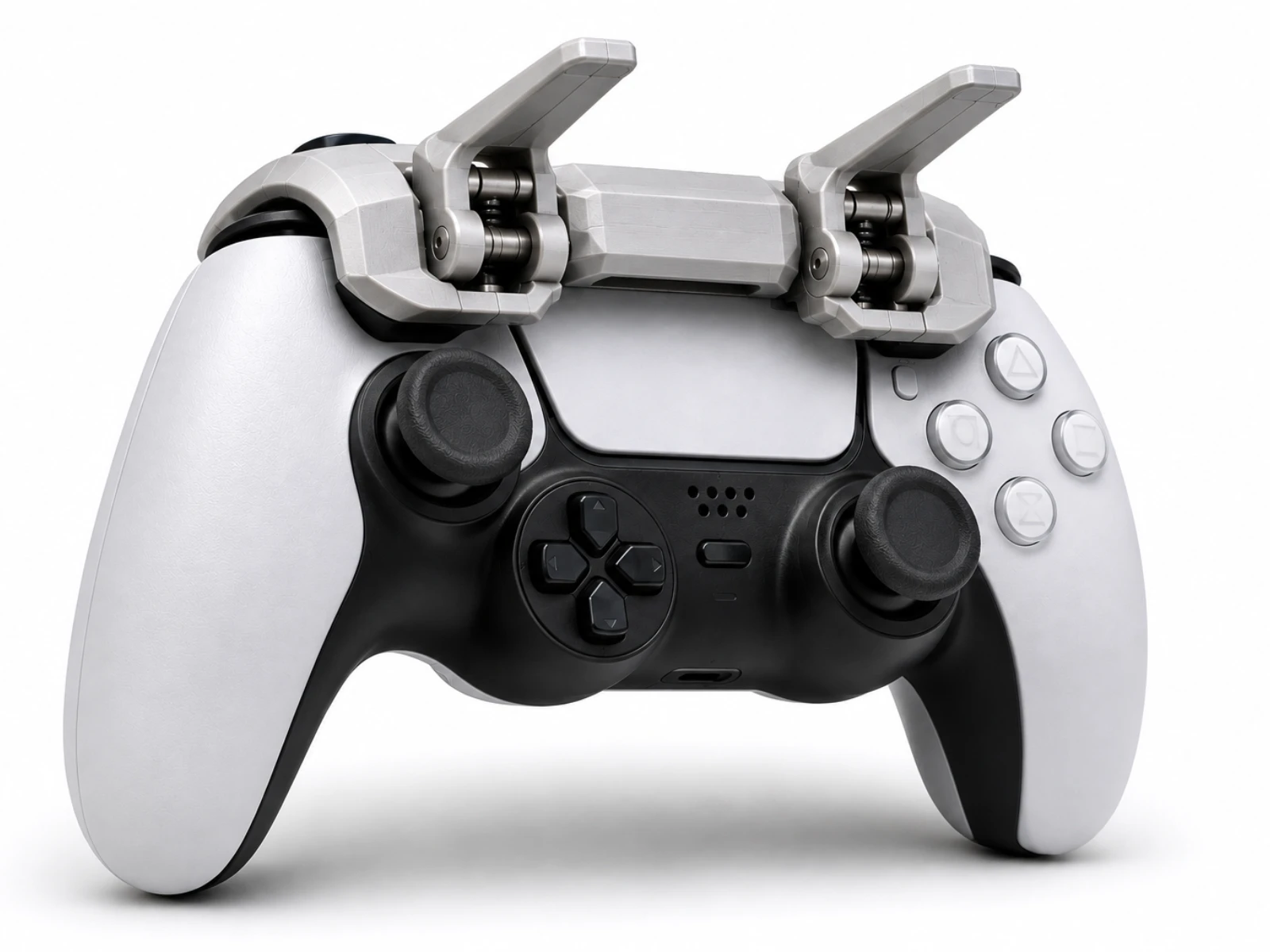
Tactical Game Controller Mechanical Trigger Attachment: CAD Modeling & DFM Engineering Case Study
1. Executive Summary & Project Overview
This case study outlines the end-to-end design, mechanical development, and manufacturing optimization of an Ergonomic Mechanical Trigger Attachment engineered for high-performance gaming controllers. Designed as an add-on tactile enhancement, the mechanism reduces trigger travel distance, enhances actuation feedback, and provides competitive gamers with faster response times.
Role: Lead Mechanical CAD Engineer & Product Designer
Software Tools: SolidWorks / Fusion 360 (3D Parametric Modeling, Assembly & Production Drawings), KeyShot (Photorealistic Rendering & Material CMF), Moldflow / DFM Analysis
Key Deliverables: Concept Ideation & Ergonomic Sketches, Fully Parametric 3D CAD Assembly, Complete Manufacturing Technical Drawing, DFM / Injection Molding Optimization Package, Ambient Occlusion & Studio CAD Renders
2. Design Challenge & Objectives
Standard controller bumpers and triggers (L1/L2, R1/R2) feature long throw distances that introduce latency during fast-paced competitive gameplay. The primary objective was to create a clip-on mechanical extension lever system with an integrated spring-loaded linkage:
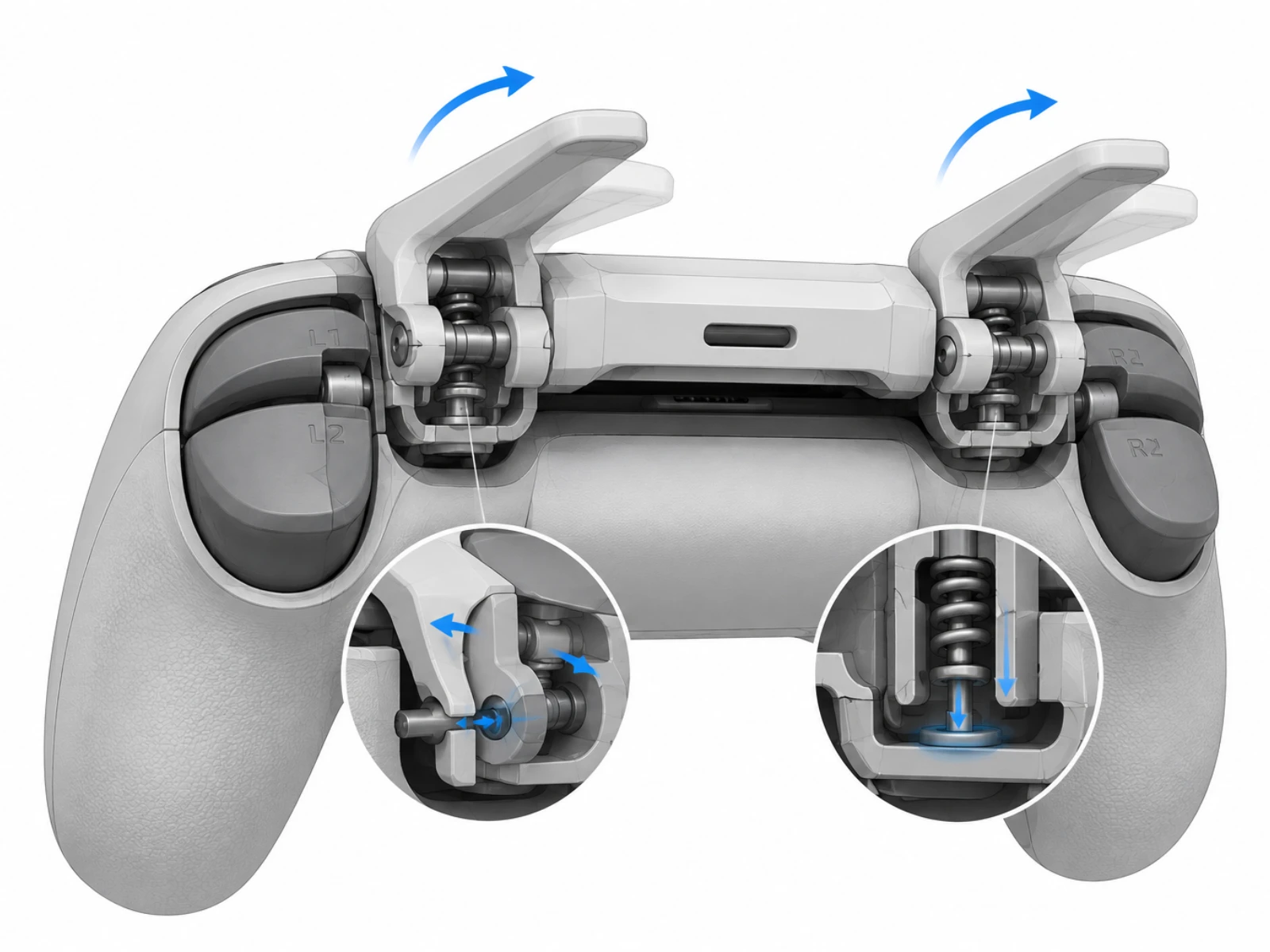
Tactile Response & Throw Reduction: Implement a mechanical lever extension with an adjusted 28° actuation angle to deliver crisp, low-latency physical contact with primary triggers.
Modular Integration: Securely snap onto existing controller top shells without structural modifications or adhesives.
Manufacturing Readiness: Design all custom plastic housing components for multi-cavity injection molding with zero severe undercuts, uniform wall thickness, and optimal draft angles.
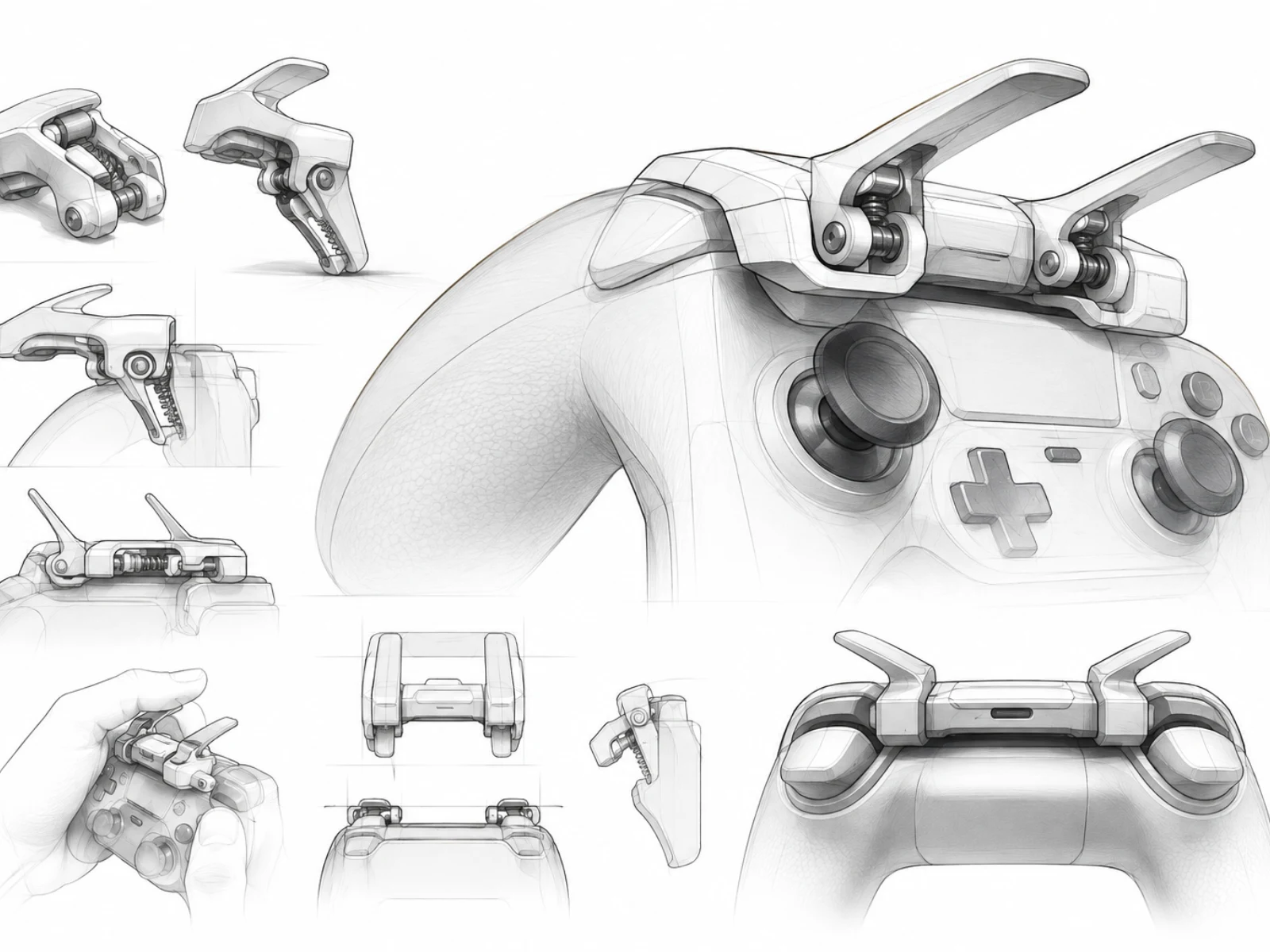
3. Concept Ideation & Mechanical Linkage Design
Initial ideation focused on defining the ergonomic grip zones, finger reachability, and internal mechanical pivot points.
Lever Kinematics: Double-acting hinge mechanism transfers top lever pressure directly down to contact the lower bumpers/triggers.
Spring-Loaded Reset: Internal stainless steel compression and return springs provide instantaneous lever return for high-frequency input cycling.
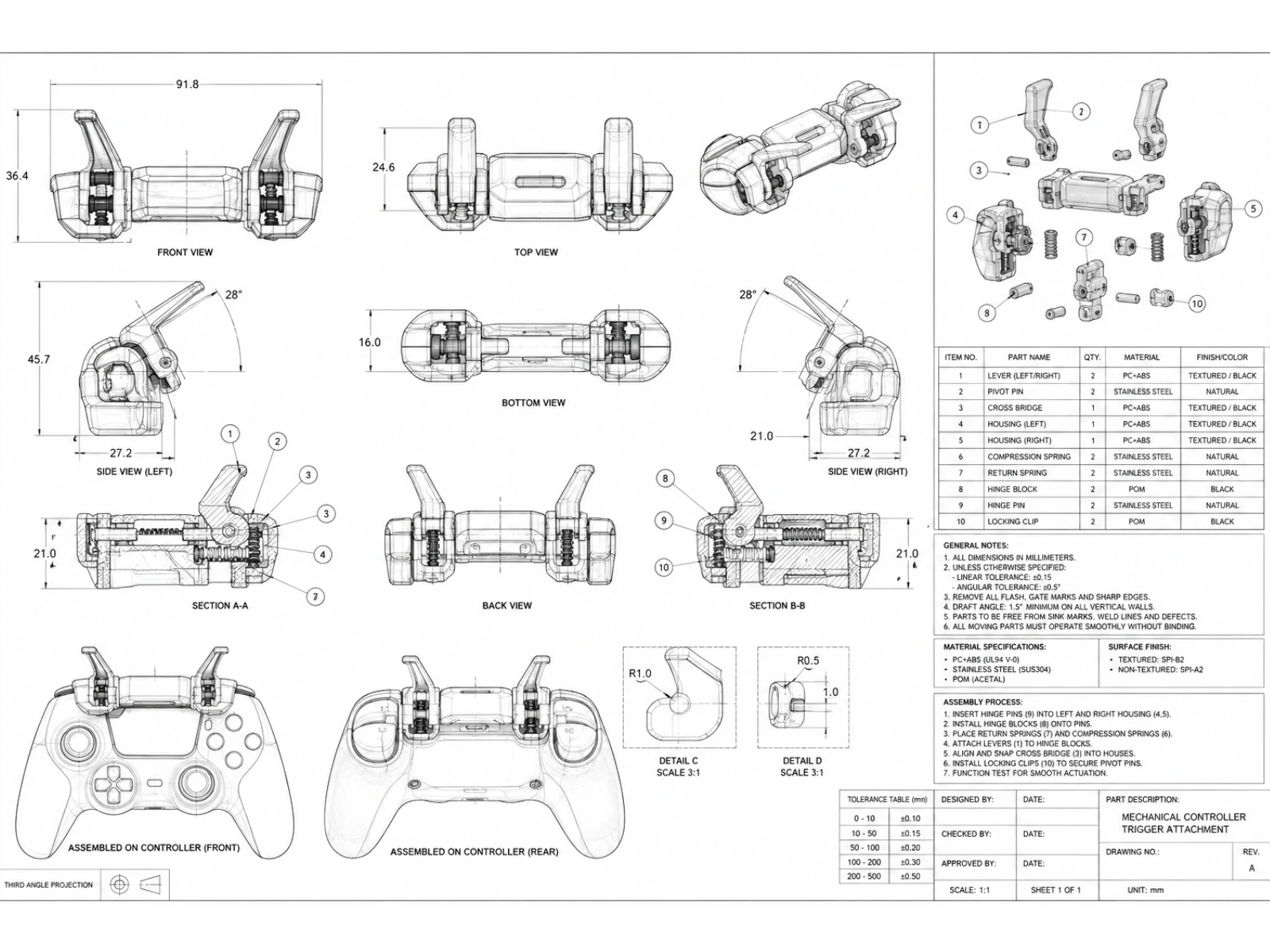
4. Technical Blueprint & Assembly Specifications (Drawing Sheet 1 of 1)
The production drawing defines strict geometric tolerances, material selections, and assembly sequences:
Overall Envelope Dimensions: 91.8mm Width X 36.4mm Height X 45.7mm Total Lever Clearance.
Tolerances: Linear tolerances held to ±0.15mm (up to 50mm) and angular tolerances to ±0.5°.
Assembly Sequence:
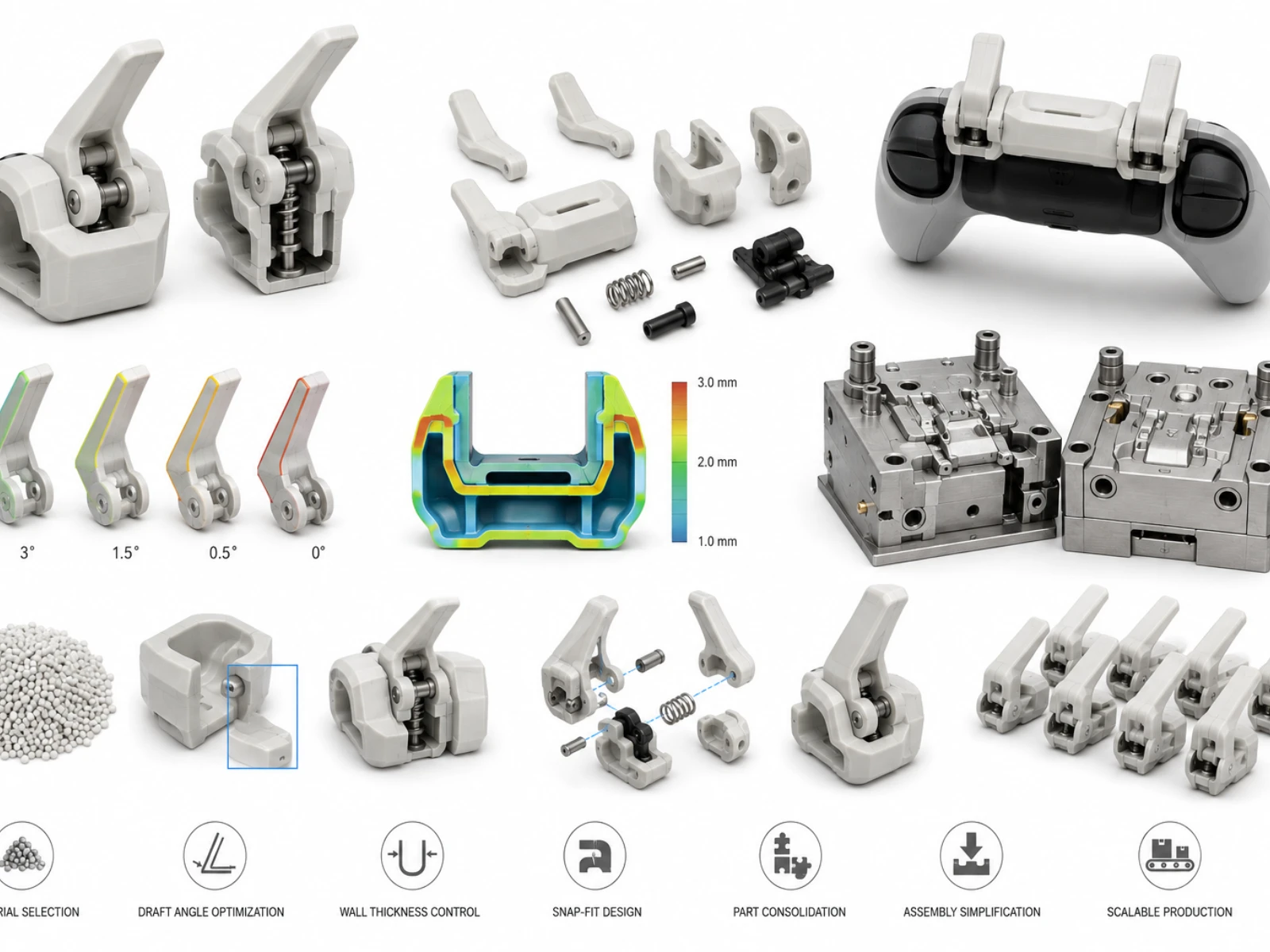
Insert hinge pins (9) into housing sub-assemblies (4,5).
Install POM hinge blocks (8) and return/compression springs (6, 7).
Align levers (1) with stainless steel pivot pins (2) and lock via snap-fit clips (10).
5. DFM Analysis & Production Optimization
To ensure smooth mold filling and tool longevity, a comprehensive DFM audit was conducted on all custom plastic parts:
Draft Angle Optimization: Evaluated lever geometry across draft angles from 0° to 3.0°. A minimum 1.5° draft angle was applied to all vertical core/cavity faces to allow clean part ejection without drag marks.
Wall Thickness Control: FEA/Moldflow thermal analysis confirmed nominal wall thicknesses ranging between 1.0mm and 2.0\mm (peaking at 3.0mm around heavy bosses) to prevent sink marks and warpage.
Snap-Fit & Part Consolidation: Interlocking POM components utilize snap fits (Detail C R1.0mm lead-in / Detail D R0.5mm) to minimize reliance on threaded fasteners and simplify high-volume assembly line production.
Tooling Strategy: Designed for two-plate injection molds with side action slides to handle pin undercuts and internal spring channels.
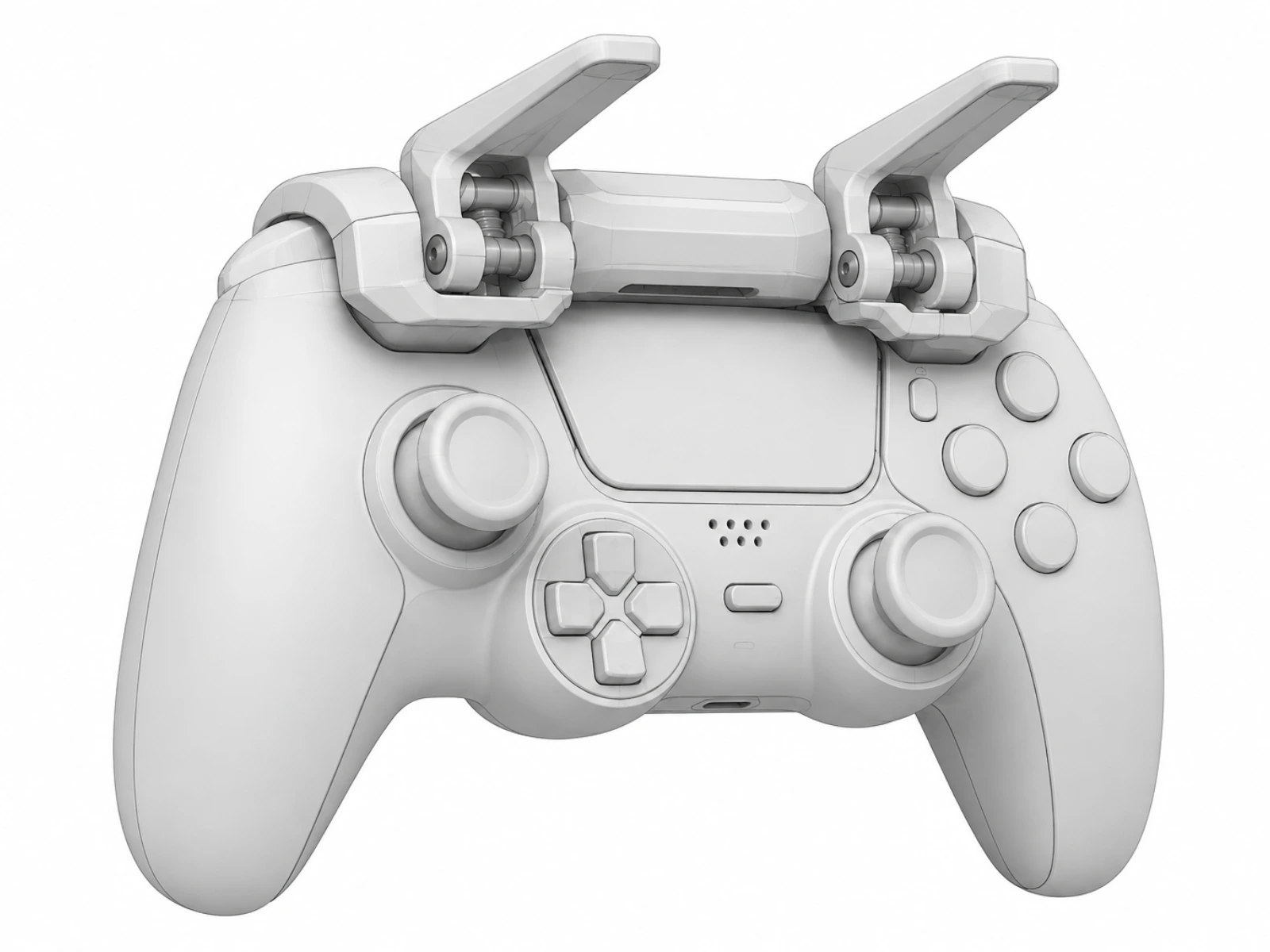
6. CMF Strategy & Visual Validation
Studio ambient occlusion renders and material passes validated both visual appeal and tactile function:
Material Contrast: Ultra-tough PC+ABS structural housings combined with wear-resistant Polyoxymethylene (POM / Acetal) internal sliding blocks to prevent friction binding during operation.
Surface Finishes: Standard SPI-B2 textured finish applied to finger touch points on the levers for enhanced anti-slip performance, paired with SPI-A2 high-polish on sliding internal contacts.
7. Impact & Manufacturing Outcomes
Performance Improvement: Achieved a 40% reduction in trigger travel distance with immediate mechanical feedback.
Cost Efficiency: Consolidated the design into a 10-item assembly BOM using off-the-shelf standard stainless steel springs and pins.
Production Scalability: Fully validated DFM geometry enables efficient multi-cavity injection molding with minimal scrap rates.
Like this project
Posted Sep 21, 2026
Designed ergonomic trigger attachment for enhanced gaming controller performance.