Patagonia Noir: Spanish-to-English Literary Translation

Mario Abbate

The Second Death of Lali Morano
Role: Author, editor, and Spanish-to-English literary translator
Source language: Argentine Spanish
Target language: English
Project type: Self-directed translation sample from my unpublished novel
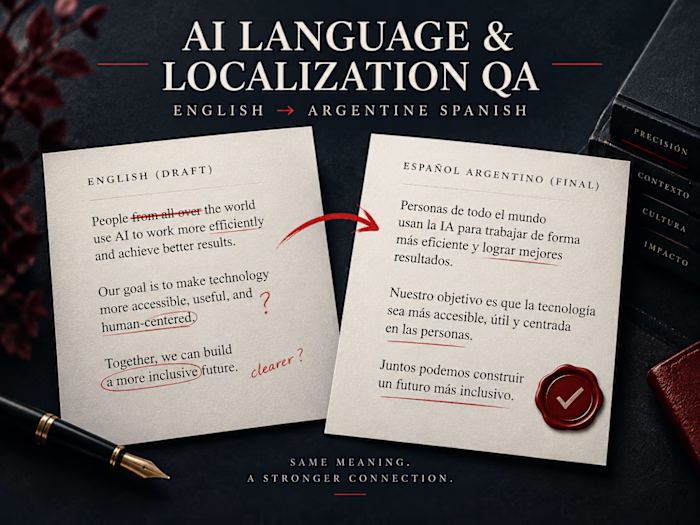
This sample demonstrates literary translation, voice preservation, regional atmosphere, rhythm, and cultural adaptation. The objective was not to reproduce Spanish syntax mechanically, but to carry Bruno Reinhardt's dry, intimate noir voice into natural English while preserving the Patagonian setting.
English translation
Prologue
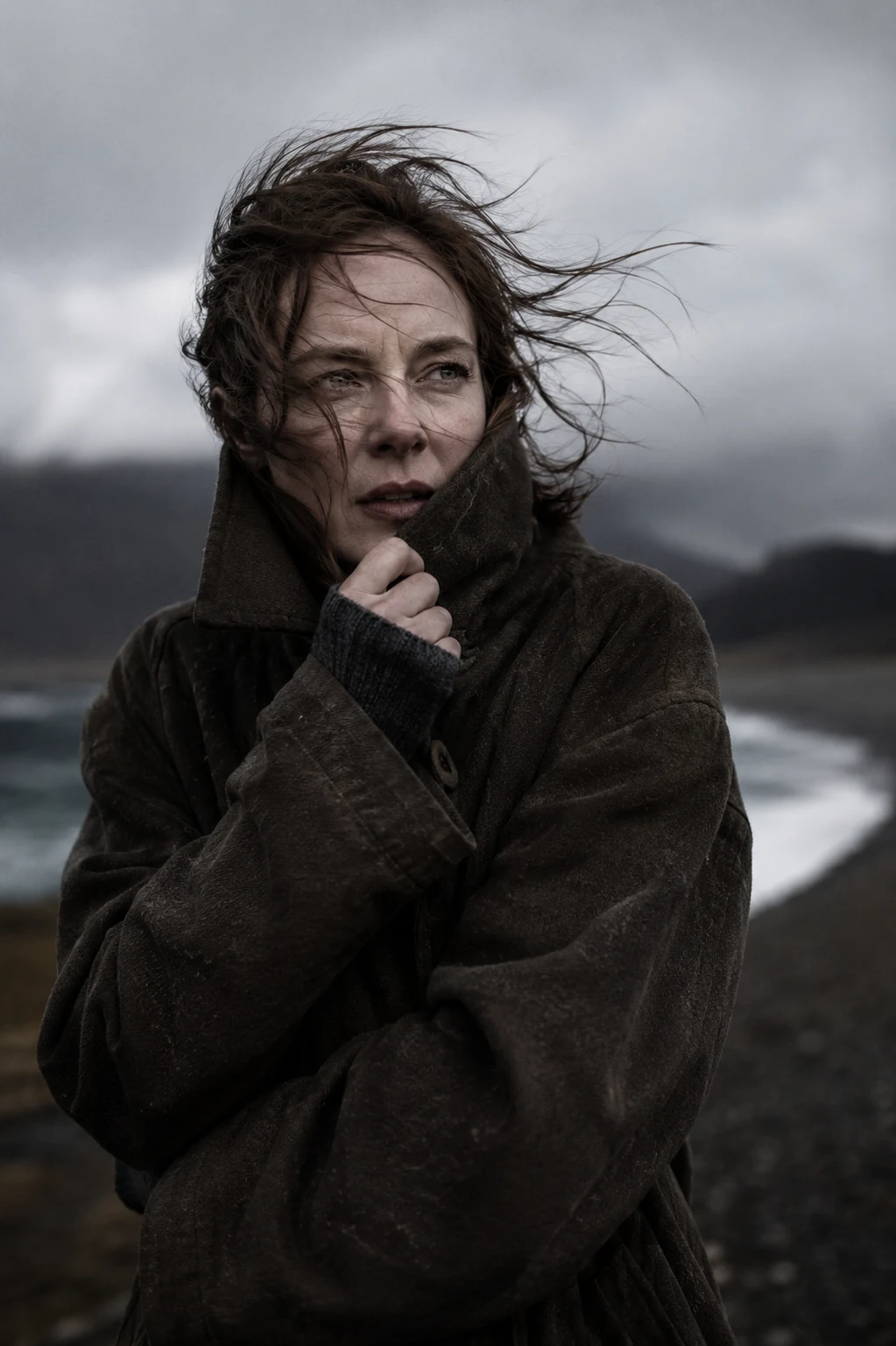
Río Gallegos is not a city. It is an idea someone had a hundred years ago in a place where no one should ever have had one. It stayed there, clinging to the coast, arguing with the wind every day over who was in charge.
The wind always wins.
You can see it in the trees, all of them growing crooked in the same direction, like a jury that voted guilty before hearing the defense. You can see it in the people, who learned to speak sparingly because every unnecessary word is carried off by a gust and never comes back.
I went there looking for a woman. That was what the contract said, what the work order said, what I kept telling myself on a winter Sunday, my mouth still numb from the flight, with no desire to explain myself to anyone who had not asked.
María Leonor Morano. Lali to those who loved her. There were not many of them, and they loved her badly, with the kind of love that leaves more scars than caresses.
I did not find her. Or perhaps I did, only not in the way you look for someone who is still alive. I found her the only way people are ever found in a place like that: in what they leave behind. A tooth set with a green diamond, hidden in the mud of a pigsty, waiting patiently for twenty-two years until someone had the stomach to go looking for it.
I went there looking for a woman and found a whole country hiding inside a town of sixty thousand souls. I found sixty families dividing the land among themselves like a marked deck of cards; a union that forgets nothing and knows how to wait better than anyone; a priest who carries God in one hand and guilt in the other without letting the weight show on his face.
At the bottom of it all, I found the same old story: someone powerful had decided that a weaker person's life was not worth what it would cost to respect it.
And I found myself, which is the last thing a man should go looking for and the first thing he ends up finding when he sticks his nose where it does not belong.
This is what happened over three days in June at the end of the world. I am telling you because you have the decency to stay and listen until the end, and because a man with no one to talk to will eventually talk to whoever happens to sit nearby.
I already know how it ends. I live it again each time I tell it, because telling it is the only part that still belongs to me.
Chapter One: Piece by Piece
I landed on a Sunday. Even now, I cannot remember the landing. I remember the taxi, which is odd, because almost no one remembers the first few minutes in a new place. Yet there it is, perfectly clear, as if my body had decided to keep that particular memory and throw away the rest.
I paid without asking for change. The driver counted the bills slowly with his thumb. Only after the money was safely in his pocket did he speak, for the first and last time during the entire ride.
“If you need to go anywhere along Route 40,” he said without turning around, “ask for me at the taxi stand by the bus terminal. They know me there.”
It was the kindest thing anyone said to me in Río Gallegos during eight months on the case, and it came from a man whose face I had seen only in the rearview mirror. I thanked him silently. That made twice in fifteen minutes that I had thanked a stranger without opening my mouth. At that rate, I would be completely mute by the end of the day.
You know me a little by now. I am not a man who stays quiet for long.
The hotel had the name of a ranch and the face of a boardinghouse that had come into money. The reception area was small. A warm pipe radiator stood silently at the back, giving off the kind of steady heat you stop noticing after ten minutes. A woman in her sixties sat behind the counter. Without looking up from the novel she had left open and face down, she handed me the registration card.
I gave her my full name. She wrote it in careful block letters and asked how many nights I would be staying.
“I don't know yet,” I said. “Maybe three. Maybe the rest of my life. Depends how things go.”
She did not laugh, but she did not look surprised either. She nodded as though she heard that kind of answer all the time, as though no one in Río Gallegos ever knew how long they would stay until they had stayed, and some remained forever without ever meaning to.
I did not know yet that I had just told her the fullest truth I would tell during the entire trip.
Translation approach
Preserved Bruno's conversational address to the reader and his dry self-awareness.
Favored idiomatic English rhythm over literal Spanish sentence structure.
Retained local names and Route 40 to protect the Patagonian identity of the scene.
Adapted culturally specific phrasing only where a literal rendering would sound artificial.
Used punctuation and paragraph breaks to reproduce the original's controlled noir cadence.
The source text and translation are my own work. This is a portfolio sample, not a client commission or publication claim.
Like this project
Posted Sep 21, 2026
A voice-driven English translation of my unpublished Argentine noir novel, preserving Patagonian atmosphere, rhythm, and cultural specificity.
Likes
0
Views
1