Developmental Editing & Manuscript Assessment

Mario Abbate

Developmental Editing and Manuscript Assessment
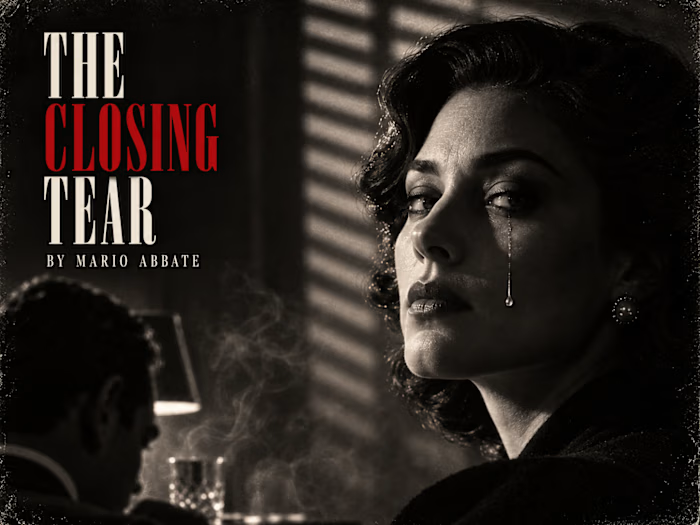
Prof. Mario Abbate · Self-directed editorial case study · Patagonian noir
This case study shows how I assess a complete manuscript and turn a broad editorial judgment into an ordered revision plan. The source is my own unpublished novel, La segunda muerte de Lali Morano. It is a demonstration of method, not a client commission or an independent publisher's endorsement. I have kept plot revelations and manuscript pages out of this public summary.
The editorial question
The draft had a distinct first-person investigator, a setting that shaped the investigation, and a mystery with a thematic purpose. The question was whether the book needed a structural rewrite or a more disciplined final edit.
What I examined
I read the complete manuscript and assessed its architecture, voice, pacing, character functions, thematic coherence, local atmosphere, factual exposure, and market position. I treated the opening, investigation, late change in narrative authority, and ending as one system: a cut in one place had to preserve the payoff in another.
Diagnosis
Preserve the architecture. The investigation moves from a practical question about a disappearance toward the harder question of who gets to define an absent person. The late shift in perspective gives that question a dramatic answer. Rebuilding the plot would put the manuscript's strongest feature at risk.
Protect the narrator's fallibility. Bruno Reinhardt has a recognizable voice and series potential because his observations are sharp but sometimes wrong. His mistakes create suspense and moral consequence; they are not defects to smooth away.
Make the place causal. Río Gallegos matters through distances, weather, relationships, and institutional habits. Those details influence what characters can know and do. The setting is part of the mechanism, not decorative local color.
Compress explanation after effective scenes. Repeated comparative structures and occasional commentary after a gesture or exchange made the prose less forceful. The revision target was selective line editing: retain images that earn their place, remove a second explanation when the reader already understands the first.
Separate literary judgment from technical verification. Realistic references to criminal procedure, local geography, and historical chronology require a dedicated fact-check. A strong scene can still lose credibility through one verifiable detail.
Recommended sequence
Keep the existing plot structure and the late perspective shift.
Edit repeated sentence patterns and explanatory afterthoughts one passage at a time.
Check continuity of dates, knowledge, documents, travel, and objects.
Commission or conduct a separate legal, historical, and local fact-check.
Complete copyediting and a final read aloud after the substantive changes.
The manuscript's positioning is Patagonian noir / literary crime fiction / Argentine investigative thriller. The immediate editorial decision was to edit and verify the existing novel, then present it; a structural rewrite was not indicated. This sample makes no claim about sales, acquisition, or publication outcome.
Like this project
Posted Sep 21, 2026
Self-directed editorial case study: assessed my Patagonian noir manuscript, mapped revision priorities, and identified fact-check risks.
Likes
0
Views
1