Hale — Mindfulness & Emotional Journaling App

Peter Umeh

Overview
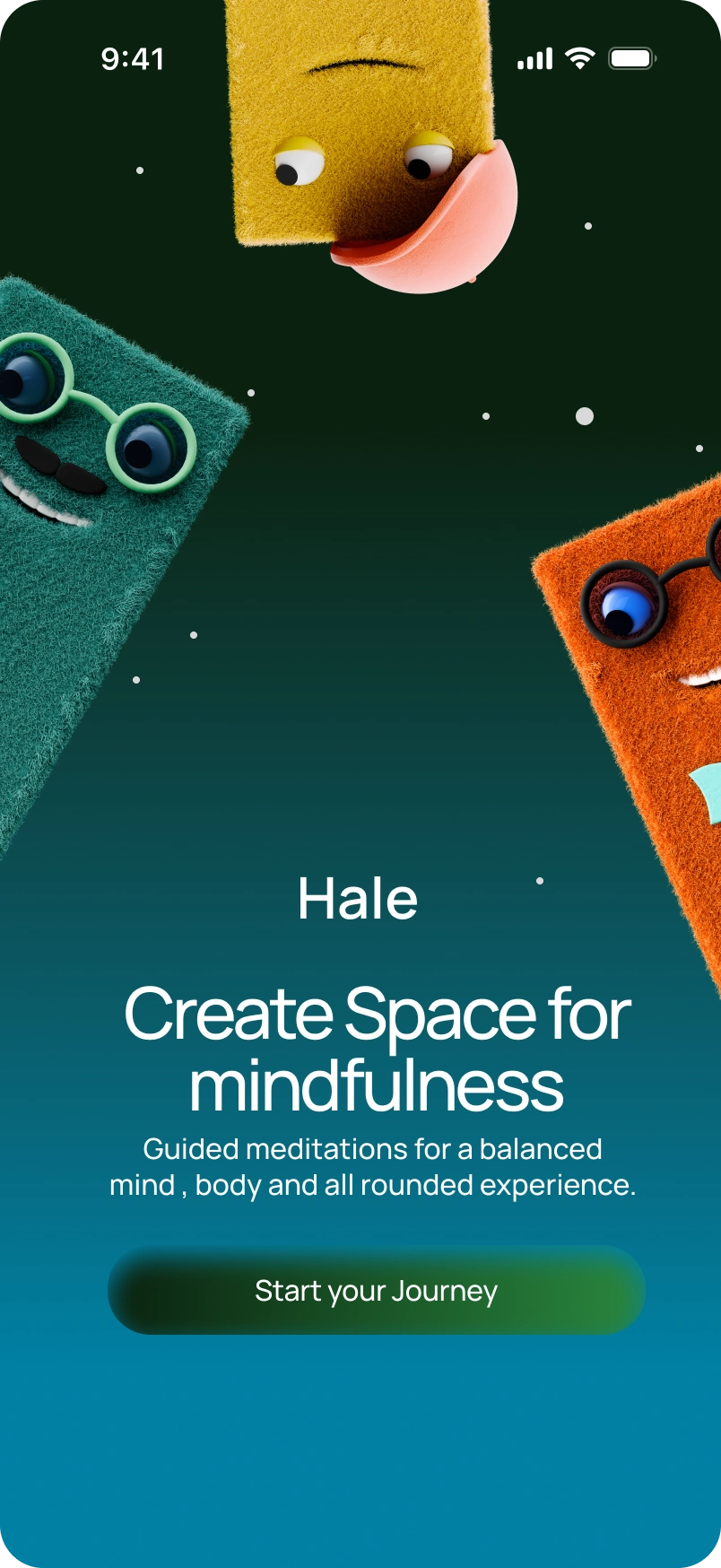
Hale is a mobile mindfulness app built to help people pause, identify how they feel, reflect on their emotional state, and turn small moments of awareness into healthier routines.
The product sits between mood tracking, journaling, and lightweight mental wellness rituals. Instead of asking users to "do therapy," Hale reduces emotional reflection into quick daily actions: How do you feel? What is on your mind? What small action can help right now?
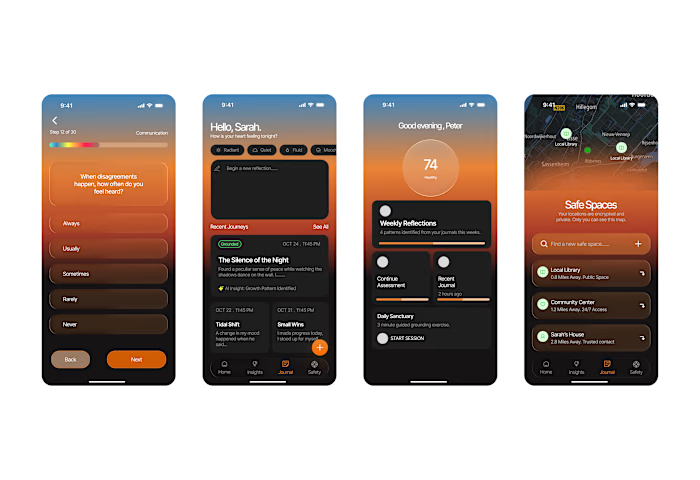
Hale App Overview
The Problem
Many wellness apps are built around long meditation sessions, habit systems, or clinical mental health frameworks.
That creates friction.
People who feel overwhelmed, emotionally tired, mentally scattered, or stressed often do not want a heavy process. They want something immediate, simple, and emotionally lightweight.
Current gaps:
Emotional states are often hard to describe
Journaling can feel intimidating
Most mindfulness tools ask for too much effort upfront
People need support in the moment, not after motivation appears
The Solution
Hale introduces a low-friction emotional reflection flow:
Select how you feel
Capture what is on your mind via text or voice
Tag the emotional state
Receive immediate calming actions
Build emotional awareness over time
The product transforms self-awareness into a small daily ritual.
Hale Emotional Flow
Product Goals
Hale helps users:
Identify emotions quickly
Externalize thoughts before they become overwhelming
Build consistency through lightweight daily rituals
Connect moods to reflection, meditation, and behavioral habits
Recognize patterns over time
My Role
Product Designer — responsible for product strategy, UX flows, interaction design, visual design, and prototyping.
Target Users
Young professionals
People managing work stress, emotional fatigue, deadlines, and digital overload. They need fast emotional check-ins, quick decompression tools, and a private reflection space.
Emotionally self-aware users
People who already journal, meditate, or actively monitor mental wellbeing. They need mood tracking, emotional pattern recognition, and accessible mindfulness rituals.
New mindfulness adopters
Users curious about mental wellness but intimidated by traditional wellness products. They need easy onboarding, playful interaction, and low cognitive load.
Hale Target Users
Design Challenge
The main challenge: How do you make emotional reflection feel approachable instead of emotionally demanding?
The interface needed to feel emotionally warm, low-pressure, expressive, and fast enough for everyday use.
That informed the decision to use:
Playful emotional characters
Reduced text complexity
Single-action flows
Visual emotional selection instead of abstract labels
Core UX Hypothesis
If emotional reflection becomes small, fast, and visual, users are more likely to return consistently.
Hale UX Design
User Flow
1. Daily Entry
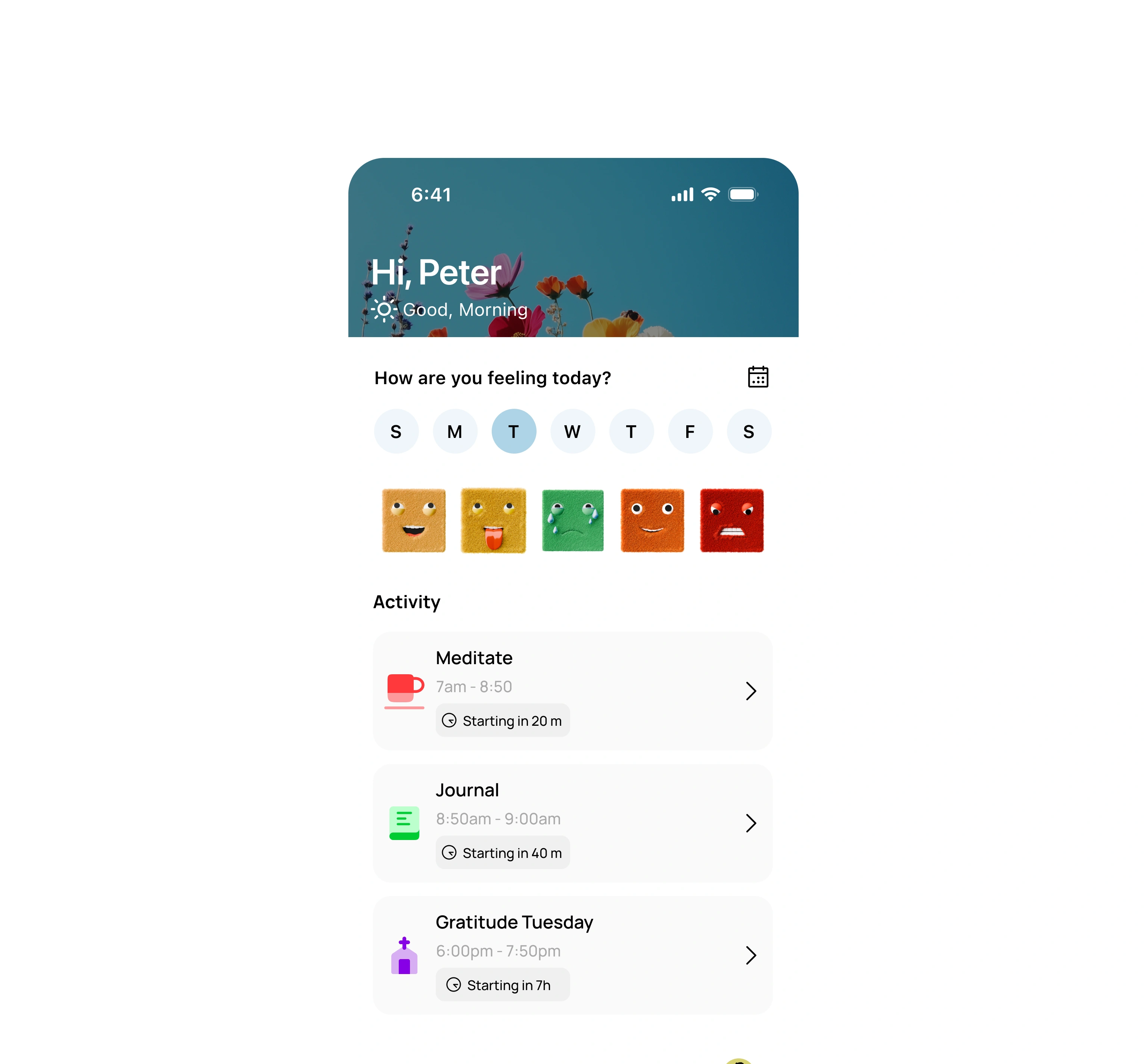
User opens Hale. Home surfaces a greeting, today's emotional prompt, recent activity, and quick rituals.
2. Mood Check-in
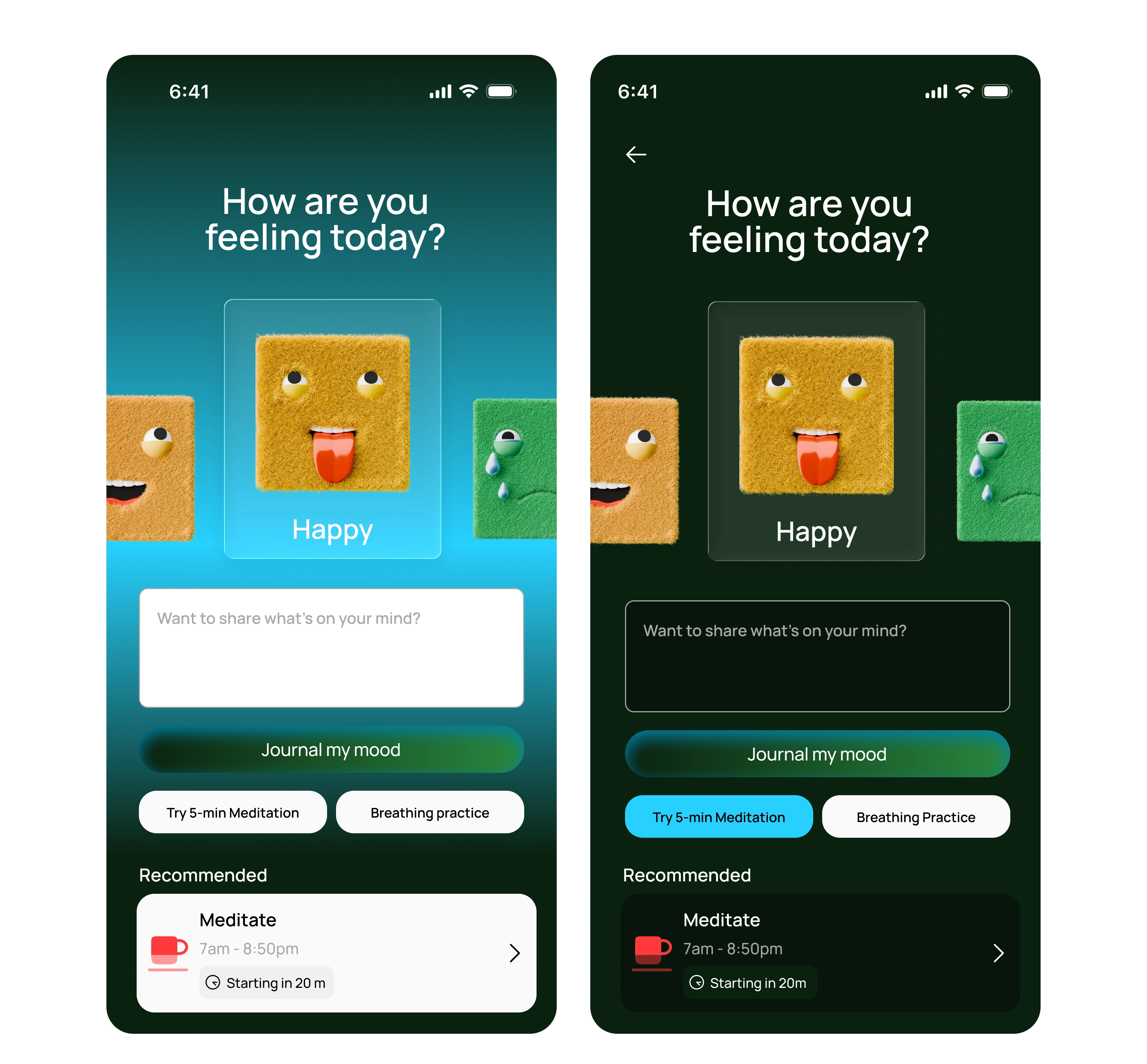
User selects emotional state: happy, overwhelmed, sad, calm, frustrated. This becomes the emotional anchor for the session.
3. Reflection Capture
User can type thoughts or record voice notes. The prompt "Want to share what's on your mind?" lowers blank-state anxiety.
4. Emotion Tagging
User confirms which emotion best represents the reflection. This improves future insights and emotional pattern recognition.
5. Save Entry
The journal is stored with timestamp, mood, reflection type, and metadata for future analysis.
6. Immediate Support
After saving, Hale offers a contextual action: 5-minute meditation, breathing practice, calming activity, or short guided reflection.
7. Long-term Retention
Over time users build emotional history, reflection streaks, recurring mood patterns, and personalized recommendations.
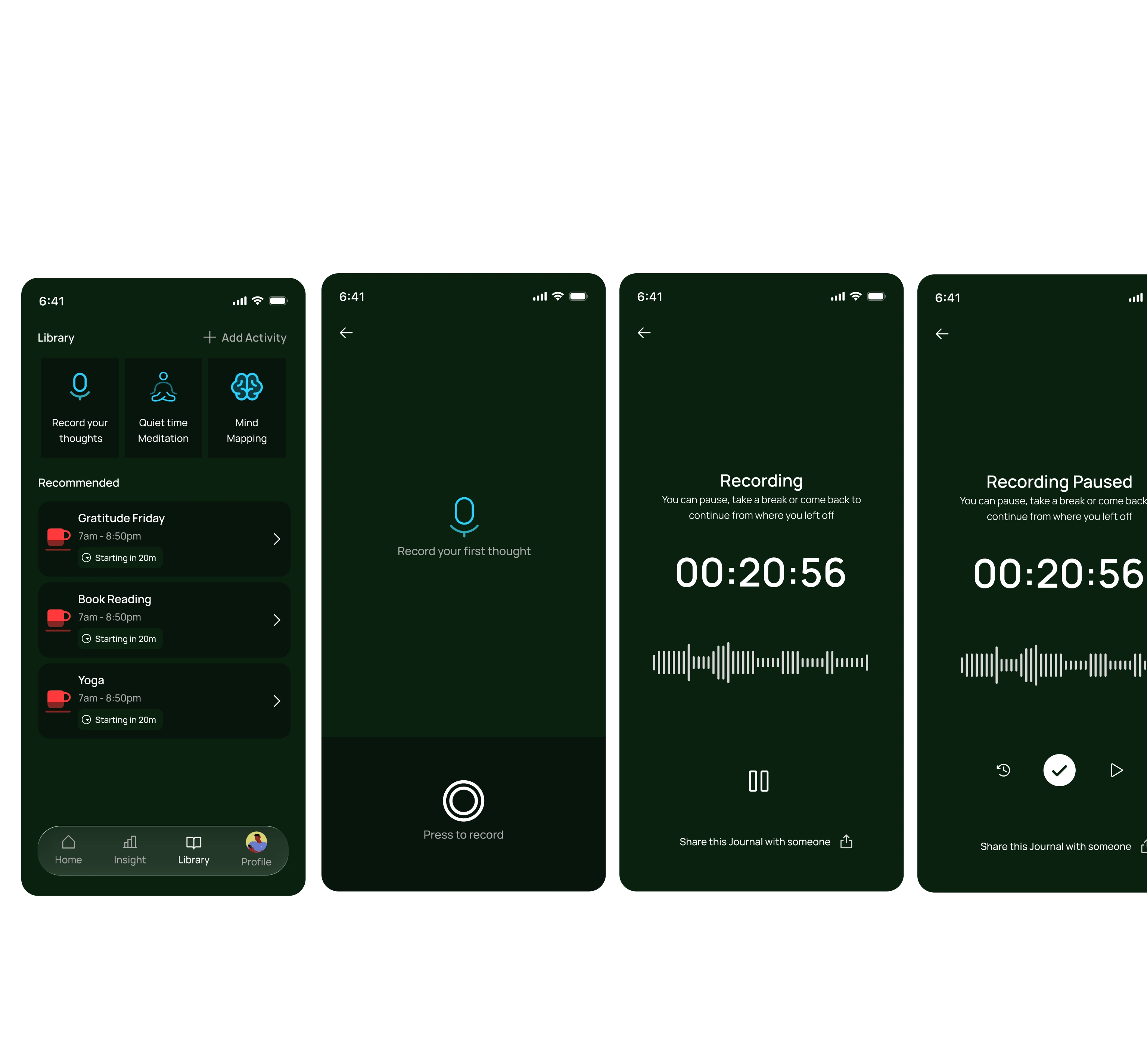
Hale User Flow
Information Architecture
Primary Navigation
Home — Daily emotional check-in and recommended activities
Insight — Mood trends, emotional patterns, consistency metrics
Library — Meditation, breathing, guided reflections, content
Profile — Settings, premium, reminders, preferences
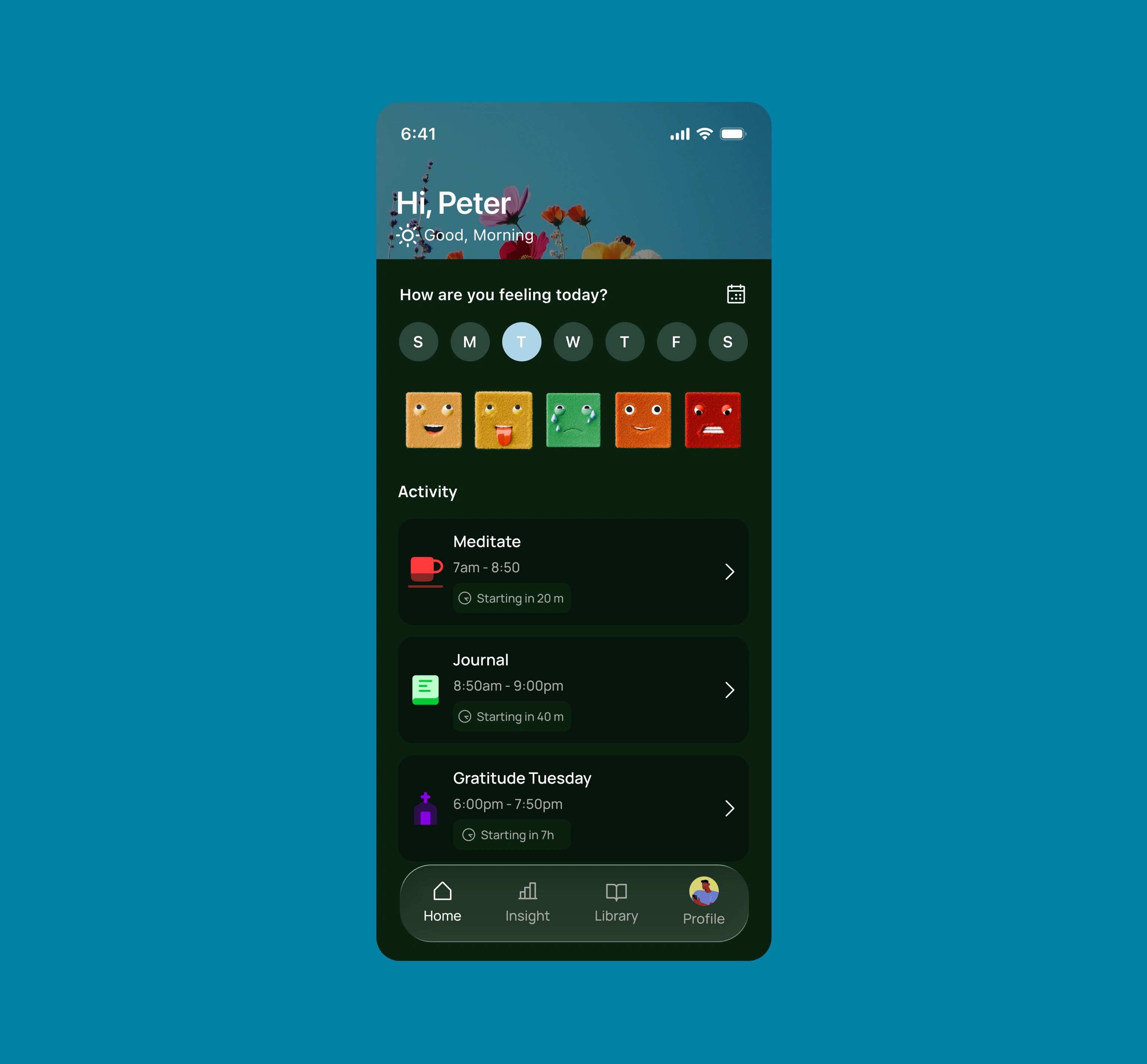
Hale Information Architecture
Key Screens
Home
Create a calm daily entry point. Main components include greeting, day-based emotional prompt, mood selector, recommended activity cards, quick journaling CTA, and bottom navigation. The home screen reduces decision-making by keeping the next action obvious.
Mood Journaling
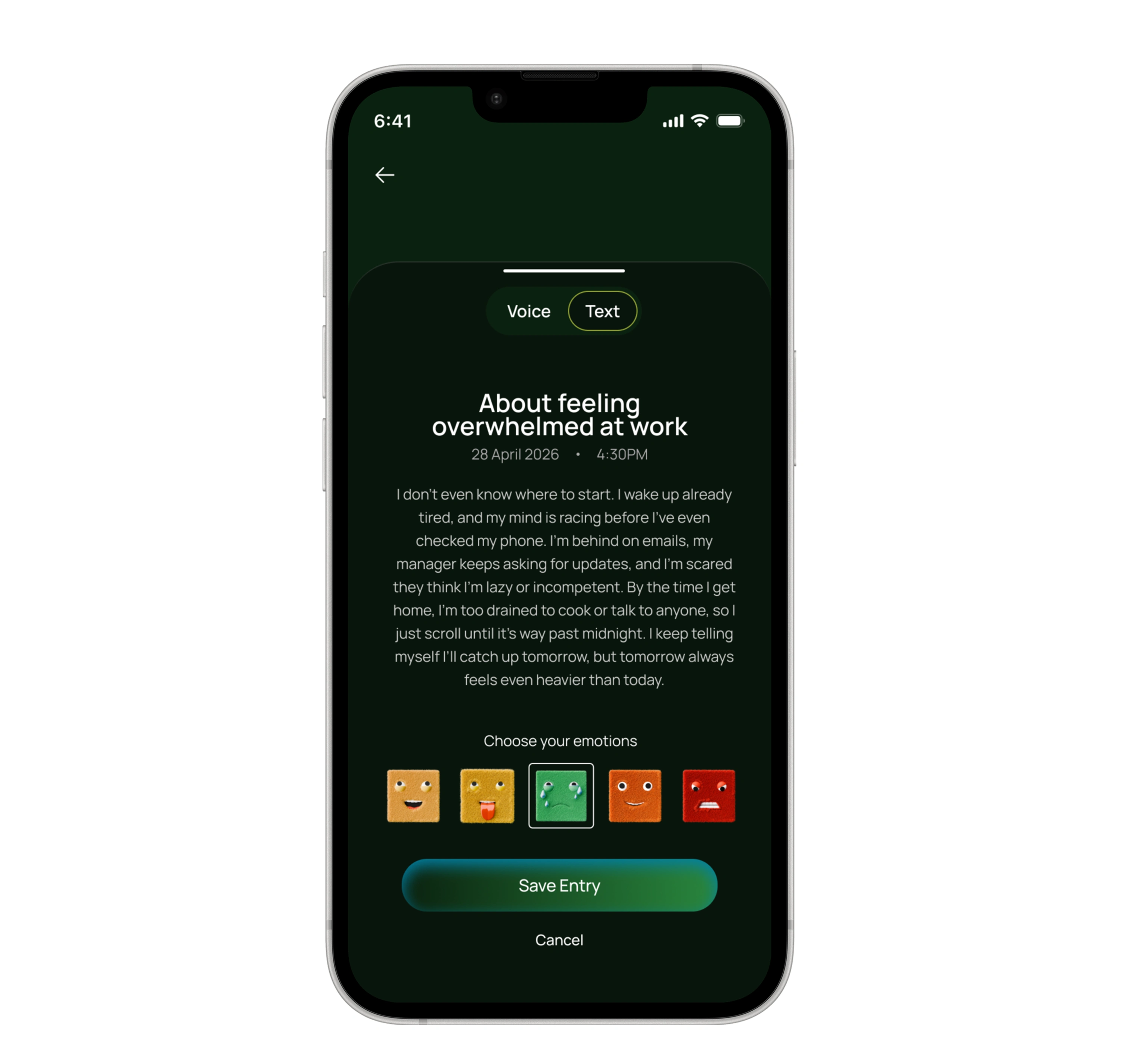
Capture emotional context in a lightweight way. Components include emotion selector, text input, voice toggle, and save entry CTA. Users often know how they feel visually before they can articulate it verbally.
Entry Detail
Allow deeper reflection after writing. Components include entry title, timestamp, journal content, emotion tags, and edit or revisit options.
Activity Recommendations
Convert reflection into immediate action: meditate, breathing practice, gratitude exercise. This prevents journaling from becoming passive emotional dumping.
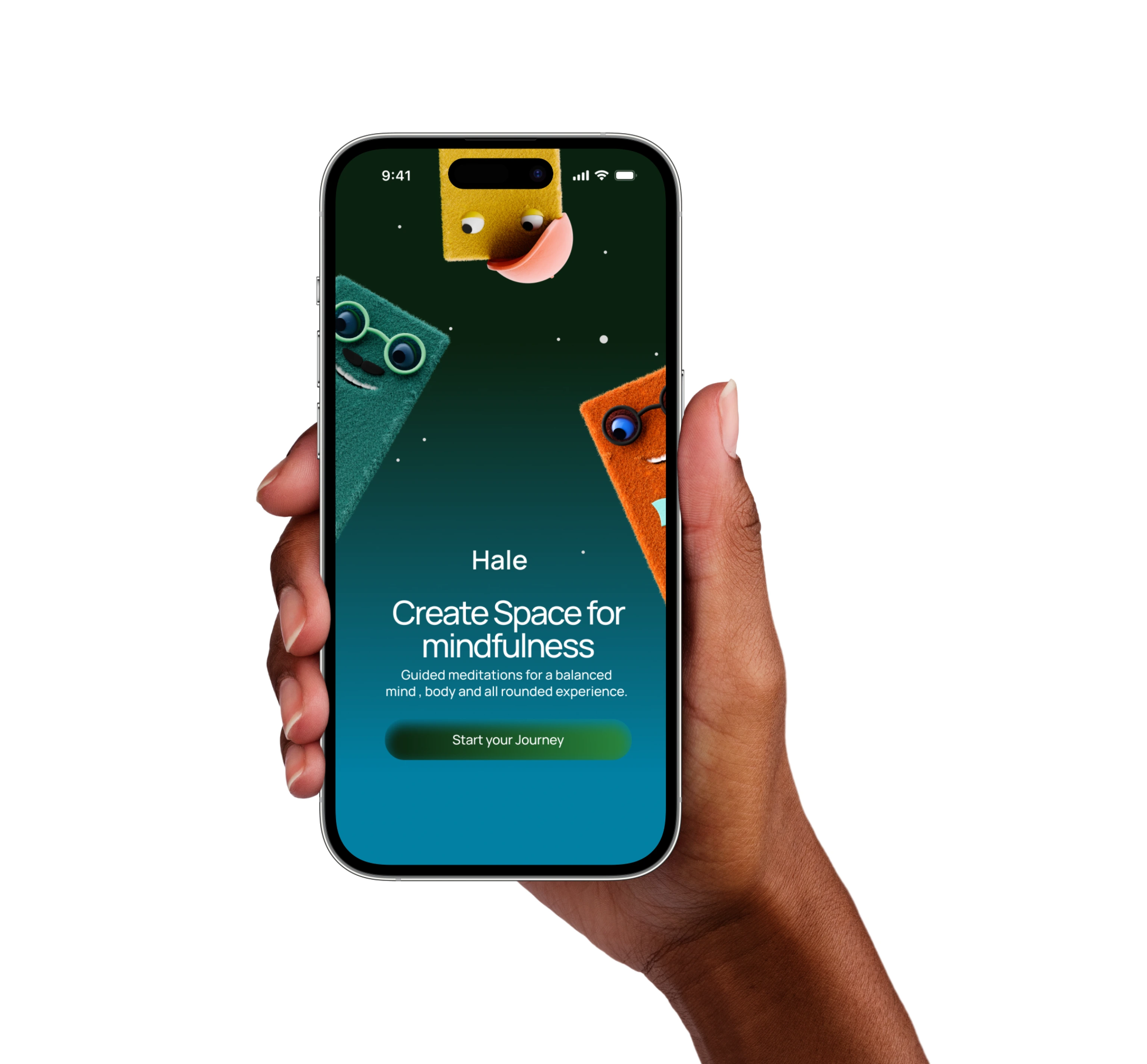
Hale Key Screens
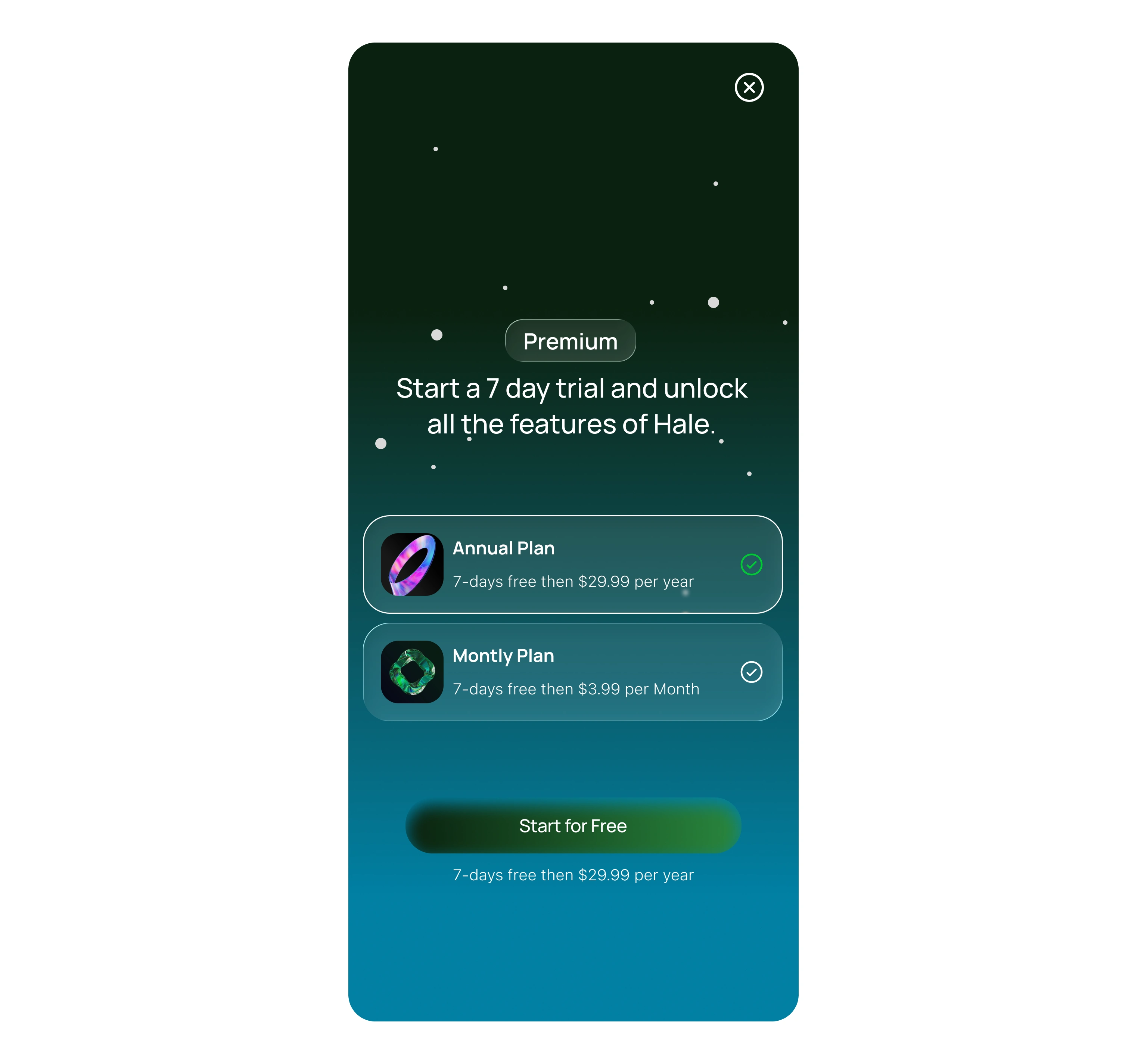
Premium
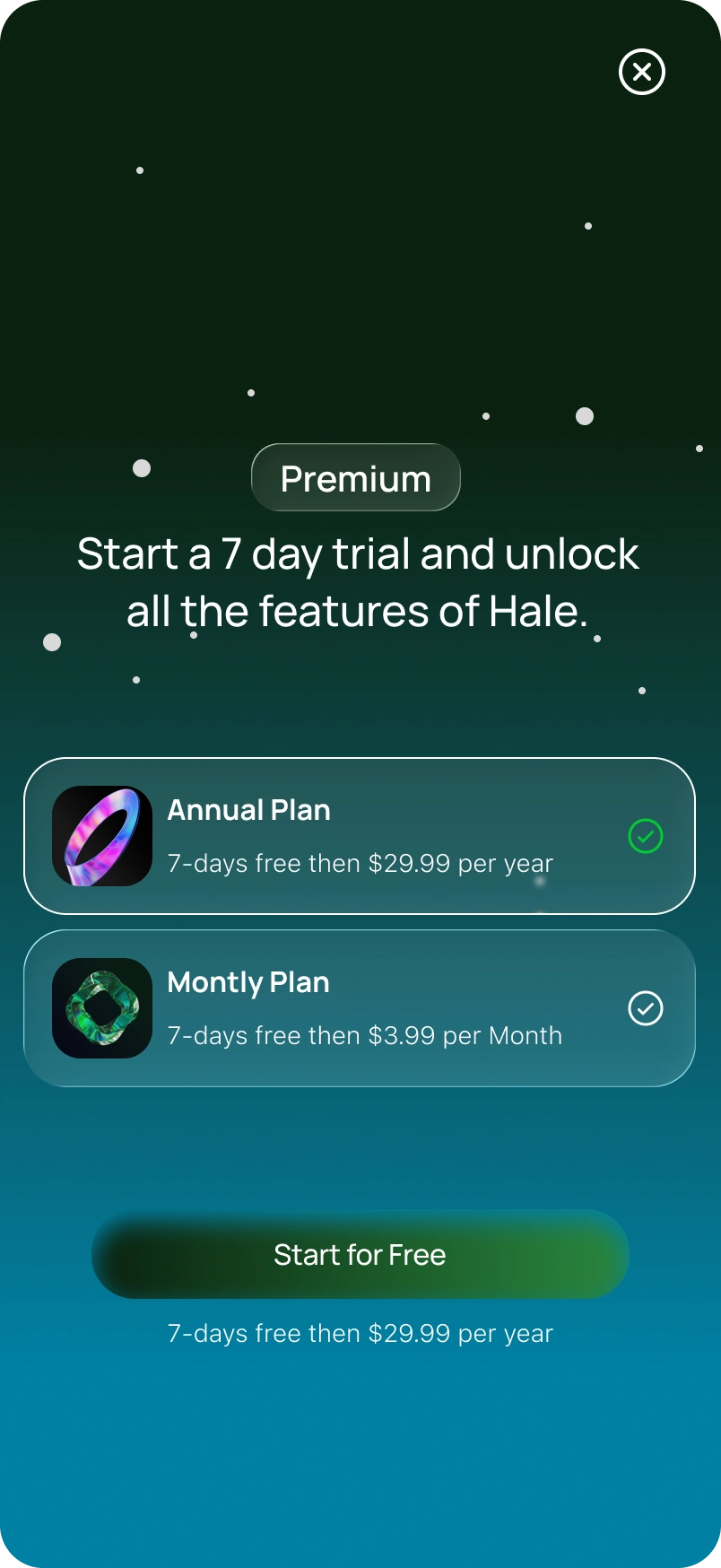
Hale Premium Paywall
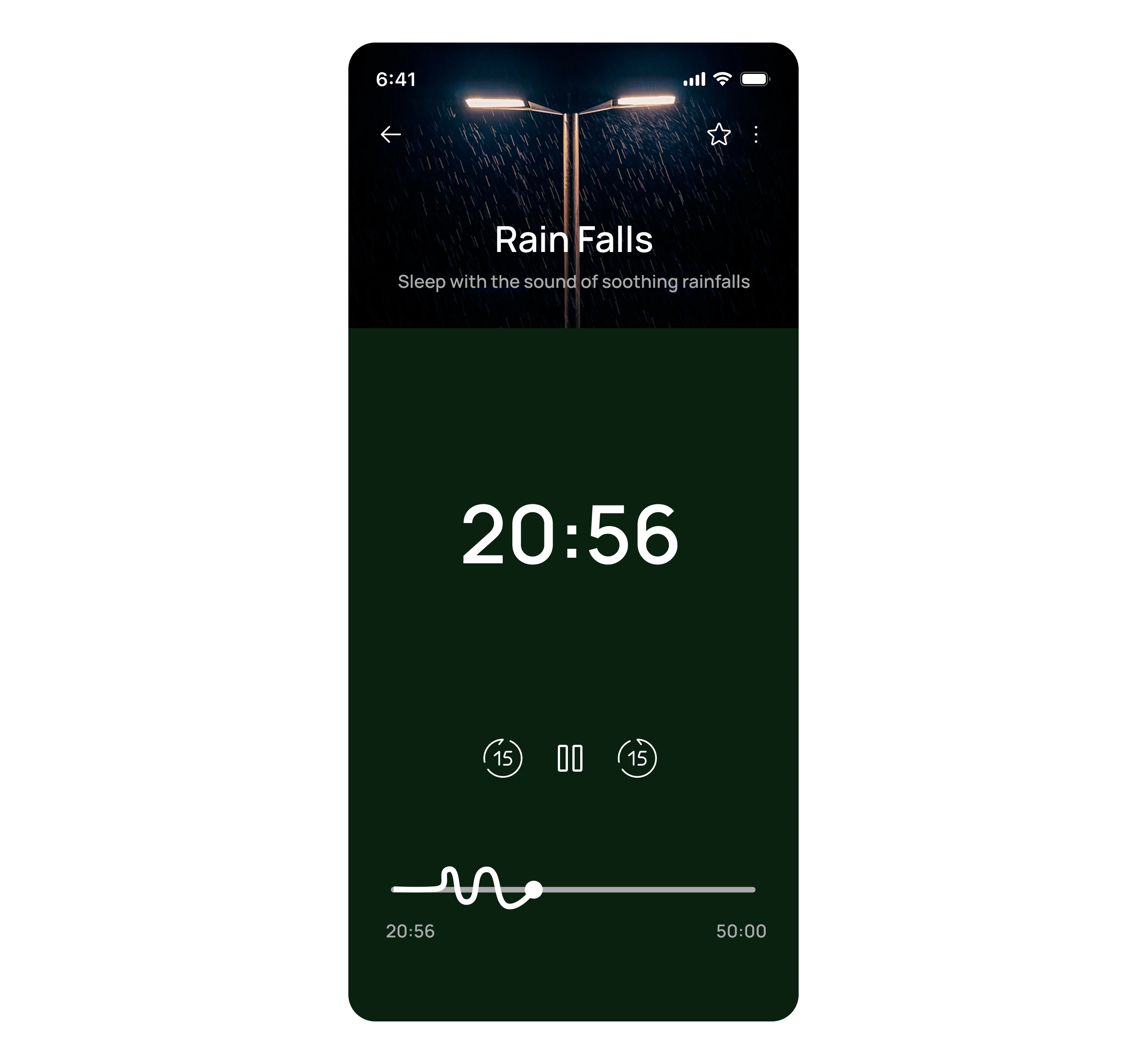
Hale Final Screens
Like this project
Posted Jul 28, 2026
A mindfulness app designed to make emotional reflection feel approachable, not demanding. Concept exploring mood journaling, voice capture, and lightweight daily wellness rituals.
Likes
0
Views
11
Timeline
Jun 28, 2025 - Jul 12, 2025