YUUM App Design for Vegans and Vegetarians

Summer Yim


YUUM is an imagined product that helps vegans and vegetarians discover restaurants and organize dine-outs with friends. By integrating social and planning features, we made the restaurant research and planning process a seamless and efficient experience for vegans and vegetarians.
Discover Restaurants
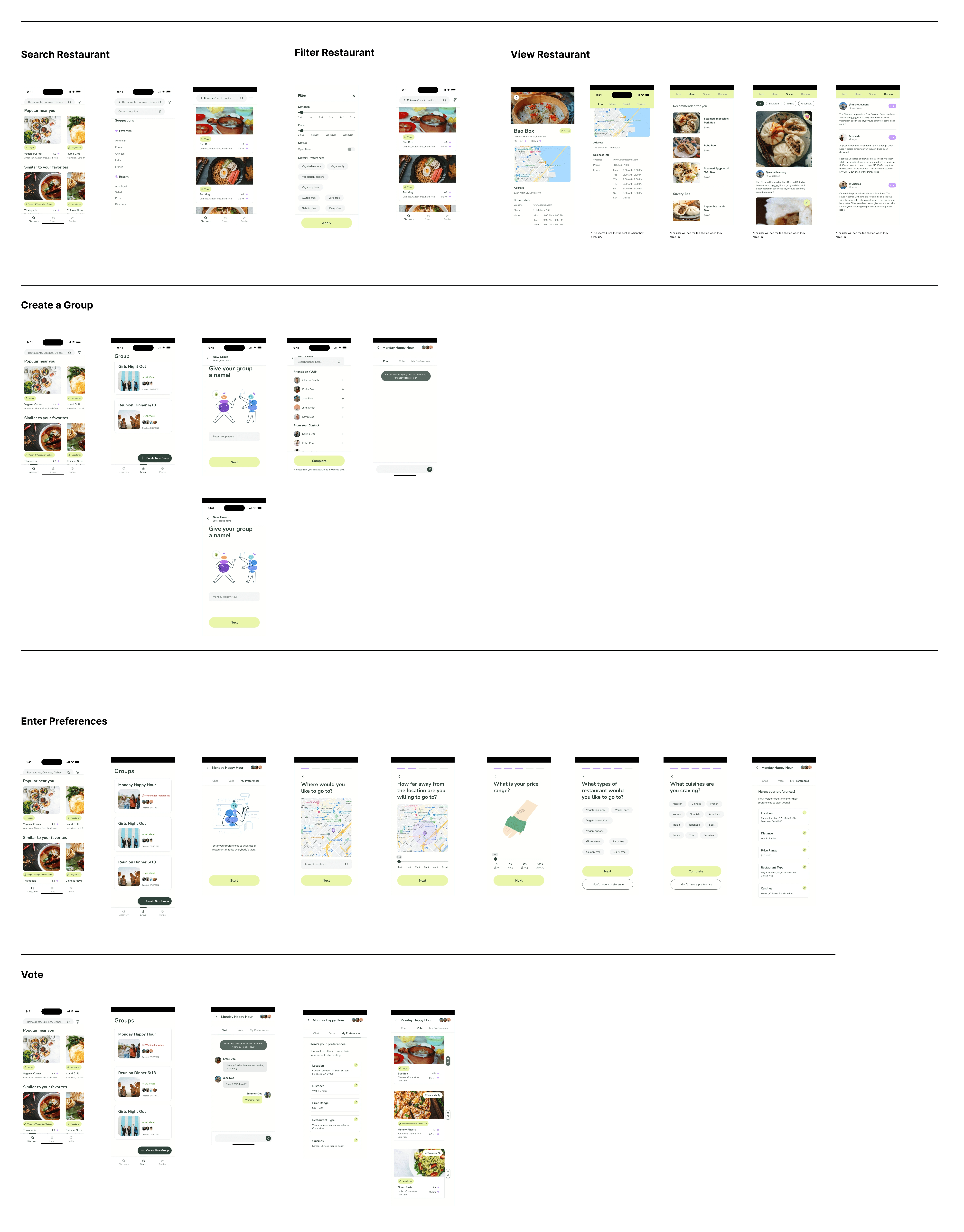
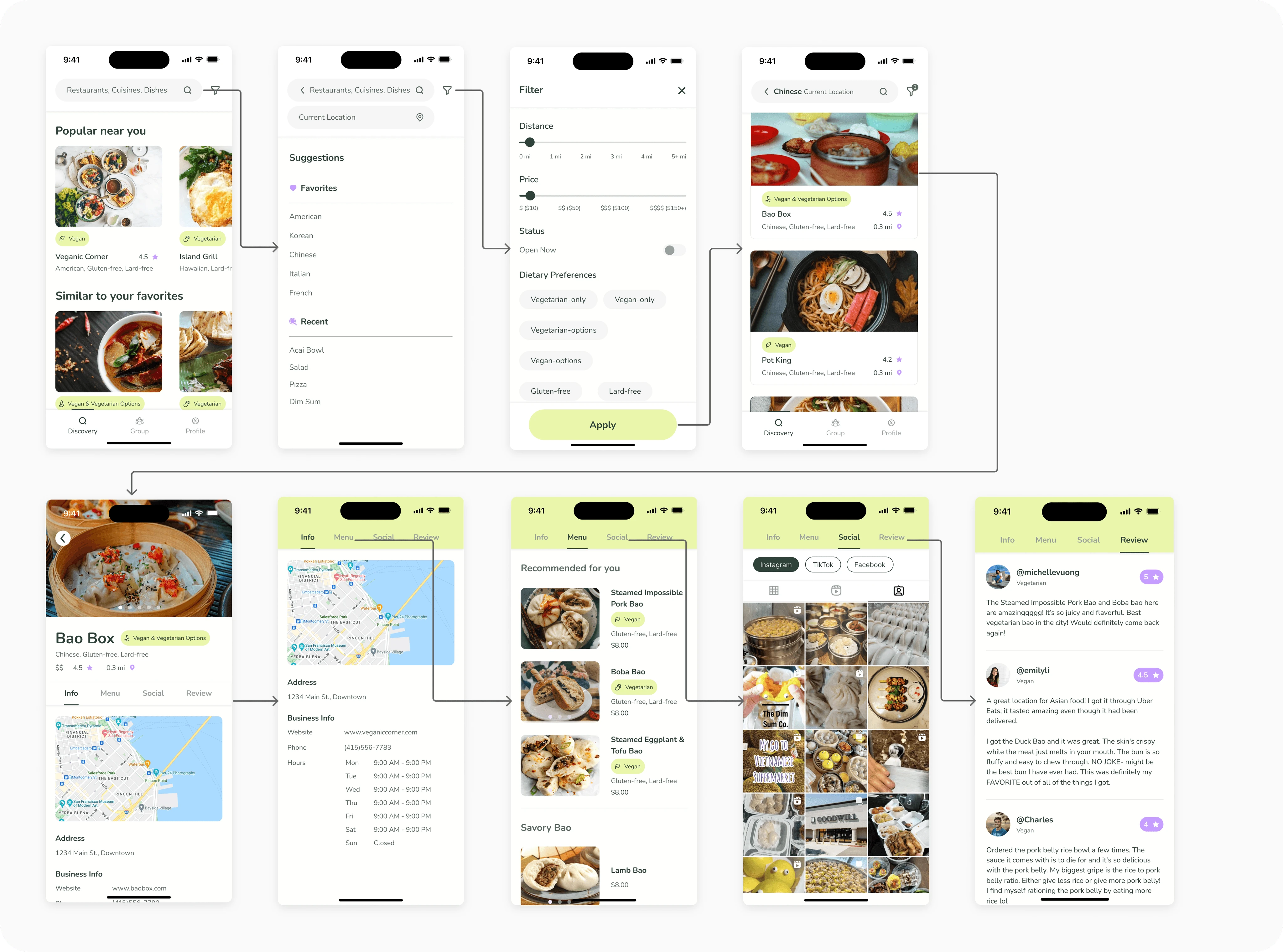
The YUUM app features specific filters that cater to vegetarians and vegans, allowing users to discover restaurants based on their dietary preferences. Additionally, YUUM provides a social media page for each restaurant, enabling users to access the business's social content directly from the app.
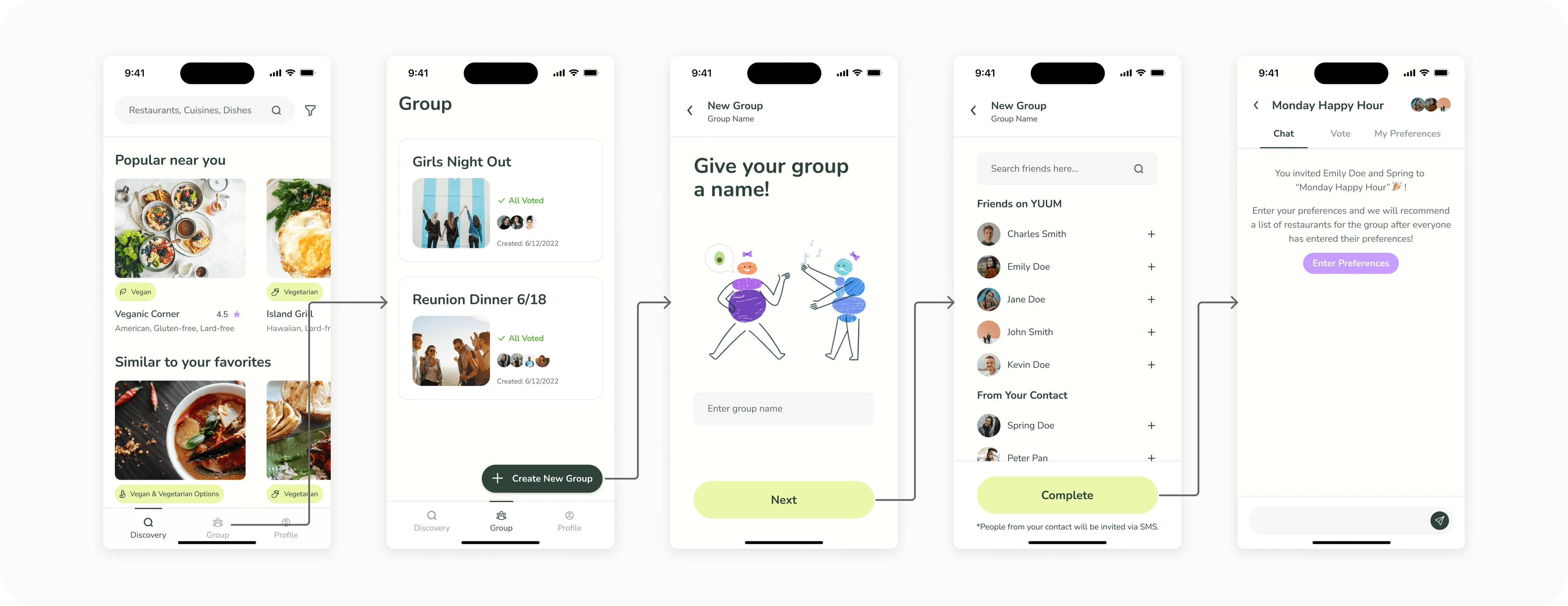
YUUM's group feature streamlines the process of organizing dine-outs with friends by enabling users to create a group within the app. This eliminates the need to switch between multiple chat apps, making the planning process more efficient and user-friendly.
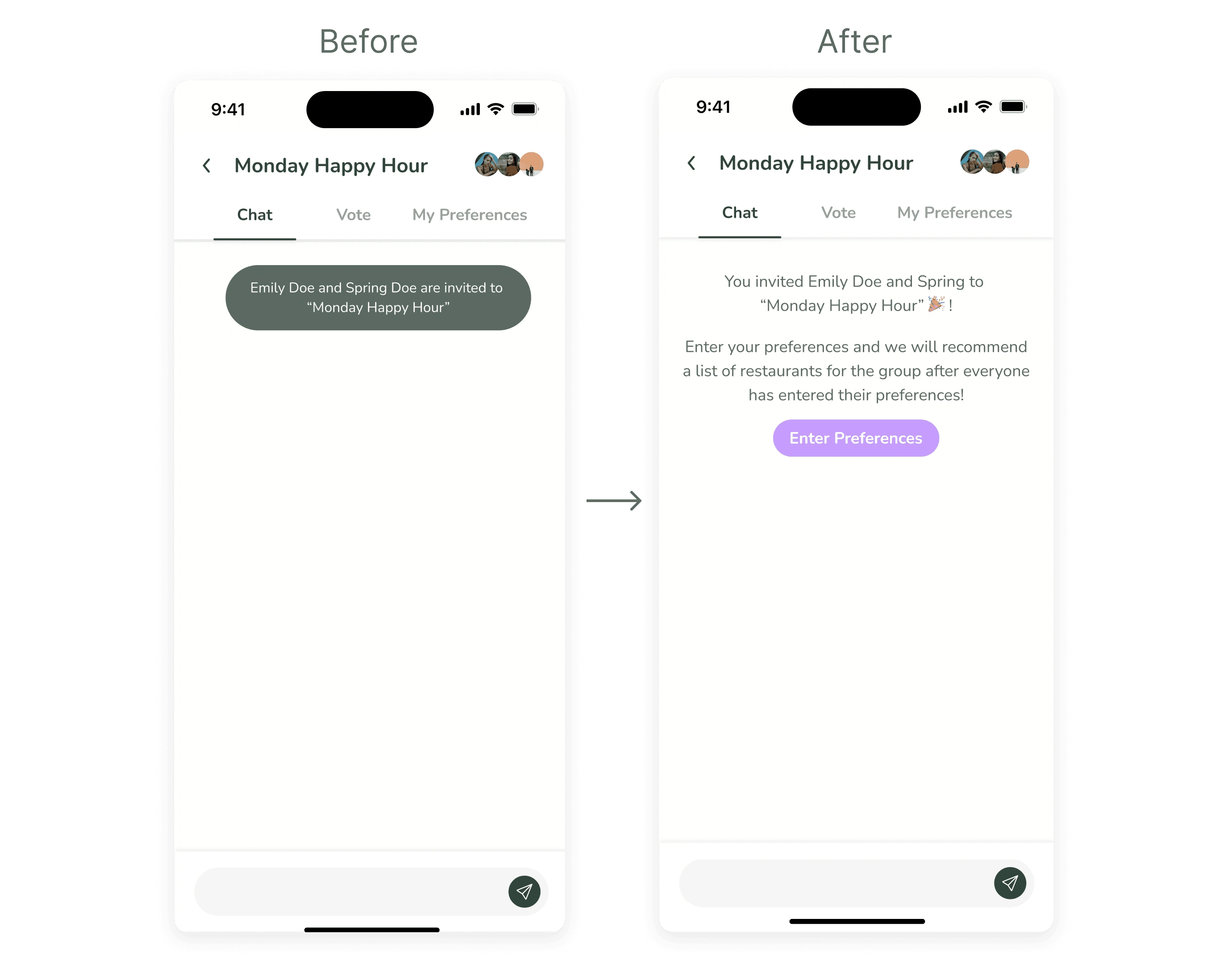
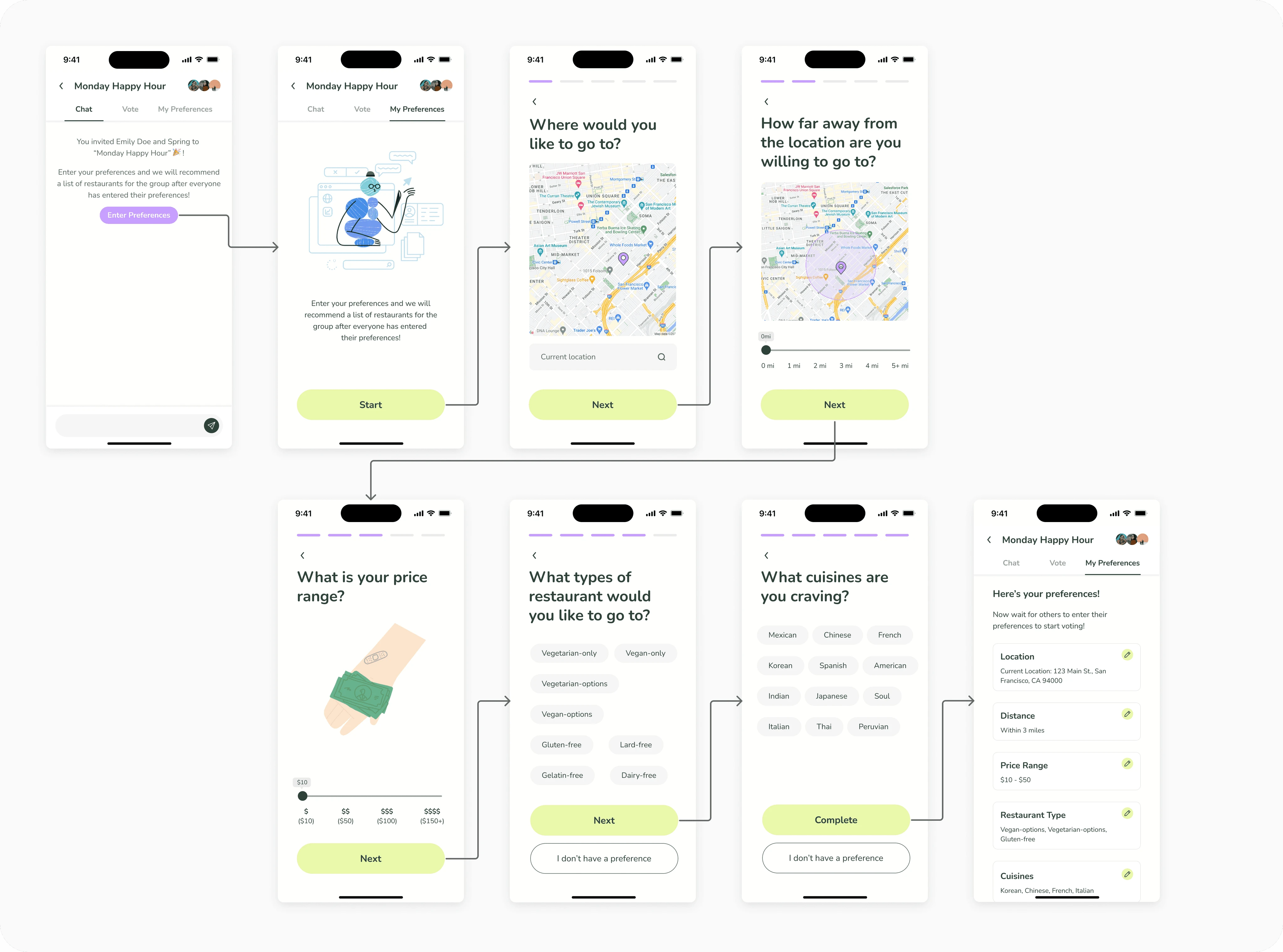
Users can enter their dining preferences within their group on YUUM, allowing the app to calculate and provide the group with five restaurant recommendations that accommodate everyone's preferences.
This feature reduces the time and effort required to find a restaurant that suits everyone's needs.
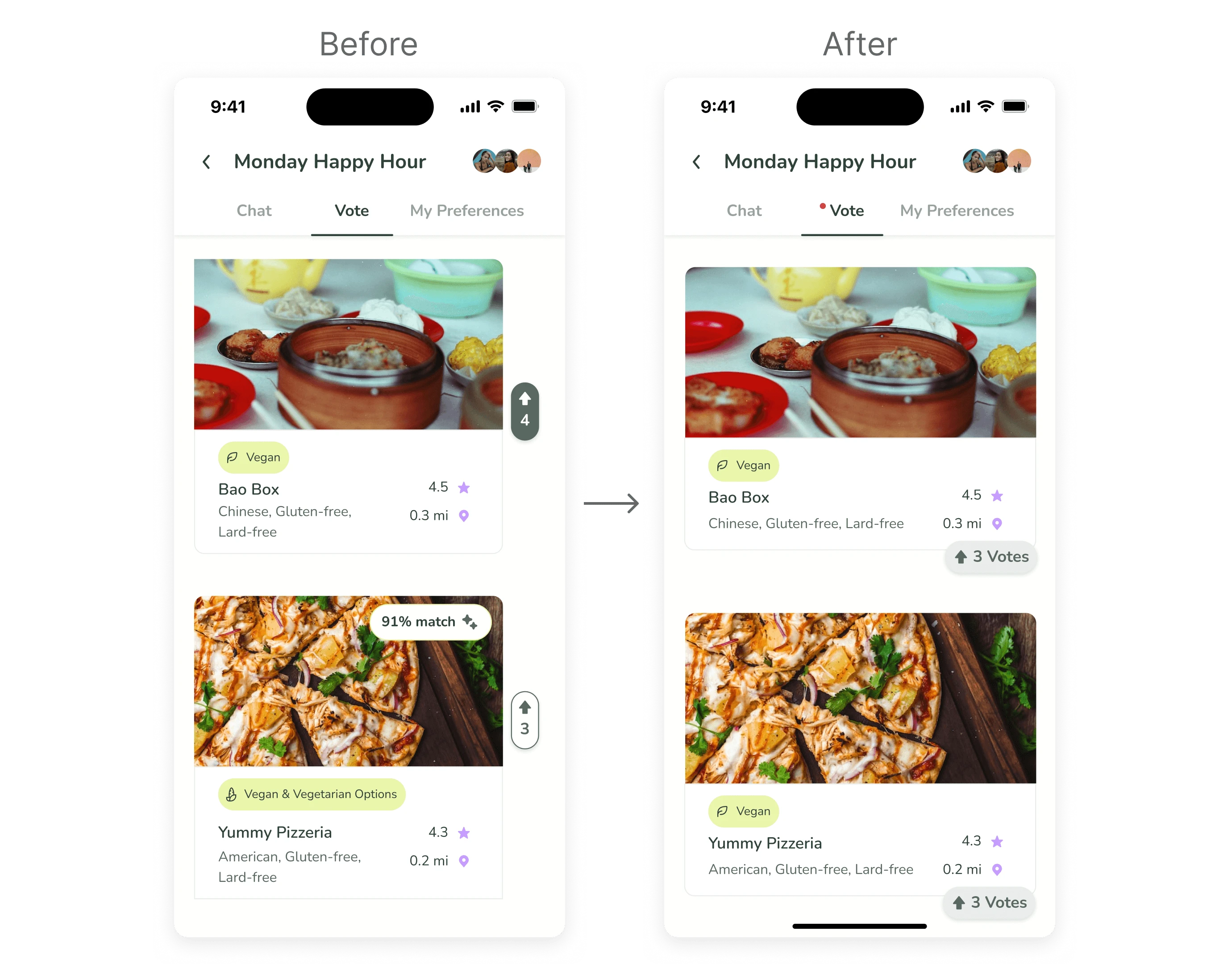
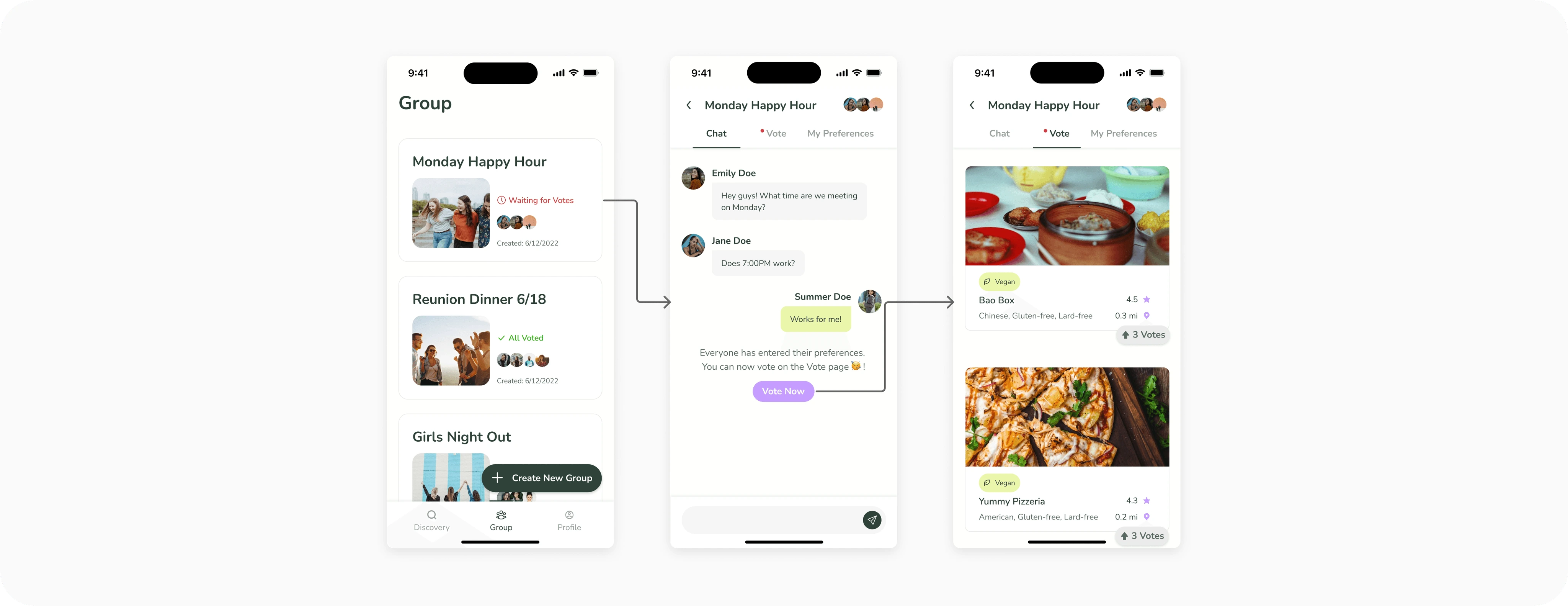
After entering their preferences, YUUM allows group members to vote for their favorite restaurant based on the app's recommended options.
This feature streamlines the decision-making process and ensures that everyone in the group is satisfied with the final choice.
Vegetarians and vegans spend 2x more time researching restaurants than omnivores.
According to the Statista Global Consumer Survey on diets and nutrition in the US in 2022, there are about 15.5 million people in the US who follow a vegetarian diet. If each one of them spends 10 more minutes researching restaurants, that's more than 294 years wasted in total!
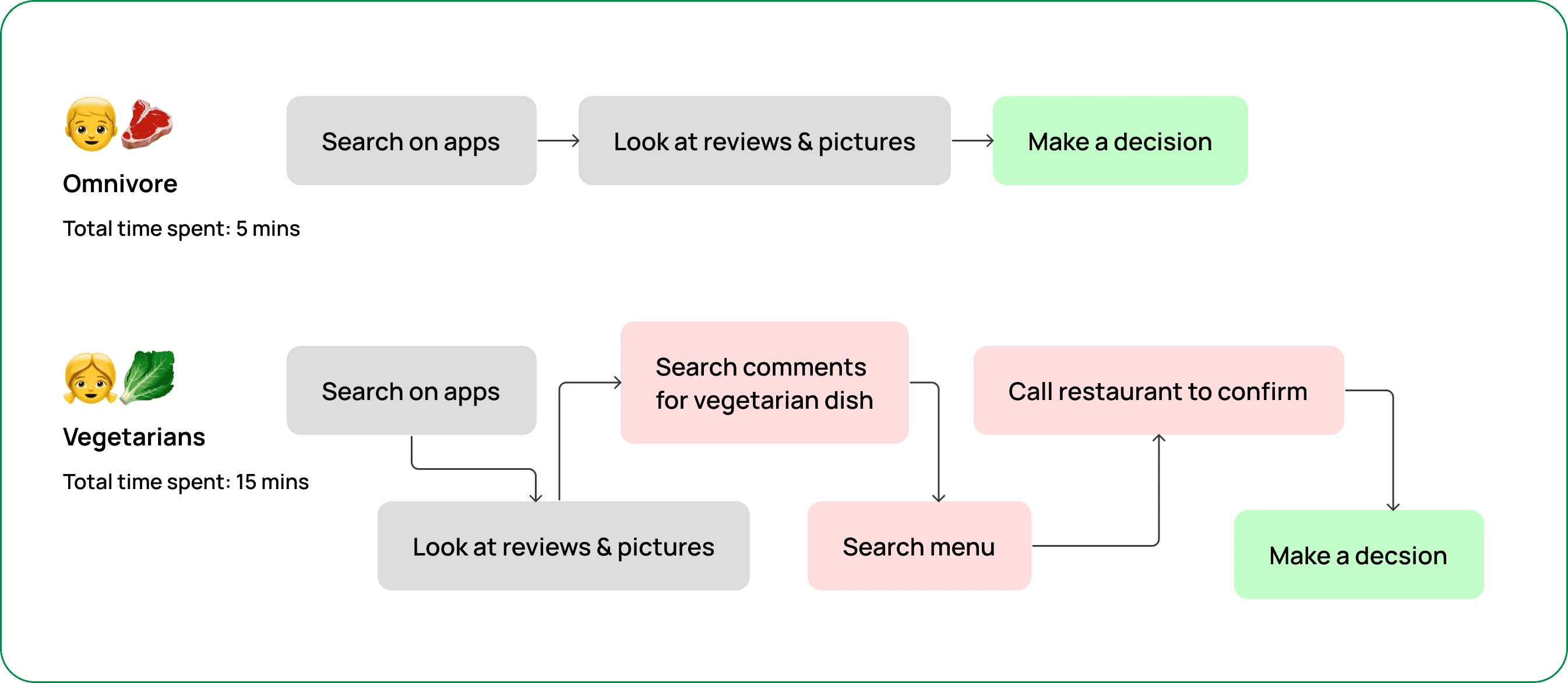
This observation makes me wonder:
"How might we make the research process easier for vegans and vegetarians when they dine out with others?"
To gain a more comprehensive understanding of the scope and context of the problem I am addressing, I conducted desk research to gather existing data on the topic.
Here are the 2 main insights I found:
65% of vegetarians identified “eating out” as a major challenge because there are limited vegetarian options at restaurants
When it came to assistance, the study found that 80% of vegetarians consider “suggestions for eating out” as excellent support.
Vegans & vegetarians expressed that the restaurant research and dine-out planning process is inefficient & time-consuming
To further understand the needs and challenges faced by our users, I conducted primary research in the form of one-on-one generative interviews with 6 vegetarians and vegans who dine out with others at least once a month. The purpose of this research was to gather first-hand insights into how these users currently research restaurants, plan dining outings, and any pain points they encounter during the process. By directly engaging with our target audience, I was able to gather valuable insights that were lacking from the desk research.
Through affinity mapping and thematic analysis, I identified 3 main pain points:
The information about the restaurants in the existing apps doesn't clearly specify if they have vegetarian dishes or not. The users usually need to dig through the menu and reviews to find out.
Since vegetarians have more dietary restrictions, they often become the default person who does the restaurant research and planning for the group.
Vegans & vegetarians usually switch between 3-5 apps to research and plan whenever they dine out with others. These apps include Yelp, Google Maps, iMessage, Messenger, Instagram, TikTok, etc.
None of the apps streamline the experience from finding a restaurant to organizing a dine-out with friends
In addition, I conducted a competitive analysis to understand how the existing products solve the problem and what features are necessary for our product to stay competitive in the market.
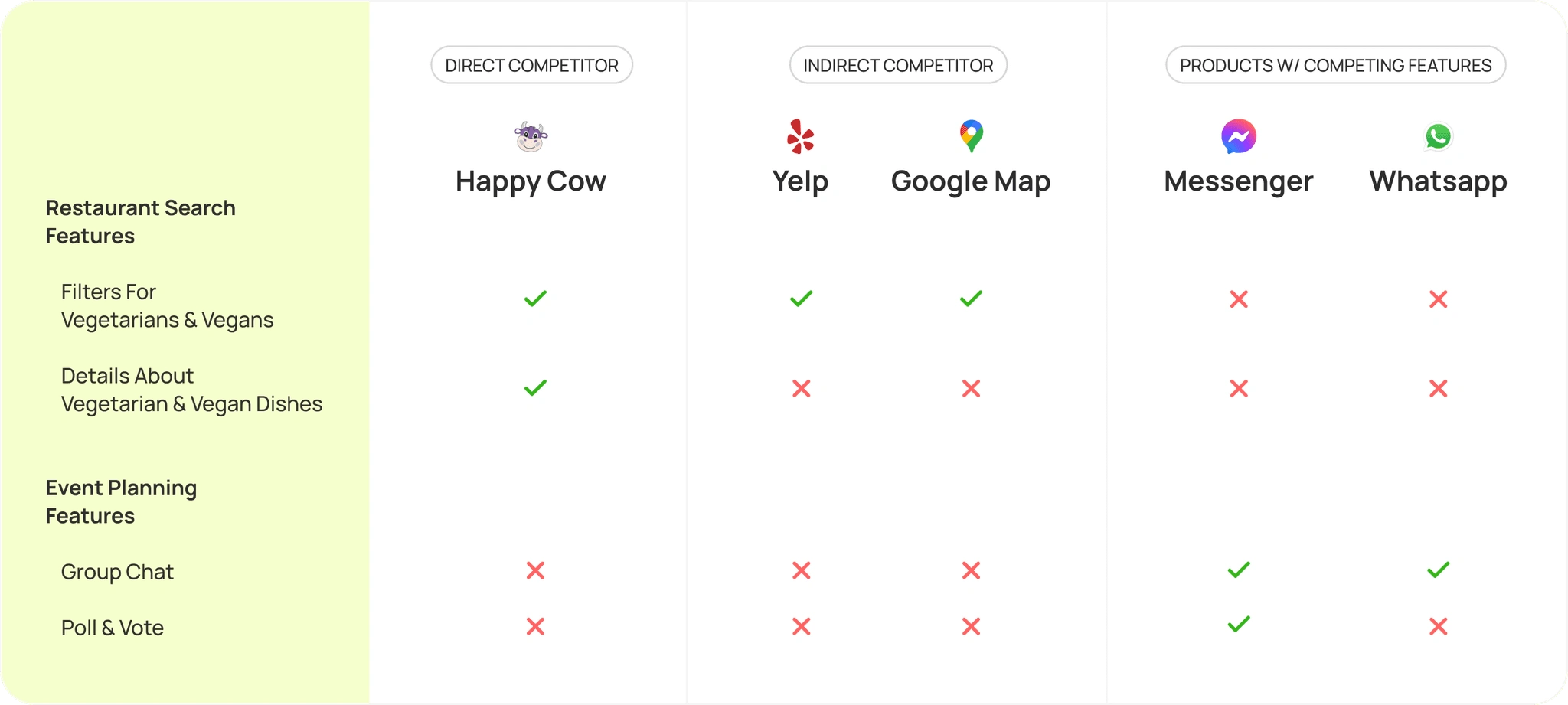
From the analysis, I found that none of the applications streamline the experience from finding a restaurant to organizing a dine-out with friends.
An app that helps vegetarians and vegans find restaurants and organize options of where to go will reduce the time they spend on researching and planning when they dine out with friends.
Based on the data and insights gathered from my research, it became clear that vegans and vegetarians need a product that helps them effectively plan dine-outs with others. With this in mind, I identified the following MVP features that are necessary for the product to provide value to users:
Synthesizing features ideas to organize the flows and the structure of the app
To visualize how users would accomplish their goals, I created user flows based on the proposed features.
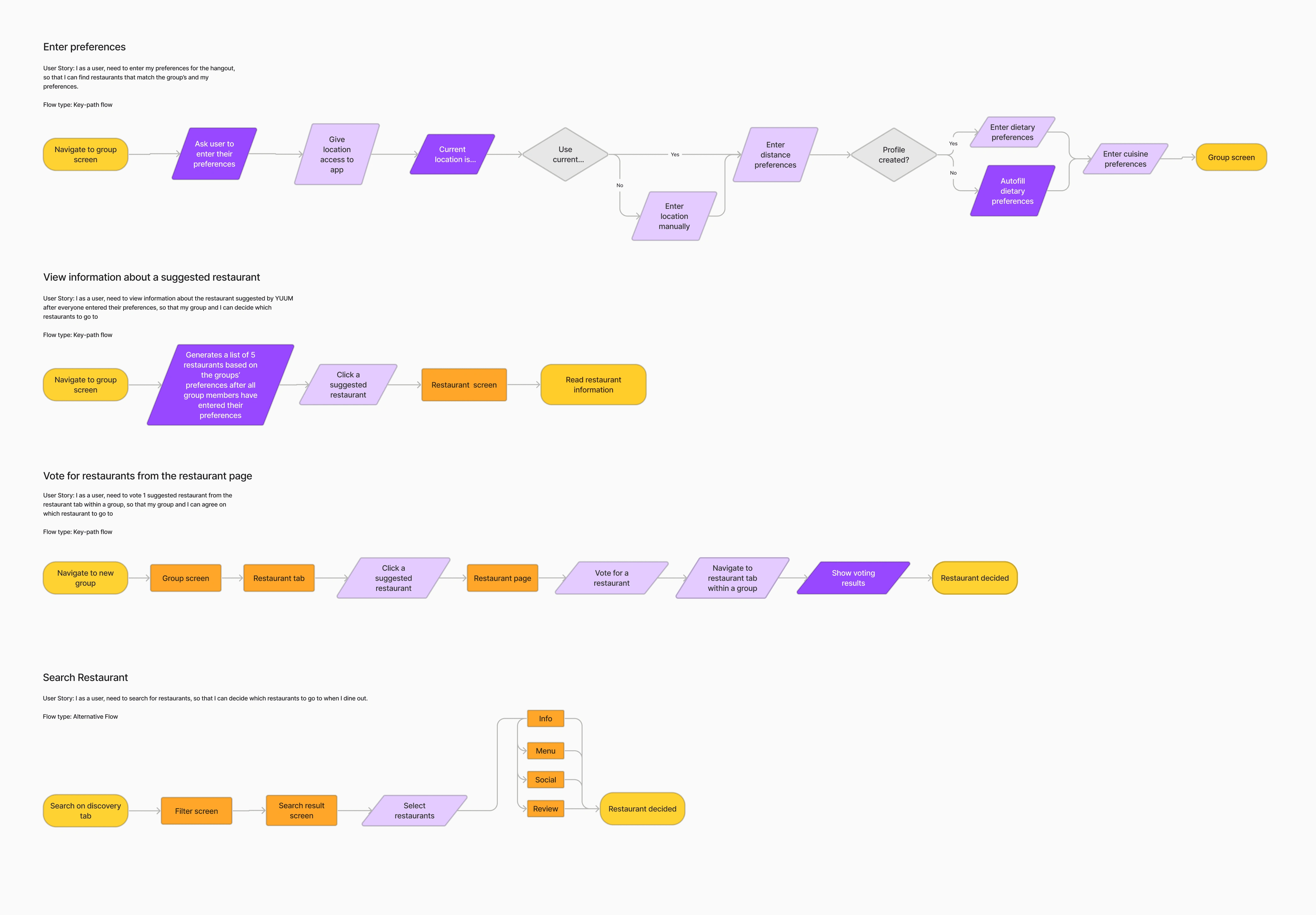
By defining the user flows, I gained a deeper understanding of the necessary app pages and content, which allowed me to consolidate my insights into information architecture.
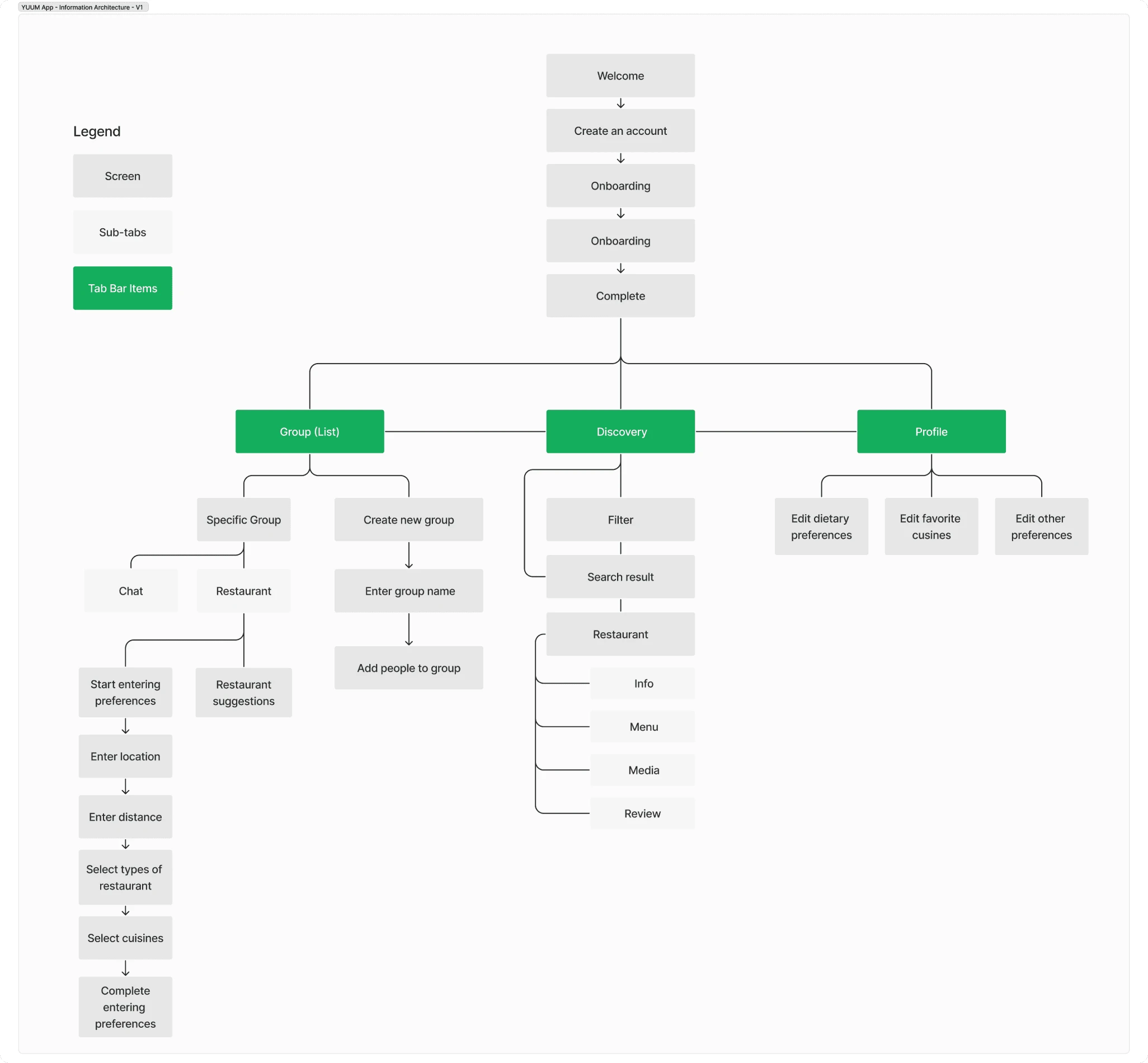
Group: where the users plan a dine-out with their friends
Discovery: where the users search and browse restaurants
Profile: where the user edits their profile. It is a necessary but non-critical feature. Therefore, the Profile tab will not be included in the MVP design.
There are 2 sub-tabs within the Group tab: Chat and Restaurant.
Chat: where the users can chat and talk about the logistics of their dine-out plan
Restaurant: where the users enter their restaurant preferences for dine-out. After everyone in the group has entered their preferences, the tab will change to a restaurant suggestions page.
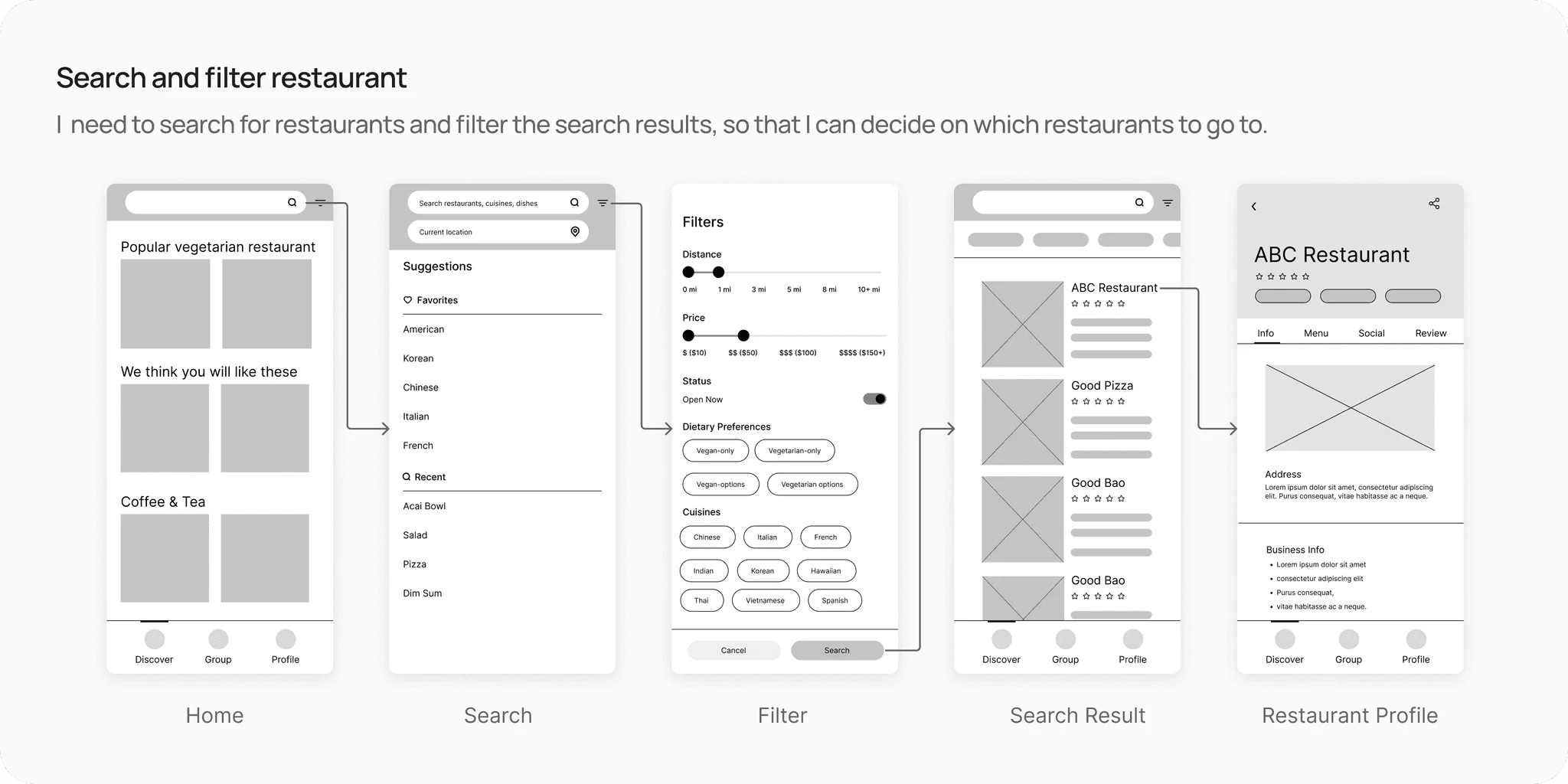
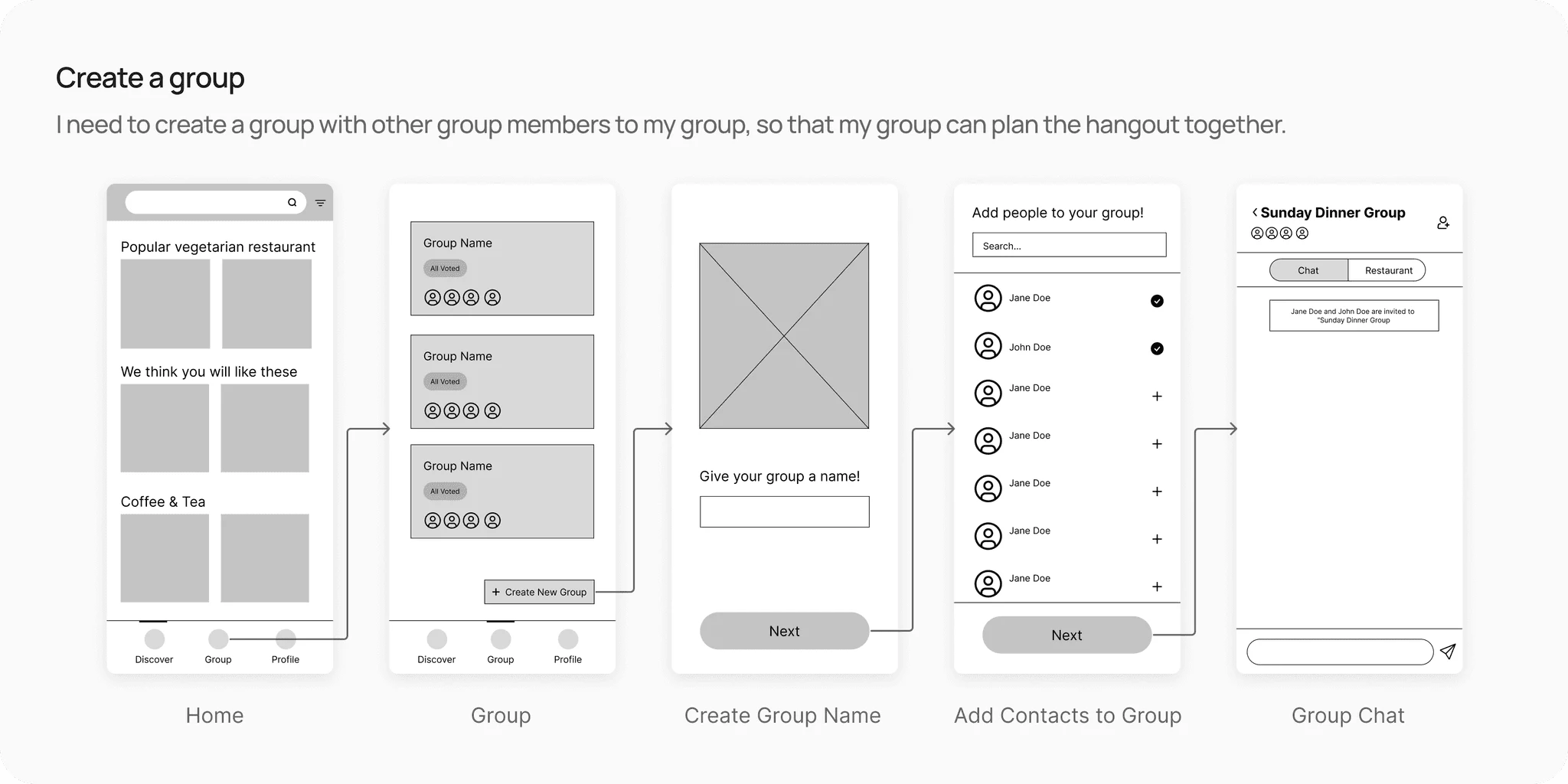
Creating wireframes to visualize the user flows and layouts of the app
After sketching out my initial ideas for the product, I translated them into wireframes to create a more tangible representation of the design. The low-fidelity wireframes would then be used for testing my design during the concept testing sessions.
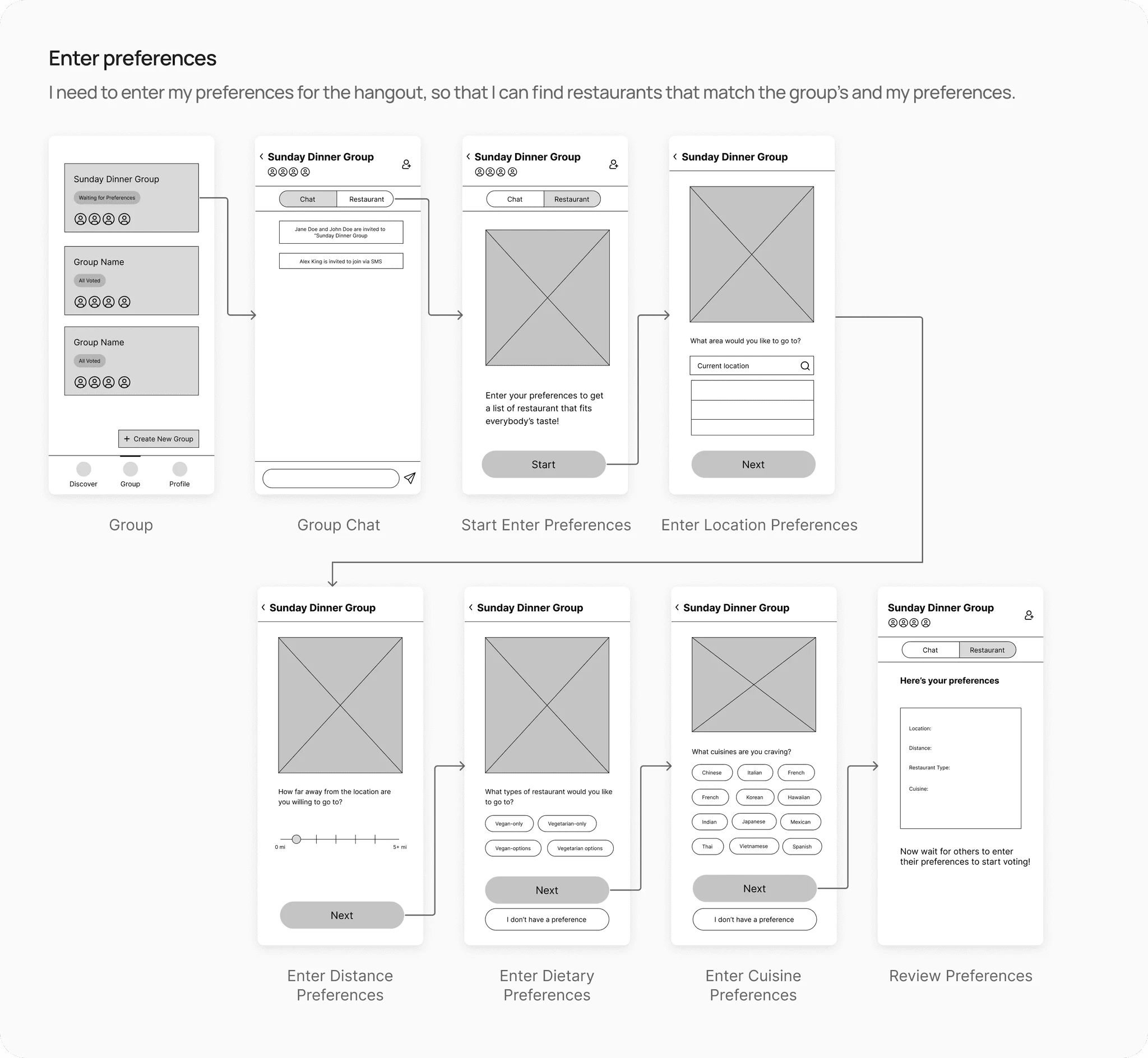
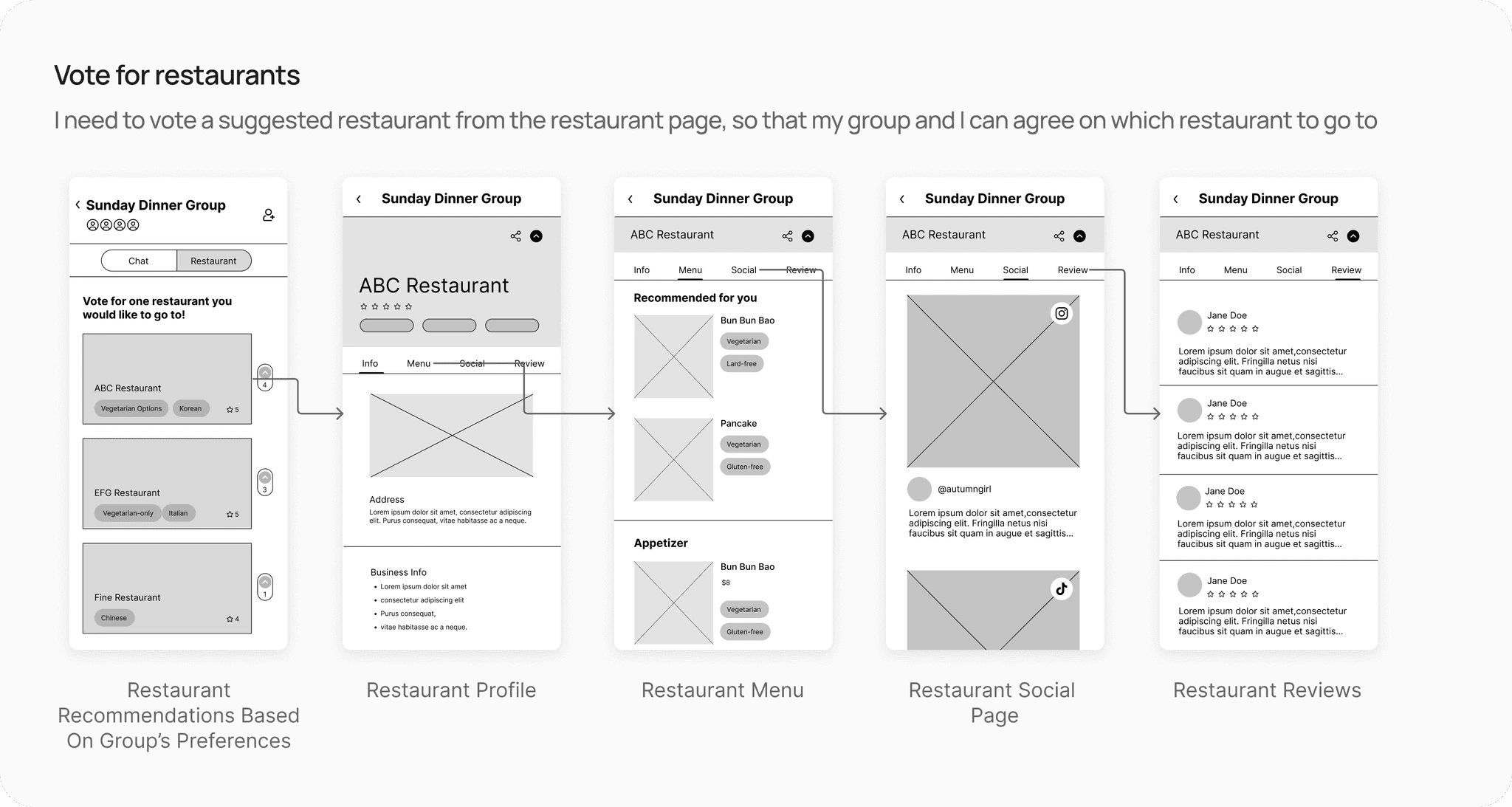
Early user feedback unveiled flaws in user flows and tab labeling
At this point of the design process, I wanted to get early user feedback about the design solution to make sure that the product was heading the right direction. The goals of the test were to evaluate if the design matches the mental model of the users and to validate the information architecture of the app and the labeling of the tabs.
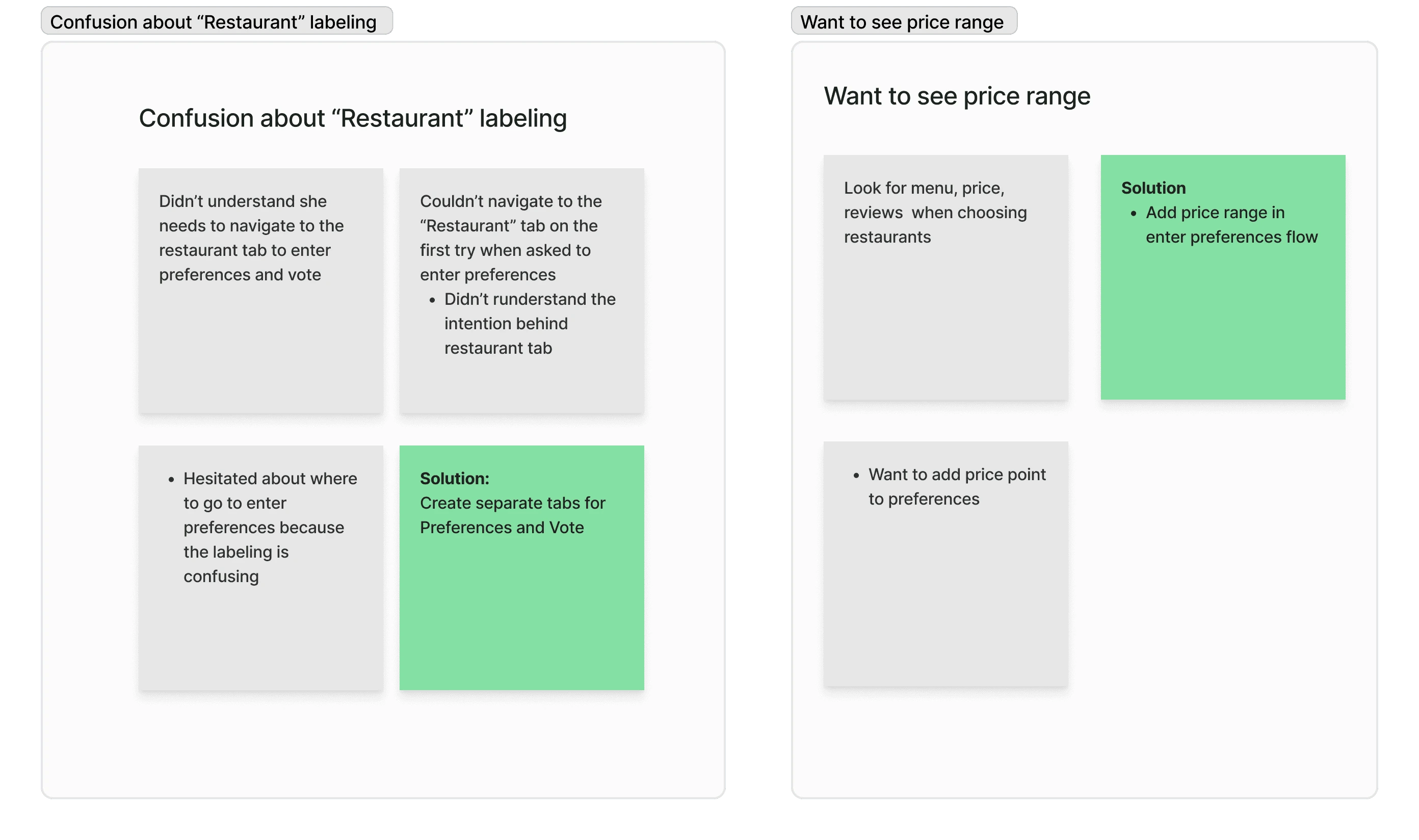
Overall, the users believed that the application will help them streamline their research process when dining out with friends. Meanwhile, I also identified 2 major areas of concern and iterated the design to address those issues.
Users had difficulty understanding the purpose of the "Restaurant" tab, which is where they can enter preferences and vote for restaurants. To address this, I separated the two tabs and provided clear labels to help users easily locate and perform the desired actions.
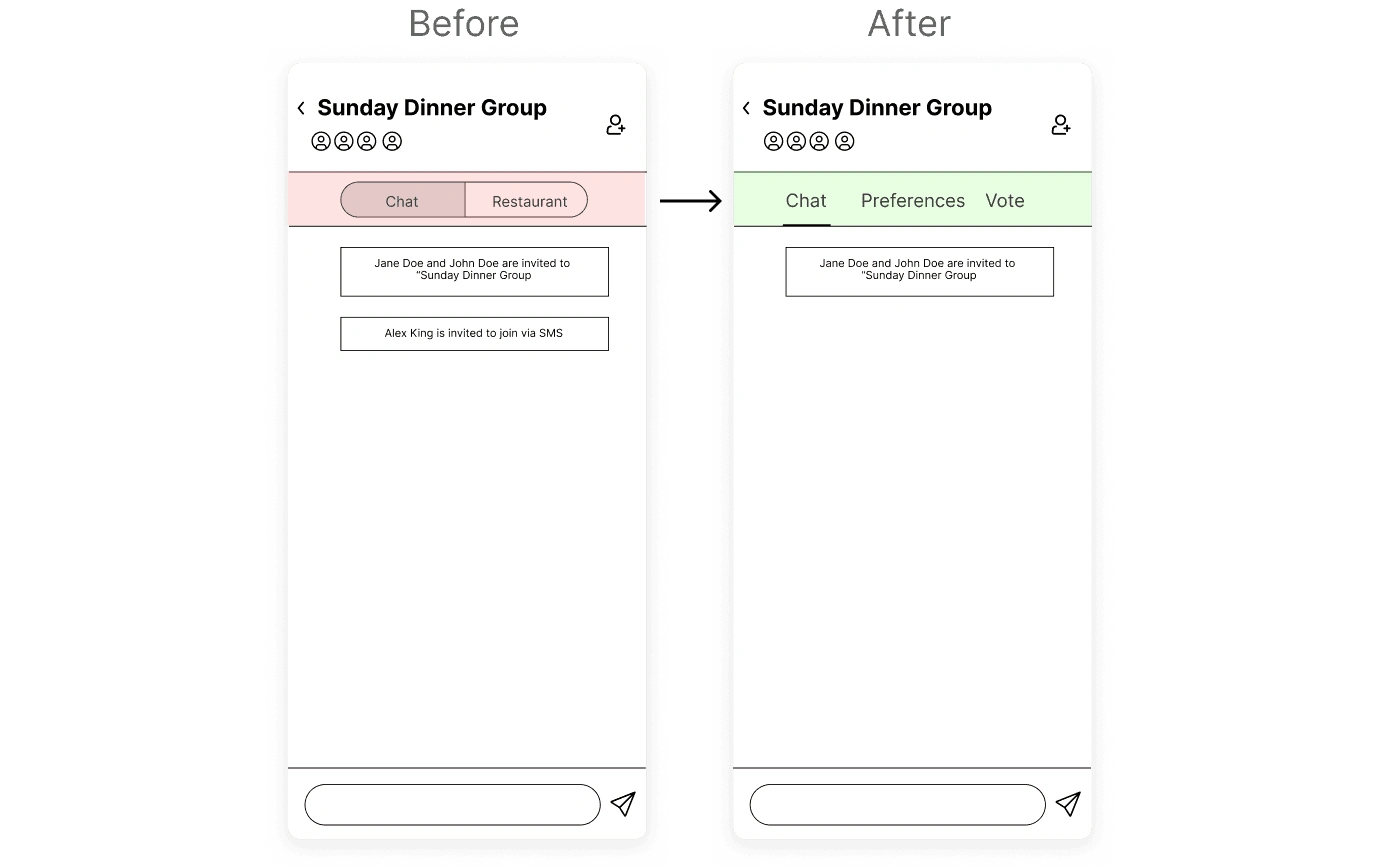
Based on the insights I gathered from the concept testing sessions and the improvements I made to the design, I felt more confident to move forward with my design solution. I iterated the low-fidelity wireframes and continued on to creating the high-fidelity prototypes.
Conducting another round of testing to uncover usability issues
Before finalizing the MVP of the product, I wanted to conduct additional usability testing sessions to ensure the optimal usability of the YUUM app. The goals of these testing sessions were to:
Evaluate the users' ability to successfully create a group, enter preferences, and vote for a restaurant using the YUUM app. This will help us assess the effectiveness of the app's core functionalities and determine if users can accomplish these tasks intuitively and without confusion.
Identify and uncover any usability issues that may exist within the app. By observing users' interactions and collecting their feedback, I aim to pinpoint any areas of friction, confusion, or inefficiency in the user experience.
Fine-tuning the high-fidelity prototype based on key findings from usability tests
Based on the usability test, I made 3 more improvements on the high-fidelity design.
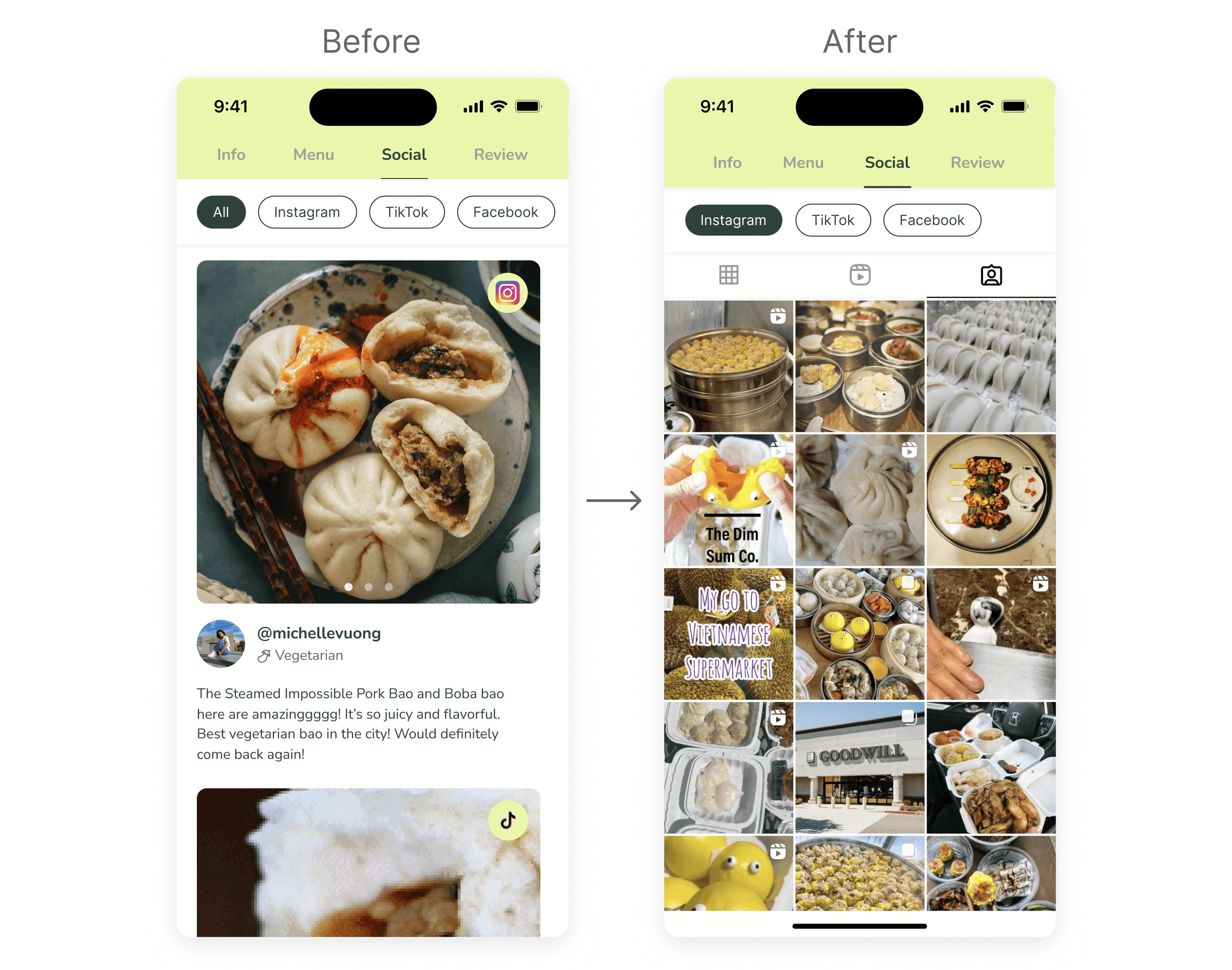
Changing the restaurant's social media tab from an aggregated social media feed to an in-app browser
In my usability testing, many users expressed confusion about where the social media content comes from. In addition, I also consulted an engineer about the feasibility of the design and I realized that aggregating all the social media content and building an in-app social feed is technically too complicated for an MVP product.
The iterated version of the social tab will open a browser app version of Instagram, Tiktok, and Facebook. The content under each social media platform will also be separated.
Final Product
Search, Filter and, View Restaurant Details
Create Groups
Enter Preferences
Vote For Restaurants
Like this project
Posted Aug 25, 2025
Designed YUUM app to streamline dining planning for vegans and vegetarians.
Likes
0
Views
7
Timeline
Aug 25, 2022 - Nov 25, 2022