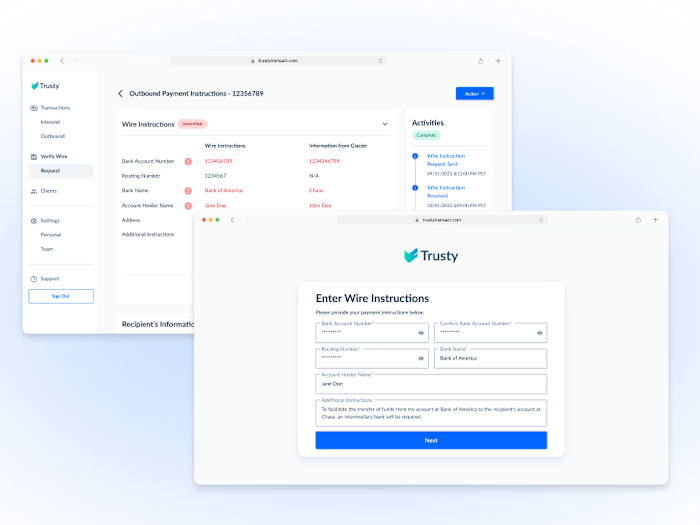
Payment Facilitation Platform Design for Trusty

Summer Yim

The Trusty team made the strategic decision to pivot from real estate transaction management software to payment facilitation software. This shift was driven by market research indicating a growing demand for a way to improve the payment process for real estate professionals. Our solution is an online payment facilitation platform that helps settlement agents collect earnest money deposits.
As the sole designer on this project, my responsibilities spanned various areas, including leading the design process from research, ideation, visual design to prototyping. To ensure the success of the product, I also collaborated with the product manager and the engineer to define the product requirements, technical constraints, and user flows.
The homebuyers will receive a co-branded email about the payment request. They can then initiate the payment process by securely connecting their bank accounts via Plaid.
The settlement agents can track their payments from the dashboard and view payment details by clicking on the transactions table.
At the beginning of this project, our knowledge of the regulations and processes surrounding real estate payments was limited. To bridge this gap, we engaged with settlement agents, who handle a majority of money transfers, to gain a better understanding of their pain points and challenges related to payments.
Most settlement agents utilize checks and wires for collecting and sending payments because they think these methods are more secure and meet regulatory requirements.
While acknowledging the inefficiency and outdated nature of these methods, settlement agents preferred for a secure payment transfer, even if it meant adopting an inefficient process.
More than half of the settlement agents we talked to have experienced wire fraud in the past. Wire fraud feeds into settlement agents' need for security, leading them to take extra precautionary steps to protect the money.
Settlement agents are usually closing multiple transactions at a time. Therefore, they constantly have many responsibilities on their plates.
🤔 Our research led us to ponder...
Our hypothesis: By building a digital payment software, we can streamline the payment process and eliminate the manual work of sending and receiving payments through check and wire.
For the initial iteration of our product, our focus revolved around streamlining the collection of earnest money deposits, which is a deposit made to a seller that represents a buyer's good faith to make a purchase such as the acquisition of a new home. We recognized this as the first significant payment in a real estate transaction process, which often causes unease for settlement agents.
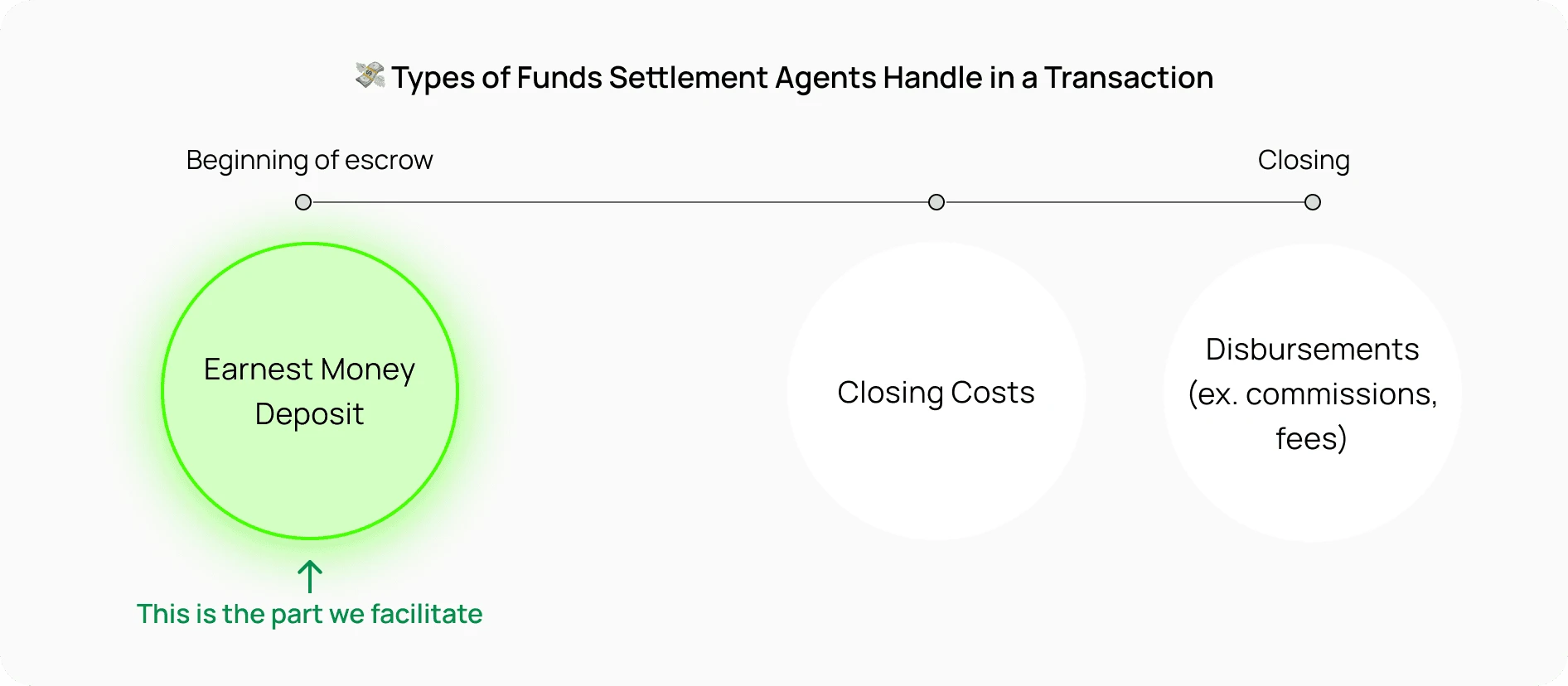
Prioritizing the needs of settlement agents and simplifying the payment workflow to create competitive advantages
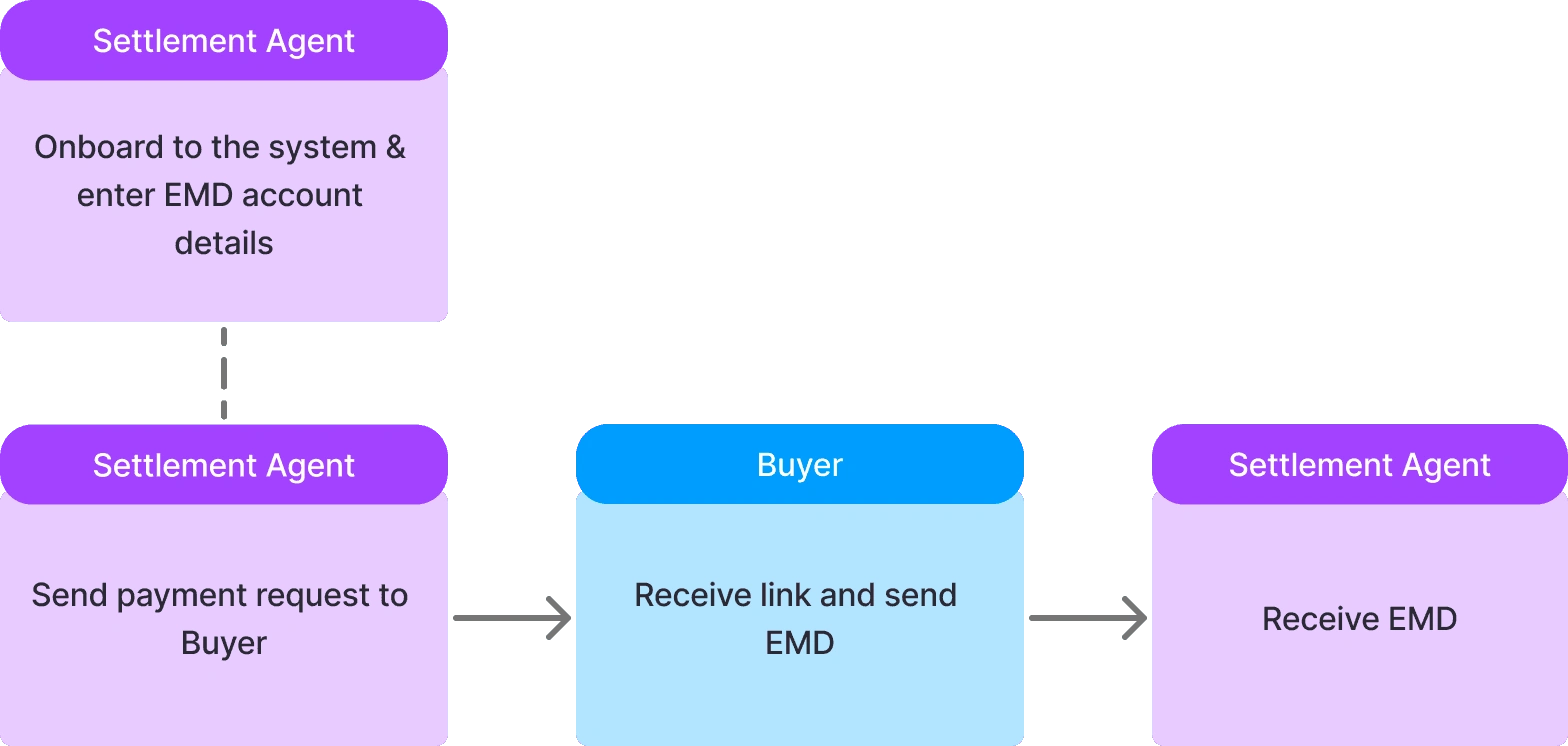
To inform our design, I revisited our research interviews with settlement agents to gain deeper insights into the existing payment process. Synthesizing the research, we learned how the current earnest money collection process works. Here’s what it looks like:

Additionally, I conducted a comprehensive competitor research analysis to explore the user flows employed by our competitors. This step was crucial in identifying areas for improvement and distinguishing our product in the market before diving into the design phase.
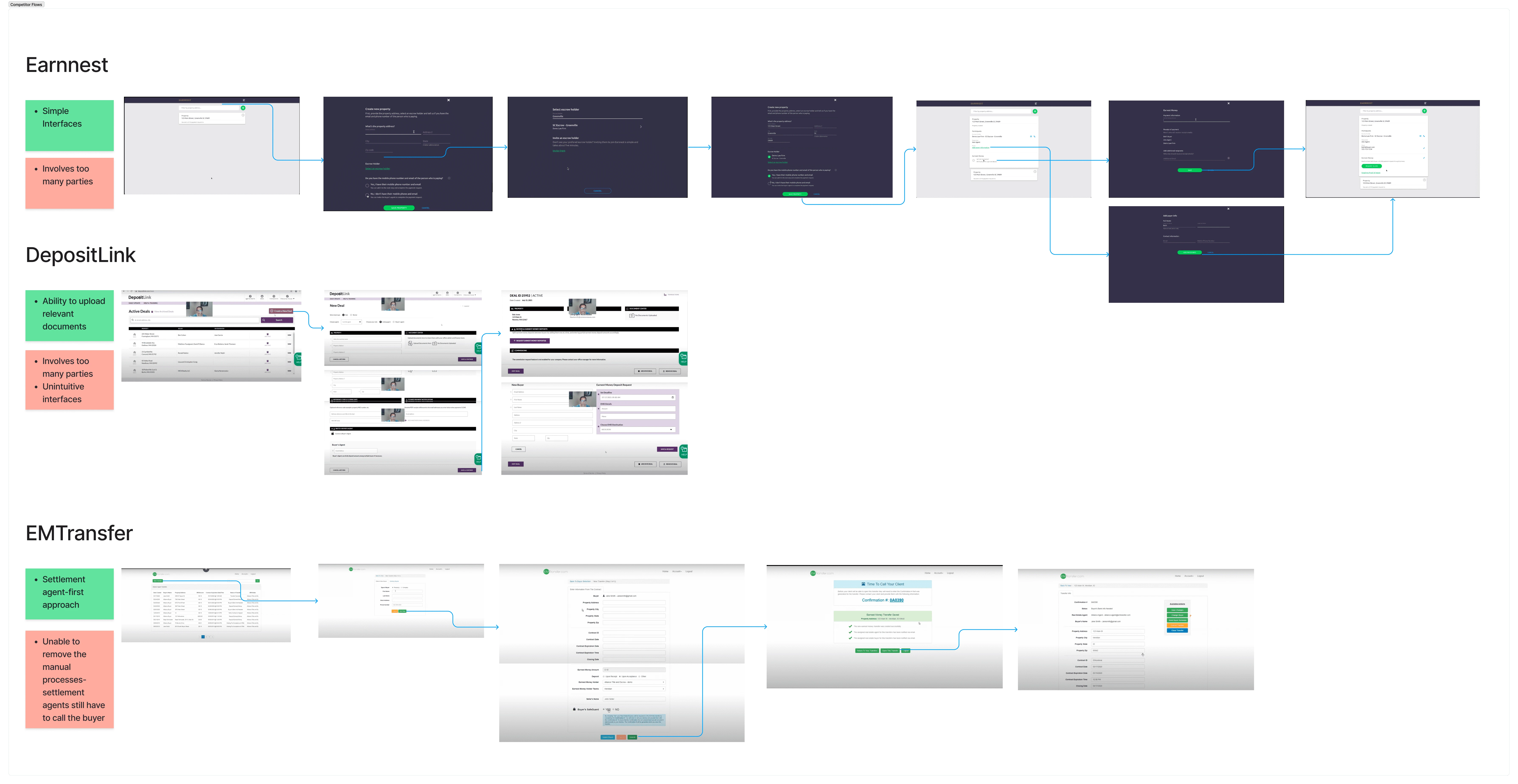
From the competitive analysis, I realized 2 major pitfalls about our competitors' products:
❌ Involves unnecessary parties (ie. buyer agent) in the process
❌ Settlement agents have no control over the process even though they are the party holding the funds
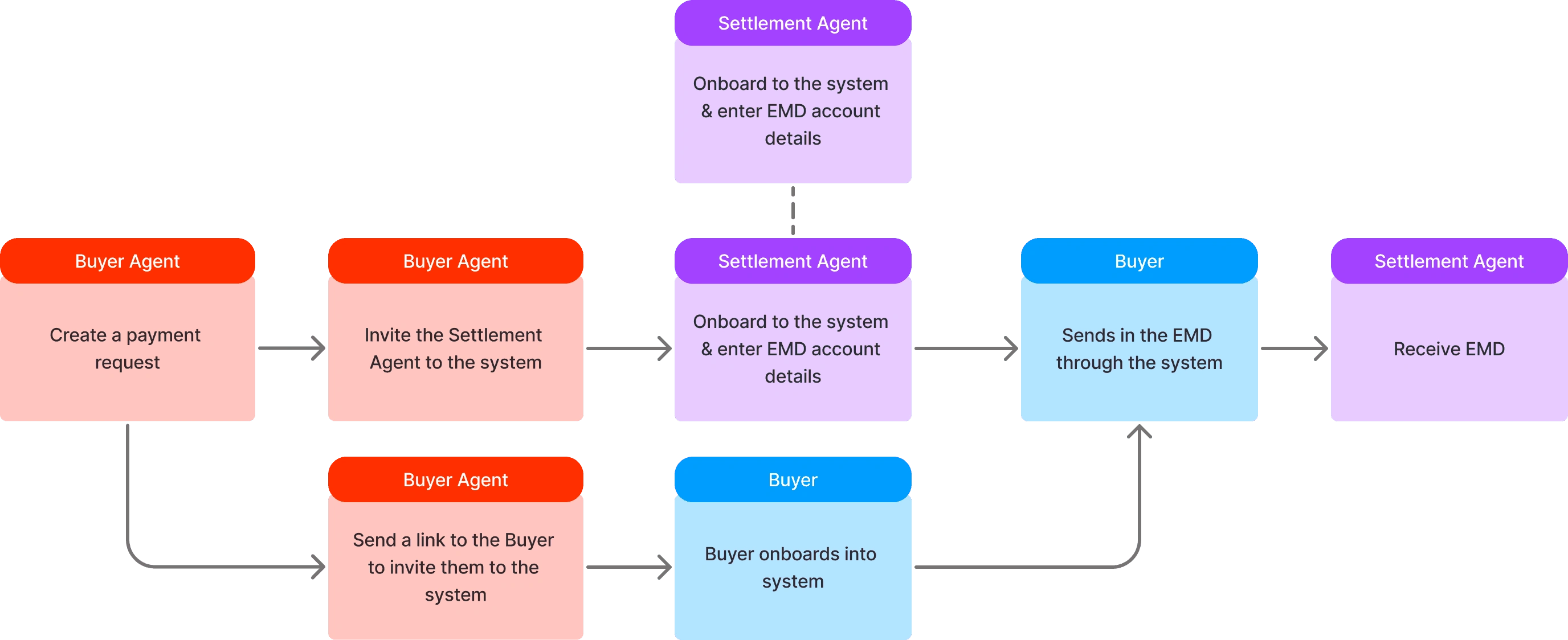
With the insights obtained from our research, I collaborated with the product and engineering team to define the high-level user flows. Unlike other competitors in the market, which focus their software on serving the real estate agent, we wanted to prioritize the settlement agent as the primary user. This helped us to eliminate the back-and-forth communication between the settlement agents and the real estate agents. Hence, creating a more streamlined , efficient, and secure payment workflow.
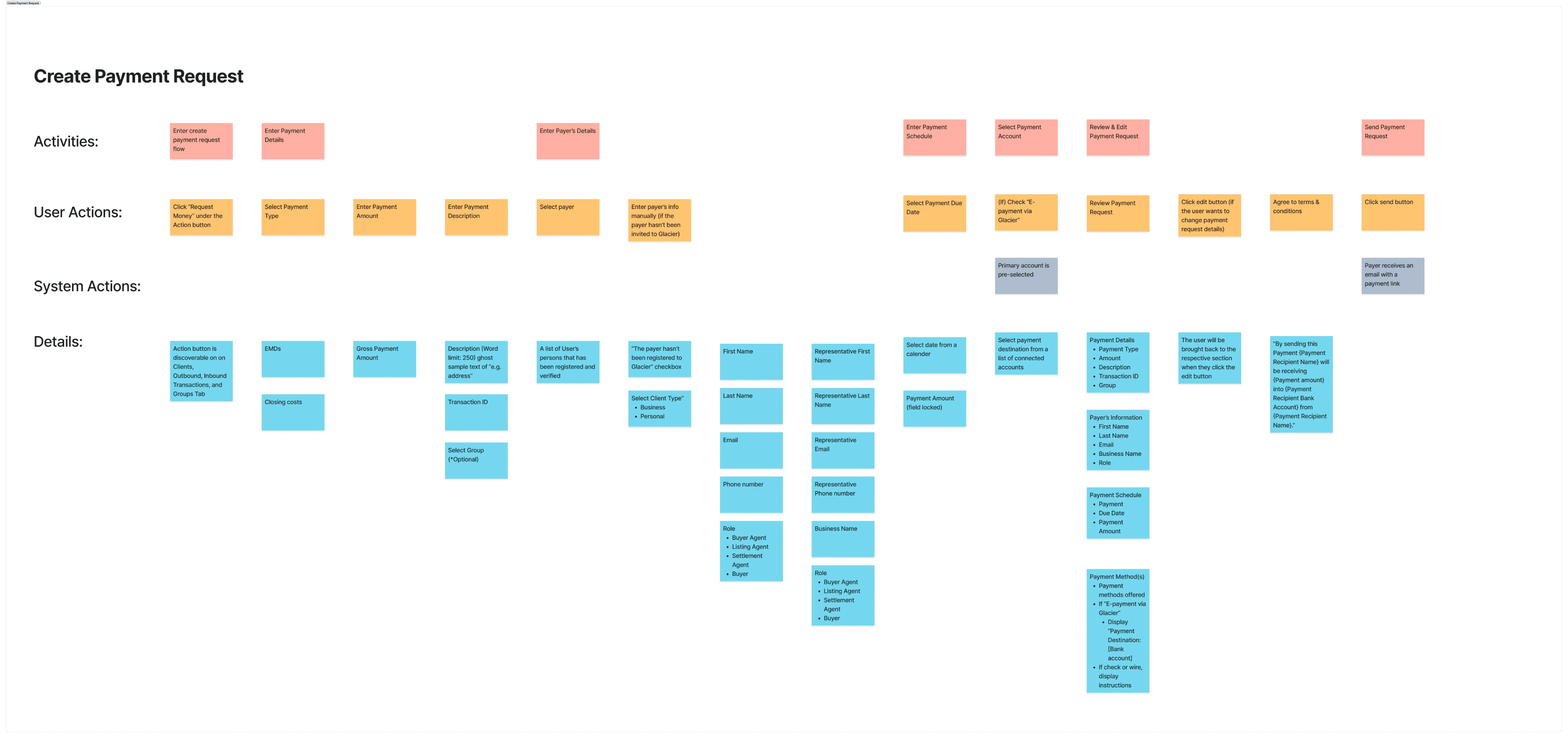
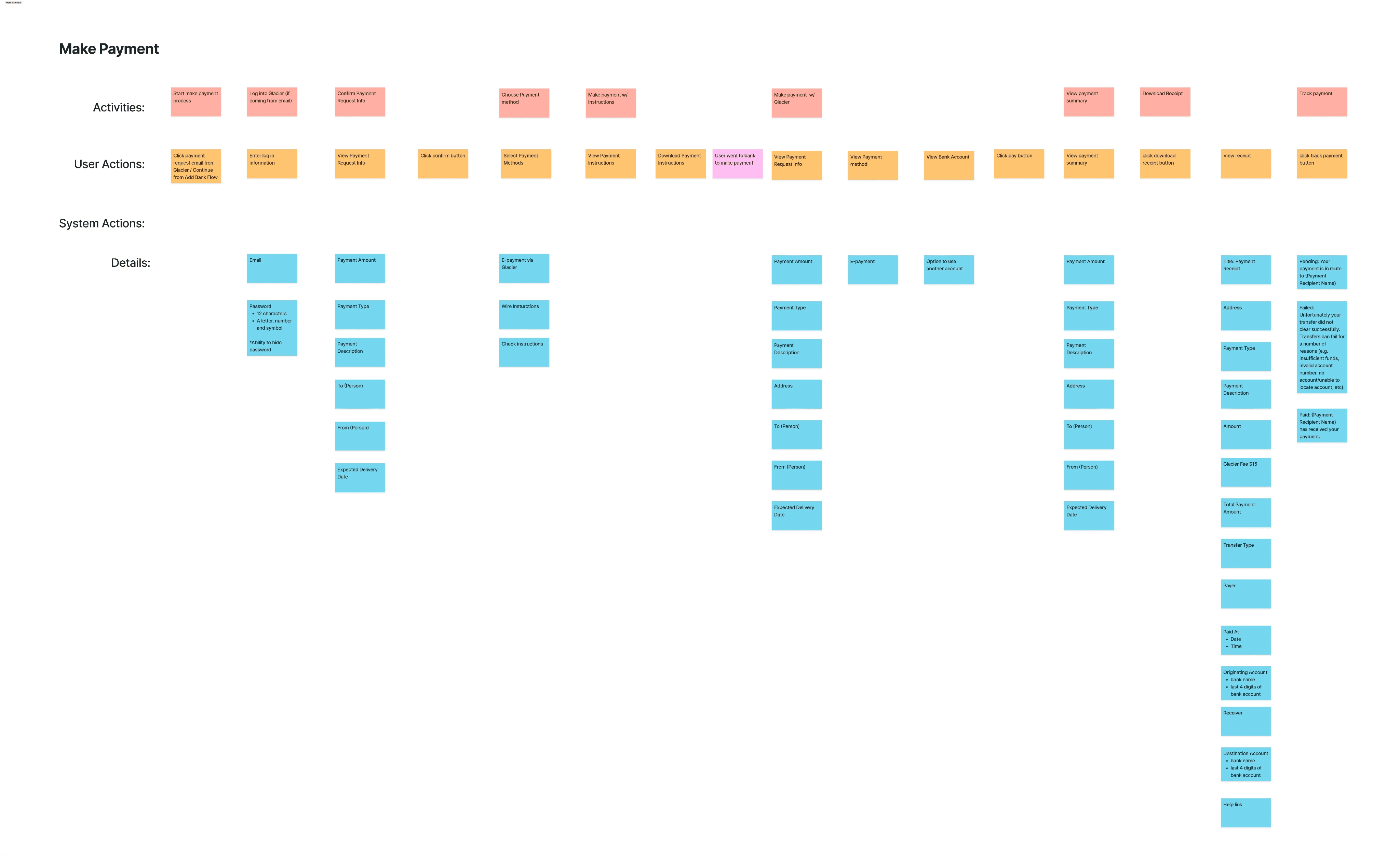
After defining the high-level user flow, we further defined the user stories to facilitate the payment process.
Leveraging existing components for a timely MVP launch
After defining the user flows and product requirements. I started on the design portion of the product launch.
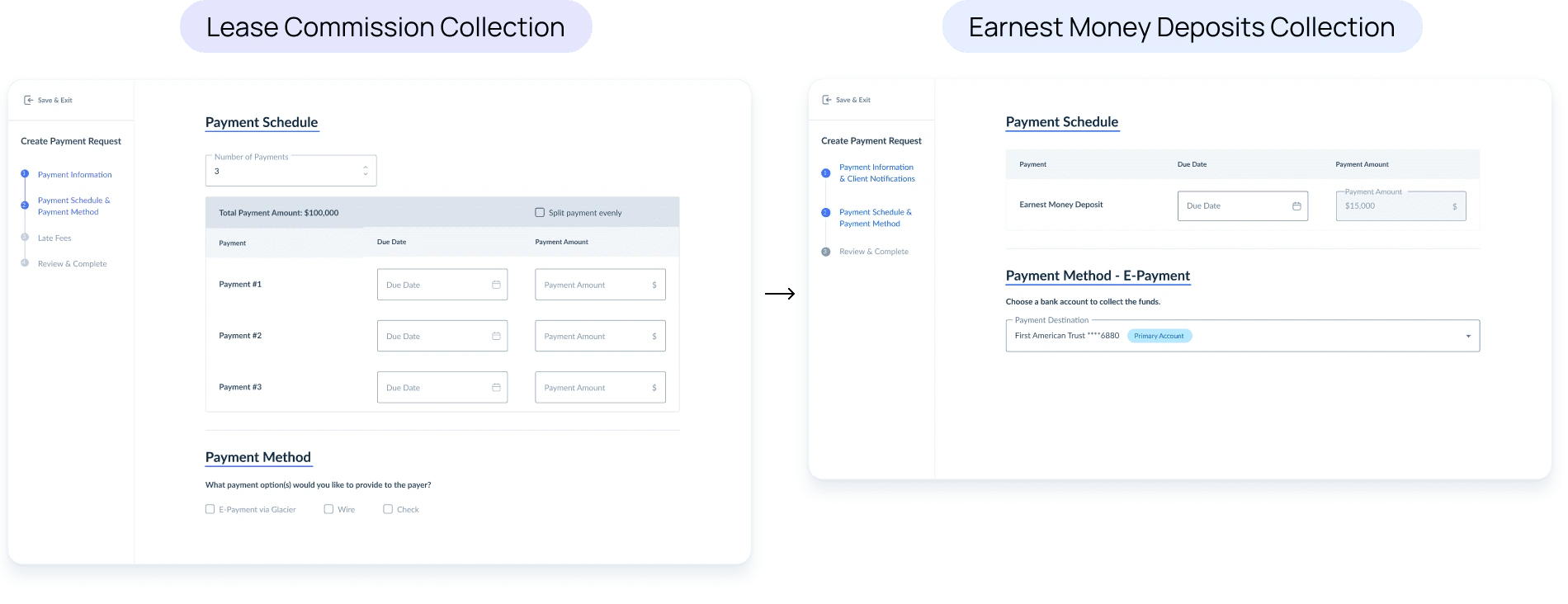
To meet our internal deadline and expedite the product launch, I repurposed components from our previous Lease Commission Collection product. Although this approach might potentially impact the usability of the product, our team recognized the importance of quickly launching the MVP to validate its product-market fit and gather immediate feedback from settlement companies.
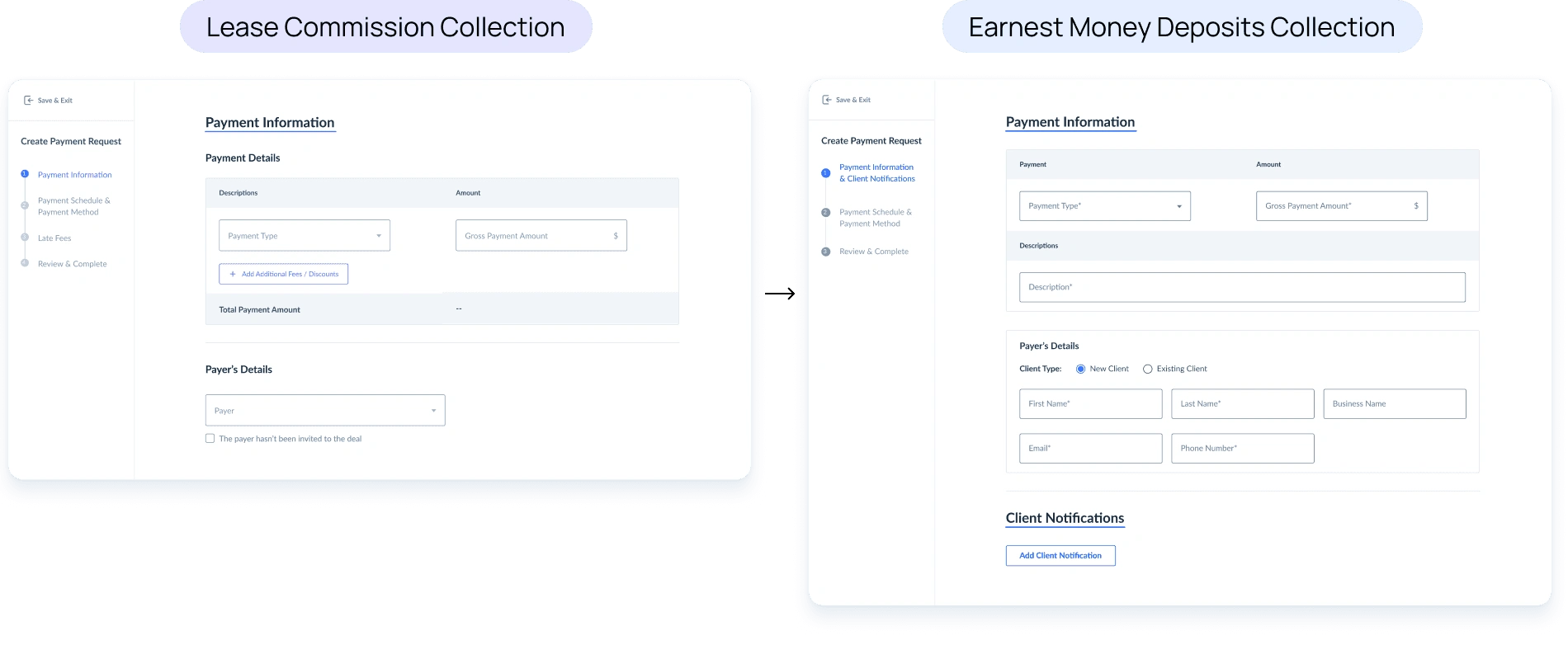
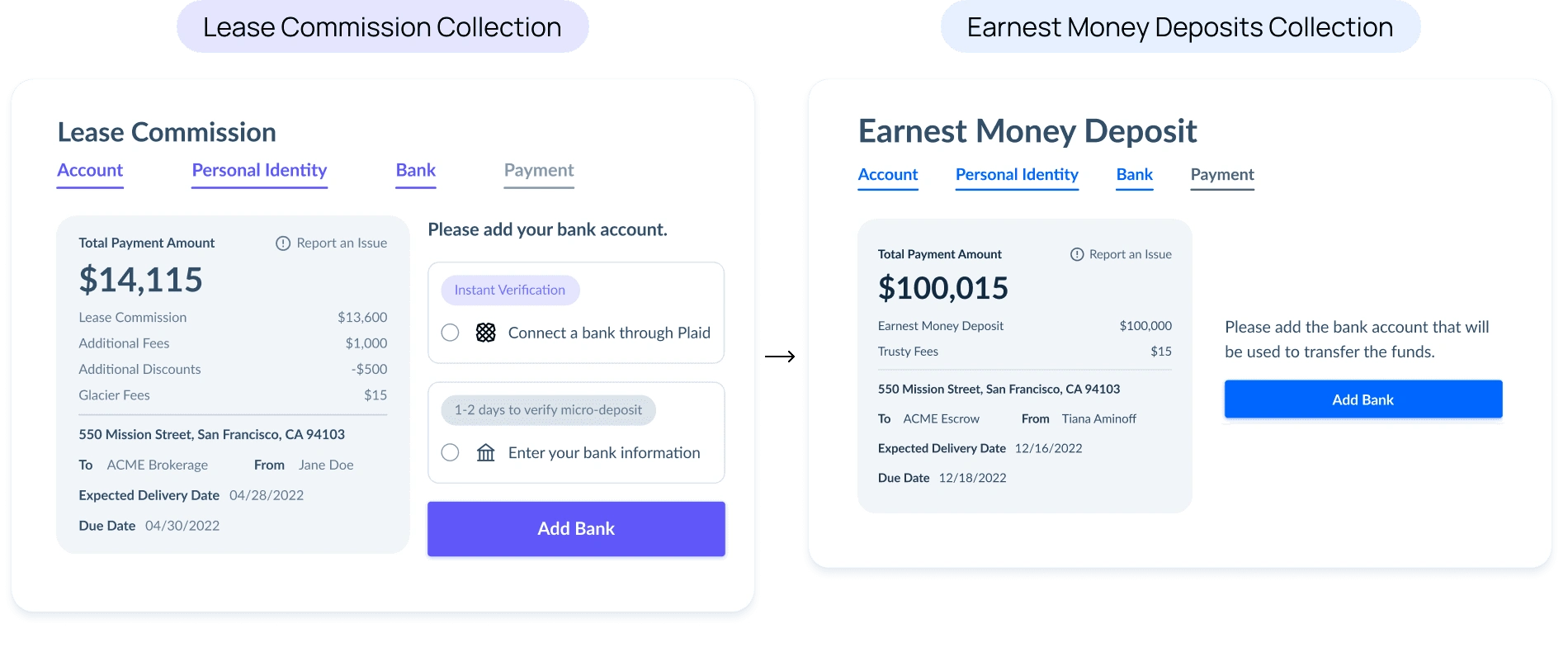
Homebuyer receives a payment request email and makes earnest money deposits
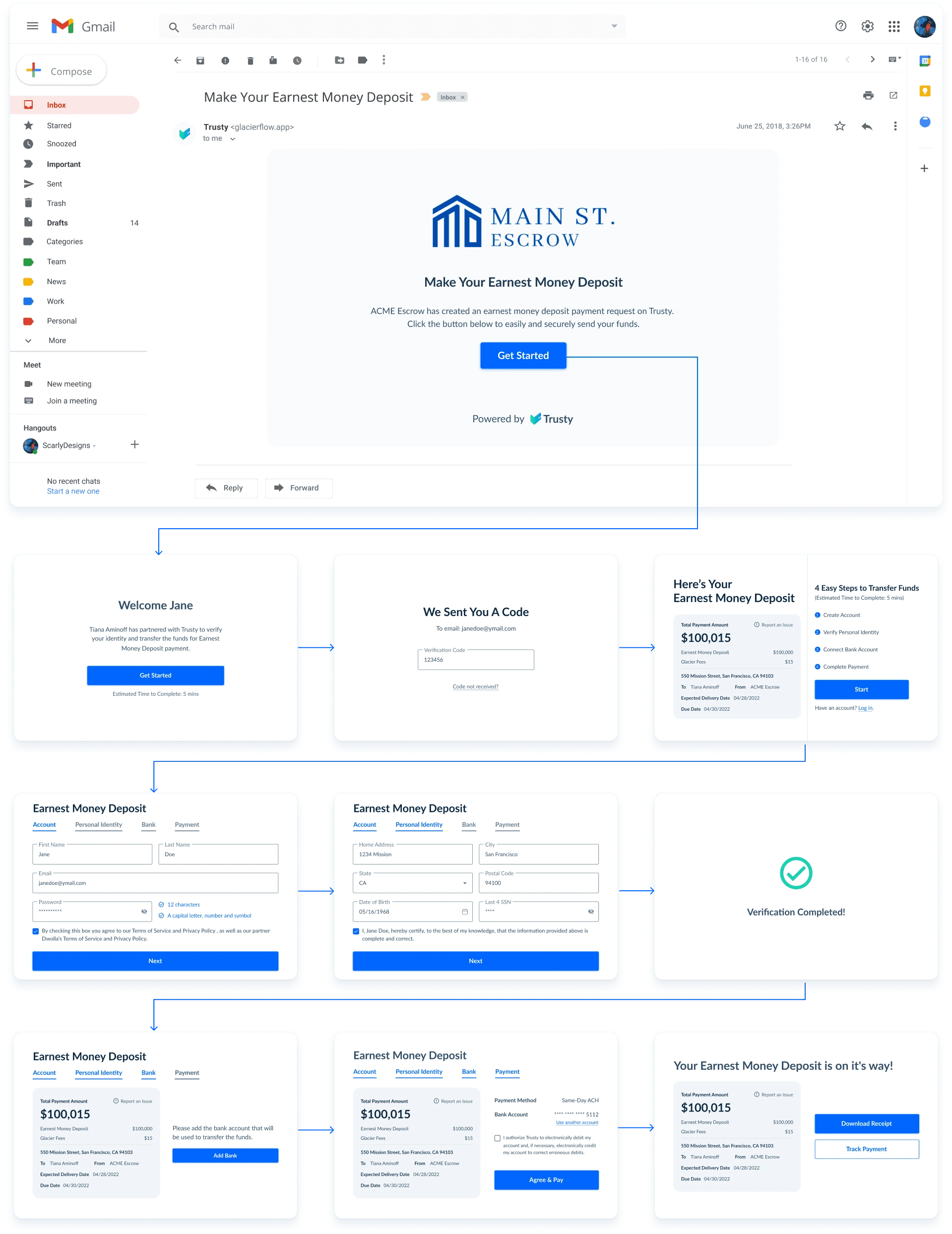
After shipping the MVP, we reached out to our research participants and asked for their feedback. The initial feedback we got from settlement agents was mostly positive. Many of them found the product simple, straightforward, and easy to use.
However, they also raised 2 significant concerns about the product:
Our current system does not allow separation of responsibilities among agents.
🤔 With the new insights, the next version of our product shifted to addressing the following questions:
1. HMW increase our system’s flexibility to accommodate the need for separation of duties in settlement companies?
2. HMW enhance the perceived credibility of our system?
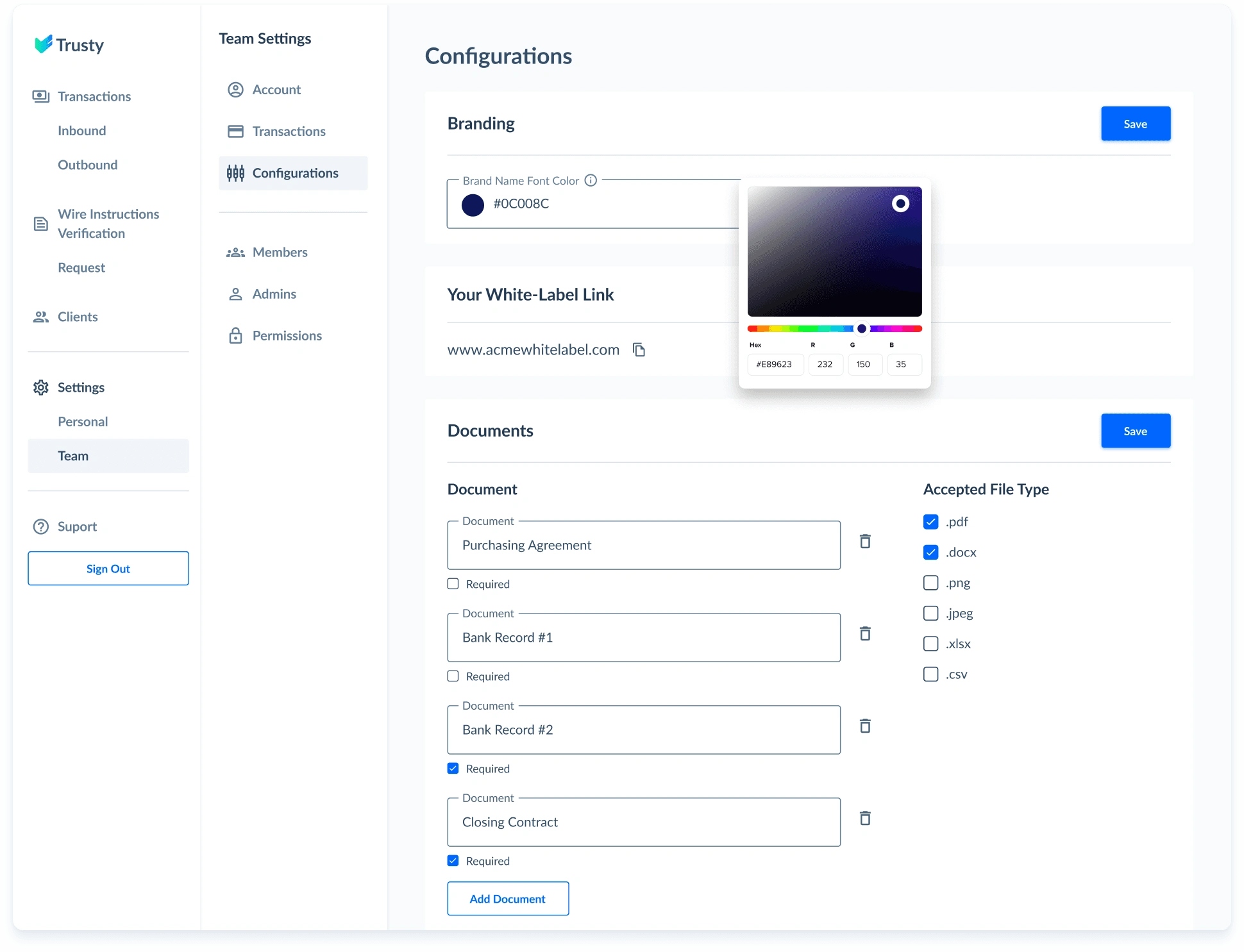
We recognized that every settlement company has its own permission policies. To optimize our platform to fit their needs, we implemented a feature that enables settlement companies to create their own permission templates. These templates can then be assigned to different users within the company, providing a streamlined and efficient way to manage user permissions.
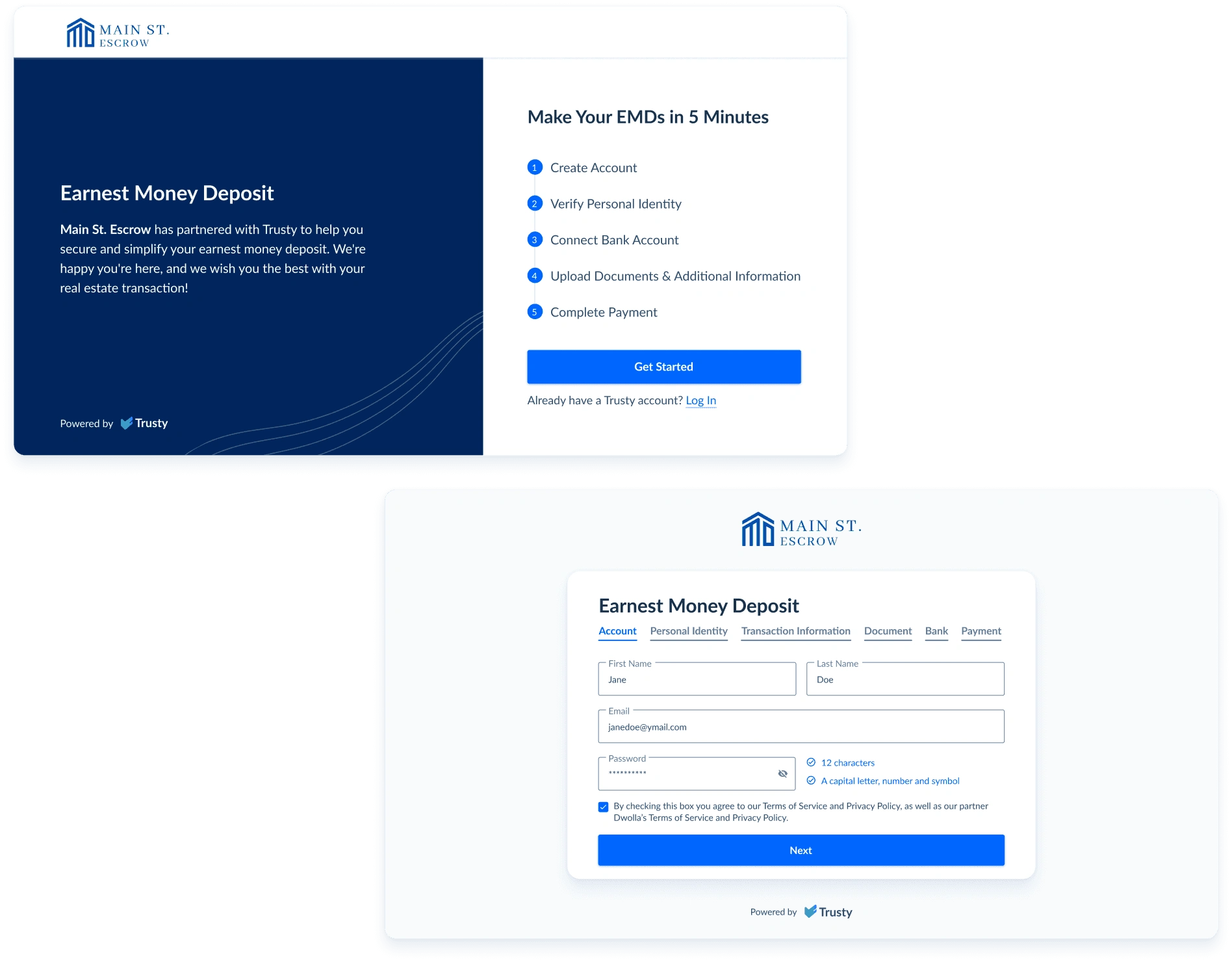
With this solution, we visually connect the settlement agent's brand with our software throughout the payment process. This allowed us to leverage the existing trust homebuyers have in settlement companies. In addition, we reduced the workload of settlement agents by enabling homebuyers to initiate payments directly from the settlement companies’ websites, eliminating the need for the agents to create payment requests.
The lack of RTP infrastructure with regional banks hindered the growth of the product
Although we addressed the credibility and flexibility concerns with our system, our product's growth potential was hindered by the current state of national payment policies. Our solution utilizes Real-Time Payment technology to ensure non-reversible transactions, which is mandated by the Department of Financial Protection and Innovation's "good funds" requirement. However, at the time of this product launch, the many regional banks that settlement companies utilize have yet to adopt the RTP technology. Compounding the issue, as a new company, our payment processing vendor only permitted fund transfers up to $150K.
These constraints severely restricted the types and number of transactions our system could facilitate, resulting in a significantly low adoption rate.
Like this project
Posted Aug 25, 2025
Designed a payment facilitation platform for real estate transactions.
Likes
0
Views
7
Timeline
May 25, 2022 - Oct 25, 2022