AI-powered companion for mental wellbeing

Ghulam Mustafa


Overview 👀
During the pandemic, people have gone through some kind of stress and tight situation which have taken a toll on them. The impact of COVID-19 is dramatically changing the lives of people including the lives of young people. Schools and Universities have closed, exams and events have been cancelled and some people have a network connection issue. All works and socialising are limited and stuck. And they experienced mental or emotional challenges such as anxiety, depression and even suicidal thoughts according to students well being in during the pandemic.
A KFF Health Tracking Poll from July 2020 also found that many adults are reporting specific negative impacts on their mental health and well-being such as difficulty sleeping (36%) or eating (32%) increases in alcohol consumption or substance use (12%) and worsening chronic conditions (12%) due to worry and stress over the COVID-19.
Objective 🎯
The objective of Mindspace is to explore how a mobile mental health application can provide accessible, user-centered support for individuals seeking to understand and manage their mental well-being. The app aims to create a safe and supportive digital environment that enables users to access mental health resources, reflect on their emotional state, and develop healthier coping strategies at their own pace.
The project also seeks to understand users’ perceptions, needs, expectations, and concerns surrounding digital mental health support, with particular attention to accessibility, privacy, trust, usability, and the role of technology in supporting everyday mental well-being.

User Research 🔬
In the user research, I aimed to send the online survey. To prepare the survey, I analysed the most trending mood-tracking application and did the competitor analysis. It's helped to understand the functionality of the application and the most usable functionalities with user reviews and feedback. I got 29 respondents to survey who had a different kind of mental illness.
During the past 4 weeks, 34.5% of users faced the problem with mentality. 51.7% of people had relationship problems during the past 2 weeks. In the sleeping pattern, 44.8% sleep 4-6 hours per day and 3.5% sleep less than 4 hours. 55.2% of people had emotional problems, depression and anxiety during the past 4 weeks. 89.7% said mobile mental health apps are useful for treatments.
Design Process
& principles 🗿
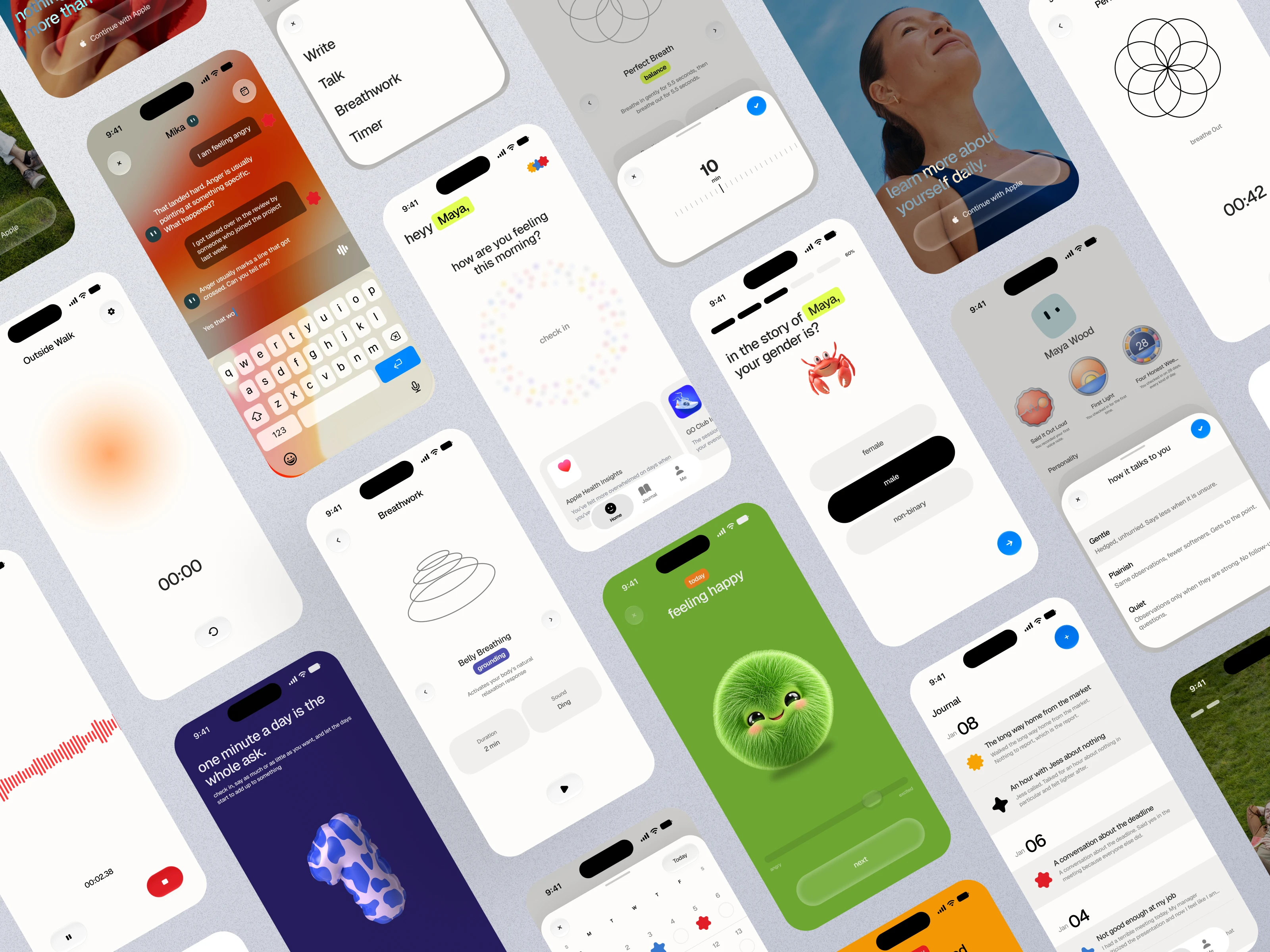
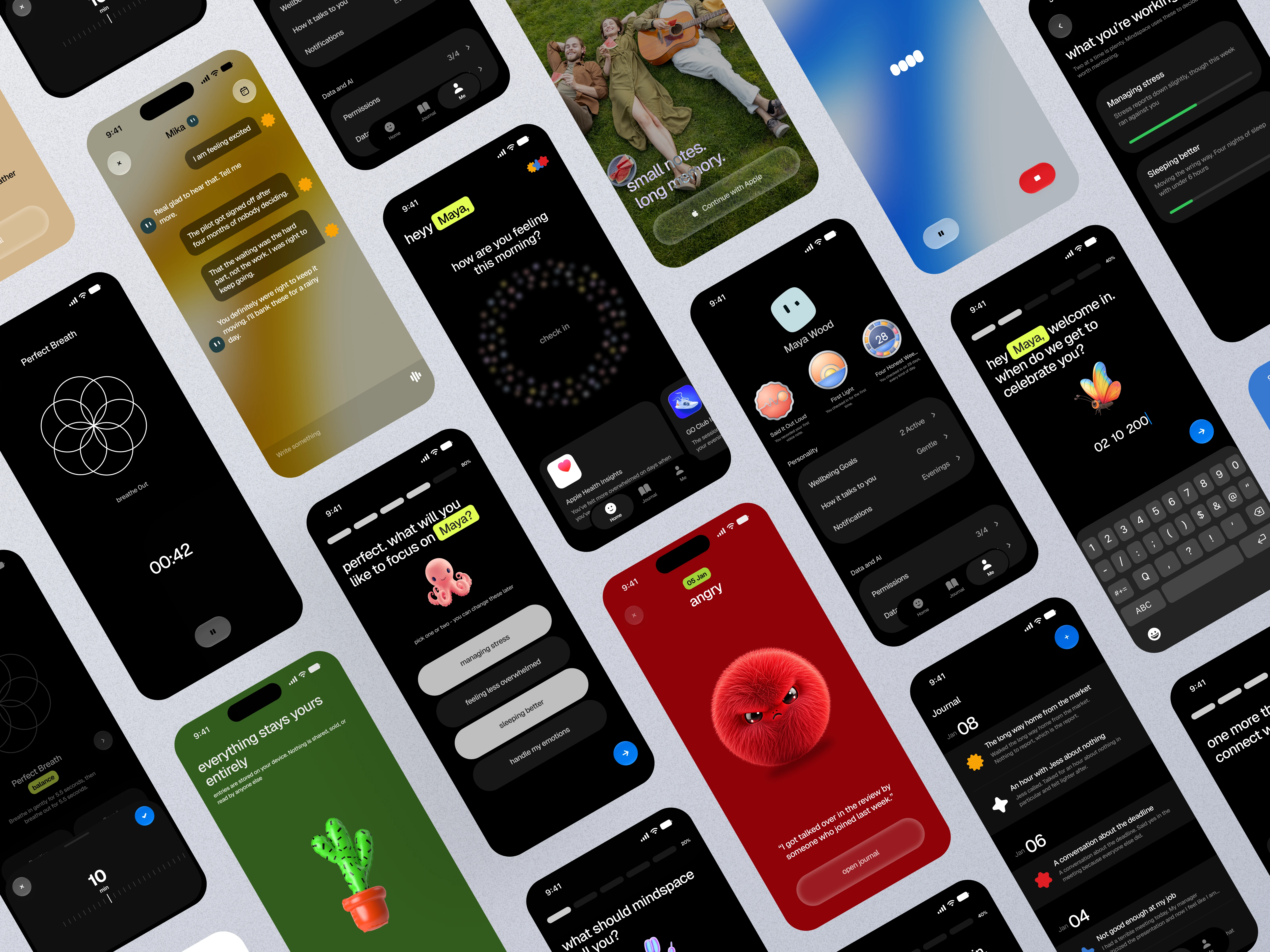
Starting with low-fidelity wireframes, we created basic layouts and structures. User feedback guided the transition to high-fidelity prototypes, ensuring the design met user needs and preferences. These prototypes provided a realistic preview of the final product, allowing us to test functionality and usability.
Mindspace follows five core design principles: simplicity, accessibility, empathy, privacy, and usability. The experience is designed to reduce cognitive load, support diverse users, create a warm and welcoming environment, protect user data, and continuously improve through usability testing.
Usability Testing 🧪
After completing the design, I conducted A/B testing with users to identify the app’s main features, strengths, and weaknesses. The testing helped uncover opportunities to improve the overall user flow based on direct user feedback. Key features identified through testing included check-ins and free conversations with an AI chatbot, journal entries and therapist session booking, and self-guided motivational activities.
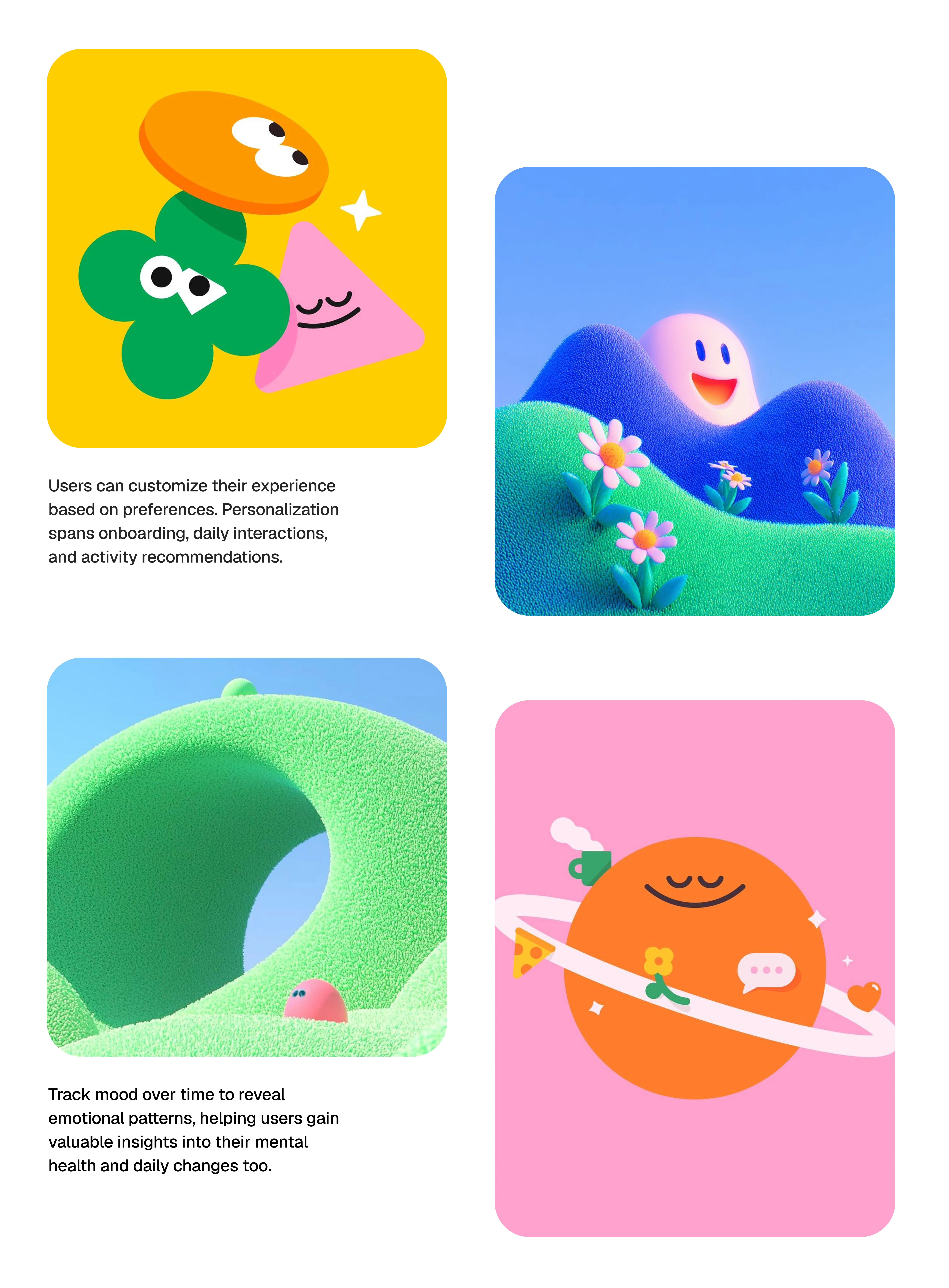
In addition to supporting interaction design, visual components can play an important role in influencing users’ emotions and overall experience. By understanding and incorporating these emotional responses into the design, we can create interactions that feel more supportive and engaging. During the initial design phase, I did not include the SOS functionality in the user flow. However, after completing usability testing with users, I identified the need to add this functionality to make the experience more comprehensive and supportive.
Users should also be able to engage with activities alongside motivational quotes. In the initial design, motivational quotes were not included as part of the activity experience. Based on user feedback, I introduced motivational messages that appear when users select daily activities but do not complete them. These reminders provide encouragement through motivational and welcoming messages, helping users stay engaged with their activities.
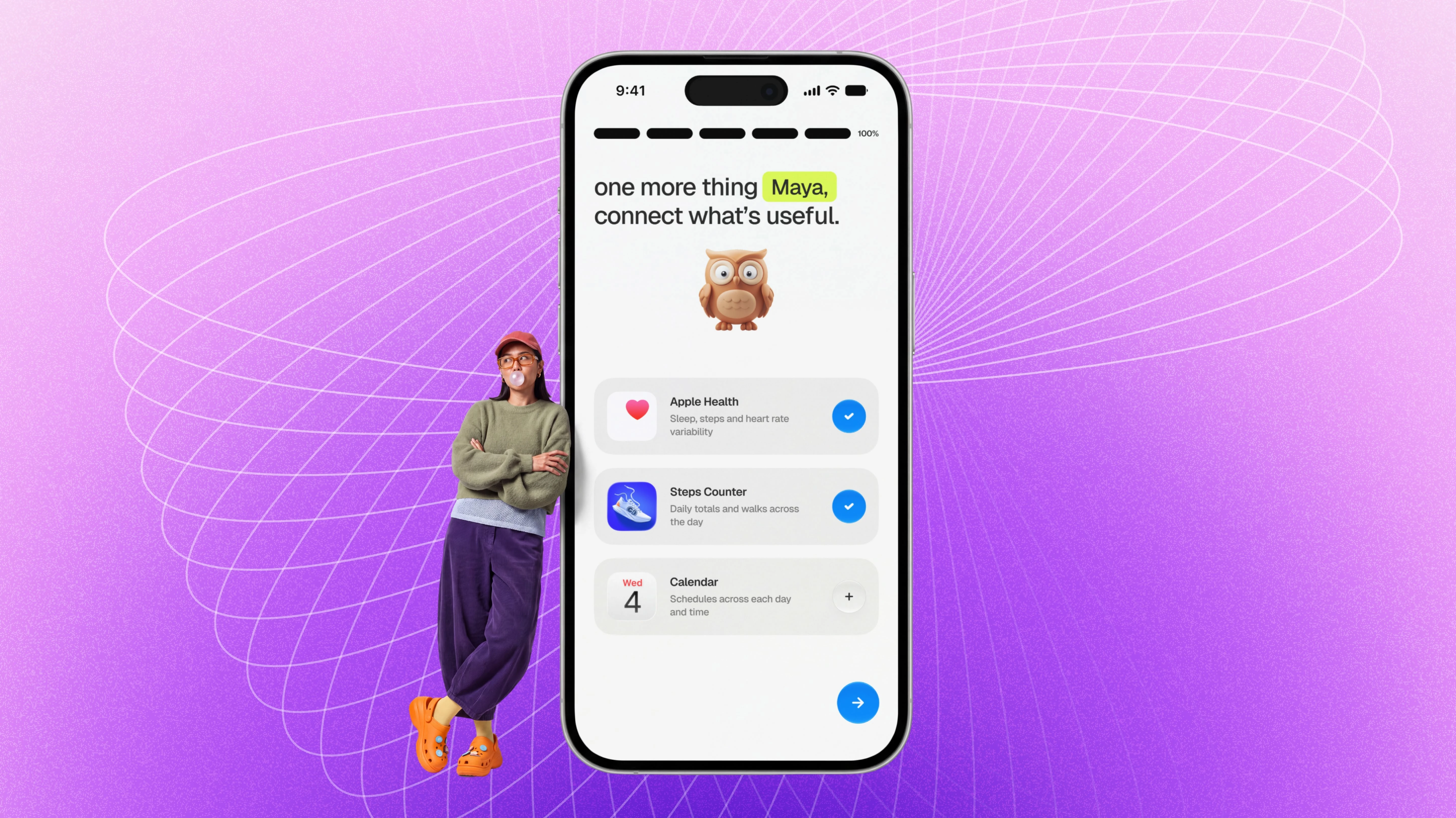
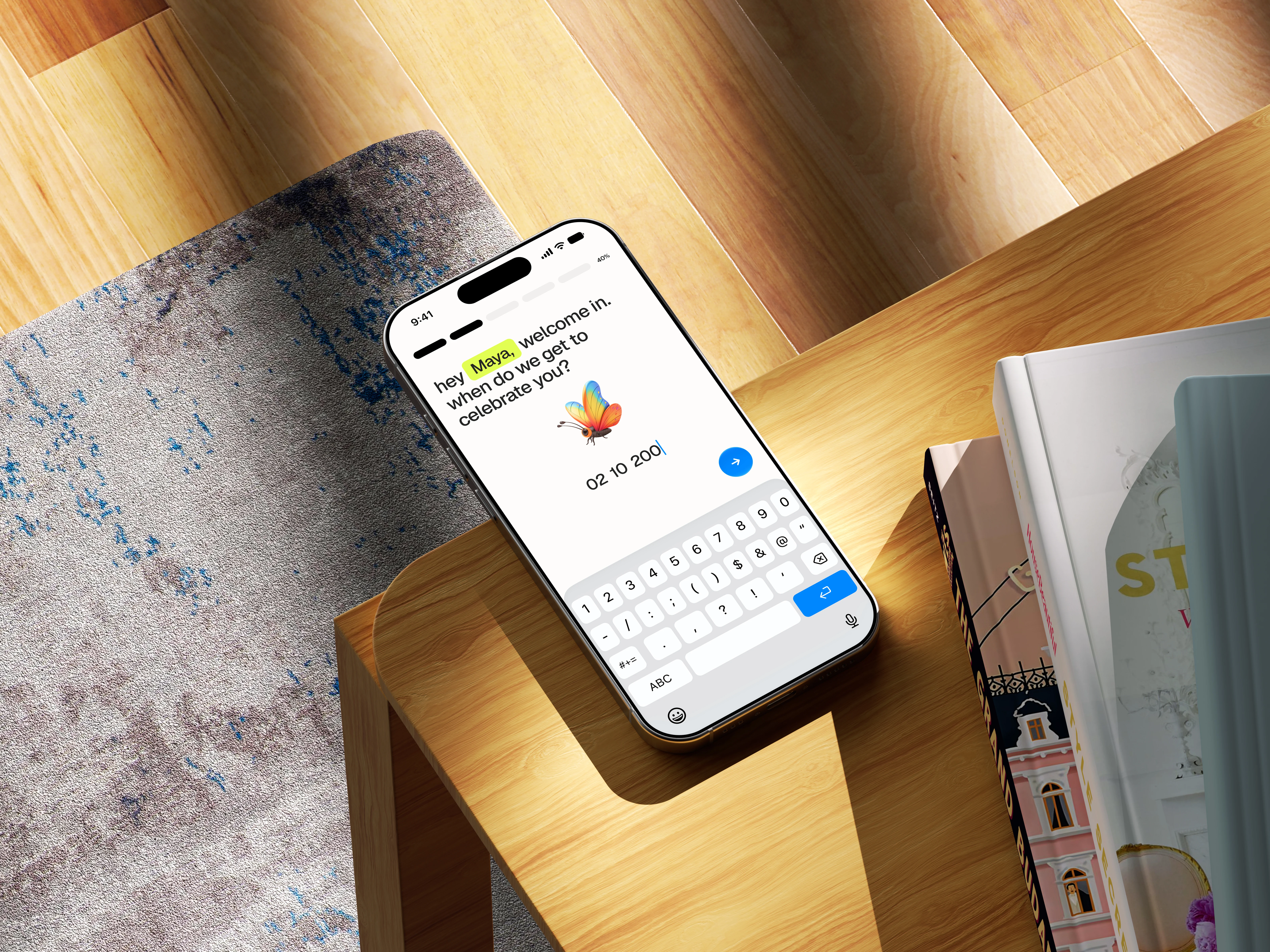
I also introduced a more personalized experience on the home page. After logging into the application, users receive a welcoming message designed to acknowledge them and encourage interaction with the app. This creates a more supportive first interaction and makes the experience feel more personal.
Like this project
Posted Oct 4, 2026
Designed a mental health app focusing on user needs and usability enhancements.
Likes
0
Views
1