The AI operating system for education

Ghulam Mustafa


Overview 👀
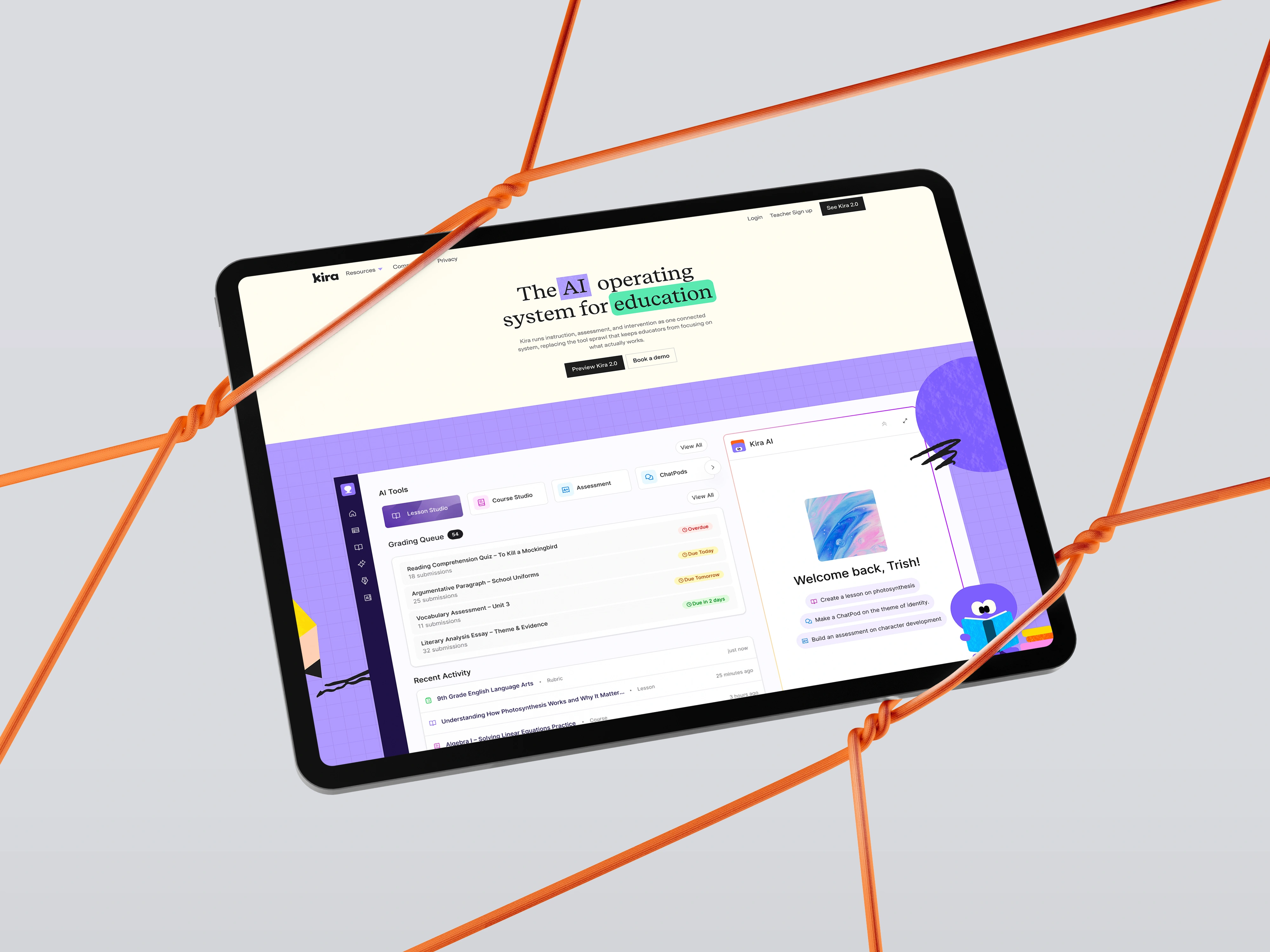
Education is at a turning point, with outdated systems creating administrative burden, slowing schools down, and limiting what’s possible for teachers and students. AI presents an opportunity to fundamentally transform education by making learning more personalized, efficient, engaging, and responsive to individual needs. Kira Learning was created to address these challenges through an AI native approach to education, bringing intelligent tools into the learning experience while reducing friction across teaching, learning, and school operations.
Kira Learning empowers educators, accelerates student learning, and streamlines school operations through AI powered tools that adapt, automate, and enhance the overall learning experience.
Product Goals
and Objectives 🎯
Improve how users discover, understand, and access Kira Learning through a guided, self-service onboarding experience. Help contracted customers get started independently, increase signup conversion to 5%, drive 50% first-session activation, and contribute toward the broader goal of reaching $6M ARR.
Create a learning environment where students can learn and practice independently with effective guidance and feedback. Improve debugging skills, provide meaningful feedback on student code, enable high-quality learning without constant teacher support, and achieve a learner CSAT score above 75%.
Improve the teaching experience by making classroom workflows, grading, feedback, and course creation more efficient. Help teachers grade faster, provide richer feedback, improve in-classroom experiences, support course expansion, and achieve a teacher CSAT score above 75%.
Make Kira Learning easier to adopt across new users, organizations, and markets. Introduce flexible organizational configuration, support localization for Vietnam and Togo, reduce friction when using lessons and exercises, meet WCAG AA accessibility standards, and grow to 15,000 direct signups with 5,000 retained consumers.
One system
every learning context. 📚
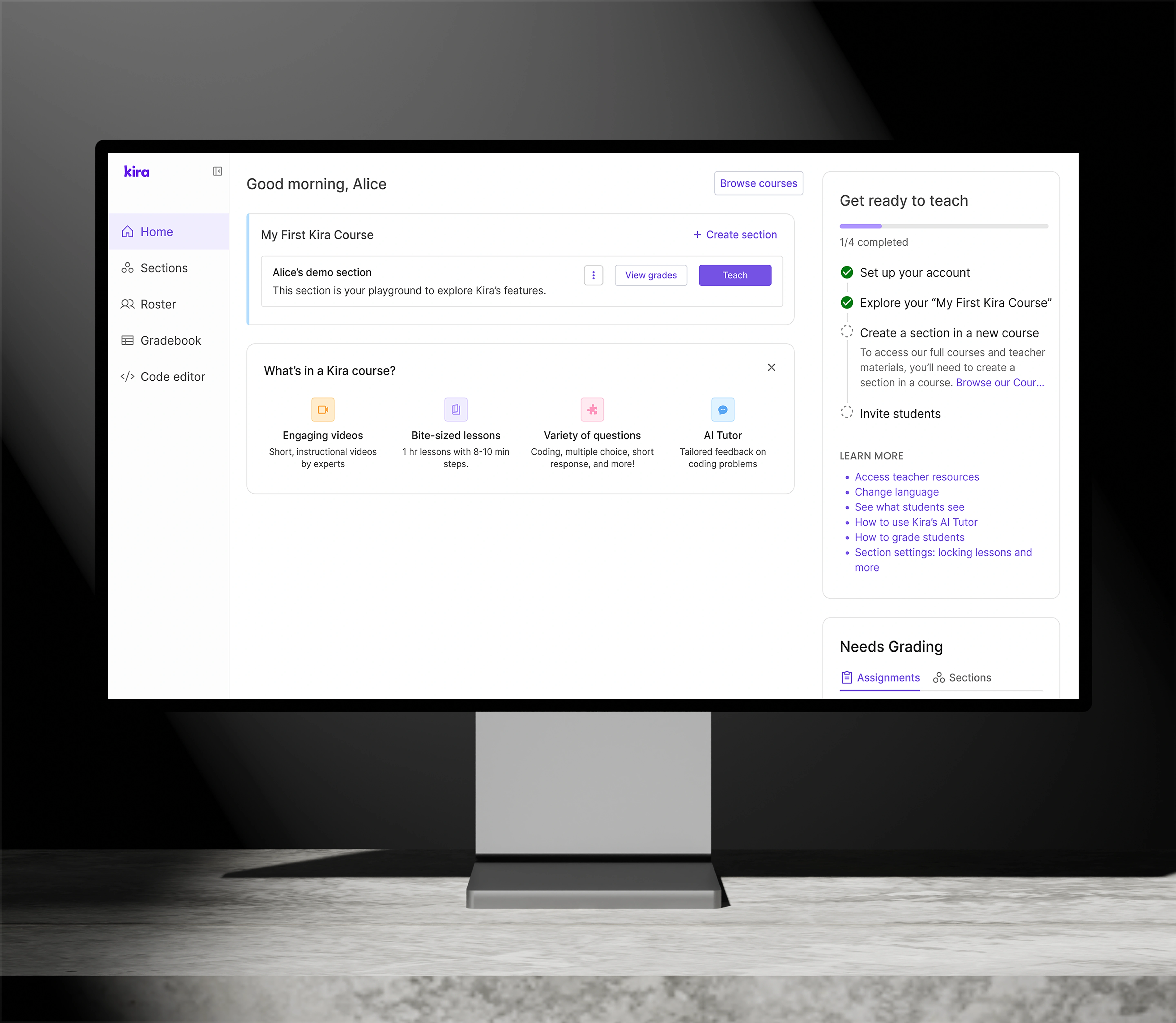
I approached the product around a simple principle; schools should not have to change how they work just to use a new platform. My goal was to design a flexible system that could adapt to different classrooms, teaching styles, student needs, and curriculum structures.
Rather than designing isolated features for individual workflows, I focused on connecting learning, teaching, assessment, feedback, and course management within one experience. This meant understanding where students and teachers experienced friction, identifying common patterns across workflows, and creating a system that could support those needs without adding unnecessary complexity.
The outcome was a more flexible and connected experience that could adapt to different instructional contexts while giving students and teachers a consistent way to learn, teach, and collaborate.
AI-powered grading with
one-click release 🎓
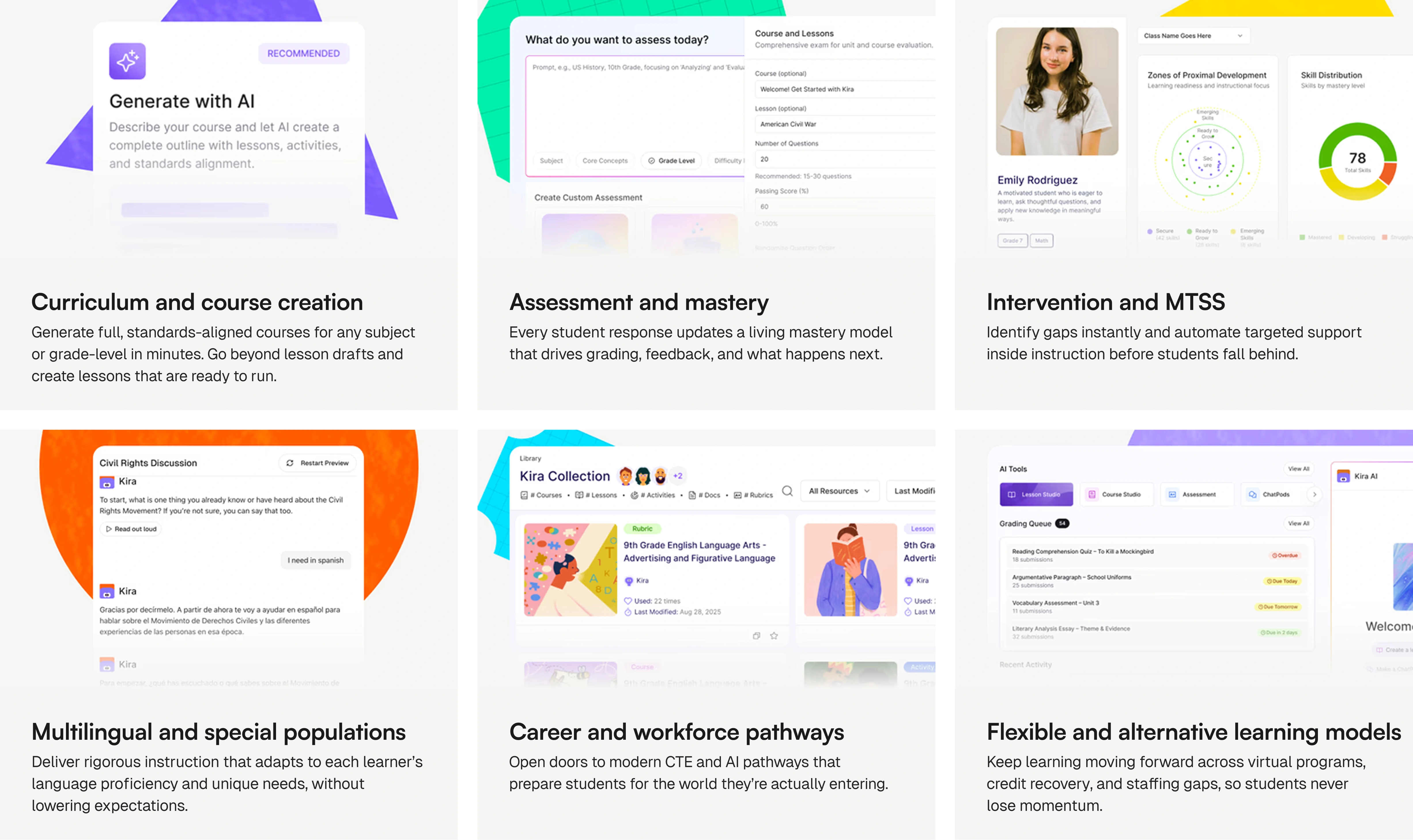
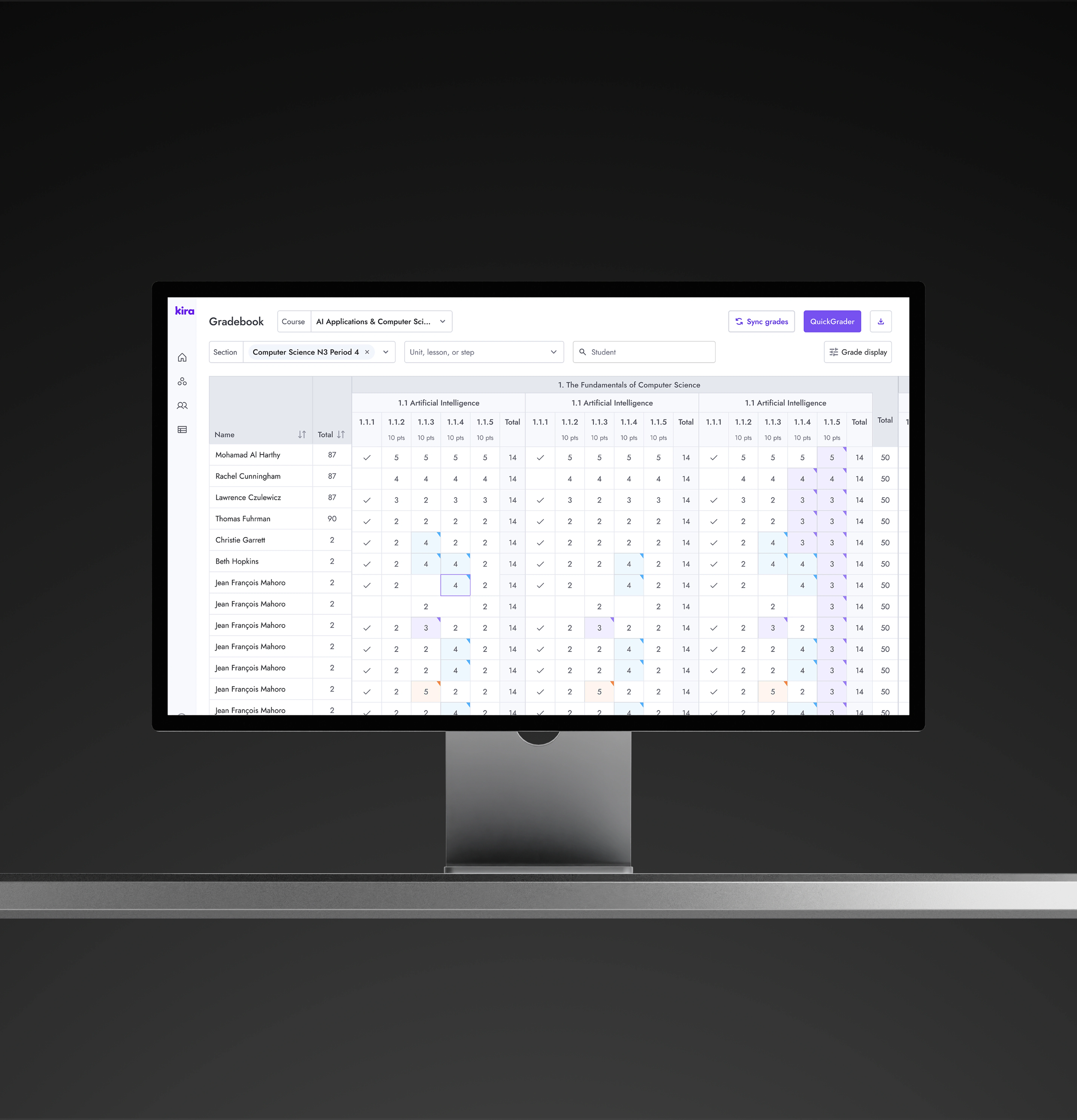
The experience was designed to reduce the time teachers spend on repetitive grading tasks by using AI to automatically assess assignments. Teachers can review the results and release grades with a single click, while flexible grading models support completion, percentage, competency, and mastery based assessment.
Beyond assigning grades, AI analyzes student responses to generate detailed and constructive feedback. This helps teachers identify areas where students need improvement while reinforcing key concepts before grades are released.
Grades are also synced automatically across assignments, assessments, and learning activities. This removes manual data entry, reduces errors, and keeps student progress accurate and consistent across the platform.
A Unified Coding
Experience 👨💻
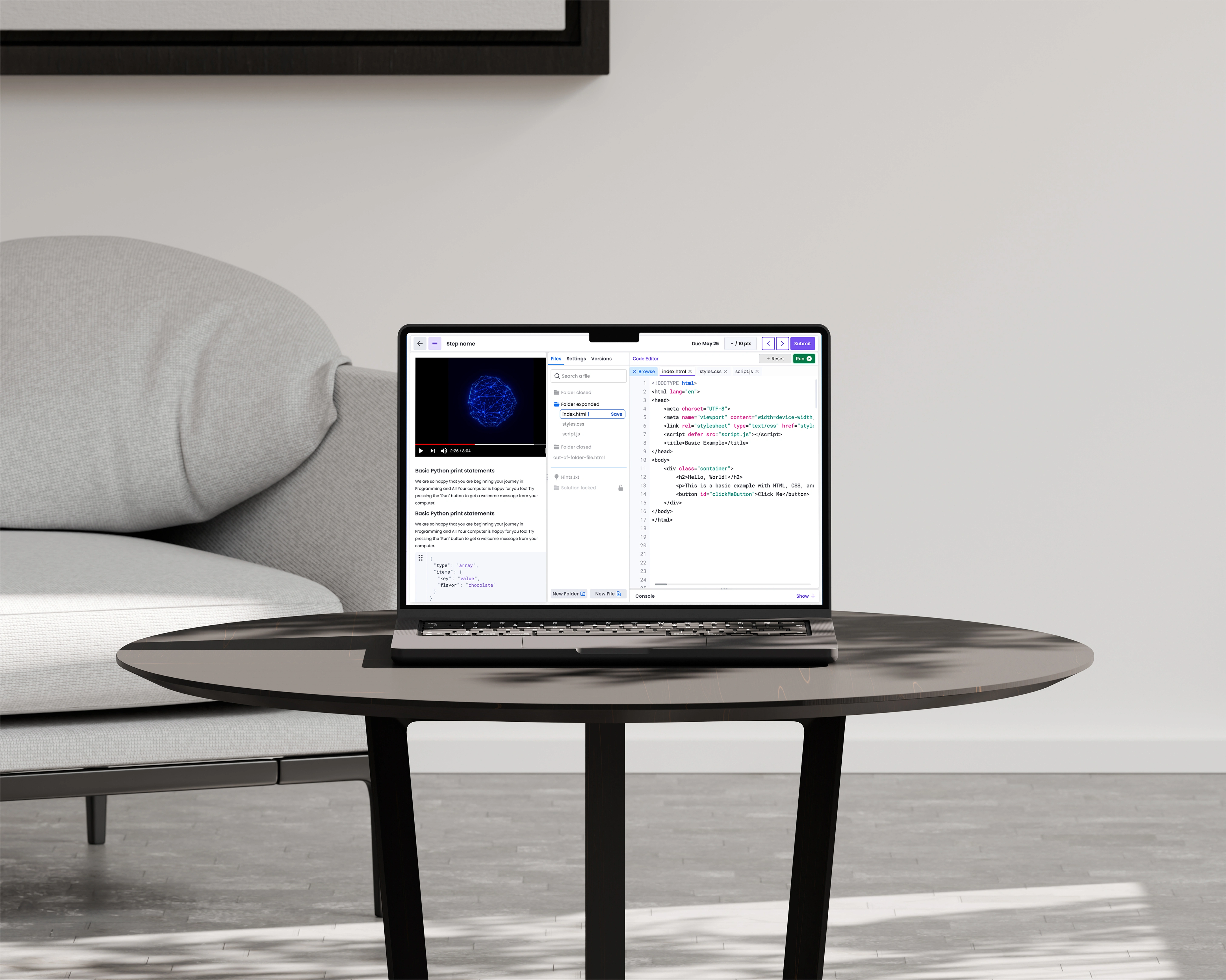
I designed the coding experience around hands-on practice, real-world problem solving, and collaborative learning. The goal was to give students a dedicated environment where they could learn by writing, testing, debugging, and improving code without having to rely on external tools or complicated setup.
Students could work across languages such as Python, JavaScript, and HTML/CSS, with the ability to run and test their code directly within the platform. This removed common setup barriers and allowed students to move from learning a concept to applying it immediately.
I also focused on making coding more collaborative. Pair programming enabled students to work together in real time, share ideas, troubleshoot issues, and build projects collaboratively. Together, these experiences created a more accessible and engaging coding environment that supported both independent practice and teamwork.
Tutoring That Adapts
to Context 👩🏫
I designed the coding experience around hands-on practice, real-world problem solving, and collaborative learning. The goal was to give students a dedicated environment where they could write, test, debug, and improve code without relying on external tools or complicated setup. Students could work across Python, JavaScript, and HTML/CSS, with the ability to run and test code directly within the platform.
I also focused on making coding more collaborative and accessible. Pair programming allowed students to work together in real time, share ideas, troubleshoot issues, and build projects collaboratively. This created an environment that supported both independent practice and teamwork while helping students move from learning concepts to applying them immediately.
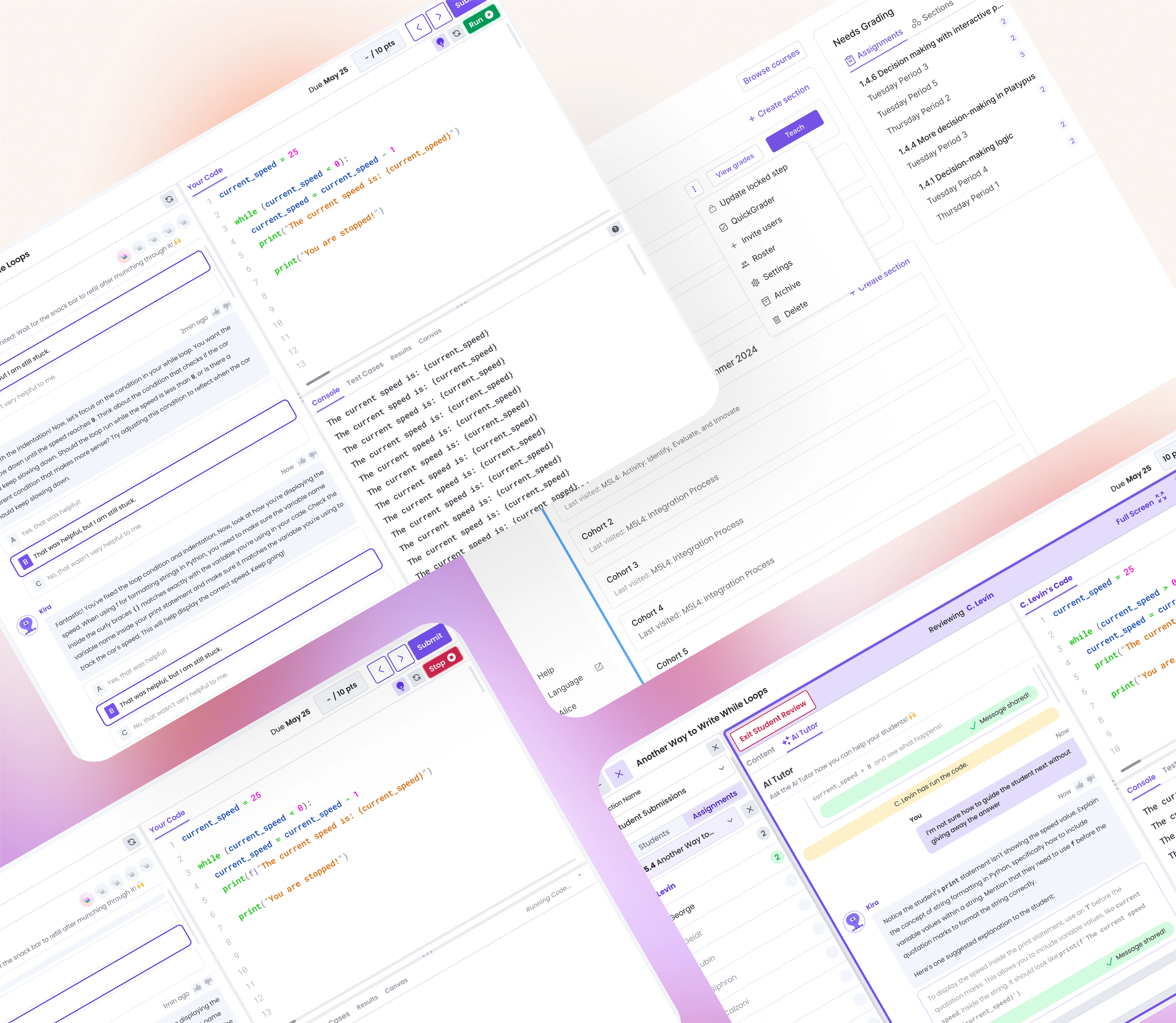
For personalized learning, I designed the AI Tutor experience to respond to each student’s pace, engagement, and performance. It could recommend additional practice, alternative explanations, or foundational concepts to review, while drawing from curriculum aligned resources, teacher approved content, and verified academic references to provide accurate and relevant support.
Like this project
Posted Oct 4, 2026
Streamlined the onboarding process for a SaaS solution, resulting in a 40% reduction in customer churn and an improvement of customer retention by 25%.