*Artifacts & Accouters

McDonald Ajibo


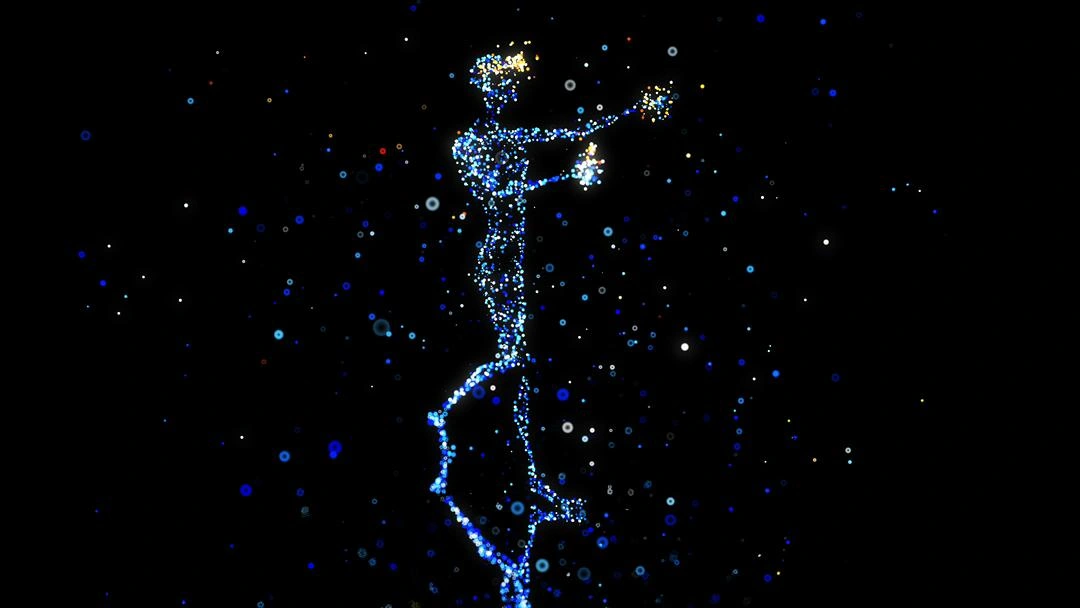
*Artifacts & Accouters.
formerly known as Software and Hardware.
— The Architecture of Extended Presence.
The language we use shapes the worlds we build. When we call something “software,” we inherit decades of assumptions — programs that run on machines, applications that open and close, interfaces that mediate intent through clicks and commands. When we say “hardware,” we imagine devices we pick up and put down, tools that extend our reach but remain separate from our presence.
These terms served the era of personal computing, but they need to reflect the era of dimensional computing.
As the internet evolves into an extension of the universe — as I’ve defined the metaverse to be , we need language that reforms how technology exists in this new ontological condition.
Artifacts and Accouters.
Not replacement terms for software & hardware, but reframing that capture their transformed relationship to human presence and reality itself.
Artifact: Software as Spatial Object.
In the metaverse, software applications will no longer be a program on a 2D screen interface, waiting to be launched. It becomes something that inhabits your peripheral dimension — a tool that materializes in spatial relation to you.
An artifact is a virtual application with presence and form.
They are not applications confined to screens, but spatial constructs that can be summoned, perceived, and interacted with. An artifact has form, behavior, and context — it exists around your view, not inside a window.
Where apps are interfaces, artifacts are inhabitants.
An Interface Beyond Spatial Screens
Current reality interfaces are fundamentally spatial screens — desktop metaphors floating in 3D space. It feels like virtual monitors hovering around you, windows you resize and reposition. More screens. Same paradigm. This misses the point entirely.
If the metaverse is art, if it’s the digital world becoming an experiential dimension, then software cannot simply be dashboards floating in space. That’s screens with extra steps.
The transformation must be ontological, not just positional.
Software must become spatial objects — expressive, with their own logic and mode of presence. The aesthetic integrated into function. Not interfaces you click at, but tools that feel alive while remaining practical.
Designing for Presence
Building artifacts requires thinking beyond casual interface design into something closer to game design — understanding objects as holistic entities rather than collections of buttons and menus.
Artifacts must be aesthetically intentional. The aesthetic can vary wildly: organic forms, mechanical assemblies, pure geometry, fantastical objects, retro-futuristic designs. The key is consistency. The aesthetic becomes part of your spatial environment’s character.
Just like in games — you don’t operate interfaces, you interact with world objects. The interaction feels diegetic, happening within the world rather than through abstract UI.
Artifacts remain functional — accomplishing the same tasks as mobile applications with the same efficiency. But they’re also expressive — aesthetic character, spatial presence, animated behavior. They exist as objects in your dimension rather than interfaces on screens.
This is the balance: we are moving from Information Technology (accessing data) to Experiential Technology (living with digital matter).
Creating artifacts requires infrastructure that fuses art, logic, and spatial design.
Spatial Interface — The discipline of designing for dimensional space rather than flat screens. Artifacts respond to proximity and gaze — look to select, gesture to confirm. Intuitive spatial gestures replace mouse and keyboard: tap, swipe, pinch in 3D space. Contextual menus appear near artifacts when needed, dissolve when not. Information organizes in spatial depth. Every interaction confirms through multiple senses: visual response, spatial audio, haptic feedback.
3D Modeling and Animation — Each artifact is crafted as a dimensional object with animated states: resting, active, dissolving. Procedural animation creates smooth transitions — scrolls dissolving into arrows, pages folding, birds departing. Shader systems render materials, lighting, and visual effects that make artifacts feel tangible.
System Awareness — Artifacts understand your position, gaze direction, hand movements through computer vision and sensor fusion. They orient toward you, maintain readable distance, respond to gestures. Physics simulation governs gravity, collision, natural movement in spatial environments.
Sensory Feedback — Haptic systems provide tactile confirmation through vibrations or resistance. Spatial audio positions sound directionally — sound with presence.
Intelligent Behavior — AI-driven contextual intelligence. The map adjusts between driving and walking modes. The bird animates based on conversation activity. State machines orchestrate artifact behavior across different modes and contexts, interpreting context and driving responsive behavior.
The technical challenge is significant — real-time rendering of dimensional objects, fluid animations, responsive environments. This computational demand is what makes the metaverse transcendental beyond the internet. It is art. It is experience. It is optional — something you enter and exit freely.
Let’s see how this plays out in practice with an example.
The Messenger Artifact
You tap the icon.
A messenger bird appears, perching quietly in your space. Below it, a page interface unfurls.
Your conversations appear like ledger entries — names and last messages, spatial but familiar. You tap one. The page shifts, revealing your thread as handwritten text.
You want to converse. You have two modes:
Write — trace letters in air with your finger, gestures becoming ink stroke by stroke. Or tap a spatial keyboard, haptic feedback confirming each keystroke. Either way, text appears as flowing script.
Whisper — you tap to activate voice mode. The bird leans in, attentive. You speak softly to this presence. Your words are captured. The bird settles back. The message appears as an audio note in the thread, marked with a waveform.
When you send, text folds into conversation with small animation — archived, placed. When done, you dismiss the artifact. The page retracts. The bird flies away, departing like a carrier.
When a message arrives, you hear wings flutter by, delivering. A piece of paper flows through your space and archives itself into the page interface.
This is functionally identical to any messaging app — same threads, same ability to type or voice, but expressed through spatial forms.
The artifact feels alive. Receiving feels like delivery instead of notification ping. The interactions feel natural and efficient, just dimensional.
The Interaction Logic
The interactions remain fundamentally unchanged from what you already know through mobile and desktop interfaces.
What changes is what happens around interactions — the motion and animation of spatial objects within your peripheral dimension. The tap still selects. The swipe still scrolls. But now these actions trigger spatial responses — objects that unfold, dissolve, transform. Characters that appear and depart.
You’re experiencing familiar operations expressed through virtual presence rather than flat pixels.
The Social Dimension
The current interface centralizes attention.
Artifacts distribute it.
Instead of everyone bending toward a single laptop while one person drives, the project is summoned into shared space — an object hovering between you, visible and editable from every position. Conversation continues, eye contact remains, and collaboration becomes parallel rather than performative. The software no longer interrupts the social flow; it settles into the background like atmosphere, it becomes the shared center — a digital sculpture everyone can shape at once.
Right now, we share files. With artifacts, we share environments.
The same shift happens in ordinary moments. You’re deciding where to eat. No one pulls out a phone while the group waits. Someone activates a shared spatial artifact, and restaurant options bloom in the air — ratings, distance, ambiance — visible to everyone wearing AR glasses. People gesture, rearrange, highlight, vote. The decision forms in space, together. The device disappears. The moment remains collective.
The technology facilitates social interaction rather than interrupting it.
Artifacts reimagine software as programs that inhabit your space. But to feel them as spatial objects, you need systems that extends your perception beyond screens — that let you see, hear, and feel the dimensional layer. This is where accouters come in: hardware you embody, not devices you operate.
Accouter: Hardware as Embodied Accessory
The metaverse is fundamentally about presence. Not just visual presence, but bodily presence. Your form, motion, gestures, position — all captured and translated into an immersive dimension where they carry meaning and consequence.
An accouter is a wearable device that extends your perceptual and interactive capabilities into the dimensional layer.
Not a tool you hold, but gear you wear — glasses on your face, buds in your ears, bands on your wrists — augmenting your senses and movements to perceive and interact with digital environments.
Current Reality
We’ve struggled with fragmented reality technologies. Want overlay? AR headset. Want immersion? VR headset. Want blend? MR headset. Multiple devices. Multiple purchases. This fragmentation makes adoption impractical.
But there’s a deeper problem. The technology feels incomplete. External battery packs, separate processing units, bulky headsets pressing on your face, unclear optics, latency causing nausea. These aren’t just refinement issues — like early computers with CPU, monitor, keyboard scattered across desks. That fragmentation worked for enthusiasts, but mass adoption required convergence.
Current reality devices are at that early stage. Functional, but not yet integrated enough for billions to adopt naturally.
Consider my reality: I need prescription glasses to see clearly, but sometimes I hate them. They’re uncomfortable. I’m aware of them every moment. They feel like burden despite being necessary.
Now imagine millions like me being asked to wear something heavier, more complex, more obtrusive — AR or VR headsets for hours daily. The answer is no. Not because the technology isn’t compelling, but because the physical reality of wearing something on your face constantly is too uncomfortable, too intrusive.
This is the adoption barrier technology alone cannot solve.
Mobile
Billions of people already carry a portal in their pocket — the phone. They’re fluent in tapping, typing, swiping, scrolling. If the metaverse ignores mobile, it ignores humanity’s most distributed device.
The metaverse must be a mobile-first experience.
The metaverse should still be accessible through mobile apps — familiar, flat, immediate. But when paired with an accouter, the same familiar function expands from screen into space, an expressive experience. What you once observed, you now inhabit.
The phone remains the foundation; the accouter extends it into dimension.
You don’t just open music — sound surrounds you with presence.
You don’t just check maps — navigation appears with form in your path.
This makes accessibility inevitable. No one is forced into immersion. Everyone begins where they already are. Then, when they choose, they extend their phone into presence. The app doesn’t disappear — it evolves.
The Headphone Principle
Consider why people use headphones. Not because phones can’t play sound, but because headphones give personal listening experience.
The phone remains central, but headphones extend that experience into something richer. Sound that’s yours alone. Privacy for calls. Immersion for movies. Music without disturbing others.
Early headphones were bulky, utilitarian. Comfort and style were secondary. Function was everything
Then design evolved. It then felt like a fashion accessory, around the neck when not in use. The stigma of “wearing tech on your head” disappeared. They became socially acceptable.
This teaches us the path forward.
The Fashion of Function
Most accouters must follow the same principle. Utilitarian yet fashionable — designed to be socially acceptable. Most importantly, they extend the mobile experience.
The Eyepiece (XR) — The Primary Accouter.
The eyepiece is the foundation, the only accouter most people will ever need — not because it does the most, but because it does enough. Enough to see. Enough to hear. Enough to move. Enough to act.
Not just a display but a complete system — hand tracking, spatial audio, motion capture, environmental mapping, gesture recognition, processing, power — all integrated.
The eyepiece must collapse multiple roles into one form. It sees the world and the layer simultaneously — not as modes you switch between, but as one continuous perceptual field. Physical space remains primary. Dimensional artifacts inhabit it without displacing it.
AR, VR, and MR dissolve into modes of attention. The system understands what you’re doing and adjusts presence accordingly. You open a game — it shifts to immersion automatically. You summon a messaging artifact — casual overlay appears. You navigate a city — minimal guidance. The transition is invisible.
The distinction no longer belongs to hardware. It belongs to intent.
Extended Accouters
Designed for everyday use, casually extending the eyepiece. Comfortable and socially acceptable.
Spatial Audio Buds — While the eyepiece carries integrated spatial sound, dedicated buds offer higher fidelity and true privacy. For audiophiles, they preserve dimensional positioning and intensify immersion.
Manus Haptics — When vision and sound aren’t enough, touch completes the illusion. Rings, gloves, and wristbands translate virtual contact into vibration, pressure, and resistance. You feel texture, tension, impact.
Interface Collar — Resting at the neck, it captures whisper-level speech, tracks facial expressions and translates emotions into virtual presence. It extends immersion from the head into the body.
Full Immersion Accouters — Function over Fashion.
Wearable but not for everyday public use. For dedicated sessions wanting deeper immersion.
Sensor Straps — Body-worn bands that capture precise motion and posture beyond camera tracking.
Haptic Suits — Full-body immersion garments turning torso, arms, and legs into sensory surfaces. Impact, pressure, texture — felt across the body. Not everyday wear, but dedicated session gear — engineered like high-tech athletic suits for total presence.
Neural Interface Headsets — Non-invasive headsets that detect intent directly from neural signals. Thought becomes action; imagined movement becomes virtual motion. Built for advanced control and accessibility, they’re unapologetically technological — instruments of direct mind-to-dimension connection.
Advanced Motion Interface Accouters — Absolute Function, Beyond Fashion.
These are environmental systems that prioritize complete embodiment over wearability.
Omni-Directional Treadmills — Stationary platforms that let you walk, run, and crouch naturally in virtual space without needing physical room. Sleek like home fitness equipment — compact, quiet, built for everyday environments.
Motion Platforms — Chairs or cockpit rigs that tilt, rotate, and vibrate in sync with virtual movement. Ideal for flight, racing, or simulation — designed like premium enthusiast gear.
Immersion Pods — Enclosed embodiment stations combining visual, haptic, motion, environmental, and neural systems into one total presence chamber. High-end, space-intensive, and uncompromising — the apex of immersion technology.
Most accouters are worn, becoming extensions of your body. Others are environmental, surrounding and supporting you. Whether worn or entered, each follows the same principle: embodiment. You don’t control these devices. You inhabit them. They translate you.
The Infrastructure of Presence
At the foundation is Artificial Intelligence — the layer that turns space into something alive. AI interprets imperfect gestures, predicts intent, reads context continuously, and adapts experiences without manual switches. It generates environments on demand — forests fitted to your room, cities reconstructed from data, worlds scaled to your physical constraints yet coherent and alive. It powers intelligent avatars that converse, learn, and evolve beyond scripts. It predicts full-body motion from partial signals, personalizes artifacts to your habits, and composes multi-modal experiences — visual, spatial audio, narrative, behavior — in real time. Without AI, the metaverse is 3D graphics in air. With AI, it becomes adaptive reality.
Supporting this is Spatial Computing Frameworks — the fusion of 3D generative reconstruction, semantic understanding, and spatial computing. Cameras, LiDAR, and depth sensors continuously map your surroundings. SLAM tracks your position while building persistent room memory. AI recognizes walls, tables, kitchens, offices — not just geometry, but meaning. Coordinate systems align physical and virtual space, handling occlusion, scale, and persistence so artifacts stay where they belong. Virtual content respects your furniture, your floor plan, your boundaries.
Then comes Embodied Perception — hand tracking, eye tracking, and full-body pose estimation working together. Computer vision captures skeletal hands and finger intent; gaze detection guides selection and optimizes rendering; AI-driven body tracking fills gaps when sensors lose sight. Sensor fusion blends cameras with worn devices for precision. The result is interaction without controllers — movement translated into consequence before it visibly completes.
Sensory Systems complete the illusion. Real-time rendering at high frame rates maintains visual stability. Spatial audio processing positions sound accurately in your room, reflecting off actual surfaces. Haptic systems simulate texture, resistance, pressure, even temperature. Together they make artifacts feel seen, heard, and touched — not merely displayed.
Beneath it all is Distributed Infrastructure — edge computing, 5G connectivity, cloud synchronization, and adaptive power management. Processing shifts intelligently between phone, wearable, and cloud to maintain low latency. Wireless systems coordinate multiple accouters seamlessly. Energy systems regulate performance, heat, and efficiency so presence can last without discomfort.
etc…
The metaverse requires a series of technologies and systems coordinating together to enable an extended presence.
From Software and Hardware to Artifacts and Accouters
The metaverse is not built on new concepts, but on reframed relationships.
Software becomes artifacts — spatial objects with presence and behavior, expressive yet functional, existing in your dimension rather than on screens.
Hardware becomes accouters — embodied accessories that extend you to another layer of reality, translating your form and motion into dimensional presence.
Together, they enable a reality beyond the given world — where the internet evolves connection through inhabitation, from information to experience.
The metaverse is reality reimagined — playable, mutable, artistic — while remaining optional. You can enter and exit freely. You can choose how deep to go. You can wear accouters when you want extended presence, remove them when you want unmediated reality.
From app to presence. From device to extension.
The internet connected us.
The metaverse situates us.
Like this project
Posted Jul 16, 2026
Reframing software as artifacts and hardware as accouters in relation to dimensional computing and extended presence.
Likes
0
Views
2