ADHD Management App & Portal Design for Coastal Neuro Group
Approve request to show earnings
View

Daniel G Bright
Verified


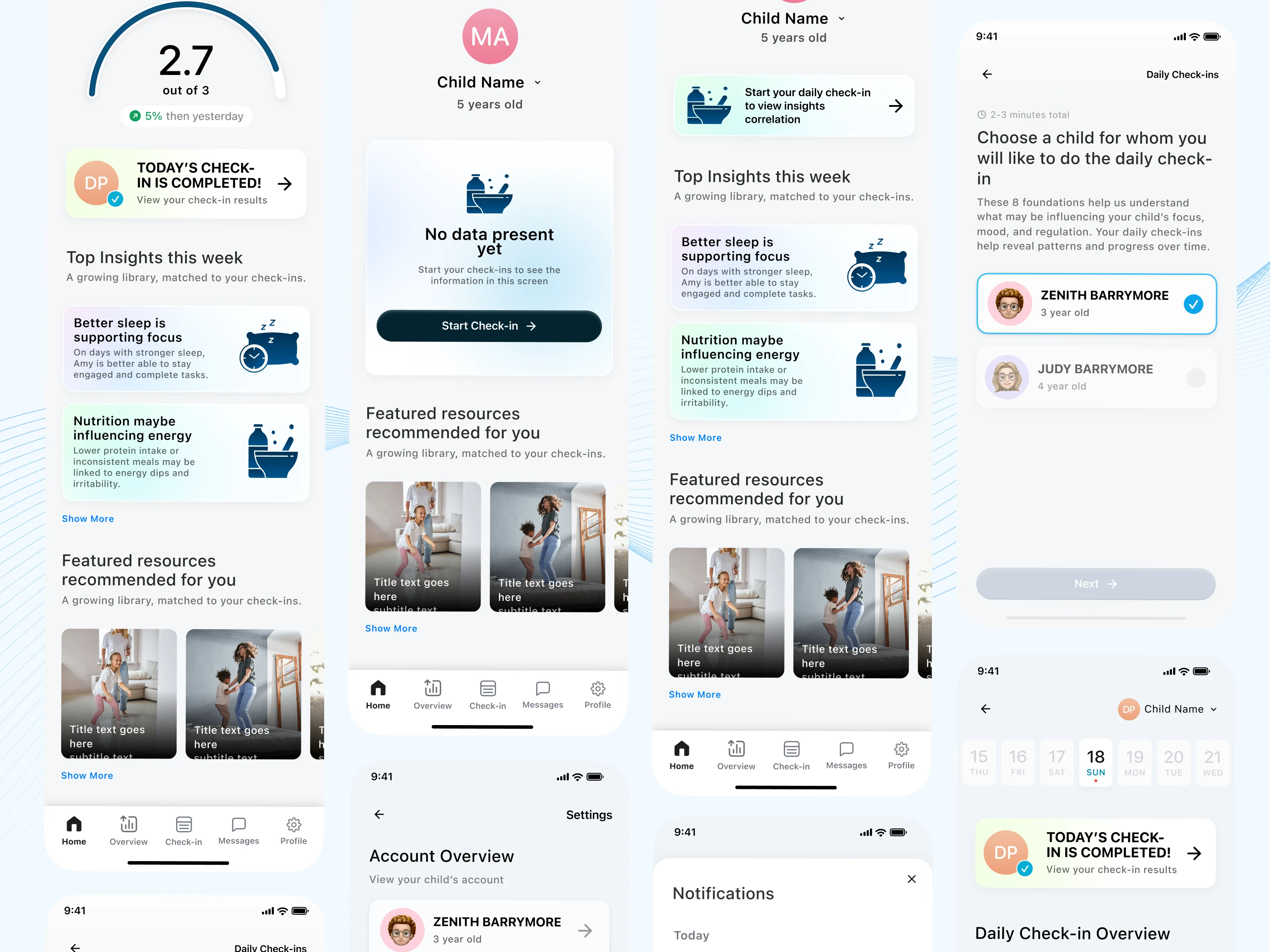
A detailed clinical model. A daily commitment from parents
Coastal Neuro Group came to us with a clear framework for supporting children with ADHD. Founder Ami Hansji had defined eight foundations of a child’s day: sleep, nutrition, routines, movement, focus, screen time, connection and emotional regulation. The scoring logic, insight rules and practitioner workflow were already taking shape.
Our role was to turn that framework into an MVP: a mobile app where parents could check in, and a web portal where practitioners could review patterns and guide care.
Ami’s brief made the priority clear: legibility, low information density and an experience that wouldn’t overwhelm families.
That set the central design question: how much of the model does a parent need to see to take the next useful step?
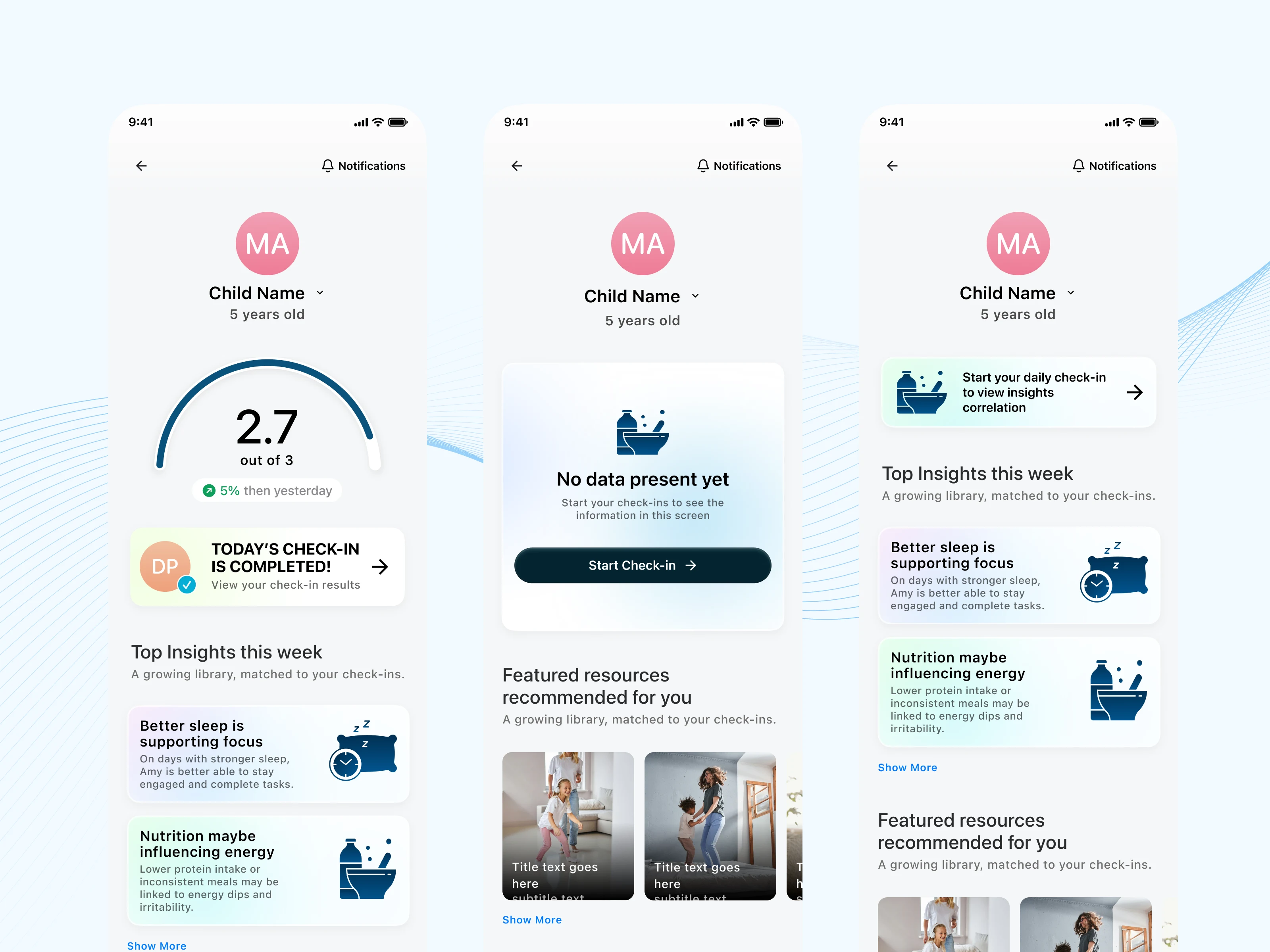
Make room for the daily habit
We treated the amount of attention each screen required as a product decision.
Early in the engagement, we removed a baseline assessment flow after reviewing how the results would enter the practitioner workflow. It added a step without a workable process behind it.
The same restraint shaped the insight system. We capped it at three insights per week, each with an observation, an interpretation and one piece of gentle guidance. The intention was to give parents a manageable next step rather than a growing list of things to address.
We also designed two versions of the foundation experience. On the first visit, parents see the fuller explanation. On subsequent visits, that content collapses to a header, a short line and the action.
The context remains available without asking parents to read it again every day.
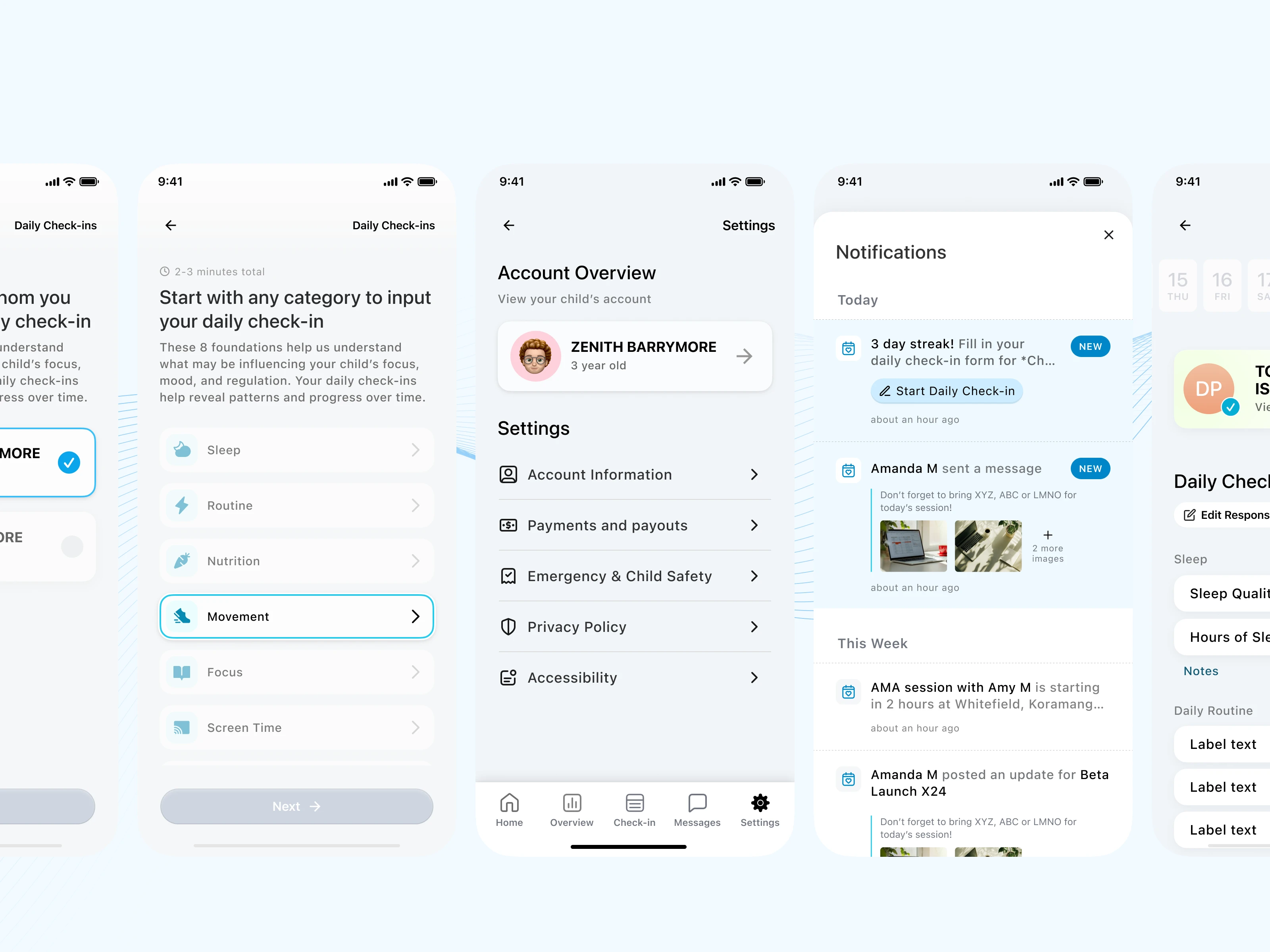
Ask parents about what they can observe.
The foundation copy needed the same attention as the interface.
Some of the original language referred to clinical concepts such as cortisol dysregulation and nutrient deficiencies. We rewrote all eight foundation screens around what parents could observe in their child’s day, keeping the check-in questions grounded in those observations and leaving clinical assessment to the care team.
We also recommended neutral language within the daily experience, using terms such as attention, focus and regulation. ADHD framing could sit in onboarding and on the website without being repeated throughout the app. Ami extended that decision to the practitioner-facing patient headers.
These changes gave the product a clearer division of responsibility: parents record their observations; practitioners use that context to guide care.
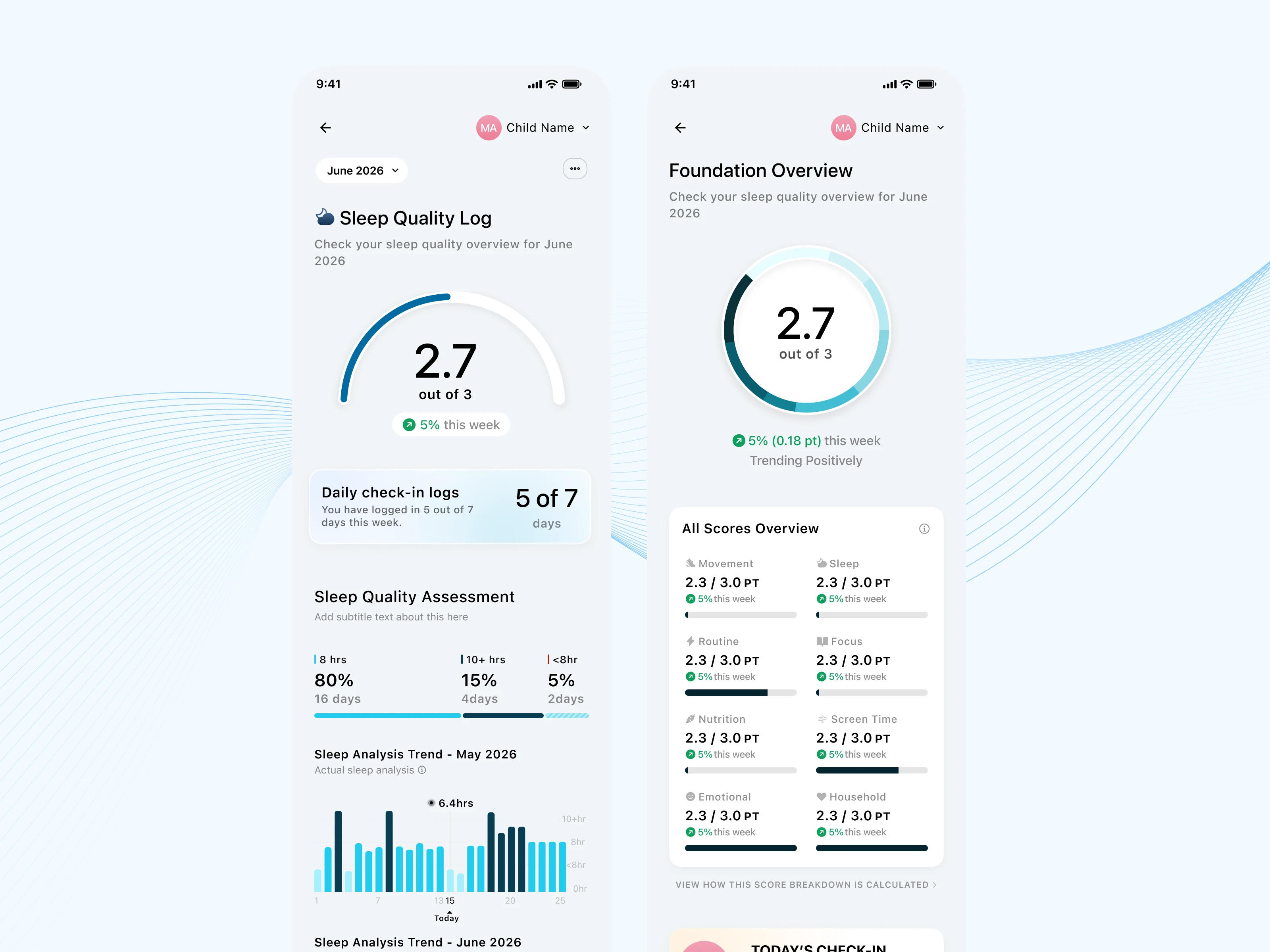
Two interfaces, with different jobs
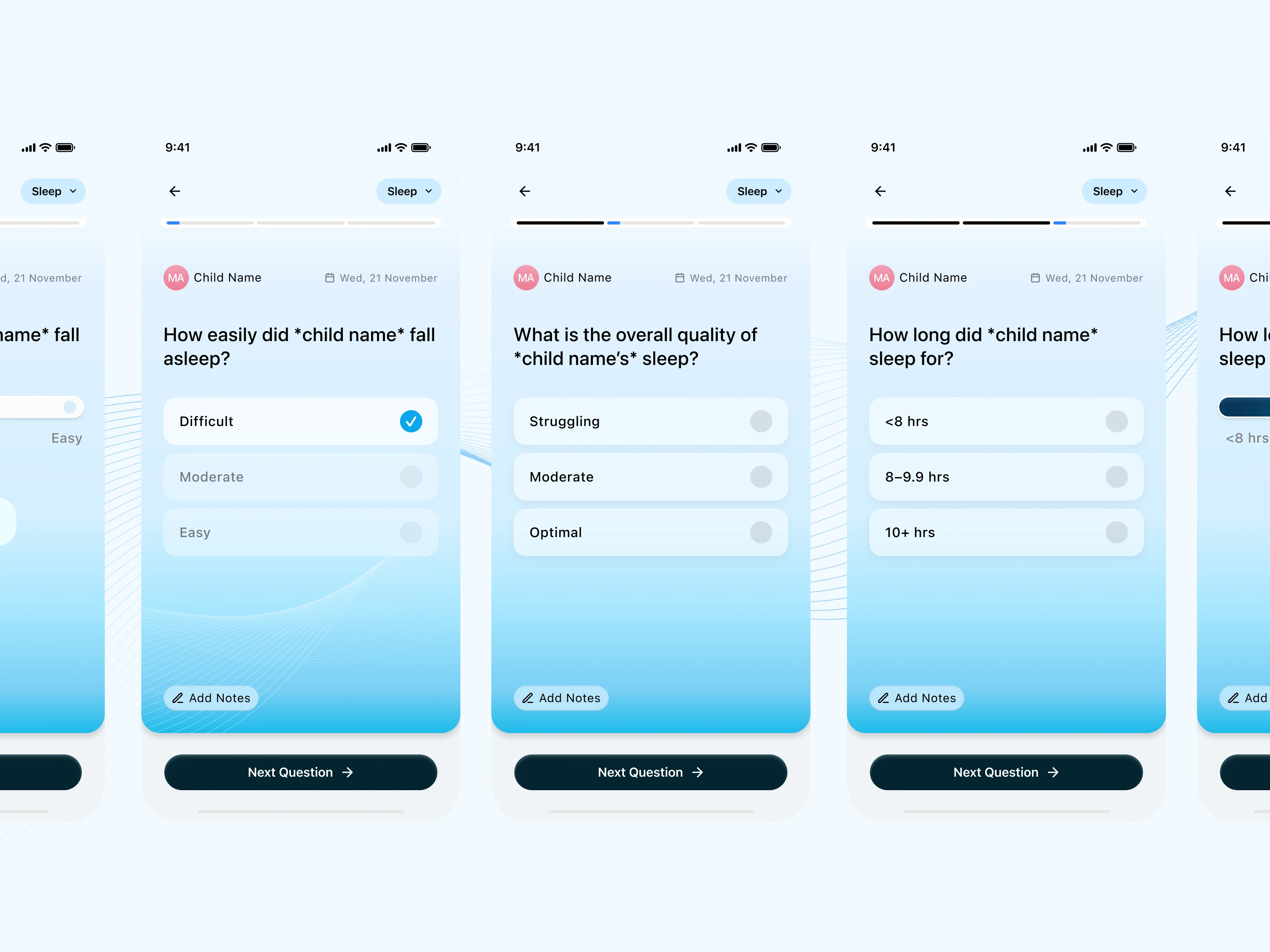
The parent app centres on a short loop: complete a check-in, review the pattern and find a next step.
Each of the eight foundations uses three to five questions on a one-to-three scale. During the design process, we identified and corrected two scales that ran in the opposite direction, so a score of three consistently represented the optimal end of the scale. Foundation names were standardised across check-ins, charts, insights and the portal.
Daily status indicators and a weekly view bring those responses together. Child profiles use initials by default, with an optional photo.
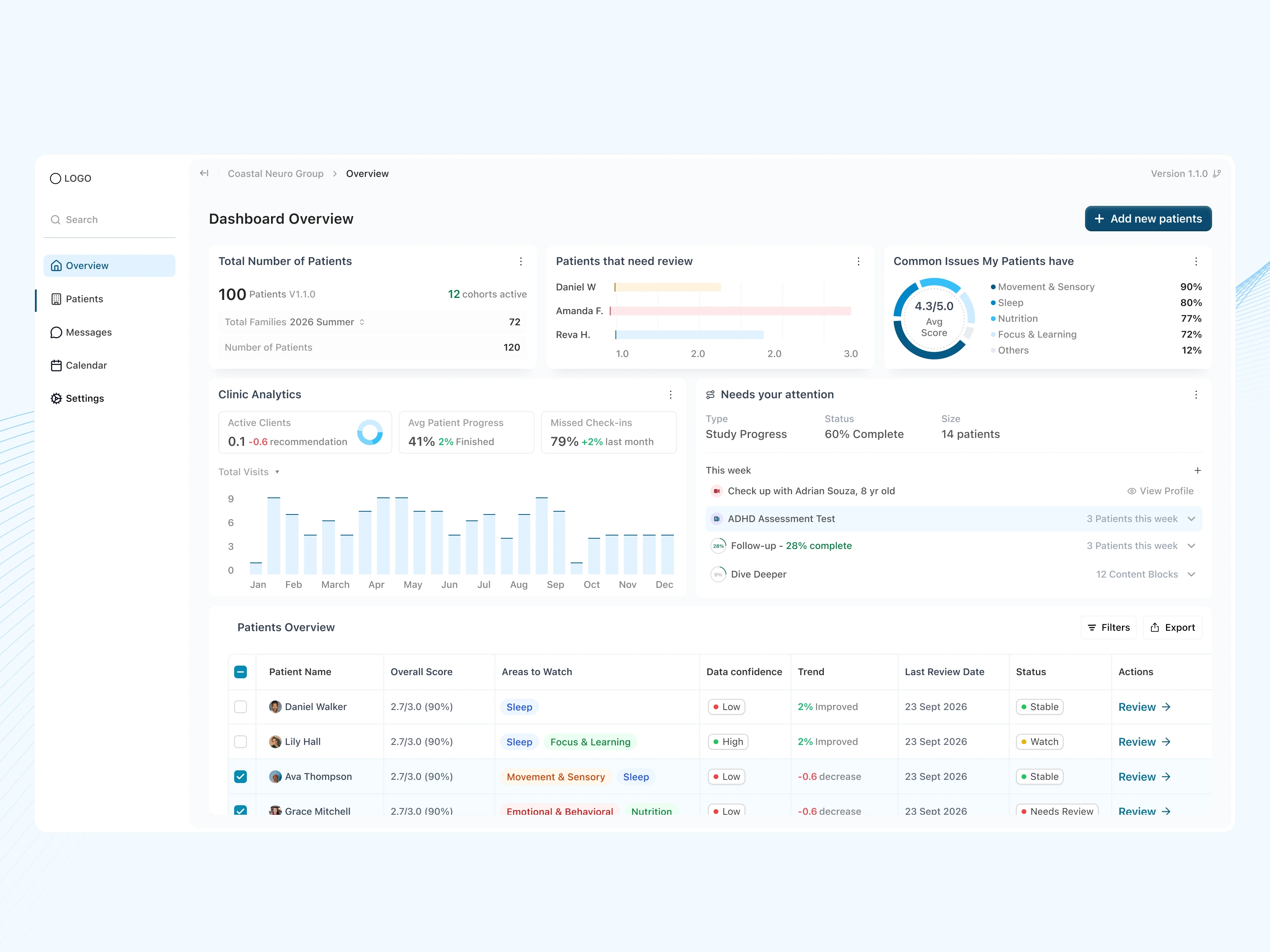
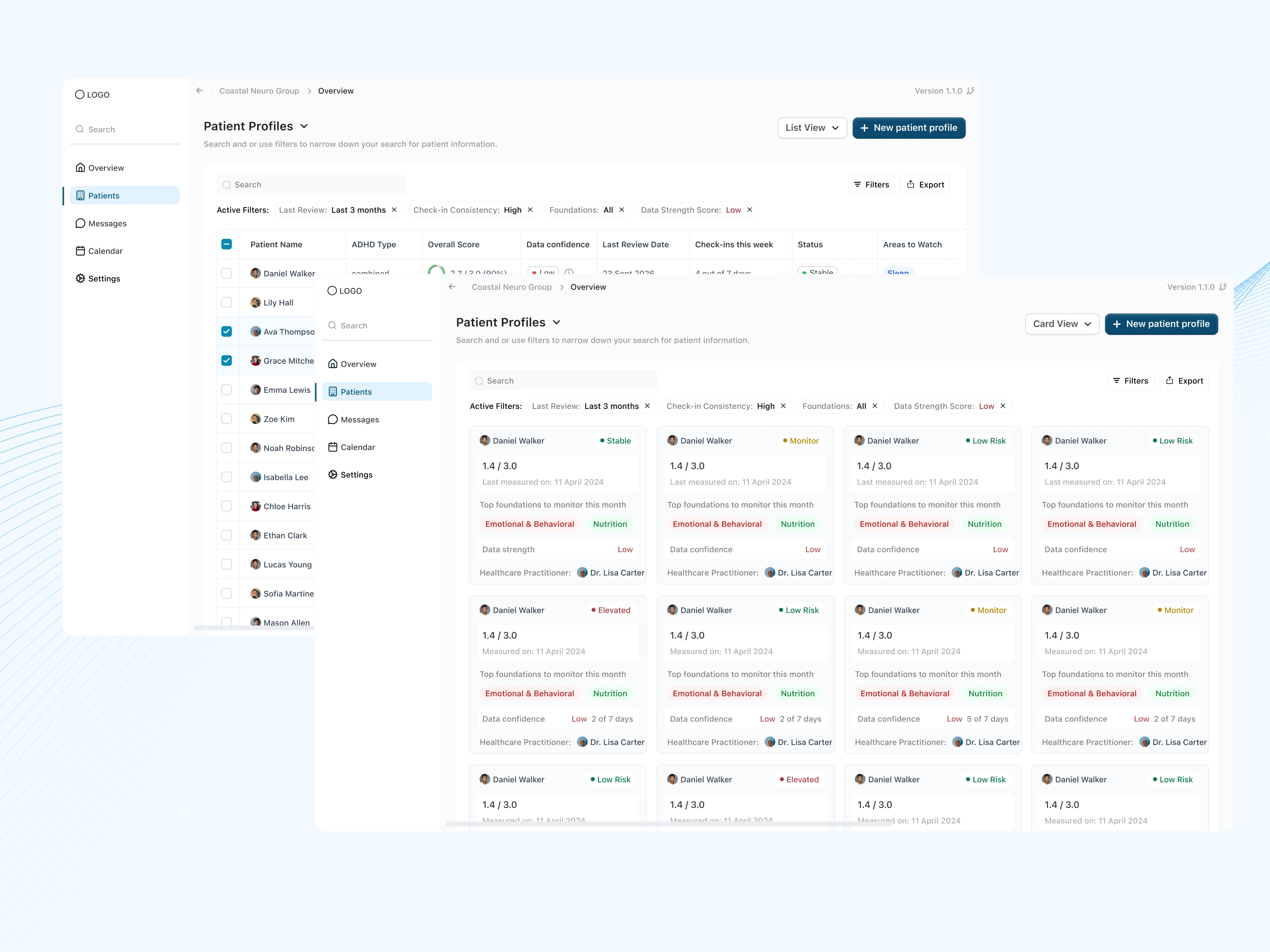
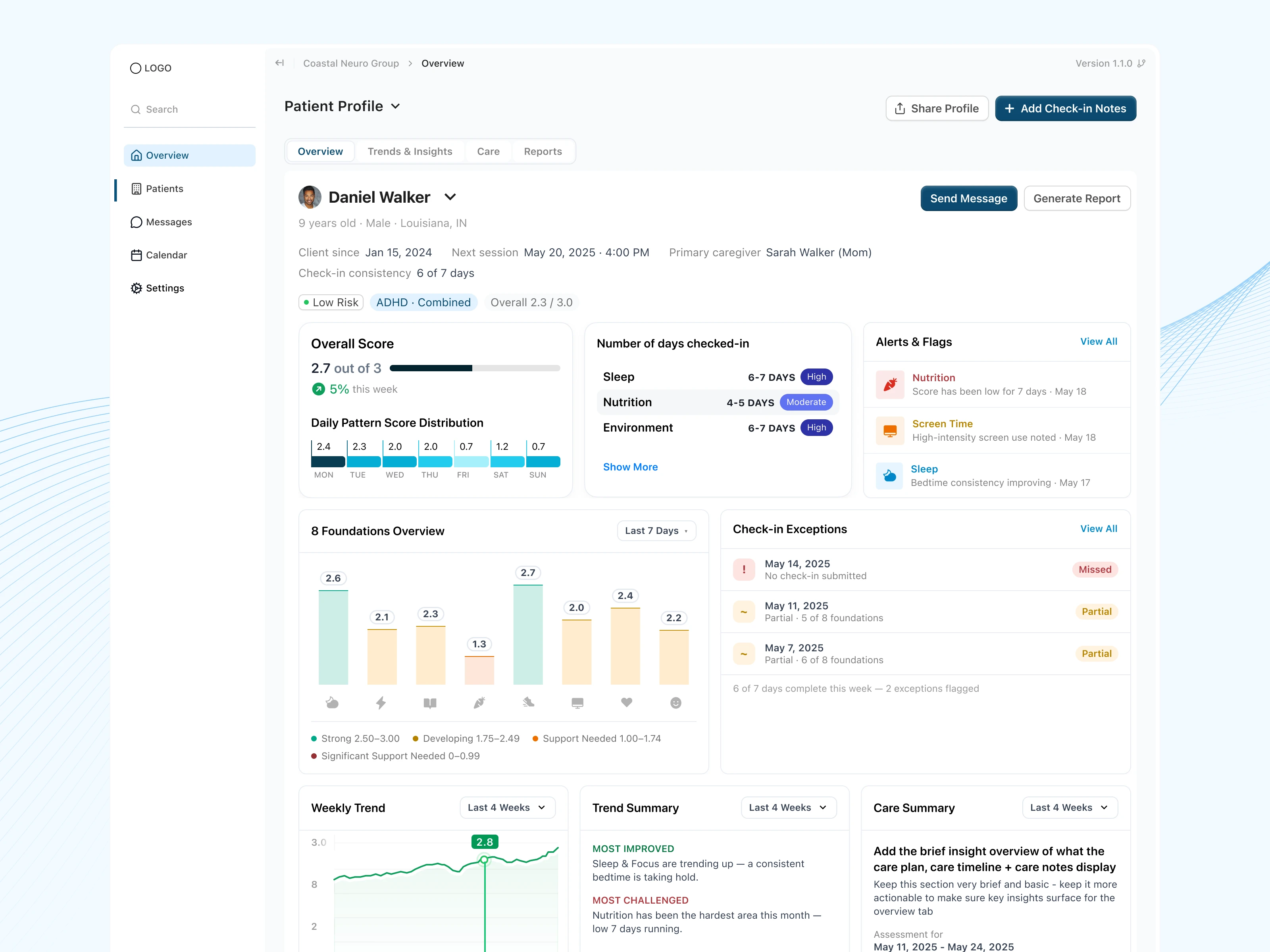
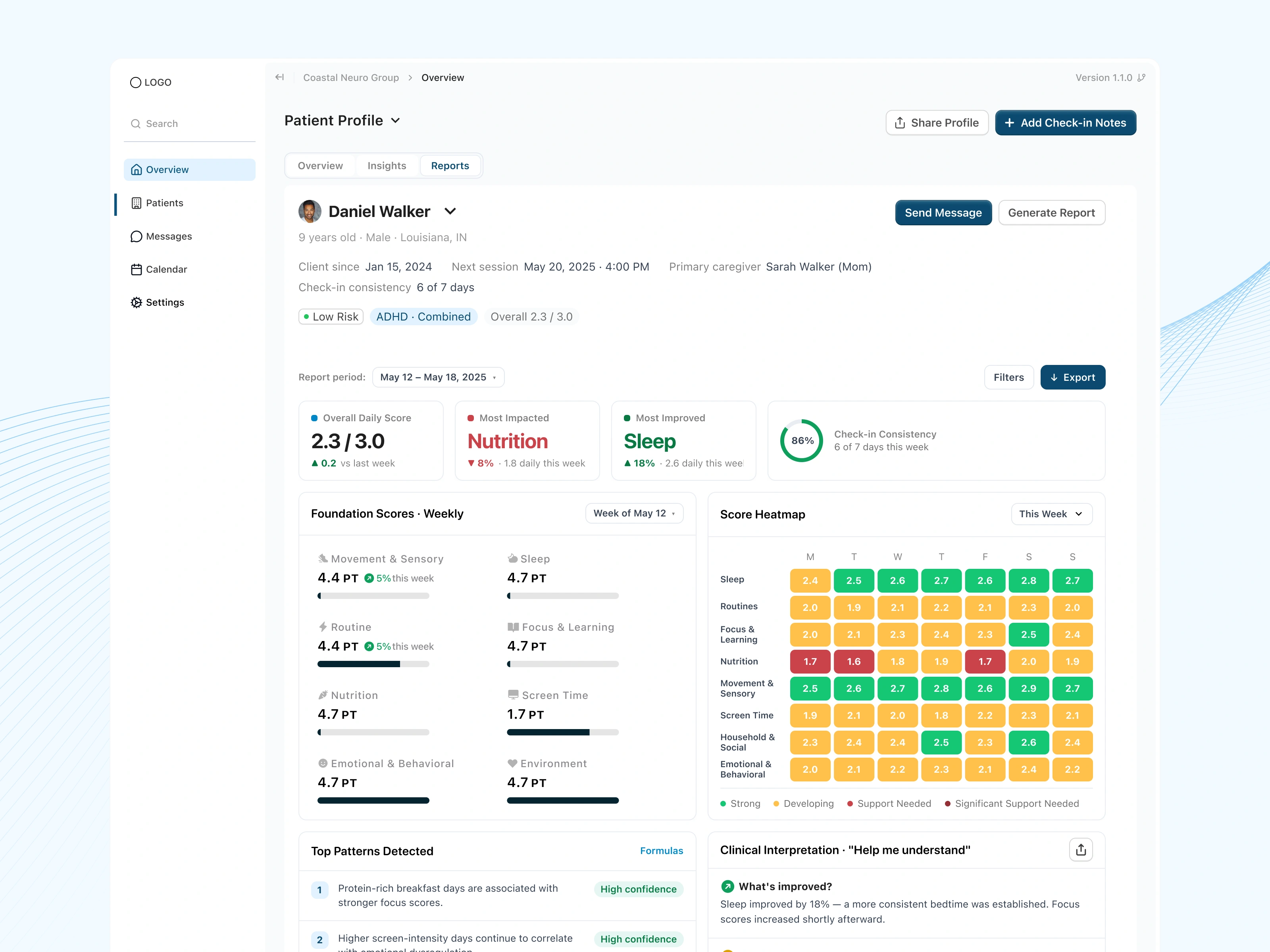
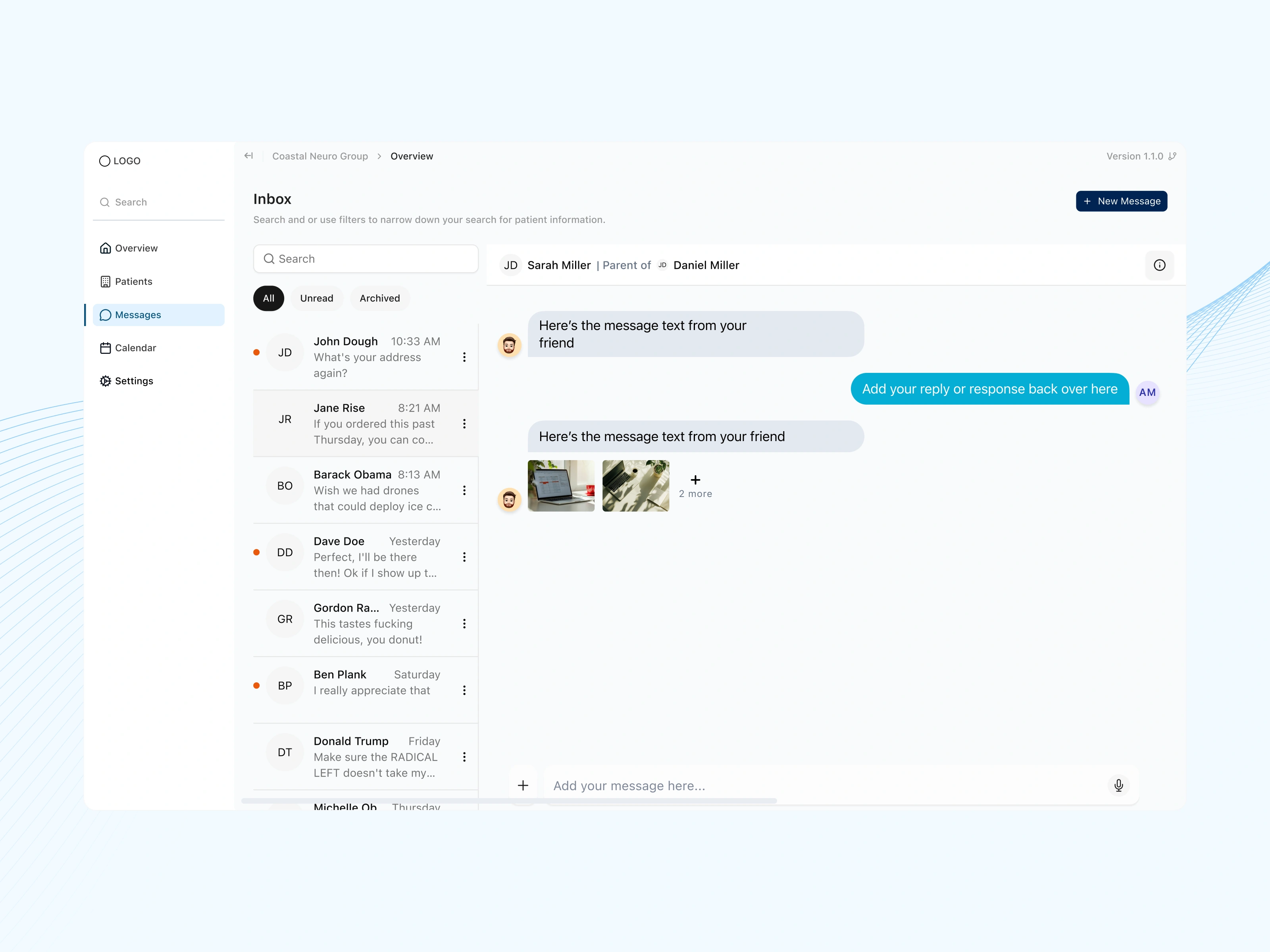
The practitioner portal gives clinicians the detail needed to act on that information. Reports, notes, messages and care plans sit around the patient workflow. Today’s note stays at the top of the profile, while quick actions provide access to follow-up scheduling and resource sharing.
The two interfaces share the same underlying model, with different levels of detail for the person using each one.
Prepare the design for the next stage
We built on Coastal’s existing brand identity, defining typography, colour and layout rules, then developing reusable components as screens were approved.
During the project, Ami shared plans to offer the platform across multiple provider practices. We moved the provider name into a shared component variable, allowing it to change consistently across the designs.
That accommodated a future requirement at the design level. Implementation across practices would still need to be addressed during development.
What the engagement delivered
Across two phases, we completed the parent app and practitioner portal designs in Figma for development handoff.
The work also resolved decisions a future development team would otherwise have inherited: an assessment flow without a workable input process, two inconsistent scoring scales and clinical language that needed to become clear daily questions.
At the close of the design engagement, the product had not launched. Adoption, continued use and clinical outcomes remain unmeasured.
The design contribution is concrete: a defined daily experience for parents, a connected workflow for practitioners and a more consistent system to build from.
For Coastal, making the product calmer meant deciding how much to ask of a parent each time they opened it.
Like this project
Posted Sep 14, 2026
Turning an ADHD clinic’s eight-foundation model into a parent app and practitioner portal, with less to process at each step.
Likes
14
Views
365
Timeline
Jun 9, 2026 - Sep 4, 2026