WHYSER — EdTech Startup Built From Scratch

Rishabh Chopra


WHYSER — I Built an EdTech Startup From the Ground Up
Role: Solo Founder — Research, Brand Strategy, Logo Design, Illustration Direction, Curriculum Architecture, Copywriting, Web Design & Development
EdTech Brand Strategy Curriculum Design Product Strategy Competitive Analysis Copywriting Landing Page Design Framer Illustration Direction User ResearchI built an EdTech startup from the ground up — customer research, competitive analysis, brand identity, illustration system, curriculum architecture, landing page copywriting, and website. Everything you see here came from one person.
The Problem
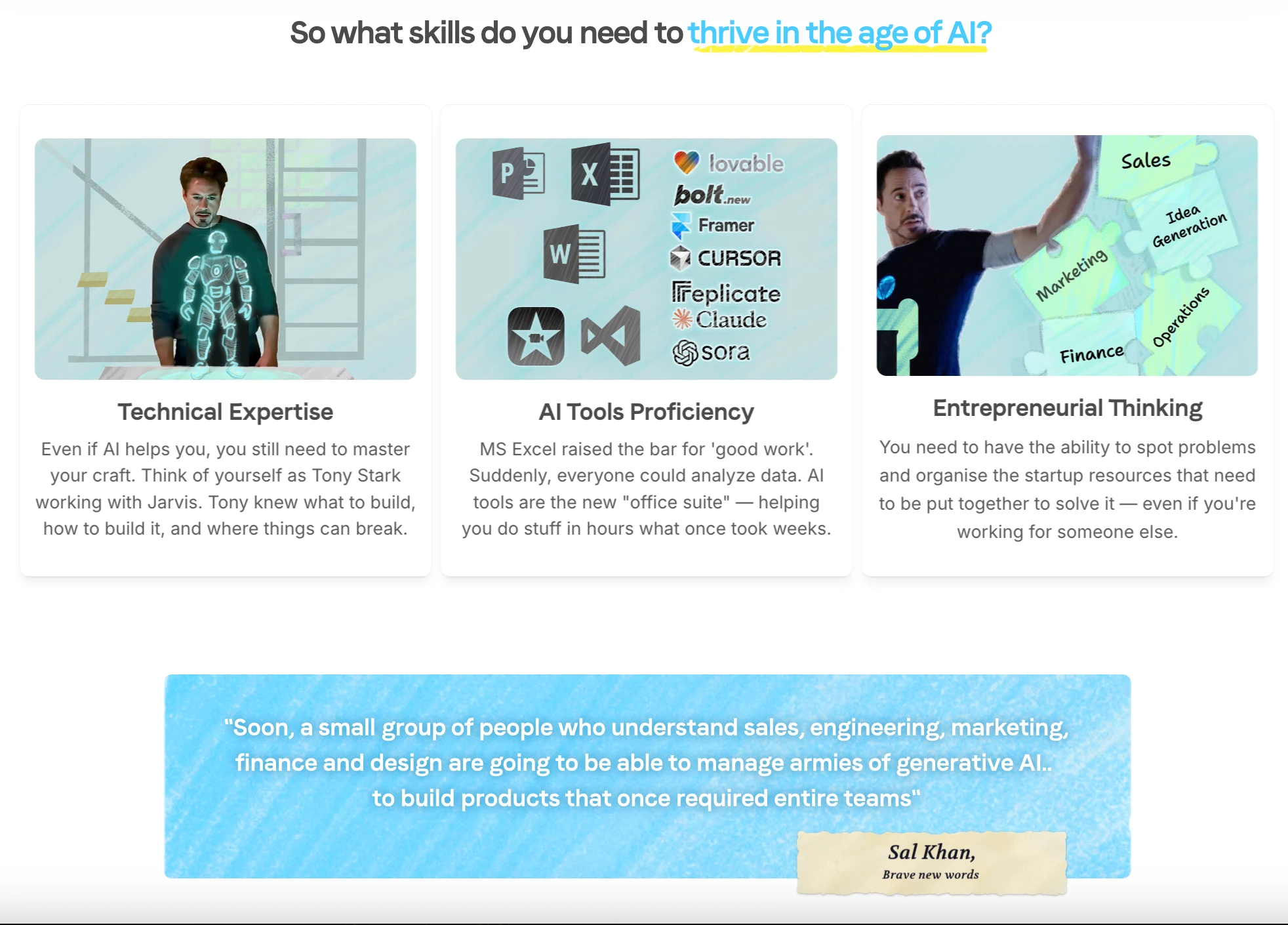
Growing up, I consistently chose the safe path over what I actually wanted. Trading creative interests for academic security, stifling passions for safer options. And kids today face the same pressure — they want to build apps, start YouTube channels, sell products online. But school funnels them into the same subjects, same exams, same competition.
The existing options for teens who want to break out of that cycle all fall short. Coding programs teach syntax for months before building anything real. Summer entrepreneurship camps cram everything into 4 weeks — not enough time to launch, get feedback, and iterate. Teen accelerators discuss emerging tech but never make students actually build a startup. And doing it yourself means thousands of hours of adult content with nobody to guide you.
Every program teaches either basic coding OR basic business. None teach both. None teach AI. And none offer a clear, milestone-based path to a real startup. That was the gap.
Customer Research — Understanding Who I'm Building For
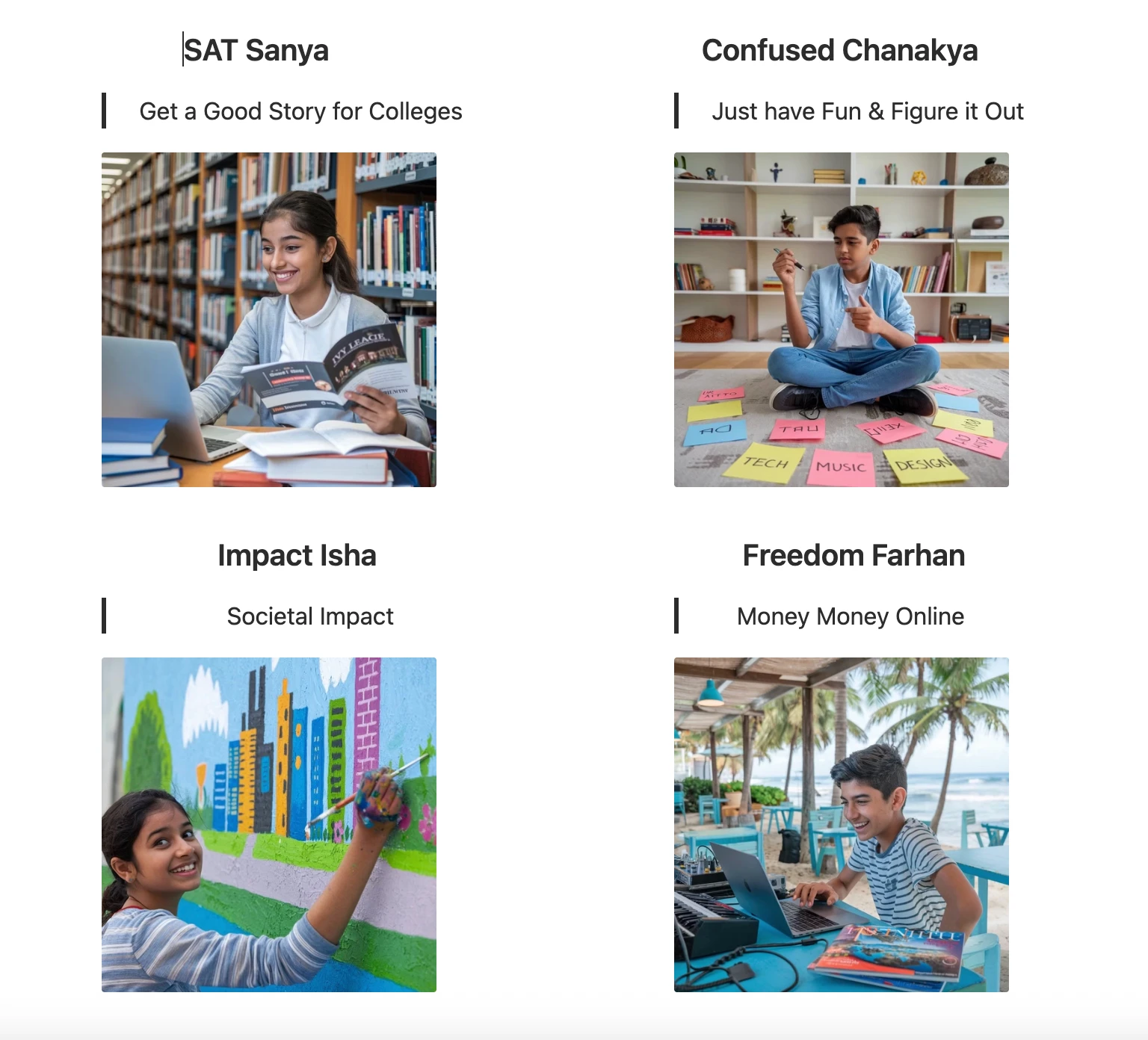
The first challenge: this product has a dual customer. The parent pays. The teen learns. Their motivations are completely different. Understanding both was the starting point — 6 detailed personas, 2 parents, 4 students.
Smita is a tech-savvy product manager who harbors an unfulfilled dream of entrepreneurship — she wants her son to have the education she never got. Raj is a traditional project manager who's skeptical but warming up to supplementing his daughter's education. On the student side: Isha wants to use tech for environmental impact. Farhan wants financial freedom and the digital nomad life. Sanya needs a standout project for Ivy League applications. Chanakya just wants to explore and figure out what he loves.
Each persona shaped a different part of the product. Smita's regret shaped the parent messaging. Farhan's desire for independence shaped the curriculum's emphasis on ownership. Sanya's college pressure shaped the "perseverance story" outcome. Every design decision traces back to a real person with a real need.
Competitive Analysis — Going Deeper Than Anyone
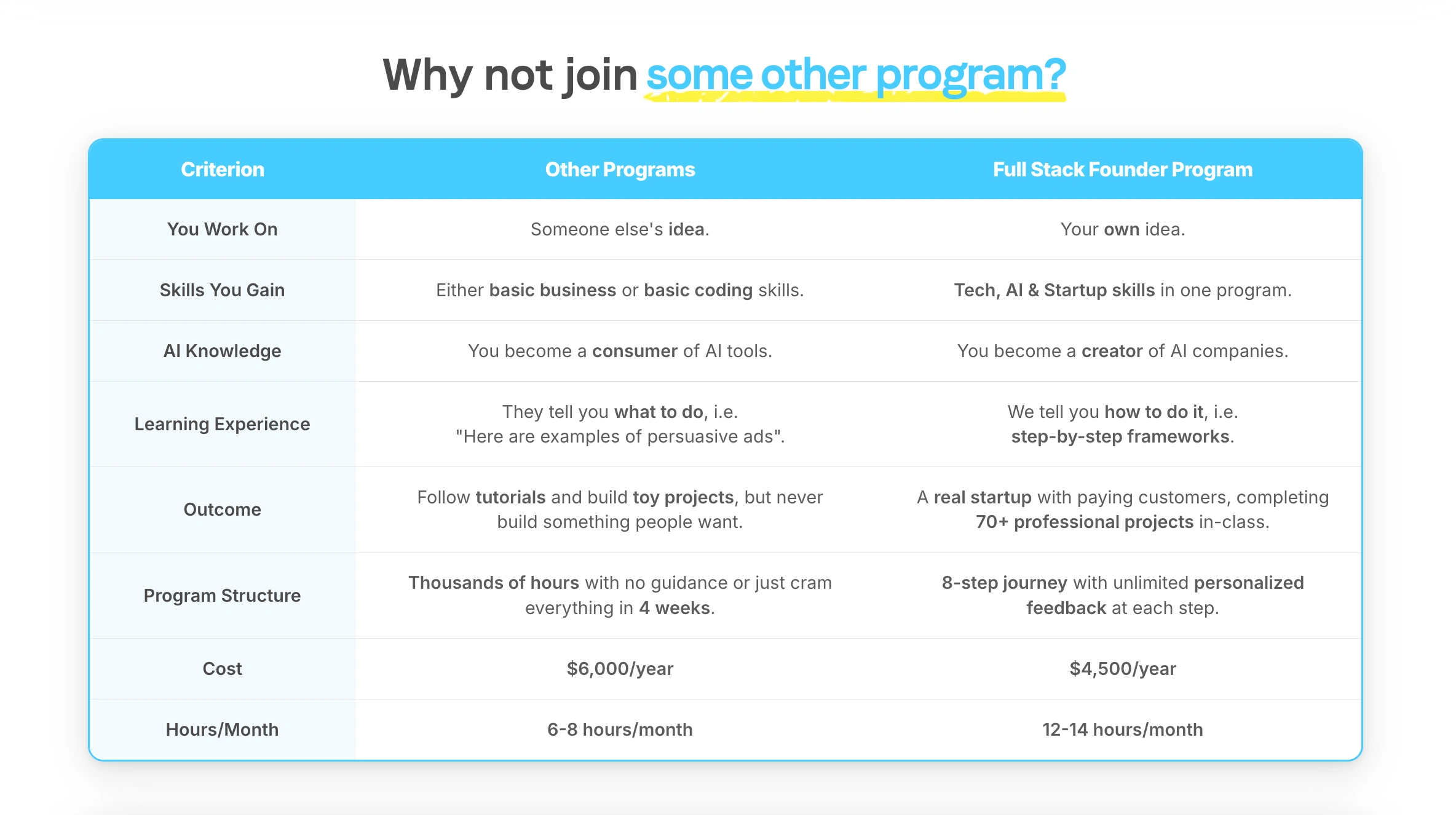
The research covered 6 categories: coding programs (BrightChamps, Codingal), summer camps (LeanGap, BetaCamp), teen accelerators (TKS, Prequel), Technovation, Moonpreneur, and the DIY path. For each of WHYSER's 20+ value propositions, every competitor was benchmarked — what they offer, what they miss, and why.
This wasn't surface-level. A master spreadsheet tracks themes from "Authentic Self-Expression" to "AI Creator vs Consumer" to "Non-VC Funding Approach" — each value prop with specific messaging, competitive benchmarks, and tier rankings. Price-per-hour varies wildly across the market: $60-100/hr for summer camps vs under $40/hr for WHYSER.
The website's comparison table is the summary. Behind it sits months of research that informed every positioning decision, every piece of copy, and every curriculum choice.
Brand Identity — Who Is a Whyser?
The name WHYSER is a play on "why" + "wiser" — follow your why, become wiser in the process. The word "Founder" was chosen over "Entrepreneur" deliberately. A founder builds something authentically. An entrepreneur just makes money. WHYSER creates founders.
The brand character: Miles Morales from Spider-Verse. A regular teen who goes to school by day and does extraordinary things his own way. He doesn't copy Peter Parker's style — he invents his own. He's scrappy, builds with what he has, and proves himself by finding solutions nobody else thought of.
That character decision drove everything downstream. The WHYSER varsity jacket on every illustrated character — like Miles' iconic jacket. The "double life" narrative structure of the landing page: dreams and aspirations vs. the conformity of school. The tone of voice: informal, confident, never condescending. Because these kids aren't kids. They're young adults capable of far more than anyone gives them credit for.
Brand archetype: Creator × Explorer. Tone of voice: Noah Kagan's directness meets Ali Abdaal's approachability, with a dash of Tony Stark confidence. A 40+ adjective tone analysis mapped across 7 reference sources landed the exact voice — authoritative but informal, enthusiastic but honest, challenging but supportive.
Logo Design
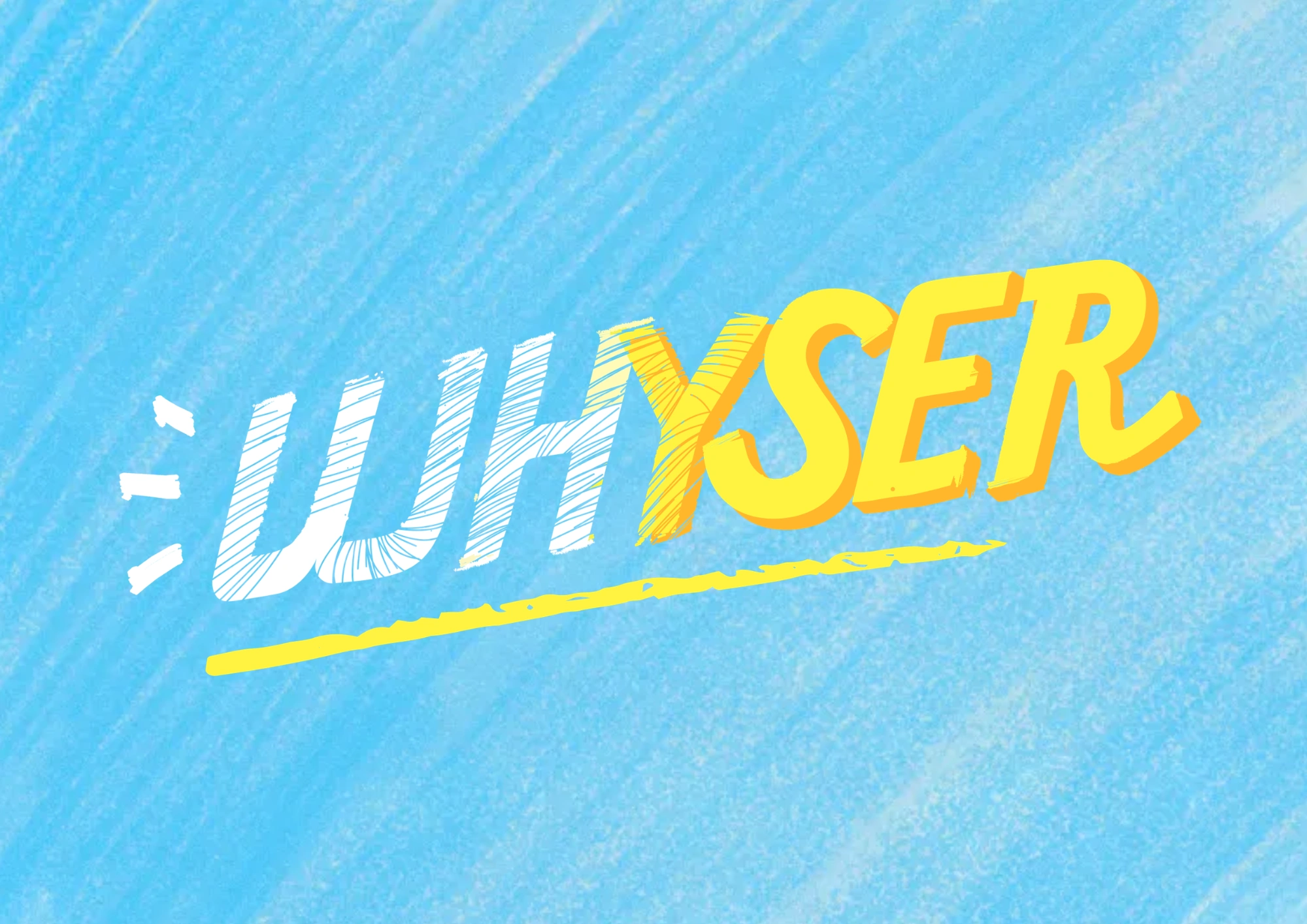
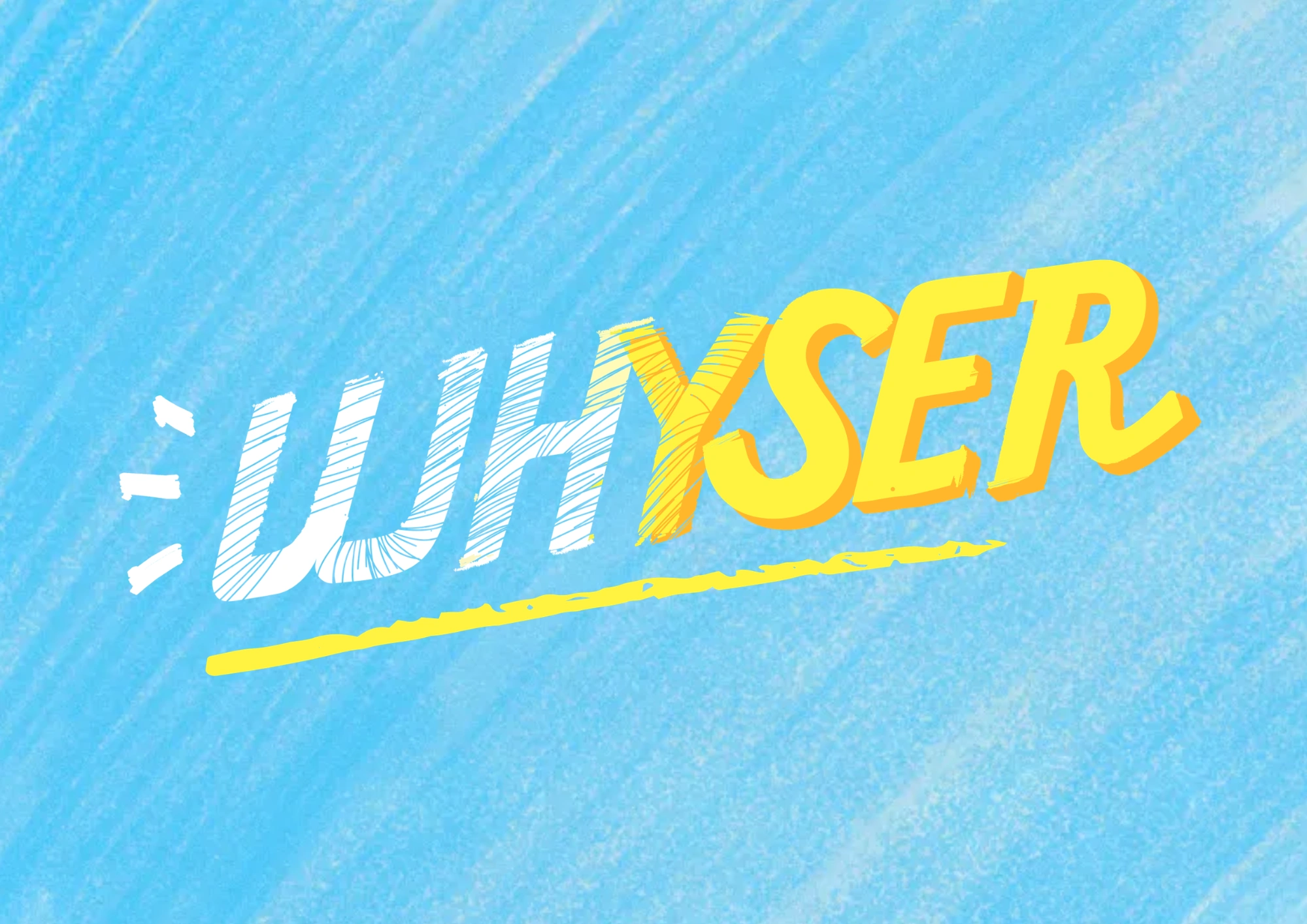
The WHYSER wordmark transitions from hand-drawn, sketchy letterforms ("WHY") to solid, finished forms ("SER"). The concept: turning something you made by hand into a finished product. It represents the entire journey of the program — from raw idea to shipped startup.
The hand-drawn texture signals authenticity and craftsmanship. The solid finish signals the professional outcome. The ascending italic conveys progression and growth. Visual inspiration came from Ed Sheeran's hand-lettered album covers and the energy of street art — raw creativity becoming something real.
Visual Design System — The Illustration Language
I directed a custom illustration style that runs through every section of the site. The key design decision: aspirational states are rendered in full-color watercolor — what kids dream of becoming. Problem states are rendered in grayscale pencil sketches — what school reduces them to.
This contrast tells the emotional story without a single word of copy. Scroll from the colorful teens dreaming of YouTube channels and app stores to the grayscale students all wearing the same uniform, taking the same exams — and you feel the loss before reading anything. That's visual storytelling doing the work that copy can't.
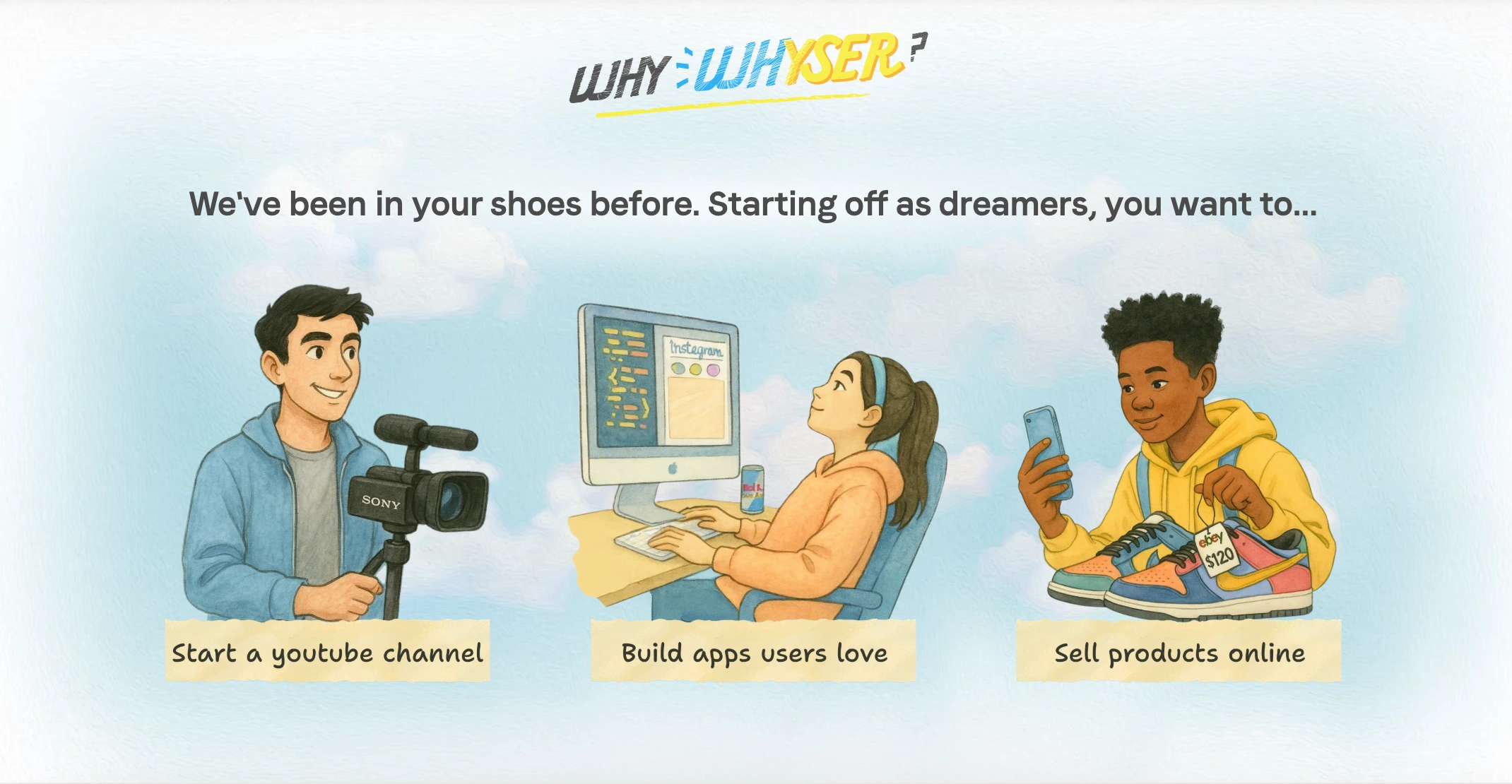
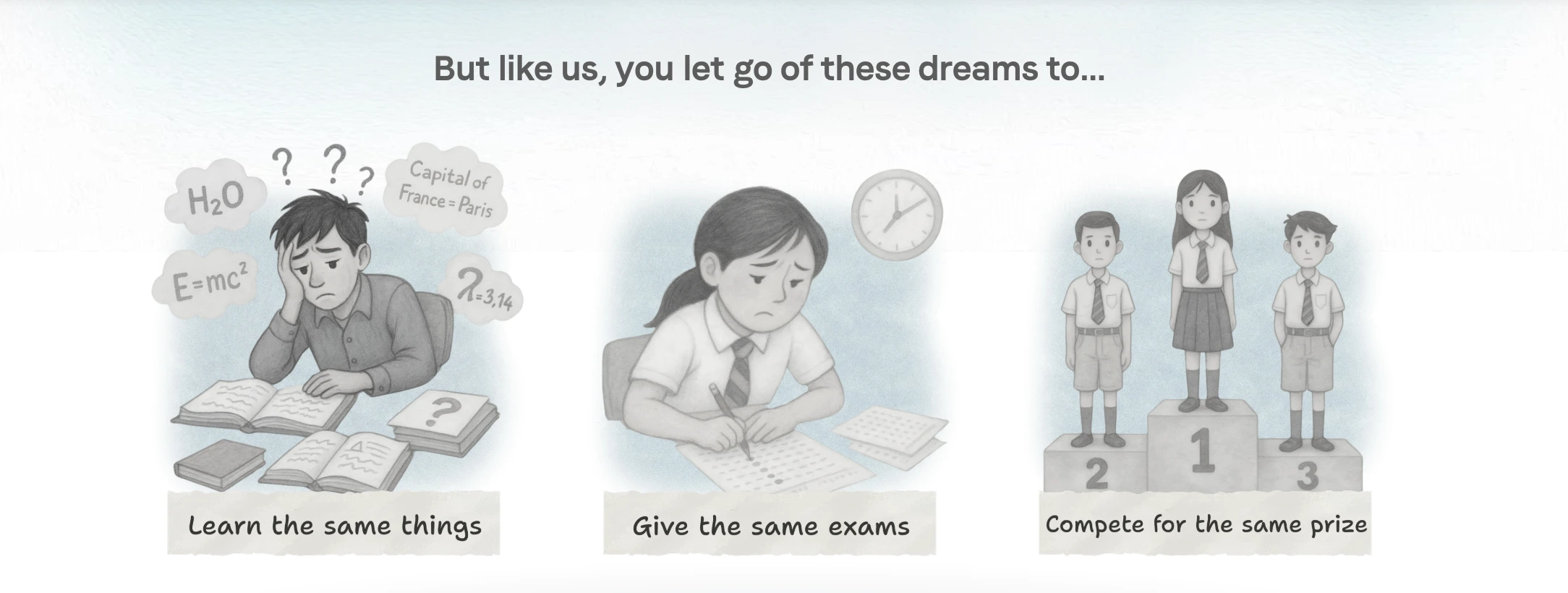
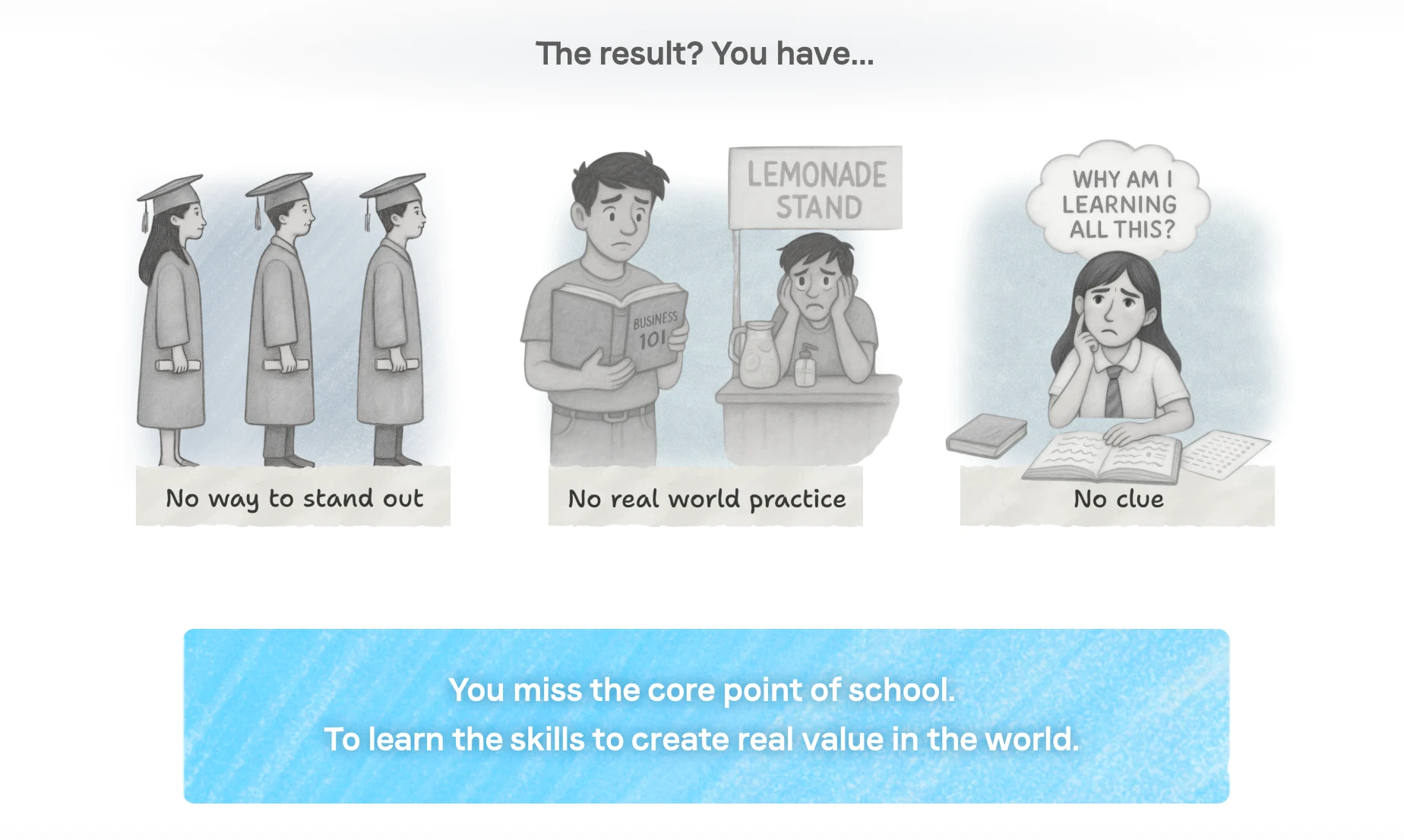
Every student character wears the WHYSER varsity jacket — a recurring identity element inspired by Miles Morales' iconic jacket in Spider-Verse. Characters span diverse ethnicities, ages, and interests because the program is global. The illustration style blends Ali Abdaal's clean, uncluttered approach with energetic watercolor textures — resulting in something I call "playfully professional." Never childish, never corporate.
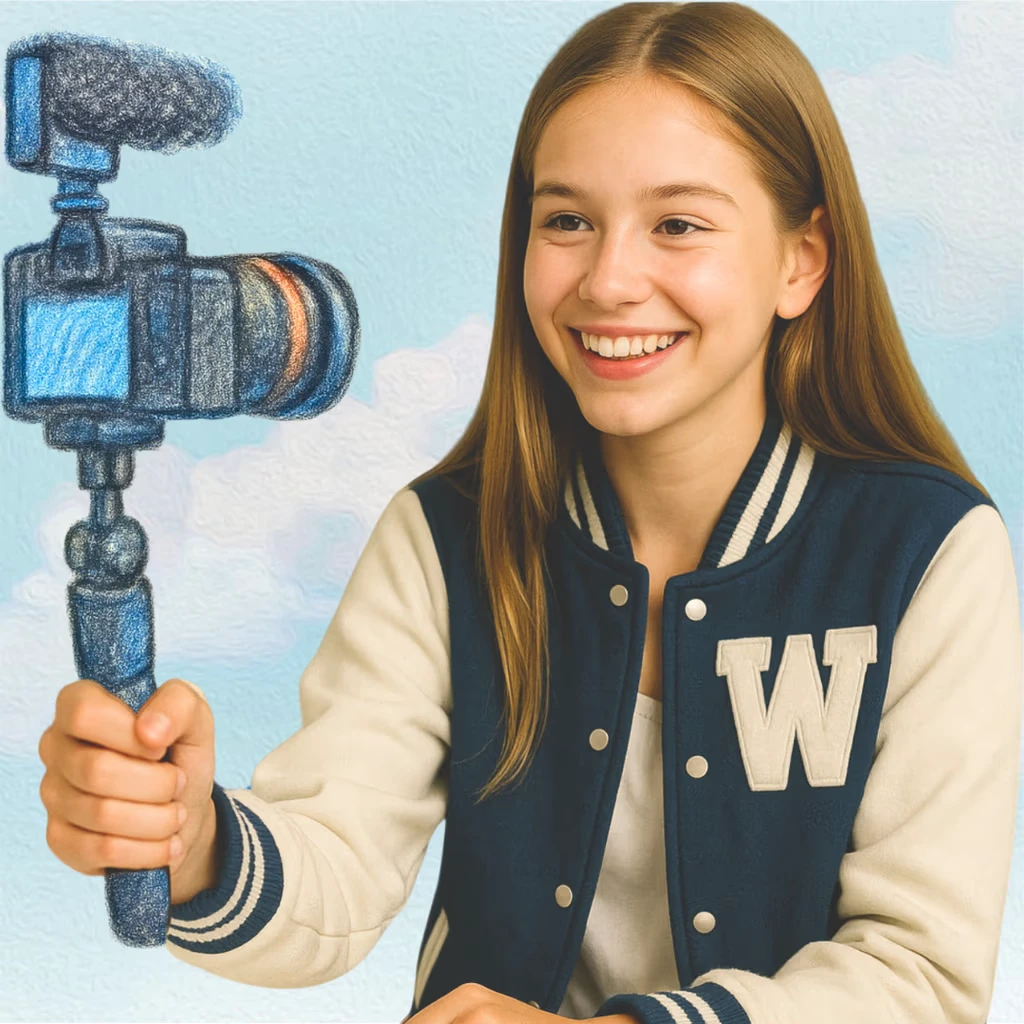
The design system includes 8 deliberate visual elements: hand-drawn 2D illustrations, watercolor/brush stroke backgrounds, curved line patterns for ease, happy pastel colors, real people in product demos, clouds and stars for aspirational moments, sticky notes and highlighting for callouts, and clean minimalist backgrounds for structure. Each element has a specific emotional function.
"Landing on this system meant evaluating dozens of illustration styles, color palettes, and layout approaches against the brand's emotional goals before committing to the direction
Curriculum Architecture — The Intellectual Core
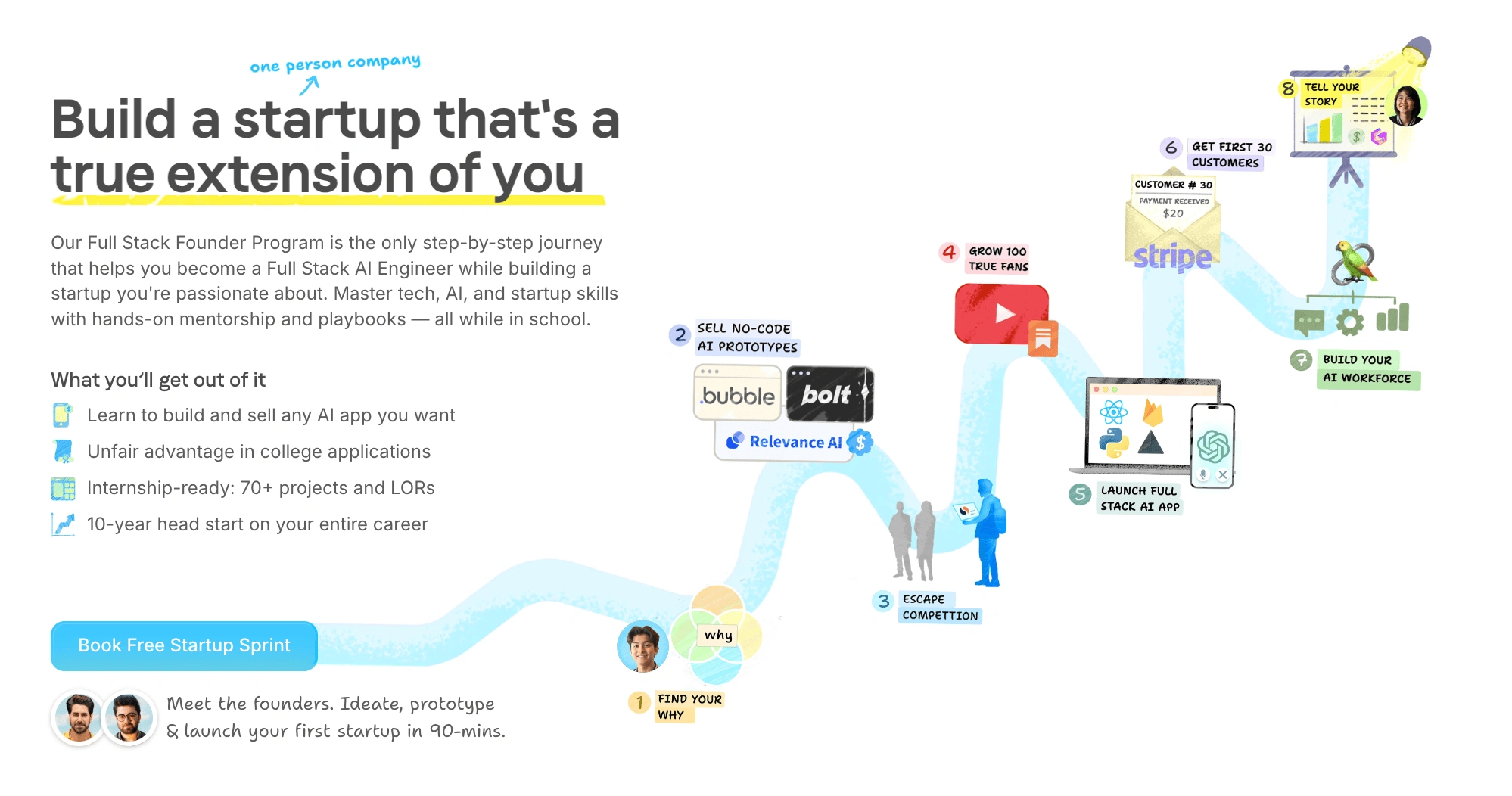
The curriculum is based on IDEO's Human Centered Design framework: Inspiration → Ideation → Implementation. I condensed thousands of hours of adult-level startup, tech, and AI content into an 8-step milestone journey that a teenager can follow in 4 hours per week alongside school.
Each milestone is a project with a concrete deliverable, specific tools (shown as logos beneath each card), and a feedback loop. The key insight that shaped the entire structure: most programs either teach you to build OR to sell. Never both. And none of them let you work on your own idea.
The progression: find what you care about → validate by selling before building → prototype without code → escape competition by doing it your own way → build an audience of 100 true fans → ship a full-stack AI app → get 30 paying customers → build an AI workforce to scale yourself → tell your story and explore funding that keeps the company yours.
By the end, students aren't just coders or business students. They're full-stack founders with a real startup, a documented perseverance story, and a unique interdisciplinary skill-set that doesn't exist anywhere else in teen education.
Landing Page Copy
The landing page isn't a feature list. It's a story. I wrote every word.
The narrative arc: "You had dreams → school killed them → but the products we use every day were made by young people who followed theirs → here's their 3 secrets (Small Fire, Fast Fail, Build & Sell) → and every year it gets easier to follow in their footsteps → but the world is changing fast → you need 3 skills to thrive → no single program teaches all of them → we make it easy → here's the 8-step journey → here's what you graduate with → here's how it works week by week → here's the full curriculum → here's why we're different → here's who this is for (and who it isn't) → here's the price → meet the founders → book your free sprint."
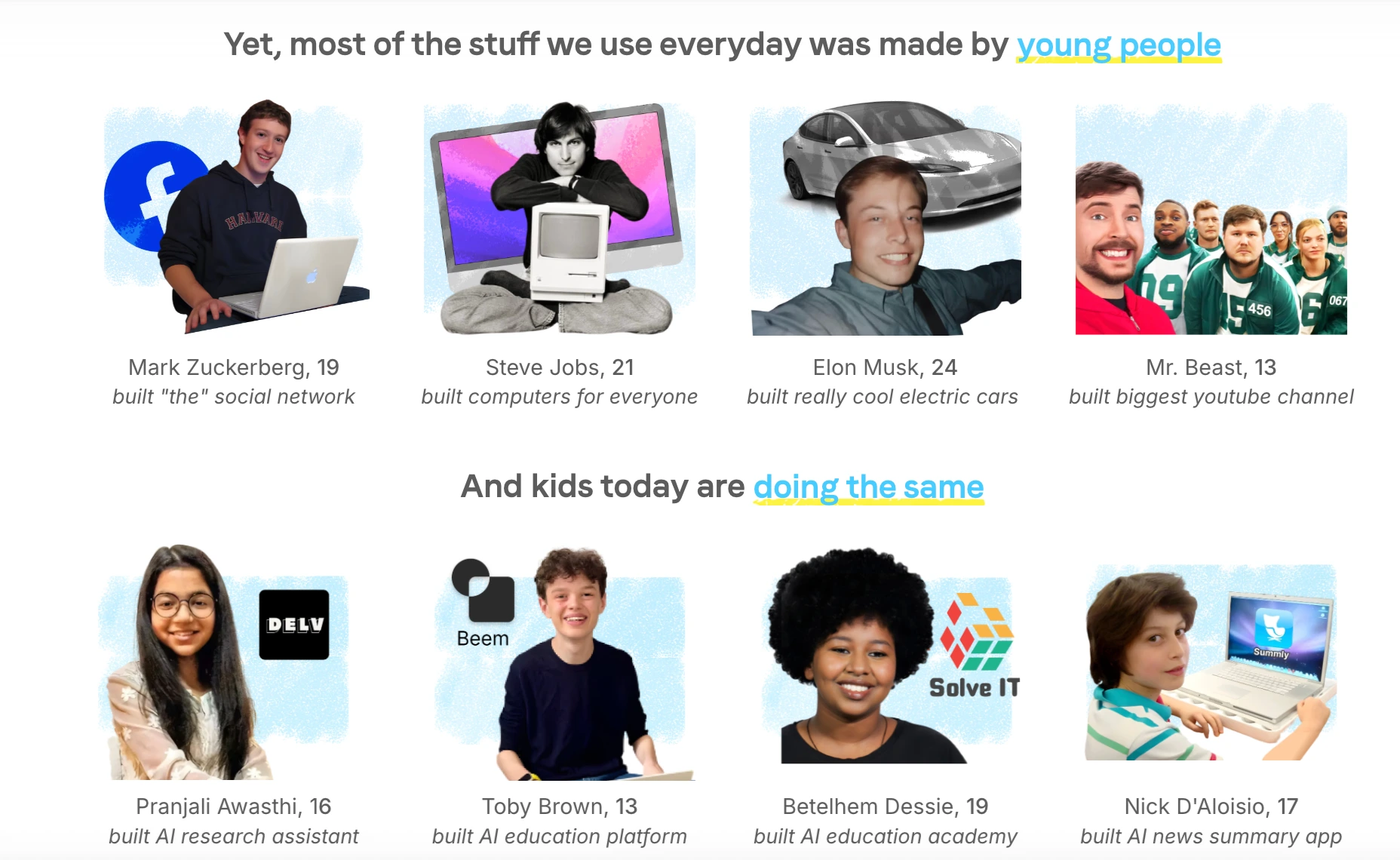
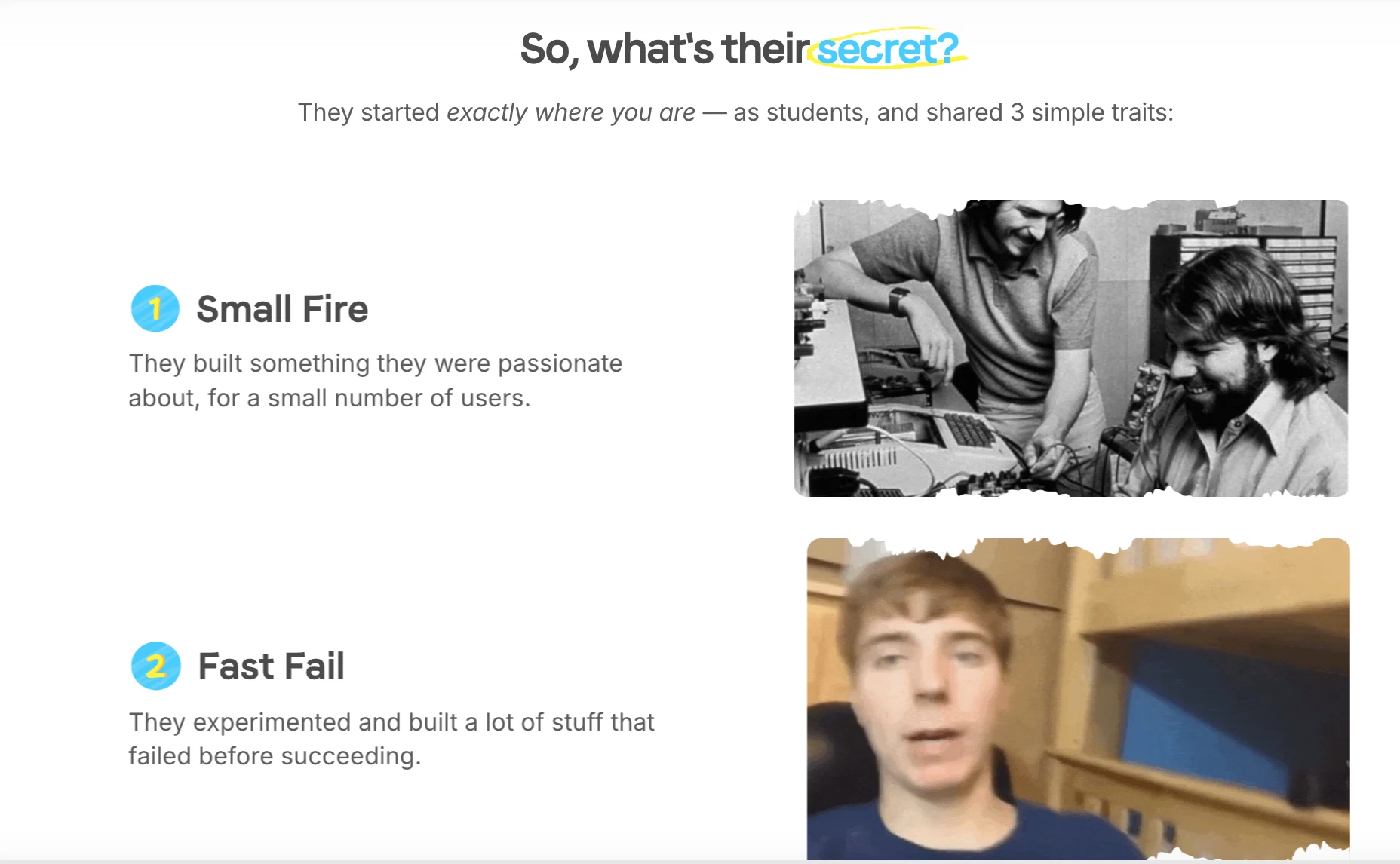
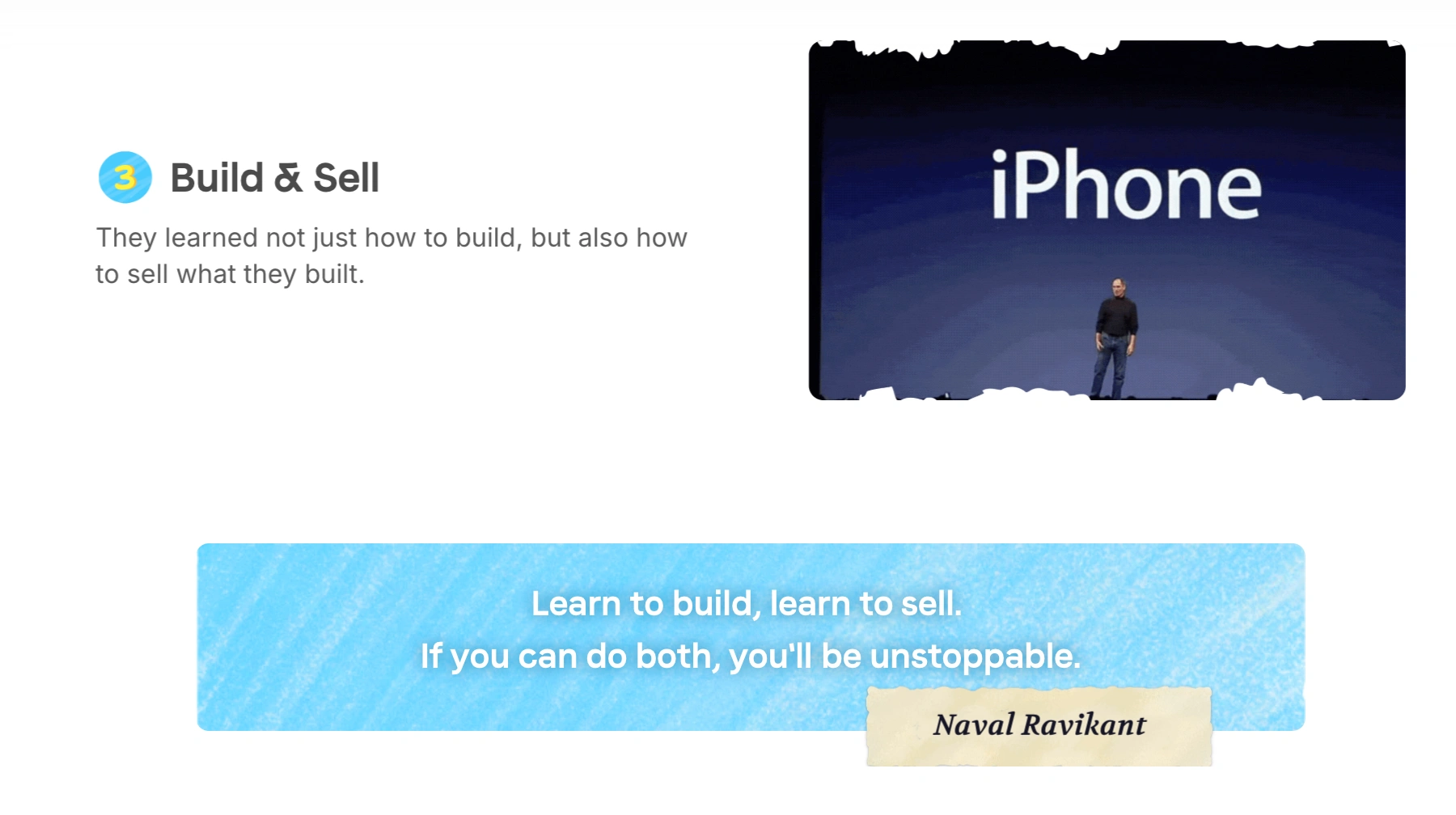
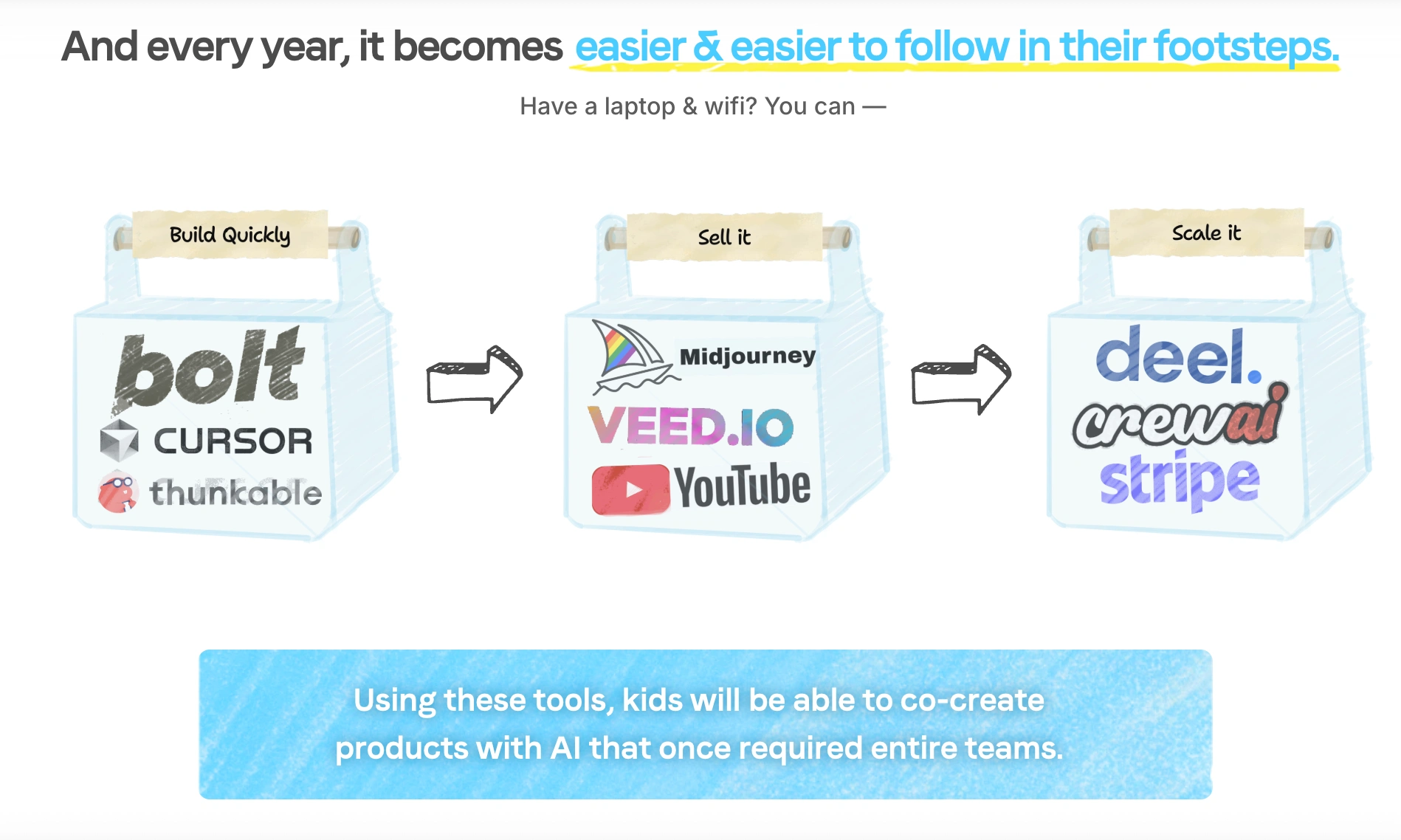
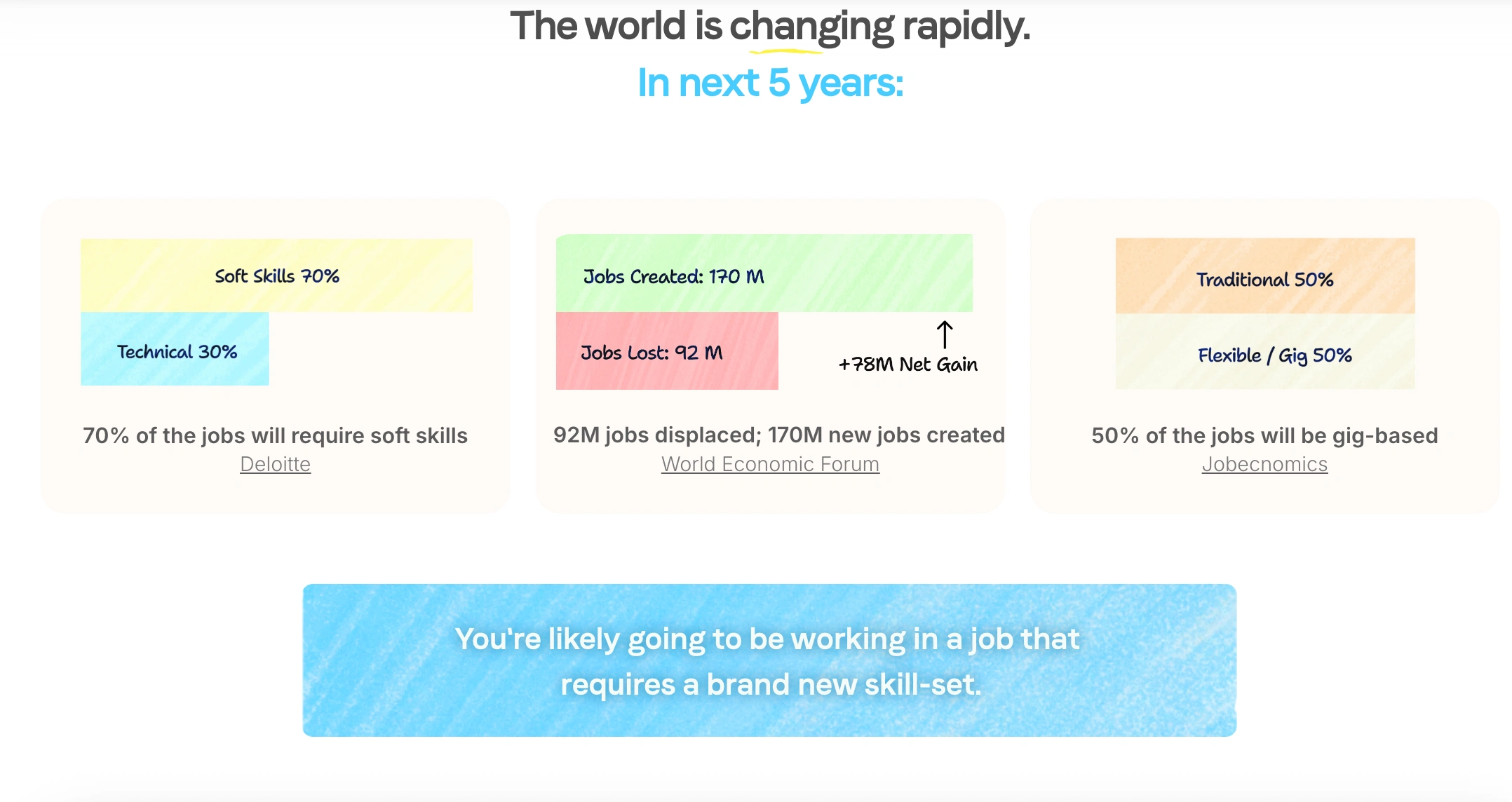
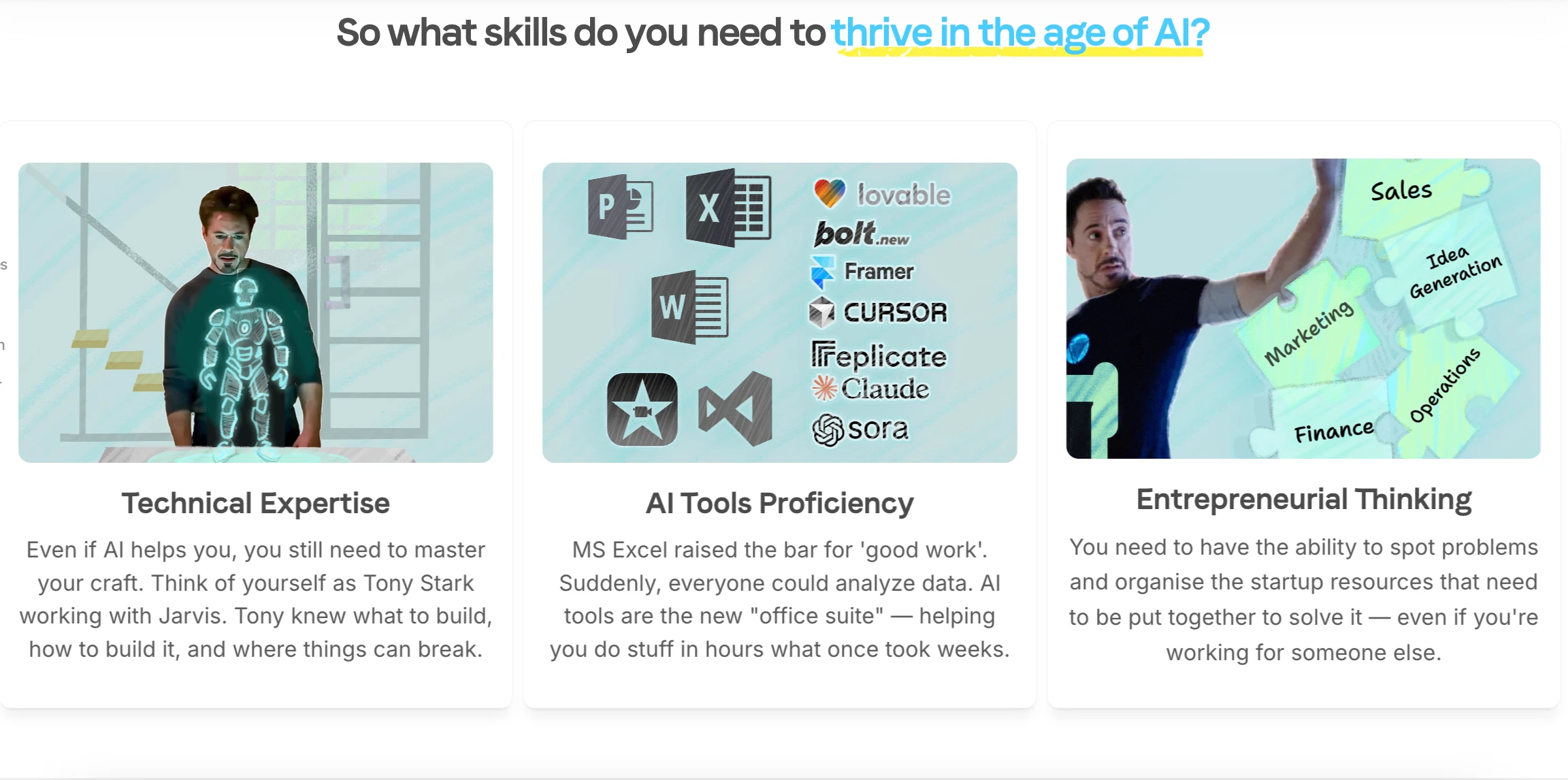
Every section earns the next scroll. The copy mirrors the brand tone: informal, authoritative, direct. "Learn the same things. Give the same exams. Compete for the same prizes." — that's not marketing copy. That's a mirror held up to every parent and student reading it. And then: "You miss the core point of school. To learn the skills to create real value in the world." That's the turn. That's where they stop scrolling and start reading.
How the Product Actually Works
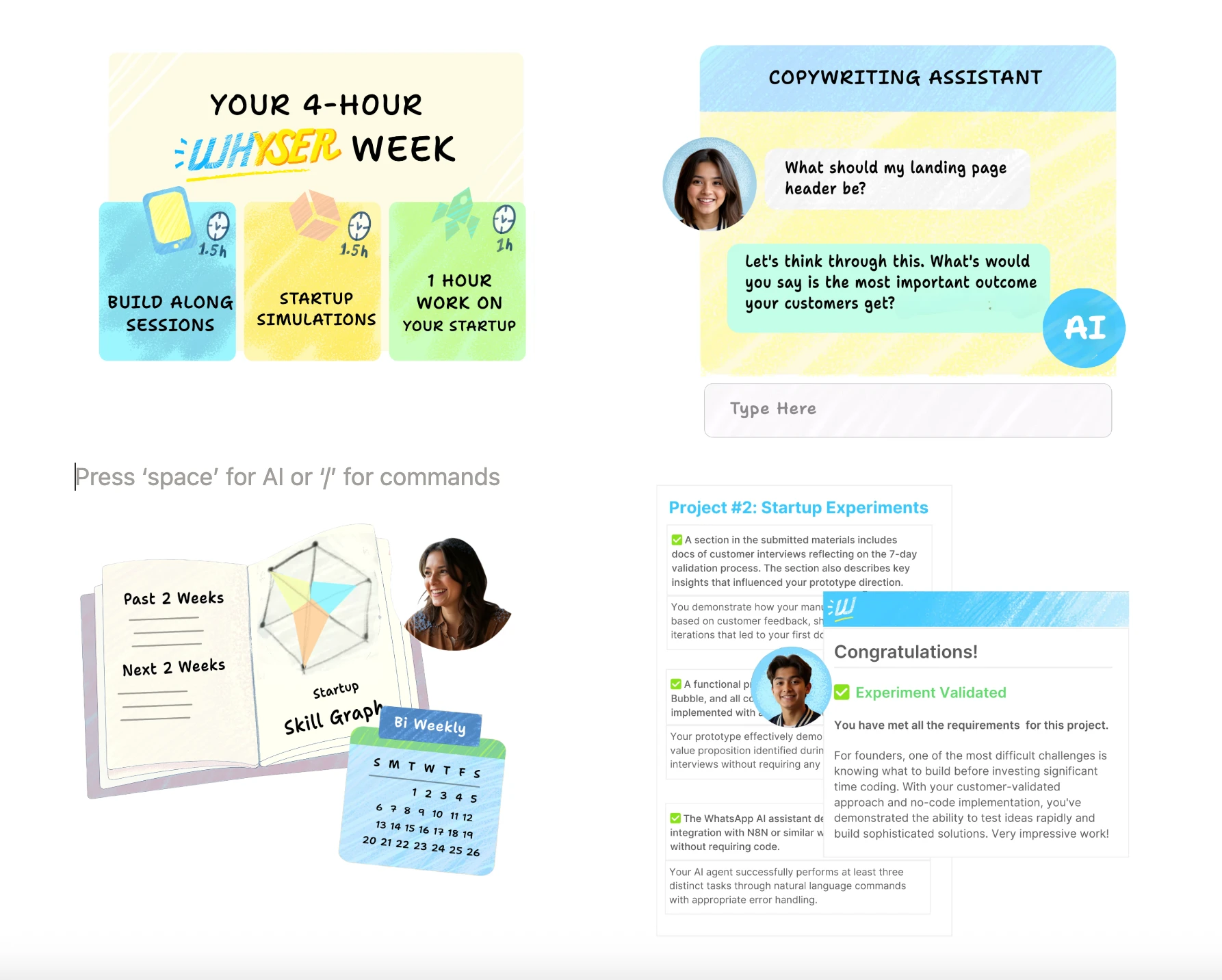
The learning experience is designed down to the weekly rhythm. Two 90-minute live sessions: Build-Along Sessions where students build real AI apps inspired by Y Combinator startups, and Startup Simulations where they solve real startup challenges — redesigning Airbnb's landing page one week, fixing Netflix's pricing strategy the next. Plus 1 hour of independent project work on their own startup.
The program also includes AI playbooks — custom AI assistants for each milestone that guide students through execution without doing the work for them. Ask "What should my landing page header be?" and the AI responds with clarifying questions: "What's the most important outcome your customers get?" It teaches thinking, not dependency.
Bi-weekly Growth Coaching rounds out the experience: a dedicated coach reviews progress, sets goals, tracks skill development across tech, AI, marketing, and public speaking — and documents wins and losses. That documented journey becomes the student's college essay material, internship talking points, and investor pitch story.
Outcomes & Positioning
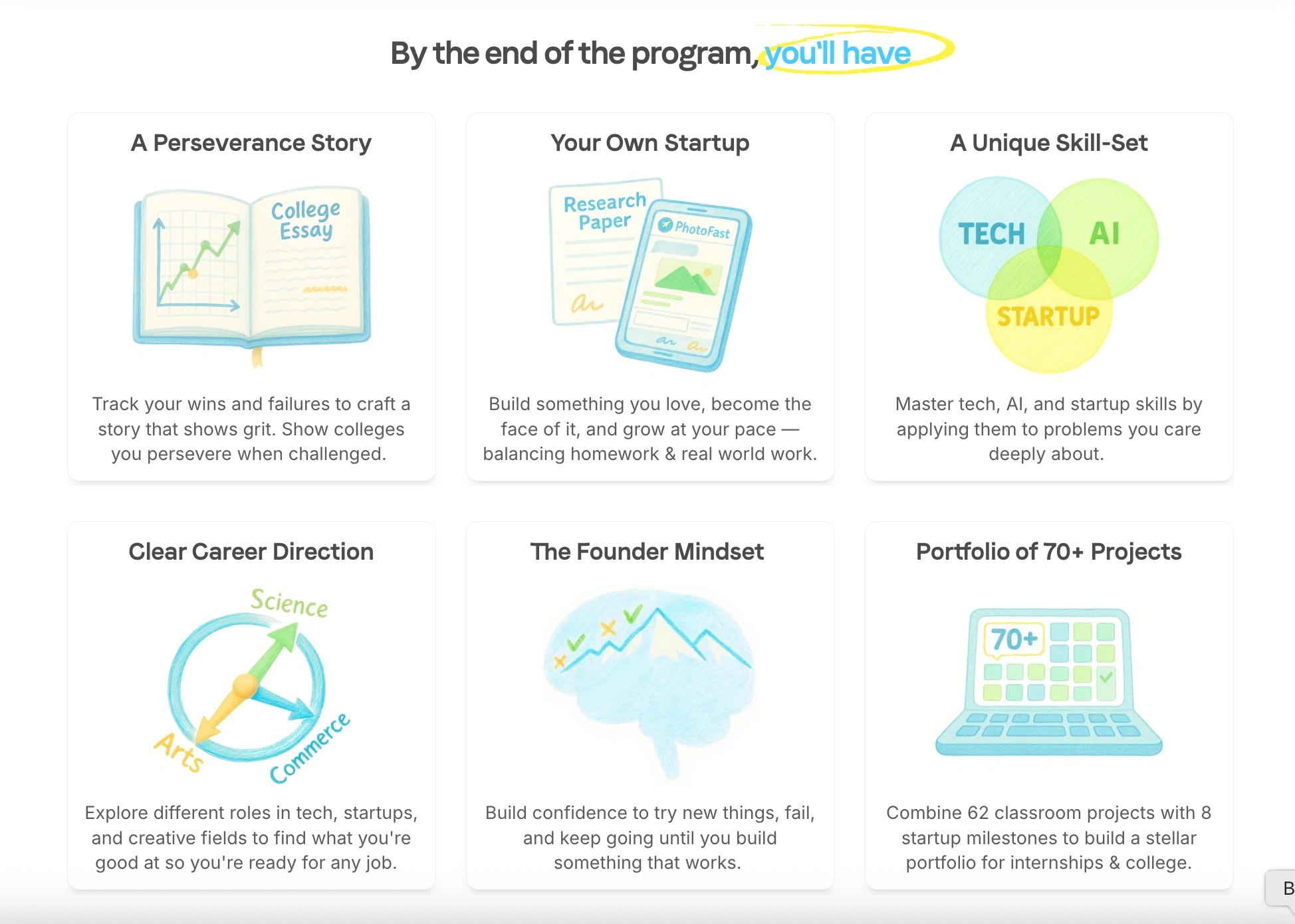
Six outcomes, each mapped to a specific part of the curriculum. Three tangible: your own profitable startup, a unique interdisciplinary skill-set (tech + AI + startup), and a documented perseverance story for college essays. Three intangible: clear career direction from experiencing multiple roles, the founder mindset (confidence to try, fail, and try again), and a portfolio of 70+ projects built just by attending classes.
Strong positioning means saying who you're NOT for. No "funding over profit" seekers. No corporate prep. No get-rich-quick mentality. No team managers who want to hire large teams from day one. WHYSER is for creators, builders, part-time hustlers, and small but mighty dreamers who want a lean, automated, one-person company they love.
What I Did
Every piece of WHYSER came from one person.
Competitive research across 6 program categories and 10+ competitors. A master value proposition spreadsheet with 20+ features benchmarked against every alternative. Six detailed customer personas — 4 students, 2 parents — each with demographics, pain points, goals, and design implications. Brand strategy: naming ("why" + "wiser"), brand archetype (Creator × Explorer, inspired by Miles Morales), only-ness statement, 40+ adjective tone analysis mapped across 7 reference sources. Logo design: hand-drawn to solid wordmark concept. Custom illustration direction: color/grayscale emotional contrast system, WHYSER varsity jacket identity element, diverse character system. An 8-milestone curriculum architecture based on IDEO's Human Centered Design, with AI playbook design for each milestone. 40 screens of original landing page copy. Website design and build in Framer.
This is the startup I'm building — and it reflects how I approach every project.
Built by Rishabh Chopra — Co-founder & CEO, WHYSER. Full Stack AI Engineer & Startup Consultant. Harvard Extension School, Learning Design & Technology. 8 years in EdTech. Previously Technical Operations Manager at Udacity, where I solo-built UTools (15,000+ downloads on iOS & Android).
Like this project
Posted Mar 12, 2026
Designed and built an entire EdTech startup — brand strategy, curriculum, illustration direction,landing page, and website. Teaching teens to build AI startups.