Eliminating Onboarding Roadblocks to Boost Participation

Ali Abid


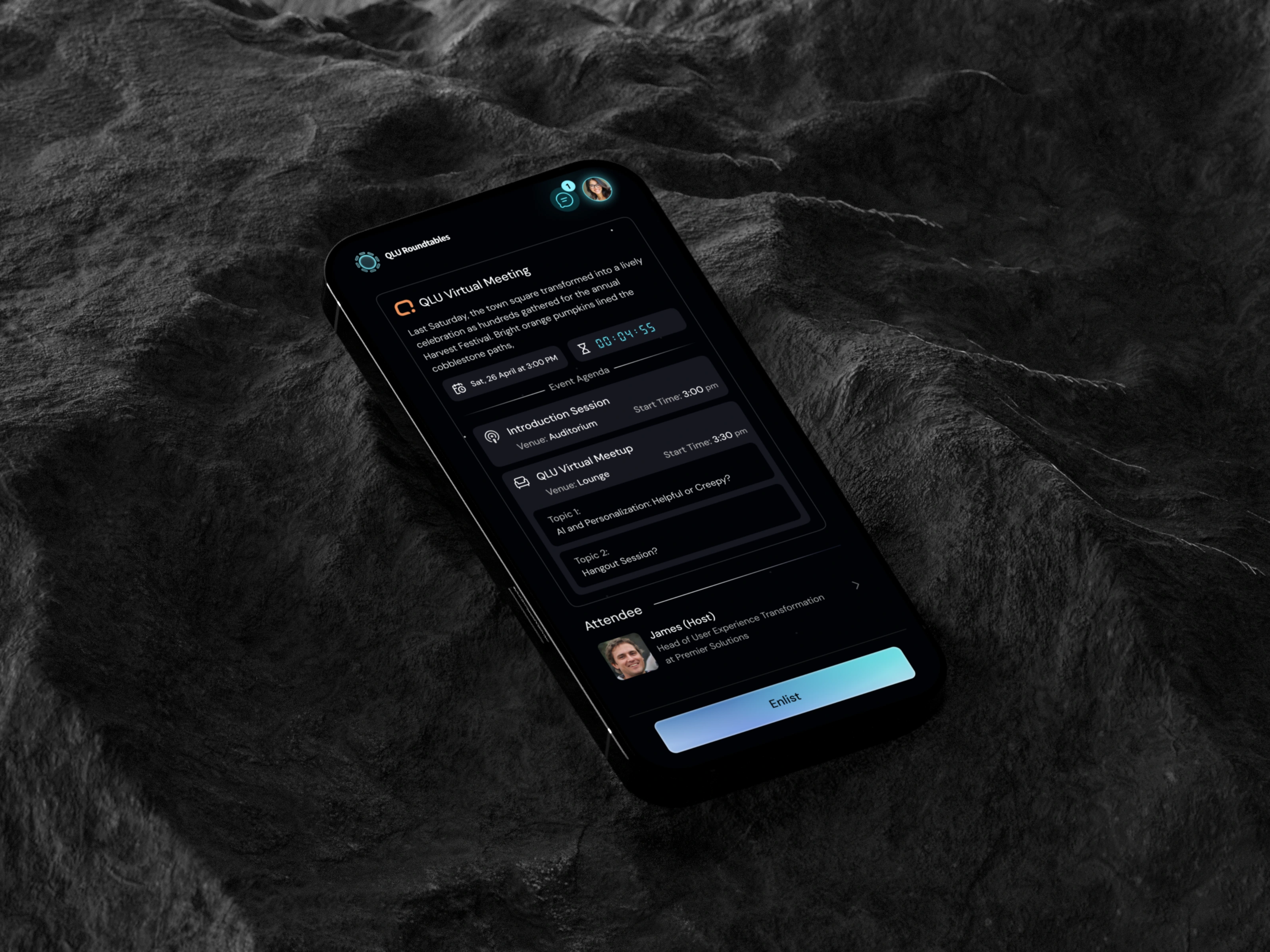
About the Client:
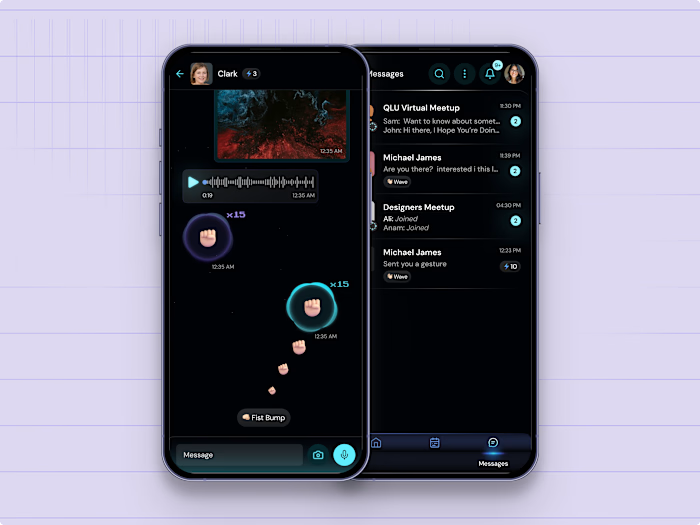
QLU Social is an invite‑only mobile app for professionals to build authentic, lasting networks. Its mission is to help people not only make new connections but also strengthen the ones they already have. Events are the primary way to attract new users, while the rest of the app’s features are built to retain them and deepen relationships.
About the project:
As Head of Product Design, I led strategy, research synthesis, UX and UI design, and cross‑team execution while managing and mentoring a team of three designers. When we shared event links via networks like WhatsApp, many people agreed to join, but only a fraction actually did. Out of 10 people who said “yes,” just 2–3 completed onboarding. A process that often took multiple follow‑ups and an average of two days.
The Problem:
Through analytics (UXCam sessions) and direct user conversations, we uncovered the core issue: the onboarding process had too much friction and too many steps before users could take part in the event.
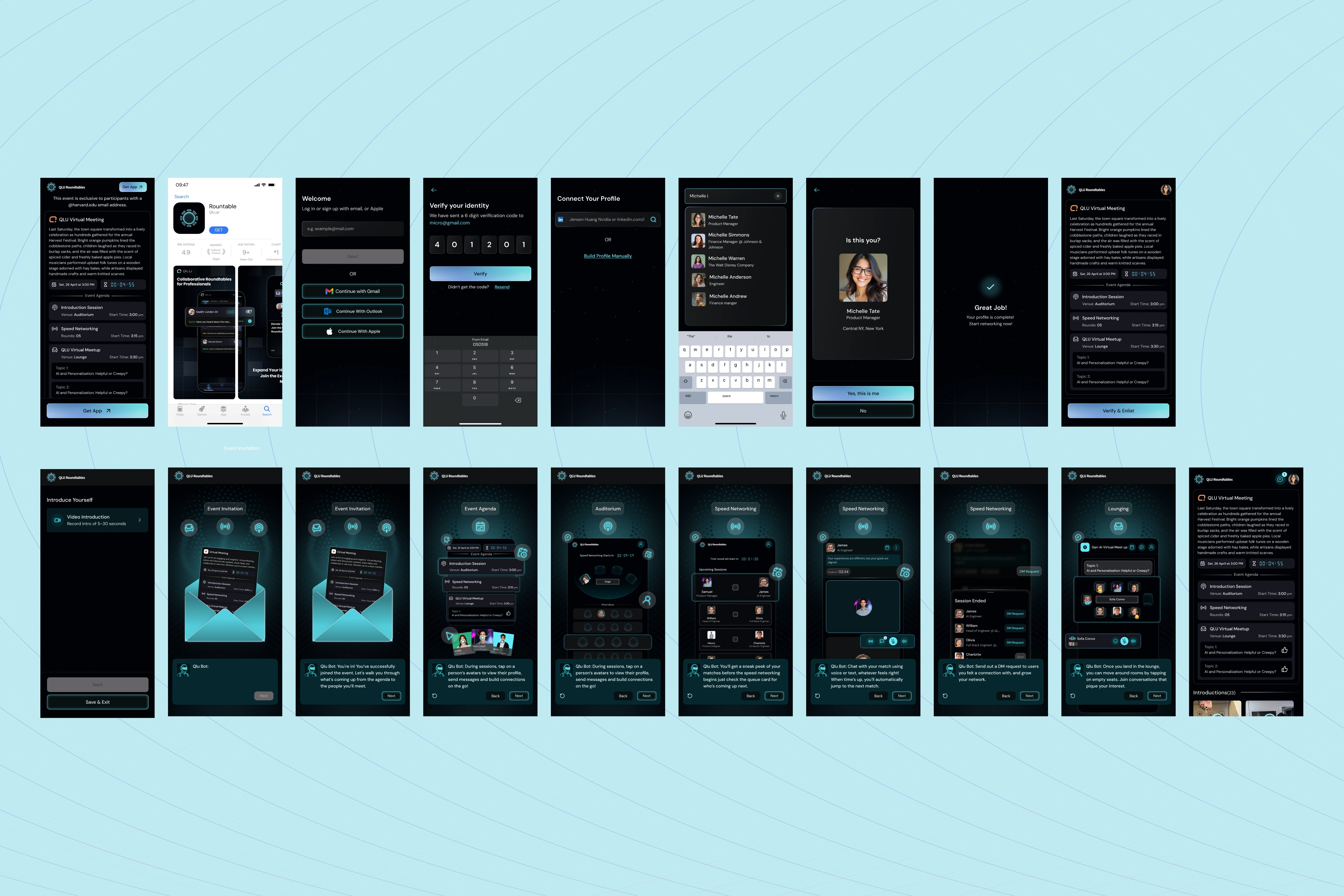
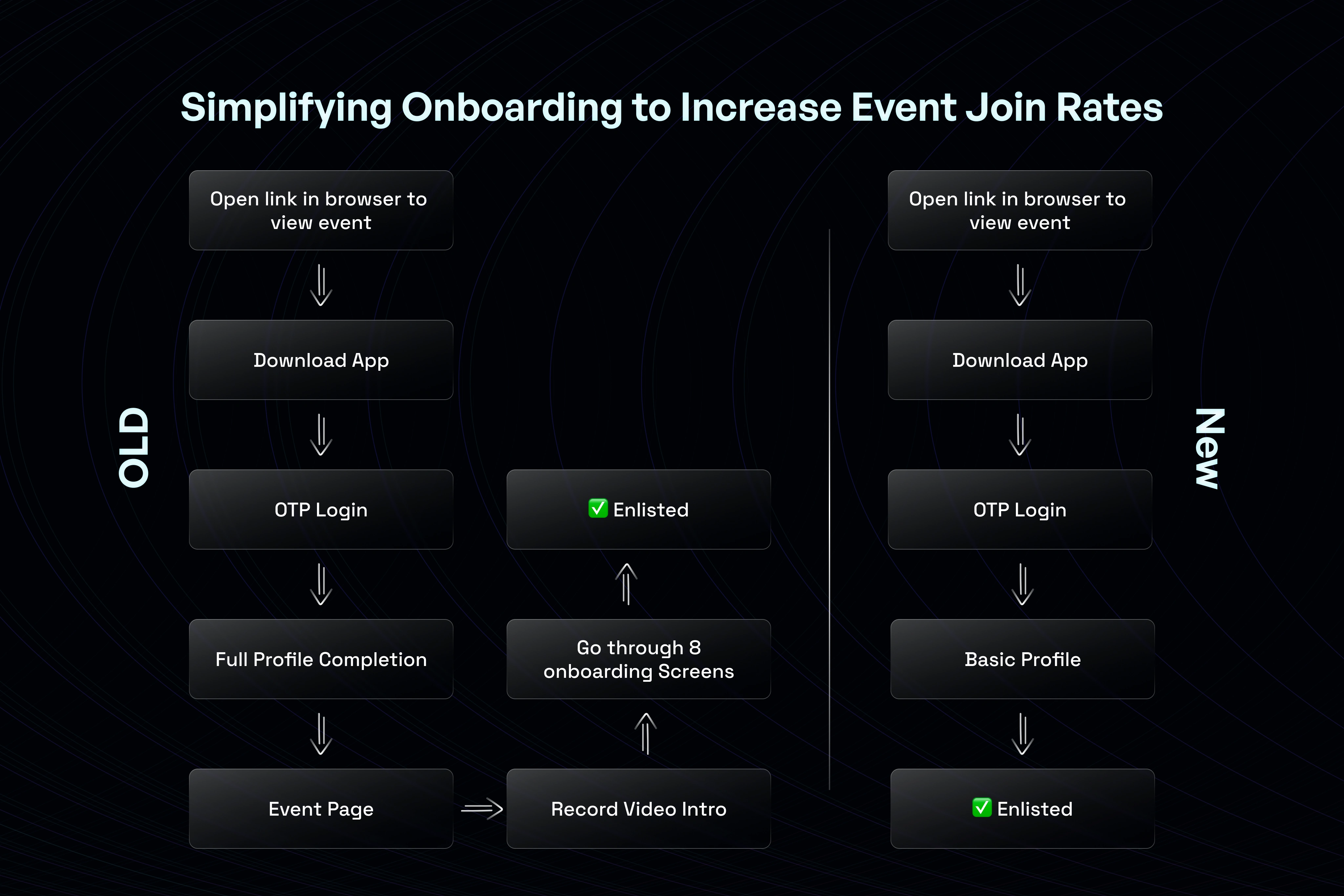
Old flow:
Open link in browser to view event
Download app
OTP login
Full profile completion (headline, description, interests, experience, education, via LinkedIn sync or manual entry)
Land on event page
Record 30‑second video intro
Go through 8 onboarding (FTE) screens for event features
Finally enlist for the event
We were losing users at three key points:
Profile completion
Video introduction
Long first time experience flow
Stakeholders believed these steps ensured authenticity and richer networking, but our data and users told us we were asking for too much, too soon.
One‑liner problem statement:
High friction onboarding was turning “yes” into “no show,” killing event conversion
The Approach:
We reimagined onboarding to get users into the event first, and complete optional steps later.
We reimagined onboarding to get users into the event first, and complete optional steps later.
Key changes:
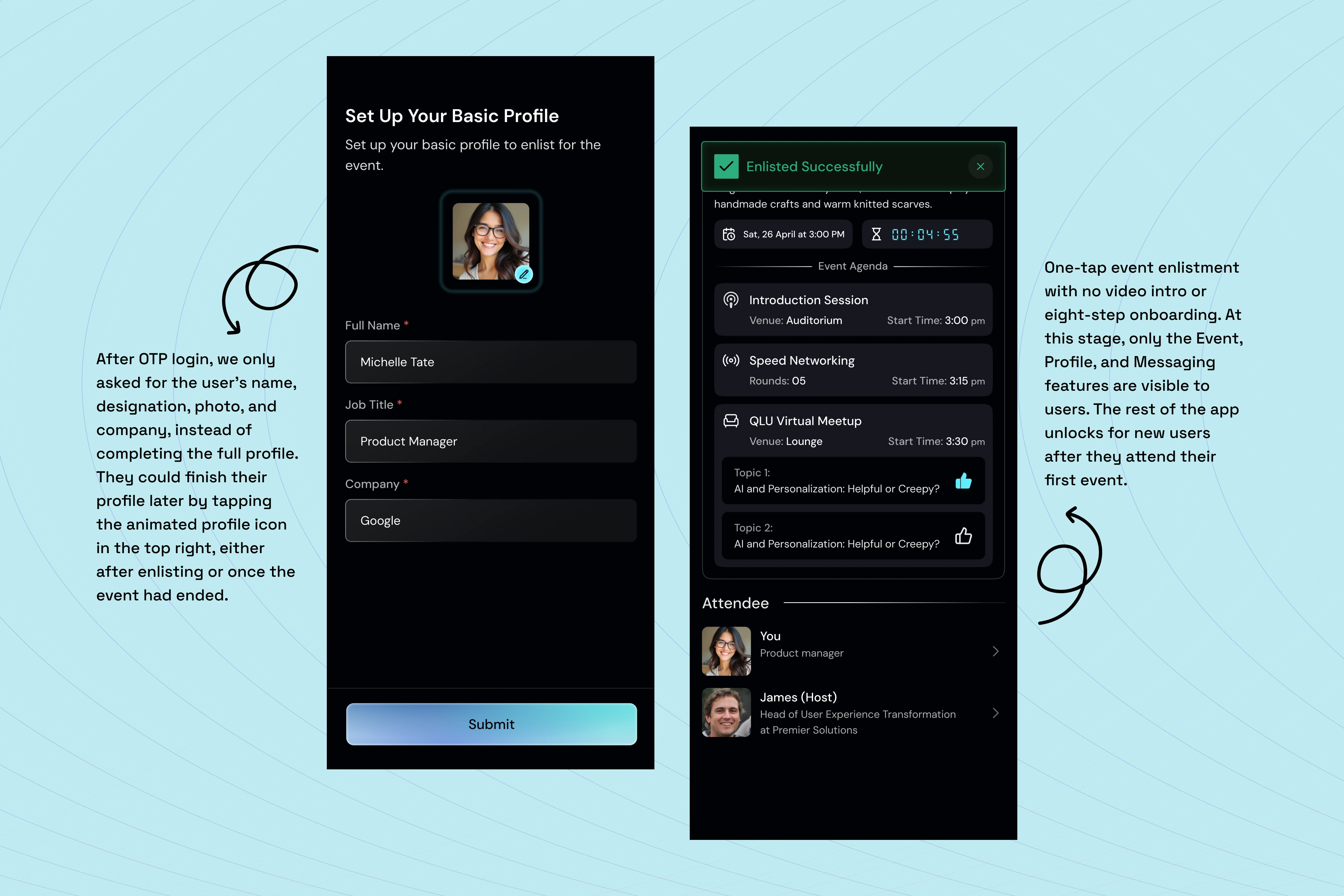
Reduced upfront input: After OTP login, only asked for name, designation, photo, and company.
Event‑first flow: New users landed directly on the event page and could enlist with one tap.
Deferred profile completion: Added a subtle blinking animation on the profile icon to encourage completion later.
Simplified UI access: At first, new users saw only events, profile, and messages to stay focused.
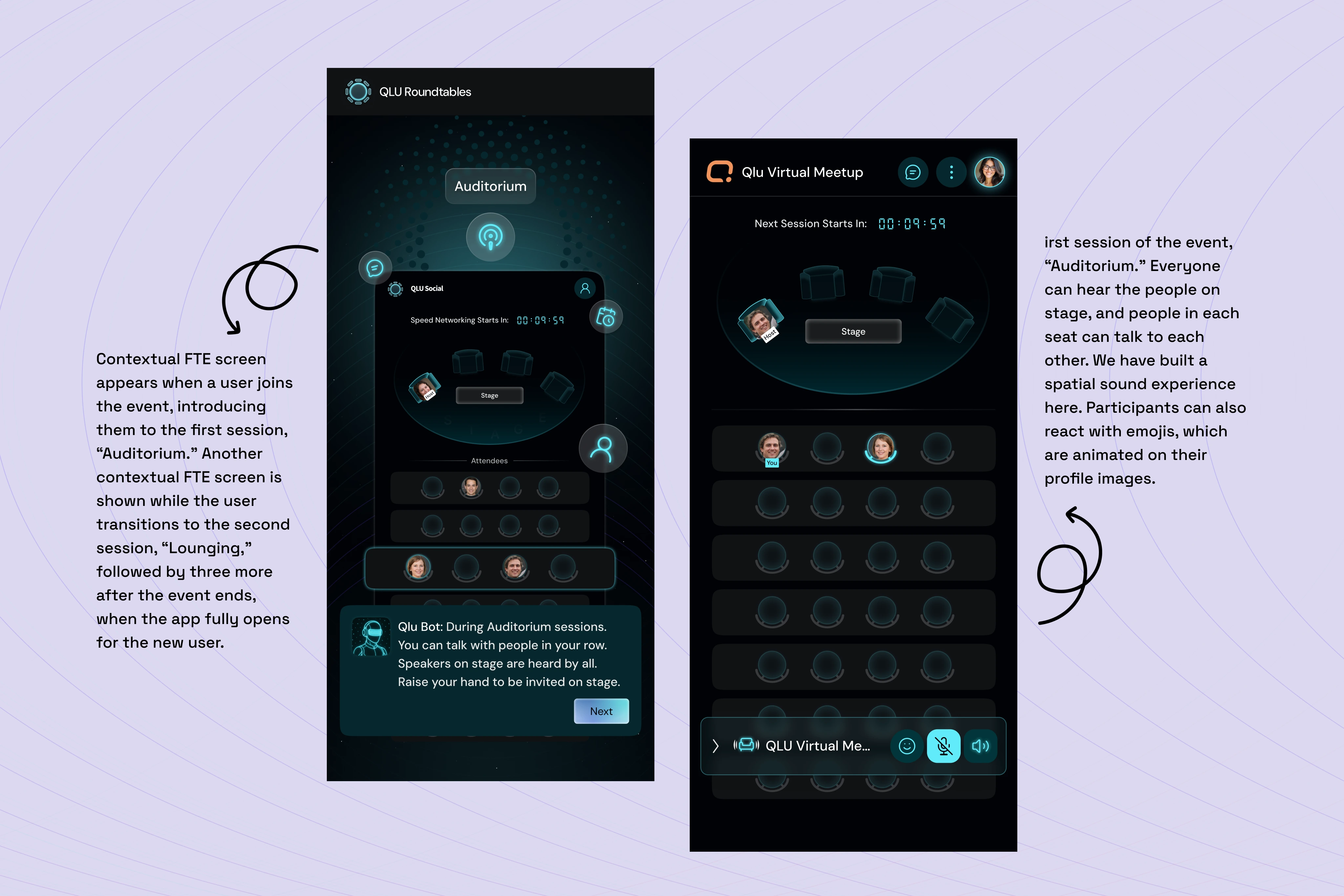
Contextual FTE: Removed 8 screen FTE. Instead, surfaced feature tips at relevant points:
2 screens at event start (session 1 features)
1 screen at session 2 start
3 screens after event end, introducing the rest of the app
Video intro removed (for now): After three sprints of testing and stakeholder discussions, agreed to reintroduce when active users surpass 10k, with reduced friction or added value.
The Outcome:
While still early after launch, we have seen:
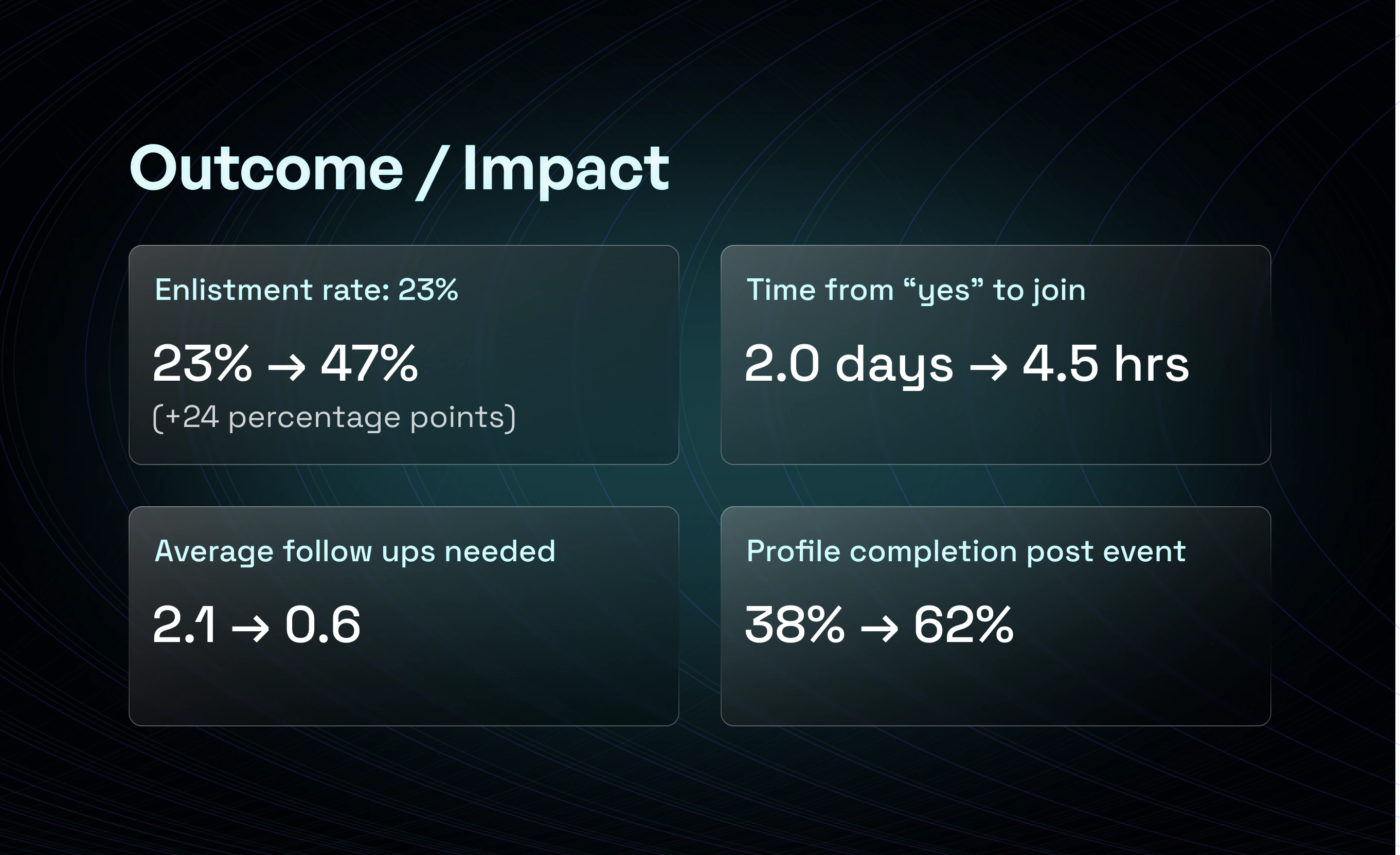
Higher enlistment rates with fewer follow ups
Faster time from “yes” to event join
Stronger completion of profile steps post event due to contextual prompts
User feedback:
Joining the event was instant, I could focus on the session right away and update my profile later.
Reflection:
This project reinforced that value needs to come before commitment. By letting users experience the event first, we earned the right to ask for deeper engagement later. It also proved that high‑touch authenticity features work best when the user already feels invested.
It was a clear reminder that when acquiring new users for any product, you should reduce friction as much as possible to minimize drop‑off rates. The smoother the first interaction, the more likely users are to stick around long enough to experience the value you’ve worked so hard to create.
Thank you for reading
👉 Ready to level up your product design? Hire me on Contra or connect on LinkedIn.
Like this project
Posted Aug 23, 2025
Redesigned QLU Social’s onboarding with an event-first flow that cut friction, boosted join rates, and turned quick interest into real attendance.