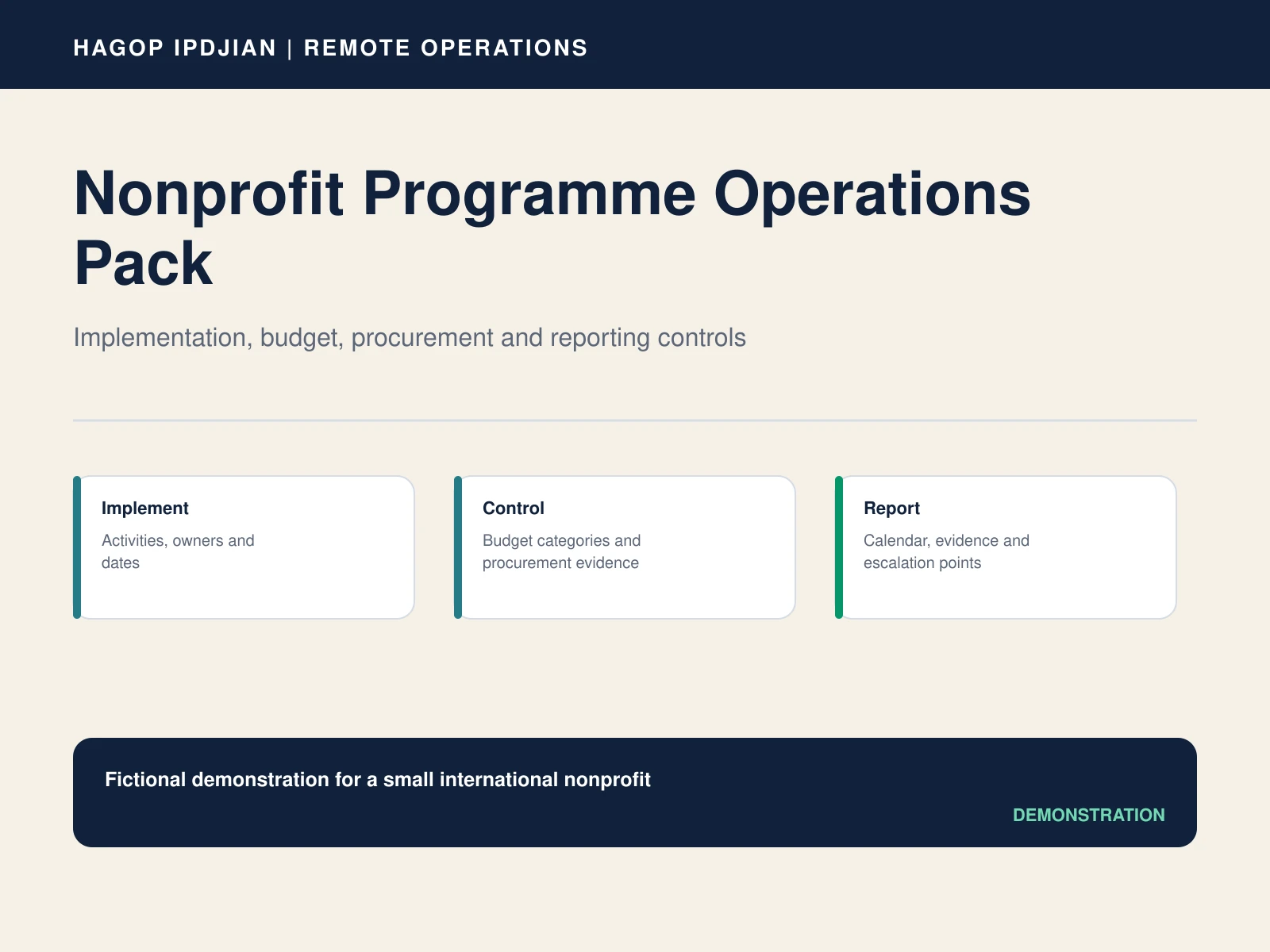
Nonprofit Programme Operations Pack — Demonstration

Hagop Ipdjian


SELF-DIRECTED DEMONSTRATION
Context
This demonstration models one programme delivered by a fictional small international nonprofit. It shows how operational records can connect activities, ownership, budget categories, procurement evidence and reporting dates without exposing beneficiary information.
Operational problem
Programme teams may maintain delivery plans, spending records, procurement files and reporting calendars separately. Managers then spend time reconciling versions and chasing evidence instead of reviewing genuine exceptions.
Approach
I designed a joined-up operating structure with a programme implementation tracker at its centre. Each activity has an owner, status, next evidence item and due date. Supporting views cover budget monitoring against approved categories, procurement and contract records, and the donor-reporting calendar.
Deliverables demonstrated
• Programme implementation tracker
• Budget-monitoring structure using approved categories
• Procurement and contract evidence record
• Reporting calendar and evidence checklist
• Operational SOP and handover structure
Key design decisions
The pack keeps delivery ownership visible without duplicating specialist finance or programme-design work. It records approvals and evidence locations rather than making compliance decisions. Sensitive beneficiary and partner data should remain in access-controlled source systems.
Result of the demonstration
The finished structure gives a programme manager one operational view of work due, evidence outstanding and issues requiring escalation. It demonstrates the type of control pack I can tailor; it is not a claimed donor or programme result.
Boundaries
Operational support only. The service excludes fundraising strategy, donor prospecting, proposal authorship, donor representation, technical programme design and assurance on donor, legal or financial compliance.
Like this project
Posted Sep 12, 2026
A fictional operations pack joining programme delivery, budget monitoring, procurement evidence and reporting dates.